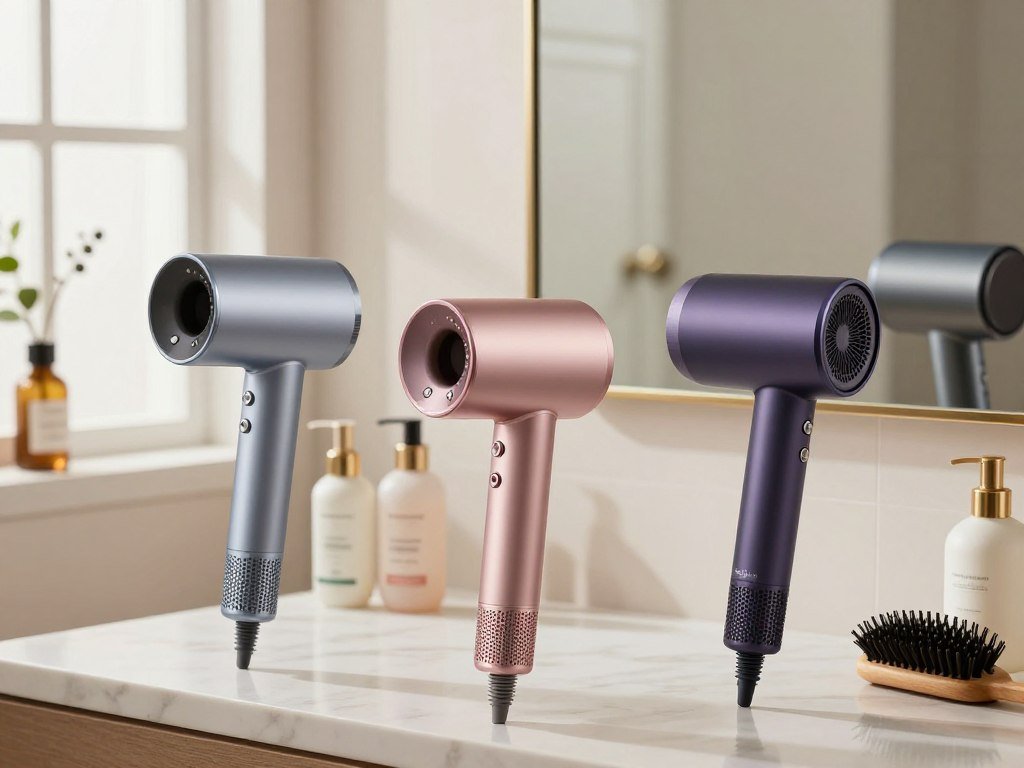
A good hair dryer should make your routine easier without forcing you to trade control or comfort for speed. The best hair dryers 2025 balance fast drying with manageable heat, useful airflow, practical attachments, and a price that fits your budget.
Your hair texture, styling habits, and time each morning all shape which features matter most. Ionic technology is a hair-dryer feature that releases negative ions to help reduce static and make hair look smoother. This guide covers 2025 picks and adds a short 2026 update, so you can weigh newer claims against useful everyday features.
A higher price or bigger feature list does not always make a tool easier to use. Consider how it feels in your hand, whether its controls make sense, and if its attachments suit the styles you wear.
Start with the way you actually dry and style your hair, then compare the features that support that routine.
Key Takeaways
- Choose heat and airflow that suit your texture and styling goal.
- Check a dryer’s weight, cord reach, and control placement.
- Compare included attachments with the styles you often make.
- Use adjustable heat rather than relying on a technology label.
- Dyson Supersonic Nural is the all-around pick in this guide.
- Consider TYMO’s 2026 specifications as features, not proof of better results.
How Were Hair Dryers Evaluated?
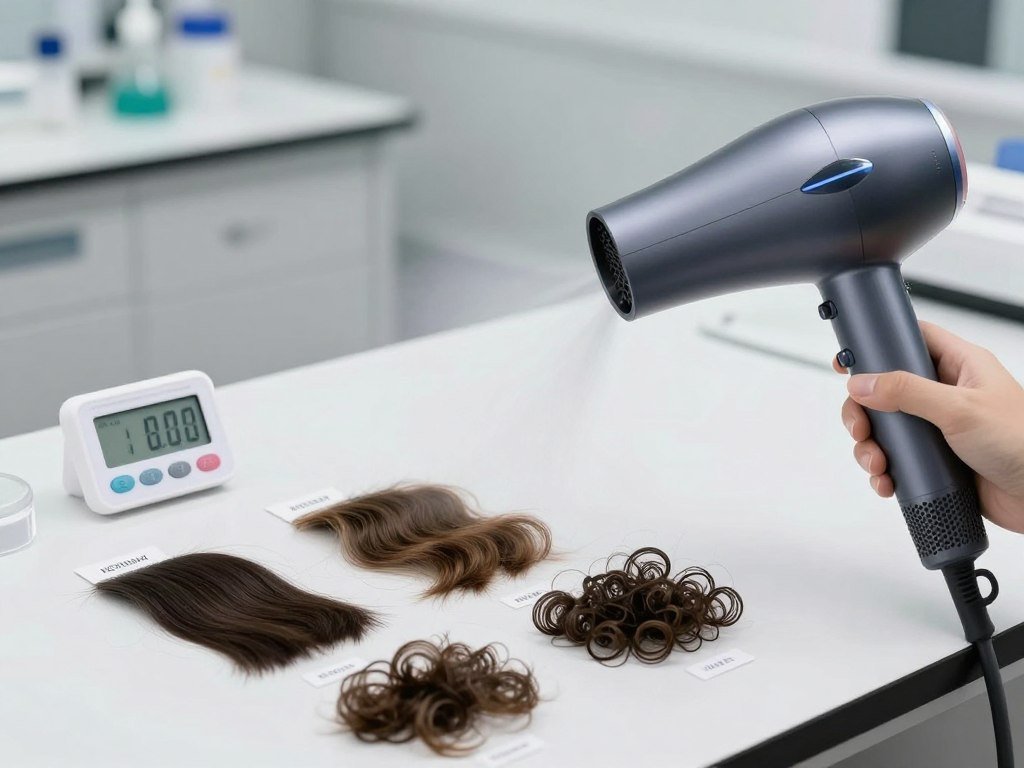
A useful comparison combines controlled measurements with real handling feedback rather than relying on one speed claim. The GH Beauty Lab evaluated 41 hair dryers over 8 weeks, using 320 hours of hands-on testing and recording 2,244 data points.
Three stages covered lab measurements, home-use feedback, and noise assessment. Each stage helps answer a different question, from how fast a dryer works to how comfortable it feels.
What lab measurements reveal
Lab tests compare standardized hair samples to measure drying speed under controlled conditions. Testers also check airflow, air temperature, weight, surface temperature, and cord length.
Those readings can help you compare power and handling without relying on a product’s claims. A longer cord, for example, may give you more room to move around a bathroom.
Still, lab results describe a test setup, not every home routine. Hair length, density, and starting dampness can change how long drying takes.
What home testers can tell you
Home testers use dryers on different hair textures, then report on ease of use and comfort. They also assess smoothness, frizz, shine, and signs of damage across varied hair types.
That feedback adds details a machine cannot capture, such as whether a handle feels tiring or a button is easy to reach. It can also show how well a dryer works for someone with curls or fine strands.
A quick lab result cannot guarantee comfortable handling or a good match for every texture.
Noise assessment adds another daily-use factor, especially if you dry your hair early or share a home. Treat a fast drying result as one useful measure, not proof that a dryer will suit your hair or routine.
- Lab measurements: speed, airflow, heat, weight, surface temperature, and cord.
- Home-use feedback: comfort, ease, smoothness, frizz, shine, and damage.
- Noise assessment: sound during operation.
How Do You Choose a Hair Dryer?
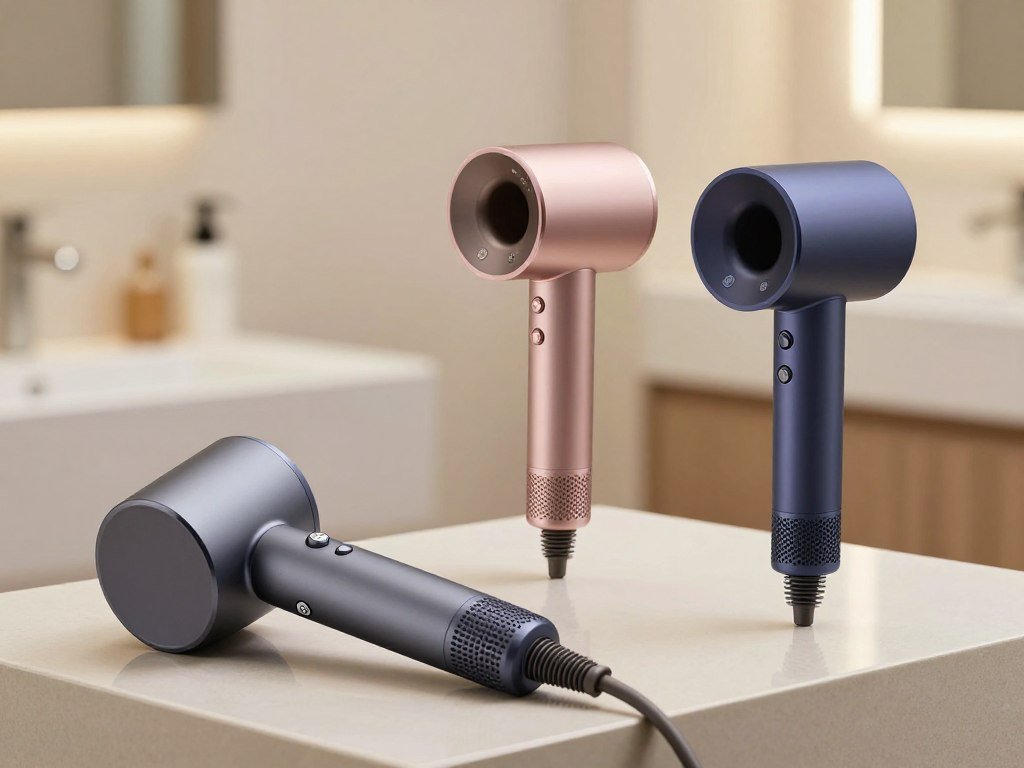
For most everyday routines, compare dryers in the 1,500-2,000-watt range before paying extra for added features. Higher wattage alone does not promise a better result, especially if the tool feels awkward to hold.
A dryer often uses 1,875 watts, but your routine matters more than one number. Strong airflow can help move drying along, while a comfortable grip and balanced weight make longer styling easier.
Match wattage and airflow to your routine
Use the wattage guide as a starting point, then weigh airflow against comfort. Thick hair often suits 1,800-2,000 watts, while a long styling session may call for a lighter tool.
| Routine | Useful wattage guide | What to prioritize |
|---|---|---|
| Everyday use | 1,500-2,000 watts | Balanced airflow and grip |
| Thick hair | 1,800-2,000 watts | Strong airflow and control |
| Long styling sessions | 1,500-2,000 watts | Low weight and comfort |
Shoppers looking for the Best Professional Hair Dryer may value a focused stream of air, too. Power is useful, but it should work with your styling method rather than dictate it.
Check weight, cord, and control placement
A dryer under 1 pound can be easier to maneuver during extended use. Weight is only one part of handling, since a poorly placed button or short cord can make styling harder.
- Cord reach: can you stand where you need to style?
- Control placement: can you change settings without losing your grip?
- Grip comfort: does the handle feel steady in your hand?
- Storage needs: will the tool and cord fit your space?
If you hold a dryer overhead for several minutes, prioritize comfortable balance over a small increase in wattage.
Which Hair Dryer Suits Your Hair Type?
A fine-haired person who wants a gentle rough-dry needs different controls from someone stretching dense type 4 coils. Choose settings for both strand thickness and styling goal, since hair types do not respond to one setting in the same way.
Fine strands generally benefit from gentler heat control, while dense or thick hair often needs stronger airflow. Curly or coily hair may benefit from adjustable settings and a diffuser when you want to keep curl definition.
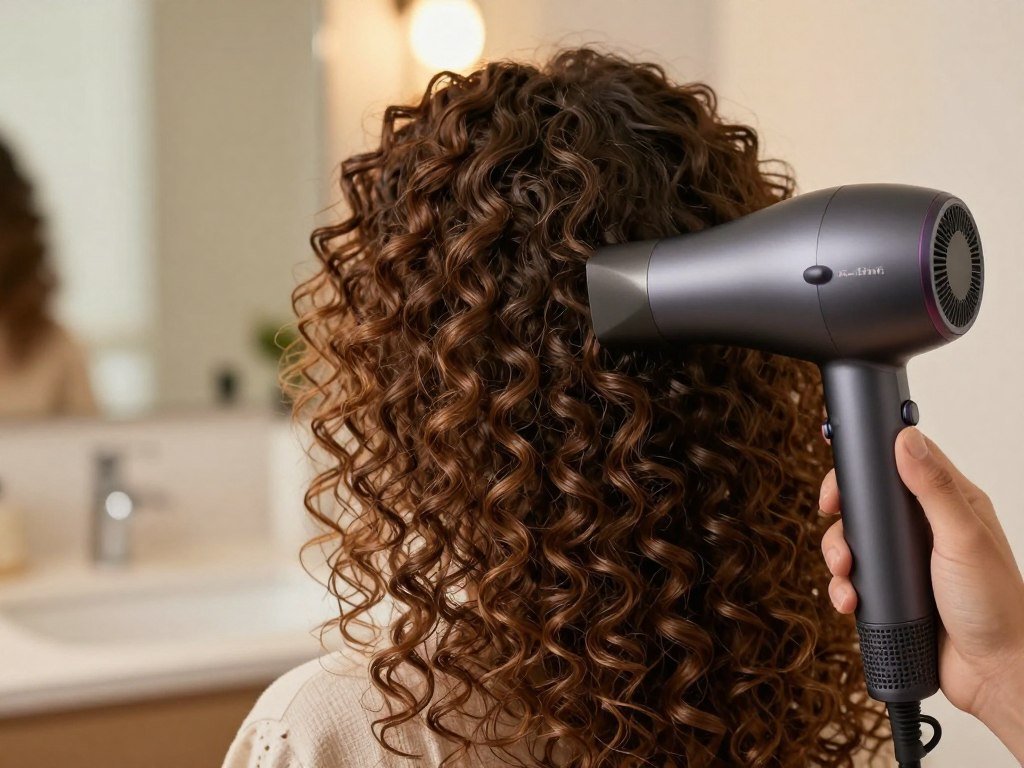
Strand thickness and overall density are different traits. Fine hair can be dense, and thick strands can grow in a less dense pattern, so consider both when choosing a dryer.
For broader care needs, this guide to shampoo and conditioner explains how hair texture and condition can affect daily care. Hair that is fragile or chemically treated may need a gentler approach than healthy, coarse strands.
Curl-pattern labels commonly run from type 3A through type 4C. Two people with the same curl pattern may still need different airflow or heat because their density, strand thickness, and styling goals differ.
Someone seeking a stretched look may prefer more airflow, while a person preserving natural volume may favor gentler movement. Fine hair often needs less heat to dry than dense hair, but technique and starting dampness also matter.
Look at how your hair behaves when wet and what finish you want, not just the category on a chart. Choose for both your strand thickness and your styling goal, not curl pattern alone.
Ionic vs. Ceramic Hair Dryers: Which Is Better?
Ionic is the more direct choice when your main concern is static, while ceramic is not automatically better for every routine. Ionic technology can help reduce static and frizz, though the label does not guarantee a certain finish.
Hair dryers often use one of three technology labels: ionic, ceramic, or tourmaline. Their practical value depends on the settings and the result you want.
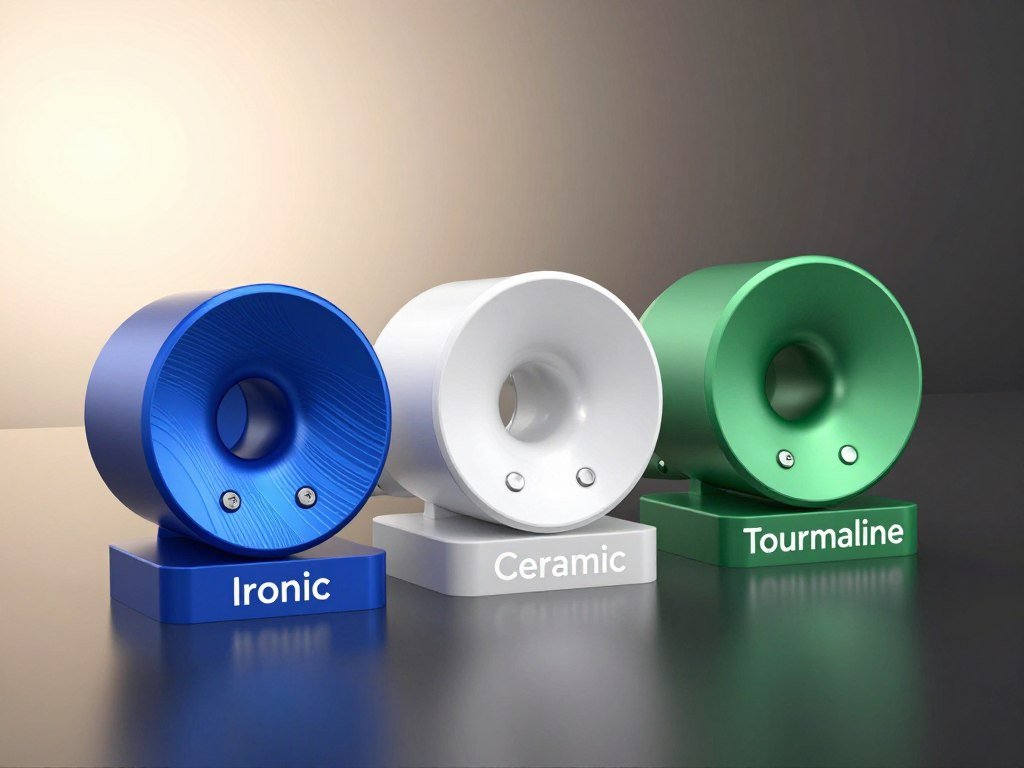
What ionic technology does
Ionic dryers release negative ions that can help limit static and make hair look smoother. This may appeal if flyaways bother you, but it is not a substitute for choosing suitable heat and airflow.
A very smooth finish is not the only goal for everyone. If you want to preserve natural curl volume, a finish with less frizz may not be your only measure of success.
What ceramic and tourmaline labels mean
Ceramic and tourmaline are common labels on dryer designs and materials. Comparative testing does not readily distinguish a consistent advantage for either over other dryer designs.
| Technology | Typical purpose | What to keep in mind |
|---|---|---|
| Ionic | Reduce static | May help smooth flyaways |
| Ceramic | Heat-related design label | Not proof of better results |
| Tourmaline | Heat-related design label | Compare controls and finish |
The label can help explain a feature, but it cannot tell you how a dryer feels or how its settings work. If you also use a straightener, this hair straightener guide covers heat controls and styling goals.
Judge the finish and heat control you get, not the technology name printed on the box.
How Can You Reduce Heat Damage While Blow-Drying?
Starting with damp rather than dripping-wet hair can shorten the time strands spend under moving heat. Keep the dryer moving about 6-8 inches from your hair to avoid holding hot airflow in one spot.
Low heat is a common starting point for fine hair, medium for normal hair, and higher heat for thick or coarse hair. Damaged or fragile hair may need a gentler approach than those usual starting points.
Before turning the dryer on
Prepare your hair so you can spend less time drying it. A heat protectant can help reduce exposure, but it does not make unlimited heat safe.
- Begin with damp hair rather than hair that is soaking wet.
- Apply a heat protectant before styling.
These steps can make a routine more manageable without promising that heat damage will never happen. If your hair feels weak or breaks easily, use a gentler setting and limit styling time.
While drying and finishing
Keep the airflow in motion, and adjust the distance if heat feels too strong. A steady pass is more useful than aiming hot air at one section for a long stretch.
- Keep the dryer moving at a sensible distance.
- Finish with a cool shot if it suits your style.
The cool shot is a brief burst of unheated air that can help set a style. Your scalp can also tell you when a setting is uncomfortable, even before your hair looks dry.
If your scalp feels uncomfortably hot, lower the heat or increase the distance instead of continuing at that setting.
Which Settings and Attachments Matter Most?
A diffuser changes how air reaches curls, while a concentrator narrows airflow for more directed styling. Choose attachments for the way you style, rather than treating a large bundle as automatically useful.
A dryer may include a diffuser, concentrator, or comb nozzle, and some brands sell attachments separately. Extra settings only help if you can operate the controls easily mid-style.
Direct airflow for a smooth finish
A concentrator focuses airflow into a narrower stream, which can help you direct air along a section. This can be useful when smoothing hair or aiming air at one area.
| Attachment | Airflow effect | Useful for |
|---|---|---|
| Diffuser | Disperses airflow | Helping preserve curl definition |
| Concentrator | Narrows airflow | Directed smoothing and styling |
| Comb nozzle | Guides air through sections | Stretching or detangling hair |
Diffuse or comb through textured hair
A diffuser spreads air across a wider area to help preserve curl definition. A comb nozzle can help stretch or detangle sections as you dry.
Heat and speed controls matter alongside attachments. The Dyson Supersonic Nural has 4 heat settings and 3 speed settings, while the Pattern Beauty Blow Dryer comes with 4 attachments.
- Heat range: does it offer settings that suit your needs?
- Speed range: can you choose a gentler or stronger airflow?
- Cool-shot control: can you reach it while styling?
- Attachment fit: is your needed tool included or sold separately?
Check whether your must-have attachment comes in the box before assuming it is part of the dryer set.
Best Hair Dryers 2025: Which Picks Fit Each Need?
For most shoppers seeking one versatile pick, the Dyson Supersonic Nural is the strongest all-around starting point in this guide. Pattern suits curls, Shark suits styling, L’Oréal suits speed and heat-conscious drying, and RevAir suits stretching textured hair.
These picks address different routines, so the best hair dryer for you depends on the tools and controls you will use. The listed prices also show how much the features may ask from your budget.
The all-around pick and the use-case winners
| Use case | Model | Listed price | Main reason to consider it |
|---|---|---|---|
| All-around | Dyson Supersonic Nural | $449 | Versatile settings and attachments |
| Curls | Pattern Beauty Blow Dryer | $199 | Four included attachments |
| Styling | Shark SpeedStyle | $230 | Tools for polished finishes |
| Speed and heat-conscious drying | L’Oréal AirLight Pro | $475 | Quick drying and adjustable settings |
| Stretching textured hair | RevAir Reverse Air Dryer | $459 | Reverse-air stretching method |
Brands represented here include Dyson, Pattern, Shark, L’Oréal Professionnel, RevAir, GHD, InStyler, and Drybar. The right brand depends on your routine, rather than a single ranking.
What to compare in 2026 models
For an all-around choice in 2026, use the Dyson recommendation as a practical reference point. TYMO AIRHYPE lists a 110,000 RPM motor and 200 million negative ions, while AIRHYPE LITE lists the same motor speed and 100 million negative ions.
Those TYMO motor and ion specifications describe specific features, not proof that either dryer outperforms other models. Compare the included tools and usable controls against the price you are willing to pay, not the highest specification on the package.
Is the Dyson Supersonic Nural the Best All-Around Dryer?
Its scalp-distance sensor and attachment recognition make the Supersonic Nural a flexible option for mixed styling routines. Four heat settings, three speed settings, and five attachments let you adjust the tool for different looks.
The Dyson Supersonic Nural received a 2024 Best of Beauty Breakthrough Award. It uses 1,600 watts, weighs 1.8 pounds, and has an 8.6-foot cord.
Its sensor measures how close the dryer is to your scalp and adjusts heat through Scalp Protect mode. That feature may help when you want more control near the roots.
The tool can remember preferred settings and recognize attachments. It can also pause airflow when you set it down, which may help during a multi-step style.
Those features support versatility, though the dryer still weighs more than some lightweight options. Its mix of settings and attachments can suit homes where more than one person styles their hair differently.
The control layout may take a little getting used to, so allow time to learn where each control sits. A tool can offer many options and still need a short adjustment period.
Check that the attachment set you expect is included with the specific configuration you plan to buy.
Is the Pattern Beauty Blow Dryer Best for Curly Hair?
The Pattern dryer is designed to support both defined curls and stretched styles through its four included attachments. Its diffuser, brush, wide-tooth comb, and concentrator nozzle give you options for different curly hair routines.
The tool uses 1,875 watts and has three heat settings and two speed settings. Its 9-foot cord gives you room to move as you style.
Use the diffuser to dry curls, the comb to stretch a section, or the concentrator to smooth hair. That range can help if you switch between natural definition and a stretched look.
Testers noted its large diffuser and customizable heat and fan settings. Those features can give you more ways to shape airflow without relying on one speed.
The Pattern dryer weighs 2.5 pounds, which may feel heavy during longer styling sessions. A long routine with the dryer held overhead could make its weight more noticeable.
The brush attachment adds another option for styling, while the wide-tooth comb can help manage sections. Your preferred attachment may depend on how often you diffuse versus stretch your hair.
If you mostly diffuse, confirm that the dryer’s weight feels manageable for the full length of your routine.
Is the Shark SpeedStyle Best for Frizz and Styling?
The SpeedStyle’s attachments make it more than a basic dryer for readers who want to finish a smooth or voluminous style. Its styling tools support directed drying, volume, and flyaway smoothing, though the model may not suit every texture.
It uses 1,700 watts, has three heat settings, and weighs 1.66 pounds. The dryer measures air temperature 1,000 times per second and is designed to stay below 230°F.
The Turbo Concentrator directs airflow, while the QuickSmooth Brush can add volume and styled ends. The RapidGloss Finisher is made to smooth flyaways for a more polished look.
Those attachments give you options for shine and shape beyond basic drying. They may appeal if your routine includes a brushed finish or extra volume.
The diffuser and wide-tooth comb can be purchased separately. That matters if your routine includes defined curls or combing through textured sections.
The available styling tools focus on finishes such as smoothing and volume, so the SpeedStyle may not be the best match for coily hair. Its airflow and attachment set should fit the style you make most often.
Check which attachments are included in the exact set, since the diffuser and wide-tooth comb may be separate.
Is the L’Oréal Professionnel AirLight Pro a Gentler Fast Dryer?
The AirLight Pro is worth considering when quick drying and adjustable settings matter more than a simple one-button design. One tester dried slightly damp hair in 4 minutes and 4 seconds, but that is an individual result, not a promised drying time.
The dryer received a 2025 Allure Best of Beauty Award. It uses 1,875 watts, has three heat settings, weighs 1.7 pounds, and has an 11.5-foot cord.
The AirLight Pro combines infrared light at the front with a traditional motor and coils. Its design emphasizes quick drying, but no dryer can guarantee damage-free styling.
You can change settings through a phone app, which may suit someone who wants more control than a basic button layout. The dryer includes two attachments, a diffuser and a concentrator.
Its light weight and long cord may make handling easier during a longer routine. The app adds a step, though, so it may not feel as simple as turning a dial.
The tester’s 4-minute-and-4-second result came from slightly damp hair and should not set expectations for every head of hair. Your own drying time depends on your hair and routine.
Use a heat protectant and keep the dryer moving even when its design emphasizes gentler drying.
Is the RevAir Reverse Air Dryer Right for Coily Hair?
The RevAir stands apart because its wand uses reverse-air suction to stretch hair as it dries. Its three heat settings and seven tension settings let you adjust the process for different textures and styles.
The system uses 800 watts and includes a 5.5-foot hose. It suits people who want to stretch textured hair, including locs, braids, and twist-outs.
Instead of directing hot airflow at hair, the wand uses suction to draw and stretch it while drying. That different method may suit a routine built around lengthening curls.
The tension settings give you options for how firmly the tool draws hair into the wand. The heat settings also let you choose among levels suited to your styling needs.
The full unit weighs about 8 pounds and can feel bulky to travel with. The wand itself may feel awkward during a long session, even though the base stays in place.
This is a larger system than a standard handheld dryer, so it needs a spot in your home. The hose length and placement of the base can shape where you can comfortably work.
Consider your storage space and whether the stationary base fits your routine before choosing this system.
Is the GHD Helios the Best Professional Hair Dryer?
The Helios is a strong professional-style choice for readers who want concentrated airflow through thick sections. Its airflow reaches up to 75 miles per hour, and its slim nozzle helps direct air where you need it.
The dryer uses 1,875 watts and weighs 1.7 pounds. Focused airflow may help dry dense sections with fewer repeated passes.
Testers reported a smooth finish, though your results depend on your technique and hair. The narrow airflow can help when you want salon-style smoothing at home.
The reviewed configuration does not include a diffuser. That can be a drawback if you wear curls often and want to disperse airflow rather than concentrate it.
A focused stream suits some routines better than others. It may work well when you dry dense sections in a controlled way, but curl-first styling may call for another attachment.
Its weight is within the range of several full-size tools, so grip comfort still matters during longer sessions. A slim nozzle can direct the air, but it does not replace a diffuser.
If you wear your hair curly most days, check whether you need to buy a diffuser separately.
Is the InStyler Turbo Max a Good Value?
The InStyler Turbo Max focuses on straightforward airflow control rather than a large attachment set or smart features. Its $100 price, 1.45-pound weight, and customizable airflow dial make it a practical option for basic daily use.
The dryer uses 1,500 watts and has two airflow settings. Testers found its airflow strong and drying quick, with a lightweight balance that can feel easy to handle.
A concentrator helps direct the air, and the controls are easy to operate. The dial lets you adjust airflow without sorting through a large number of settings.
Sound testing measured the Turbo Max as loud, which may bother you if noise is a concern. That drawback can matter during early mornings or in a shared home.
A lower-cost dryer can cover everyday basics well. Higher-end models may add specialized attachments or smart features that this simpler tool does not include.
The Turbo Max keeps the focus on airflow and easy handling instead of a long feature list. Think about whether its basic setup matches the styles you make most.
If quiet operation is a priority, compare the noise experience before settling on this value pick.
Is the Drybar Baby Buttercup a Practical Travel Dryer?
Dual voltage and a folding handle make the Baby Buttercup a practical option for readers who split time between home and travel. It weighs 1.3 pounds and includes a travel bag, so packing it is fairly simple.
The dryer uses 1,200 watts, with two speed settings and two heat settings. Dual voltage can help it work with different electrical systems when you travel.
A folding handle saves space, and the included bag keeps the dryer together with your travel items. It can also handle occasional home use when you want a smaller tool.
The reviewed model does not include a diffuser and may feel bulkier than a compact travel-only tool. If you rely on a certain styling attachment, plan space for it in your bag.
- Verify voltage compatibility for your destination.
- Secure the foldable handle before packing.
- Pack any styling attachment the dryer lacks.
The two heat and speed settings keep controls simple, while the lower wattage differs from many full-size dryers. Your travel routine may matter more than maximum power when luggage space is tight.
Confirm the electrical requirements for your destination before plugging in any dryer abroad.
Check the voltage and outlet needs for the place you are visiting, since plug shape and voltage are separate concerns. Confirm the electrical requirements for your destination before plugging in any dryer abroad.
Conclusion
The right pick is the one whose controls, attachments, and handling match how you actually style your hair. Start with airflow and heat control that suit your texture, then treat weight and attachment fit as practical needs.
Before buying, compare the exact model configuration with your routine. A bundle may vary, so check which attachments and controls come with the version you plan to choose.
Before you buy, confirm the included attachment set and choose the lowest heat that gets the job done.
FAQ
What hair dryer do hairdressers recommend?
Which is the No. 1 brand hair dryer?
What is the best dryer for 2025?
What is the best hair dryer for 2026?
Which is better, an ionic or ceramic hair dryer?
Is there really a difference between cheap and expensive hair dryers?
What is the least damaging type of hair dryer?
What are the disadvantages of ionic hair dryers?