
A good pair of noise-cancelling earbuds can make a commute, flight, or noisy workday easier without taking up the space of over-ear headphones. The best noise cancelling earbuds for you depend on your budget, phone, fit, and listening habits. ANC means active noise cancellation, which uses microphones and processing to reduce incoming environmental sound. It can soften steady background noise, but it cannot make every place silent.
Some people want calmer music on a plane, while others need clear calls or a secure fit for workouts. You will find options for low budgets, premium listening, different phone systems, and exercise. Comfort and a good tip seal matter as much as a long feature list. Start by deciding whether quiet, a secure fit, or compatibility with your phone matters most.
Key Takeaways
- Choose ANC to reduce steady background noise, not to silence every sound.
- Compare measured noise reduction separately from scores and personal listening impressions.
- Check phone support before paying for features tied to one ecosystem.
- Try different ear tips to find a comfortable, secure seal.
- Match workout earbuds to your activity and needed water resistance.
- Compare battery results only when their test conditions match.
Which Are the Best Noise Cancelling Earbuds for Different Budgets?
If you want one quick starting point, shortlist the Liberty 4 NC for value, then choose a premium, phone-specific, or workout model only if that feature matters more. The best noise cancelling earbuds in this group depend on the job you need them to do. The Soundcore P31i/R60i NC costs less, while other picks focus on premium ANC, Apple features, or training.
Use this shortlist to match a model to your main need, not to declare one pair best for everyone. The reason for each pick is brief, so you can see where to begin. A fit that feels wrong or a phone feature you cannot use can outweigh a strong test result.
| Model | Best fit | Reason to shortlist |
|---|---|---|
| Soundcore Liberty 4 NC | Budget-conscious noise reduction | Strong measured under-$100 result |
| Soundcore P31i/R60i NC | Lowest budget | Scarbir’s under-$50 pick |
| Bose QuietComfort Ultra (Gen 2) | Premium ANC | High ANC score |
| Apple AirPods Pro 3 | iPhone users | Apple ecosystem features |
| Beats Powerbeats Pro 2 | Training | Earhook fit |
Lab percentages, test scores, and real-world impressions are different kinds of evidence. Do not treat them as directly interchangeable.
For example, a lab percentage describes a measured change under test conditions. A score ranks performance on one scale, while a listening impression describes what someone noticed in a particular setting. All can help, but they answer different questions.
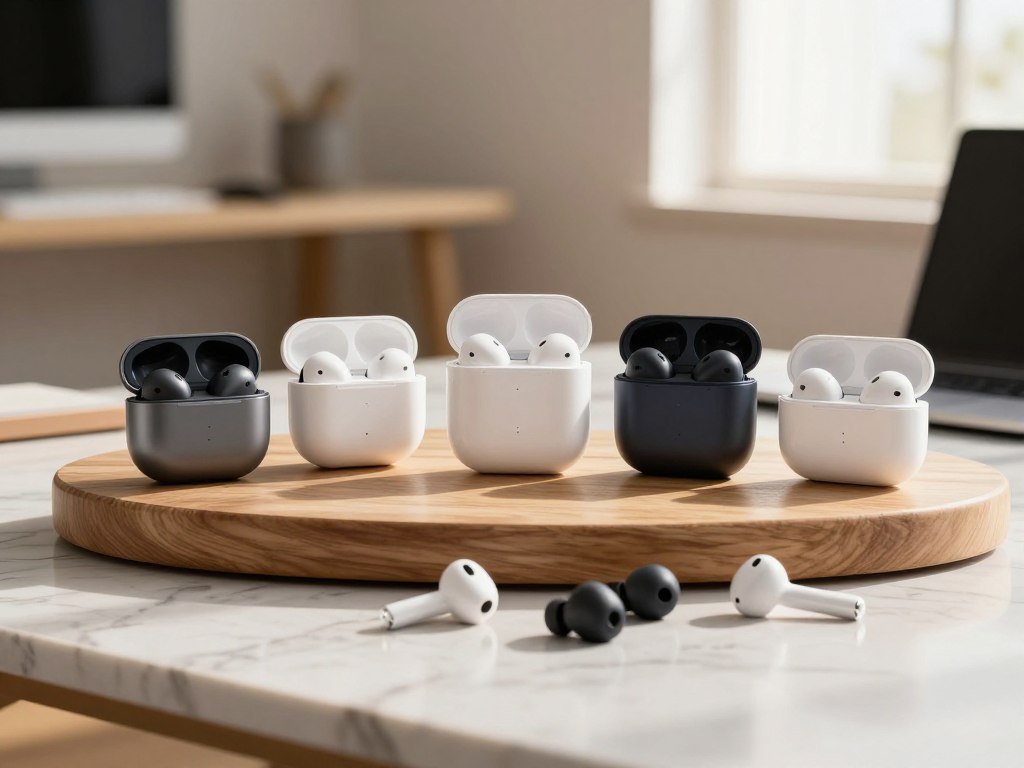
Bluetooth headphones and earbuds also differ in fit, controls, and how they connect to your devices. Check that the model supports the phone features you care about, then test comfort if you can. Treat the shortlist as a way to narrow the field, then confirm the fit and phone compatibility that matter to you.
How Well Do Earbuds Under $100 Cancel Noise?
Among these three under-$100 choices, the Soundcore Liberty 4 NC has the strongest reported average reduction, at 84% with ANC on. In 2026 lab testing, it tied for the highest measured result among earbuds under $100. That makes it a strong best budget choice if measured noise cancellation is your main concern.
The 84% result is an average reduction in outside-noise loudness, not a promise of silence. Sound changes by frequency, and a test result cannot predict every street, office, or flight. Voices and sudden sounds may remain clear even when steady noise sounds softer.
| Earbuds | Outside-noise reduction | Test condition |
|---|---|---|
| Anker Soundcore Liberty 4 NC | 84% | ANC on, 2026 lab testing |
| EarFun Air Pro 4+ | 80% | ANC on, 2026 lab testing |
| Nothing Ear (3a) | 80.9% | ANC on, 2026 lab testing |
The EarFun Air Pro 4+ reached 80% in the same year’s lab testing. The Nothing Ear (3a) measured 80.9% with ANC on. These results are close enough that comfort, controls, and sound may matter more to your choice.
ANC works alongside passive sound isolation, which is physical sound blocking from the earbud and its tip. A loose tip can let sound leak around the earbud, limiting the quiet you notice. If you are comparing models in person, use the same steady background sound and check that each pair seals comfortably before judging ANC.
Which Earbuds Deliver ANC Under $50?
The Soundcore P31i, sold as the R60i NC in India and Indonesia, is the most direct under-$50 ANC choice here. Scarbir named it the under-$50 ANC pick in 2026. The two names refer to the same model in different regions, not two separate earbuds.
The P31i/R60i NC filters constant middle- and higher-frequency sounds well. Its transparency mode, which feeds outside sound into the earbuds, is only decent. Its IP55 water-resistance rating and playback figures can also help you judge whether it suits daily use.
- Soundcore P31i/R60i NC: Scarbir’s budget ANC pick, with a case that adds 3.5 hours of playback after a 10-minute charge.
- Realme Buds Air 7: Scarbir’s runner-up, lasting 8 hours per charge with ANC on in testing.
- Soundcore P31i/R60i NC: A possible fit if you might use its translation app, which supports more than 100 languages.
The P31i/R60i NC provides up to 8 hours of playback on one charge. Its IP55 rating offers resistance to dust and water, though you should follow the product’s care instructions. Translation features may be handy during travel, but they should not outweigh fit or sound.
Keep expectations modest for transparency mode if you need outside voices to sound natural. A budget app can offer useful extras, but its controls and results may not suit every situation. Check the exact model name on the box before buying, since the regional naming can differ.
Which Premium Earbuds Block the Most Noise?
In this three-model score comparison, the AirPods Pro 3 leads with 8.9 out of 10, followed by Bose at 8.4. The AirPods Pro 3 tops this scale, while Bose QuietComfort Ultra (Gen 2) remains a premium alternative. Samsung Galaxy Buds4 Pro scores 8.3 out of 10.
These scores compare performance on one test scale, not what every listener will hear. Your experience may differ on a plane, in an office, or beside a busy street. A model’s shape and seal can change how quiet it feels in your own ears.
| Model | 2026 ANC score out of 10 | Fit note |
|---|---|---|
| Bose QuietComfort Ultra (Gen 2) | 8.4 | Premium alternative |
| Apple AirPods Pro 3 | 8.9 | Leads this score comparison |
| Samsung Galaxy Buds4 Pro | 8.3 | Comfort-and-fit score 8.1 out of 10 |
TechGearLab gave Bose QuietComfort Ultra (Gen 2) a noise-cancellation score of 8.4 in 2026. The AirPods Pro 3 scored 8.9, and Galaxy Buds4 Pro scored 8.3. The Samsung model also received an 8.1 comfort-and-fit score.
Scores can help you narrow a premium choice when the same testing scale covers each model. They cannot settle questions about your ear shape, daily setting, or preferred sound. Use the score to narrow your premium choices, not to override an uncomfortable fit.
Are AirPods Pro 3 the Right iPhone Pick?
If you use an iPhone and value its close connection to Apple devices, AirPods Pro 3 is the clearest fit in this roundup. Apple’s device integration can make them convenient if you already use several products from the same company. Those conveniences, rather than a general claim that they suit everyone, are the reason to choose them.
AirPods Pro 3 work with Android and Windows, but full feature compatibility requires an iOS device. A basic Bluetooth connection does not mean every Apple feature will work on another system. If you switch between phones or computers, consider which features you use most often.
Apple AirPods can be appealing when you want your earbuds to fit into an existing set of devices. That is a practical benefit for some people, not a rule for every buyer. A pair with more features is not automatically a better choice if those features do not match your daily routine.
Think about how often you move between devices, and whether you rely on features that are tied to iOS. Your phone should shape the choice only when its special features matter to you. Before choosing it for an Android phone, confirm that the features you rely on are available there.
Which Noise-Cancelling Earbuds Suit Android Phones?
For an Android user who wants flexibility across devices, the Sony WF-1000XM6 is the most straightforward starting point. It supports both iOS and Android, which helps if you switch phones or also use another device. Pixel Buds 2a suit people who use Google services, while Galaxy Buds4 Pro make the most sense for Samsung owners.
Choose a phone-matched model when its extra features fit the devices you already use. Samsung Galaxy Buds4 Pro features are most useful with a recent Samsung device. Pixel Buds 2a are a Google-focused option, rather than a universal Android choice.
The Google Pixel Buds 2a received a noise-cancellation score of 7.4 out of 10 in 2026. Treat that as a point of comparison within its test, not a universal ranking across different test systems. The score does not directly settle how it compares with a model tested on another scale.
If you are also choosing a phone, a guide to budget phones such as Pixel and Samsung models can help you weigh software support and device fit. Those details matter when an earbud feature depends on the phone brand. Choose a phone-matched model only if its exclusive features are worth staying within that ecosystem.
Which Earbuds Offer the Strongest Sound and Feature Mix?
The EarFun Air Pro 4+ and Soundcore Liberty 4 NC stand out here for different combinations of codecs and everyday controls. The better feature mix depends on your phone and habits, not the length of a specification list. Both models offer tools that can make wireless earbuds more convenient.
Which wireless audio features matter most?
Multipoint lets earbuds connect to two devices, such as a phone and laptop, and switch between them. Adaptive ANC adjusts noise reduction as conditions change. Manual adjustment lets you choose the level yourself.
The EarFun Air Pro 4+ supports multipoint connections and wireless case charging. The Soundcore Liberty 4 NC adds adaptive ANC and five manual ANC levels. Wireless case charging means you can set a compatible case on a charging pad instead of plugging it in.
What do LDAC and aptX Lossless add?
LDAC and aptX Lossless are Bluetooth audio codecs, or ways to send digital sound to earbuds. The EarFun Air Pro 4+ supports both, while the Soundcore Liberty 4 NC supports LDAC. Codec support depends on your phone and listening setup, so a name on a box alone does not promise a noticeable change.
Some listeners may hear a difference with a compatible phone and suitable audio. Others may notice little change during everyday listening. Match the features to your phone and habits before paying extra for a spec you may not use.
How Long Do ANC Earbuds Last Per Charge?
Among these measured results, the Liberty 4 NC lasted 9 hours and 53 minutes with ANC on. The condition matters: ANC-on and ANC-off figures do not measure the same use. Battery life can also shift with volume and how you use the earbuds.
Compare runtimes only when the test condition is clear. A longer figure with ANC off may not help much if you need noise reduction during a long trip. Manufacturer estimates and measured results are different kinds of figures, so treat them separately.
| Model | Runtime | Condition |
|---|---|---|
| Soundcore Liberty 4 NC | 9 hours 53 minutes | ANC on, 2026 testing |
| EarFun Air Pro 4+ | 6 hours 17 minutes | ANC on, 2026 testing |
| Nothing Ear (3a) | About 10 hours, or around 6 hours estimated | ANC off, or ANC on estimate |
| Bose QuietComfort Ultra (Gen 2) | 5.8 hours | Measured |
| Apple AirPods Pro 3 | 12.8 hours | Measured |
Nothing estimates about 10 hours with ANC off and around 6 hours with ANC on. TechGearLab measured Samsung Galaxy Buds4 Pro at 7.8 hours and Google Pixel Buds 2a at 6.8 hours. TechGearLab measured Bose at 5.8 hours and AirPods Pro 3 at 12.8 hours.
Real-world runtime can change with volume, ANC use, and the tasks you do. Calls and frequent device switching may affect how long a charge lasts in daily use. For a long flight or workday, compare runtimes measured with ANC on whenever that condition is available.
How Can You Get a Comfortable, Secure Fit?
Even strong ANC can disappoint if an ear tip leaks or creates pressure after a short wear. A comfortable seal helps passive sound isolation and can affect the bass you hear. Sony WF-1000XM6 uses foam ear tips, while Apple AirPods Pro 3 has a stem-style design.
A stable seal matters for comfort, sound, and how much outside noise reaches you. Foam and silicone feel different, so a material that feels soft to one person may bother another. Your left and right ears may also need different tip sizes.
- Try more than one tip size before settling on a pair.
- Check for an even seal in both ears.
- Wear the earbuds long enough to spot pressure points.
- Retest ANC after adjusting the fit.
Do not judge a tip only by how it feels in the first minute. A pressure point can become more noticeable during a longer workday or ride. A tip that seals well should feel secure without making your ear sore.
A balanced fit can also make bass sound more consistent from one ear to the other. If one earbud feels loose, try another size in that ear rather than changing both. If the seal only feels secure when you push the earbuds painfully deep, try another tip or shape.
Which Earbuds Stay Put During Running and Workouts?
For a secure ANC option during hard workouts, Powerbeats Pro 2 is the clearest running pick in this group. The Run Testers found it stayed in place during runs longer than 20 miles and sweaty treadmill sessions. Its earhooks give the buds extra support when movement would loosen a standard fit.
When do earhooks make sense for running?
Choose an earhook design if a secure fit matters more than a small, low-profile shape. Runner’s World also described the Powerbeats Pro 2 earhooks as secure during intense workouts. In 2026, the model listed at $249, with 10 hours in the earbuds, 45 hours with the case, and an IPX4 rating.
The JLab Go Air Sport+ listed at $30, with 9 hours in the earbuds and 26 hours with the case. Its IP55 rating differs from the Powerbeats Pro 2’s IPX4 rating. The JBL Endurance Peak 4 listed at $99.95, with an IP68 rating, 12 hours in the earbuds, and 36 hours with the case.
These ratings and battery totals do not make the models identical in fit or use. The JLab Go Air Sport+ can suit a tighter budget, while the JBL has a different resistance rating and listed runtime. Check the exact model name, since similarly named sport earbuds can be different products.
What if you want to hear more of your surroundings?
Shokz OpenRun Pro 2 was named Runner’s World’s best overall running headphones. It offers 12 hours of battery life, an IP55 rating, and no ANC. JLab Go Sport+ was named its best-value running headphones, with 9 hours per earbud, IP55, and no ANC.
Both are open-ear alternatives for runners who prefer awareness of nearby sounds over noise cancellation. Open-ear listening does not replace attention to traffic or other hazards. Match the resistance rating and fit style to your workout, rather than assuming every sports earbud offers ANC.
Which Earbuds Make Calls Sound Clearer?
In this two-model call-quality comparison, AirPods Pro 3 leads with 9.6 out of 10, ahead of Bose at 8.0. The AirPods Pro 3 scores higher for voice pickup in this test. Bose QuietComfort Ultra (Gen 2) remains an option if premium ANC is your priority.
A call-quality score can guide a comparison, but it cannot promise the same result in every place. Wind, traffic, and room noise may change how a caller hears you. Microphone processing and the fit of the earbuds can also affect voice pickup.
TechGearLab gave AirPods Pro 3 a 9.6 call-quality score in 2026. Bose QuietComfort Ultra (Gen 2) received 8.0. The gap gives you a useful comparison between these tested models, but a quiet room may produce a different experience from a windy sidewalk.
Try a short call in the place where you expect to use the earbuds. Listen for changes in your voice when you turn or move, and ask whether words remain clear. Make one test call outdoors before relying on any earbuds for daily work calls.
Which Earbuds Work Best on Airplanes or at Bedtime?
For a flight with steady engine rumble, Bose QuietComfort Ultra Earbuds are a strong ANC-first option, though they will not make the cabin silent. ANC works best against steady sounds such as engine noise and background hum. Sudden sounds and voices are harder to remove completely.
Bose QuietComfort Ultra Earbuds are a premium choice for steady airplane noise, not a way to erase every announcement. The Run Testers described their ANC as the strongest they had encountered on in-ear earbuds, while noting sub-par battery life. Cabin announcements and conversations may still reach you.
Side sleeping creates a different problem from airplane noise. A low-profile, comfortable earbud may press less against your ear than a bulky model, but side pressure can still make in-ear listening uncomfortable. No earbud should be treated as made for sleep without considering its shape and your comfort.
- Test pressure while lying on your side.
- Keep playback low enough to hear needed alarms or safety cues.
- Use a comfortable fit rather than forcing a seal.
For other ways to manage cabin noise, read about aviation headsets for jet travel. Those headsets serve a different role from everyday earbuds. Keep enough awareness for announcements and alarms whenever your surroundings require it.
What Do ANC, ENC, and Decibel Claims Mean?
A larger dB number on a box does not, by itself, tell you which earbuds will sound quieter in daily use. Test conditions matter when you compare noise-cancelling claims. ANC and ENC also refer to different jobs.
How does ANC differ from ENC?
ANC reduces environmental noise heard by the wearer, while ENC processing targets clearer voice pickup on calls. ANC uses microphones and processing to create an opposing sound wave that reduces incoming noise. It does not cancel every sound or guarantee complete silence.
ENC is aimed at the microphone’s call sound, not at making the listener’s surroundings quiet. It can help voice pickup stand out from background noise. The two labels describe separate features, so one does not replace the other.
How should you read decibel claims?
A claim such as 32 dB, 40 dB, 50 dB, or 70 dB needs frequency and test-condition details. A 70 dB headline does not show that all real-world noise drops by that amount. Different sounds can be reduced by different amounts.
For the same reason, you cannot judge 32 dB against 50 dB fairly from the numbers alone. Ask what frequencies the test covers and how it was run. No earbud delivers 100% cancellation in every setting. Compare transparent tests under similar conditions, not isolated headline numbers.
Is Active Noise Cancellation Safe for Your Hearing?
ANC can support safer listening in noisy settings if it lets you keep your music quieter. A lower listening level may be easier to maintain when outside sound is reduced. Safe listening still depends on both volume and how long you listen.
ANC does not make unlimited volume or listening time harmless. A 2022 study of 23 adults aged 20 to 40 found average preferred levels below 75 dBA with noise-cancelling canal earphones. Averages exceeded 85 dBA with the other tested earphone and headphone setups.
In that study, 80 dBA subway noise raised preferred music levels for every tested setup except noise-cancelling canal earphones. The researchers recommended noise-cancelling earphones in noisy places to reduce recreational noise exposure. The results describe one small study, not a guarantee for every listener.
ANC may help you avoid turning music up just to compete with background noise. It cannot make loud playback safe regardless of duration. If listening causes discomfort or ringing, lower the volume and take a break.
What Do Price and Water-Resistance Ratings Tell You?
The three under-$100 models here carry listed prices from $99 to $99.99, but their IP ratings are not identical. An IP rating describes resistance to dust or water under set conditions. The price alone does not predict ANC performance or tell you how well a model will handle your routine.
List prices are not necessarily current sale prices, and an IP rating does not mean an earbud is waterproof. In 2026, premium models in this group listed at $249 to $299. Check both the product’s stated protection and the way you plan to use it.
| Model | 2026 MSRP or list price | IP rating and stated protection |
|---|---|---|
| EarFun Air Pro 4+ | $99.99 | IP55, sweat and rain |
| Anker Soundcore Liberty 4 NC | $99.99 | IPX4, sweat and splashes |
| Nothing Ear (3a) | $99 | IP54, sweat and rain |
| Bose QuietComfort Ultra (Gen 2) | $299 | IPX4 |
| Apple AirPods Pro 3 | $249 | IP57 |
The Samsung Galaxy Buds4 Pro listed at $250 with an IP57 rating. Google Pixel Buds 2a listed at $129 with an IP54 rating. Those extra examples show why price and protection are best compared model by model.
- Compare listed prices with current retailer pricing.
- Check the IP rating against your intended use.
- Remember that resistance ratings do not mean waterproof.
Choose an IP rating that fits your actual exposure, and follow the product’s care instructions after sweat or rain.
IPX4 means protection from splashes, while IP55 and IP54 include stated resistance to sweat and rain for these products. Ratings do not grant permission to submerge an earbud. Choose a rating that fits your actual exposure, and follow the product’s care instructions after sweat or rain.
Conclusion
The best choice is the pair that fits your ears, phone, and most common listening setting. Start with your main use, whether that means quiet travel, daily calls, workouts, or music at work. Then check comfort and a secure seal, since both affect how useful your earbuds feel.
Your phone can shape which features work well, while battery and water resistance matter for longer days and exercise. Pick your top use case, shortlist two models, and confirm their fit and device features before you buy.
FAQ
Is 100% noise cancellation possible?
What is better, ANC or ENC?
Is ANC healthy for ears?
Is 40 dB ANC good?
Are there any earbuds with 70 dB ANC?
Which noise cancellation is better, 32 dB or 50 dB?
Is 50 dB noise cancellation good?