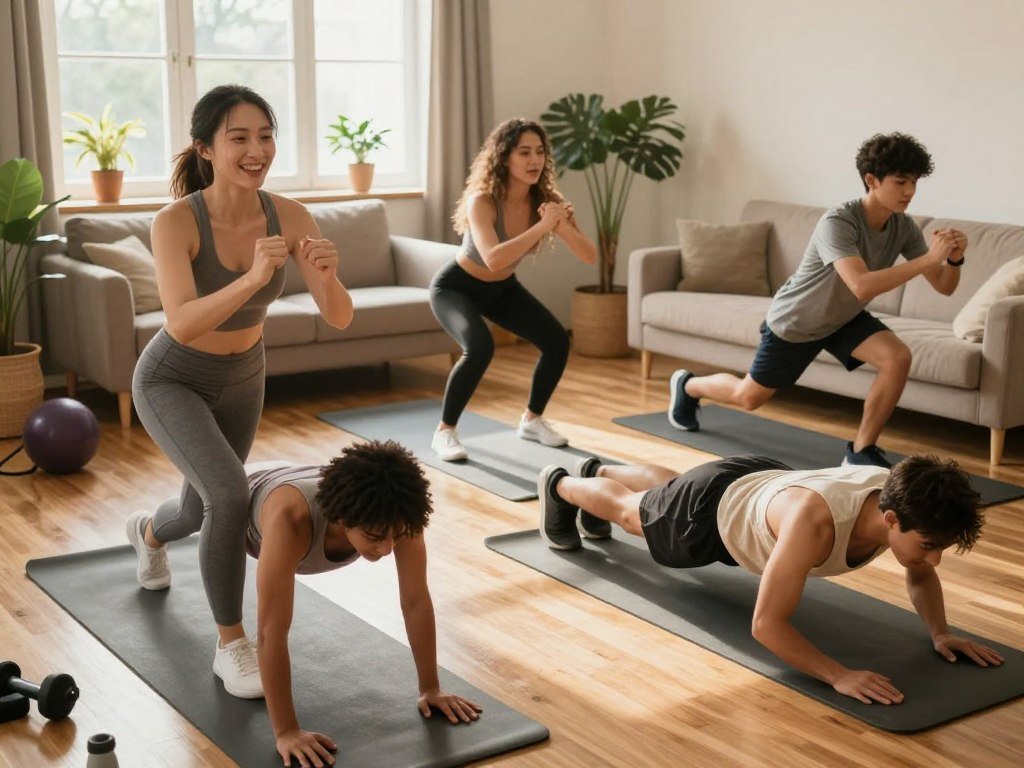
A useful home workout combines movements you can do consistently with a level of effort you can recover from. If your schedule is busy, even setting aside a few minutes can make a home routine easier to start. The best exercises for weight loss at home include cardio and bodyweight strength work, so you can build fitness without special equipment.
Exercise supports weight management, but it does not promise fast results or fat loss from one body area. Progress comes from a routine you can repeat and adjust as your fitness changes. A plan that fits your week is more useful than one that leaves you too tired to return.
Use the ten choices below to create a workout that fits your space and starting point. You can walk indoors, march in place, or add strength moves such as squats and push-ups. Keep the pace steady enough to stay in control. Choose a starting level that lets you finish the session with steady form.
Key Takeaways
- Pick home exercises that fit your current fitness and available space.
- Mix aerobic movement with bodyweight strength work.
- Start with a pace and range of motion you can control.
- Adjust a move when your form starts to slip.
- Build a routine you can repeat across the week.
How Does Exercise Support Weight Loss?
Exercise can support weight loss by increasing activity, but it works more reliably as part of a sustainable calorie deficit. A calorie deficit means taking in less energy than your body uses over time. Eating habits and movement both affect that balance.
Aerobic exercise, such as walking or dancing, uses energy while you move. Strength exercise challenges your muscles and helps develop and maintain muscle. Combining changes to eating habits with physical activity tends to work better for weight loss than either approach alone.
Exercise supports weight management, but it cannot replace eating habits that sustain a calorie deficit over time.
Activity energy is often described with METs, or metabolic equivalents. One MET equals 1 kilocalorie per kilogram per hour, roughly the energy cost of sitting quietly. It also equals an oxygen uptake of 3.5 milliliters per kilogram per minute.
The 2024 Adult Compendium of Physical Activities, published in January 2024, updates estimates of the energy costs of human activities. You can explore the 2024 Compendium of Physical Activities to see how activities are classified. Those values describe activity levels, not a personal calorie total.
Two people can use different amounts of energy doing the same exercise. Body size, pace, movement skill, and effort all affect the result. Exercise also supports fitness beyond weight change, including endurance and the ability to do daily tasks.
Treat any activity-energy estimate as an approximation, since body size and effort change the energy cost.
Best Exercises for Weight Loss at Home: 10 Easy Workouts
For most beginners, brisk indoor walking is the easiest of these ten moves to start with, while bodyweight strength movements add variety. Choose a pace you can control, then add moves that suit your fitness, space, and available time. A bodyweight circuit can take about 15-20 minutes.
Start with two sets of 10-15 repetitions per strength move, resting 30 seconds to one minute between moves. The fastest weight-loss exercise is not the same for everyone. The right workout is the one you can do safely and repeat.
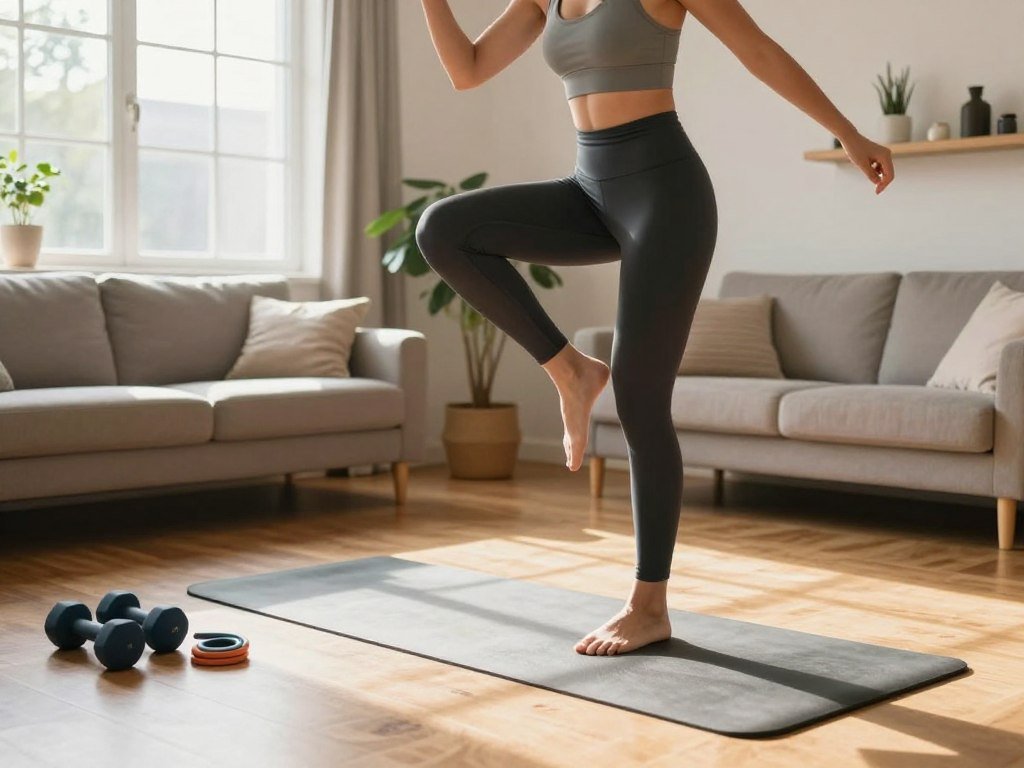
Brisk Walking and Stair Climbing
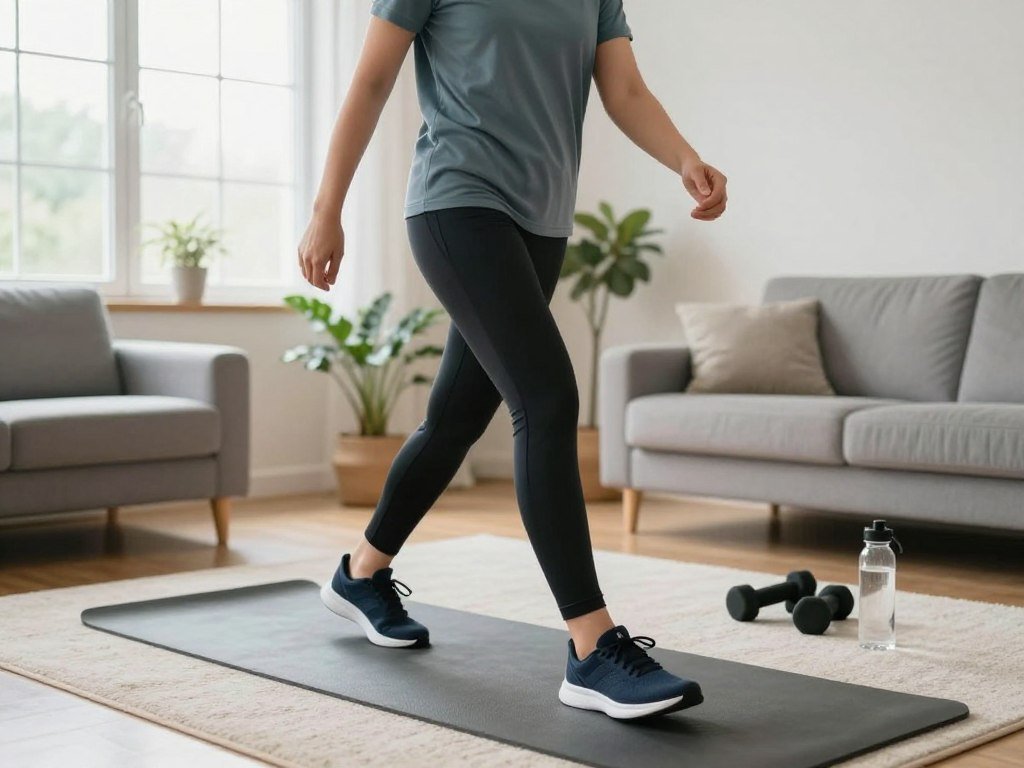
Walk around a clear room or hallway, lifting your feet and swinging your arms naturally. To raise the effort, use a flight of stairs if one is safe and available. Step up and down at a pace that lets you keep your balance.
Keep your shoulders relaxed and look ahead rather than down at your feet. Begin with a few minutes, then add time as the movement feels easier. Walking is a simple first exercise for men and women alike, since you can adjust the pace to your own ability.
Marching in Place and High Knees
Stand tall with your feet about hip-width apart and march without traveling. Lift each knee only as high as you can while keeping your balance. Let your arms swing in a natural rhythm.
For more effort, lift your knees higher or move your arms faster. For an easier version, keep the steps low and slow. If high knees pull on your hips or knees, return to a comfortable march.
Jump Rope or Shadow Rope
Hold a jump rope with both hands and turn it from your wrists, making small hops as it passes under your feet. Use a clear floor and begin with short rounds. A rope is optional: shadow rope means copying the arm motion and light steps without one.
Keep each jump low, land softly, and stay relaxed through your shoulders. If hopping feels uncomfortable, use shadow rope with a step-touch instead. That keeps the rhythm without requiring you to leave the ground.
Low-Impact Intervals
Alternate brisk step jacks with easy marching, using a timer if that helps. For a step jack, step one foot out as your arms rise, then return and switch sides. Move with control rather than trying to jump or rush.
You can change the work and recovery periods to suit your fitness. Start with a short period of faster movement, followed by an easy march. As your fitness improves, lengthen the brisk part without losing smooth steps.
Bodyweight Squats
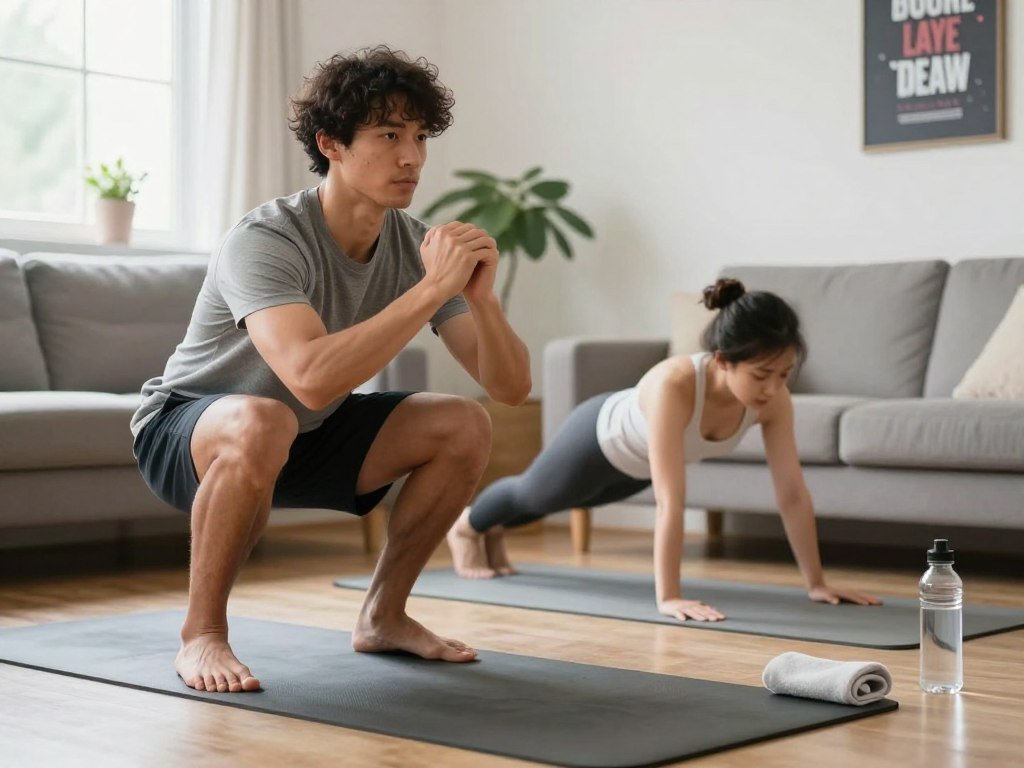
Stand with your feet about shoulder-width apart and your toes turned slightly outward. Bend your hips and knees as if reaching for a chair, then press through your feet to stand. Keep your chest lifted and knees tracking in line with your toes.
Squats train the legs and hips without weights. Use a chair behind you as a target, or squat only as far as you can while keeping control. Increase the depth or repetitions gradually, not both at once.
Reverse Lunges
Stand tall with your feet under your hips, then step one foot back and bend both knees. Press through the front foot to return to standing, and switch sides. Keep your front knee in line with your foot.
Take a smaller step or hold a sturdy counter for balance if needed. A shallow reverse lunge still lets you practice the pattern. Stop if you cannot keep your balance or your knees begin to collapse inward.
Push-Ups
Place your hands on the floor under your shoulders and extend your legs behind you. Bend your elbows to lower your chest, then push back to the starting position. Keep your body in a straight line from head to heels.
Push-ups work the upper body, including the arms and chest. Use a wall or sturdy counter to make the move easier. A higher hand position reduces the amount of body weight your arms need to press.
Glute Bridges
Lie on your back with your knees bent, feet flat on the floor, and arms at your sides. Tighten your hips and lift them until your body forms a line from shoulders to knees. Lower slowly without letting your back arch.
This strength move targets the glute muscles and the back of your legs. Keep the lift small if your lower back feels strained. When the basic version feels steady, pause briefly at the top of each repetition.
Mountain Climbers
Begin in a high plank with your hands under your shoulders and your legs extended. Bring one knee toward your chest, return it, and switch sides. Keep your back steady as your legs move.
Move slowly to focus on control, or pick up the pace if your form stays stable. To reduce the demand on your wrists and core, place your hands on a sturdy counter. That elevated position makes each knee drive less intense.
Forearm Planks
Start on your forearms and knees, with your elbows under your shoulders. Extend one leg at a time, then hold your body steady. Keep your back straight and your hips level instead of letting them sag or rise.
Begin with a brief hold, then rest before trying again. For an easier position, keep your knees down or elevate your forearms on a stable surface. A shorter hold with good form is more useful than a long hold with a dropped back.
These exercises can work for men looking for home workouts, too; movement choices depend on ability and preference, not gender. Stop a set when your form starts to change, rather than forcing extra repetitions.
How Can Beginners Modify Each Move?
A beginner can make a workout easier by changing the starting position or range of motion before adding speed. An easier variation still counts as practice, and it helps you build control before a move gets harder. Start with a version that keeps your back steady.
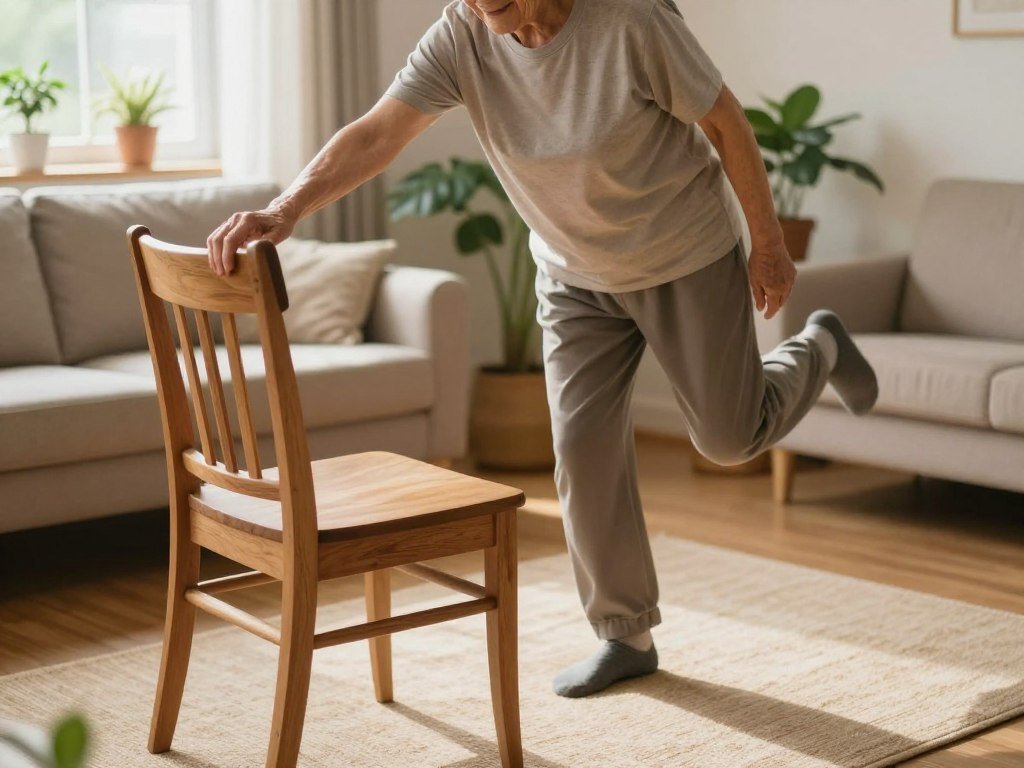
Choose a position that lets you move smoothly without losing balance or changing your form. A chair sit-to-stand is a squat variation that helps you practice bending and standing with support nearby. You can also reduce the depth of a squat until your legs feel ready for more range.
Make the Starting Position Easier
For push-ups, begin at a wall, then use a sturdy incline such as a counter. When that feels controlled, try kneeling push-ups before full push-ups on the floor. Move your hands to a stable surface that will not slide.
For planks, elevate your hands on a firm surface or shorten the hold. With either change, keep your shoulders over your hands and your body in a straight line. If your back sags, use a higher surface or end the hold sooner.
| Move | Easiest variation | Next variation | Form check |
|---|---|---|---|
| Squat | Chair sit-to-stand | Shallow bodyweight squat | Knees follow toes |
| Push-up | Wall push-up | Incline, kneeling, then full | Body stays straight |
| Plank | Hands elevated, short hold | Lower hands or extend hold | Back stays steady |
Progress Only When Form Stays Steady
Try a slightly deeper squat or a lower hand position only after the current version feels smooth. Move slowly enough to notice whether your knees, hips, and back stay in line. Small changes can make a familiar exercise harder without adding speed.
For more beginner workout ideas, the best workout routines for different fitness goals can help you think through training options that fit your schedule. Keep the movement simple while you learn it. Move to a harder variation only after you can repeat the current one with controlled form.
Which Workout Burns Energy Fastest at Home?
For someone ready for vigorous effort, short HIIT intervals are a time-efficient way to raise intensity at home. HIIT means high-intensity interval training, which alternates hard efforts with planned rests. Brisk walking or low-impact intervals suit many beginners better.
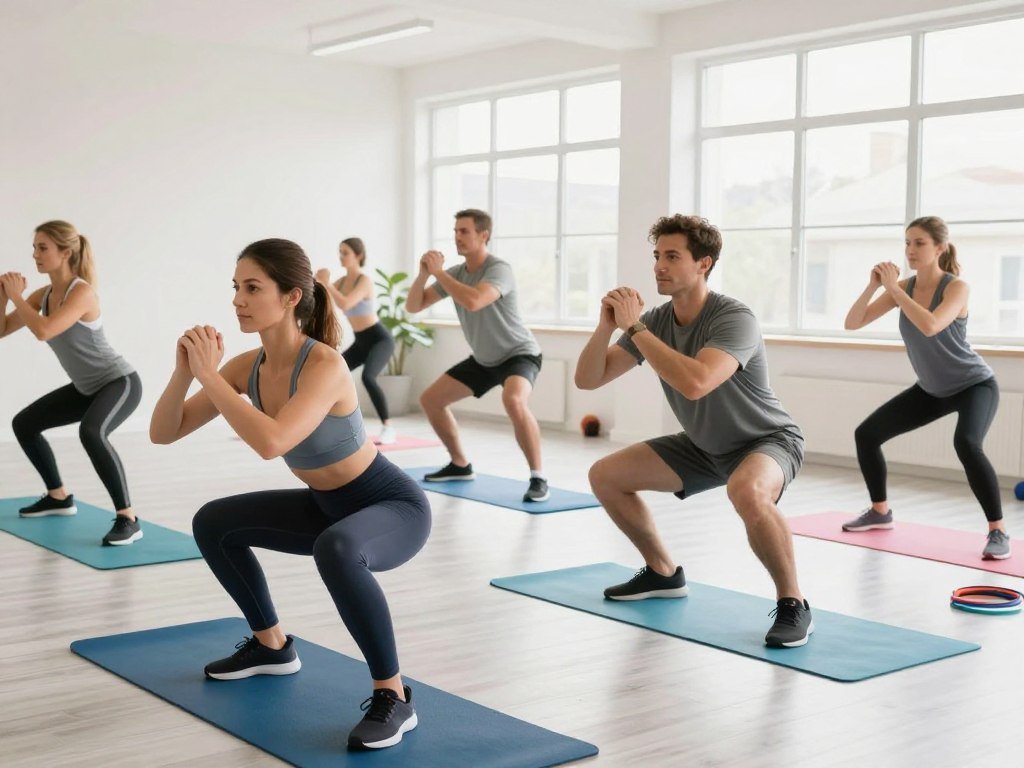
A faster workout is not automatically the best choice if you cannot recover from it or keep good form. Try this sample circuit only if vigorous movement feels suitable for you. It includes six moves, with options to reduce impact.
- Burpees, or step back to a plank and return without a jump.
- High knees, or march in place at a brisk pace.
- Reverse lunges, stepping back only as far as you can control.
- Jumping jacks, or step jacks without leaving the floor.
- Mountain climbers, or bring knees forward from an elevated surface.
- Jump rope, or use shadow rope with small steps.
Warm up for five minutes before the circuit with easy walking and gentle movement. Work for 30 seconds, then rest for 30 seconds after each move. Complete six movements for two or three rounds, based on your current fitness.
Finish with a five-minute cool-down of slower walking and gentle movement. The full session takes about 15-20 minutes, depending on your rounds and transitions. Keep the rests in place rather than racing through them.
High intensity can feel demanding even when the session is brief. If you are new to exercise, begin with fewer rounds or use the low-impact versions. Choose the low-impact substitute if jumping causes discomfort or makes you lose control of the movement.
How Much Activity Should You Aim for Each Week?
Aim for at least 150 minutes of moderate aerobic activity each week, plus muscle-strengthening activity on 2 days. Moderate effort makes you breathe faster while still letting you talk. The CDC guideline also allows vigorous activity as an alternative.
Adults can meet the aerobic guideline with 150 minutes of moderate activity or 75 minutes of vigorous activity each week. Strength work should challenge the main muscle groups on at least two days. You can use bodyweight moves or resistance equipment at home.
| Activity | Weekly target or guideline | Home examples |
|---|---|---|
| Moderate aerobic activity | At least 150 minutes | Brisk indoor walking, step jacks |
| Vigorous aerobic activity | 75 minutes as an alternative | Hard intervals, fast rope work |
| Strength activity | At least 2 days | Squats, push-ups, bridges |
| Everyday movement | Move more and sit less | Walking, cleaning, standing |
Brisk walking faster than 2.5 miles per hour is one example of moderate-intensity aerobic activity. You may notice a faster breath and warmer body, while still being able to speak in short sentences. That talk test can help you judge effort without a device.
The Physical Activity Guidelines for Americans give adults a range of 150-300 moderate minutes or 75-150 vigorous minutes each week. Start where you are, then build toward the guideline as your fitness allows. Count brisk walking toward the aerobic total when its pace brings you to moderate intensity.
How Can You Fit Workouts Into a Realistic Week?
A realistic weekly plan can spread activity across the days you actually have available. Choose a pattern you can repeat, then adjust the sessions around work, school, family, and rest. A 20-minute home workout adds physical activity, even when time is tight.
A schedule made only of 20-minute workouts may fall short of the weekly aerobic recommendation. Treat the examples below as templates to build toward your target, not as a promise that every short session meets it. Add walking or other movement when the plan needs more activity.
| Schedule | Workout days | Cardio choices | Strength choices | How it can flex |
|---|---|---|---|---|
| Short sessions | 5 days | 20-minute walks | 2 brief full-body sessions | Add walking time when available |
| Fewer, longer sessions | 3 days | Long indoor walks | Strength after two walks | Split one session across two days |
| Paired sessions | 3-4 days | Walk before strength | Bodyweight circuit after cardio | Shorten either part on busy days |
These samples need adjusting to match your fitness and schedule. If you have three open days, pair a walk with strength work on two of them. If your week changes often, shorter sessions may be easier to move around.
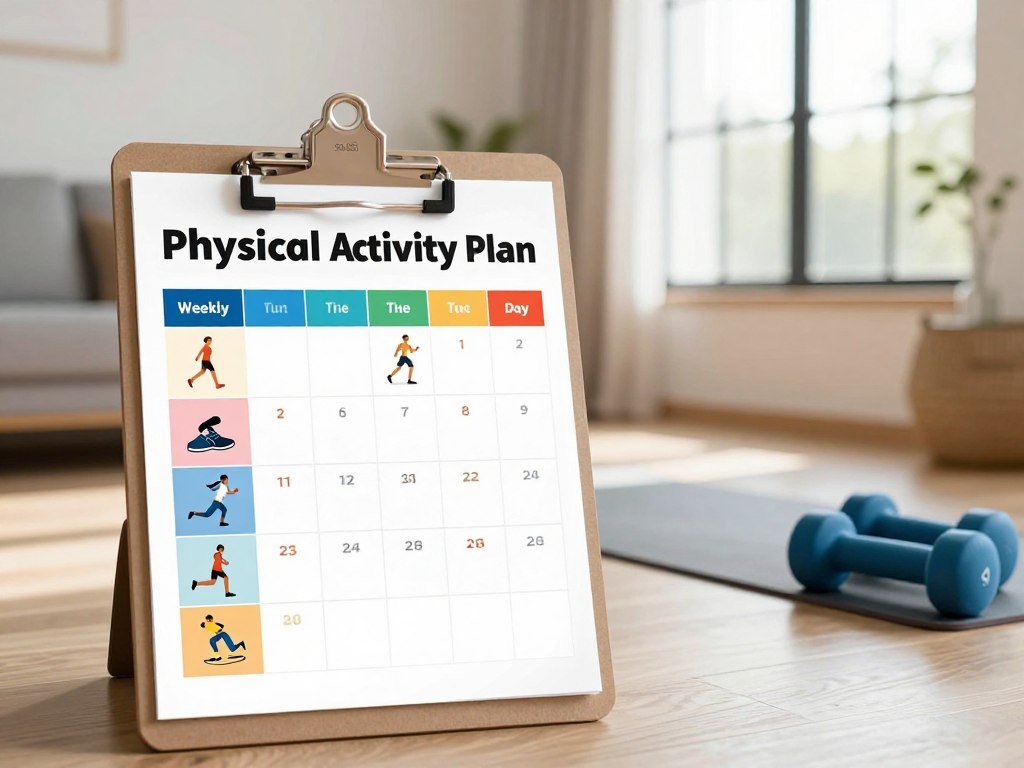
Keep a calendar or a simple note of completed sessions. Seeing a mark beside each workout can help you spot which days work best. The group exercises you can do at home can also add a shared session with a friend or family member.
Do not treat a missed day as a reason to abandon the week. Move the session to another open day, or do a shorter version if time is limited. Put the sessions on your calendar at times you can repeat from week to week.
How Should You Progress as You Get Fitter?
A good progression makes one part of the workout harder while the rest of your technique stays reliable. Change one feature at a time, such as the length of a walk, the number of controlled repetitions, or the resistance you use. This makes it easier to tell how your body responds.
Use the 0-10 effort scale to check how hard a session feels, and avoid making every workout an all-out effort. Zero means rest, while ten means your hardest effort. A steady workout should leave room to move well and recover before your next hard session.
Strength training can progress through more repetitions, a slower lowering phase, a harder exercise variation, or added resistance. Choose one change, then repeat that level long enough to learn it. A backpack with light items can add resistance, but only if you can keep your back and joints steady.
- Keep your form steady through the full set.
- Add one challenge, such as time, repetitions, or resistance.
- Notice how your body feels during and after the session.
- Repeat the same level before increasing it again.
Leave recovery time after hard exercise, especially when a session uses muscles that feel sore the next day. You can keep moving with an easy walk or gentle activity. A rest day is part of a plan, not a sign that you have lost progress.
If the added challenge leaves you unable to recover before the next session, return to the previous level.
Which Low-Impact Options Work for Different Needs?
For a low-impact full-body routine, combine walking or another comfortable aerobic option with controlled strength movements. Low impact does not mean low value; the pace and range can still challenge your fitness. Yoga can add balance, flexibility, and strength work.
No one needs a female-specific exercise list; the same movements can be adapted to your ability and preference. Indoor walking, steady strength training, and yoga all work at home with little or no equipment. If available, cycling and swimming offer lower-impact options outside the home.
Controlled strength work can support the upper body, legs, hips, and core without jumping. Use a pace that lets you guide each repetition rather than dropping into it. Resistance bands or light weights can add a new challenge when bodyweight moves become easier.
A 2023 systematic review selected 12 randomized clinical trials published from 2015 to 2022. It found that strength exercise can improve strength, physical activity, bone density, and hormonal and metabolic levels in menopausal women. Those findings describe possible health benefits, not a promise of weight loss.
Choose yoga for a slower session that connects movement with balance and breathing. You can also pair a short yoga flow with walking or simple strength work. Favor a movement you can repeat comfortably over one that aggravates a joint.
Can You Target Belly Fat With Specific Exercises?
Core exercises can strengthen the trunk, but they cannot selectively burn belly fat. Planks train muscles, including the abdominal muscles, but they do not control where the body loses fat. Overall fat loss happens across the body rather than only where you exercise.
Localized muscle training has not been shown to produce spot reduction. A 2022 systematic review and meta-analysis looked at 13 controlled studies with 1,158 male and female participants aged 14-71. Its pooled effect size was -0.03, with a 95% confidence interval from -0.10 to 0.05 and p = 0.508.
The result means training one area did not reliably reduce nearby fat in the studies. You can still use core work to build strength and control. A stronger trunk may help you hold positions during squats, push-ups, and daily tasks.
Full-body exercise can support general fitness, while a calorie deficit supports overall weight loss. Neither a plank nor another single movement guarantees a smaller waist. The same principle applies to people of every sex and fitness level.
The review found no meaningful spot-reduction effect across its pooled results. Keep planks or other core work for strength, not as a promise of a smaller waist.
How Should Food and Exercise Work Together?
Pairing regular activity with an eating pattern that supports a manageable calorie deficit is a more useful goal than trying to exercise away every calorie. Food and movement work together, but neither needs to be extreme. A steady plan is easier to maintain than a strict short-term push.
A general approach is to take in about 500 fewer calories than you burn each day, which may lead to about one pound of loss per week. That is not an individual prescription, since needs differ. The NIDDK suggests that people who are overweight aim to lose 5-10 percent of their current weight within six months.
Exercise at home for weight loss in 7 days can help you begin a healthier routine, but one week does not guarantee a certain amount of fat loss. Daily weight can shift for reasons beyond fat change. Focus on habits you can keep rather than trying to force a fast result.
- Build balanced meals with foods you enjoy and can keep buying.
- Choose a calorie deficit that feels manageable, not punishing.
- Keep regular activity in your week, including walks and strength work.
- Track progress over time instead of judging one day.
A food and activity log may help you notice patterns, but it does not need to become a strict rulebook. Record meals, workouts, or energy levels in a way that feels useful. If tracking causes stress, use a simpler measure, such as completed sessions.
Ask a qualified health professional for help setting an appropriate calorie target if you have a medical condition or a history of disordered eating.
How Can You Exercise More Safely at Home?
Clear a nonslip space and choose a variation you can control before you begin. A steady setup matters when you exercise on a floor, near furniture, or in a small room. Check that your shoes and any chair or counter will stay in place.
People with a heart condition, high blood pressure, or type 2 diabetes should check with a doctor before starting exercise or adding weights. Warm up before the main workout, then cool down afterward. Five minutes for each is one practical example.
- Clear a stable floor area and move loose rugs or objects.
- Wear footwear suited to the movement and surface.
- Warm up before exercise and cool down afterward.
- Stop if you have chest pain or feel unwell.
During a hip hinge, keep your back straight and send your hips back. In squats and lunges, let your knees follow the direction of your feet. For incline push-ups, place your hands on a stable surface that cannot tip or slide.
Choose a well-lit area, especially when stepping backward or using stairs. Keep water nearby if you need it, and avoid exercising on a surface that becomes slippery. If a move causes sharp pain, stop that movement instead of pushing through it.
Stop exercising and contact a doctor if chest pain occurs.
What Helps You Stay Consistent When Progress Slows?
Consistency is easier when activity fits into small openings in an ordinary day. Short bouts still count: moderate activity can be split into 10-minute sessions. A walk, standing while you work, cleaning, and cooking can all add movement to your day.
There is no single best time of day for everyone to exercise. A morning or evening session can work well if it fits your schedule and feels manageable. Choose a time that does not turn the workout into another source of stress.
Track a behavior you can repeat, such as finished sessions or walking time. You might also note your energy, sleep, or how a movement feels. These details can show progress even when your weight changes slowly.
When motivation dips, make the session smaller rather than skipping it by default. Ten minutes of walking or a short set of familiar exercises can keep the routine alive. If you enjoy company, try a shared session or take turns choosing the moves.
When progress slows, keep the habit small enough to repeat. A workable routine gives you more chances to stay active.
Weight changes can pause even when you keep moving, so review your routine before making a drastic change. Check whether your schedule still leaves room for activity and recovery. If progress stalls, first check whether the routine is still workable enough to keep doing.
Conclusion
A dependable home routine is built from manageable sessions repeated over time. A mix of aerobic movement and strength work can support weight management while helping you build fitness. The best starting point is a session you can do safely and fit into your real week.
Choose two or three familiar movements, such as indoor walking, squats, or wall push-ups. Set aside a time, clear a safe space, and keep the first session at a pace you can control. Pick your first session, set a time for it, and begin at a level you can control.
FAQ
What exercise makes you lose weight the fastest at home?
How can I drop 20 pounds quickly?
What are 7 exercises I can do every day to lose weight?
What exercise burns the most belly fat for females?
How can I lose 30 pounds in 100 days?
What’s the hardest age to lose weight?
Can I lose 20 lbs in 100 days?