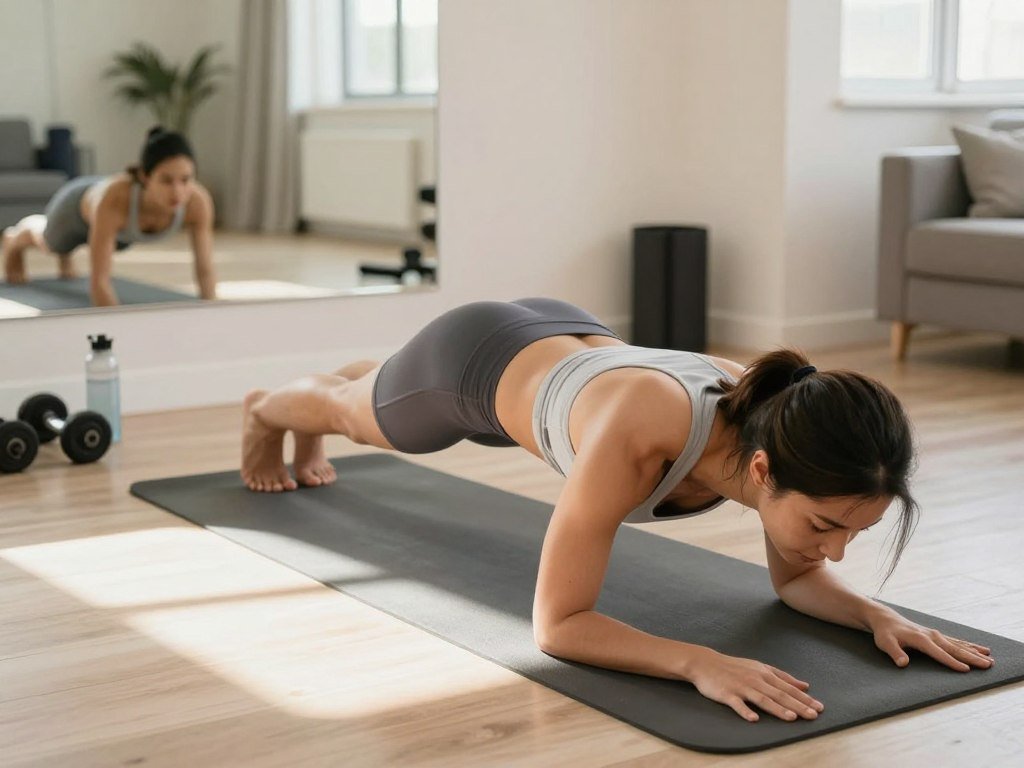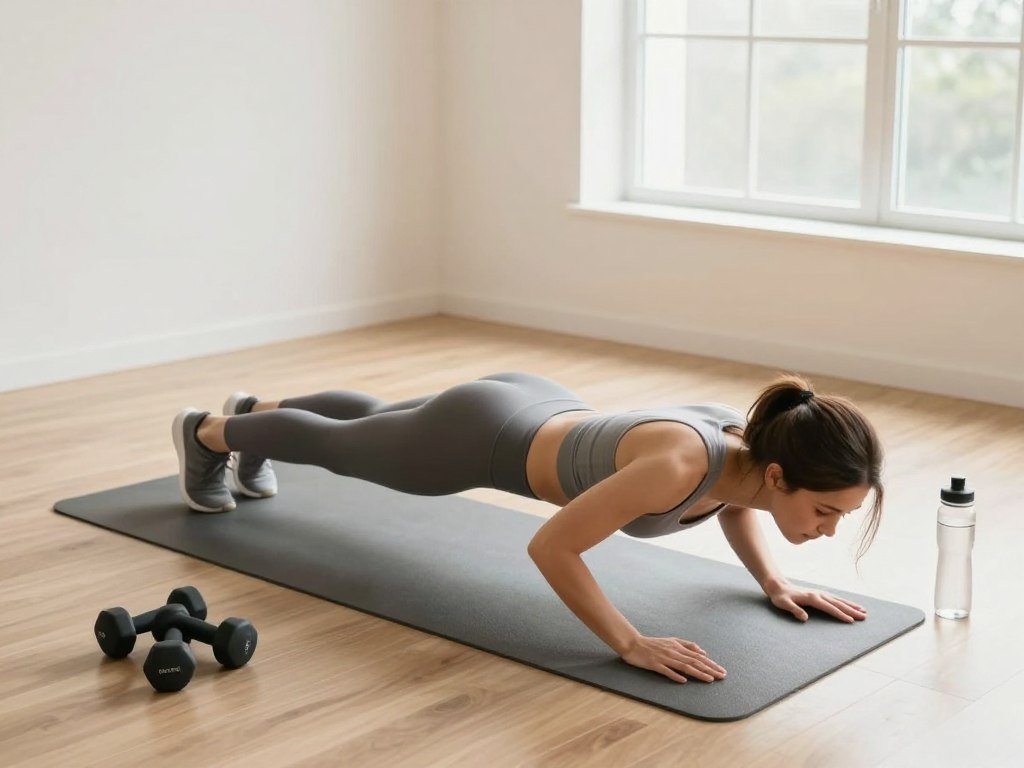
You can start building strength at home with a small space, a few basic movements, and a plan you can repeat. A full-body workout can fit around work, school, family, and the time you have today. You do not need to feel fit before you begin.
Start with bodyweight moves, then add household items, resistance bands, or dumbbells as you get stronger. Progressive resistance training means gradually increasing the challenge to your muscles through resistance, such as by adding reps or using more weight. The goal is a repeatable routine, not a complicated plan that is hard to follow.
Your first steps can be modest. Learn a few movements, choose a version you can control, and build a routine around your fitness goals and schedule. This approach gives you room to adjust as your strength and confidence grow.
Key Takeaways
- Begin with movements you can do with control.
- Use bodyweight first, then add a safe source of resistance.
- Choose exercises that cover several kinds of movement.
- Record your reps and resistance to track your work.
- Make your first routine simple enough to repeat.
Choose a version of the routine that feels manageable enough to do again next week.
Why Choose a Full-Body Workout at Home?
A full-body workout is a useful home option when you want to train several major areas without splitting every session by body part. One session can work several muscle groups, which suits people with limited time or little room for a complex schedule.
In 2026, an American College of Sports Medicine position stand drew on 137 systematic reviews and more than 30,000 participants. It found that resistance training improved strength, muscle size, power, endurance, contraction speed, gait speed, balance, and other measures of physical function compared with no exercise. Strength and muscle growth are only part of the possible benefit.
The 2026 review also found gains in balance and physical function. Those findings matter outside a workout, since daily tasks rely on strength and steady movement. You can train at home without turning each day into a long session.
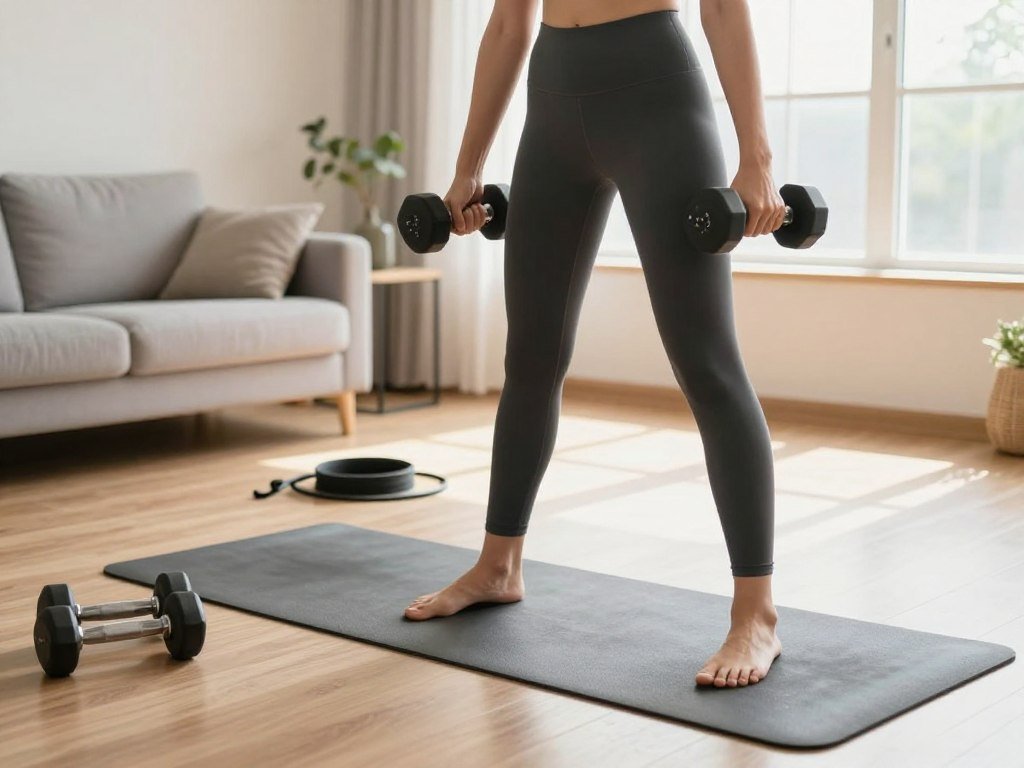
The ACSM resistance training position stand covers these outcomes across adults. The best exercises for full body to build muscle are compound movements that use more than one area, paired with consistent training and a suitable increase in challenge.
Choose movements you can repeat with control, then build the routine as your strength grows.
There is no need to wait for perfect equipment or the perfect workout. A few well-chosen movements can help you start, while more experienced exercisers can adjust resistance and effort. Treat regular practice as the goal, not a search for a supposedly perfect exercise.
Which Movement Patterns Train the Whole Body?
A balanced routine is easier to plan when you choose movements by pattern instead of collecting unrelated exercises. Six patterns cover common ways your body moves during strength training, from standing up to carrying a load.
Use patterns to help spread work across the body. The six strength-training movement patterns are squat, hinge, push, pull, lunge, and carry. Each involves different muscles and actions, so a short combination can train more areas than one repeated move.
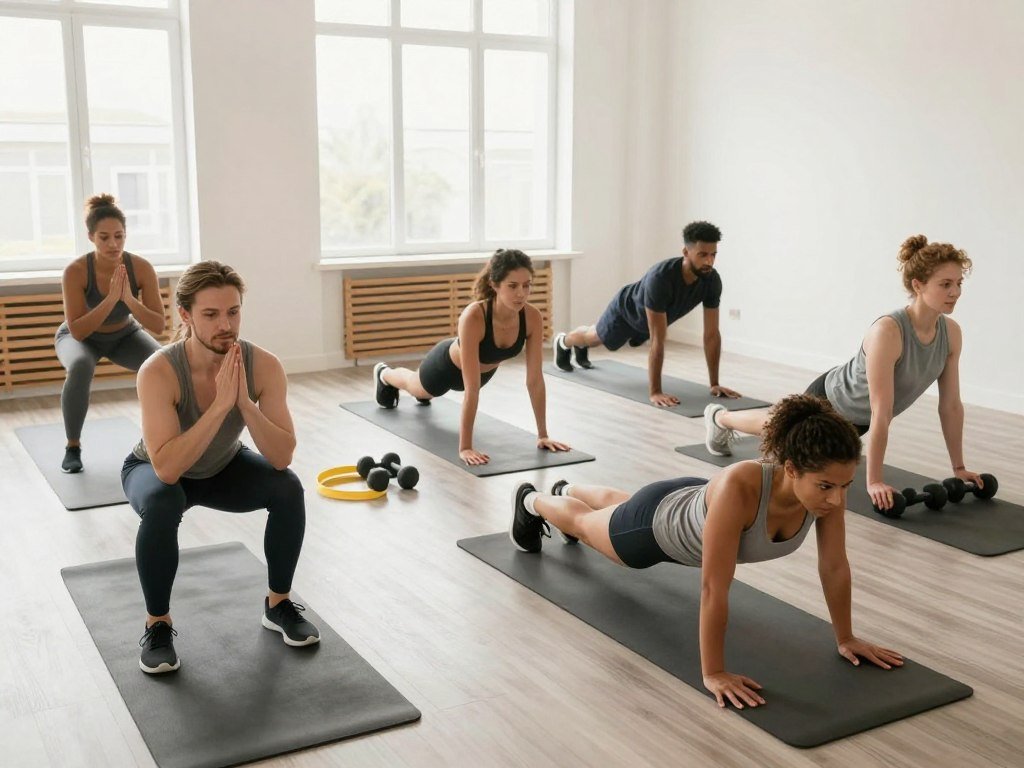
Six patterns to cover across a routine
A squat bends the hips and knees and works the lower body. A hinge sends the hips back and trains the back of the body. A push moves resistance away from you, while a pull brings resistance toward you.
A lunge challenges one side at a time and asks you to control your balance. A carry asks you to hold a load while walking or standing. These patterns can help you spot gaps when choosing exercises.
| Pattern | Example exercise | Main action |
|---|---|---|
| Squat | Goblet squat | Lower-body bend |
| Hinge | Romanian deadlift | Hip bend |
| Push | Overhead press | Press away |
| Pull | Single-arm row | Pull toward the body |
| Lunge | Reverse lunge | Single-leg bend |
Other choices include a farmer carry, a simple way to practice the sixth pattern. Patterns are broad categories, not a list of moves you must complete every time you exercise.
Why one exercise is not enough
A single exercise for the whole body cannot cover all six patterns as evenly as a short combination can. A squat-to-press may involve several areas, but it does not replace a separate pull or carry.
One move can still be useful when you are short on time or learning to exercise. Experienced exercisers may combine patterns, while beginners may find separate movements easier to control. Use the patterns as a checklist, not as a requirement to fit every option into one session.
What Equipment Do You Need for Home Training?
Start with the equipment you can use safely and consistently, even if that means no equipment at all. Bodyweight exercises such as squats and push-ups can make a useful start without a gym.
Safe movement matters more than owning special gear. A stable floor and enough room to move are useful for the best full-body exercises at home. Bodyweight exercises, elastic bands, and home-based routines can improve strength, muscle growth, and physical function.
| Setup | Examples | Useful for |
|---|---|---|
| Bodyweight | Squats, push-ups | No equipment |
| Resistance band | Band row, band press | Low-cost portable resistance |
| Dumbbells | Goblet squat, row | Load that can be adjusted |
| Household load | Secure backpack | Added weight with a firm grip |
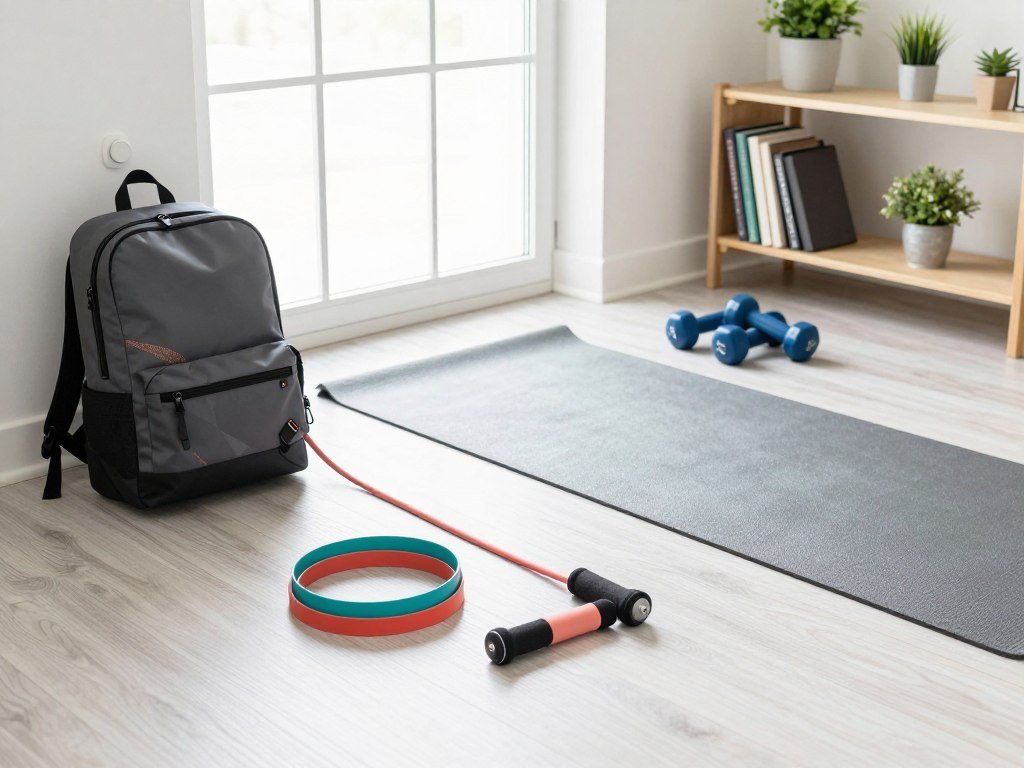
Bodyweight squats, lunges, planks, and push-ups are common strength exercises that need no equipment. A band adds resistance without taking much storage space. Dumbbells let you adjust the load, while a backpack can hold a small household load.
- Check that the floor is stable and level.
- Clear enough space for each movement.
- Choose equipment with a secure grip.
- Use a load you can control while lifting and lowering.
Make sure you can move through a comfortable range without hitting furniture or losing balance. Skip any household object that shifts, leaks, or is difficult to hold.
What Does a Beginner Full-Body Workout Look Like?
A first home session can be as simple as one squat, one push, and one pull exercise. That three-move start gives you a clear way to work the legs, chest, shoulders, and back without a long exercise list.
Start with 2-3 sets per exercise and keep the effort comfortable enough to maintain form. UC Davis describes a starting combination of one leg exercise, one upper-body push, and one upper-body pull. The exact reps can depend on your chosen movement and ability.
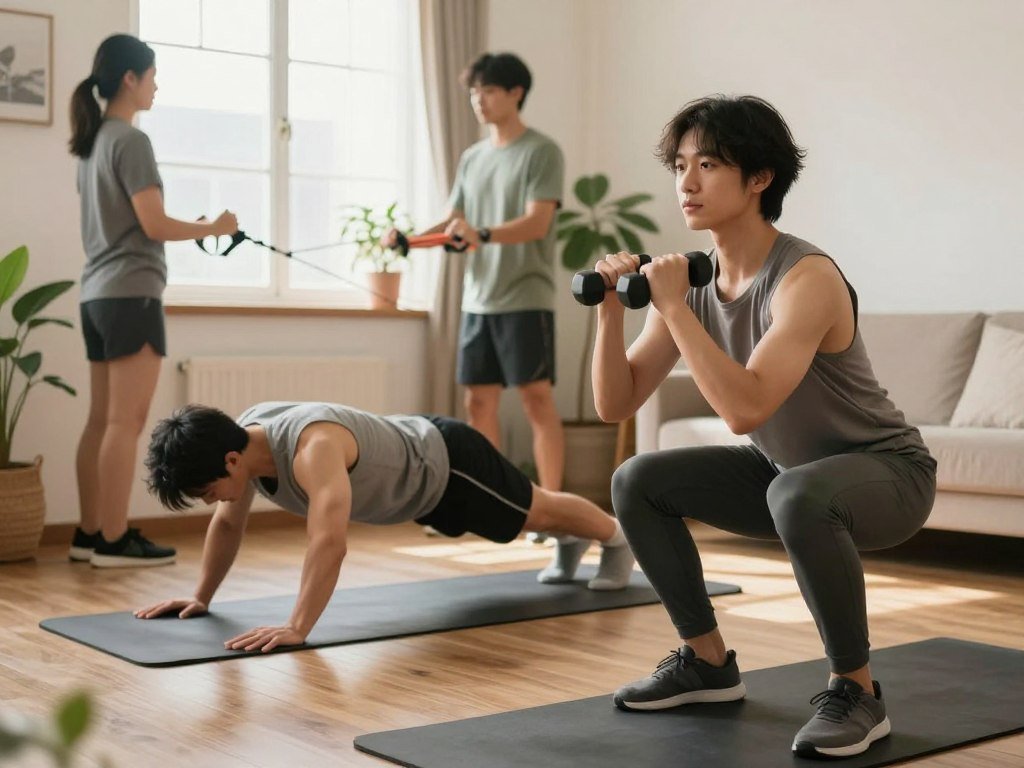
A simple first session
| Exercise | Home version | Starting dose | Easier adjustment |
|---|---|---|---|
| Squat | Bodyweight squat | 2-3 sets | Use a chair for support |
| Push | Wall or knee-supported push-up | 2-3 sets | Stand closer to the wall |
| Pull | Band or backpack row | 2-3 sets | Use less resistance |
Rest between sets until you feel ready to move again. You do not need to rush from one exercise to the next. If you prefer a combined movement, a bodyweight squat-to-overhead raise can use 1-3 sets of 8-12 reps.
How to scale each movement
Beginners can shorten the range of motion or use support when a movement feels hard to manage. A wall can make a push-up easier, and a chair can guide a squat. These changes can help you practice without forcing painful positions.
Experienced exercisers can use more resistance or a harder version once the basic movement feels steady. The best exercises for full body for beginners are the ones you can repeat with control, rather than the hardest options you can find. Finish the session feeling that you could repeat the movements with control.
How Should You Warm Up and Practice Good Form?
Spend a few minutes raising your breathing and rehearsing the movements before adding resistance. Five to ten minutes is a useful warm-up period before a strength-training workout.
Form means keeping a controlled position and range of motion you can repeat. It does not mean forcing extra depth or speed. A comfortable range helps you practice without turning each repetition into a test.
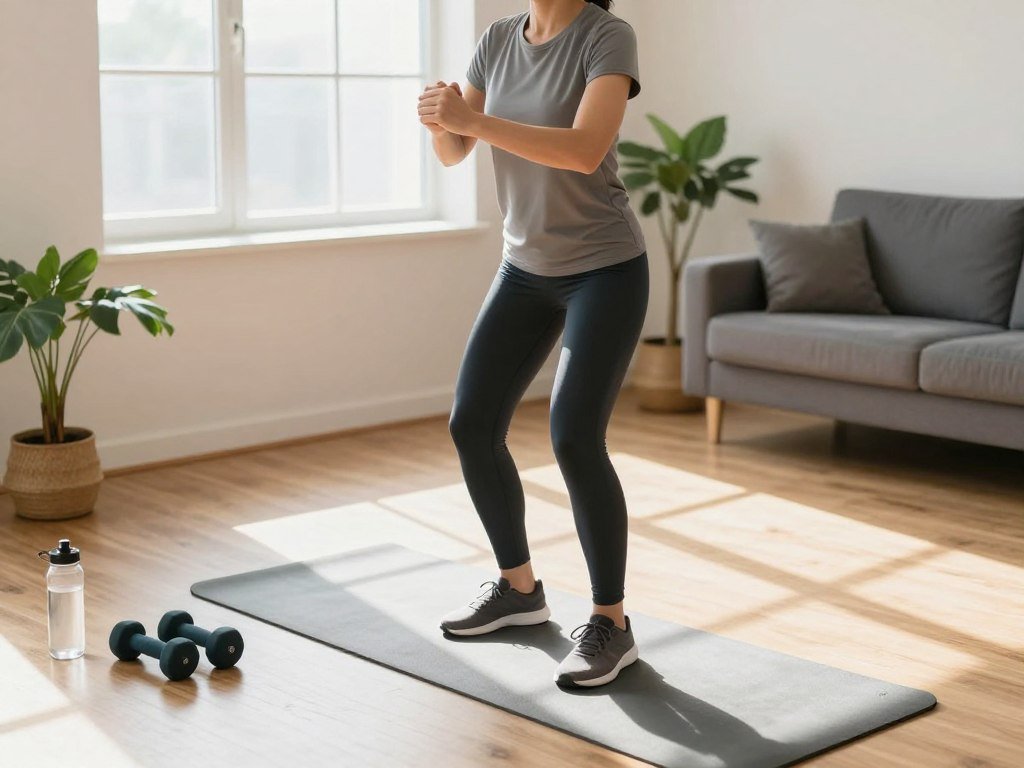
Prepare with easy movement
A warm-up can begin with easy walking, marching in place, and gentle practice repetitions before you add resistance. Use these four actions to get ready:
- Walk or march at an easy pace.
- Move your joints through a comfortable range.
- Practice a few reps of your first exercise.
- Check the floor and your equipment.
Keep each repetition controlled
During a repetition, keep your position steady as you move. The lowering part of a lift is the eccentric phase; the lifting part is the concentric phase. Both should suit your skill and the load you use.
Do not rush through the eccentric phase just to finish a set. You should be able to keep the same basic form from the first rep to the last. Stop if you feel sharp pain, dizziness, or a sudden loss of control.
Those signs are reasons to stop rather than push through. If you feel uncertain, reduce the range or resistance and practice again when ready. End a set when control starts to slip, even if you planned more reps.
How Do You Do a Squat Pattern at Home?
A bodyweight squat is the simplest place to practice bending both knees and hips together. Start with your own body weight so you can learn how the movement feels before adding a load.
Choose a depth that matches your comfortable range of motion and balance. Stand with your feet in a comfortable stance, then sit your hips back and down while keeping your feet planted.
Keep your balance over your feet as you lower. To stand, press through the whole foot and let your hips and knees straighten together. Your stance does not need to match someone else’s exactly.
A box squat gives you a depth target, while a goblet squat adds a weight held close to your chest. Both are options after you have tried the bodyweight version. A box can help you judge depth without guessing.
Front squats and split squats are other squat-pattern choices. Your legs and lower body can work differently as your stance and depth change, so use a version that lets you stay steady. A stable chair can also serve as a guide.
A biomechanical review of squats explains how stance and depth can affect demands on the hips and knees. Use a box or chair as a depth guide only if it is stable and does not slide.
Which Hinge Exercises Train the Back of Your Body?
A hip hinge starts by moving the hips back, not by reaching the weight toward the floor with a rounded back. The hips lead this action, which works the hamstrings, glutes, and other muscles on the back of your body.
Keep your spine comfortably neutral and the weight close to you. In a hinge, the hips travel back more than they do in a squat, while the knees bend only modestly.
Try an unloaded hip hinge first. Stand tall, soften your knees, and send your hips back while your torso tips forward. Stop before you lose your comfortable back position, then stand by bringing your hips forward.
A glute bridge or hip thrust is another way to train hip extension at home. A light Romanian deadlift adds a weight to the hinge once you can control the bodyweight version. Keep the load close throughout the movement.
Kettlebell deadlifts, good mornings, and Romanian deadlifts are other hinge exercises. Kettlebell swings use a fast, ballistic motion, so they are not the first hinge variation to learn. Move to them only after you understand the slower hip action.
Choose a load that lets you move smoothly instead of pulling your back into position. Practice the unloaded hinge before adding a weight you cannot control.
Which Pushing Exercises Work the Chest and Shoulders?
A wall push-up lets you practice the same pushing action with less body weight than a floor push-up. Use the wall as an easier starting point if the floor version feels too hard.
Keep your elbows at a comfortable angle instead of flaring them straight out. A horizontal push, such as a push-up or dumbbell bench press, moves resistance forward. A vertical push, such as an overhead press, moves it upward.
Push-ups and presses train the chest, shoulders, and triceps, though each version places different demands on the body. A standard push-up can start at 1-2 sets of 8-12 reps, then build to 3 sets as your strength improves.
A knee-supported push-up is less challenging than a standard floor push-up. A wall push-up is an easier adjustment still. You can change the angle by standing closer to or farther from the wall.
For a floor push-up, keep your hands planted and your trunk steady as you lower and press. For a dumbbell bench press, use a stable bench and a load you can control. An overhead press is another option when you can lift without leaning back to finish the rep.
Chest presses and overhead presses can suit different goals and available gear. Keep the movement smooth instead of rushing the lowering part. Choose the version that lets you lower and press without losing a steady trunk position.
Which Pulling Exercises Build Your Back?
A row is a practical first pull because the resistance comes toward you rather than requiring you to lift your whole body. Start with a row to train muscles across your back with simple home equipment.
Pull the resistance toward your torso while keeping your shoulders controlled. You can use one arm at a time or pull with both arms, depending on your setup.
For a one-arm backpack row, hold a secure backpack in one hand and support yourself with the other hand on a stable surface. Pull the bag toward your torso, then lower it with control. Start with a light load.
A resistance-band row offers another way to work the back. Sit or stand tall and pull the band toward you while your shoulders stay relaxed. Reduce the resistance if the last reps make your position hard to hold.
A suspension row can work if the equipment is securely installed. Rows, lat pulldowns, pull-ups, face pulls, and band pull-aparts are other pulling exercises, but a pull-up bar is not necessary to start.
Experienced exercisers can increase resistance when they can complete their reps without swinging. Check the anchor point before using a band or suspension trainer.
How Can Lunges Train Each Leg?
A reverse lunge gives you a single-leg challenge while letting you reset your stance after each repetition. Step back, lower within a comfortable range, then return to standing.
Use a step length that lets you stay steady. The movement trains each leg in turn and asks you to control your balance as you lower and rise.
A stationary split squat keeps both feet in place while you bend and straighten your legs. A low step-up is another single-leg option, especially when you have a stable step that feels manageable.
You can hold a wall or chair lightly for balance. That support lets you focus on the movement instead of worrying about a wobble. Choose a range that feels comfortable rather than dropping lower than you can control.
Reverse lunges are often easier to control than walking lunges because your feet do not have to keep traveling forward. Walking lunges can ask more of your balance and coordination as you move across the floor.
Split squats, step-ups, and reverse lunges are all useful ways to train the legs one side at a time. Keep the step short enough to stay balanced and pain-free.
How Do Carries and Core Work Fit at Home?
A carry turns a safely held weight into a walking or standing challenge for grip and trunk control. Keep your body tall as you hold the load, and choose a path that gives you room to move.
Set the load down before your posture or grip starts to fail. A farmer carry uses a weight in each hand, while a suitcase carry holds a load on one side.
Walk along a clear path for a farmer carry or suitcase carry. If your space is limited, march in place while keeping your steps small and steady. A front-rack carry holds the load near your shoulders; an overhead carry holds it above you.
Carry work can fit beside your other exercises without taking over the workout. It challenges the muscles that help you hold your position while your hands grip the load.
A plank or dead bug can add optional core work. These exercises train trunk control, but they do not replace squat, hinge, push, pull, or lunge movements.
Use a backpack or household load only when it is secure enough to carry without contents shifting. Stop before your grip or position gives way, then put the load down safely.
How Can Household Weights and Bands Add Resistance?
A resistance source is useful only if you can grip it, move it, and set it down under control. Start small when using household items, so you can focus on the movement rather than the load.
Use only a weight that stays secure from the first rep to the last. Bodyweight exercises, elastic bands, and home-based routines can all support strength, muscle growth, and physical function.
| Resistance option | Examples | Best use |
|---|---|---|
| Bodyweight | Squat or push-up | Starting point |
| Band | Row or press | Adjustable pull or press |
| Household load | Shopping bag, cans, or water | Rows or carries |
Make a household load easier to control
Shopping bags filled with objects, cans, and water can serve as home resistance. Check that a bag closes securely, its contents do not shift, and its handles feel comfortable in your hands.
Use small loads that are easy to lift and put down. A bag that is too full can pull unevenly or strain its handles. Test the grip before you begin a full set.
Add resistance with a band
Adjust band tension by changing your distance from the anchor or moving your hands along the band. Keep the band under control as you return to the start, rather than letting it snap back.
Try a light band first for a row or press. You can adjust the tension between sets without changing the movement itself. Retire any improvised weight that leaks, tears, or changes shape during a repetition.
What Are the Best Exercises for Full Body Workouts at Home?
A five-move session can cover the main patterns without turning a home workout into a long exercise list. Use a dumbbell session with a farmer carry, Romanian deadlift, single-arm row, dumbbell overhead press, and goblet squat.
General programming guidance uses 2-4 sets per exercise and 8-12 reps for strength-focused movements. Adjust those ranges to your goals, experience, and recovery. A full-body workout at the gym for women can use the same movement patterns as one for men, with load and variations chosen for the individual.
A five-move dumbbell session
Start with a light load that lets you control each rep. A farmer carry uses distance or time rather than reps, so walk a clear path and stop before your grip slips.
For the other four strength-focused movements, use the general rep range as a guide. A single-arm row can be done one side at a time. Set up the dumbbell overhead press only if you can hold a steady position.
People of any sex can choose these movements, with the load and exercise version matched to their current ability. A beginner might use a lighter dumbbell, while an experienced exerciser may choose a heavier one.
Adapting the session for a gym
| Pattern | Home or dumbbell move | Gym alternative |
|---|---|---|
| Squat | Goblet squat | Front squat |
| Hinge | Romanian deadlift | Trap-bar deadlift |
| Push | Overhead press | Bench press |
| Pull | Single-arm row | Seated cable row |
| Carry | Farmer carry | Front-rack carry |
A gym version can use a cable machine, bar, or other equipment while keeping the same movement pattern. Pick substitutions that preserve the movement pattern rather than chasing an exact equipment match.
How Often Should You Train and Progress?
For most healthy adults, two sessions a week is a strong starting target for progressive resistance training. Regular practice matters more than a complex plan or a supposedly perfect routine.
Train all major muscle groups at least twice a week as a general goal. An ACSM position stand found that at least 10 sets per muscle group per week enhanced muscle growth, but that higher training volume is not a beginner minimum.
Set a repeatable weekly schedule
The right plan should fit the time you have and leave room for recovery. A workout routine for your goals can be simple, with repeatable sessions on days you can keep.
Some goal-specific findings address heavier strength work and faster power work. Strength benefits were found with loads of at least 80% of one-repetition maximum, using 2-3 sets and a complete range of motion.
Power benefits were found with moderate loads of 30%-70% of one-repetition maximum and a fast concentric phase. These are goal-specific prescriptions, not rules that every beginner needs to follow.
Record reps and resistance
Training to momentary muscle fatigue did not consistently affect outcomes. Equipment type, exercise complexity, set structure, time under tension, and periodization also did not consistently affect results.
A simple record can show what you did last time and help set a clear target. Use these steps:
- Record the weight used and the reps completed.
- Add a rep when your control stays steady.
- Try a slightly heavier load when appropriate.
Apps such as Hevy and Strong can record sets, reps, weights, and workout history. Keep a simple record so the next workout builds on what you actually completed.
How Do You Adjust the Plan to Your Goal and Recovery?
Keep the same basic movement patterns and adjust the exercise or load to your experience and recovery. Your own response helps you decide when a session needs to be easier.
If soreness changes how you move, choose an easier session rather than forcing the planned load. Mild soreness may allow a lighter workout or different movements, while sharp pain or illness is a reason to stop and seek appropriate medical advice.
The best exercises for full body for men use the same core movement patterns as routines for other adults. Exercise choices and load should match the individual, not their sex.
No muscle is hardest or easiest for everyone to grow. Genetics, training history, exercise selection, and consistency can all affect results, so your progress may differ from another person’s.
A common three-day weekly pattern can use full-body sessions on separate days or spread sessions across the week. Your schedule depends on recovery and the time you have available.
- Can you control each movement throughout the set?
- Does soreness change your technique?
- Does the routine fit your week?
Change the session when soreness affects your movement, and stop for sharp pain or illness.
Review these checks before increasing the challenge. If soreness changes how you move, choose an easier session rather than forcing the planned load.
Conclusion
A simple, repeatable routine is a solid way to begin building strength at home. Start with a manageable version that covers several movement patterns and lets you keep control from one rep to the next.
Your next step is to choose a squat, a push, and a pull, record the reps, and schedule a second session this week. You can adjust the plan as your skills, goals, and available equipment change.
If you want help keeping track, a workout app for logging sessions may make it easier to record your work. The right starting point is the routine you can repeat, not a complicated plan that feels out of reach.
- Choose three movements you can control.
- Write down your reps and resistance.
- Put your next session on the calendar.
Set out the space and equipment for your next session, then write down what you complete.
FAQ
What is the 3-3-3 rule for workouts?
What is the best full-body workout routine?
Is it okay to exercise when I’m sore?
Are 4 exercises enough for full body?
What are the only 5 exercises you’ll ever need?
What kills muscle gains the most?
Which muscle never gets tired?