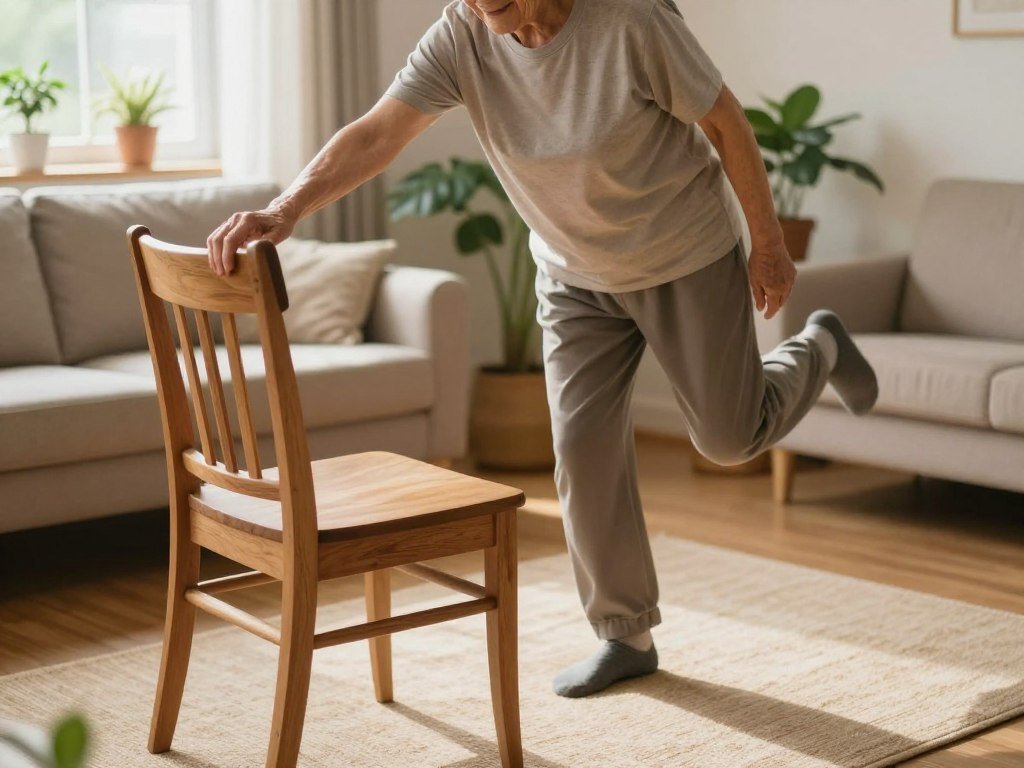
A few simple movements can train steadiness for everyday tasks such as climbing stairs and changing direction. The best exercises for balance are moves you can do with control, not difficult poses you must master. A safe starting point matters more than doing a hard move perfectly.
Proprioception means your body’s awareness of where it is in space. The moves below include standing still, controlled walking, and lower-body strength work. A sturdy chair or wall can make a home routine feel more approachable, especially if you are an older adult or have concerns about falls.
Key Takeaways
- Begin beside a stable chair or counter.
- Choose a move that feels controlled and steady.
- Use support when you need it, even for simple moves.
- Stop and seek medical advice about new balance problems.
- Try a short routine two or three times a week.
Start with a version you can control, even if that means keeping both hands on a chair.
How Do Exercises Improve Balance and Stability?
Balance is useful whenever you shift your weight, turn, or move from one surface to another. Exercises can help your body coordinate strength and movement, supporting steadier steps during everyday activity.
Good balance practice can make daily movements feel more controlled, but it cannot remove every fall risk. It can help you work on actions such as:
- Climbing stairs while carrying a light bag.
- Carrying groceries from the car to your kitchen.
- Changing direction to answer the door.
Balance draws on muscle strength, coordination, and your body’s sense of position. Repeating controlled movements gives you a chance to practice shifting weight and placing your feet with care.

Falls affect many older adults. In 2018, 27.5% of community-dwelling U.S. adults aged 65 or older reported at least one fall in the previous year. In that group, 10.2% reported a fall-related injury.
In 2021, fall-related injuries caused 38,742 deaths. A record of U.S. fall figures offers context for why safe movement matters. Research summarized by the U.S. Preventive Services Task Force found exercise interventions linked with fewer falls and injurious falls.
Treat fall prevention as one reason to stay active, not a promise that any exercise removes fall risk.
Regular practice can support stability, but falls can have many causes. Treat fall prevention as one reason to stay active, not a promise that any exercise removes fall risk.
When Should You Get Medical Advice Before Exercising?
A sudden change in steadiness, or dizziness that makes you feel at risk of falling, deserves a call to your doctor before you test yourself with a challenging move. New balance problems can start suddenly and without an obvious cause, so take a change seriously.
Talk with a doctor if you feel unsteady, dizzy, or as if you might fall. Symptoms do not prove one specific cause, but they can help you explain what is happening.

| What you notice | Examples | What to do |
|---|---|---|
| Dizziness or vertigo | Spinning or a sense of motion | Call your doctor before challenging exercise |
| Unsteadiness or staggering | Feeling as if you might fall while walking | Ask your doctor for advice |
| Blurred vision or confusion | Blurred sight or disorientation | Seek medical guidance before exercising |
Possible causes include medicines, inner-ear problems, alcohol, diabetes, and heart disease. Stroke and problems with vision, the thyroid, nerves, or blood vessels can also affect balance.
These conditions do not mean that every symptom has the same cause. A new balance problem needs attention, especially when it begins suddenly or affects walking.
Some balance exercises can be done while seated. A chair-based option may help you stay active when standing feels unsafe, but ask your doctor what fits your health and needs.
A vestibular rehabilitation therapist can create an individual plan for a chronic balance disorder. Exercises that use specific head and body movements should also be chosen for you by a physical therapist or another qualified professional.
Your doctor can advise whether exercise is safe and how to lower fall risk during daily activities. If a head movement brings on dizziness, stop rather than trying to push through it.
Which Are the Best Exercises for Balance at Home?
For a simple first challenge, stand beside a sturdy support and lift one foot only as far as you can while keeping your torso upright. These home balance exercises can suit older adults and other adults when you choose a version that matches your ability.
Keep a chair or counter within reach, and use it whenever you need help staying steady. A supported version is still useful practice.
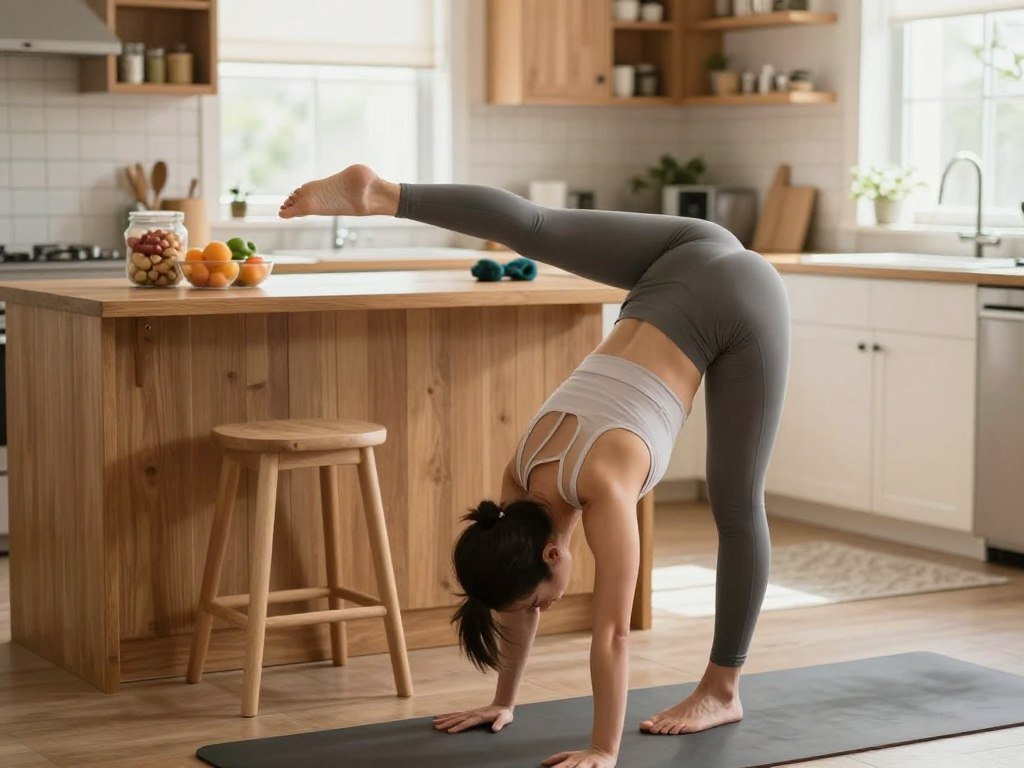
Single-Leg Stand
Start with your feet hip-width apart beside a chair or counter. Stand tall, then lift one foot a few inches while keeping your weight over the standing leg.
Hold the position for 10-15 seconds if you can do so with control. Lower your foot, then repeat on the other side. Five stands on each leg are one example, not a requirement.
Keep one or both hands on the support if needed. You can begin by lifting a heel instead of raising the whole foot.
Tandem Stance
Stand beside a counter with one foot directly in front of the other, heel close to toe. This heel-to-toe stance narrows your base of support, so use a hand for balance.
Hold for 5-30 seconds as a starting example, then switch which foot is in front. One to three sets may suit some people, but you can shorten the hold or use more support.
Supported Calf Raises
Stand with your feet hip-width apart and hold a counter lightly. Rise onto the balls of your feet, keeping your body upright, then lower your heels slowly.
Pause at the top for about three seconds. Five to 20 repetitions can be an example range; stop earlier if your form changes or your calves tire.
Rock the Boat
Stand with feet hip-width apart and hold a sturdy support. Shift your weight onto one leg, then lift the other foot slightly or let its toes touch the floor.
Unlike a quiet held stance, this move asks you to shift your weight from side to side. Try up to 30 seconds or three to five sets of five to 10 repetitions on each side, adjusting the range to your control.
Make the movement small before making it wider. Keep your gaze on a fixed point in front of you while practicing a standing hold.
Which Moving Drills Build Steadier Steps?
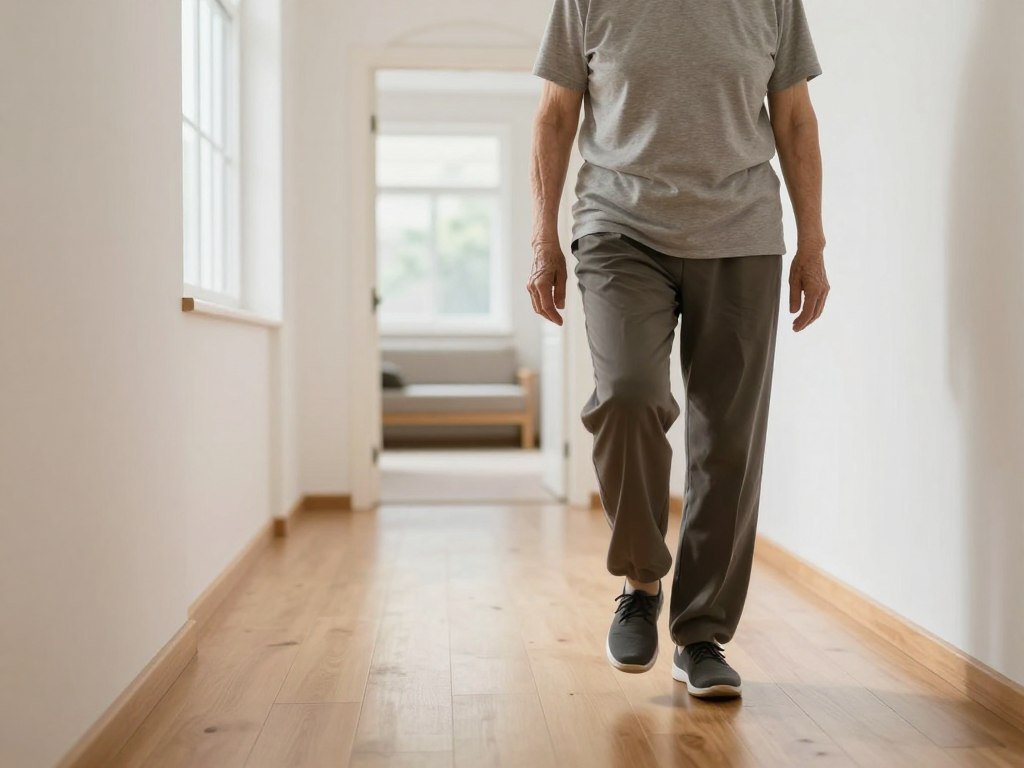
A clear hallway or open stretch beside a wall gives you room to practice moving without rushing. The heel-to-toe walk is a useful first drill because it asks you to place each foot carefully as you move.
Use a clear path and keep a wall or rail close enough to reach. Stop if your steps become uncontrolled.
Heel-to-Toe Walk
Stand near a wall, then place one foot directly in front of the other. Aim to have the back heel touch or nearly touch the front toe.
Walk along a clear line for at least five steps, looking ahead rather than down at your feet. Take small steps at first, and use the wall for light support if needed.
Sideways Walking
Stand facing a counter or wall, with your hands near the support. Step to one side with one foot, then bring the other foot toward it without crossing your legs.
Take 10 steps in one direction, then repeat in the other direction. Move slowly and keep your hips level instead of letting them drop as you step.
Step-Ups
Stand in front of a stable, low step with a railing or wall nearby. Place one whole foot on the step, press through it to rise, then step down with control.
Begin with up to five steps using each leg. Keep your body upright and your foot fully on the step before shifting your weight.
Use a low step and a pace that lets you place each foot with care. Keep the step low enough that you can place the whole foot securely before shifting your weight.
Which Strength Moves Support Everyday Stability?
Standing up from a chair is a practical way to train the legs and control the transition from sitting to standing. These strength moves use familiar actions to work muscles that support daily activity.
Strength training with body weight, bands, machines, or free weights can help build balance. Pick a level that lets you move with steady form.
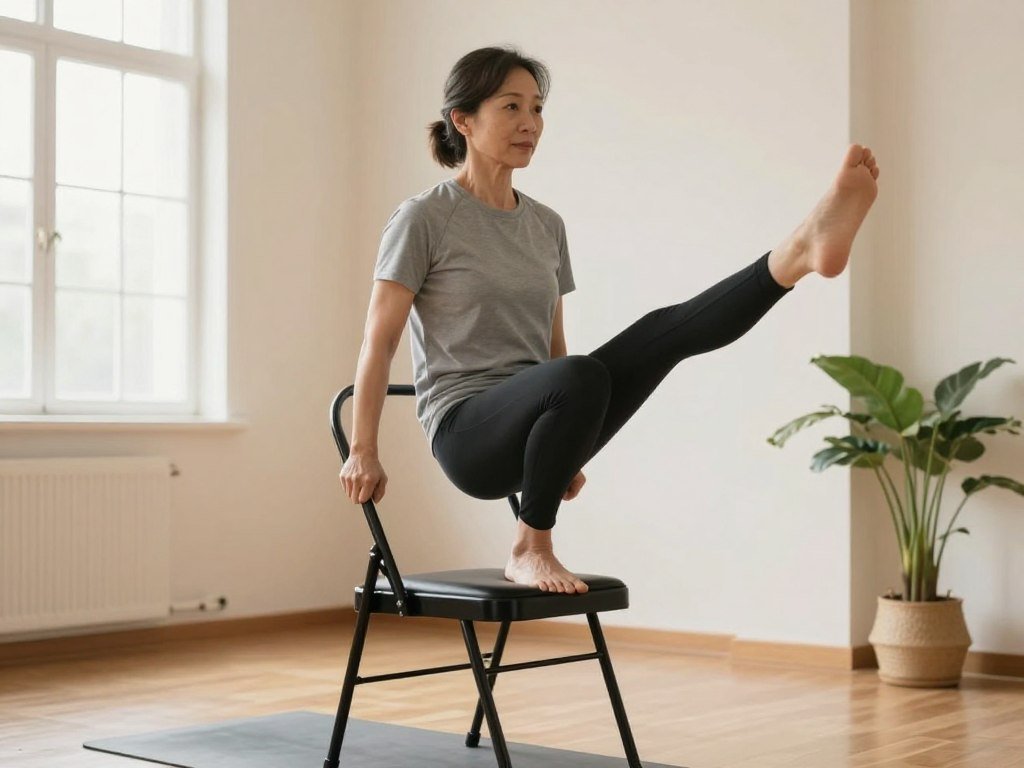
Sit-to-Stands
Sit near the front of a sturdy chair with your feet flat on the floor. Lean forward slightly, then push through your feet to stand without pulling on the chair.
Pause once upright, then bend your knees and lower yourself slowly. Ten repetitions can be a useful example, but you can stop sooner or use your hands for help.
Keep your knees lined up over your feet as you rise. Moving slowly on the way down helps you control the final part of the motion.
Standing Marches
Stand behind a chair or counter and hold it as needed. Lift one knee a comfortable distance, lower the foot, then lift the other knee while keeping your torso upright.
Twenty alternating marches can be a starting example. Reduce the number if you find yourself leaning back or lifting your knees less evenly.
Foot Taps
Stand facing a low step or sturdy object with a chair or counter within reach. Tap one foot onto the step, then return it slowly to the floor.
Repeat the tap 15-20 times on one leg as a guide, then switch sides. Keep the standing knee soft and your body centered rather than leaning toward the step.
Body-weight moves can be part of strength training, alongside bands, free weights, or machines. The right amount depends on your ability and health, so one set does not suit everyone.
Use a chair that stays firmly in place, rather than one that can slide as you rise.
How Can You Build a Short, Repeatable Routine?
A repeatable routine is easier to maintain when it fits a familiar time and place in your week. A five-move sequence can include a standing hold, walking drill, strength move, weight shift, and step task.
Two or three balance sessions a week can work as a general schedule. A health professional may suggest a different plan for your needs.
A Five-Move Daily Sequence
To build a five-exercise sequence, pair a supported single-leg stand with a heel-to-toe walk, sit-to-stands, Rock the Boat, and low step-ups. These choices cover different kinds of movement without asking you to do every move in one long session.
Choose a time that already fits your day, such as after breakfast or before an afternoon rest. Small, steady habits are often easier to keep than a big routine that feels hard to start. A few ideas for building healthy habits can help you plan a routine around your normal week.
A 10-Minute Home Routine
For a 10-minute balance session, choose five moves and spend about one minute on each side. Use the remaining time for safe transitions, or shorten the sequence if a change of position takes longer.
Try a standing hold, side steps, chair rises, a weight shift, and a low step task. The routine can be shorter than 10 minutes if that better matches your pace.
Check your progress with four simple questions:
- Can you control each movement?
- Does your posture stay steady?
- Does each side take a similar effort?
- Can you finish your chosen repetitions without rushing?
Change only one part at a time, such as the number of repetitions or the amount of hand support. Increase the challenge only after the current version feels controlled on both sides.
Which Other Activities Can Help Improve Balance?
Tai chi, yoga, Pilates, and strength training can all support balance in different ways. A structured activity may feel more engaging than a list of moves done alone.
No single activity is best for every person; choose one that fits your ability and interests. A physical therapist can suggest balance exercises for your fitness level and needs.
| Activity | Balance-related emphasis | Useful fit |
|---|---|---|
| Tai chi | Fluid movements, poses, strength, and stamina | People who want choreographed movement |
| Yoga | Flexibility and controlled, steady poses | People who want to practice body control |
| Pilates | Core strength and flexibility for posture | People who want core-focused movement |
| Strength training | Strength from weights, bands, machines, or body weight | People who want to build muscle strength |
Tai chi uses flowing movements and poses to build balance, muscle strength, and stamina. Yoga can help with flexibility and the ability to hold your body steady during controlled movement.
Pilates builds core strength and flexibility, which support posture and balance. Strength training can use free weights, machines, bands, or body weight.
Harvard Health describes how tai chi, yoga, and Pilates can support balance and movement. A class gives you a set time and shared practice, while a physical therapist can tailor moves to your needs.
Start with a level that lets you follow the movements safely, and ask about changes if a pose feels difficult. Choose an activity you can do consistently and adapt to your current ability.
How Can You Make Home Activities Safer?
A safer path through a familiar room can matter just as much as the exercise you choose. Practical changes to lighting, footwear, and support can lower everyday risks.
If balance problems affect your daily movement, ask a doctor whether a cane or walker is right for you. A support aid does not replace care for a new or worsening problem.
| Situation | Specific precaution | Practical example |
|---|---|---|
| Dark walkways | Avoid walking in the dark | Turn on lights before crossing a room |
| Footwear | Wear nonskid, rubber-soled, low-heeled shoes | Choose shoes with secure fit and traction |
| Mobility aids | Ask a doctor if a cane or walker is suitable | Use the aid recommended for your needs |
| Stairs or steps | Use a handrail for support | Hold the rail while going up or down |
Choose shoes that feel secure and comfortable, with reliable traction for the activity. This guide to walking shoes discusses fit, support, and grip.
Handrails can provide support near stairs or other areas where you need a steady hand. A doctor can help decide whether a cane or walker fits your balance and daily activities.
Support aids can help with fall risk, but they do not explain why a new problem started. Keep the route between your bed and bathroom well lit at night.
How Do Older Adults Get Personalized Fall-Prevention Support?
Fall-prevention support can begin with general advice and become more individualized when an older adult is found to be at high risk. The next step depends on the person’s risk level.
Older adults at high risk should receive a full assessment followed by personalized support across several areas. A health professional can explain what that means for daily activities and health needs.
| Stage | Who it applies to | Recommended action |
|---|---|---|
| General advice | All older adults | Discuss falls prevention and physical activity |
| Risk case-finding | Community-dwelling older adults | Look for possible fall risk during routine care |
| Full assessment | Older adults at high risk | Assess multiple factors, then plan personalized care |
The World Falls Guidelines recommend advice on falls prevention and physical activity for all older adults. They also recommend looking for fall risk among older adults who live in the community.
For older adults at high risk, the guidelines call for a comprehensive multifactorial falls-risk assessment. That means looking at several factors, then planning personalized interventions across more than one area.
The U.S. Preventive Services Task Force review covers research on fall-prevention interventions for community-dwelling older adults. Its review included exercise and multifactorial approaches.
The National Institute on Aging’s Exercise and Older Adults Toolkit offers health articles, infographics, publications, and videos. It is designed for older adults, caregivers, and health care providers.
Ask what follow-up fits your own needs after a falls-risk assessment, since your next steps should reflect your health and daily life.
Bring questions about activity and daily movement to your next appointment. Ask a health care professional what follow-up is appropriate after a falls-risk assessment.
Conclusion
A steady routine can start with one controlled move and a support you trust. A manageable practice can help you work on balance, stability, and the movements that make daily life easier.
If symptoms, health conditions, or fall concerns affect your exercise choices, professional guidance can help you find a safer starting point. You do not need to master every move before beginning.
Choose one exercise that feels within reach and decide when to try it. Set aside a convenient time this week to try your chosen move beside a sturdy chair.
FAQ
What are some good balance exercises for seniors?
How do I get my balance back to normal?
What is the best exercise for me?
How long should a 70 year old be able to balance on one leg?
What exercise should seniors not do?
What exercise should a 70 year old do every day?
What are five exercises that seniors can do every day?