Skin changes in your 50s can include dryness, visible lines, uneven tone and reduced firmness, and a serum can target one or more of those concerns. A humectant is an ingredient that attracts and holds water in the skin to support hydration. Hydration can make fine lines look less pronounced, while retinoids have stronger evidence for longer-term skin changes. A serum is one part of skin care, not a way to stop natural aging. The best anti aging serum for 50s depends on what you want to address and what your skin can tolerate. Choose a formula you can use consistently and pair it with daily sun protection.
Key Takeaways
- Choose a serum based on your main skin concern.
- Retinoids have stronger evidence for longer-term wrinkle changes.
- Hydrating ingredients can temporarily soften the look of fine lines.
- Introduce active ingredients with care, especially if your skin is sensitive.
- Daily sunscreen helps protect skin from UV damage.
Which Is the Best Anti Aging Serum for 50s?
For many people whose main goal is softening wrinkles over time, a retinoid is the strongest place to start. Medik8 Crystal Retinal 1 Serum is the lead pick if you prioritize a retinoid and can tolerate one. Retinoids have stronger evidence for long-term remodeling than hydrating ingredients.
The best anti-aging serum that really works depends on your concern and consistent use. The products below cover wrinkles, firmness, antioxidant support and a lower-priced retinol option.
| Product | Listed price | Best fit | Standout detail |
|---|---|---|---|
| Medik8 Crystal Retinal 1 Serum | $87 | Retinoid option | Retinal |
| SkinMedica TNS Advanced+ Serum | $295 | Mature-skin firmness | Growth-factor serum |
| SkinCeuticals C E Ferulic | $185 | Antioxidant support | 15% L-ascorbic acid, vitamin E and ferulic acid |
| L’Oréal Paris Pure Retinol Revitalift Night Serum | $32 | Lower-priced retinol option | Night serum |
SkinCeuticals C E Ferulic contains 15% L-ascorbic acid, vitamin E and ferulic acid. Apply it in the morning after cleansing. SkinMedica TNS Advanced+ Serum is a growth-factor choice for firmness, while L’Oréal Paris offers a lower-priced retinol serum.
Choose the active that fits your main concern and your skin’s tolerance before weighing packaging or texture.
Price matters, but the formula also needs to fit your routine. Match the choice to your main concern before comparing extras such as texture or packaging.
Which Active Ingredients Match Your Main Skin Concern?
Retinoids have the strongest evidence among common topical ingredients for changing the appearance of wrinkles and skin texture over time. Choose active ingredients by concern, then give your skin time to adjust. A humectant attracts and holds water in skin, which supports hydration but does not have the same role as a wrinkle-targeting active.
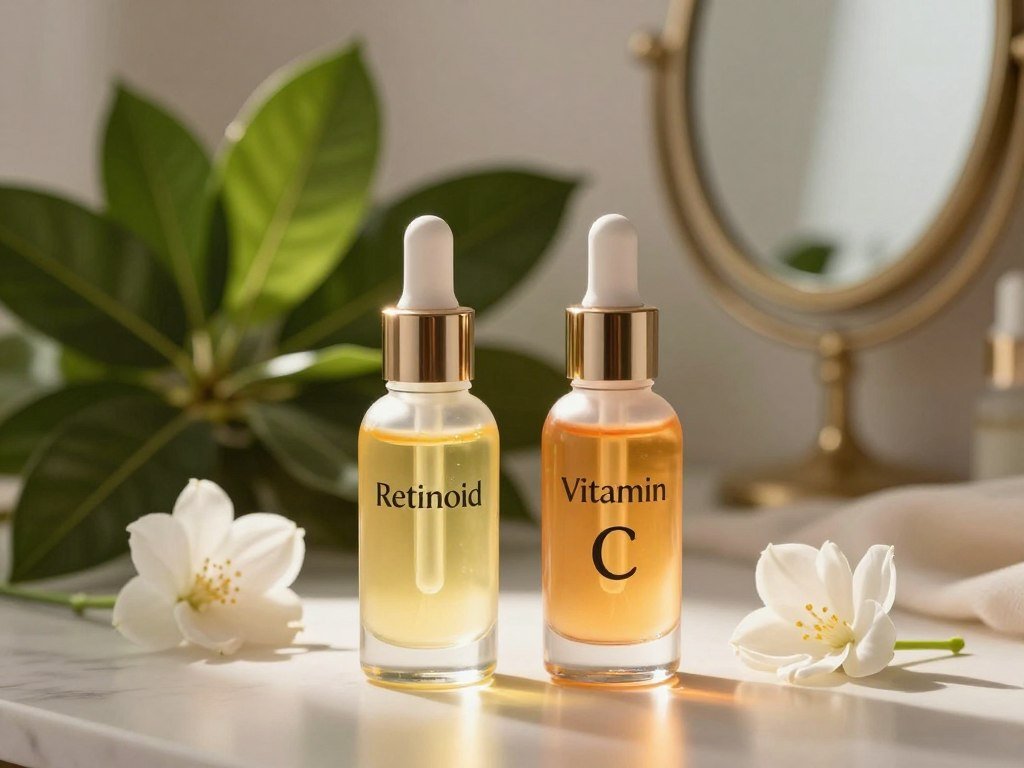
Different ingredients target different signs of aging, from rough texture to uneven tone. A simple plan can also help you see which product agrees with your skin.
Retinoids for texture and wrinkles
Prescription retinoids include tretinoin and tazarotene. Over-the-counter products commonly use retinol or retinal. Retinoids can support collagen production, improve skin thickness and smooth the outer skin layer.
They may also help with visible texture changes as skin renews. A Stanford dermatologist’s retinol overview explains these uses and common side effects. Dryness or redness can occur, so the strength and use pattern should suit your skin.
Antioxidants and exfoliating acids for tone
Vitamin C and other antioxidants can help protect skin from environmental damage. Skin care antioxidants include vitamin C, vitamin E, glutathione and niacinamide. Vitamin C is often chosen when dullness or uneven tone is a concern.
Alpha-hydroxy acids and polyhydroxy acids exfoliate the skin’s surface. Azelaic acid can help with redness and uneven tone. Salicylic acid is often used for blemishes, including clogged pores.
These ingredients are not interchangeable, and a product’s strength affects how it feels on skin. Avoid starting several exfoliating products together, especially when your skin is already dry or reactive.
Peptides and growth factors for firmness
Peptides are generally well tolerated and may support firmer, smoother-looking skin. Their evidence is more modest than the evidence for retinoids or vitamin C. Growth-factor serums may also support a firmer appearance, but much published research comes from manufacturer-supported studies.
That makes growth-factor evidence promising rather than definitive. Your best fit depends on whether you value a gentler approach or want ingredients with stronger evidence for wrinkle changes. Prioritize one active ingredient that addresses your main concern rather than layering several new ones at once.
Which Is Better for Aging Skin, Retinol or Hyaluronic Acid?
Retinol is the stronger choice for longer-term remodeling, while hyaluronic acid is the better choice when dryness is making fine lines look more noticeable. Retinol has stronger evidence for collagen, skin renewal and longer-term changes. Hyaluronic acid attracts water, so it can make skin look more hydrated, supple and temporarily plumper.
| Ingredient | Main role | Time of use | Best fit |
|---|---|---|---|
| Retinol | Longer-term skin renewal | Evening | Wrinkles, texture and pigmentation |
| Hyaluronic acid | Hydration and temporary plumping | Day or night | Dryness and dehydration lines |
| Using them together | Hydration alongside retinol | Evening | Skin needing both moisture and renewal |
Retinol can address photoaging, fine lines, uneven texture, enlarged-looking pores, congestion and pigmentation. Hyaluronic acid can soften the appearance of dehydration lines, but it does not create the same longer-term remodeling.
You can layer hyaluronic acid beneath retinol, then apply moisturizer to help reduce dryness and irritation. A retinol and hyaluronic acid routine can be useful when you want both hydration and an active ingredient.
Hyaluronic acid works day or night and can fit into a routine without replacing moisturizer. If your skin feels tight or dry, prioritize hydration before adding another active.
Which Serums Can Help With Loss of Firmness and Deep Wrinkles?
For a dermatologist-recommended growth-factor option aimed at mature skin, consider SkinMedica TNS Advanced+ Serum. A dermatologist recommends it for mature skin, and its formula combines growth factors, cytokines, antioxidants, matrix proteins and botanicals. Its growth-factor evidence is promising rather than definitive.
These formulas may appeal if you want to target firmness without relying on one ingredient alone. They are different from retinoids, and they should not be treated as guaranteed fixes for deeper wrinkles.
Growth-factor support for mature skin
SkinMedica TNS Advanced+ Serum is the dermatologist-recommended serum pick for mature skin. Its blend includes growth factors and other skin-supporting ingredients, rather than a single active. The formula is aimed at skin that looks less firm or smooth.
Growth factors are proteins involved in cell signaling. In a skin-care product, they are used to support a firmer-looking appearance. Research is still limited, and much published evidence for growth-factor serums comes from manufacturer-supported studies.
That matters when you compare a product’s promise with what the evidence can show. You may choose it for its formula and routine fit, while keeping expectations measured. It is not a proven way to erase deep lines.
Peptides and a richer nighttime finish
Medik8 Advanced Pro-Collagen+ Peptide Cream costs $99. It contains collagen amino acids, peptides, ceramides, enzymes, squalane and hyaluronic acid. The range of ingredients makes it a richer option for a nighttime routine.
Use the cream as the last step of your nighttime routine. Its texture may suit skin that feels dry after cleansing or after using other active ingredients. Ceramides and squalane add a moisturizing feel, while hyaluronic acid supports hydration.
A cream can help limit the tight feeling that comes with dry skin, but it cannot promise a change in deeper wrinkles. Consider how it layers with your other products before adding it. Choose a formula whose texture and routine placement you can sustain consistently.
Can Vitamin C Help Brighten Dark Spots and Dullness?
Vitamin C is a strong option when dullness and uneven tone matter as much as fine lines. It can help protect skin from free-radical damage, brighten the complexion and reduce the appearance of dark spots. Its effect depends on the formula, and dark spots are not guaranteed to disappear.
The best face serum for anti-aging and glowing skin may pair a suitable antioxidant with hydration. A good fit depends on the ingredients, the formula’s feel and how your skin responds. A brightening serum should not take the place of sun protection.
Use this checklist when comparing a vitamin C product:
- Check the vitamin C form listed on the label.
- Choose packaging that limits light and air exposure.
- Pair daytime antioxidant use with sunscreen.
A serum that feels comfortable is more likely to earn a regular place in your routine. If a formula stings or leaves your skin feeling irritated, stop and reassess rather than adding more products. Add one new brightening product at a time so you can tell how your skin responds.
Which Hyaluronic Acid Serums Suit Dry or Dehydrated Skin?
For dehydration lines and dry-feeling skin, a straightforward hyaluronic acid serum is often the most direct fit. Follow a hydrating serum with moisturizer to help keep the added moisture from evaporating. A lightweight serum may feel comfortable, but very dry skin can need a richer finish.
Prices and formulas vary across these four options, from a low-cost basic serum to a multi-glycan product. Choose by texture, added ingredients and how your skin feels after use.
Simple, lower-cost hydration
The Ordinary Hyaluronic Acid 2% + B5 costs $10 and contains ceramides. Vichy Mineral 89 costs $30 and offers a simple hydration-focused option. The Ordinary costs less and includes ceramides, while Vichy is another straightforward choice.
For dry skin, serum alone may not provide enough moisture. A richer cream can help reduce water loss and make the routine feel more comfortable. You can also compare skin care products for dry skin if a lightweight serum does not feel like enough.
A barrier-supporting serum
La Roche-Posay Hyalu B5 contains hyaluronic acid, vitamin B5 and madecassosides. It is allergy-tested and fragrance-free. The listed price is $40 at Amazon and $43 at Ulta.
Those details may matter if you prefer a fragrance-free product or want a serum with more than one supporting ingredient. The skin barrier is the protective outer layer, and gentle care can help keep it comfortable.
For body care, a gentle cleanser can also support skin comfort. A guide to body wash for soft, healthy-looking skin covers cleanser choices and moisture support.
A multi-glycan hyaluronic acid option
SkinCeuticals H.A. Intensifier Multi-Glycan costs $120. It is the multi-glycan option in this group, suited to shoppers looking for a higher-priced hydration serum.
| Product | Listed price | Notable ingredients | Best fit |
|---|---|---|---|
| The Ordinary Hyaluronic Acid 2% + B5 | $10 | Hyaluronic acid, B5, ceramides | Lower-cost hydration |
| Vichy Mineral 89 | $30 | Hyaluronic acid | Simple hydration |
| La Roche-Posay Hyalu B5 | $40 Amazon, $43 Ulta | Hyaluronic acid, B5, madecassosides | Fragrance-free formula |
| SkinCeuticals H.A. Intensifier Multi-Glycan | $120 | Multi-glycan blend | Multi-glycan option |
Apply moisturizer after a hydrating serum, especially when your skin feels tight after washing. Follow a hydrating serum with moisturizer to help keep the added moisture from evaporating.
How Should You Start Retinol Without Irritating Mature Skin?
Start retinol slowly, especially if your skin is dry or reactive. Retinol can cause redness, flaking and dryness, and it may increase sensitivity to sunlight. Begin with two evenings a week and increase only as your skin tolerates it.
Use retinol in the evening and wear sunscreen the next day. SkinMedica Retinol Complex comes in 0.25, 0.5 and 1.0 strengths. These options show that products come in different strengths, but no one strength suits everyone.
A Harvard Health skin-care routine also advises bedtime retinoid use, gentle cleansing, moisturizer and sunscreen. A mild routine can help you notice irritation before it becomes harder to manage.
- Begin with two evenings a week.
- Increase gradually only as your skin tolerates it.
- Use sunscreen the next day.
Keep other new actives out of the routine while you learn how your skin responds. If redness or peeling starts, reduce use or stop until your skin feels calm. Pause use and seek professional advice if irritation is persistent or severe.
What Does a Practical Anti-Aging Routine for Your 50s Look Like?
A simple routine you can repeat is more useful than a long lineup of products you rarely use. The best anti-aging regimen for people in their 50s centers on hydration, barrier support and consistent sunscreen. Use broad-spectrum sunscreen with SPF 30 or higher each morning.
A mild cleanser, a suitable serum and a moisturizer can cover the basics. A simple beginner-friendly skin-care routine can help you keep the number of steps manageable.
- Morning: cleanse mildly, use an optional antioxidant, apply moisturizer, then broad-spectrum SPF 30 or higher.
- Evening: cleanse gently, use one chosen active as tolerated, then apply moisturizer.
- Whenever skin feels dry: use a fragrance-free moisturizer to support comfort.
- Each day: keep hydration and barrier support ahead of adding extra products.
Daily sunscreen helps protect against UV damage and skin cancer. A rich moisturizer can help when mature skin feels dry, while a gentle cleanser limits unnecessary irritation.
The best anti-aging serum for people in their 50s and over 60 should match the concern being treated, not age alone. A steady routine is easier to judge than a crowded shelf of products. Apply sunscreen every morning, even when your routine includes other protective ingredients.
Do Serum Needs Change in Your 40s, 60s, and 70s?
The best product choice changes more with skin concern and tolerance than with a birthday. A best anti-aging serum for people in their 40s, 60s or 70s is not determined by age alone. Choose by the skin change you want to address and the routine you can tolerate.
Age can offer context, but it does not dictate which ingredients suit your skin. Dryness, texture and firmness may matter more than the number of years you have lived.
- In your 40s, consider a retinoid if texture or early lines are a priority.
- In your 60s, prioritize hydration and barrier support if dryness is prominent.
- In your 70s, choose a tolerable routine focused on the concern that matters most.
A 2025 article estimates collagen can decrease by 30% in the five years following menopause. That figure is an estimate, not a personal forecast for every person.
A small study described in 2025 reported topical estriol increased firmness by up to 61% and hydration by 38% after 16 weeks. More research is needed, and hormone-related treatments call for clinician guidance. Discuss hormone-related skin treatments with a clinician rather than starting them on your own.
What Can Korean Skincare Do for Wrinkles?
Korean skincare can include hydrating masks, but no mask is a topical substitute for Botox. The Biodance Bio-Collagen Real Deep Mask contains hyaluronic acid, glycerin, galactomyces ferment filtrate, niacinamide and collagen. It can support a temporarily plumper appearance, not erase deep wrinkles.
The mask is designed to stay on for three to four hours or overnight. That long wear time makes it a specific hydration step, rather than a quick rinse-off treatment.
A long-wear mask may soften the look of dehydration lines for a time, but it does not replace wrinkle treatments.
Its ingredients can help skin look more hydrated and smooth after use. The effect is cosmetic and temporary, not the same as longer-term changes to skin texture.
Korean skincare is a broad category, not one universal wrinkle treatment. Treat a long-wear mask as an optional hydration step, not the foundation of wrinkle care.
What Can You Use if Retinoids Irritate Sensitive Skin?
If retinoids are not tolerable, a resveratrol-and-peptide formula is one alternative to discuss. Caudalie Resveratrol-Lift Instant Firming Serum costs $84 and combines resveratrol with a peptide complex. It is not a one-for-one retinoid replacement.
A dermatologist recommends it as an option for people who cannot use retinoids. The formula may support a firmer appearance, but it does not offer the same evidence for longer-term changes.
Persistent sensitivity can make even gentle products uncomfortable. A dermatologist can help you sort out suitable ingredients and a routine that respects your skin barrier.
Comfort matters when you want to use a product consistently. Let comfort and consistency guide the choice, rather than expecting an alternative active to reproduce retinoid results.
Conclusion
A useful choice starts with the skin concern you want to address first. Retinoids are the evidence-led option for longer-term wrinkle concerns, while hydration helps when dryness makes fine lines more visible.
Pick one product that fits your main concern and your tolerance. Give it a regular place in your routine before deciding whether you need another active.
Add one product to your routine, use it consistently as directed, and reassess how your skin responds.
FAQ
What serum should I use for anti-aging?
Which is better for aging skin, retinol or hyaluronic acid?
What is the best anti-aging cream for a 50 year old?
What is the best face serum for a 50-year-old woman?
What do Koreans use against wrinkles?
What do Koreans use instead of Botox?
Which Korean skincare brand is best for anti-aging?
What skincare is best for deep wrinkles?