The right base can even your complexion while still letting your skin look like itself. Fine lines, dryness, and changes in hydration can affect how makeup sits, but your preferences matter just as much. A good match should even tone without making lines or dry areas more noticeable.
This roundup offers practical choices for different skin types, budgets, and coverage needs. You can compare sheer everyday options, medium coverage, and fuller formulas, then decide which finish feels right. There is no age-based rule that says you must wear a certain texture or amount. Your comfort and the look you want are the best guides.
Key Takeaways
- Choose a finish that suits your skin and personal style.
- Use thin layers when you want buildable coverage.
- Look for a formula that feels comfortable through the day.
- Test shades where your face meets your neck.
- Consider lighter coverage for an easy everyday look.
A comfortable everyday match is the one you can wear lightly and adjust where you want more coverage.
Which Is the Best Foundation for Mature Skin Over 60?
For the most versatile balance of coverage and radiance, Giorgio Armani Luminous Silk is the strongest starting pick. It suits readers who want a polished look without a heavy feel. Versatile coverage means you can apply thin layers until you reach the look you want.
Age alone does not decide the best formula, whether you are over 40, over 50, or over 70. Comfort, coverage, and finish are more useful decision points. Hourglass Veil Hydrating Skin Tint is a lighter everyday choice, while IT Cosmetics Bye Bye Foundation Full Coverage Moisturizer SPF 50+ is the fuller-coverage alternative.
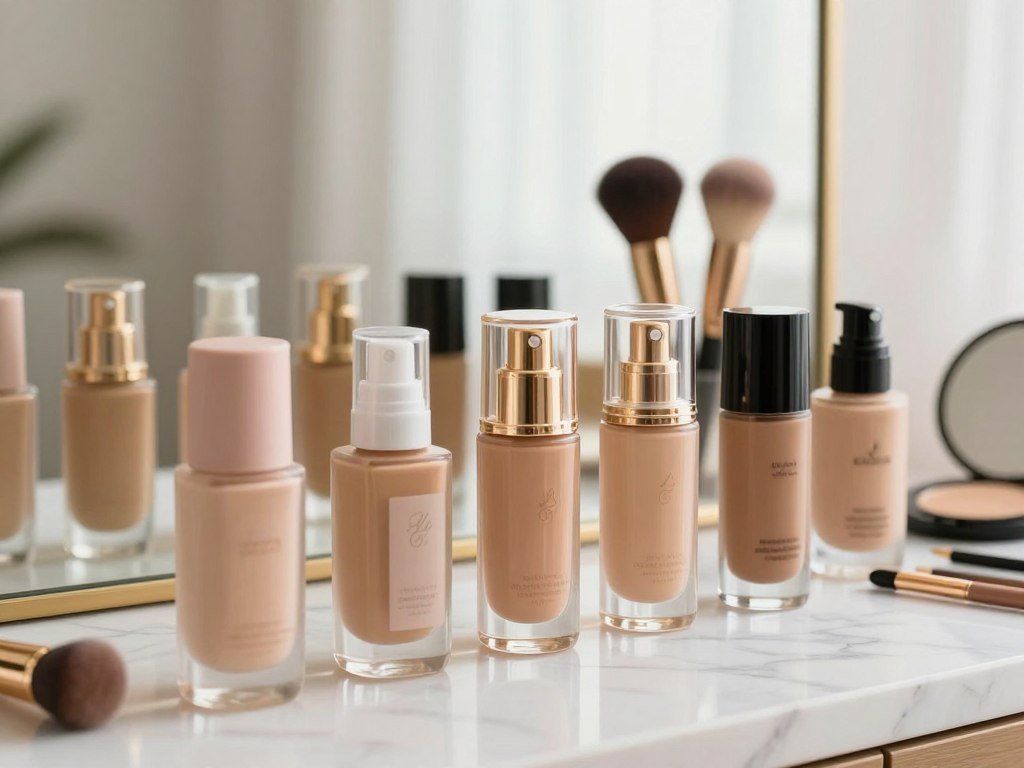
Choose the level of coverage you will feel comfortable wearing for a full day, not the highest level available.
That rule applies whether you want natural-looking foundation mature skin can wear daily or a more polished base for an event. The best foundations serve different needs, so compare their feel before choosing.
In 2026, the best foundation for mature skin over 60 is still the one that works with your comfort and finish preferences. The same applies when you want medium coverage or a more natural result.
Choose the level of coverage you will feel comfortable wearing for a full day, not the highest level available.
Which Finish and Coverage Look Most Natural After 60?
A radiant or satin finish is usually the easiest place to start if dryness makes a flat finish look dull. These finishes reflect some light and can keep the complexion from looking overly matte. Natural-looking makeup still depends on how much coverage you prefer.
Start with a flexible formula and light-to-medium coverage if you want tone to look more even without masking your skin. A dewy foundation for mature skin can be a practical choice when you want a fresh, luminous look.
Choose a radiant or satin finish when dryness is a concern
Radiant, satin, and natural are common finish labels. A satin finish sits between glow and a flatter look, while a natural finish aims to resemble skin. Dryness and texture can make matte finishes or heavy powder more noticeable.
Matte is still a valid preference, not an automatic mistake. A combination or oilier T-zone may feel better with a natural-matte formula, especially if other areas are less oily.
Match coverage to what you want to even
Serum foundations, BB creams, and cushion foundations tend to feel light. Pressed powders, long-wear liquids, and sticks may need more care on dry or textured areas. Try these useful label cues:
- Radiant or satin finish
- Sheer or buildable coverage
- Serum or skin tint texture
- A flexible feel rather than a stiff one
Choose coverage based on the areas you want to even, not on a promise of total concealment. A skin tint can suit a lighter look, while a medium layer can soften visible color differences.
If a formula feels stiff on your hand after a short test, try a more flexible texture before wearing it across your face.
Which Ingredients Help a Foundation Feel Comfortable on Dry Skin?
For a base that feels comfortable on dry skin, start by checking for humectants and emollients. Humectants attract water, while emollients help soften the feel of skin. These ingredients can support comfort, though makeup does not replace skin care.
Hyaluronic acid and glycerin are humectants; squalane and jojoba are emollients. You may also see niacinamide, vitamin E, peptides, and ceramides in complexion products.
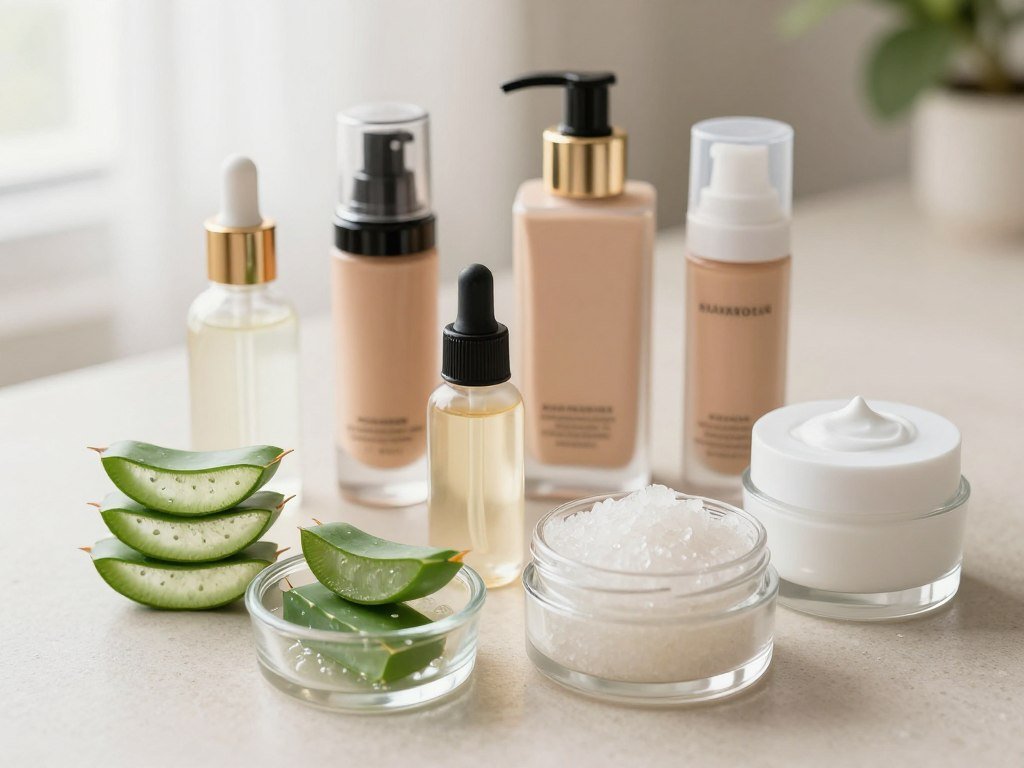
Look for humectants and emollients
Hyaluronic acid can help a formula feel hydrating, while glycerin is another common water-attracting ingredient. Squalane and jojoba can give a product a softer feel on skin that feels tight or dry.
These names are useful when comparing a foundation, but they do not tell you everything about its texture. The full formula and your skin’s response matter too. For more on choosing moisturizers and other skin care products for your needs, consider how your routine feels day to day.
Treat skincare claims as useful extras
Niacinamide, vitamin E, peptides, and ceramides appear in many skin care products and some makeup. Their presence can be a helpful detail, but a listed active is not a promise that a foundation will improve skin over time.
Lancôme Teint Idole Ultra Wear Care & Glow Foundation costs $53 and contains hyaluronic acid. That makes it a specific option to compare if you want a complexion product with that ingredient.
For more on how humectants and emollients work in daily care, read this guide to body lotion for soft, hydrated skin. Choose the formula that feels comfortable on your skin rather than relying on an ingredient name alone.
How Should You Prep Mature Skin Before Foundation?
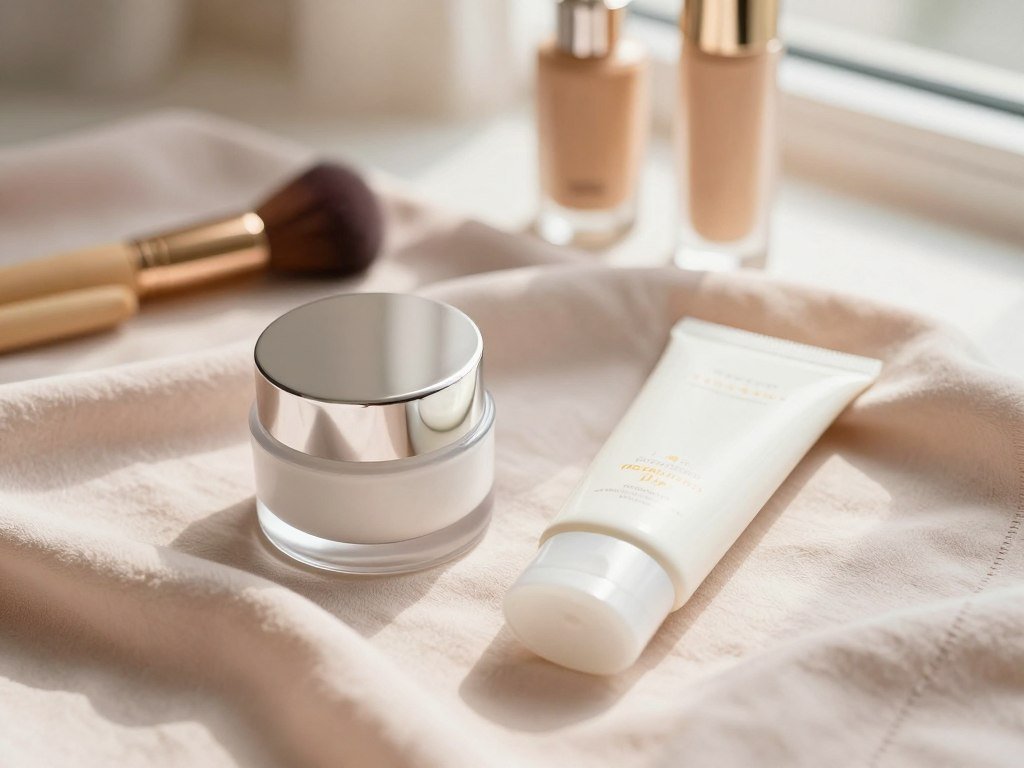
A light, settled layer of moisturizer gives foundation a more even starting surface. Keep prep simple, since too many layers can feel heavy or cause makeup to shift. Use this order to give each layer time to settle.
Apply dedicated sunscreen over moisturizer and under primer. Use a broad-spectrum sunscreen with SPF 30 or higher as your daily sun protection.
- Apply moisturizer in a light layer.
- Wait 2-3 minutes for it to absorb.
- Apply dedicated sunscreen over the moisturizer.
- Use primer only where texture or makeup wear needs extra help.
Makeup with SPF can add another layer, but it does not replace sunscreen. For daily sun protection, the American Academy of Dermatology recommends broad-spectrum sunscreen with SPF 30 or higher on skin not covered by clothing.
For more ideas on moisturizer and skin prep, browse these skin care products for different needs. Let sunscreen set for at least 2 minutes before adding primer or foundation.
How Do You Apply Foundation Without Emphasizing Fine Lines?
Start with a small amount at the center of the face and blend outward in a thin layer. Add a second layer only where the first still leaves areas you want covered. Less product at first makes it easier to avoid buildup in fine lines.
Use pressing or stippling motions on deeper folds instead of dragging makeup across them. That lets you place coverage without pushing product into the crease.
Start thin and build only where needed
Apply one thin layer, then pause to check the result. If a spot still needs coverage, add a small amount there rather than coating the whole face again.
Expression lines move as you talk and smile. A thick layer can collect in those creases, especially near the mouth, so keep the amount light in those areas.
Pick a tool that does not drag across texture
Each tool gives a different finish. Pick the one that feels easiest to control:
- Damp sponge for a seamless, sheered-out finish
- Dense brush for more even coverage
- Fingers for a fast, natural blend
A damp sponge presses on product with a bouncing motion. A dense brush can blend in circles, while fingers warm the formula for a quick blend.
Check the folds around the nose and mouth before adding another layer, since those areas show excess product first.
Which Lightweight Foundations Work for Everyday Coverage?
For everyday wear with little makeup feel, start with Hourglass Veil Hydrating Skin Tint or NARS Pure Radiant Tinted Moisturizer. Both suit a lighter look, though their formats differ. Your preferred feel can help settle the choice.
Tinted moisturizer is often the better choice for sheer, low-effort coverage; foundation suits you when you want more. A skin tint is a lightweight complexion product between foundation and tinted moisturizer.
Skin tints and tinted moisturizers for a sheer look
Hourglass Veil Hydrating Skin Tint feels lightweight and sits between foundation and tinted moisturizer, with a luminous finish. NARS Pure Radiant Tinted Moisturizer SPF 30 is sheer, lightweight, and buildable. You can apply it with your fingers.
NARS Pure Radiant Tinted Moisturizer has SPF 30, but it should not replace dedicated sunscreen. The sheer, buildable coverage can suit days when you want less makeup on your face.
ILIA Super Serum Skin Tint SPF 40 is another serum-style option, priced at $48. Its format may appeal if you prefer a lightweight base with a skin tint feel.
Light-coverage foundations for more evening
NARS Light Reflecting Foundation gives medium coverage with a natural-looking glow. L’Oréal Paris True Match Nude Hyaluronic Tinted Serum Foundation offers light coverage and contains hyaluronic acid.
| Product | Coverage | Finish | Useful distinction |
|---|---|---|---|
| Hourglass Veil Hydrating Skin Tint | Sheer, lightweight | Luminous | Between foundation and tinted moisturizer |
| NARS Pure Radiant Tinted Moisturizer | Sheer, buildable | Natural glow | SPF 30; apply with fingers |
| NARS Light Reflecting Foundation | Medium | Natural-looking glow | More coverage than a tint |
| L’Oréal True Match Nude Hyaluronic Tinted Serum | Light | Serum texture | Contains hyaluronic acid |
Compare the amount of evening you want with how much product you like to feel. Pick the lightest option that evens the areas you want covered.
What Are the Best Budget Foundations for Mature Skin?
Maybelline Lifter Plump and Glow is the strongest budget starting point for readers who want a radiant finish and skincare ingredients. It costs $16 and includes hyaluronic acid and niacinamide. That mix makes it a practical first option for a hydrated feel.
The matte Fit Me formula suits normal-to-oily skin better, while dewier serum formulas are more natural starting points for dryness. Choose based on your skin type and the finish you like.
| Product | Price | Finish or coverage | Standout detail |
|---|---|---|---|
| Maybelline Lifter Plump and Glow | $16 | Radiant | Hyaluronic acid, niacinamide, 24 shades |
| L’Oréal Infallible 32H Fresh Wear | $15 | Natural radiance | SPF; 40 shades |
| Maybelline Fit Me Matte + Poreless | $12 | Natural matte | Normal-to-oily skin; up to 12 hours; 40 shades |
| Neutrogena Sensitive Skin Serum | $17 | Dewy, sheer buildable coverage | Provitamin B5; 15 shades |
| L’Oréal Age Perfect Radiant Serum | $11.97 | Serum formula | SPF 50, vitamin B3, 26 shades |
L’Oréal Infallible 32H Fresh Wear has SPF and comes in 40 shades. Its natural-radiance finish offers another budget option if you want a broader shade range.
Maybelline Lifter Plump and Glow comes in 24 shades, and its $16 price keeps it within reach for many budgets. Neutrogena Sensitive Skin Serum offers sheer, buildable coverage with a dewy finish.
Fit Me Matte + Poreless provides up to 12 hours of wear. Its natural-matte finish is a better fit for normal-to-oily skin than for areas prone to dryness.
L’Oréal Age Perfect Radiant Serum costs $11.97 and has SPF 50 and vitamin B3. Match the formula to your skin type and finish preference rather than choosing on price alone.
Can Full-Coverage Foundation Still Look Natural on Mature Skin?
Yes, fuller coverage can look natural when a flexible formula is applied in a thin layer only where needed. IT Cosmetics Bye Bye Foundation Full Coverage Moisturizer SPF 50+ is a strong choice if you want more coverage. Focused application keeps the rest of your complexion lighter.
Full coverage is most useful when you want visible evening of tone, not simply to conceal every area. A full-face layer may feel like too much if only a few spots need extra help.
Choose flexible formulas rather than a thick layer
Bye Bye Foundation costs $47 and combines full coverage with a moisturizer format. It includes SPF 50, hyaluronic acid, and 10 botanical oils.
In Good Housekeeping Beauty Lab testing, it beat 29 other foundations and earned the only perfect score for smooth-looking coverage. The Beauty Lab’s full-coverage foundation results may help you weigh that result.
Keep fuller coverage focused on the areas that need it
IT Cosmetics CC+ Cream costs $39 and offers full coverage, a radiant finish, and SPF 50. Makeup by Mario SurrealSkin Foundation is full coverage, lightweight, buildable, and satin-finish.
| Product | Coverage | Finish or formula | Useful detail |
|---|---|---|---|
| IT Cosmetics Bye Bye Foundation | Full coverage moisturizer | Hydrating formula | SPF 50, hyaluronic acid, 10 botanical oils, $47 |
| IT Cosmetics CC+ Cream | Full coverage | Radiant | SPF 50; $39 |
| Makeup by Mario SurrealSkin | Full coverage | Lightweight, buildable, satin | Flexible formula |
Use concealer or a second light pass on specific spots instead of adding another heavy layer across the face.
Is Laura Geller Baked Balance-n-Brighten a Color-Changing Foundation?
Laura Geller Baked Balance-n-Brighten blends marbleized pigments to help the color adjust to your skin tone, but it is not a formula that changes color after you apply it. The blending effect comes from combining those pigments as you apply the powder.
It is a baked powder foundation with lighter coverage than Double Take Baked Full Coverage Matte Foundation. That makes it a more natural choice if you prefer a lighter powder finish.
Listed shades include Porcelain, Ivory, Fair, Light, Medium, Golden Medium, Sand, Tan, Deep, and Toffee. The shade names offer a range of depths, but the product’s color effect still depends on how well the pigments blend with your skin tone.
The formula contains jojoba seed oil, sunflower seed oil, centella asiatica extract, and green tea leaf extract. Those ingredients are part of the makeup formula, not proof that it will suit every skin type.
Laura Geller lists the regular price as $38 and gives the product a 3.9-out-of-5 rating from 52,113 reviews. Readers seeking full coverage should compare its lighter coverage level carefully before choosing it.
Blend the pigments well before deciding whether the shade is a close match.
Which Foundations Have Strong Testing Results for Smoothing and Hydration?
For hydration and tone-evening performance, No Makeup Makeup Foundation received the strongest combined scores among the products tested. It scored highest for hydration, evening skin tone, and concealing sun blemishes. Testing can help narrow your choices, though personal comfort still matters.
Use results to compare a specific benefit, such as hydration or blendability. A strong score in one area does not mean a formula will suit everyone.
| Product | Test result | Reader fit |
|---|---|---|
| CoverGirl + Olay Simply Ageless | Lightweight and blendable cream compact | $15; foundation combined with Olay moisturizer |
| No Makeup Makeup Foundation | Highest scores for hydration, tone-evening, sun blemishes | For readers focused on hydration and uneven tone |
| Mary Kay TimeWise Luminous 3D | Over 90% saw smoother-looking lines after one week | $28; contains vitamin E, niacinamide, peptides |
| Make Up For Ever HD Skin | Top scores for spreading, absorption, and blending | $49; lightweight and reported to last through the day |
| Olay Total Effects Tone Correcting CC Cream | Hydration rose 36% over six hours; spots and pores looked smaller over four weeks | For readers focused on hydration and tone |
CoverGirl + Olay Simply Ageless combines foundation with Olay moisturizer in a cream compact. Testers found it lightweight and blendable while still giving coverage.
Mary Kay TimeWise Luminous 3D contains vitamin E, niacinamide, and peptides. Over 90% of testers in a cited study found it smoothed the look of lines after one week.
Make Up For Ever HD Skin earned top scores for spreading easily, absorbing quickly, and blending smoothly. Testers found it lightweight and said it lasted throughout the day.
Olay Total Effects Tone Correcting CC Cream increased hydration by 36% over six hours. Brown spots and pores looked minimized over four weeks.
Treat test results as a shortlist, then check how a formula feels and looks on your own skin.
How Can You Find a Shade That Matches Your Face and Neck?
The most reliable starting point is a jawline swatch checked in natural daylight. Test 2-3 likely shades so you can compare how each looks against both your face and neck. Daylight makes differences easier to spot than indoor lighting.
The best match should blend into both your face and neck without a visible line. A swatch on paper can help compare undertones, but it cannot confirm the shade on your skin.
Swatch in natural daylight
Use this short checklist when shopping in a store or narrowing down options online:
- Compare 2-3 likely shades along the jawline.
- Check the swatches in natural daylight.
- Make sure the best match blends into face and neck.
Apply the shades side by side, then step near a window or outside. Indoor lighting can shift how a color appears, so daylight gives you a clearer view of the match.
Compare undertones before choosing a depth
A white paper towel can make undertone differences easier to compare side by side. It helps show whether one swatch looks more pink, golden, or neutral than another, but it does not replace checking the shade on your skin.
Your skin tone can shift over time or with sun exposure. If your usual shade no longer blends naturally, revisit the match rather than relying on the shade name alone.
Choose the shade that disappears into both your face and neck, not the one that looks best on a paper swatch.
Conclusion
A good match should even your complexion while still feeling comfortable and looking like your skin. A buildable formula is a better starting point than the heaviest coverage, since you can add product only where you want more.
Try your preferred option in daylight before wearing it across your whole face. Start with one thin layer of your preferred formula and check the finish in natural daylight before adding more.
FAQ
Is tinted moisturizer better than foundation?
Should mature skin use liquid or cream foundation?
What kind of makeup should a 60-year-old woman use?
What is the absolute best foundation for aging skin over 60?
Which makeup brand is best for mature skin over 60?
Is Laura Geller makeup good?
What are some good makeup brands for older adults?