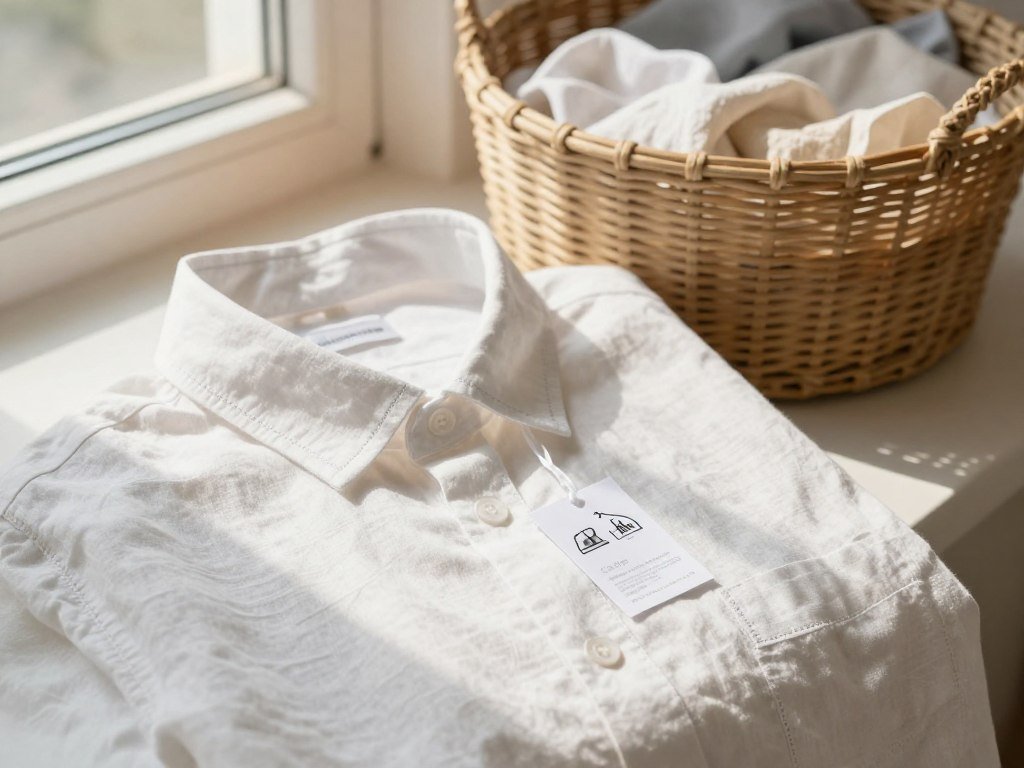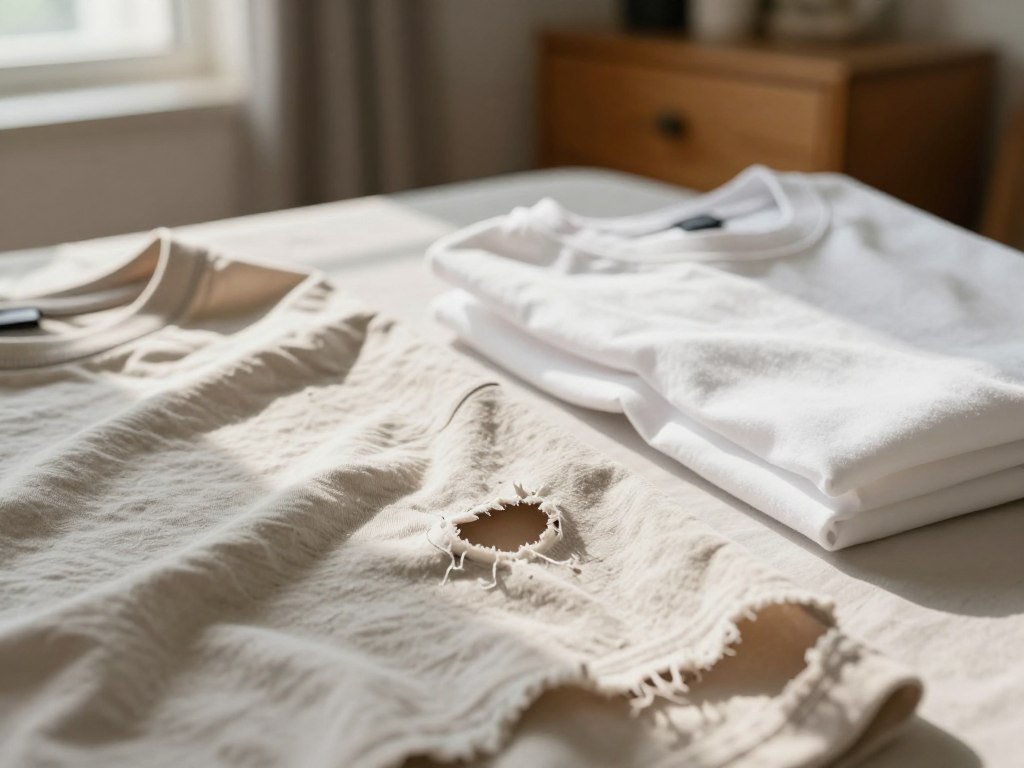
A tiny hole in a favorite tee is frustrating, but its location often gives you a useful first clue. Abrasion means gradual fabric wear caused by repeated rubbing. Holes near the lower front often point to rubbing, while damage elsewhere can have other causes.
Good care can help keep a shirt in use, but every hole does not share one cause. A little attention to washing, repair, and storage can save time and keep small damage from spreading.
The right response depends on what the damage looks like and where it appears. You can check for wear, protect the fabric during routine care, and deal with signs of pests when they appear.
Start by noticing where the damage appears and what the shirt was doing before you found it.
Key Takeaways
- Lower-front holes often point to rubbing against jeans hardware.
- Gentle washing habits can lower the risk of snags.
- Small holes may be stabilized or darned before they spread.
- Thinning fabric, shed skins, or larvae can signal fabric pests.
- Clean garments and airtight storage help protect clothing over time.
Why Do Tiny Holes Show Up at the Front of T-Shirts?
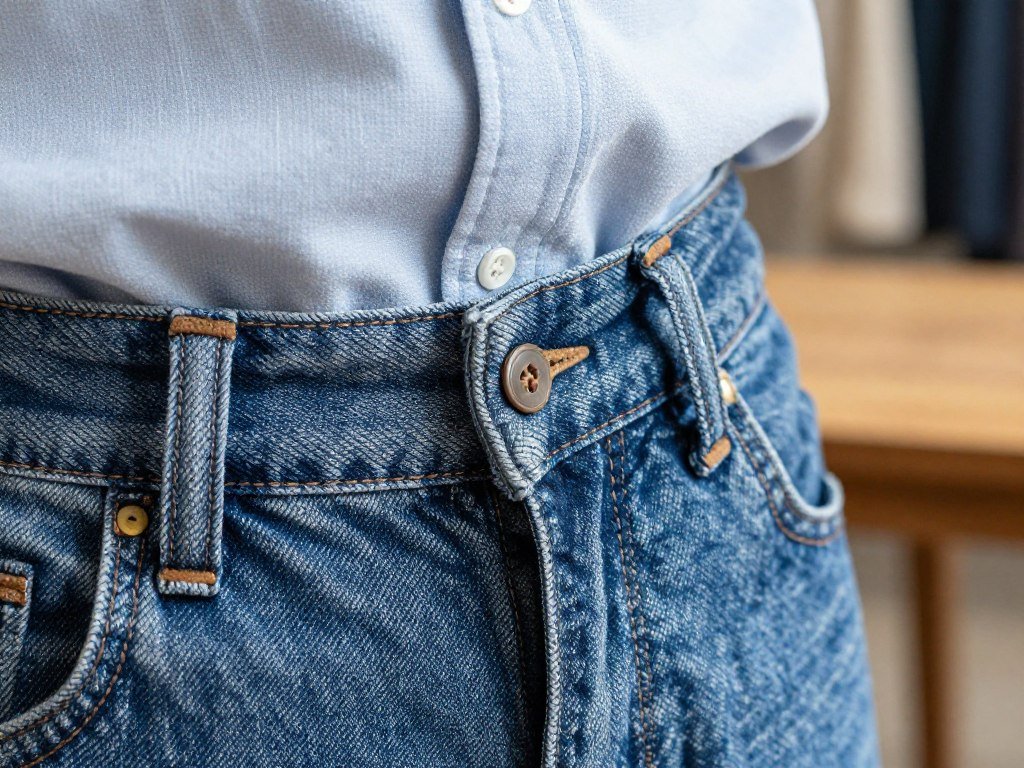
A cluster of tiny holes at the lower front usually points to repeated rubbing around the waistband. Hard contact can abrade a knit as you move, especially when the same spot meets a belt buckle, trouser button, zipper, or the top corner of jeans.
Stomach-area holes commonly come from jeans hardware or a belt rubbing against the shirt. Thinner knits may show wear sooner, though fabric weight is not the only cause. A belt-line friction pattern can help explain why several small holes appear close together.
A cluster at the belt line points to repeated contact, but holes elsewhere need a closer look.
Other daily contact can add friction, too. A counter or sink edge may rub the front when you lean over, while a seat belt or bag strap can wear fabric in its path.
- Belt buckles and trouser buttons
- Jeans zippers and pocket corners
- Counter or sink edges
- Seat belts and bag straps
Holes away from the belt line, especially with thinning or other signs of fabric pests, deserve a closer inspection.
How to Prevent Holes in T-Shirts With Simple Care
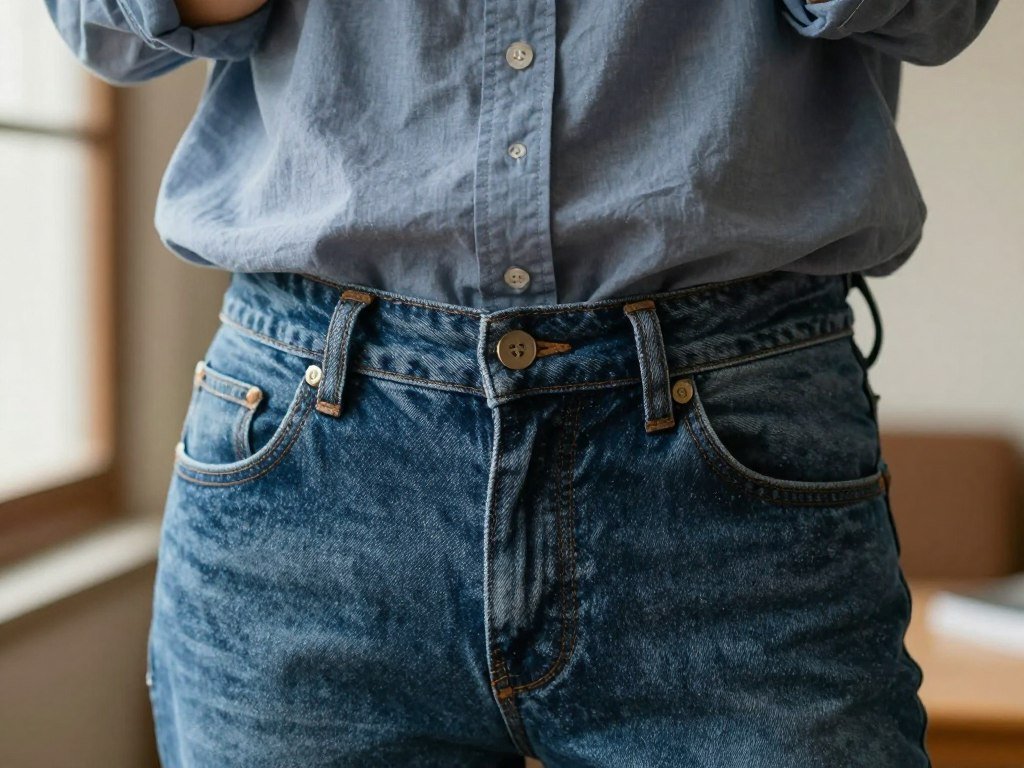
Tucking the shirt between the fabric and jeans is the easiest no-cost way to stop direct contact with the waistband hardware. A simple layer between the knit and the metal can prevent repeated rubbing in the same spot.
Choose a barrier that does not pull or bunch the shirt. A smooth, low-profile belt can help if your current buckle catches the fabric, while a silicone cover over a jeans button can soften contact.
Keep the shirt away from jeans hardware
A silicone button cover works best when the button itself is the point that meets the shirt. It creates a smoother surface without changing the shirt’s fit. Check that the cover sits flat, since a loose edge can catch the knit instead.
A stiff patch sewn onto the outside may shield a spot, but it can change how the shirt drapes. Tucking usually creates a less noticeable barrier for everyday wear.
Reduce rubbing during chores and daily wear
When you lean over a counter or sink, the shirt can rub against a hard edge. An apron keeps the fabric away from the surface, and tucking the tee in offers a quick option if you do not have one.
Notice where a seat belt or bag strap crosses your shirt during a usual day. If the same area meets a strap often, shifting the strap or keeping the shirt smooth underneath can reduce repeated contact.
These small choices work best when they fit your routine, not just a special occasion. Choose the least noticeable barrier that fits how you actually wear the tee.

How Can Washing Cause or Prevent New Holes?
A hole noticed after a wash may have been weakened by rubbing before the shirt ever entered the machine. Agitation can pull at that weak spot or snag fabric on another item.
Turn shirts inside out, use mesh bags, and separate exposed hardware. These steps reduce direct abrasion and snags in a washing machine. A hole first noticed after washing may have started earlier and grown during the cycle.
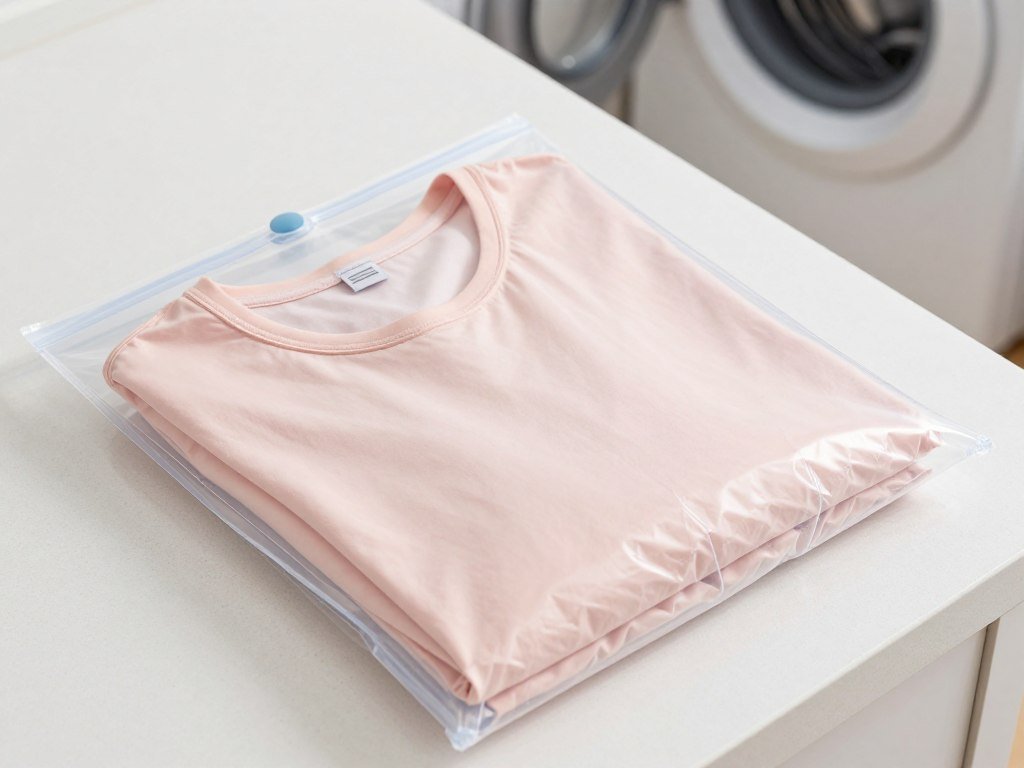
| Laundry step | What to do | Snagging risk it addresses |
|---|---|---|
| Turn shirts inside out | Reverse each shirt before loading | Less rubbing on the outer face |
| Use a mesh laundry bag | Place delicate shirts inside a zipped bag | Less contact with other clothes |
| Separate exposed hardware | Wash zippered items in another load | Less catching on zippers or sharp parts |
Read the garment label before you change the cycle or water temperature. A gentle cycle can help delicate fabric, but hot water is not a universal fix for holes.
The laundry care guide also recommends checking labels and choosing a gentle cycle for delicate items. Avoid filling the machine so tightly that clothes cannot move freely.
If you iron a shirt after washing, match the heat to its fabric and label. This shirt ironing guide covers safe settings and ways to avoid heat damage.
Check the care label before changing the cycle or water temperature.
How Can You Repair a Small Hole in a T-Shirt?
Repair a small hole before another wear or wash stretches the weakened knit further. Early repair can keep a small opening from spreading across the shirt.
Holes up to about 5 mm often suit a small stabilizing repair. Larger holes may need a larger patch or professional repair, especially when the knit has thinned around the opening.
Stabilize a tiny hole without sewing
Lay the shirt flat and smooth the fabric from the inside. Bring the hole’s edges closer without stretching them, so the knit keeps its shape.
Cut a small piece of fusible bonding web or lightweight stabilizer to cover the weak area. Apply it from the inside and follow the package directions for heat and pressure.
Keep the surface flat as the material cools. Pulling the fabric during the repair can leave a pucker that shows through the shirt.
Darn a thin or delicate knit
Darning suits a delicate knit when you want to avoid a stiff patch. Use a thin needle and thread close to the shirt color, then make small stitches that cross the opening.
Work around the edge without tugging hard. The goal is to support the knit, not gather it into a tight knot.
A repair guide for caring for vintage clothing also stresses checking labels and using gentle methods on delicate fabric. That advice matters when a favorite shirt has a fine or fragile knit.
What Are Shirts With Holes Called?
A shirt deliberately made with visible holes is commonly called a distressed T-shirt. Those holes are part of its fashion design, unlike accidental damage that appears after wear.
Check whether the holes follow a planned pattern before repairing them. If the fabric is fragile or the damage is larger than about 5 mm, a larger patch or professional repair may be a better choice.
Test any iron-on material on an inconspicuous area first, since heat and adhesive can affect delicate fabric differently.
How Can You Tell Friction Damage From Moth or Beetle Damage?
Holes concentrated at a waistband suggest rubbing, while thinning fibers, shed skins or larvae point toward fabric pests. Look for a pattern across the shirt and nearby stored items before deciding what caused the damage.
Clothes moth larvae, not adult moths, damage fabric. They feed on animal-origin fibers such as wool, fur, hides, hair, and feathers. They may also chew synthetic fabric to reach dirt or stains made from animal fibers.
| Likely cause | Damage pattern or location | Clue to look for |
|---|---|---|
| Friction | Small holes near belt line | Repeated contact with hardware |
| Clothes moth larvae | Grazed areas or holes under 1 mm to 1-2 inches | White larva with dark head, up to 1/2 inch |
| Carpet beetle larvae | Threadbare spots or irregular holes | Tan-brown bristles, 1/8-1/4 inch, shed skins |
Look for clothes moth larvae and grazing
Moth damage can look like holes or thin, grazed patches, with sizes ranging from less than 1 mm to one or two inches. Clothes moth larvae can hide in fabric cases or tubes, so inspect nearby folds and stored items.
Adult clothes moths avoid light and hide when disturbed, so you may find damage before you see one. Their presence can be hard to spot even when larvae are active.
Check folds for carpet beetle larvae
Carpet beetle larvae often feed in hems, collars, and cuffs. They are densely bristled and leave shed skins behind; those clues can be easier to spot than the larvae themselves.
Carpet beetle larvae feed on wool, felt, fur, silk, feathers, and leather. They rarely attack cotton or synthetic fabric unless it is blended with wool or heavily soiled.
Adult carpet beetles are about 1/16 to 1/8 inch long and often black or mottled. They feed on flower pollen, not fabric. The University of Kentucky’s carpet beetle guide describes their size and shed skins.
Use a flashlight to check dark seams and folds before deciding that a damaged shirt is only worn out.
What Should You Do When Clothes Moths Are Active?
Finding an adult clothes moth is a reason to inspect nearby stored fabrics, because larvae cause the damage. Start with the area where you saw the moth and check items stored close by.
Pheromone traps monitor adult male clothes moths, but they do not remove fabric-damaging larvae. Use them to track activity, not as the only step in treating affected clothing.
Clear and clean the affected area
Remove affected items from the storage area, then clean nearby surfaces and crevices. A trap can help show whether adult moth activity continues after cleaning.
- Remove affected garments and other stored items.
- Vacuum cracks, crevices, and shelf edges.
- Wash shelves and nearby surfaces with soapy water.
- Set pheromone traps to monitor adult male moths.
Adult clothes moths are a sign that larvae are causing damage somewhere. A heavy infestation may need help from a pest control professional.
Treat items that cannot be washed
Hot-water laundering for 20-30 minutes kills clothes moth eggs, larvae, and adults. Use that method only when the garment’s care label allows it.
Dry-cleaning is another option for items suited to that method. Dryer heat can kill carpet beetle eggs and larvae, but check the label before using heat on a garment.
For a non-washable item, seal it in a plastic bag and freeze it for two weeks. Then let it reach room temperature before opening the bag.
Keep a non-washable item sealed until it has returned to room temperature after the two-week freeze.
How Do You Protect Clothes in Long-Term Storage?
Clean clothing and an airtight container are more dependable storage basics than relying on a fragrance. Clean fabric is less likely to hold stains that attract clothes moths.
Wash or dry-clean clothes before long-term storage, then seal them in airtight bags or containers. Dry-cleaning kills clothes moth eggs and larvae and removes stains that can attract them.
- Clean and fully dry clothing before storage.
- Use airtight bags or containers with secure seals.
- Remove dust, cobwebs, and pet hair from storage areas.
- Inspect used animal-fiber items before bringing them indoors.
Check used wool clothes, rugs, and furniture under collars, along seams, and inside crevices. A seasonal closet rotation guide can help you organize stored clothing and keep containers easy to inspect.
February and March are useful months to begin prevention in most U.S. homes. Heated homes can have clothes moth activity year-round, so check stored items at other times, too.
Mothballs are pesticides, not casual air fresheners. Use them only as the label directs, inside airtight containers or garment bags, never in open closets or plastic garbage bags.
Mothball vapors can harm people and pets, and open-space use is not allowed. Never mix naphthalene and paradichlorobenzene mothballs in one container.
Use mothballs only in labeled, airtight storage, never in an open closet or garbage bag.
If using mothballs, follow the product label exactly and keep the vapors contained away from people and pets.
Conclusion
A few small care habits can help a favorite tee last longer. A change in daily wear or storage can protect clothing without turning routine care into a chore.
Choose one frequently worn shirt and check where it meets hard edges or hardware. Then inspect one stored item for thinning fabric, shed skins, or other pest signs.
For the shirt you wear most often, make one change today that protects it from its most likely source of damage.
FAQ
How do I get rid of bugs eating holes in my clothes?
Why does my shirt suddenly have holes in it?
Why are there holes in my clothes even though there are no moths?
Should you throw away clothes with moth holes?
What smells do clothes moths hate?
What time of year are clothes moths most active?
Can moths get through Ziploc bags?