
Choosing the best weight loss plan starts with understanding your health, eating habits, daily routine, and long-term goals. A diet that works well for one person may be difficult or unsuitable for another. The right plan should help you lose weight gradually while providing enough nutrients, energy, and flexibility to maintain your progress.
Before committing to a specific diet, consider the following factors.
1. Consider Your Health and Weight Loss Goals
Start by identifying what you want to achieve and whether weight loss is appropriate for your current health situation. Your age, medical history, medications, activity level, and current weight can all influence the most suitable approach.
Avoid choosing a plan solely because it promises rapid results. A realistic approach should prioritize health, sustainable habits, and gradual progress rather than extreme restrictions.
If you have a medical condition, take medication that affects your weight, or are unsure whether weight loss is appropriate for you, consult a qualified healthcare professional.
2. Choose a Diet You Can Maintain
The best weight loss plan is one that fits your everyday life. Consider your work schedule, food preferences, cooking habits, budget, and family meals before choosing a particular diet.
For example, a calorie-controlled eating plan may suit someone who wants flexibility, while a Mediterranean-style diet may appeal to someone who enjoys vegetables, fruit, legumes, whole grains, and fish.
You do not necessarily need to eliminate rice, bread, potatoes, or other favorite foods. Managing portions and balancing meals can be more practical than following strict food rules. Small daily routines make habits easier to keep. For ideas, see our luxury morning routine ideas.
3. Look for Balanced Nutrition

A suitable weight loss plan should provide protein, carbohydrates, healthy fats, fiber, vitamins, and minerals.
Look for plans that include:
- Protein sources such as eggs, fish, chicken, beans, lentils, and yogurt.
- Vegetables and whole fruits.
- Whole grains and other fiber-rich foods.
- Healthy fats from nuts, seeds, and suitable oils.
- Enough food to support your daily activities and nutritional needs.
Be cautious of plans that eliminate entire food groups without a sound medical reason or rely heavily on meal replacements and supplements. Looking for a hearty, bean-based meal? See our best chili recipe, which includes turkey and vegetarian versions.
4. Understand How the Plan Supports Weight Loss
Most weight loss plans work by helping you consume fewer calories than your body uses over time. Some emphasize portion control, others change meal timing, and some reduce particular foods.
A plan does not have to be complicated to work. Compare how it helps you manage portions, choose satisfying meals, and maintain consistency.
Intermittent fasting and lower-carbohydrate diets may suit some people, but neither is automatically more effective for everyone. The most useful approach is one you can follow while meeting your nutritional needs.
5. Consider Exercise and Your Daily Routine

Choose a plan that complements your current activity level and allows you to increase movement gradually.
Walking, cycling, swimming, dancing, and strength training can all support health and weight management. You do not have to join a gym to become more active.
If you are new to exercise, begin with manageable sessions and build up as your fitness improves. A good plan should leave you with enough energy for everyday activities rather than making you constantly exhausted. Looking for a gentle way to stay active at home? See our guide on what to check in the best yoga mats.
6. Avoid Unrealistic Promises
Be skeptical of programs that promise dramatic weight loss within a few days, guarantee results for everyone, or market detox teas and fat-burning supplements as essential.
Rapid changes on the scale can reflect water loss rather than body fat loss. Severe calorie restriction can also increase the risk of nutritional deficiencies, fatigue, and other problems.
Look for transparent guidance, realistic expectations, and recommendations grounded in established nutrition and physical activity principles.
7. Compare the Cost and Convenience
Some weight loss programs charge subscription fees, require specialized foods, or depend on regular consultations. Others can be followed using ordinary groceries and home-based exercise.
Before paying for a program, check what is included, whether cancellation is straightforward, and whether the suggested foods fit your budget.
An expensive plan is not necessarily more effective than a balanced approach built around accessible foods and consistent habits.
8. Track Progress and Adjust When Necessary
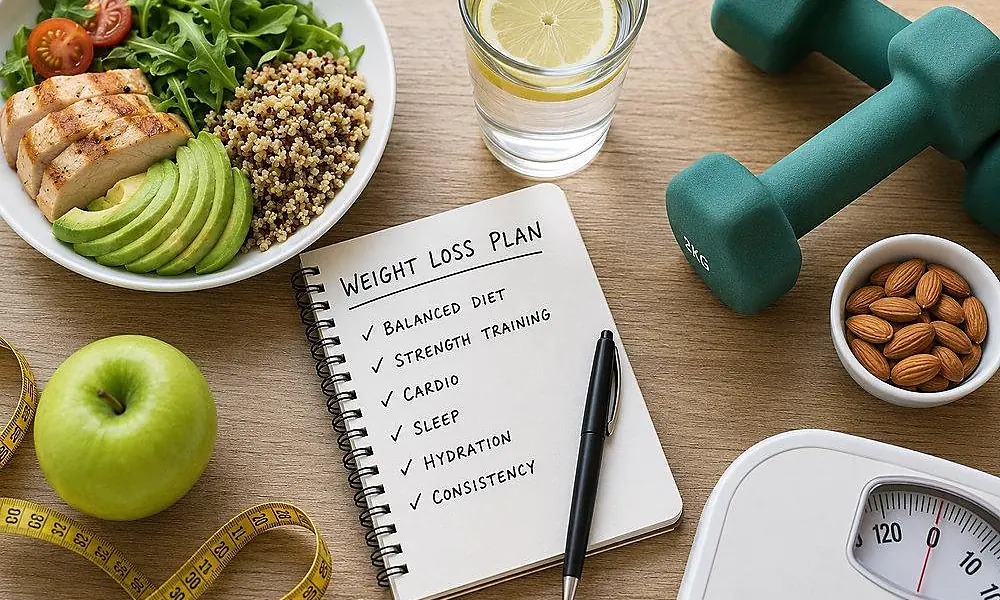
Choose a plan that allows you to assess progress without becoming overly focused on daily changes.
Depending on your circumstances, you might track weight trends, waist measurements, physical fitness, energy levels, or improvements in eating habits. Weight can fluctuate naturally because of fluid retention, digestion, and hormonal changes.
If a plan leaves you persistently hungry, weak, dizzy, or exhausted, reconsider whether it is providing enough food and nutrients. A qualified healthcare professional or registered dietitian can help you make appropriate adjustments. Writing things down can also help you notice habits and patterns. See our guide to mindfulness journaling.
Frequently Asked Questions
Which weight loss plan is best for beginners?
A balanced, calorie-controlled eating plan is a practical starting point for many adults. It allows you to improve portions and food choices without following complicated rules.
Should I choose a low-carb or low-fat diet?
Either approach can support weight loss when it helps you maintain an appropriate calorie intake. Choose based on your preferences, nutritional needs, and ability to follow the plan consistently.
How do I know if a weight loss plan is safe?
Look for balanced nutrition, realistic expectations, and flexibility. Avoid extreme restrictions and products that promise guaranteed rapid results. Seek professional advice if you have medical conditions or specific nutritional needs.
Do I need a paid weight loss program?
No. Many people can work toward their goals with balanced meals, portion awareness, regular physical activity, and consistent habits. Professional support can be useful when you need individualized guidance.
Final Thoughts
Choosing the best weight loss plan means finding an approach that fits your health needs, food preferences, budget, and lifestyle. Prioritize balanced nutrition, manageable portions, regular movement, and realistic expectations over restrictive diets or quick fixes. For more on building steady routines at home, see our luxury self-care routine at home guide.
Disclaimer: This article is for informational purposes only. Consult a qualified healthcare professional for advice tailored to your individual health and nutritional needs.