A sunscreen that feels comfortable enough to use every morning is a more useful choice than a formula that sits untouched in a drawer. The best sunscreen for sensitive skin is the one you can wear on your face or body without dreading how it feels. Daily protection matters because ultraviolet rays can cause sunburn and contribute to skin aging. A formula that fits your habits can make regular use easier.
Comfort depends on more than the active filters. The label, other ingredients, your skin’s needs, and the sunscreen’s texture all shape how well it fits your routine. A light face lotion may suit a morning commute, while a larger body formula may be easier to use outdoors. Broad spectrum is a sunscreen label indicating protection against both UVA and UVB rays.
This guide offers practical ways to compare formulas without treating one type as right for everyone. You can focus on a label and texture you trust, then pay attention to how your skin responds. A product’s fit matters as much as its features when you want a routine that lasts. Start with a broad-spectrum formula that suits your skin’s everyday routine.
Key Takeaways
- Choose broad-spectrum protection that matches your routine.
- Check active filters and other ingredients on the label.
- Mineral and chemical formulas can both work if you tolerate them.
- Face, body, and children’s products may have different intended uses.
- Stop using a formula that causes a persistent reaction.
How to Choose the Best Sunscreen for Sensitive Skin
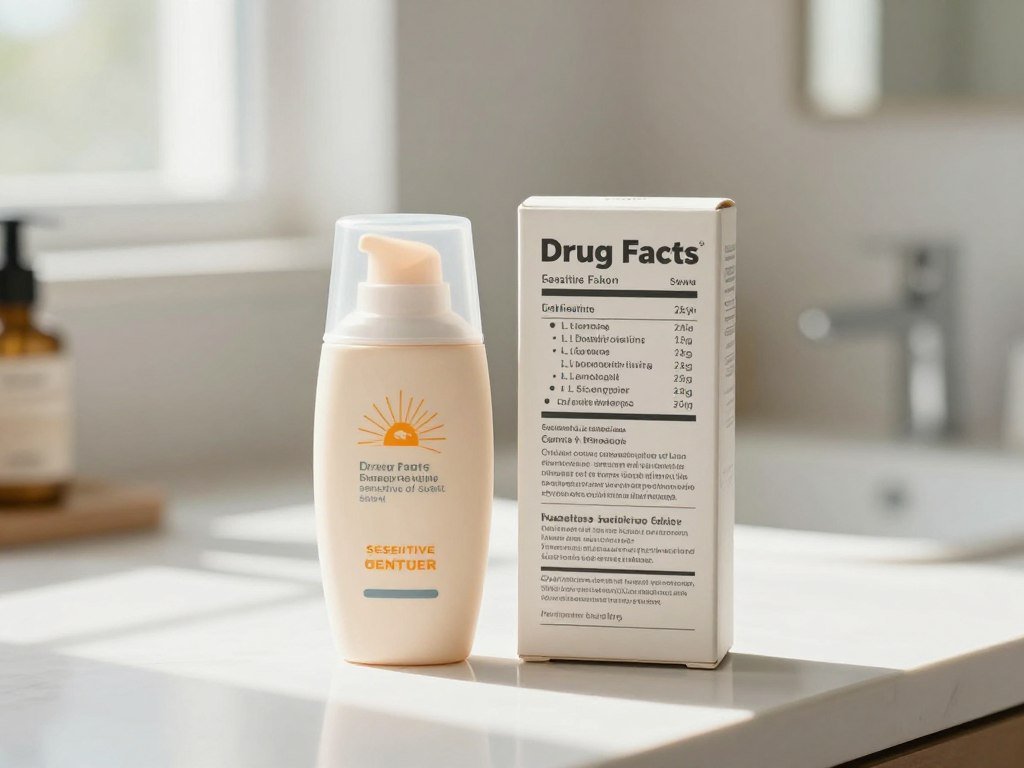
Begin with the Drug Facts panel, since the active ingredients tell you whether a formula uses mineral filters, chemical filters or both. Start with the label, then consider the texture and where you plan to use the sunscreen. A product’s front label alone may not tell you how the full formula will feel on your skin.
Use these four checks to narrow your choices before buying. They help you compare products without assuming that a certain filter or texture will suit every person.
- Look for broad-spectrum labeling, which means the product protects against UVA and UVB rays.
- Read the active ingredients on the Drug Facts panel. Zinc oxide and titanium dioxide are mineral UV filters; oxybenzone, avobenzone, and octinoxate are examples of chemical UV filters.
- Compare fragrance and texture preferences. A fragrance-free lotion may feel different from a thick cream or stick.
- Check whether the product is intended for your face, body, or both.
“Mineral” on the front label does not guarantee that every inactive ingredient will suit every person.
The active ingredient panel also helps you spot formulas that combine mineral and chemical filters. Those products are sometimes called hybrids, but the word does not describe every ingredient in the formula. Read the full label when you have a known sensitivity.
Texture can affect how much you enjoy wearing sunscreen each day. A lotion may spread more easily over a large area, while a stick can be handy for smaller spots. Your usual routine matters: a face product should feel comfortable around the eyes, and a body product should suit the areas you cover.
Some products list separate directions or limits for their intended area. Check the product’s intended use before applying a face formula over the whole body.
Are Mineral Filters Better for Reactive Skin?
Mineral filters are a sensible first trial for some people with reactive skin, but they are not a guarantee against irritation. A first trial can help you see how a formula feels without assuming that every ingredient will agree with you. Any sunscreen formula can contain an ingredient that does not suit your skin.
What mineral and chemical filters do
Zinc oxide and titanium dioxide are mineral UV filters used in sunscreen. Chemical filters are another valid choice for people who tolerate them. A sunscreen’s active ingredients are listed in the Drug Facts panel, so you can identify which filters the formula uses.
Some products combine mineral and chemical filters. The category alone cannot predict how your skin will respond. People can react to different parts of a formula, and sensitivity to one filter does not mean all chemical filters will cause a reaction.
For a plain-language overview of sunscreen labels and filter types, WebMD explains how sunscreen filters differ. The important point is to treat filter type as one part of your choice, alongside the rest of the formula and its intended use.
Why some people start with mineral formulas
Mineral sunscreen can be an easy starting point because its active filters are clear on the label. Some people prefer zinc oxide or titanium dioxide when they are trying to limit exposure to filters that have bothered them before. That preference is useful, but it does not make a product automatically suitable.
Inactive ingredients still matter. A mineral sunscreen may have a texture, scent, or other ingredient that you dislike or cannot tolerate. If a formula feels comfortable and works with your routine, there is no need to switch just because another filter type is popular.
What bemotrizinol adds to U.S. sunscreen options
In 2026, the FDA added bemotrizinol to permitted U.S. sunscreen active ingredients. Bemotrizinol provides UVA and UVB protection and is permitted at concentrations up to 6 percent. The FDA considers it generally recognized as safe and effective for sunscreen use by adults and children 6 months of age and older.
This change gives shoppers another active ingredient to consider. It does not show that every formula containing bemotrizinol will feel gentle on every person. Bemotrizinol’s permitted concentration is one label detail, not a prediction of personal comfort. Treat a new active ingredient as another option to assess, not as proof that a formula cannot irritate.
Which Ingredients Should Sensitive Skin Avoid?
The active filters are only part of the ingredient list, so check the inactive ingredients as well. Your own history is a useful guide: an ingredient that has caused trouble before deserves extra attention. Fragrance-free can be a helpful preference if fragrance already bothers your skin.
Fragrance and other possible triggers
“Fragrance-free” can help you narrow choices if scented skin products have caused discomfort. It does not mean that every other ingredient will suit you, so compare the full list with products you already tolerate. Labels can also show whether a sunscreen uses mineral filters, chemical filters, or both.
Some sunscreens combine zinc oxide with chemical UV filters. Do not rely on a front label that says “mineral” to tell you the complete active-filter mix. The Drug Facts active-ingredient panel gives you a clearer view of the filters in that product.
If ingredient labels feel hard to compare, use a few simple details to sort the options:
- Fragrance: note whether the formula is fragrance-free or scented.
- Texture: compare lotion, cream, stick, or gel.
- Hydration: check for ingredients such as hyaluronic acid or niacinamide.
- Filter blend: see whether the active ingredients make it a hybrid formula.
Hydrating ingredients and formula feel
Hyaluronic acid and niacinamide appear in some hydrating or skin-supporting formulas. They may appeal if you want a sunscreen that feels less drying, though an ingredient’s presence does not promise a certain result for every person. The finish also depends on the whole formula and how it feels on your skin.
A moisturizer can support a dry-skin routine, but it does not replace sunscreen. If you are building a routine for dry skin, this guide to skincare products for dry skin covers other product types that may fit alongside sun protection.
Some people prefer shorter ingredient lists because they are easier to compare with products they already use. Others may choose a richer formula because it feels more comfortable. Choose the shortest ingredient list that still gives you a texture you will use consistently.
What SPF and Broad-Spectrum Label Should You Choose?
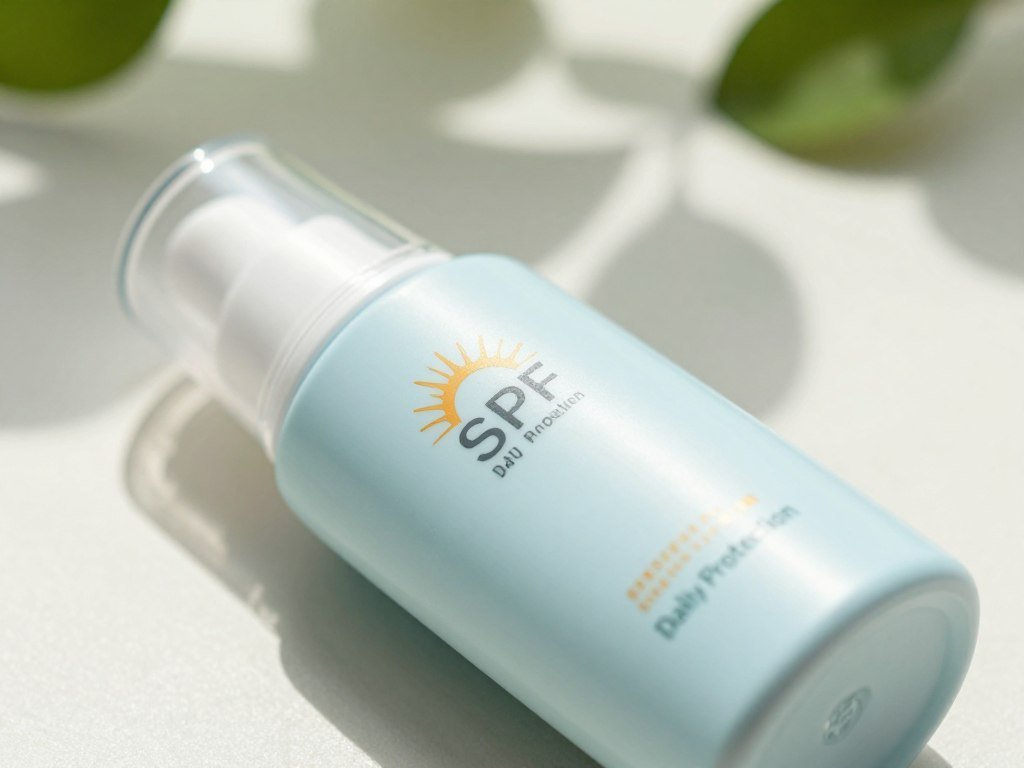
Choose broad-spectrum SPF 15 or higher as the baseline, then select a higher SPF if it fits your routine. Both labels matter: SPF measures sunburn protection, while broad-spectrum labeling indicates protection against UVA and UVB rays. The FDA recommends regular use of broad-spectrum sunscreen with SPF 15 or higher, alongside other sun-protection measures.
What SPF tells you
SPF is a measure of protection against sunburn, which is linked mainly to UVB rays. Higher SPF values up to 50 provide greater sunburn protection. A high sunscreen SPF does not replace other steps, such as seeking shade and wearing protective clothing.
For many people, broad-spectrum SPF 30 or higher is a practical everyday choice. The FDA’s stated recommendation is broad-spectrum SPF 15 or higher. The FDA’s SPF recommendation gives you a clear baseline, while a higher SPF may fit your needs and routine.
Why broad-spectrum labeling matters
UVA rays can contribute to skin aging, while UVB rays cause sunburn. A broad spectrum label means the sunscreen protects against both types of rays. SPF alone does not tell you that a product offers UVA protection.
Compare the broad spectrum wording and the SPF number together. A product with a high SPF but no broad spectrum label does not meet the same label standard for UVA and UVB coverage. Choose a product you can use regularly, rather than relying on the number by itself.
Sunscreen works best as one part of sun protection. Clothing, shade, and limiting time in strong sun can add protection beyond a sunscreen label. Do not use a high SPF as a reason to apply less sunscreen.
Best Face Sunscreens for Sensitive Skin
For a straightforward daily face option, EltaMD UV Daily combines zinc oxide protection with hyaluronic acid. It may fit people who want a face sunscreen with a hydrating ingredient, while other options offer a tint or different SPF. These are options for different preferences, not a universal ranking.
The table compares five face sunscreens by SPF, formula detail, and a useful fit. Product details can help you narrow your choices, but the finish and feel still depend on your own skin.
| Product | SPF | Filter or formula detail | Useful fit |
|---|---|---|---|
| EltaMD UV Daily | 40 | Zinc oxide plus hyaluronic acid | Dry or sensitive skin |
| SkinCeuticals Physical Fusion UV Defense | 50 | 100% mineral filters, translucent tint | Tinted mineral preference |
| Alastin SilkSHIELD All Mineral | 30 | All-mineral formula | Preference for a silky texture |
| AESTURA DERMA UV365 Mineral Hydrating | 50+ | Mineral hydrating formula | Daily facial use |
| Avène Mineral Sunscreen Face Lotion | 50 | Mineral face lotion | Daily facial use |
EltaMD UV Daily is available in tinted and untinted versions. That choice can make it easier to match your preference for a visible tint or a more neutral finish. It also combines zinc oxide with hyaluronic acid, which some people may like in a face formula.
SkinCeuticals Physical Fusion UV Defense uses 100% mineral UV filters and has a translucent tint. It may interest you if you prefer a tinted mineral sunscreen. Alastin SilkSHIELD All Mineral uses 100% mineral filters and may fit someone who likes a silky texture.
AESTURA DERMA UV365 Mineral Hydrating Sunscreen SPF 50+ Broad Spectrum and Avène Mineral Sunscreen Face Lotion SPF 50 are listed for daily facial use. The AESTURA formula is described as mineral and hydrating, while Avène is a mineral face lotion. Check each product’s directions and label for its intended use.
If you are choosing between tinted versions, compare the finish on your face and neck in natural light. A tint that looks subtle indoors can appear different outside. Compare the finish in daylight before settling on a tinted formula.
Which Face Formula Fits Acne, Redness, or Dryness?
EltaMD UV Clear SPF 46 is a focused option for acne-prone or rosacea-prone skin, while EltaMD UV Skin Recovery SPF 50 is recommended for redness-prone or post-procedure skin. For dry skin, CeraVe SPF 50 mineral sunscreen offers a more hydrating formula with hyaluronic acid and niacinamide. A stated skin-type fit is not a guarantee that you will tolerate a product.
Acne-prone or reactive skin
Acne-prone or reactive skin may benefit from trying a lightweight, non-comedogenic option such as EltaMD UV Clear SPF 46. It contains 9% zinc oxide and 5% niacinamide, and is described as oil-free and non-comedogenic. Those features make it a focused choice for acne-prone, rosacea-prone, or reactive skin.
Non-comedogenic means a product is designed not to clog pores. It does not promise that every person will find the formula comfortable. If your skin reacts to a product, the product’s listed skin-type fit cannot explain away that response.
Redness-prone or post-procedure skin
EltaMD UV Skin Recovery SPF 50 is recommended for redness-prone and post-procedure skin. Its suggested use case may help you shortlist it, but skin can be more delicate after a procedure. The treating clinician’s directions should guide what you apply during recovery.
Some people with redness also have dry or easily irritated skin. A formula’s intended fit is one starting point, not a substitute for your own response. Keep track of whether the product feels comfortable when you first try it.
Dry skin that needs a more hydrating feel
CeraVe SPF 50 mineral sunscreen suits readers who want a more hydrating mineral formula. It includes hyaluronic acid and niacinamide, ingredients used in hydrating or skin-supporting products. These details may appeal if your skin feels dry, but they do not guarantee that the sunscreen will feel moisturizing enough on its own.
For a dry-skin routine, a moisturizer can sit under sunscreen if both products work for you. A moisturizer does not replace sun protection, so keep sunscreen as the protective layer in your daytime routine. The best texture is the one you can wear without discomfort.
When a dermatologist recommends a product for a skin concern, treat that as a useful match rather than a personal prediction. For post-procedure skin, follow the treating clinician’s instructions before changing your sunscreen.
Best Sunscreen for Sensitive Skin for the Body
For dry or sensitive skin on the body, CeraVe Hydrating Mineral SPF 30 pairs zinc oxide with ceramides and hyaluronic acid. For other needs, La Roche-Posay Anthelios Mineral SPF 50 and Blue Lizard Sensitive Mineral SPF 50 offer higher SPF and water resistance. Compare the formula and intended area, not just the price.
These three products give you different details to weigh when choosing a body sunscreen.
| Product | SPF | Active-filter or formula detail | Useful fit |
|---|---|---|---|
| CeraVe Hydrating Mineral Sunscreen | 30 | 100% mineral, 21.6% zinc oxide, ceramides, hyaluronic acid | Sensitive or dry body skin |
| La Roche-Posay Anthelios Mineral | 50 | 100% mineral, zinc oxide and titanium dioxide, water resistant | Mineral formula with water resistance |
| Blue Lizard Sensitive Mineral | 50 | 100% mineral, fragrance-free, water resistant for 80 minutes | Fragrance-free body option |
CeraVe Hydrating Mineral Sunscreen for the body is a 100% mineral SPF 30 formula. It contains 21.6% zinc oxide, ceramides, and hyaluronic acid. Its zinc oxide and hydrating ingredients may appeal if you want a mineral body product with ingredients often used in skin-supporting formulas.
La Roche-Posay Anthelios Mineral SPF 50 uses zinc oxide and titanium dioxide. It is 100% mineral and water resistant. Blue Lizard Sensitive Mineral Sunscreen SPF 50 is also 100% mineral, fragrance-free, and water resistant for 80 minutes.
Prices are more useful when you compare similar sizes and intended uses. These listed options include products for different areas, so a face mini should not be compared with a larger body bottle as if they serve the same need.
- Tower 28 Mini SOS FaceGuard SPF 30: $18 for 20 ml.
- Evereden Moisturizing Mineral Sunscreen SPF 50: $29 for 60 g.
- Evereden Cooling Mineral SPF 30 Sunscreen Stick: $26 for 17.3 g.
- Cell Fusion C Aquatica UV Defense Sunscreen SPF 50: $21 for 50 ml.
To compare cost, look at price per ounce and account for whether the product is meant for your face or body. A lower listed price may come with a much smaller package or a different intended area. Check the package size and intended area before comparing prices.
What Sunscreen Is Best for Sensitive Skin in Kids?
For infants younger than 6 months, use shade and protective clothing rather than sunscreen unless a doctor advises otherwise. For older children, follow the Drug Facts label and choose a sunscreen that suits the child’s skin and planned activity. The FDA advises asking a doctor before applying sunscreen to an infant under 6 months.
Children’s sun protection also includes shade and clothing. For age-based details and product formats, see this guide to choosing sunscreen for kids.
Infants younger than 6 months
The FDA recommends shade and protective clothing for infants under 6 months. It does not recommend sunscreen for this age group and advises asking a doctor before applying it. An infant’s skin and care needs make this a case for medical guidance, not trial and error.
Choosing a sunscreen for children over 6 months
For children older than 6 months, the FDA recommends following the Drug Facts label. A dermatologist recommends zinc-based mineral or hybrid sunscreens for children and prefers mineral sunscreen for kids. These options can be a starting point if you are looking for a formula for a child with sensitive skin.
The table compares several children’s products by their listed SPF, zinc oxide percentage, and format. Earth Mama’s product name does not state an SPF, so the table does not assign one.
| Product | SPF | Zinc oxide percentage | Format |
|---|---|---|---|
| Badger Baby Mineral Sunscreen Cream | 40 | 22.5% | Cream |
| Earth Mama Sunscreen Lotion | Not specified in product name | 25% | Lotion |
| Mustela Mineral Sunscreen Lotion | 50 | 24% | Lotion |
| Neutrogena Pure & Free Baby Sunscreen Lotion | 50 | 21.6% | Lotion |
| Thinkbaby Safe Sunscreen | 50+ | 23.4% | Sunscreen |
Babyganics Kids Mineral Sunscreen Lotion SPF 50 is listed for active body use. Babyganics Kids Mineral Sunscreen Stick SPF 50 is listed for active face use. Those format details may help you choose a product for where it will go.
Applying sunscreen to a child
Use about ¼ teaspoon for a child’s face and approximately 1 ounce for the body. Reapply every 2 hours and immediately after swimming or sweating. Apply the product as directed on its Drug Facts label, and include exposed areas that are easy to miss.
A child’s activity and product format can affect how easy it is to cover the skin evenly. A lotion may suit larger areas, while a stick can be practical for the face. Recheck the child’s Drug Facts label whenever you switch products.
How Do Korean Sunscreen PA Ratings Work?
Korean sunscreen labels may use PA ratings alongside SPF, so compare both markings rather than treating them as interchangeable. PA relates to UVA protection, while SPF addresses sunburn protection. For everyday comparison, look for at least PA+++ with SPF 30.
The PA scale runs from PA+ to PA++++. The table shows three useful points on that scale and how to read them when comparing products.
| PA rating | Position on the scale | Practical reading |
|---|---|---|
| PA+ | Lowest positive tier | Lower than the suggested minimum |
| PA+++ | Middle listed tier | At least the stated minimum choice with SPF 30 |
| PA++++ | Highest tier in the listed scale | PPD value of 16 |
Reading the PA scale
PA ratings describe UVA protection, with more plus signs marking higher tiers. PA++++ corresponds to a PPD value of 16. PPD is a measure used in the PA rating system, so the highest listed PA tier gives you a specific UVA-related detail to compare.
A PA rating does not replace the SPF number. A sunscreen can show both markings because they refer to different parts of sun protection. Check each label rather than using one rating to guess the other.
Pairing a PA rating with SPF
Pair a PA rating with SPF when comparing Korean sunscreens. The practical recommendation is at least PA+++ and SPF 30. Also check the product’s active ingredients and broad-spectrum labeling when those details appear on the package.
The active ingredients help you understand which filters the sunscreen uses, while the PA and SPF marks describe protection ratings. Read all three details together before choosing a product. For everyday comparison, look for at least PA+++ with SPF 30.
How Much Sunscreen Should You Apply and When?
Apply sunscreen 15 minutes before sun exposure so it is on your skin before you head outdoors. Then reapply at least every 2 hours, or sooner after swimming or sweating. No sunscreen is waterproof, and water resistance has a time limit.
A simple routine makes it easier to cover exposed skin and keep protection in place. Use these steps as a reminder when you plan time outside.
- Apply sunscreen 15 minutes before going outdoors.
- Cover exposed skin with a full, even layer.
- Reapply at least every 2 hours while outdoors.
- Reapply sooner after swimming or sweating.
- Check the water-resistant time on the label.
Apply before going outside
Give sunscreen 15 minutes to settle before sun exposure. Put it on before leaving home when you can, rather than waiting until you are already outdoors. That timing gives you a clear point in your routine for applying it.
Apply the formula according to its directions and cover the skin that will be exposed. A rushed, patchy layer can leave gaps. Take care around the hairline, ears, and other spots that are easy to overlook.
Use enough to cover exposed skin
Use enough sunscreen to form an even layer over exposed skin. Thin or missed areas can reduce the protection you get from the product. Pay attention to the edges of clothing and to spots where straps or sleeves may shift.
A sunscreen stick can help you reach small areas, but follow its directions and spread the product as needed. A lotion may be easier to spread over a larger area. Choose a format you can use evenly on the skin you plan to cover.
Reapply after time outdoors or water exposure
Reapply at least every 2 hours. Swimming or sweating can call for an earlier application, as can toweling off. A water-resistant label must state whether the sunscreen remains effective for 40 or 80 minutes while swimming or sweating.
Water resistance does not mean waterproof. It gives you a stated time for water or sweat exposure, not all-day protection. Reapply after toweling off, since time in the water and towel drying can remove sunscreen.
Can Sunscreen Go Under Makeup?
Yes, sunscreen goes on before makeup as the protective skincare layer. Let it settle before adding complexion products, so your makeup does not disturb the base while you apply it. Colorescience Face Shield Flex SPF 50 and No-Show Mineral Sunscreen SPF 50 are options to wear under makeup.
Applying sunscreen beneath makeup
Apply the sunscreen as the last protective step in your skin care routine and before foundation or other makeup. Face Shield Flex SPF 50 and Total Protection No-Show Mineral Sunscreen SPF 50 are examples presented for use under makeup. Choose the one whose feel and finish work with your other products.
Give the sunscreen layer time to settle before adding makeup. Apply your complexion products gently, so you do not rub away the layer underneath. Your sunscreen still needs to be applied evenly before you begin makeup.
Touching up protection over makeup
Colorescience Sunforgettable Total Protection Brush-On Shield SPF 50 is a brush-on option for touch-ups over makeup. A brush-on format may be easier to use without disturbing your look, but it does not replace a properly applied initial sunscreen layer.
Powder and makeup with SPF should not be your only base for sun protection. A full, even layer of sunscreen underneath gives you a more reliable start to the routine. Keep a full, even sunscreen layer as the base instead of relying on makeup or powder alone.
How Can You Reduce White Cast?
A tinted mineral formula can be a useful first try if an untinted product leaves a visible cast. Tint may blend the pale look of mineral sunscreen, though the finish depends on your skin tone and the amount you apply. Test a tint on your face and neck in daylight, not only on your hand.
When tinted formulas help
Mineral sunscreens with zinc oxide or titanium dioxide can leave a visible white cast on some skin tones. A tint can make the product easier to blend visibly. Colorescience Sunforgettable Total Protection Face Shield FLEX SPF 50 is a 100% mineral tinted sunscreen with 12% zinc oxide and iron oxides.
SkinCeuticals Physical Fusion UV Defense SPF 50 is another 100% mineral formula with a translucent tint. A tint does not guarantee a perfect match, since skin tones and product finishes differ. The amount applied can also change how the color looks.
How to check the finish before wearing it all day
Try the product on your face and neck, where the color needs to match the skin you will show. A hand swatch can look close but fail to show how a formula blends across the face. Check the finish in daylight, which can make a visible cast easier to spot.
Let the formula settle before you judge its color. Look at your face from more than one angle, and check whether the tint leaves a line at the jaw or hairline. Check the finished color in daylight before wearing a new tint for a full day.
What Should You Do if Sunscreen Irritates Your Skin?
If a sunscreen causes a new rash or persistent stinging, stop using that formula rather than pushing through the reaction. Give your skin a break from the product while it is unsettled. Do not keep applying a formula that appears to cause a reaction.
Stop using a formula that causes a reaction
Fragrance, alcohol, dyes, and some preservatives such as parabens are possible irritation triggers. They are not guaranteed to cause a reaction, and a reaction can have more than one cause. Avoid repeated exposure to a product while your skin remains irritated.
Recurring reactions may need more than a product swap. A dermatologist can assess the symptoms and help identify contact allergens. This can be useful when several formulas seem to cause similar problems.
Narrow down possible triggers carefully
Keep a simple record of what you used and when the reaction began. That detail can help you discuss the pattern with a dermatologist. Do not test a new product on skin that is still inflamed.
- Stop using the new formula.
- Note the product and when the reaction started.
- Avoid retrying it on irritated skin.
- Seek professional advice for persistent or severe symptoms.
Stop a formula that causes a reaction, and avoid testing it again while your skin is irritated.
When a reaction keeps returning, a clinician can help sort out whether a specific ingredient is involved. Get medical advice for a severe or persistent reaction instead of testing another product on inflamed skin.
Conclusion
The most useful choice is a formula that fits your skin and your everyday routine. Comfort supports consistency, while broad-spectrum protection helps cover both UVA and UVB rays. Keep those two points in mind as you narrow your choices.
Choose one sunscreen that matches your skin concern and intended use, whether you need a face formula or a body product. Check its Drug Facts label before applying it for the first time. Pick one suitable option and check its label before adding it to your morning routine.
FAQ
What is the best SPF for sensitive skin?
How often should you reapply sunscreen?
Can I put sunscreen on my fungal acne?
Which brand is better for sensitive skin?
What do dermatologists recommend for sensitive skin?
What is the No. 1 brand recommended by dermatologists?
What skin care products do dermatologists recommend for people over 60?