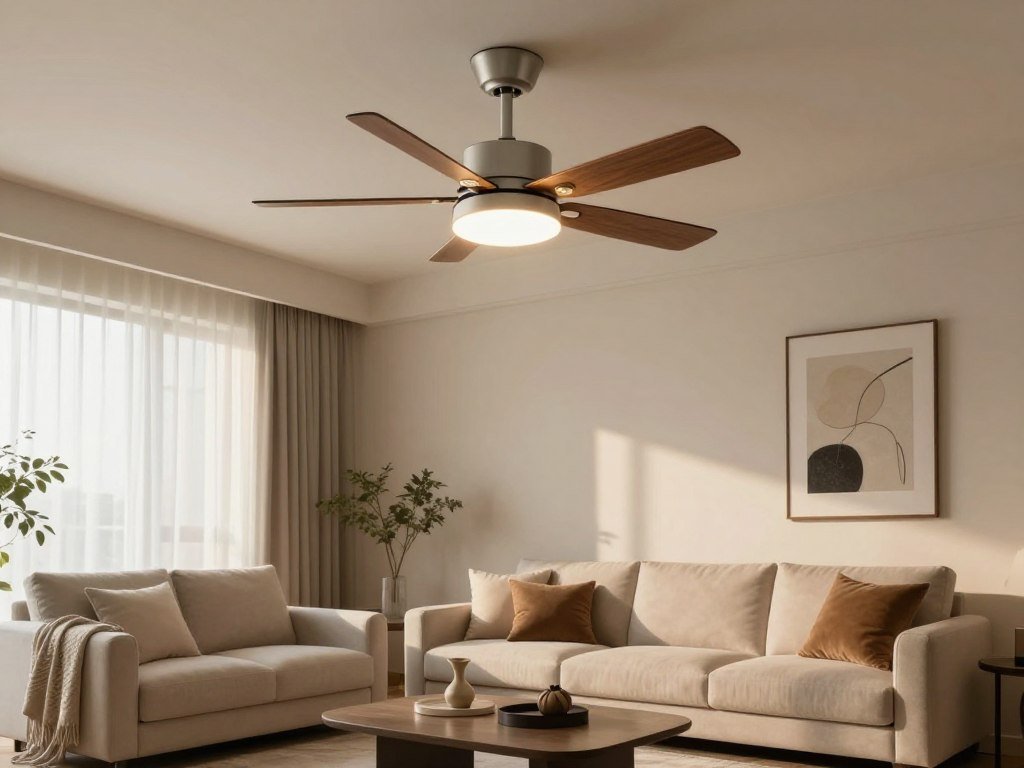
A well-chosen ceiling fixture can bring room lighting and air movement together without asking either feature to do every job. The best ceiling fans with lights suit the space, ceiling height, lighting needs, and controls you prefer. CFM means cubic feet per minute, a measure of the volume of air a fan moves.
That balance matters in a bedroom, living room, or covered porch. A fan should move air comfortably, while its light and design should work with the room’s other fixtures. Some homes need simple controls; others benefit from a remote or app.
You can narrow the choices by checking how you use the room, which features you rely on, and how the fixture will fit overhead. Start by deciding which feature matters most in the room you are furnishing.
Key Takeaways
- Match blade span to the room’s floor area and layout.
- Compare airflow at high and low speeds, not blade count alone.
- Check whether the light can handle your room’s main tasks.
- Choose controls that work where you use the fan.
- Confirm ceiling clearance and the correct mounting style.
How to Choose the Best Ceiling Fans With Lights
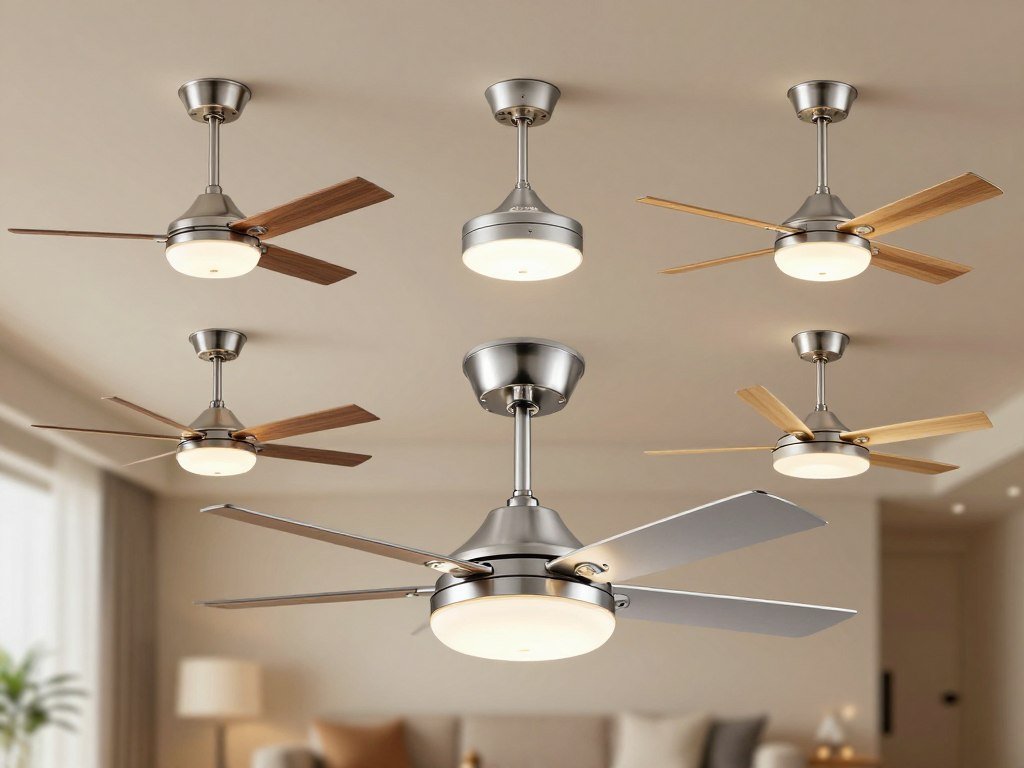
For a feature-rich all-rounder, start with the Dreo Smart Ceiling Fan 712S, then compare its features with the room and controls you need. Its six speeds, app controls, timer, adjustable white light, and mood lighting offer useful flexibility. Choose by room fit and daily use, not by feature count alone.
The Minka-Aire Barn suits a large room, while Hunter Builder offers a traditional look. The Hunter Hartland gives you another light-kit option, and the Hunter Dempsey works for a lower-profile setup. Check the measurements against the room before settling on a style.
| Model | Blade span | High airflow | Light or control detail |
|---|---|---|---|
| Minka-Aire Barn | 65 inches | 3,712-9,155 CFM | Built-in light, remote, and app |
| Hunter Builder | 52 inches | 4,339 CFM maximum | Light, pull chains, reversible blades |
| Hunter Hartland | 52 inches | 5,634 CFM maximum | Light kit and remote |
| Hunter Dempsey | 52 inches | 3,768 CFM on high | Light and low-profile design |
| Dreo Smart Ceiling Fan 712S | 52 inches | 6,040 CFM maximum | Adjustable light, app, and timer |
In 2026, Consumer Reports lab-tested 52-inch ceiling fans from nine manufacturers for airflow, adjustability, and noise. Two models earned excellent Overall Scores. The Minka-Aire Barn’s airflow range reaches 9,155 CFM at its highest setting.
A remote or app keeps controls within reach, but it cannot fix a fan that is too large for the room.
The best ceiling fans with lights and a remote keep controls accessible from a bed or sofa. For a living room, layout and existing light sources also shape the right choice. Hunter ceiling fans with lights include options with pull-chain or remote controls, while Minka-Aire ceiling fans with lights include remote and app operation.
Treat the shortlist as a fit check, not a reason to choose a larger fan than the room can accommodate.
What Fan Size Fits Your Room?
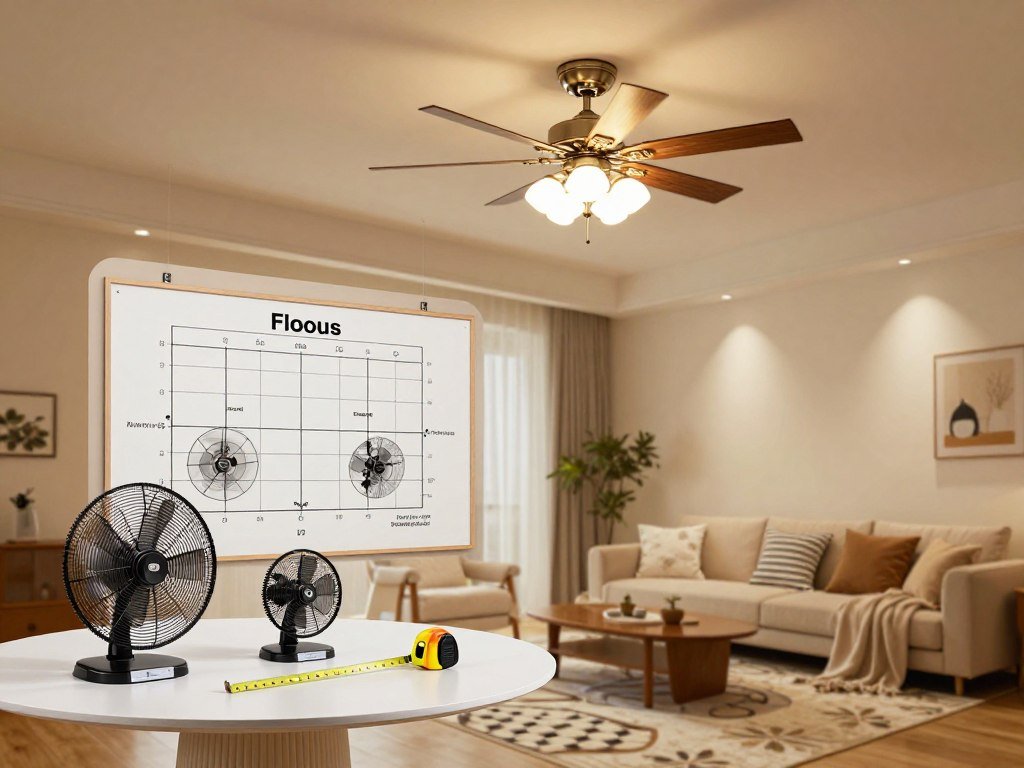
Measure the room before comparing blade spans, since the same fan can feel oversized in a small bedroom and underpowered in an open living area. Measure length and width in feet, then multiply them to find square footage. That area gives you a practical starting point.
Use the guide below as a general range, not a strict limit. Open layouts may need a larger span or more than one fan, while furniture placement and safe clearance still matter.
| Room area | Suggested fan size | Example room use |
|---|---|---|
| Up to 100 square feet | 30-42 inches | Small bedroom |
| 100-400 square feet | 44-54 inches | Living room |
| More than 400 square feet | 56-96 inches | Large open-plan area |
A long, narrow room can have the same floor area as a square room, yet its airflow needs may differ. An open kitchen and living area also behaves differently from two rooms divided by a wall. Consider where people sit and sleep, not just the total number on your floor plan.
Blade span describes the width of the fan from one blade tip to the opposite tip. The ceiling and nearby walls can limit the useful size, even when the room’s square footage points toward a larger fan. Fans need clear space to move air around occupants.
If the room is larger than 400 square feet, a 56-96-inch fan is a general starting range. A larger span or multiple fans may suit an open area, depending on how the space is divided. Measure the usable room area rather than estimating from the doorway.
Which Ceiling Fan Works Best in a Bedroom?
A remote is especially practical in a bedroom because you can change the fan setting without getting out of bed. For a ceiling fan with a light and remote for a bedroom, the River of Goods Yvette is a smaller-room option. A bundled remote avoids reaching for a pull chain from bed.
The fan’s style also matters in a room where you want a calm look. Existing lighting can affect whether the fan light needs to brighten the whole space.
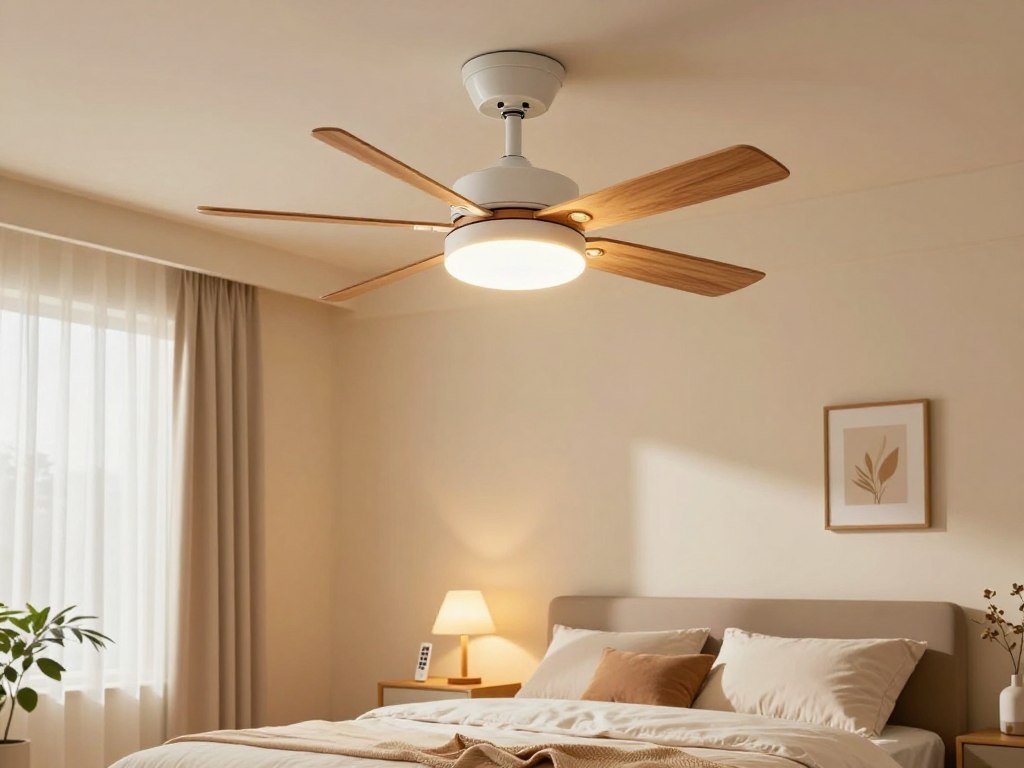
A 42-inch remote-controlled option for a smaller bedroom
The River of Goods Yvette has a 42-inch blade span, a light kit, remote control, and reversible blades. That combination makes it a practical pick when a smaller bedroom needs both air movement and overhead light. A remote lets you adjust the fan without standing beneath it, a comfort you may value when winding down.
Its reversible blades give you a choice of two visible finishes, so the fan can better suit the room’s style. Check the actual blade finish and other fixture details against your furniture and ceiling. The remote is the key convenience here, while the light kit adds a useful option rather than setting the room’s whole lighting plan.
A bedroom with bedside lamps or another overhead fixture may not need the fan light as its only source. Layered lamps can provide focused light without turning on the main fixture. If you are planning a softer bedroom look, these small-bedroom lighting ideas show how bedside light can add warmth.
A 52-inch globe-light style for a larger bedroom
The Hunter Hepburn is a 52-inch fan with a globe-shaped light, brass base, and white blades that reverse to aged oak. It suits a larger bedroom where a globe fixture feels more at home than a compact, plain light kit. The brass and two blade finishes create a more traditional look without requiring extra decorative lighting.
Compare the fixture’s shape with nearby furniture and the room’s other metal finishes. A globe light can become a visible feature, so it may work best when you like the fixture’s design as well as its use. The Hepburn’s reversible blades also let you change the look without replacing the fan.
Bedrooms with other overhead or bedside lighting may not need the fan light to serve every task. Check whether the bedroom already has enough light before making the fan’s light kit a deciding feature.
What Makes a Ceiling Fan Move More Air?
A fan’s airflow depends on more than how many blades you can see. Compare both its high-speed airflow and the difference between high and low settings. That range shows whether the fan can offer a strong breeze and a gentler setting.
Consumer Reports tested 52-inch fans from nine manufacturers in 2026 for airflow, adjustability, and noise. It found adjustability to be the biggest performance difference among those models. Adjustability means the gap in airflow between a fan’s highest and lowest settings.
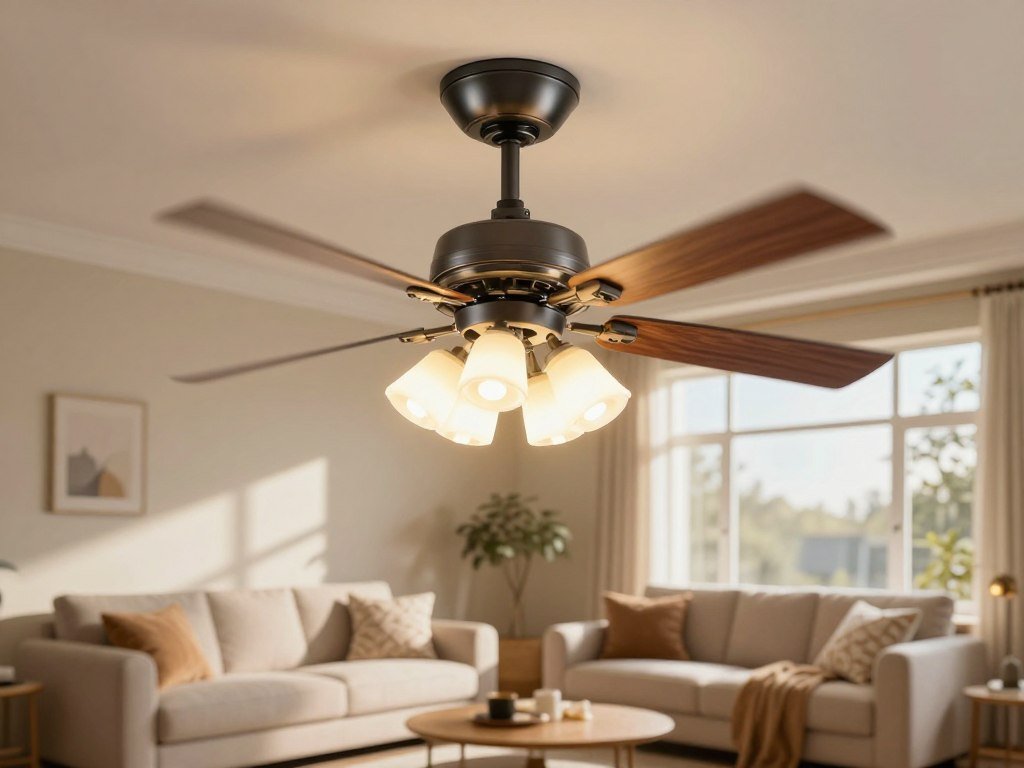
Use this five-point checklist when airflow matters more than appearance:
- High-speed airflow rating for the fan’s stated size.
- Airflow range between the highest and lowest settings.
- Motor strength for steady air movement.
- Blade shape and material, which affect how blades move air.
- Blade pitch, or the angle of each blade.
A fan with five blades does not automatically circulate air better than one with three. Motor strength, blade shape, pitch, and material all affect performance. An ideal blade pitch is 12-15 degrees, but the full design matters more than that number alone.
Consumer Reports’ test results for the quietest tested ceiling fans compare airflow, noise, and adjustability at high and low speeds. The Westinghouse Comet rated excellent for airflow and noise and was the only tested fan to ace adjustability. Results from those 52-inch fans are most useful when compared with models of similar size.
Airflow figures from different fan sizes or test conditions are not direct equivalents. A high CFM number can help, but it does not tell you how smoothly a fan works across its speed settings. Compare airflow and adjustability for the same fan size before treating a single high-speed rating as the whole story.
How Bright Should a Fan’s Light Be?
Choose light output for the tasks in the room, then decide whether dimming or adjustable color matters more. Lumens describe how much light a fixture gives off, while color temperature describes whether it looks warmer or cooler.
The Honeywell Carmel has an 800-lumen, 3000K LED light that dims from 20% to 100%. The Sofucor KBS-52K077 has an 18-watt LED light with three color tones. Those features do different jobs: dimming changes brightness, while color options change the light’s tone.
A 3000K light looks warm compared with a cooler white tone. The Carmel’s dimming range gives you control over its brightness, but it does not mean the light changes color. The Sofucor’s three tones let you select a different look, while its stated wattage describes power use rather than brightness in lumens.
Think about what happens in the room during the day and at night. A kitchen or reading area may need clear task light, while a sitting room may benefit from a softer setting. An integrated light can support the room’s main lighting, but it may not replace every desk lamp or reading light.
Natural light can change the role of a fan light, too. A skylight can bring daylight into a room, while its placement and type affect how that light reaches the space. A skylight’s natural light may reduce the need to use the fan fixture during the day.
Check the fixture’s light output and color settings against your actual tasks. A pleasing evening glow is useful, but it may not be enough for reading, cooking, or other close work. Check that the fixture’s light is suitable for the room’s main activities, not only its evening ambience.
Which Controls Make a Fan Easier to Use?
Choose controls around where you will use the fan, such as a remote at bedside or an app for scheduled changes. A control is useful when it is easy to reach and simple to use. Ceiling fans commonly use wall switches, pull chains, or remote controls.
The Dreo Smart Ceiling Fan 712S is a useful smart ceiling fan example, with six speeds, app control, timers, adjustable white light, and RGB mood lighting. Its listed noise level is under 35 dB, which does not promise silence in every room. Look at the whole control setup, not just its smart features.
- Wall switch: Check whether it controls the fan, the light, or both.
- Pull chain: Make sure the chain is easy to reach from the floor.
- Handheld remote: Keep it somewhere you can find it from bed or a sofa.
- Smartphone app: Check that its settings suit how you use the fan.
- Timer or voice integration: Confirm that scheduled or spoken commands are supported.
The Dreo’s app can set a fan speed or adjust its light without a handheld remote. Its timer offers 1-, 4-, and 8-hour settings, which can suit a set bedtime or time away from home. Six speeds give you more steps between a light breeze and the highest setting.
Smart controls can be handy, but they are not a must for every household. A simple wall switch may work well when the fan stays at one speed most of the time. If more than one person uses the room, choose controls everyone can find and understand.
Some fans pair app or remote settings with a separate wall switch. That setup may matter if one person wants the light off while the fan keeps running. Confirm that the fan and light can be controlled separately if you want different settings.
Should You Choose Flush Mount or Downrod?
Check the fan’s lowest point and blade clearance before choosing a mounting style. Fan blades should sit at least 7 feet above the floor, with 8-9 feet a common ideal. The right mount depends on the ceiling height and the fan’s drop.
A flush mount keeps the fan close to the ceiling, while a downrod hangs it lower. Ceilings 10 feet and higher will often need a downrod. Check the full fixture height, not only the name used for its mount.
| Mount type | Typical ceiling situation | Practical trade-off |
|---|---|---|
| Flush mount | Low ceiling with limited drop | Closer fit, but less height adjustment |
| Short downrod | Standard ceiling needing added clearance | More space below the ceiling, with extra drop |
| Longer downrod | Ceiling 10 feet or higher | Can lower the fan, but needs more vertical room |
The Sofucor flush-mount fan extends just over 11 inches below the ceiling and requires an 8-foot ceiling. Its low-profile label does not make it suitable for every low ceiling. The fixture’s actual drop still affects how much room remains beneath it.
Some ceilings slope, which can change the kind of mount a fan needs. A downrod can help position the fan below a sloped surface, but the allowed angle and parts depend on the model. The Minka-Aire Barn’s 10-inch downrod can help clear a sloped ceiling.
Compare the fan’s measured drop with the height of the room and the position of nearby beams or lights. Ceiling height alone does not show how low the light kit or housing will sit. Follow the product’s clearance requirements and use a qualified installer if the mounting setup is uncertain.
Can a Ceiling Fan Go on a Covered Porch?
A covered porch still needs a fan rated for the conditions where it will be installed. A protected outdoor rating does not mean a fan can handle direct rain. Match the rating to the porch’s actual exposure.
A dry or protected-outdoor rating suits covered locations that avoid direct weather. Damp-rated products can handle some moisture, while wet-rated fans are made for fully exposed wet locations. Read the location rating before focusing on style or controls.
- Check the fan’s location rating on its product details.
- Match that rating to the porch’s exposure to moisture and weather.
- Confirm that the light and controls suit how you use the outdoor space.
The Wind River Willow is a 60-inch outdoor ceiling fan rated for a maximum 6,131 CFM. It has a light, remote, app controls, and a dry or protected-outdoor rating. That rating makes it an example for a covered space, not a guarantee against direct weather.
The Sofucor fan is listed for indoor or protected-outdoor use. That wording still calls for a sheltered location, rather than a spot where rain can reach the fan. A porch ceiling may block rain from above, but wind can carry moisture through open sides.
Check where water could enter from the sides and whether the fan will face regular moisture. The control and light setup should also make sense for outdoor use. Match the location rating to actual exposure rather than relying on the word “outdoor” in a product description.
How Do Motor, Warranty, and Brand Affect Long-Term Value?
A model’s warranty and installation conditions tell you more than a broad brand label. Most ceiling fans last 10-15 years when properly installed and maintained. A long motor warranty does not automatically cover every part or labor.
Read the model’s coverage and specifications together. Small differences in control support or location rating can matter more than a familiar logo.
Motor life and warranty details
Proper installation and maintenance affect how long a ceiling fan lasts. Dust on the blades, loose connections, or a poor mounting setup can affect use over time. Keep the fan clean and follow the care steps that come with the model.
Warranty terms explain what the maker will repair or replace under stated conditions. Hunter lists a limited lifetime motor warranty for its 52-inch Dempsey fan. That term applies to the motor, not automatically to the light, controls, blades, or installation labor.
Check how the warranty handles parts, labor, and exclusions. A motor warranty can offer useful protection, but it does not promise that every component will last as long as the motor. Save the model details and warranty terms with your purchase records.
How to screen ceiling fan brands before buying
There is no sound reason to label an entire manufacturer a brand to avoid without checking its models. A ceiling fan brand can sell products with different motors, blades, controls, and ratings. Compare the details of the exact fan you plan to use.
Use these model-level checks before deciding:
- Warranty scope: See which parts and services the terms cover.
- Control match: Confirm that the fan supports the controls you need.
- Location rating: Choose a model suited to its indoor or outdoor setting.
- Room fit: Compare the model’s size and specifications with your space.
Quiet operation, energy efficiency, and build details can also vary between models from the same maker. Check the listed features rather than assuming every fan under a brand name works alike. Read the warranty terms for coverage limits and exclusions before treating its duration as a measure of total product life.
What Does Ceiling Fan Installation Cost?
A straightforward replacement has a labor estimate of $150-$300 through Home Depot’s Pro Referral and $100-$300 through Lowe’s. A new installation that needs wiring or mounting changes can cost more than a replacement.
Before booking, make sure the existing setup suits the fan you chose. Ask what the estimate covers, especially if you need a different mount or changes to wiring.
- Confirm that the existing ceiling box and wiring suit the fan.
- Check whether the fan needs a flush mount or downrod.
- Ask which labor tasks the estimate includes.
- Confirm the labor warranty and its terms.
The stated Lowe’s estimate is $100-$300 for straightforward replacement labor. Lowe’s booked installations include a one-year labor warranty, in addition to the manufacturer’s materials warranty. The stated Home Depot Pro Referral range is $150-$300 for a straightforward replacement.
Those labor terms do not show which retailer has better ceiling fans. Compare the specific fan models separately, then weigh the installation work and coverage for your job. A ceiling fan with lights may need wiring that differs from the old fixture’s setup.
Tell the installer about the fan’s size and mounting needs before the appointment. A quote for a direct replacement may not cover extra work on the ceiling box or wiring. Ask whether the quote covers any needed wiring or mounting changes before scheduling the work.
How Should You Run a Fan in Summer and Winter?
In summer, set the blades to turn counterclockwise so they create a downward draft. A ceiling fan makes people feel cooler by moving air over them, but it does not lower room temperature.
In winter, run the fan clockwise on low speed to push warm air down. Use a gentle setting so the fan moves air without creating a strong draft.
The direction switch is often on the fan body, but its location can vary by model. Change the setting only when the fan is off. Then use the speed that feels comfortable for the people in the room.
Moving air can help your body release heat in warm weather. That comfort effect can let a household using air conditioning raise its thermostat setting about 4°F without reducing comfort. It is not a promise that every home will use less energy or pay a smaller bill.
In winter, warm air can gather near the ceiling. A clockwise fan on low speed can help push that warm air down. The goal is a mild circulation, not a breeze that makes people feel colder.
The right seasonal setting depends on the fan’s direction switch and how the moving air feels in the room. Check the direction switch on the fan before changing the thermostat setting.
Conclusion
The right choice is the fan that fits the room and meets its main lighting and comfort needs. Blade span, airflow, light, controls, and mounting all shape how well a fan works in your home.
Start with the room and ceiling measurements, then compare only models that suit those limits. That small check can help you avoid a fixture that hangs too low or feels out of place. Measure the room and ceiling height, then use those numbers to narrow the final options.
FAQ
What is the average lifespan of a ceiling fan?
Which is better, a 1200mm or a 1400mm fan?
What brand ceiling fan is the best?
Which ceiling fan is best in 2026?
What is the best time of year to buy a ceiling fan?
Who has better ceiling fans, Lowe’s or Home Depot?
What are some high-quality brands of ceiling fans with lights?
Which is better, a 3 or 5-blade ceiling fan?