Supportive boots can make long days easier on a sore heel, but the right pair has to fit your work and walking routine. The plantar fascia is the thick band of tissue running from the heel toward the toes that supports the arch. Repetitive strain and hard surfaces can aggravate this tissue, causing plantar fasciitis and sharp heel pain that often feels worst during your first steps in the morning.
The best boots for plantar fasciitis can improve everyday comfort, especially during long shifts, but footwear cannot promise a cure. A boot that feels supportive in a store may still bother your heel after hours on concrete or uneven ground. Fit, work needs and walking habits all affect how a pair feels, so judge comfort during real use when possible. Treat persistent or worsening heel pain as a reason to seek an accurate diagnosis from a qualified clinician.
Key Takeaways
- Match your boot choice to your work, trail and daily walking needs.
- Look for a stable heel, arch support and cushioning that feels right.
- Check jobsite toe rules before choosing a safety boot.
- Make sure any insert fits without crowding your toes or lifting your heel.
- Get professional advice when heel pain persists or gets worse.
Best Boots for Plantar Fasciitis by Work and Trail Use
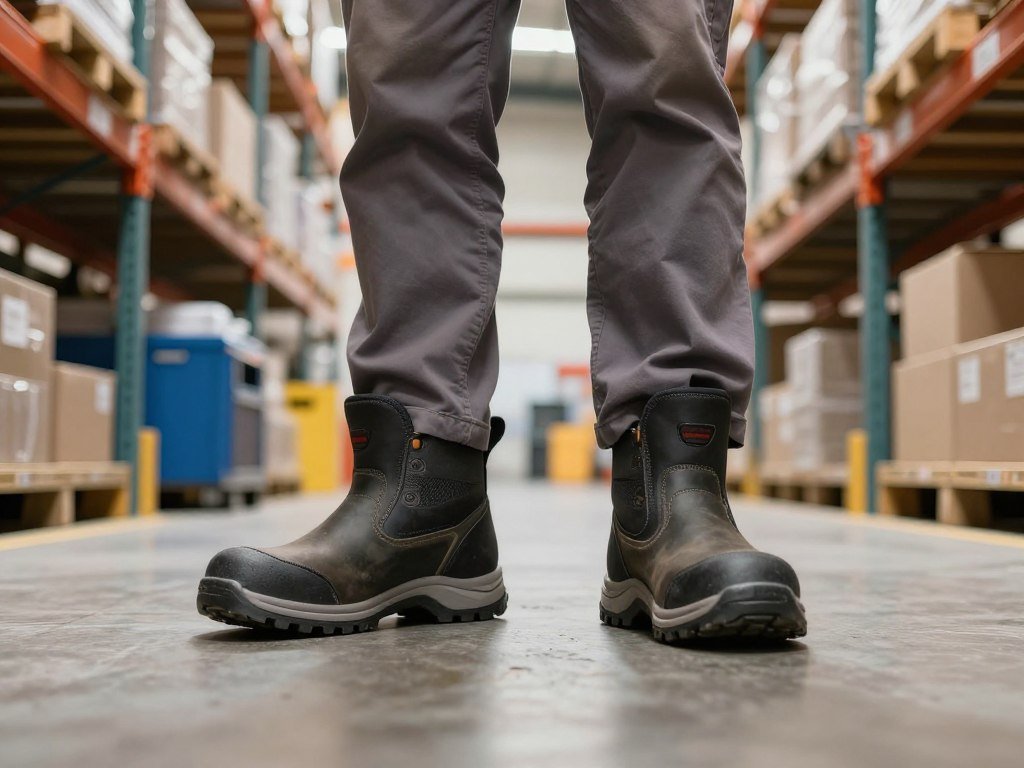
For a concrete work shift, start with the waterproof composite-toe Wolverine Overpass; for severe heel pain, consider the Orthofeet Granite. These plantar fasciitis boots serve different needs, so the best pair depends on your job and symptoms. The Wolverine Overpass is the clearest pick for concrete shifts, while the Orthofeet Granite suits severe heel pain.
The CAT Second Shift is a soft-toe shop-floor choice with a steel shank. The Carhartt CMF6366 offers a composite toe for heavy-duty construction. A job’s required safety rating comes before comfort preferences, even when another boot feels softer in the store.
| Model | Toe | Best-fit use | Standout support or protection |
|---|---|---|---|
| Wolverine Overpass | Composite | Concrete shifts | Waterproof construction |
| Orthofeet Granite | Protective toe not specified | Severe heel pain | Orthotic-grade insole and deep heel cup |
| CAT Second Shift | Soft toe | Shop floor | Steel shank |
| Carhartt CMF6366 | Composite | Heavy-duty construction | Composite-toe protection |
For a concrete shift, a waterproof upper can help keep work conditions from soaking your socks. The Overpass pairs that feature with composite-toe protection, making it a direct match for workers who need both. Still, a comfortable feel does not make a boot suitable for every regulated worksite.
Match the boot’s toe protection to the jobsite rule before comparing cushioning.
Check your employer’s rules for the required toe type and safety rating. A soft-toe boot may suit a shop floor where protective toes are not required, but it cannot replace required protective footwear. Pick the pair that fits the task first, then judge the comfort features during a proper try-on.
The Orthofeet Granite is built around an orthotic-grade insole and deep heel cup, which may appeal when heel pain is severe. The CAT Second Shift has a steel shank, a support feature for workers who want a firmer midsection. The Carhartt option is the shortlist choice for heavy-duty construction, provided it meets the site’s rules.
Which Support Features Matter Most?
A supportive boot combines a secure heel, a firm arch platform and cushioning rather than relying on softness alone. A deep heel cup helps hold the heel in place, while arch support limits a collapsed, unsupported feel. Choose stable support with cushioning, not a boot that feels soft but lets your foot shift.
| Feature | What it does | What to check in a boot |
|---|---|---|
| Deep heel cup | Holds the heel more securely | Heel sits centered without rubbing |
| Firm arch support | Supports the arch during steps | Arch feels supported, not pressed |
| Shock-absorbing midsole with removable insole | Cushions impact and allows insert changes | Midsole feels steady; footbed lifts out |
A deep heel cup and firm arch support
A deep heel cup gives the back of your foot a more secure seat inside the boot. It can reduce unwanted movement, which may make each step feel more controlled. Firm arch support should meet your arch without creating a sharp pressure point.
The right feel is personal, but the heel should not slide around as you walk. A boot with removable insoles gives you the option to use another foot orthosis. A foot orthosis is an insert that supports the foot inside a shoe or boot.
Cushioning and a stable shank
A shock-absorbing midsole can soften the repeated impact of walking and standing. Yet a soft, compressible feel is not the same as stable support. If the midsole collapses under your weight, the boot may feel less steady than it did during a brief try-on.
A shank is a firm piece built into the boot’s midsection. A fiberglass shank helps keep that area stable on uneven ground, and a shank resists twisting through the sole. It can be useful when you walk over rough surfaces or carry a load.
Toe-box room for natural movement
A roomy toe box gives your toes space to spread instead of clawing for grip. Tight toes can make a long walk feel tiring, even when the heel and arch feel supported. Check that your toes can move without pressing into the boot’s sides.
Many people focus on cushioning first, though a steady platform and toe room also affect comfort. A boot should bend at the forefoot as you step, while its middle resists twisting. Flex the forefoot, but avoid a boot that twists easily through the middle.
How Should Boots Fit for Heel Pain?
A boot can have the right features on paper and still fail if your heel lifts or your toes feel cramped. Try it on while standing and walking, not just while seated. Most workers with plantar fasciitis are advised to try a slight 8-12 mm heel drop.
Comfort still matters, and your clinician’s guidance may affect whether that heel height suits you. Heel drop means the difference in height between the heel and forefoot. Foot shape and fit vary by brand and model, so one size label cannot promise the same feel across boots.
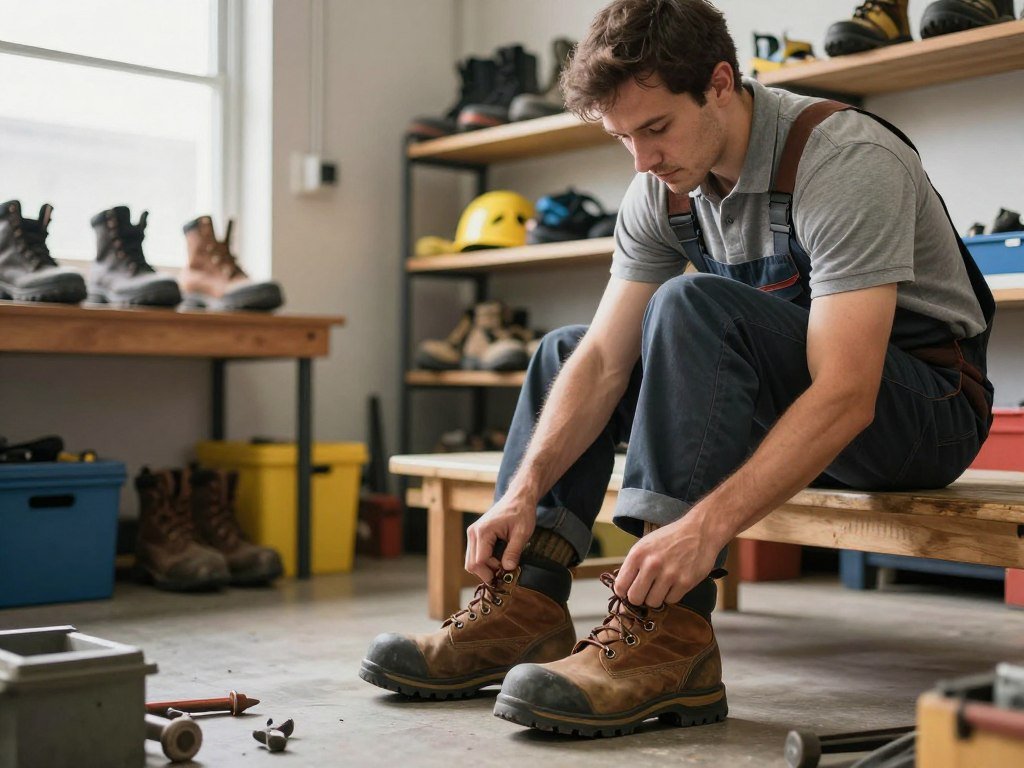
- Try boots on later in the day, when your feet may be larger.
- Wear the socks you intend to use at work.
- Check toe room while standing, with both feet bearing weight.
- Walk and test that the heel does not slip with each step.
These checks help you notice pressure that a quick glance will miss. Stand on both feet when judging the toe area, since toes need room under body weight. Then walk at a normal pace and notice whether the heel stays seated.
A removable insole or orthosis can change how a boot fits. The added layer may take up space at the toes or raise your heel inside the collar. Recheck the fit with the socks and any insert you plan to wear.
Which Midsole Works Best on Concrete?
On concrete, a midsole’s ability to keep absorbing impact matters as much as how cushioned it feels in the store. EVA midsoles can flatten after 6-12 months of repeated concrete use, while polyurethane and dual-density midsoles tend to last longer. That EVA range is an estimate, not a fixed replacement date for every worker.
Concrete offers little give, so repeated steps send impact through your feet and lower limbs. EVA is light and often feels soft at first, but heavy use can pack it down. Polyurethane and dual-density midsoles are firmer options that can hold up longer under repeated wear.
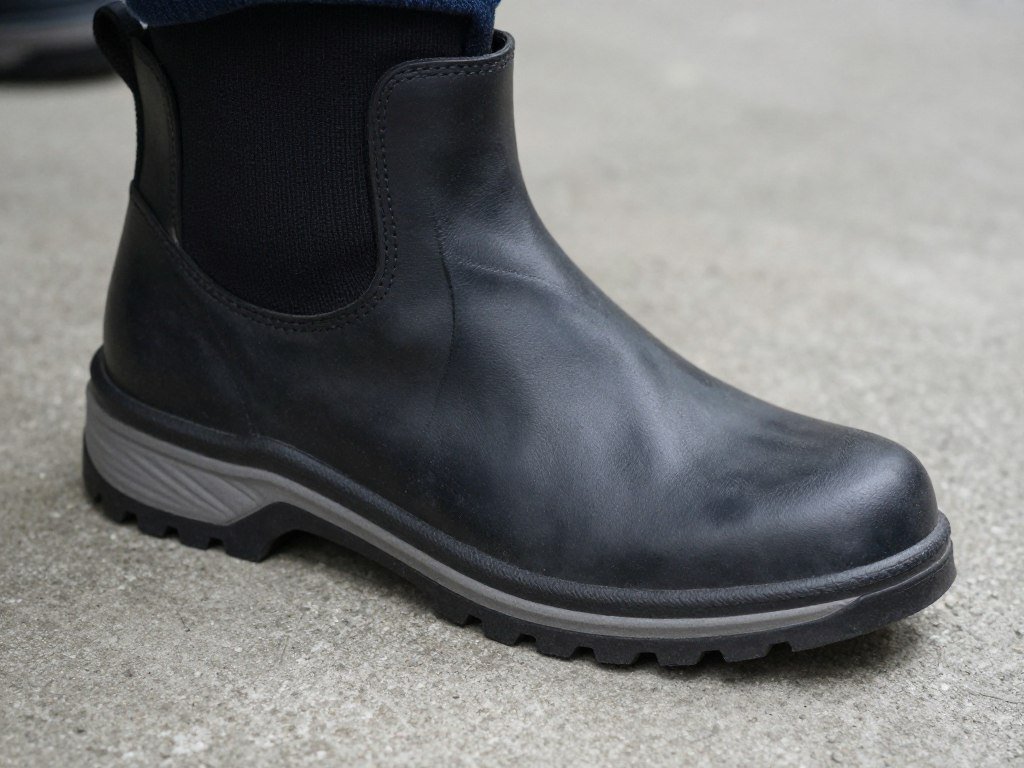
Use changes wear: body weight, shift length, floor surface and how often you wear the boot all matter. A worker on concrete for long shifts may notice a change sooner than someone who wears the pair occasionally. Look at how the boot feels during the workday, not only at the outside.
The upper can still look sound after the layer under your foot has lost its spring. That is why a clean-looking boot may no longer feel comfortable on a hard floor. Notice whether the sole feels flatter or your feet tire sooner during a familiar shift.
Some boots use a dual-density midsole, which combines layers with different levels of firmness. That design can pair a firmer base with a softer layer underfoot. The label alone cannot tell you whether the feel suits your walking style, so try the boot on a hard surface if possible.
Replace a boot when its cushioning has noticeably packed down, even if the exterior still looks serviceable.
Should You Choose a Steel-Toe or Composite-Toe Boot?
If your job permits either material, composite toe is the lighter option; if the site requires steel, follow that requirement. Both types meet ASTM F2413 impact and compression requirements. A lighter toe does not replace the safety rating or toe type your job requires.
Start with the rule for your workplace, then compare weight and fit. Composite toes weigh less than steel toes, which can matter during a long shift. Some job sites still name steel toe as a requirement.
| Toe type | Relative weight | Shared standard | When to choose |
|---|---|---|---|
| Composite toe | Lighter than steel | ASTM F2413 impact and compression | When allowed and lower weight suits your needs |
| Steel toe | Heavier than composite | ASTM F2413 impact and compression | When the site requires steel or you prefer it |
When composite toe makes sense
A composite toe is a practical choice when your employer accepts it and you want less weight at the front of the boot. It still needs to meet the required impact and compression standard. Check the model’s rating rather than relying on its material name alone.
Weight can affect how a boot feels after many steps, but it does not decide whether that boot is safe for a task. A site may require steel even when another material has the same standard. The employer’s rules settle that choice.
When steel toe is required
When a worksite calls for steel toe, choose a boot that meets the stated rule. The KEEN Utility Lansing Mid is a waterproof steel-toe option for outdoor and industrial work. Its construction may suit wet tasks, but your job’s required rating still controls.
Ask what the safety label needs to show if the rule is unclear. A boot that misses a required toe type can be unsuitable even if its fit feels excellent. Check the employer’s required toe type and rating before ordering.
Can Orthotics Help with Plantar Fasciitis?
A foot orthosis can help reduce plantar heel pain, but a prefabricated insert may work as well as a custom one for many people. A 2018 systematic review of 19 trials with 1,660 participants found moderate-quality evidence for less pain in the medium term. The review found similar results for prefabricated and custom orthoses.
The medium-term finding supports trying an insert, but it does not promise the same result for everyone. A prefabricated model may be a sensible first option if it fits your foot and boot. Custom does not automatically mean better for every person.
Fit the insert inside the boot before relying on it for a full day. It should not lift your heel out of the collar or crowd your toes against the front. A foot orthosis must sit flat and leave the foot secure.
Check whether the boot has a removable insole, since taking it out can create room for an orthosis. Some inserts are thicker than the footbed that came with the boot. A tight fit can change how the boot feels even when the insert itself seems comfortable.
People with different foot shapes may prefer different levels of firmness and arch height. An insert that feels helpful on a short walk may feel too firm after hours of standing. Give your foot time to adjust, and seek clinical input if pain increases.
Bring your current insert when trying boots, if you already use one. That gives you a better sense of the space available and how the heel sits. Check that the boot’s removable insole leaves enough room for the orthosis you intend to use.
Which Everyday Boot Styles Suit Women and Men?
A men’s or women’s label narrows the sizing range, but it does not tell you whether the boot will fit your particular foot. Compare length, width, heel hold and insert room in the exact model. The best everyday shoe for plantar fasciitis fits securely and supports the arch without pressing on the heel.
U.S. shoe sizing uses separate women’s and men’s scales, and width labels vary by model. Common work-boot widths include D and 2E, though not every boot comes in both. Fit the foot, not just the size printed on the box.
Women’s boot fit and everyday shoes
Women’s boots may come in a width range that differs from men’s models, but labels alone do not show how a heel or toe box will feel. Compare the length and width that suit your foot, then consider room for an insert. A good everyday shoe can be a boot or another supportive style.
Women looking for boots for women with plantar fasciitis should judge the shape of each model, not assume a women’s size will fit every foot. The same applies when choosing the best boots for plantar fasciitis for women. Your heel should feel held without a tight toe area.
Men’s boot fit and everyday shoes
Men’s sizing also varies across brands and boot shapes. Men comparing the best boots for men with plantar fasciitis should check the heel hold and toe room in each width offered. The best shoes for plantar fasciitis are the ones that feel supportive through ordinary daily use.
Use these checks when comparing styles:
- Use the correct U.S. sizing scale for the model.
- Compare available width options, including D or 2E when offered.
- Test the boot with your daily socks and orthosis.
Two boots with the same size label can fit very differently around the heel and forefoot. A model with enough room for an insert may still feel loose at the heel. Judge the fit in the exact model and width you plan to wear.
Which Hiking Shoes Work for Plantar Fasciitis?
For a women’s waterproof hiking shoe, the HOKA Kaha 3 Low GTX combines a GORE-TEX membrane, sugarcane-based EVA and a Vibram Megagrip outsole. It weighs 1 lb. 11.8 oz. per pair. Choose trail shoes by fit and support as well as waterproof features.
| Model | Waterproof construction | Midsole | Distinguishing detail |
|---|---|---|---|
| HOKA Kaha 3 Low GTX | GORE-TEX waterproof/breathable membrane | EVA made with 30% sugarcane | 1 lb. 11.8 oz. per pair; Vibram Megagrip outsole |
| HOKA Anacapa 2 Low GTX | GORE-TEX Invisible Fit waterproof/breathable laminate | Compression-molded EVA made with 30% sugarcane | Low hiking shoe |
| KEEN Targhee IV Waterproof | KEEN.DRY membrane | Air-injected Luftcell | Waterproof hiking shoe |
| Salomon X Ultra 5 GTX | GORE-TEX waterproof/breathable membrane | EnergyCell EVA | Trail shoe with waterproof construction |
Women’s hiking shoe options
The HOKA Anacapa 2 Low GTX uses a GORE-TEX Invisible Fit waterproof/breathable laminate. Its compression-molded EVA midsole is made with 30% sugarcane. This offers another waterproof HOKA option for women who want a low hiking shoe.
The KEEN Targhee IV Waterproof has a KEEN.DRY membrane and an air-injected Luftcell midsole. The Salomon X Ultra 5 GTX pairs a GORE-TEX membrane with an EnergyCell EVA midsole. Trail feel matters, so choose based on the support and fit your feet prefer.
Men’s hiking shoe fit
Men should apply the same heel-hold, arch-support and toe-room checks to men’s sizing and models. Do not assume a women’s shoe will fit just because its listed features look right. A secure fit matters when the trail slopes, turns or shifts underfoot.
Choose a shoe that suits the ground you walk on and leaves your foot feeling steady. The listed models have different midsoles and waterproof builds, but those details cannot settle fit by themselves. Choose the listed features only after confirming the shoe fits securely on the trail surface you use.
How Should Waterproof Hiking Shoes Fit?
A waterproof hiking shoe is a sensible choice for wet trails only if your foot stays secure and supported inside it. Waterproof protection does not replace arch support or cushioning. A breathable construction can help limit moisture buildup inside the shoe.
Moisture matters because damp socks can make your foot slide, prompting extra toe gripping. A warm, dry route may call for a different shoe if waterproof footwear runs hot or feels too stiff. Match the build to the weather and the way your feet feel.
Waterproof materials help keep outside moisture away, but they can also hold in heat and sweat. Breathable construction can make the inside feel less damp during a long walk. For more on balancing weather protection and ventilation, see these waterproof hiking pants for rainy trails.
Test the shoe on a surface like the one you plan to hike. A stiff sole may feel secure on rough ground but less comfortable on an easy, flat path. The best waterproof choice still needs to support your arch and cushion each step.
Wet trails can make a loose heel more noticeable, while damp socks may encourage your toes to grip. Choose socks that suit the outing and keep the shoe secure without squeezing the forefoot. Try the shoe with your trail socks and check for heel movement before relying on it outdoors.
Which Work-Boot Comfort Systems Suit Long Shifts?
For repeated standing, look for cushioning that feels supportive through the full shift, not just during a brief try-on. Timberland PRO uses different comfort systems across several work styles. A branded comfort feature does not replace checking actual fit, support and footbed removability.
Cushioning systems for repeated standing
The Timberland PRO Boondock and Endurance Evolution models use Anti-Fatigue Technology. The Timberland PRO Pit Boss and Wedge styles use a 24/7 comfort system. These names can help narrow choices, but the feel under your own foot still matters.
A boot may feel comfortable for a few minutes and less supportive after hours on your feet. Try to judge the heel and arch as you stand and walk, not only when you first lace up. Your work surface and the length of your shift shape what feels comfortable.
Room for inserts and arch support
The Danner Vicious has extra toe-box space for an insert. The Carhartt Force Nano has an Insite footbed for arch support. Insert room can matter if you rely on a separate orthosis or need more space inside the boot.
A roomier toe box does not ensure that the heel will stay secure. Check whether the insole lifts out and whether your insert sits flat without crowding your toes. If the footbed is fixed, your preferred orthosis may not fit as intended.
Some branded systems focus on cushioning, while others add arch support or room for an insert. Those features describe the boot, not how it will feel on your feet after a full shift. Confirm whether the footbed can be removed if you plan to use your own insert.
Do Walking Boots Help, or Is a Night Splint Different?
A walking boot can support movement, but a night splint works by holding the foot in a stretched position while you sleep. A night splint is a brace that holds the foot in a stretched position during sleep. A night splint is not the same as a regular walking or hiking boot.
Night splints for sleep
A night splint holds the foot at about 90 degrees to the ankle during sleep. It is designed for overnight wear, not for walking around during the day. Follow a clinician’s advice about whether this brace suits your symptoms.
Overnight support differs from footwear that cushions your steps. A night splint may feel unfamiliar at first, and wearing a brace for extended periods can affect comfort. Ask a clinician what schedule is right for you.
Daytime boots and walking support
Supportive daytime footwear is made for walking, standing or hiking. Daytime splints are a separate option, and they are not the same as regular boots. A medical walking boot may also differ from an everyday work or trail boot.
Discuss these points with a clinician:
- Morning first-step pain.
- Discomfort that continues despite changing footwear.
- Whether a daytime brace is appropriate.
Bring up the times when symptoms affect your day, since that can help shape the support choice. Ask a clinician which type of support fits your symptoms before wearing a brace for extended periods.
What Helps Beyond Changing Your Boots?
Supportive footwear can help, but it works best as one part of a broader conservative-care approach. Foot orthoses and supportive shoes are not stand-alone treatments for plantar fasciitis. Pair footwear choices with clinician-guided activity changes and treatment.
Combine footwear with conservative care
Conservative care can include supportive footwear and an orthosis, along with changes to activities that trigger symptoms. A clinician can help you decide which changes make sense for your work and daily routine. A boot may ease pressure during a shift, but it cannot address every cause of heel pain.
Keep expectations realistic: one new pair does not guarantee recovery. Notice which tasks increase discomfort and whether changing footwear affects how you feel. Share those details when you discuss treatment options.
Comfort can also change across the day. A boot that works for a short errand may feel different after hours of standing or walking. Use the pair that supports your daily needs, and tell your clinician when it falls short.
Know when to get professional advice
Seek professional evaluation when heel pain persists, worsens or affects normal activity. An accurate diagnosis by a trained medical professional can guide choices about footwear and orthoses. That matters because different causes of heel pain may need different care.
Before an appointment, note when the pain begins and what makes it worse. Include the boots and inserts you have already tried, along with the work or walking tasks that trigger symptoms. These details can help make the visit more useful.
Bring these points to your appointment:
- When the pain occurs, such as after rest or during a shift.
- Which footwear and inserts you have tried.
- Which work or walking tasks trigger symptoms.
Bring the boots and inserts you use most often to a fitting or clinical appointment.
That gives the clinician a direct look at what your feet use during daily activities. It can also help show whether an insert fits inside your usual footwear.
What Should You Check Before Buying?
Before you buy, check the features that are difficult to change after the boot arrives. The boot’s price depends on its materials, construction, waterproofing and required safety features. Confirm the job’s toe-protection rule before placing an order.
- Confirm the job’s required toe type and safety rating.
- Check whether the footbed is removable for an orthosis.
- Review the listed width and waterproofing.
- Read the seller’s current exchange terms before ordering.
A removable footbed creates space for an orthosis, which can matter if you use your own insert. ASTM F2413 covers impact and compression requirements for protective footwear. Make sure the boot’s listed protection matches the job’s rule.
Pay attention to the width listed for the exact model, since availability can differ across styles. Waterproofing may help in wet work conditions, but it is not needed for every job. Keep the order details and try the boots indoors before committing to a full shift.
Conclusion
A comfortable boot should support your heel and arch while matching the work or walking you actually do. The best choice balances secure boot fit, useful cushioning and enough room for your foot to move. Your daily route matters as much as the features on the label.
Think about where you spend the most time on your feet, then choose a pair built for that use. Try your leading option with your usual socks and inserts, then seek clinical guidance if heel pain persists.
FAQ
Do walking boots help with plantar fasciitis?
Can you get disability for plantar fasciitis?
What finally cured my plantar fasciitis?
What are the worst shoes to wear for plantar fasciitis?
What is the number one best shoe for plantar fasciitis?
Which brands are best for plantar fasciitis?
What to wear around the house when you have plantar fasciitis?
Are Brooks or Hoka better for plantar fasciitis?