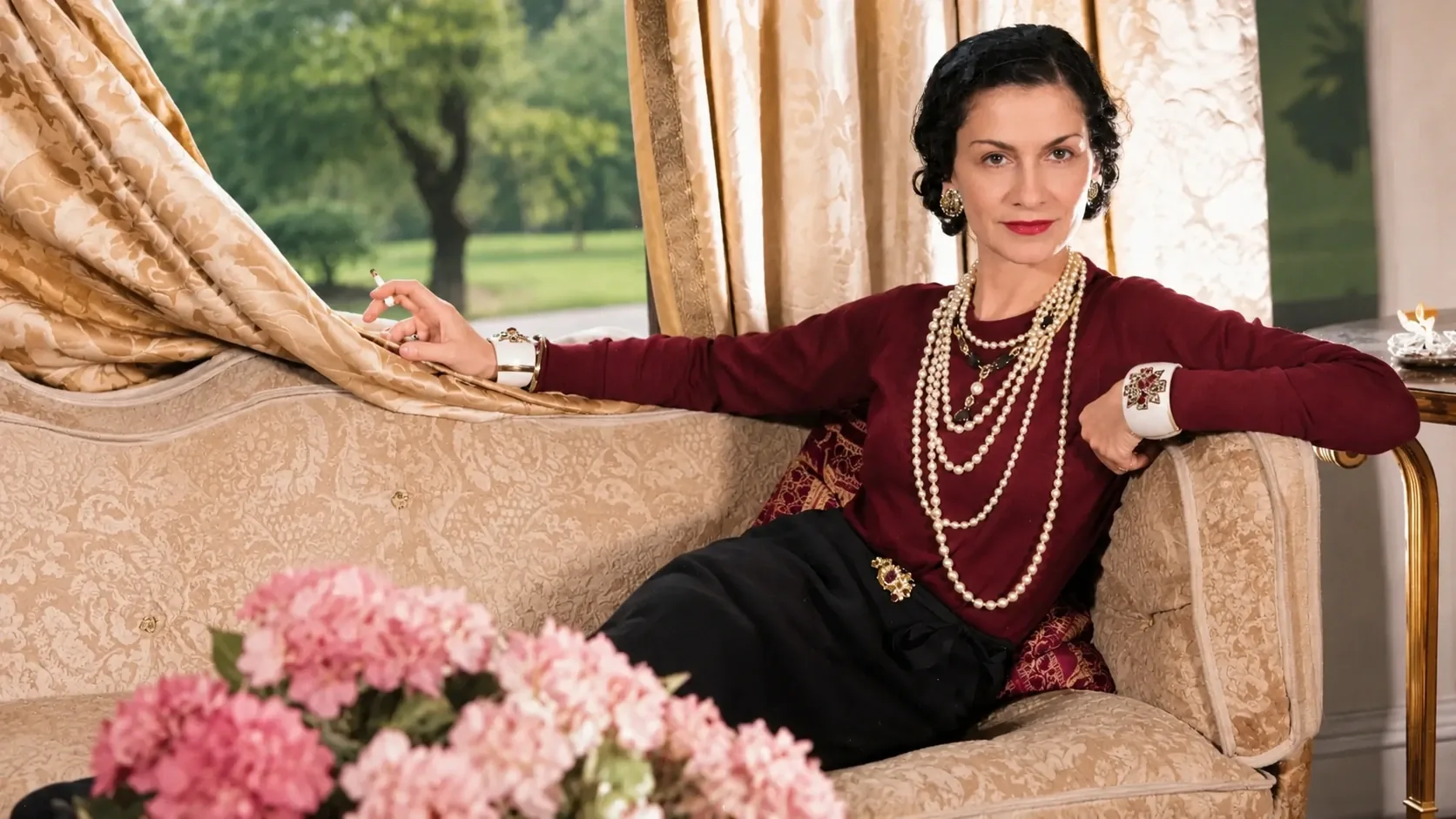
She was born in a poorhouse, raised by nuns, and abandoned by her father. She died at the Ritz with a suite full of jewels and a name worth more than most countries’ industries. Between those two addresses sits the single greatest career fashion has ever produced.
The short answer: Chanel is a $19.3 billion empire built by a woman who owned almost none of it. Gabrielle “Coco” Chanel invented modern women’s fashion, lost control of her most profitable product in one bad contract, and watched the family she spent decades suing turn her name into one of the most valuable brands on earth. The house is still privately owned by that family, the Wertheimers, and in 2025 it returned to growth under only its fourth artistic director in 115 years.
This is the full story. The orphanage, the lovers, the perfume deal she regretted for fifty years, the war chapter nobody wants to discuss, and the comeback at seventy that most designers would not attempt at forty.
The Orphanage That Taught Her Everything

Gabrielle Bonheur Chanel was born on August 19, 1883, in Saumur, France, to a laundress and a traveling street vendor. When her mother died in 1895, her father dropped his daughters at the door of the Aubazine convent orphanage and disappeared. Gabrielle was eleven.
Aubazine gave her nothing soft. It gave her discipline, silence, and six years with a needle. The nuns taught her to sew with the precision the convent demanded, and that austerity never left her work. Decades later the little black dress, the clean tweed suit, and the hatred of decoration all traced back to those stone corridors.
Fashion loves a rags to riches story. Chanel’s is the only one where the rags became the entire design philosophy.
Hats Paid the Rent, Love Opened the Doors
At eighteen she left the convent, took work as a seamstress in Moulins, and sang in cabarets at night. The nickname Coco came from the songs she performed. The voice was ordinary. The ambition was not.
Two men changed her trajectory. Étienne Balsan, a wealthy textile heir, introduced her to aristocratic life. Arthur “Boy” Capel, an English polo player and the love of her life, did something more useful: in 1910 he financed her first shop, Chanel Modes, a millinery studio at 21 rue Cambon in Paris.
Her hats were simple at a moment when hats were absurd. Society women noticed first, then actresses, then everyone. When Capel died in a car crash in 1919, Chanel was devastated. She later said his death was the beginning of the rest of her life, and she built like she meant it.
She Dressed Women in Men’s Underwear Fabric
In 1913 she opened a boutique in Deauville and made the decision that defined modern fashion: she started cutting clothes from jersey, a cheap knit used for men’s underwear. It was chosen partly because it cost little. It worked because it moved.
Women in corsets could not breathe, bend, or work. Chanel’s jersey dresses let them do all three, and they looked expensive doing it. By 1915 she had a maison in Biarritz and had repaid Capel’s entire investment. By 1918 she owned the building at 31 rue Cambon, the address that remains Chanel’s headquarters and spiritual home today.
The trick was never the fabric. The trick was understanding that freedom is the one luxury women would never give back once they had worn it.
One Bottle Paid for Everything
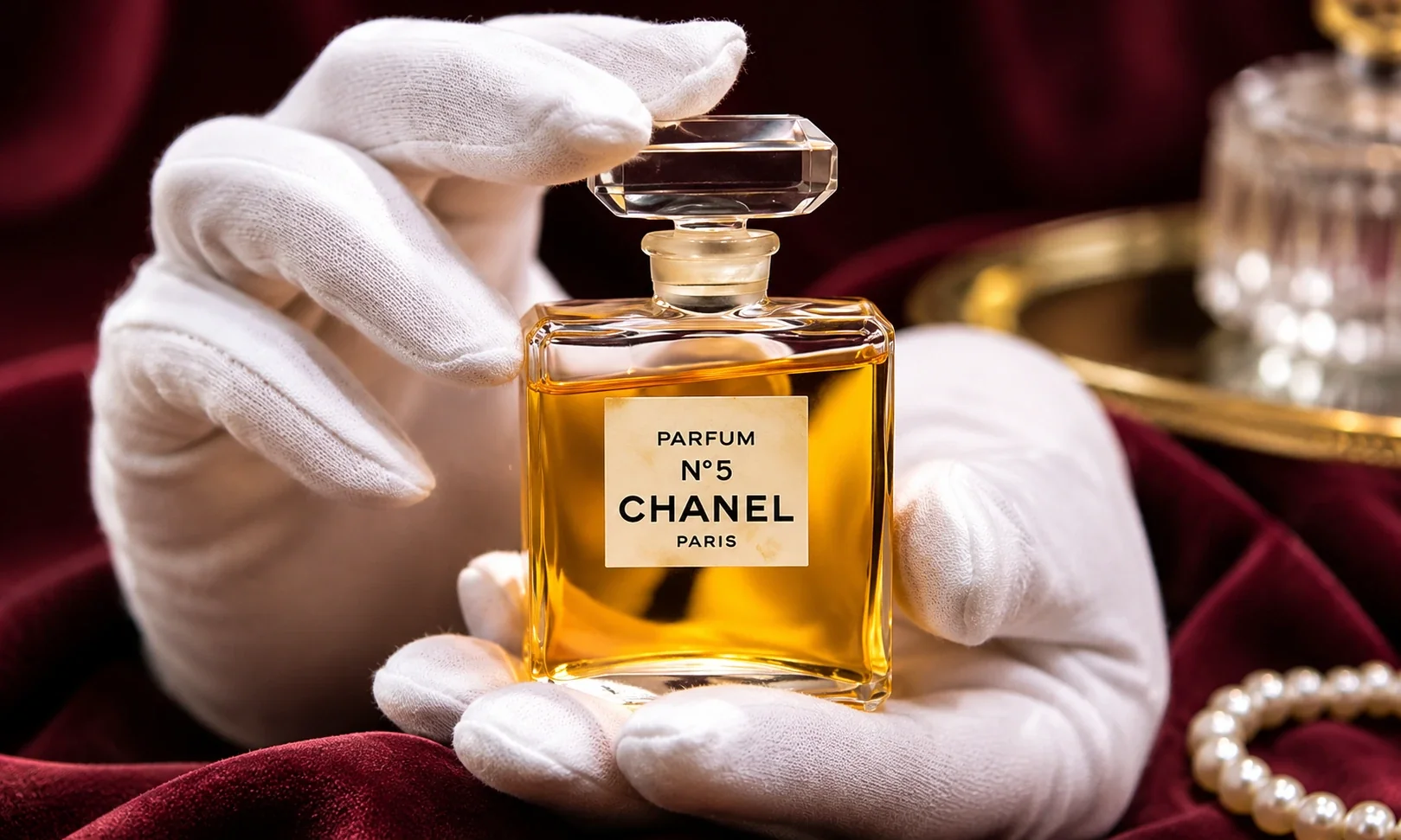
In 1921, perfumer Ernest Beaux presented her with ten numbered samples. She chose the fifth, kept the number, and named it after herself. Chanel No. 5 was the first perfume built on synthetic aldehydes at that scale, abstract rather than floral, in a rectangular bottle inspired by Capel’s whiskey decanter. Marilyn Monroe later confirmed the marketing for free when she said she wore nothing to bed but a few drops.
Then came the mistake that shaped the company forever. In 1924 Chanel signed away Parfums Chanel to scale production: the Wertheimer family took 70 percent, investor Théophile Bader took 20 percent, and the woman whose name was on the bottle kept 10.
She fought that contract in court for decades and called Pierre Wertheimer “the bandit who screwed me.” She lost almost every round. Today that 70 percent is the foundation of a fortune estimated at roughly $85 billion for brothers Alain and Gérard Wertheimer, whose family has owned the house outright since 1954.
The Little Black Dress Did What the Ford Did
In 1926, Vogue published a simple black Chanel dress and called it “Chanel’s Ford,” meaning it would do for fashion what the Model T did for cars. They were right. Black had been the color of mourning and maids. Chanel made it the color of chic, and it never went back.
Through the 1920s she also built the costume jewelry business, opened on Bond Street, and in 1931 accepted Samuel Goldwyn’s invitation to dress Hollywood stars for a fee reported around a million dollars. The Duke of Westminster, one of the richest men in Britain, proposed. She refused, with the best rejection line in fashion history: there have been several Duchesses of Westminster, but there is only one Chanel.
The War Years Nobody Likes to Discuss
A trustworthy telling has to include 1939 to 1945. Chanel closed her couture house when the war began, lived at the Ritz through the occupation, and took a German officer as a lover. Declassified documents later linked her to a German intelligence operation, codename Westminster, aimed at opening peace talks with Churchill.
She was questioned after the Liberation but never charged, reportedly after intervention from Churchill’s circle. She settled her war by settling her lawsuits: Pierre Wertheimer paid her back royalties and a share of perfume profits, which made her wealthy and made his family the sole owners of everything. She moved to Switzerland and stayed quiet for nine years.
It is the chapter the house mentions least. It is also the reason the comeback mattered so much.
At Seventy, She Came Back to Fight Dior
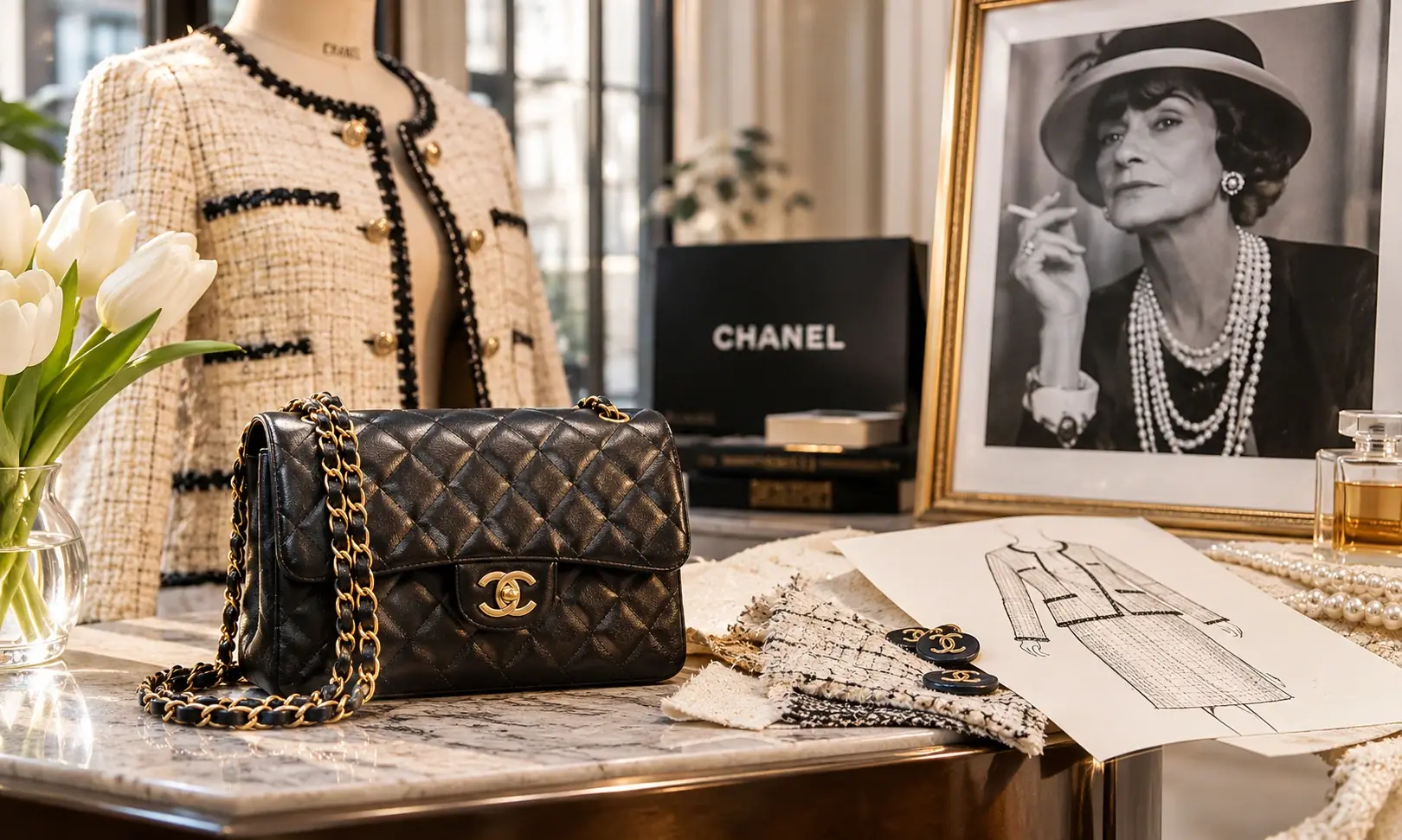
In 1954, at seventy, Chanel watched Christian Dior’s cinched, padded New Look dominate fashion and decided the whole industry had gone backwards. Her verdict on Dior is still quoted: he does not dress women, he upholsters them. She reopened 31 rue Cambon.
The French press savaged her first collection. American buyers saved it. The collarless, braid-trimmed tweed cardigan suit became the uniform of women who ran things. In February 1955 she launched the 2.55 bag, quilted like a jockey’s jacket, lined in the burgundy of her convent uniform, with a chain strap inspired by the caretakers’ key chains at Aubazine. It freed women’s hands, and it still does.
The details were never decoration. Every element was a memory from the orphanage, converted into an object women pay thousands for.
Seven Icons, One Philosophy
Every Chanel icon solves a problem or records a memory. That is why they age so well, and why the vintage market for Chanel behaves more like an asset class than a closet.`
| Icon | Year | The Problem It Solved |
|---|---|---|
| Jersey dress | 1913 | Women could not move comfortably in corsets. |
| Chanel No. 5 | 1921 | Perfume smelled like flowers, not like a woman. |
| Little black dress | 1926 | Black was traditionally reserved for mourning. |
| Tweed suit | 1954 | Dior’s New Look restricted women’s freedom of movement. |
| 2.55 bag | 1955 | Handbags forced women to carry them by hand. |
| Two-tone slingback | 1957 | Shoes shortened the leg visually and wore out quickly. |
| J12 watch | 2000 | Ceramic was not yet considered a luxury material. |
A German Named Karl Kept Her Alive for 36 Years
Coco Chanel died on January 10, 1971, in her suite at the Ritz, still working on the spring collection. The house drifted through the 1970s until Alain Wertheimer took control in 1974 and made the two decisions that saved it: pull No. 5 back from overexposure, and in 1983 hire Karl Lagerfeld.
Lagerfeld did what was considered impossible. He treated her codes, the tweed, the camellia, the pearls, the interlocked Cs, as a language he could speak fluently rather than a tomb he had to guard. Thirty-six years of collections turned Chanel from a respected name into the industry’s most reliable machine. When he died in 2019, his deputy Virginie Viard continued until 2024. Chanel has had only four artistic directors in its entire history.
The Fourth Director Arrived With a Galaxy
In December 2024, Chanel named Matthieu Blazy, the 41-year-old French-Belgian designer from Bottega Veneta, as artistic director. His debut on October 7, 2025, at the Grand Palais closed the most watched handover in fashion: a runway of planets and stars, a standing ovation, and a finale walk to “Rhythm Is a Dancer.”
The market’s verdict arrived in the financials. Chanel’s 2024 revenue was $18.7 billion, down 4.3 percent in the luxury downturn, with record capital spending of $1.76 billion to protect supply and stores. In 2025 the house returned to growth at roughly $19.3 billion, outperforming LVMH’s fashion division and Gucci in a flat market, with executives crediting the Blazy effect alongside the new Chanel 25 bag and J12 momentum.
It is the same pattern that runs through the Hermès story: family control, scarcity, and patience beating quarterly logic.
Chanel By The Numbers
- $19.3 billion in 2025 revenue, a return to growth of roughly 2 percent
- $18.7 billion in 2024 revenue, with operating profit of $4.48 billion
- $1.76 billion in record 2024 capital spending, up 43 percent year on year
- $85 billion estimated fortune of Alain and Gérard Wertheimer, owners since 1954
- $15.1 billion in dividends paid to the family since 2017
- 10 percent was Coco’s cut of Parfums Chanel under the 1924 contract
- 4 artistic directors in 115 years: Chanel, Lagerfeld, Viard, Blazy
- $220 to $10,000 plus the price journey of the flap bag since 1955
Why the Machine Works
Chanel is the control group of the luxury industry. No stock ticker, no conglomerate parent, no quarterly earnings call. The Wertheimers can spend $1.7 billion on stores and ateliers in a down year because nobody can vote them out of the room.
Then there is the product logic. The icons never change enough to date and always change enough to want. Prices climb relentlessly, which owners quietly love because it protects what they already bought. Distribution stays tight, boutiques stay theatrical, and the waiting lists do the advertising. It is a strategy Hermès wrote first, and Chanel runs it at triple the scale.
For the wider cast of houses competing for the same customer, our ranking of the most expensive designer brands shows exactly where Chanel sits and why the top tier keeps pulling away.
Frequently Asked Questions
Who owns Chanel today?
Chanel is privately owned by brothers Alain and Gérard Wertheimer, grandsons of Pierre Wertheimer, who financed Chanel No. 5 in 1924. The family has controlled the house since 1954, holds a fortune estimated near $85 billion, and has never taken the company public.
Why is it called Chanel No. 5?
In 1921, perfumer Ernest Beaux presented Coco Chanel with numbered samples, and she chose the fifth. Five was also her lucky number, and she launched the fragrance on May 5, the fifth day of the fifth month. The name stuck for a century.
When and how did Coco Chanel die?
She died on January 10, 1971, at the age of 87, in her private suite at the Ritz Hotel in Paris. She had lived at the Ritz for decades and was still preparing her spring collection the weekend she died. She never married and left no children.
Who designs Chanel now?
Matthieu Blazy, formerly of Bottega Veneta, became artistic director in December 2024. His first collection for the house showed in October 2025 at the Grand Palais to strong reviews, and Chanel credits the appointment with helping return the brand to growth in 2025.
Why is Chanel so expensive?
Three reasons: the house controls supply tightly and raises prices several times a year, production happens in high-cost French and Italian ateliers, and private family ownership means no pressure to chase volume. A Classic Flap that cost $220 in 1955 now retails above $10,000.
Is Chanel worth more than Louis Vuitton?
By brand valuation the two trade places near the top of Kantar’s annual ranking, with Hermès recently taking the number one spot. By revenue, Louis Vuitton is larger. Chanel’s distinction is profitability and scarcity discipline rather than scale, which keeps its prices climbing fastest.
The Bottom Line
Chanel’s story is not really about fashion. It is about a woman with nothing who understood, earlier than anyone, that modern women wanted freedom more than decoration, and about a family patient enough to protect that insight for a hundred years.
Coco lost the equity and kept the name. The Wertheimers took the equity and protected the name. Between those two facts sits every $10,000 flap bag, every bottle of No. 5, and every standing ovation at the Grand Palais.
If you are planning to see the world Chanel built, start with our guide to Paris in spring and our complete take on luxury travel in Europe. Rue Cambon is still there. So is everything she learned at Aubazine.