The Learjet legacy begins on a hot October afternoon in Wichita, Kansas, in 1963, when a sleek white aircraft barely nine metres long lifted off a runway and changed what success looked like from the sky. Before that first flight of the Learjet 23, the idea of a small, fast, personal jet for business leaders simply did not exist in any serious form.
Bill Lear, an eccentric self taught engineer who had already made a fortune inventing radios and autopilot systems, believed that the future belonged to those who could outrun the airlines.
His little eight seat jet climbed faster than most military fighters of its era, cruised above the weather at 41,000 feet, and looked like nothing else on any ramp in the world. Within a decade, the word Learjet had stopped being a brand name and had become the universal shorthand for flying privately, a status so complete that people still say it today about jets that Lear never built.
The Man Who Refused to Wait for the Airlines

William Powell Lear was not an aviation insider groomed by a great manufacturer. He was a restless inventor with an eighth grade education who held more than 150 patents, including the first practical car radio and the autopilot that guided airliners across continents.
By the early 1960s he had grown tired of watching executives waste whole days on commercial schedules. His answer was radical for the time. Take a fighter jet concept, shrink it into a civil aircraft, make it faster than anything its size, and sell it to companies and individuals who valued time above money.
Industry experts told him the market did not exist. Lear ignored them. He based the design on a Swiss fighter-bomber project called the FFA P-16, moved his team to Wichita because the city offered him a factory and willing engineers, and pushed the aircraft from drawing board to first flight in less than two years.
The Learjet 23 received its certification in July 1964, astonishingly quickly even by the standards of that era. The dream of the private jet as a practical business tool had begun, and it began with one stubborn man and one very small airplane.
Why the Learjet 23 Felt Like the Future
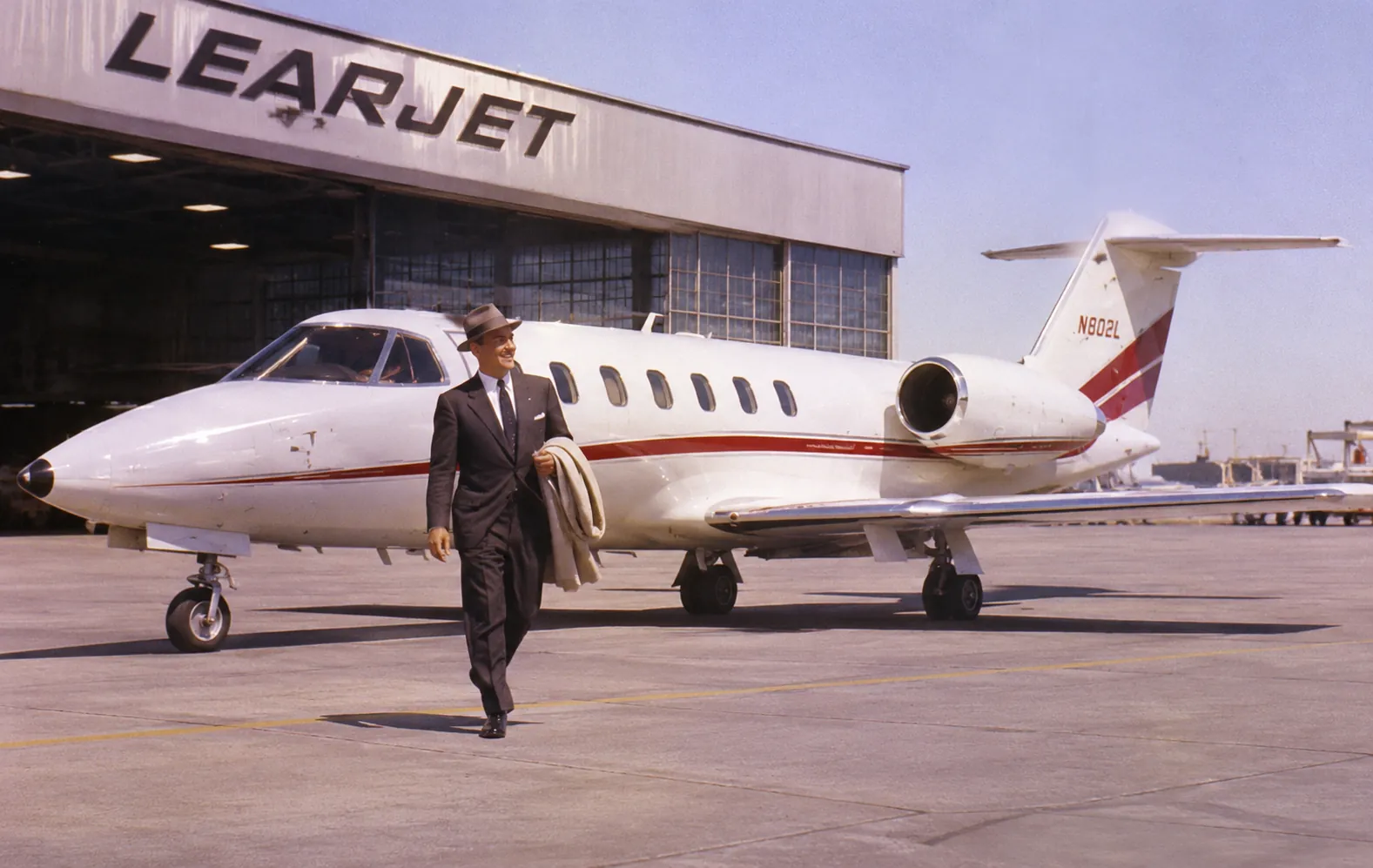
Part of the Learjet magic was pure physics. The aircraft weighed roughly half of what competing business planes weighed, yet it carried engines powerful enough to climb directly to altitudes where the air was thin, the weather was far below, and the fuel burned slowly. It could cross the United States in around five hours.
In 1965 a Learjet 23 set a round the world speed record, completing the journey in just over 65 hours including stops. Corporate giants took notice. Within its first years the aircraft was flying executives for some of the largest companies in America, and the waiting list grew longer than the factory could satisfy.
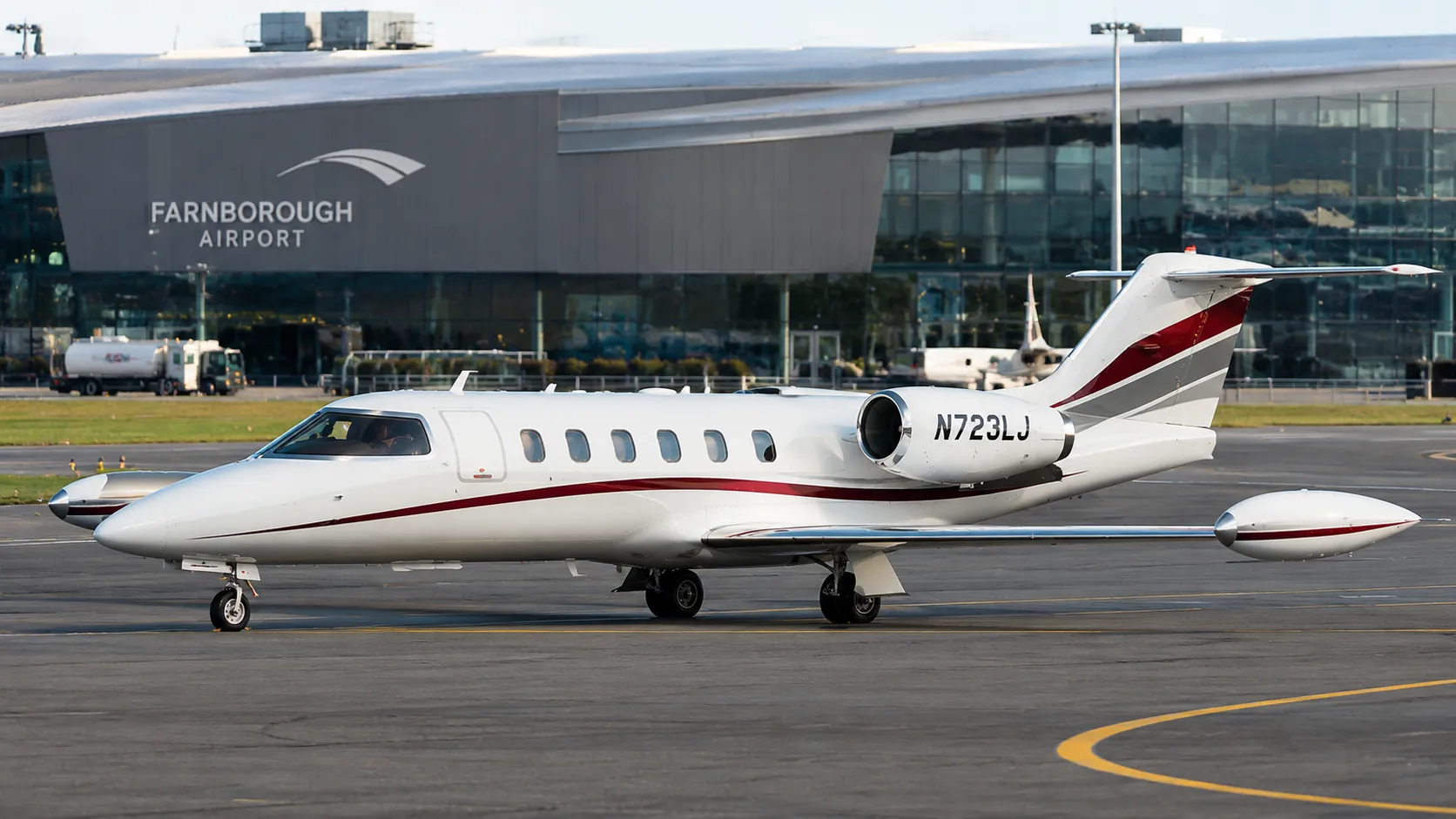
The other part of the magic was image. The Learjet looked fast standing still, with its sharp nose, its tip tanks perched at the ends of the wings, and its cockpit windows shaped like the visor of a racing helmet. Frank Sinatra bought one and famously offered friends rides to Las Vegas.
Elvis Presley flew his own. Celebrities, musicians, and athletes made the aircraft a symbol of arrival in every sense of the word, the machine you boarded when your life had outgrown the terminal. That aura still shapes how the world imagines the finest private jets in the sky today, even though the category has grown far beyond the little jet that started it.
Building a Dynasty of Jets

The Learjet 23 was only the opening act. Learjet 24 and 25 models followed quickly, stretching range and capacity while keeping the fighter-like performance that defined the brand. Bill Lear sold his company in 1967 and eventually moved on to other obsessions, but the family of aircraft kept evolving under new owners.
The Learjet 35 and 36 of the 1970s became genuine intercontinental tools, adopted even by air forces and medical evacuation services. The Learjet 55 introduced a wider stand up cabin in the early 1980s. The Learjet 60 of the 1990s brought modern engines and refined systems, and the Learjet 45 carried the brand into the new century with a fresh design and a supercritical wing.
Along the way came one of the most consequential chapters in aviation history. Bill Lear’s Learstar 600 concept, a wide cabin business jet design, was sold to Canadair in the late 1970s and evolved into the Challenger, the aircraft family that would make Canadair, later Bombardier, a giant of business aviation.
In 1990 Bombardier purchased Learjet itself, reuniting the two bloodlines under one roof. The final chapter arrived with the Learjet 75 Liberty, a modernized evolution of the Learjet 45 with improved engines, updated avionics, and a quieter cabin, intended to keep the name alive against younger rivals.
The End of an Era and What It Taught Aviation
In February 2021 Bombardier announced it would end Learjet production to focus on its larger Global and Challenger lines. The last Learjet 75 rolled out of Wichita in 2022, closing a production run that spanned 58 years and more than 3,000 aircraft. The decision was purely commercial.
Buyers had drifted toward bigger cabins and longer ranges, the light jet segment had become crowded with capable competitors, and maintaining an aging design no longer made financial sense. For travelers weighing what private jet charter actually costs, the light jet category the Learjet created remains the most accessible doorway into private aviation, now filled by the descendants of the revolution it started.
Yet the deeper legacy has nothing to do with production numbers. The Learjet established the entire grammar of business aviation. It proved that a small jet could be a serious corporate tool rather than a rich person’s toy. It taught manufacturers that speed and altitude sell.
It created the light jet category, inspired every competitor from Cessna’s Citation family to today’s Phenom and HondaJet, and planted the idea that time is the true luxury, the philosophy behind the real economics of owning a private jet as much as chartering one. Hundreds of Learjets still fly today, maintained by devoted operators and cherished by owners who understand they are keeping a piece of history airborne.
Why the Name Still Matters to Luxury Travelers
Ask anyone to name a private jet and the odds remain strong they will say Learjet, decades after the name left most production brochures. That is a rare kind of immortality, earned rather than marketed. The brand sits alongside a handful of names in luxury, like Rolls-Royce in motoring or Hermès in leather, that transcend their product category and become the category itself.
For a new generation discovering private aviation through charter apps and jet cards, the Learjet story is the essential origin tale, the reminder that everything from the Gulfstream G700 to the humblest air taxi descends from one inventor’s refusal to accept the airline timetable.
There is also a quieter lesson in the story for anyone who loves luxury. The Learjet was never the biggest jet, the most comfortable jet, or the most advanced jet. It was the first to promise freedom on your own schedule, and it delivered that promise with style. In luxury, as in aviation, the first name to make a dream real tends to keep a piece of it forever.
FAQs
Who invented the Learjet?
Bill Lear, a self taught American inventor and entrepreneur, created the Learjet. Already wealthy from inventing car radios and autopilot systems, he founded Lear Jet Corporation in Wichita, Kansas, and flew the first Learjet 23 in October 1963.
When did the first Learjet fly?
The Learjet 23 completed its maiden flight on October 7, 1963, and received its type certification in July 1964. Deliveries to customers began later that year, astonishingly fast for an entirely new aircraft category.
How many Learjets were built?
More than 3,000 Learjets were produced across the family’s 58 year production run, spanning models from the original Learjet 23 through the final Learjet 75 Liberty. Hundreds remain in active service around the world today.
Why did Bombardier stop making the Learjet?
Bombardier ended Learjet production in 2021, with the final aircraft delivered in 2022, to concentrate resources on its larger and more profitable Challenger and Global jet families. The light jet market had become highly competitive, and the aging design no longer justified continued investment.
What made the Learjet special compared to other aircraft?
The Learjet combined fighter-like climb performance, high altitude cruise above weather, and genuine coast to coast speed in a compact eight seat airframe. It proved a small jet could serve as a serious business tool, creating the entire light business jet category.
Did celebrities really fly Learjets?
Yes, extensively. Frank Sinatra owned one and made it famous among his circle, Elvis Presley flew his own Learjet, and the aircraft became the preferred ride of musicians, athletes, and Hollywood figures throughout the 1960s and 1970s, cementing its place in popular culture.
What was the last Learjet model ever built?
The Learjet 75 Liberty was the final production model, an updated version of the Learjet 45 with improved engines, modern avionics, and a refined cabin. The last example rolled out of the Wichita factory in 2022.
Can you still charter a Learjet today?
Yes. Charter operators across North America and Europe continue to fly Learjet 45, 60, and 75 models. They remain popular for short to medium range trips because of their speed, efficiency, and competitive hourly charter rates.