The Patek Philippe story begins with an exile, a partnership, and a marketing line so perfect it became philosophy. In 1839, a Polish cavalry officer named Antoine Norbert de Patek, forced from his homeland by failed revolution, settled in Geneva and began making pocket watches of unusual refinement.
His early partnership with the brilliant watchmaker François Czapek dissolved, but his second partnership, with a French inventor named Jean Adrien Philippe, changed horology forever.
Philippe had invented keyless winding, the crown mechanism that freed watches from separate winding keys, and when the two men exhibited together at London’s Great Exhibition of 1851, Queen Victoria herself became a customer.
The house they founded is today the last great independent, family owned watch manufacture in Geneva, the holder of nearly every auction record in the category, and the author of the most honest slogan in luxury: you never actually own a Patek Philippe, you merely look after it for the next generation. This is how the summit was built.
The Partnership That Invented the Modern Watch
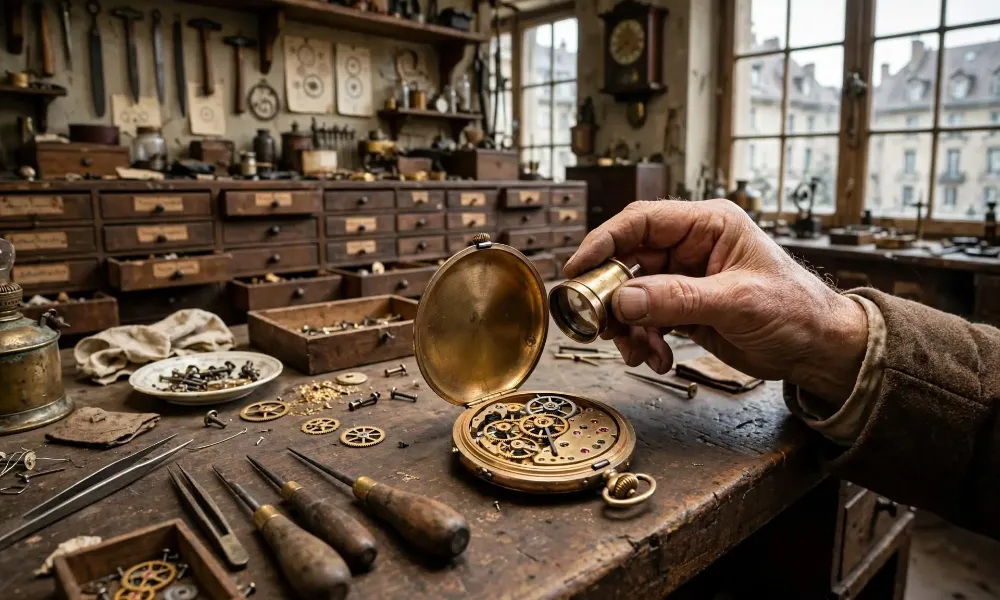
Antoine de Patek supplied the vision and the connections; Adrien Philippe supplied the technical revolution. Their 1845 partnership fused French invention with Geneva’s finishing traditions, and the house’s trajectory was set early: technical firsts wrapped in immaculate craft.
Patek Philippe invented or perfected an astonishing share of watchmaking’s vocabulary, the perpetual calendar wristwatch, the split seconds chronograph, the minute repeater’s modern form, and earned a clientele that read like a register of the nineteenth century’s powerful: Queen Victoria, Tsar Alexander II, the Pope, and the industrial titans of the Gilded Age.
The house’s early American conquest mattered enormously. When New York’s titans of finance and industry commissioned grand complications in the early twentieth century, Patek Philippe became the instrument of their rivalry, culminating in the legendary competition between banker Henry Graves Jr. and automaker James Ward Packard to own the most complicated watch on earth.
The Graves Supercomplication, delivered in 1933 with 24 complications made entirely without computers, sold at auction in 2014 for approximately 24 million dollars, a cornerstone of the records chronicled in our guide to the most impressive watch complications.
The Stern Dynasty
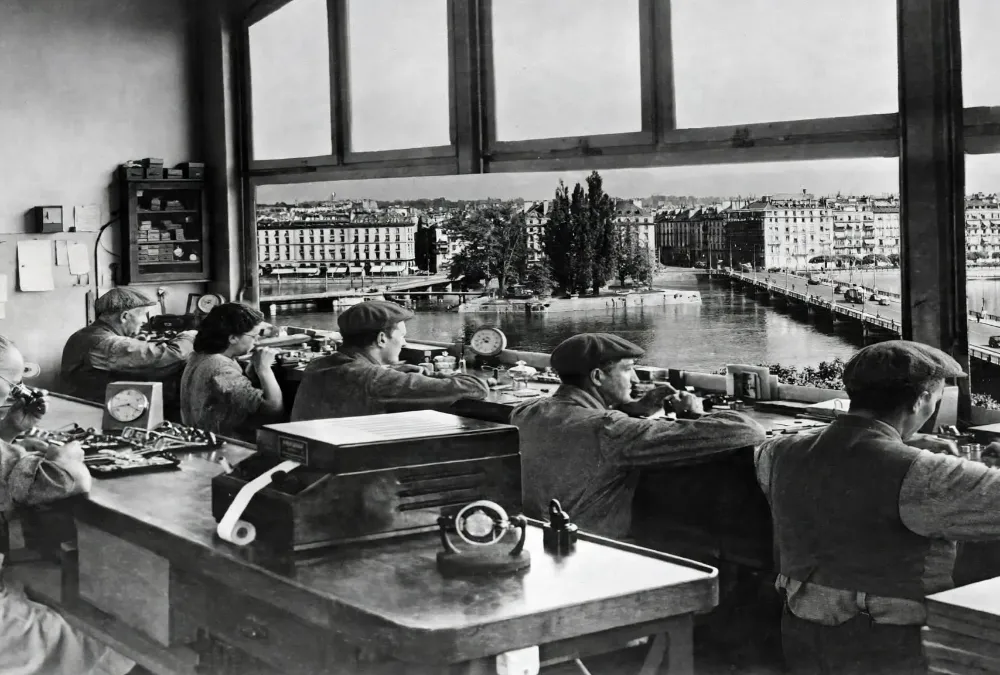
The house’s defining chapter began in crisis. The Great Depression battered Swiss watchmaking, and in 1932 Patek Philippe’s dial supplier, the Stern family’s Fabrique de Cadrans Stern Frères, acquired the struggling manufacture.
The Sterns have owned it ever since, four generations of uninterrupted family stewardship: Charles and Jean Stern, then Henri Stern, who built the American market, then Philippe Stern, who modernized production and founded the Patek Philippe Museum, and since 2009, Thierry Stern, who guards the manufacture’s independence like a birthright.
That independence is the brand’s deepest asset. In an industry consolidated into luxury groups, Patek Philippe answers to no shareholders, no quarterly targets, and no corporate strategy deck. The Sterns make decisions in decades: limiting production to maintain quality, refusing to chase trends, and famously declining to expand output even as waiting lists for the Nautilus stretched to years.
When Thierry Stern discontinued the most hyped watch on earth, the steel Nautilus 5711, at the height of its demand, the industry learned again that this house plays a longer game than fashion, a philosophy that shapes its standing in our ranking of the world’s luxury watch brands.
The Icons: Calatrava, Nautilus, and Grandmaster Chime
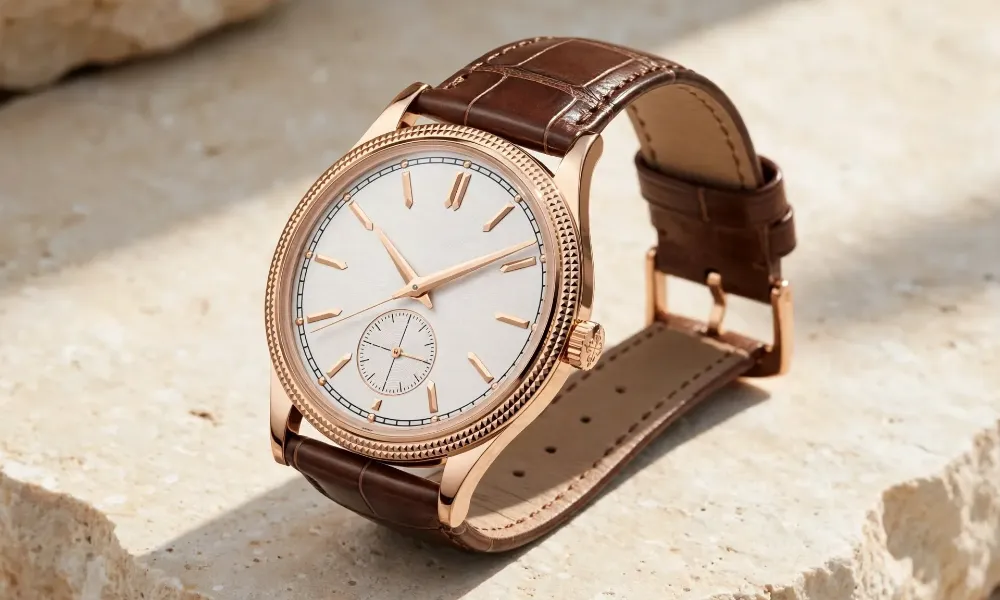
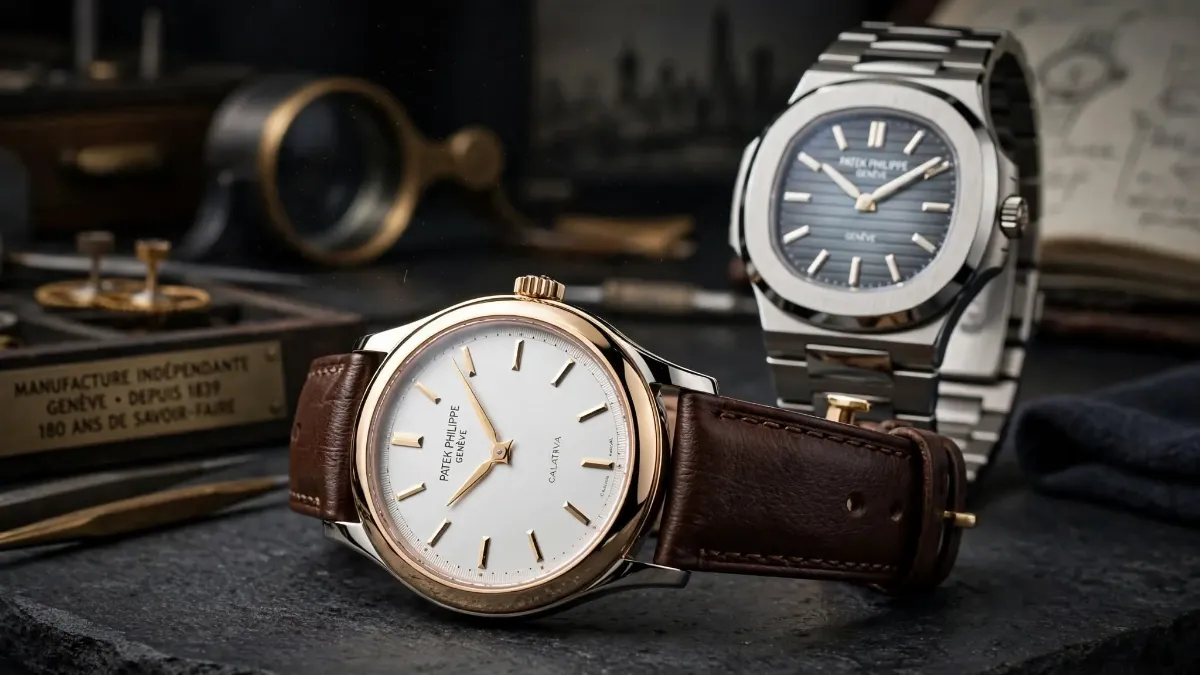
Patek Philippe’s design portfolio reads as watchmaking’s canon. The Calatrava, introduced in 1932, defined the dress watch: a round case, a clean dial, and proportions so correct that every dress watch since is measured against it.
The Golden Ellipse arrived in 1968 with geometry derived from the golden ratio. And in 1976, the house commissioned Gérald Genta, the designer of the Royal Oak, to create its sports watch: the Nautilus, with its porthole case and integrated bracelet, became the most coveted steel watch on earth, a status sealed when the 5711’s discontinuation sent secondary prices into the stratosphere.
At the summit sit the grand complications. The Caliber 89, built for the house’s 150th anniversary in 1989, carried 33 complications. The Grandmaster Chime, launched in 2014 with 20 complications and a reversible case, became in its unique steel Only Watch variant the most expensive watch ever auctioned, selling for 31.2 million dollars in 2019.
And in November 2025, a stainless steel reference 1518, the 1941 original perpetual calendar chronograph of which only four steel examples are known, achieved approximately 17.6 million dollars at Phillips in Geneva, reaffirming the house’s total command of the market’s summit.
The Philosophy of Permanence
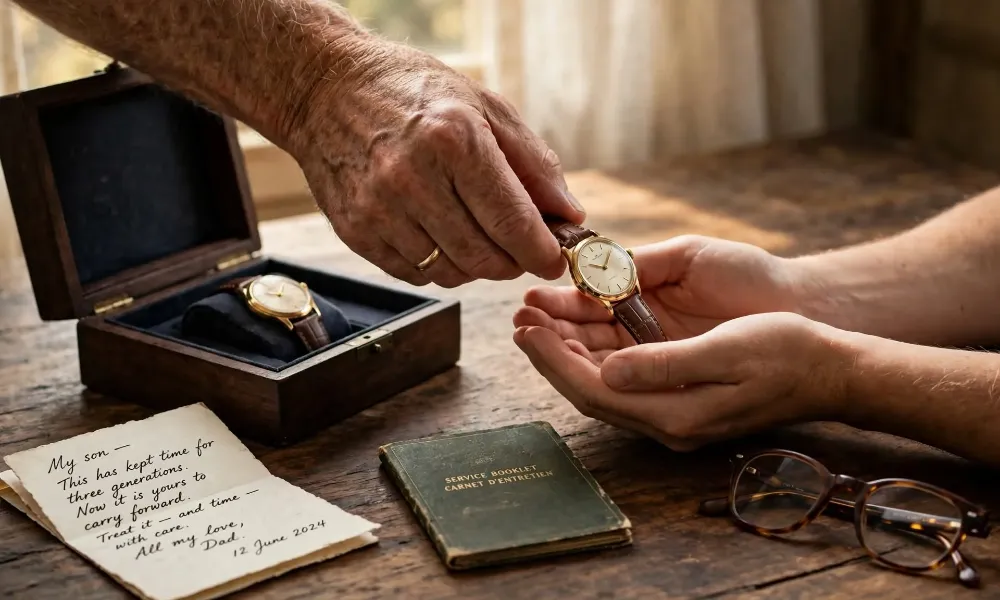
What separates Patek Philippe from every competitor is not complication count but covenant. The famous advertising line, in use since 1996, articulates a genuine operating principle: the house builds watches intended to pass between generations, services every watch it has ever made since 1839, and maintains archives documenting each piece.
A Patek purchased today can be returned to Geneva in a century for restoration by the descendants of its makers. No other manufacture offers that contract with time, and none could fake it.
This is why the house’s collectors behave differently from other markets’ buyers. They speak of stewardship, of holding pieces in trust, of children who will receive the watches with their papers.
The behavior flows from the top: a family that has held a manufacture for nearly a century attracts clients who think in the same units of time, whether they are beginning with a Calatrava or assembling the grails mapped in our guide to starting a vintage watch collection.
The Summit, Defended Daily
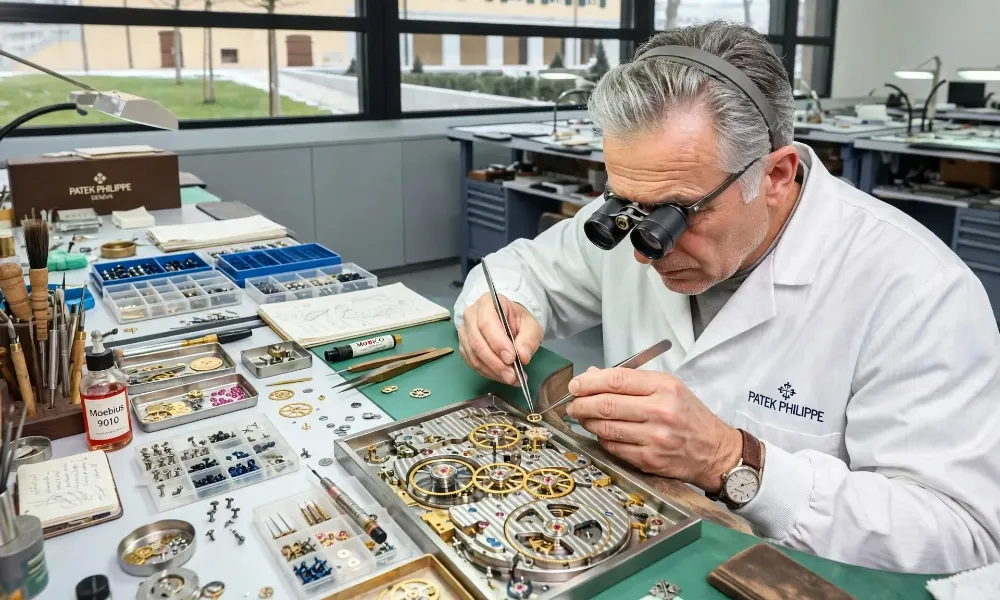
Today the manufacture operates from its Geneva headquarters with complete vertical integration, making its own movements, cases, dials, and hands, and submitting its watches to standards that exceed the industry’s own.
The Patek Philippe Seal, introduced in 2009, replaced the Geneva Seal with criteria covering the entire watch and its long term serviceability, effectively the house declaring that its own standards outgrew the official ones.
The challenges ahead are real: demand vastly exceeds supply, the secondary market’s volatility tests patience, and younger collectors arrive with different codes. Yet the house’s position seems almost geological.
In a luxury industry built on seasons, Patek Philippe is built on generations, and its authority among the most iconic watches ever made rests on the rarest corporate asset of all: 187 years of never once breaking the promise on the dial.
FAQs
When was Patek Philippe founded?
Patek Philippe traces its founding to 1839, when Polish exile Antoine Norbert de Patek began producing watches in Geneva. The house took its current form in 1845 through his partnership with Jean Adrien Philippe, inventor of keyless winding, and received its defining royal endorsement from Queen Victoria in 1851.
Who owns Patek Philippe?
The Stern family has owned Patek Philippe since 1932, when dial makers Charles and Jean Stern acquired the manufacture during the Depression. Thierry Stern, the fourth generation, has served as president since 2009, making Patek Philippe the last independent, family owned great watch manufacture in Geneva.
What is the most expensive Patek Philippe ever sold?
The Grandmaster Chime reference 6300A, a unique steel piece created for the Only Watch charity auction, sold for 31.2 million dollars in November 2019, the most expensive watch ever sold at auction. The Henry Graves Supercomplication pocket watch achieved approximately 24 million dollars in 2014.
Why is the Patek Philippe Nautilus so expensive?
The Nautilus, designed by Gérald Genta in 1976, became the most coveted steel sports watch on earth. When the steel 5711 was discontinued in 2021 at peak demand, secondary prices soared. Production is deliberately limited, waiting lists stretch for years, and allocation favors long term clients.
What is the Patek Philippe Seal?
Introduced in 2009, the Patek Philippe Seal is the house’s own quality standard, replacing the Geneva Seal with criteria covering the entire finished watch, its accuracy, aesthetics, and lifelong serviceability. It represents the manufacture’s declaration that its standards exceed official certification.
What is the Calatrava?
The Calatrava, introduced in 1932, is Patek Philippe’s definitive dress watch: a round, refined design whose proportions have defined the entire category. Named for the Calatrava cross in the house’s emblem, it remains the purest expression of the manufacture’s aesthetic philosophy.
Does Patek Philippe service old watches?
Yes. The manufacture maintains the ability to service, repair, and restore every watch it has produced since 1839, supported by complete archives and an in house restoration department. This perpetual service commitment underpins the house’s generational philosophy.
What is the rarest Patek Philippe?
Unique pieces and tiny production runs define the rarest tier. The stainless steel reference 1518, of which only four are known, sold for approximately 17.6 million dollars in November 2025. Unique commissions like the Graves Supercomplication and Only Watch pieces exist as single examples.