Aston Martin has been bankrupt seven times. It has been owned by tractor makers, industrial conglomerates, Ford, Kuwaiti investors, and a Canadian billionaire, passed between rescuers like a beautiful but ruinously expensive heirloom. And yet, across a hundred and twelve years, it has produced some of the most beautiful automobiles ever made, given the world the DB5, and become the car of James Bond, the most valuable product placement in history.
No marque’s survival is less explicable by logic or more explicable by love. Aston Martin endures because successive generations of owners, workers, and customers have repeatedly decided that it must, a collective act of devotion that says something profound about what a car company can mean.
The Hill Climb and the Name
The story begins in 1913, when two Londoners, Lionel Martin and Robert Bamford, founded a company to sell and tune sporting cars. Martin competed in hill climbs, and after a successful run at Aston Clinton, he gave the company the name that fused his own with the hill’s: Aston Martin. The marque’s early decades produced capable sporting machines and chronic financial trouble in roughly equal measure, establishing a pattern that would define the century.
The interwar years saw the company pass through receiverships and rescues, its tiny workshops in Feltham turning out hand-built cars for a devoted few while the ledgers bled. By the Second World War, Aston Martin had established its essential identity: beautiful, fast, gentlemanly, and broke.
David Brown and the DB Legend
The savior who defined the marque arrived in 1947, in the form of a tractor. David Brown, a Yorkshire industrialist whose family made tractors and gears, bought Aston Martin for a modest sum after spotting the classified advertisement, and his initials would grace every great Aston for half a century. The DB series began with the DB2 and climbed through the decade to the DBR1, which won the World Sportscar Championship and Le Mans in 1959, the marque’s only overall victory at the great race, achieved in its finest hour.
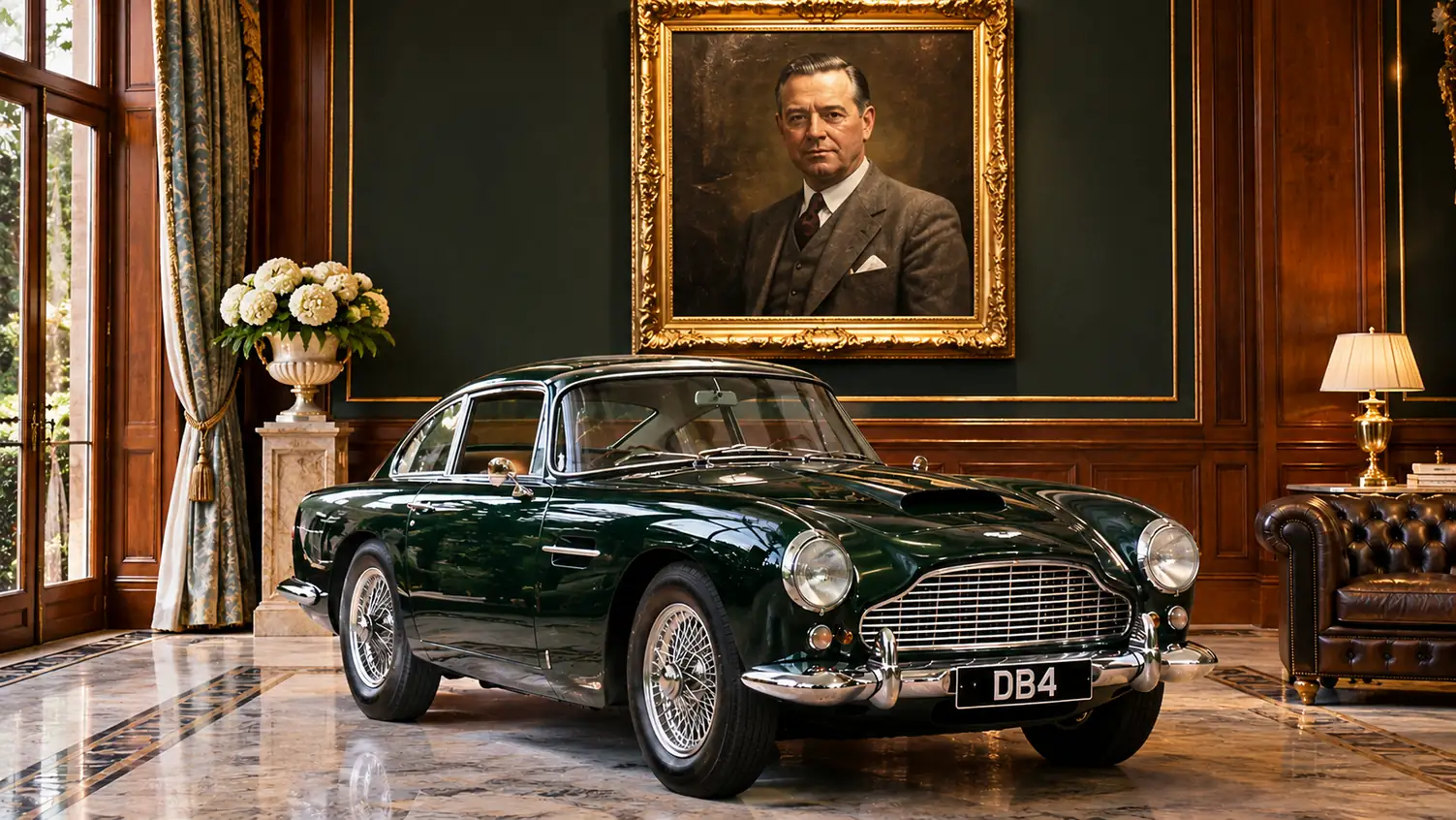
Brown’s Aston Martins established the template that endures today: elegant grand tourers rather than raw supercars, machines for fast, stylish travel rather than lap records, built in small numbers with craftsmanship that bordered on the devotional. The DB4 of 1958, with bodywork by Touring of Milan, set a standard of automotive beauty that the industry still measures itself against.
The DB5 and the Bond Miracle
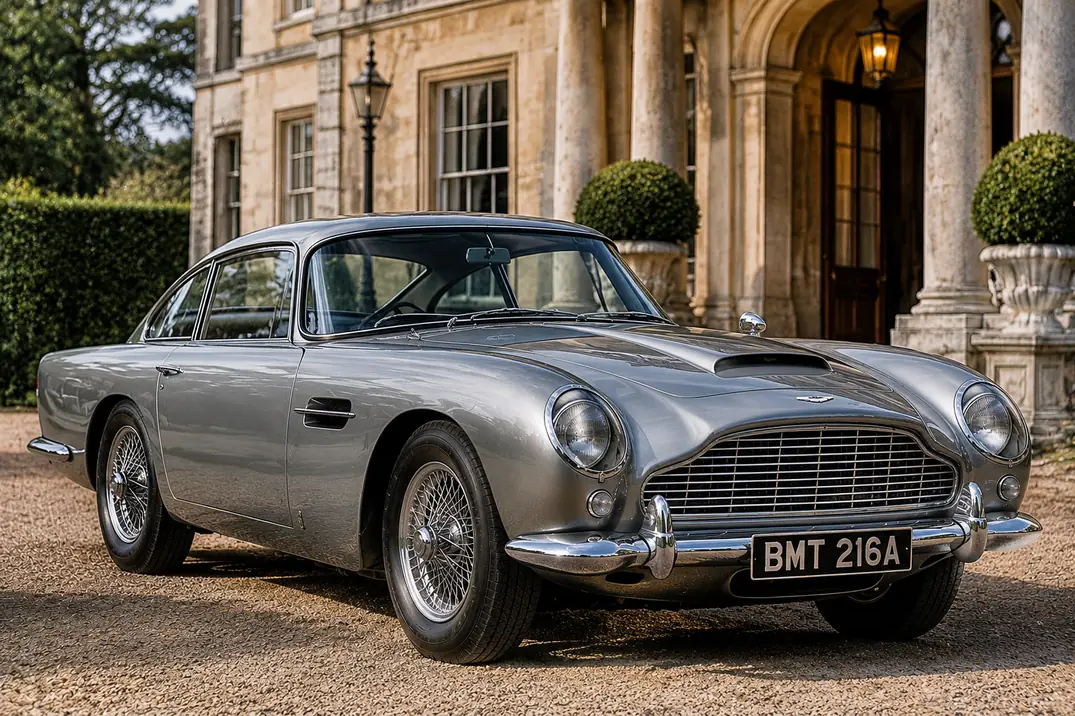
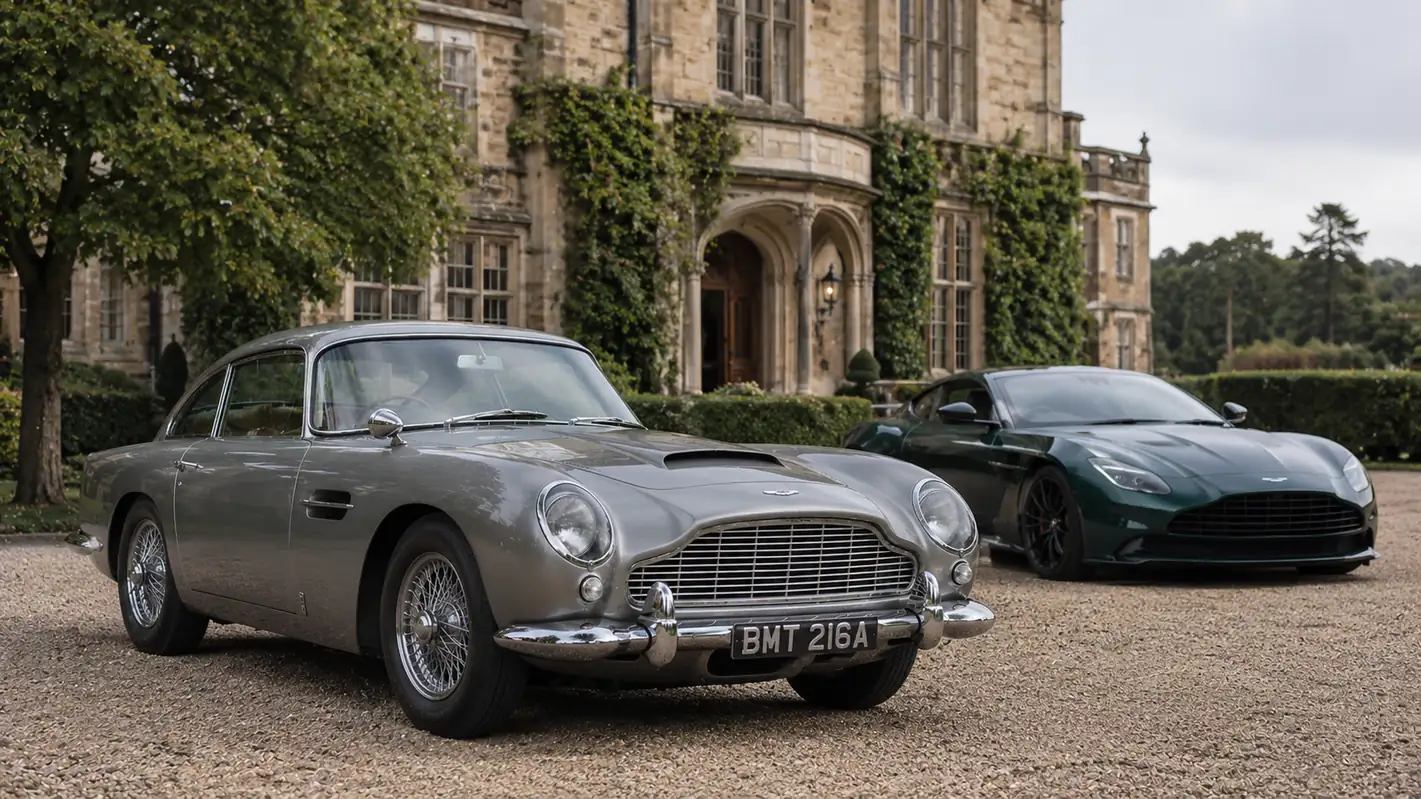
Then came 1964, and the accident of fortune that secured the marque forever. The Aston Martin DB5 was already one of the most beautiful cars in the world when the producers of Goldfinger selected it as James Bond’s car, equipping it with gadgets that every schoolboy on earth can still recite: the ejector seat, the machine guns, the revolving number plates, the oil slick.
The partnership between Bond and Aston Martin became the most successful in film history, spanning six decades and a dozen films, and its effect on the marque defies calculation. The DB5 became the most famous car on earth, the automotive co-star of the century, and every Aston since has traded on the association: the gentleman agent’s car, elegance with a license to kill. Original Bond cars now sell for figures that place them among the most valuable movie artifacts in existence, a premium detailed in the market for collectible cars.
The Wilderness Decades
Bond’s magic could not balance the books, and the 1970s and 1980s delivered the marque’s darkest chapters. David Brown sold the company in 1972, and it passed through a series of owners whose enthusiasm exceeded their resources, through receiverships and rescues, while production sometimes slowed to a trickle of hand-built cars. The V8 Vantage kept the flame alive, a brutish, muscular machine beloved of connoisseurs, but the company lurched between crises with a regularity that became almost comic.
Ford’s arrival in 1987, acquiring a controlling stake that grew to full ownership, brought the resources the marque had never possessed. The DB7, launched in 1994, saved Aston Martin commercially, selling in numbers no previous model had approached, and the Gaydon era that followed, with the DB9 and V8 Vantage, restored the marque to genuine prosperity and produced cars that stand among the most beautiful of the modern age.
The Modern Renaissance
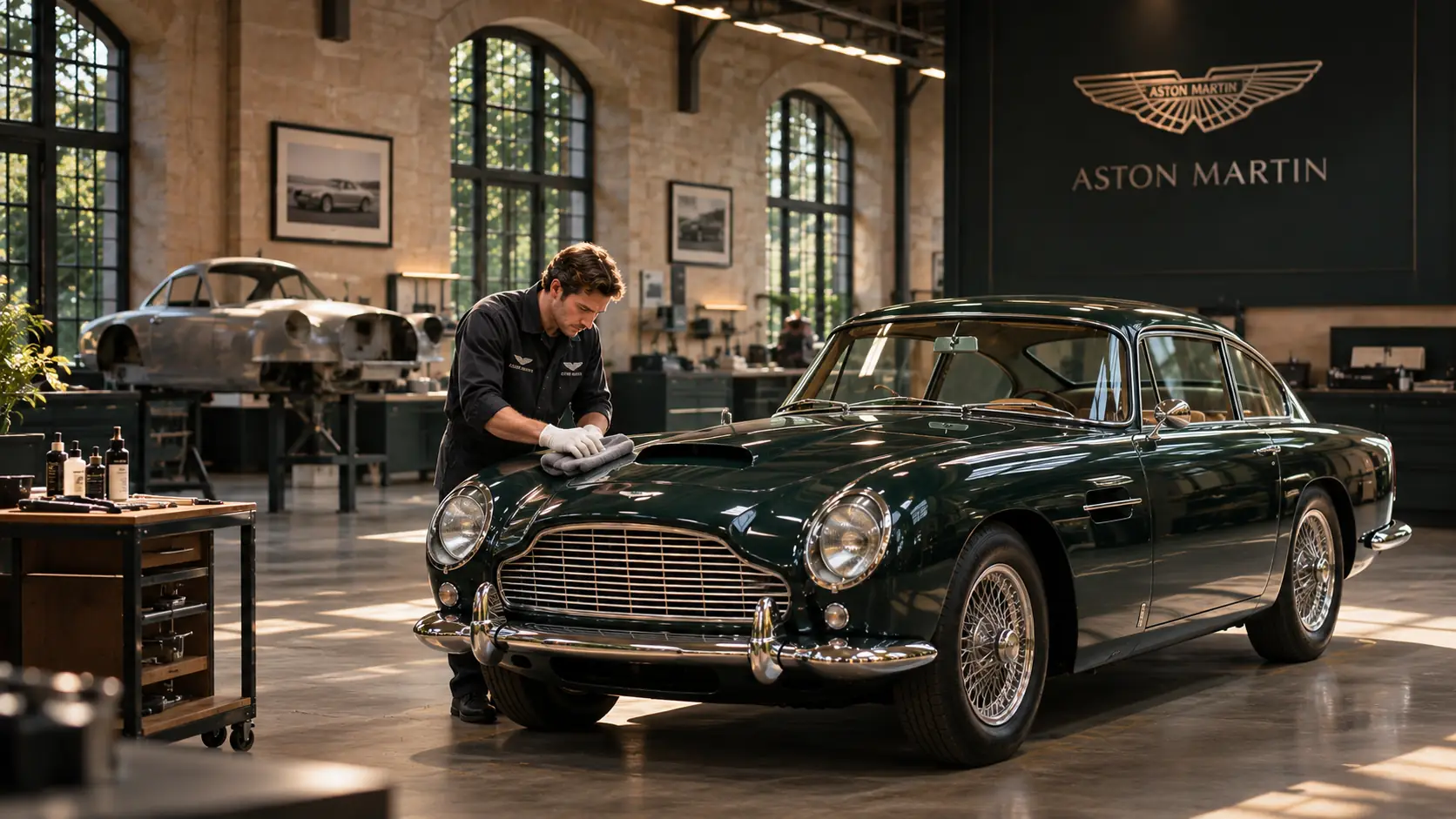
Ford sold Aston Martin in 2007 to a consortium led by the racing entrepreneur David Richards, and the marque’s recent chapters have been its most dramatic since the Brown years. New ownership under Lawrence Stroll, the Canadian billionaire, arrived in 2020 with Formula One ambitions and a complete transformation of the company’s scale and seriousness.
The modern Aston Martin builds genuine supercars alongside its grand tourers: the Valkyrie, a Formula One-derived hypercar developed with Red Bull Racing’s Adrian Newey, represents the most extreme machine ever to wear the wings, while the DB12 and Vantage continue the gentleman’s-GT tradition at its finest. The Formula One team returned the name to the Grand Prix grid for the first time since 1960, completing a circle begun by the company’s earliest sporting ambitions. The modern range holds its own in any comparison of luxury car brands.
The Secret of Survival
Seven bankruptcies would have killed any rational enterprise. Aston Martin’s survival has a less rational explanation, and it is worth naming plainly: the marque has always been worth more than its balance sheet. Its beauty created devotion, its devotion attracted rescuers, and each rescuer, from David Brown’s tractors to Lawrence Stroll’s billions, found that owning Aston Martin conferred something money usually cannot buy: stewardship of a national treasure.
The workers at Feltham, Newport Pagnell, and Gaydon built the other half of the legend, hand-finishing cars through decades when the company’s survival was measured in months. Aston Martins carry hand-signed engine plaques because Aston Martins have always been the product of identifiable human beings, and in an industry racing toward automation, that human signature may be the marque’s most defensible luxury.
The gentleman marque endures, battered, beautiful, and currently thriving, proof that in the car business, as in the spy business, style and nerve can defeat arithmetic, at least seven times running.
FAQs
How many times has Aston Martin gone bankrupt?
Seven times across its history, with rescues by owners including David Brown, Ford, and most recently Lawrence Stroll, whose 2020 investment transformed the company’s prospects.
Why is Aston Martin called DB?
DB stands for David Brown, the Yorkshire industrialist who bought the company in 1947 after spotting a classified advertisement, and whose initials have adorned the marque’s great grand tourers ever since.
What James Bond film first featured Aston Martin?
Goldfinger in 1964, which equipped the DB5 with an ejector seat, machine guns, and revolving number plates, creating the most famous product placement in film history.
Did Aston Martin ever win Le Mans?
Yes, once overall: in 1959, when the DBR1 won the 24 Hours of Le Mans and the World Sportscar Championship in the marque’s greatest racing season.
Where does the name Aston Martin come from?
From co-founder Lionel Martin and the Aston Clinton hill climb where he competed successfully, combining the hill’s name with his own in 1913.
Who owns Aston Martin today?
Lawrence Stroll’s consortium holds the controlling interest, with the company publicly listed, manufacturing at Gaydon in England, and fielding a Formula One team.
What is the Aston Martin Valkyrie?
A Formula One-derived hypercar developed with Red Bull Racing’s Adrian Newey, representing the most extreme road car in the marque’s history.
Are Aston Martins still hand-built?
Yes. Cars are assembled at Gaydon with extensive hand craftsmanship, and engines carry plaques signed by the individual builder, a tradition of identifiable human workmanship.