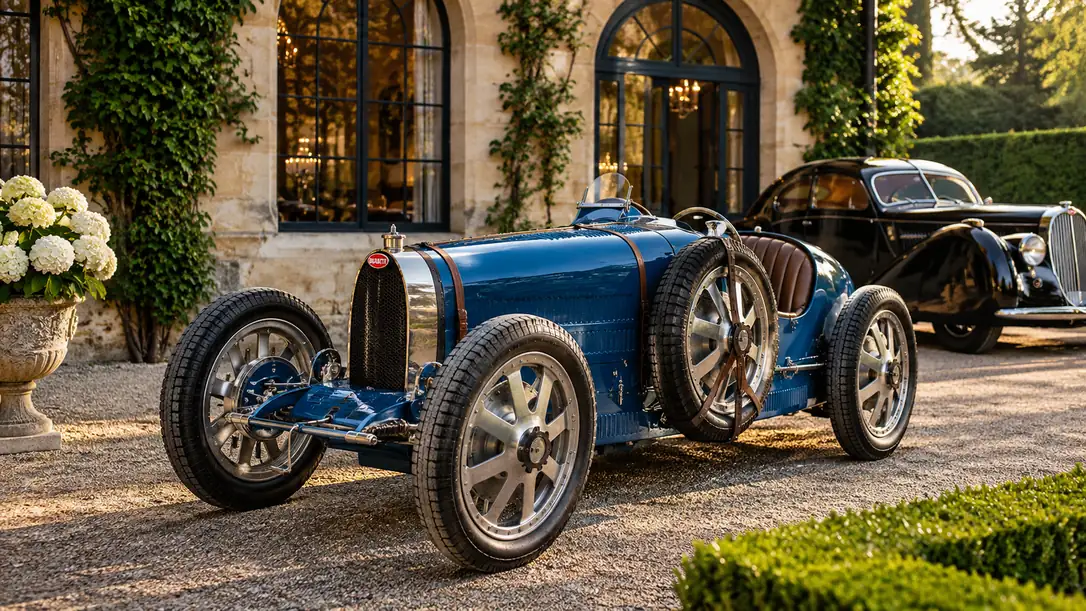
Ettore Bugatti was not a car manufacturer who appreciated art. He was an artist who happened to work in steel. The son of a celebrated furniture and jewelry designer, raised among sculptors and painters in Milan, he spent his life treating the automobile as an aesthetic object as much as a machine, and the cars he built in Molsheim, Alsace, between 1909 and 1939 remain the clearest proof that engineering and art can be the same discipline.
His story contains some of the most beautiful machines ever made, one of the most dominant racing cars in history, and a dynasty that rose like a Renaissance family and collapsed like one. To understand why Bugattis command the prices and reverence they do, you must understand the strange, stubborn, gifted man whose name they carry.
A Family of Artists
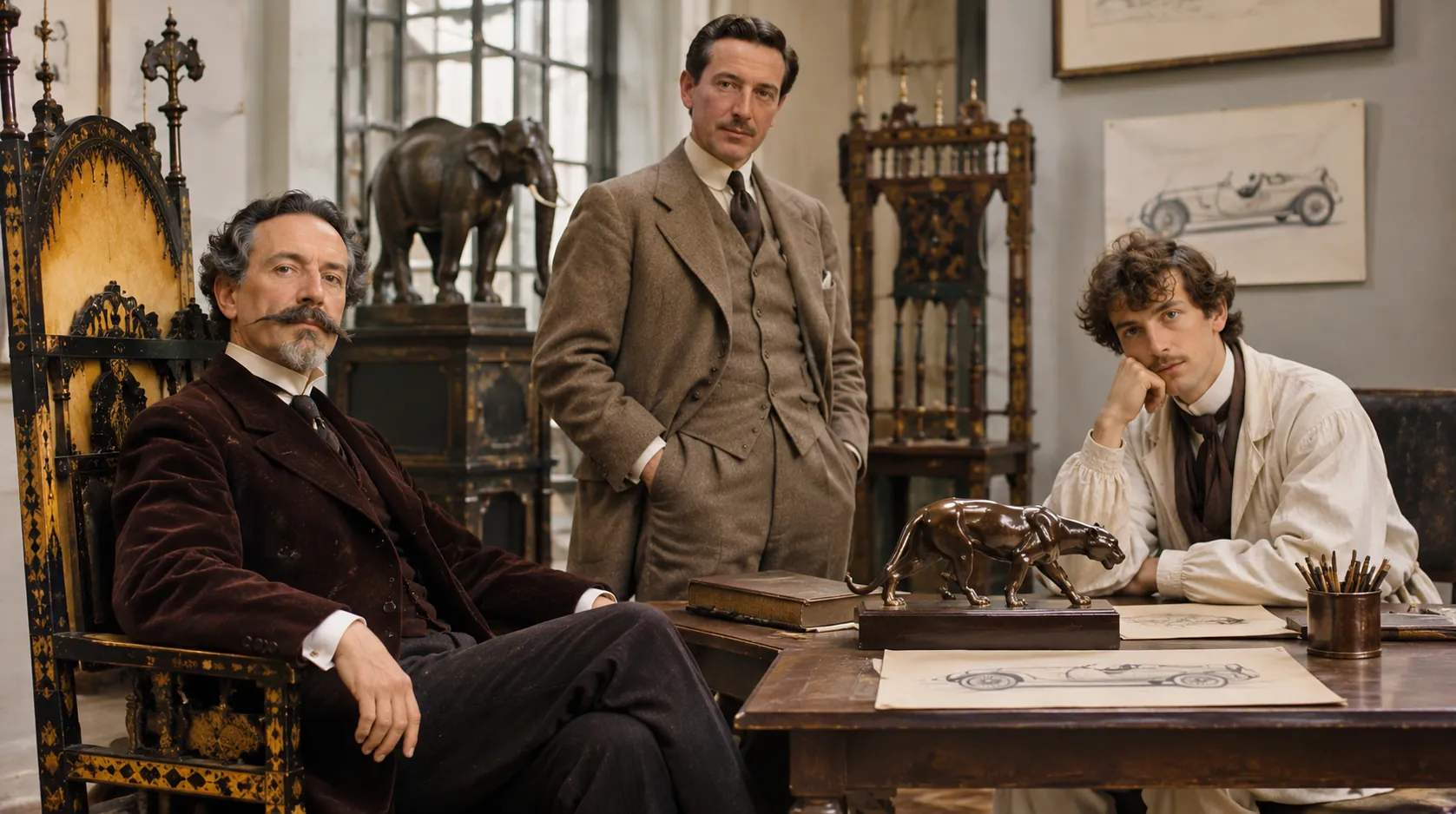
The Bugattis of Milan were not engineers. Ettore’s father, Carlo Bugatti, was a celebrated designer of furniture and metalwork whose sinuous, Moorish-influenced creations are museum pieces today. His younger brother Rembrandt, named with typical family confidence, became one of the great animal sculptors of his generation, whose bronze panthers and elephants now sell for millions.
Ettore grew up in this atmosphere of making, and the family’s assumption that objects should be beautiful at every scale never left him. Where other manufacturers viewed the automobile as a problem of function, Ettore saw it as a composition: the horseshoe radiator grille, drawn from the family’s decorative vocabulary, became the most recognizable face in motoring, and every Bugatti that has worn it since, from 1909 to the present, pays homage to a Milanese drawing room.
Pur Sang: The Thoroughbred Method
Ettore established his works at Molsheim, in Alsace, in 1909, and developed a manufacturing philosophy the world had not seen. Bugattis were built almost like bespoke suits: each car received individual attention from craftsmen who signed their work, and Ettore’s obsessive eye governed details that no customer would ever see.
His engines featured machined surfaces finished to jewel-like smoothness, fasteners of his own design, and an overall standard of mechanical beauty that made rivals’ engines look like plumbing.
The phrase that clung to the marque, pur sang, thoroughbred, captured the whole approach. A Bugatti was not assembled; it was bred. Owners became members of a small, self-selecting society, and the Molsheim factory operated more like an artist’s atelier crossed with a private club than a car plant.
The Type 35: Racing’s Greatest Thoroughbred
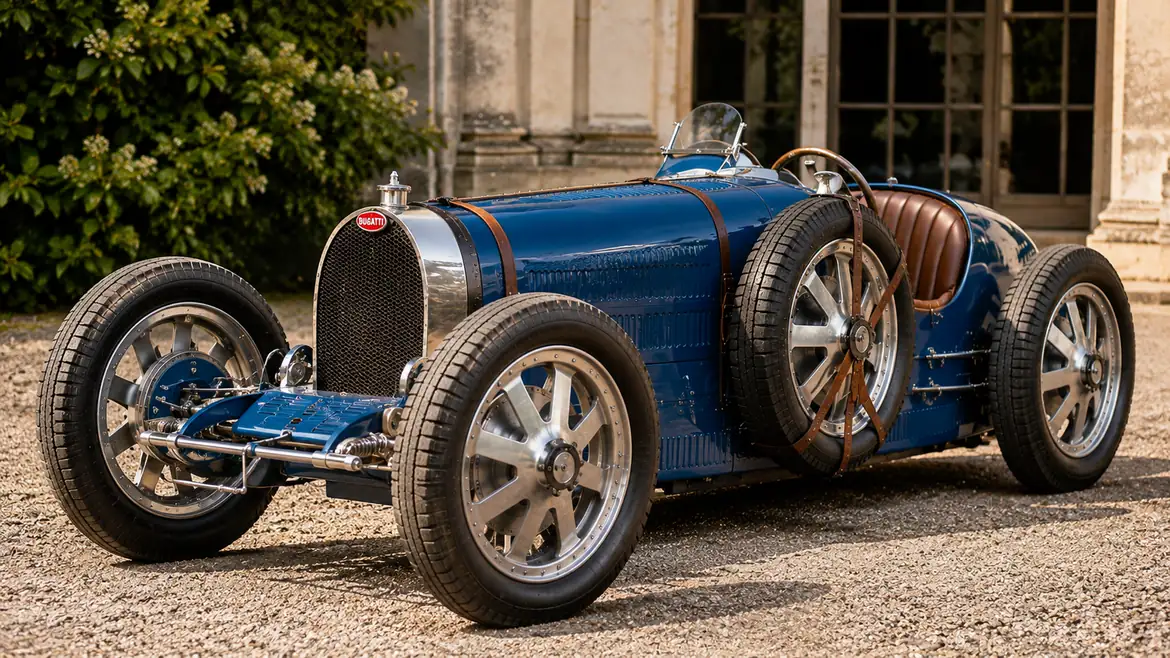
The machine that secured the legend arrived in 1924. The Bugatti Type 35 was a Grand Prix car of such completeness that it dominated the sport’s golden age: over its career, the Type 35 family won more than two thousand races, a figure unmatched by any racing car in history, including consecutive Targa Florio victories and national Grand Prix wins across Europe.
Its beauty was integral to its function. The cast aluminum wheels, a Bugatti innovation that combined wheel and brake drum in one elegant casting, the bodywork’s perfect proportions, and the jewel-like straight-eight engine made the Type 35 the first racing car that could be called beautiful without qualification.
It won because it was engineered superbly, and it is remembered because it was engineered beautifully, a distinction that defines the entire marque’s place in the collectible car pantheon.
The Royale: The King of Failures
Every great story needs its grand folly, and Ettore’s was the Type 41 Royale, the largest and most extravagant car ever built to that date. Conceived in the late 1920s as a vehicle for royalty, with a nearly thirteen-liter engine, wheels like cartwheels, and an elephant mascot sculpted by the tragic Rembrandt, the Royale was planned as a series of twenty-five for the crowned heads of Europe.
Ettore sold three. The Depression devoured the market for ten-foot-wheelbase palaces, and the Royale became the most magnificent commercial failure in automotive history, with only six built. Time, as it does with Bugattis, delivered the final verdict: the Royales are now among the most valuable cars in the world, each one a rolling monument to ambition unbounded by prudence, and the six survivors are treasured as the supreme expression of the marque’s refusal to compromise.
The Golden Decade and the Fall
The 1930s brought the marque’s aesthetic summit. The Type 57, designed largely by Ettore’s son Jean, produced in the Atlantic and Atalante coupes some of the most beautiful automobiles ever created, machines whose lines still stop concours crowds mid-stride. Jean Bugatti had inherited the family eye in full, and the partnership of father’s engineering and son’s design promised a second golden age.
It ended with almost unbearable swiftness. Jean Bugatti died in 1939, at thirty, testing a race car on a public road. Weeks later, Europe went to war, Molsheim fell under occupation, and the world that had sustained the marque vanished. Rembrandt had died by his own hand years earlier.
Ettore survived the war, attempted a return with a tiny factory and fading energy, and died in 1947 with his company effectively finished. The marque slept for four decades.
Two Resurrections
Bugatti has died and been reborn twice, and both resurrections proved the name’s indestructible power. The Italian entrepreneur Romano Artioli revived it in the late 1980s, building a futuristic factory in Campogalliano and producing the EB110, a carbon-fiber supercar whose quad-turbo sophistication anticipated the modern era, before financial collapse ended the dream in 1995.
Volkswagen acquired the name in 1998 and performed the definitive resurrection: the Veyron of 2005, a thousand-horsepower statement that redefined what a production car could be, followed by the Chiron and the record-breaking derivatives that have kept the marque at the summit of the hypercar world.
The modern Bugatti, now partnered with the Croatian electric hypercar maker Rimac, produces machines in Molsheim once again, a few dozen a year, at prices that would have seemed insane even to Ettore, and sells every one.
What Ettore Actually Built
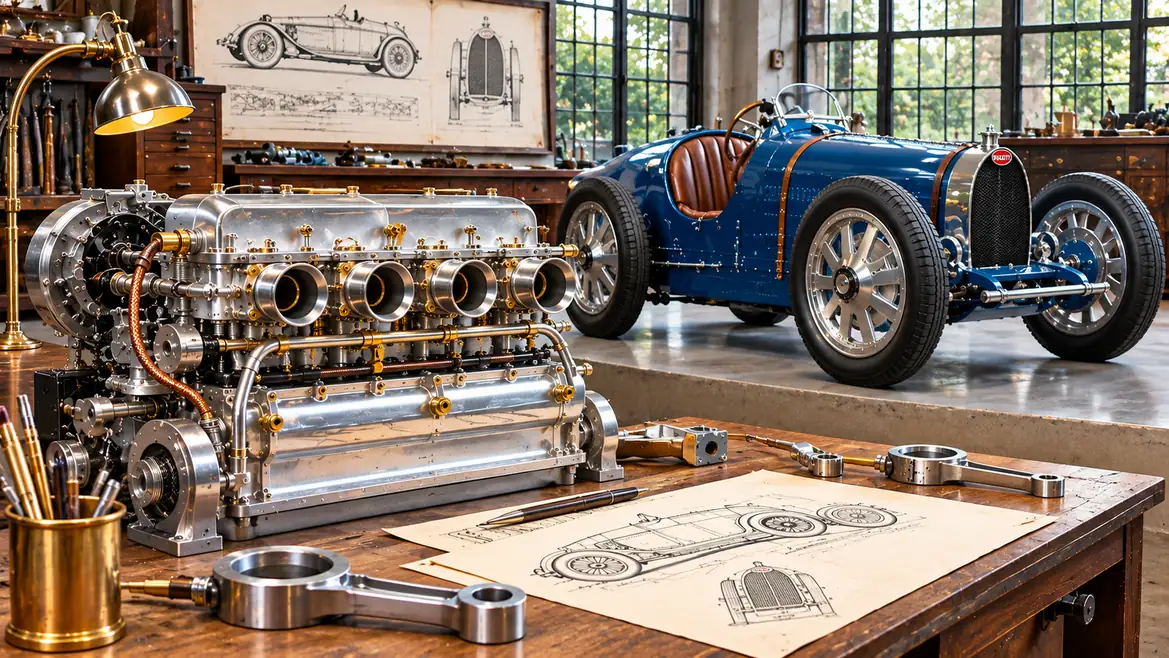
Ettore Bugatti’s true product was never the car. It was the idea that a machine could be held to an artist’s standard, that the unseen connecting rod deserved the same beauty as the bodywork, and that a factory could be an atelier. The automotive industry industrialized around him and left his method behind, but his verdict survives wherever a car is judged as an object of desire rather than transport.
The modern marque’s success, selling the fastest and most expensive cars in the world to clients who wait years, is the final proof of his insight: purity of vision, sustained without compromise, becomes priceless. Ettore failed commercially in his own lifetime and won completely in ours, which is perhaps the most Bugatti outcome imaginable.
FAQs
Who was Ettore Bugatti?
Ettore Bugatti, born in Milan in 1881, was an artistically trained engineer who founded the Bugatti automobile company at Molsheim, Alsace, in 1909, building cars that united racing dominance with unmatched craftsmanship.
What is the Bugatti Type 35?
The Type 35 of 1924 is the most successful racing car in history, with more than two thousand victories, and one of the most beautiful, featuring cast aluminum wheels and a jewel-like straight-eight engine.
What was the Bugatti Royale?
The Type 41 Royale, an enormous luxury car conceived for royalty in the late 1920s. Only six were built and three sold initially, making it a famous commercial failure; the survivors are now among the most valuable cars in the world.
Who was Rembrandt Bugatti?
Ettore’s younger brother, a celebrated sculptor of animals whose bronzes sell for millions today, and the creator of the elephant mascot that adorned the Royale’s radiator.
What happened to Jean Bugatti?
Jean Bugatti, Ettore’s gifted son and the designer of the Type 57’s most beautiful bodies, died in 1939 at thirty while testing a racing car, weeks before the Second World War effectively ended the company.
When did Bugatti stop making cars originally?
The original company collapsed during and after the Second World War, and Ettore died in 1947. The marque was dormant until Romano Artioli’s revival in the late 1980s and Volkswagen’s acquisition in 1998.
Who owns Bugatti today?
Bugatti operates today in partnership with Rimac, the Croatian electric hypercar maker, under the Bugatti Rimac venture, producing cars at Molsheim in Alsace.
Why are vintage Bugattis so valuable?
Their combination of rarity, documented racing history, unmatched craftsmanship, and the Ettore legend places them at the summit of the collector market, with top examples selling for tens of millions.