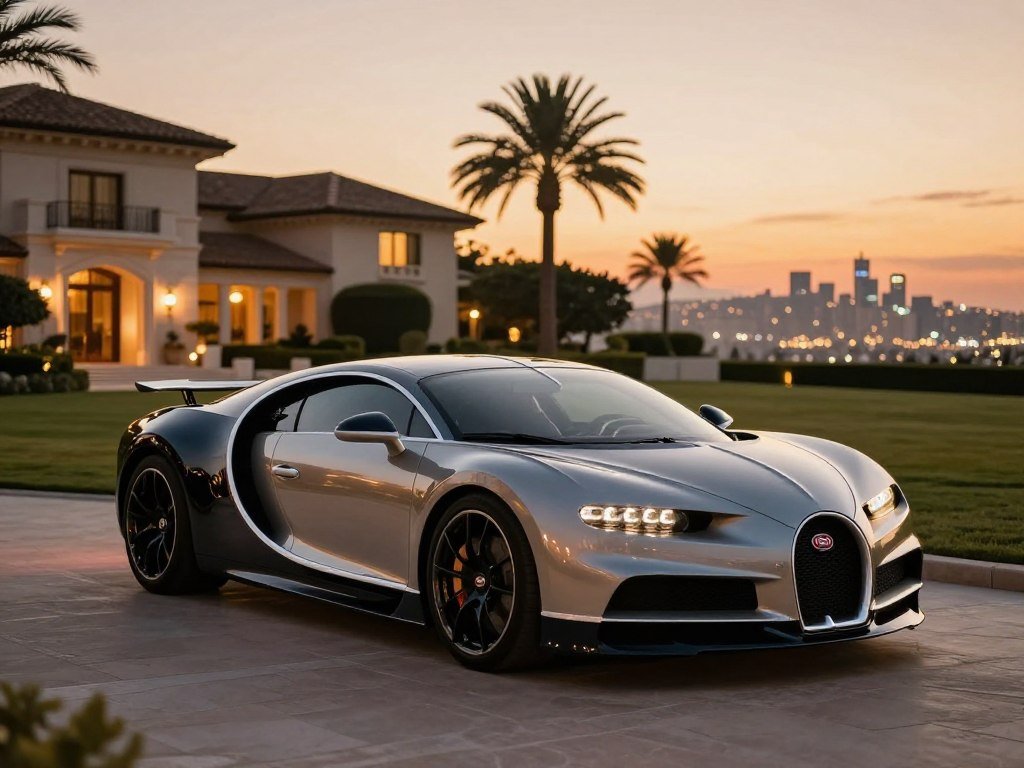
A Bugatti Chiron remains a multimillion-dollar purchase, but in 2026 buyers are comparing used-market asking prices rather than ordering a new car from the factory. The secondary market is where previously owned vehicles are sold through dealers, auctions, or private listings. Your final price depends on the variant, mileage, condition, customization, insurance, and service history. Those details can make two listings look less alike than their photos suggest. This guide gives you a clear way to read an asking price and judge the wider ownership picture. A hypercar at this level needs more than a quick look at its paint and odometer. Its records, exact factory specification, and past care matter just as much. Treat any advertised figure as a starting point until you confirm the exact car’s specification and condition.
Key Takeaways
- Expect a multimillion-dollar purchase, not a new factory order.
- Compare asking prices with the car’s variant and condition.
- Check service, ownership, and repair records before making an offer.
- Budget for insurance, service, and other ownership needs separately.
- Arrange a specialist inspection before you commit.
How Much Is Bugatti Chiron?
A useful starting estimate for a base Bugatti Chiron in the US is around $3.3 million, before you evaluate a particular car. That is a guide estimate, not a fixed asking price or a promise of what a seller will accept. The [Bugatti Chiron price guide](https://praviceler.com/bugatti-chiron-price/) gives buyers a broader view of US pricing and ownership.
Model-year references and current asking prices describe different things. The model-year figures below offer useful context, but they do not set the value of an individual vehicle. Mileage, condition, variant, and bespoke work can move an asking price. A bespoke Super Sport 300+ can exceed $5 million.
| Price reference | Figure | How to read it |
|---|---|---|
| 2026 base Chiron estimate | Around $3.3 million | Guide estimate |
| 2020 Chiron | $2,990,000 | Model-year reference |
| 2021 Chiron | $2,990,000 | Model-year reference |
| 2022 Chiron | $6,000,080 | Model-year reference |
So, how much is a 2022 Bugatti Chiron, or a 2021 Bugatti Chiron? The model-year references above give one answer, while a live listing reflects that car’s details and seller. A current asking price may sit above or below a guide estimate. Check whether the listing names the exact variant and documents its options.
Recent auction sales offer another view, but they are not asking prices. Marque reports a US median sold price of $4.37 million from seven tracked results, a small sample. Its recent sales ranged from $3.024 million to $5.725 million. These completed sales may help you frame a comparison, but they do not prove what another car should cost.
Before treating a model-year figure as a fair offer, compare it with the exact vehicle’s specification and condition.
A seller’s asking price can reflect a rare finish or factory option, yet that does not confirm excellent mechanical condition. Ask what the stated figure includes, such as taxes or added work, before comparing listings. This matters when one advertisement shows only a headline figure while another describes a detailed specification. Read each number for what it is, then weigh the car itself. Before treating a model-year figure as a fair offer, compare it with the exact vehicle’s specification and condition.
Is a Bugatti Chiron Still for Sale?
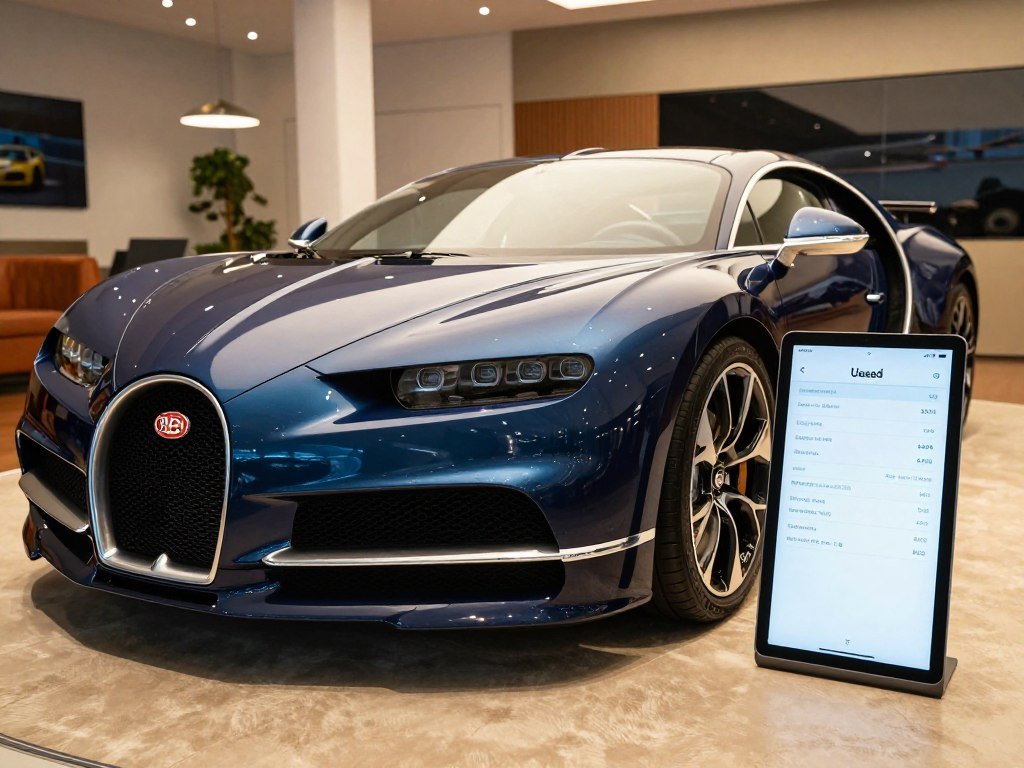
There is no new Chiron production to order: Bugatti completed the 500-car run in May 2024. A Bugatti Chiron for sale in the US is a secondary-market purchase. Bugatti ended production after a run that began in 2016, and every car had been sold by January 2022.
The final car carried the number 500, marking the end of the production run. That finite supply does not mean every car is listed for sale today. It means available inventory comes from owners, dealers, or sellers bringing a specific car to auction. Buyers may need patience to find a variant and specification that fit their needs.
A used Bugatti Chiron’s asking price depends on its variant and condition. There was no new 2025 Chiron production model because production ended in 2024. A listing for a 2025 sale may still describe a previously built vehicle, rather than a new model-year production car.
Common purchase routes include:
- Authorized dealer inventory
- Auctions
- Private resale listings
Each route can present a different buying process. Dealer inventory may offer a direct point of contact, while auctions set their own terms and timing. A private listing may require more work to confirm ownership and records. The route alone does not tell you whether the car is fairly priced or well cared for.
The 500-car production total makes the supply finite, but it does not guarantee a particular car will rise in value. Scarcity can attract interest, while condition and documentation still matter to an individual buyer. Confirm that a listing represents a completed, transferable car rather than an invitation to join a closed production run.
How Do Chiron Variants Differ in Price?
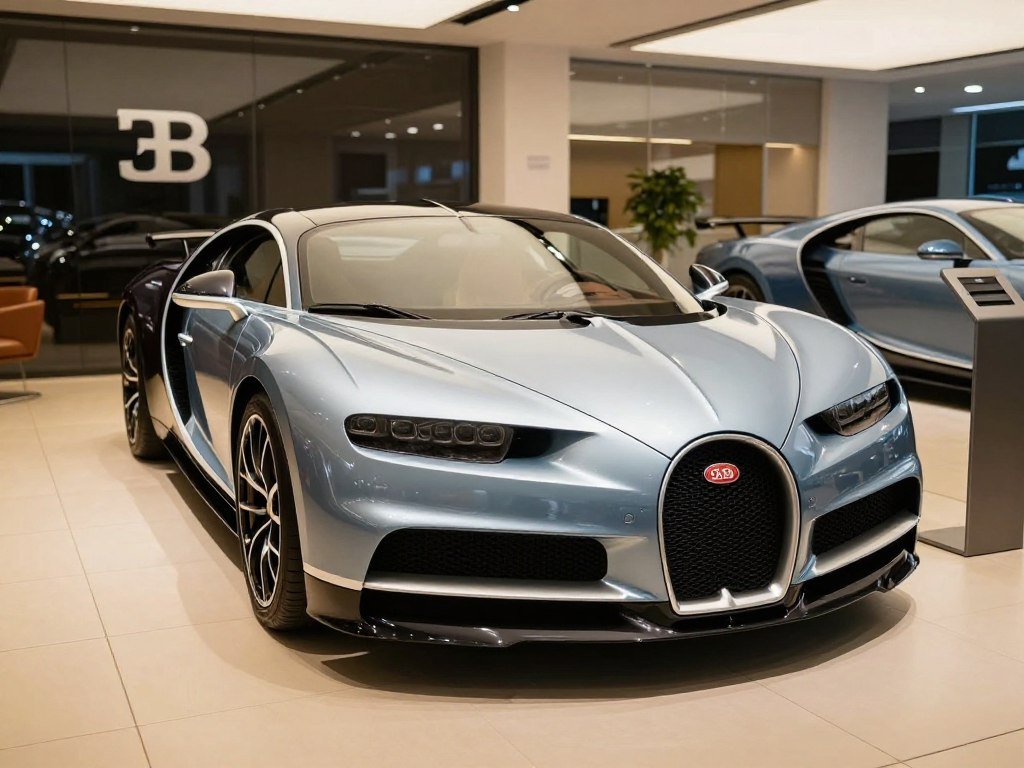
The Chiron Sport, Pur Sport, and Super Sport models trade different driving priorities for different estimated price points. Their focus matters as much as the name on the rear badge. The estimates below are not guaranteed transaction prices, and bespoke options can change the final amount.
The Pur Sport prioritizes cornering, while the Super Sport family prioritizes high-speed performance. The Chiron Sport sits between a standard car and more specialized versions, with sharper handling and less weight. The table gives a practical overview of each model’s purpose and limited-run details.
| Variant | Estimated US price | Performance or design focus | Scarcity or speed detail |
|---|---|---|---|
| Chiron Sport | Around $3.5 million | Sharper handling, 18 kg less weight | No production-count claim |
| Chiron Pur Sport | Around $3.6 million | Handling-focused setup | 60 units |
| Chiron Super Sport | Around $3.9 million | High-speed focus | Production top speed limited to 440 km/h |
| Chiron Super Sport 300+ | Around $4.5 million or more | Record-inspired version | 30 units |
The Chiron Sport is 18 kg lighter than the standard car. That change supports its sharper handling focus, rather than turning it into a separate track-only model. Your use matters here: a buyer who values cornering may prefer its feel to a version shaped around top speed.
The Pur Sport was limited to 60 units, giving it a smaller production run than the Sport. Its setup favors tighter roads and corners. If you mainly want a car built for high-speed travel, the Super Sport family is more closely aimed at that goal.
The Super Sport production model has a top speed limited to 440 km/h. The Super Sport 300+ has a limited 30-car run and a record-inspired design. A special specification or added options can also shift the amount a seller asks, so a rare badge does not explain every dollar.
These prices are estimates for comparison, not guarantees of what a specific car will sell for. Custom paint, interior work, and other factory options can affect the asking price. Choose the variant around how you would use the car, not simply the highest speed claim.

What Shapes a Used Chiron’s Value?
Two Chirons with similar mileage can deserve different valuations if their service records, condition, or factory specifications differ. The odometer is only one clue, not a full report on how a car has been kept. A careful comparison joins mileage with inspection findings and the car’s documented past.
Mileage and condition change the comparison
Low mileage may look appealing, but it cannot show how the car was stored or maintained. A physical inspection can reveal wear, damage, or repair work that the odometer cannot explain. Inspection findings matter because a low-mileage car can still need attention.
Ask what the car’s service history says about its use. A complete record gives you more context than a mileage figure alone. Compare the condition of the body, cabin, and mechanical parts with what the seller’s paperwork describes.
Provenance and rarity can set a car apart
Accident history, factory options, documented ownership, and limited-edition status can all affect value. A rare specification can command a premium without proving the car is mechanically better. A distinctive option or limited run may appeal to collectors, but condition remains a separate question.
Request these records before you compare two listings:
- Service invoices
- Accident and repair records
- Ownership history
- Factory specification and options documentation
These records help connect the seller’s claims to the exact car. Ownership records can show how the vehicle changed hands, while factory documentation can confirm its original options. A low odometer reading without clear records leaves important questions unanswered.
Resale value is never guaranteed, even for a rare luxury car. Demand, rarity, condition, authenticity, and the original purchase price can all shape later interest. Compare documented condition and provenance before treating a low-mileage listing as the stronger value.
Records that support a luxury item’s authenticity can help explain why buyers should keep paperwork with a high-value purchase.
What Does Bugatti Chiron Ownership Cost?
The purchase price is only one part of Chiron ownership, with insurance, service, and tire replacement creating separate expenses. These costs do not follow one calendar: insurance is annual, service is tied to an interval, and tires need replacement when required.
Service intervals and tires
Scheduled service is estimated at $20,000-$40,000 per maintenance interval. A full tire set costs about $42,000 when replacement is needed. The tire figure is an occasional replacement expense, not an annual bill.
That difference matters when you plan a yearly budget. A service interval may not match a calendar year, and tire wear depends on use and condition. Recent invoices can show which expenses the current car has already had.
Insurance and specialist logistics
Estimated annual insurance is $60,000-$120,000. Location, coverage, and your driver record affect the premium. The amount can also depend on the terms of the policy and how you plan to use the vehicle.
Specialist service logistics may add transport and storage expenses. A car may need to travel to a qualified service location, and that trip requires planning. Storage arrangements can also affect your total cost, even when the car is not being driven.
Build a complete ownership budget
Keep recurring costs separate from expenses that arise only when the car needs work or new tires. The figures below help set categories, not a complete annual total. A per-interval service estimate is not the same as an annual maintenance total.
| Expense | Estimate | Timing or condition |
|---|---|---|
| Insurance | $60,000-$120,000 | Annual; depends on coverage, location, and driver |
| Scheduled service | $20,000-$40,000 | Per maintenance interval |
| Full tire set | About $42,000 | When replacement is needed |
Build your budget with the car’s own schedule and recent bills, not only broad estimates. One owner may face a service visit in the year ahead, while another may have just completed one. Ask for the car’s service schedule and recent invoices before setting an annual ownership budget.
How Fast Is the Bugatti Chiron?
A standard Chiron is electronically limited to 420 km/h (261 mph), while the Super Sport 300+ record figure came from a pre-production car. The conditions are different, so those numbers do not describe the same kind of vehicle. A speed key changes the standard car’s limit.
The standard Chiron’s limiter
The standard car’s top speed is electronically limited to 420 km/h (261 mph) when the speed key is used. Without that specific key, the limit is 375-380 km/h (233-236 mph). The key changes the limit, not the car into a record-run model.
These are electronic limits for the road-going car, not a promise that you can reach them on public roads. They describe the vehicle’s set speed limit under the stated conditions. The standard car’s speed key should not be confused with a different model’s record test.
The Super Sport 300+ record run
On August 2, 2019, a pre-production Super Sport 300+ reached 490.484 km/h (304.773 mph). TÜV verified the result. That car was a modified record vehicle, so the run does not state the top speed of every customer car.
The production Super Sport 300+ has a top speed limited to 440 km/h (273.4 mph). That is a customer-model limit, not the same result as the earlier record run. The distinction helps you read claims about the fastest car without mixing a test vehicle with a production version.
Speed figures need their conditions beside them. The standard Chiron’s limiter, the speed-key setting, and the modified record car each describe a different case. Keep the record-run speed separate from the electronically limited speed of a production vehicle.
What Powers the Bugatti Chiron?
The Chiron’s defining mechanical feature is an 8.0-liter quad-turbocharged W16, with output rising from 1,479 hp to 1,578 hp in Super Sport variants. Four turbochargers force more air into the engine, helping it make very high power. The W16 has 7,993 cc of displacement.
The quad-turbocharged W16
The standard W16 produces 1,479 hp and 1,600 Nm of torque. Super Sport variants produce 1,578 hp. The engine’s layout is unusual: four banks of four cylinders form a W shape.
That output requires more than a large engine. Four turbochargers and high heat call for a complex cooling setup and specialist service. High power brings a complex cooling and service system with it. A Popular Science feature on the Chiron Super Sport explains the W16’s layout and cooling needs.
Power sent to all four wheels
A 7-speed dual-clutch transmission shifts between gears and sends power through an all-wheel-drive system. A dual-clutch setup uses two clutches to manage gear changes. All-wheel drive sends power to all four wheels, helping the car put its output down.
This drivetrain helps explain how the car delivers its power, but it does not promise easy everyday driving. Grip, road conditions, and the driver’s inputs still matter. The transmission and drive system work as a team, rather than making engine output the whole story.
The W16 is a central part of the Chiron’s appeal, though its figures are only one part of the design. Cooling, transmission, and all-wheel drive support the engine’s output. Read the engine and drivetrain figures as a package, since power alone does not describe how the car delivers performance.
How Does the Tourbillon Compare With the Chiron?
The Tourbillon is Bugatti’s successor to the Chiron, with a separate estimated starting price and a different production limit. It is a new model, so its factory estimate should not be treated as a used Chiron valuation.
Price and production scale
The 2026 Bugatti Tourbillon has an estimated starting price of $4,600,000 and production is limited to 250 units. A successor’s estimated starting price is not a used-car asking price. The [Tourbillon starting estimate](https://) is a factory-price reference, while a Chiron listing reflects a specific previously owned car.
The Veyron is another distinct model. A Bugatti Veyron’s asking price depends on its version, model year, mileage, condition, and provenance, so Chiron prices should not be used as a proxy. Model names alone do not make two used cars comparable.
Speed claims need their conditions
The Tourbillon’s top speed is electronically limited to 380 km/h (236 mph) in normal use. With the speed key inserted, the limit rises to 445 km/h (277 mph). The conditions belong beside the numbers.
Hennessey Venom F5 is another name you may see in discussions of high-performance cars. That name alone does not make it a fair price or speed comparison. Compare each vehicle’s stated version and conditions before drawing a conclusion.
Keep factory estimates apart from used-car asking prices, and keep speed limits beside their operating conditions. Compare a successor’s factory estimate with a Chiron’s specific used listing only after checking that the price bases match.
What Should You Check Before Buying a Used Chiron?
A used Chiron deserves a specialist inspection and a document check before you decide whether its asking price is justified. Paperwork and the physical car should tell the same story. A high price does not prove that the vehicle is in sound condition.
Inspect the car and its records
An independent specialist should review body and chassis condition, evidence of repairs, service records, and the match between the car and its paperwork. Do not rely on photographs or a clean history summary instead of an in-person inspection. Those items cannot show every issue a physical review may find.
Use this pre-purchase checklist:
- Confirm the VIN and ownership documents.
- Inspect service and repair records.
- Arrange a qualified physical inspection.
- Verify the exact variant and options against the sale documents.
The VIN ties the paperwork to the vehicle. The factory specification can help confirm whether the listed options match the car. Resolve gaps in records before you treat the seller’s description as complete.
Confirm the practical fit
The Chiron is a two-seat car with an estimated curb weight of 1,996 kg (4,400 lb). That combination makes it worth checking passenger needs, garage access, loading, and transport arrangements. A two-seat layout may not fit every trip you expect to take.
Its weight also matters when planning how the car moves between storage and service. Check whether your garage and access points fit the vehicle, and whether loading plans suit your needs. Make the purchase conditional on resolving any mismatch between the car, its records, and the agreed specification.
What Is It Like to Use a Chiron on the Road?
A Chiron can be driven on ordinary roads, but its fuel consumption and size make practical planning part of ownership. Trip planning matters because combined fuel consumption is 22.5 L/100 km (10.45 mpg-US). Its fuel tank holds 26.4 gallons.
That fuel figure and tank size shape trip planning, but they do not set a real-world range. Your route, driving, and conditions affect how often you stop. Do not treat the combined figure as a promise of mileage on every drive.
Check these practical details before regular use:
- Route and parking access
- Secure storage
- Fuel stops on longer drives
A car can be road-usable without being convenient as a routine commuter. A short familiar trip may be simple to plan, while a longer drive calls for more thought about fuel stops and parking. The intended use matters more than the idea of driving it every day.
Plan a familiar route and a secure parking arrangement before assuming the car will suit regular use.
Conclusion
A Chiron’s price makes sense only when you know which variant is being offered and what condition it is in. Its asking price belongs to the secondary market, while ownership needs a separate budget for ongoing costs. A rare specification can be appealing, but records and inspection findings help you judge the actual car.
Choose the variant that fits how you plan to use it. Then request the VIN, service records, and an inspection before making an offer. Start with one specific listing, verify its records, and arrange a specialist inspection before you commit.
FAQ
What is the top speed of the Bugatti Tourbillon?
What are the different Bugatti models and their prices?
Is it true it cost $25,000 to change the oil in Bugatti?
How many Bugatti Chiron Super Sports were made?
How often does a Bugatti Chiron need servicing?
Is the Bugatti Chiron street legal in the USA?