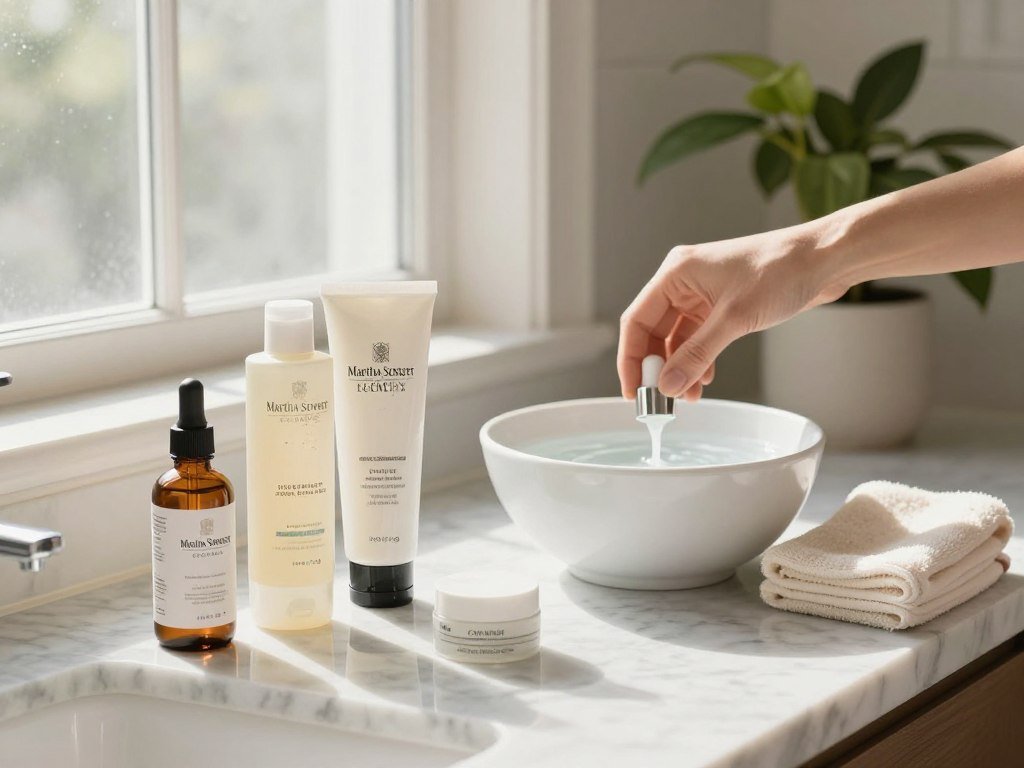
A high-profile name can draw attention to a skincare line, but the useful question is whether its products suit your skin and routine. This Elm Biosciences review weighs formulas, reported testing, routine fit, and cautions, not celebrity appeal alone. The brand was co-created by Martha Stewart and dermatologist Dhaval Bhanusali, which brings attention but cannot predict how a formula will work for you.
Beauty products aimed at aging skin can make big promises. This review separates measured results from individual impressions and considers how the products may fit different needs, including hydration and sensitivity. It also looks at the oral supplement as a separate choice, since a capsule is not a replacement for topical skincare or general health habits.
There is no guarantee that any product will soften fine lines or change skin texture. Treat any promised change as something to assess against your own skin needs, not a guarantee.
Key Takeaways
- The range includes face, lip, and oral products.
- Reported changes include brighter, more hydrated skin, but not line erasure.
- The serum’s scent may bother some shoppers.
- The oral supplement had no visible result for one reviewer after 30 days.
- Starting with one topical product makes it easier to judge fit.
What Is Elm Biosciences and What Does It Sell?
Elm Biosciences is a skincare and supplement brand co-created by Martha Stewart and dermatologist Dhaval Bhanusali. Its central concept is A3O Complex, Elm Biosciences’ proprietary, patent-pending complex used in its topical formulas. The brand’s range spans face care, lip care, and an oral supplement.
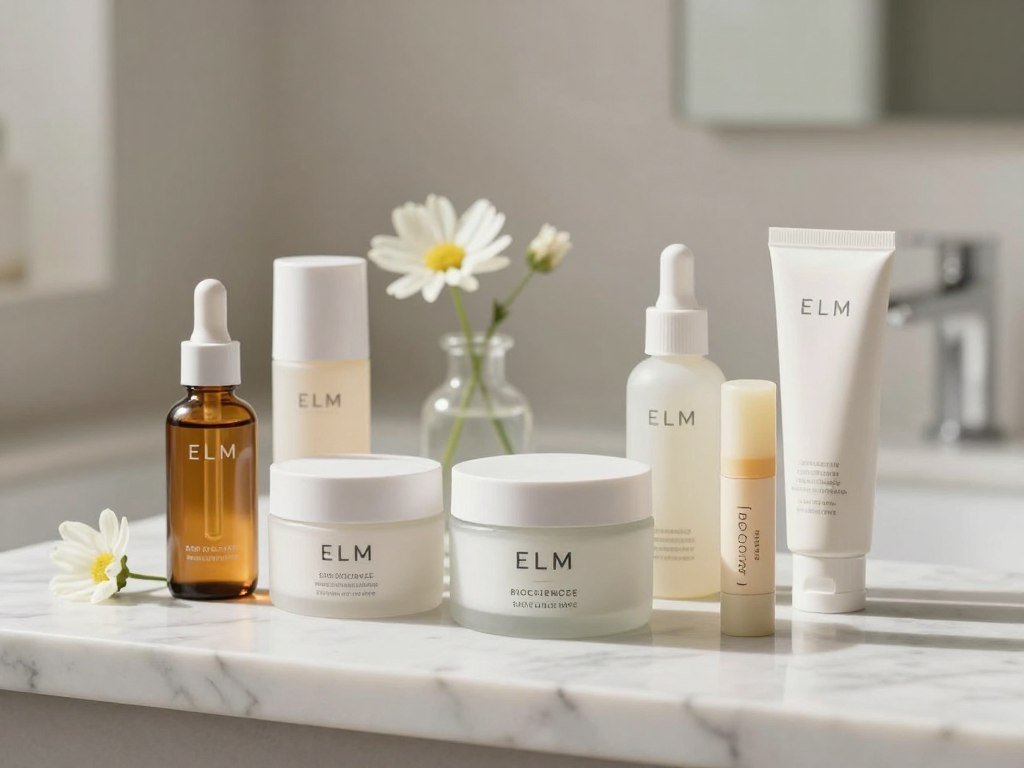
The lineup has four products, with listed prices from $45 to $165. The founders discussed the brand’s science-led approach and A3O concept in a NewBeauty interview about the launch. The official Elm Biosciences website is a place to check its products and current availability.
A multi-product routine is a choice, not a required set.
| Product | Size or count | Listed price | Product type |
|---|---|---|---|
| A3O Elemental Serum | 40 ml (1.35 fl oz) | $135 | Face serum |
| A3O Elemental Night Cream | 50 mL (1.69 fl oz) | $165 | Night cream |
| Inner Dose Daily Skin Supplement | 60 capsules, 1-month supply | $50 | Oral supplement |
| Elemental Lip Serum | 15 mL (0.51 fl oz) | $45 | Lip serum |
Shoppers comparing Elm Biosciences skin care can begin with the product that matches a clear need, rather than buying the full line. Compare the listed cost with how often you expect to use each product before choosing a multi-product routine.
What Does an Elm Biosciences Review Reveal About Results?
The strongest specific result is a week-eight study difference in image-assessed skin age, while individual experiences were more modest. The measure matters: a photo-based study score does not mean a person will look years younger in daily life.
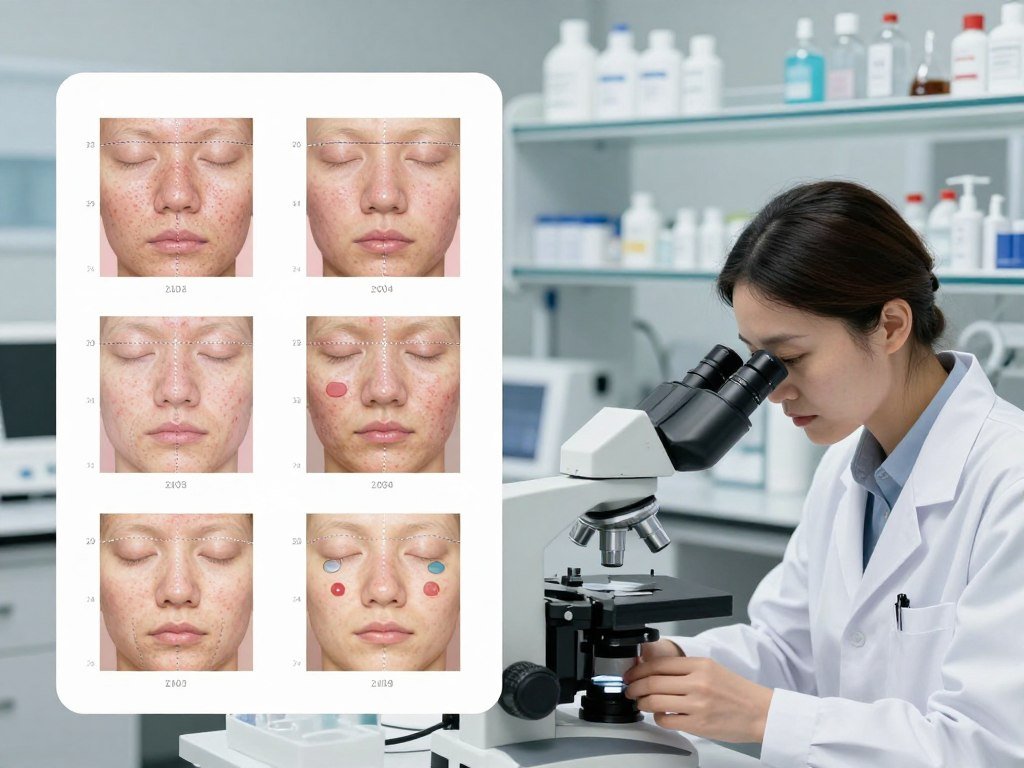
Study results and personal reviews describe different kinds of evidence. A clinical study found image-assessed skin age was 4.14 years younger than the comparator at week 8, with p=0.019. The week-eight study result is a statistical comparison, not a promise of visible age reversal for each user.
What the eight-week study measured
The study used images to assess skin age against a comparator. Its result suggests a difference on that measure at the end of eight weeks. It does not establish that every user will see a matching change in fine lines, tone, or texture.
What a six-week serum test showed
A Prevention reviewer used A3O Elemental Serum nightly for six weeks and A3O Elemental Night Cream for four weeks. After six weeks, the reviewer described brighter, more hydrated skin, but reported no firming or line erasure during that period.
The separate Night Cream test lasted four weeks, with no quantified outcome to report. That short use period makes the trial a limited guide to longer-term changes.
What a dermatologist says about the evidence
Dermatologist Mona Gohara described the clinical improvements as incremental. She also characterized evidence for acetyl zingerone as emerging compared with topical vitamin C, whose evidence base is more established.
Elm Biosciences review dermatologist coverage, before-and-after claims, and reviews and complaints point to a divide over scent and personal expectations. The clearest reported before-and-after changes were brightness and hydration, not firming or erased lines.
| Item | Evaluation period | Reported outcome | Interpretation limit |
|---|---|---|---|
| A3O clinical study | Week 8 | Image-assessed skin age 4.14 years younger than comparator, p=0.019 | Study measure, not a personal guarantee |
| Serum reviewer | Six weeks | Brighter and more hydrated skin | No firming or line erasure reported |
| Night Cream reviewer | Four weeks | No quantified outcome to report | Short use period |
Read any before-and-after claim alongside its test duration and the exact outcome measured.
Which Ingredients Define the Elm Biosciences Formulas?
The serum pairs familiar hydrators with antioxidant ingredients, while the night cream uses a retinoid-related ingredient alongside ectoin and carnosine. Each formula takes a different approach, so the product name alone does not explain how it may feel on skin.
A3O Elemental Serum contains both moisture-focused and antioxidant ingredients. Its formula includes hyaluronic acid, blue tansy, squalane, and vitamin E, along with acetyl zingerone and bakuchiol. These ingredients do not make the same promise: hyaluronic acid and squalane are commonly used in hydration-focused formulas, while vitamin E and acetyl zingerone are antioxidants.
Antioxidants and hydrators in the topical formulas
Hyaluronic acid helps a formula attract and hold water at the skin’s surface. Squalane can add a soft, emollient feel, while blue tansy and vitamin E help shape the serum’s overall formula. The brand’s A3O Complex is a blend used in its topical products, not a result by itself.
Bakuchiol is another named serum ingredient, and acetyl zingerone is part of its antioxidant profile. Their presence does not mean the serum will produce the same change for every person. The complete formula, use pattern, and skin response all matter.
A3O Elemental Night Cream contains trifarotenyl caprylate, ectoin, and carnosine. Ectoin and carnosine are formula components often discussed in connection with skin care and the skin barrier. Trifarotenyl caprylate is described as retinoid-related, but shoppers should follow the cream’s label rather than assume it works like a prescription retinoid.
What the Inner Dose supplement contains
Inner Dose includes 500 mg of turmeric per dose, along with holy basil leaf powder and polypodium leucotomos. These are ingredients in an oral supplement, not proof that the combination causes visible skin changes.
That distinction matters when comparing a topical serum with a capsule. The serum puts its ingredients on the skin, while the supplement is taken by mouth and has a different role in a routine. Evaluate an ingredient list by the role each ingredient plays and by how your own skin tolerates the complete formula.
How Do Elm Biosciences Products Fit Into a Routine?
A simple routine can place the serum after cleansing and before moisturizer and morning sunscreen. Keep the order simple, especially when adding a new formula to a routine that already includes active products.
Use the serum according to its product directions, not another person’s pump count. One reviewer used two pumps on the face and one more on the neck, but that was a personal example, not a standard dose.
A simple morning order
- Cleanse your face with a cleanser suited to your skin.
- Apply A3O Elemental Serum as its directions state.
- Add moisturizer if your skin needs it.
- Finish with broad-spectrum sunscreen.
Moisturizer is optional if the serum and your usual routine already feel comfortable. Sunscreen remains the morning step that protects exposed skin from ultraviolet rays. A guide to skincare products by routine role can help compare basic steps with optional treatments.
Layering the serum and cream at night
At night, apply the serum after cleansing, then use A3O Elemental Night Cream as a moisturizer. One reviewer used a dime-sized amount of cream on the face and neck; this is an example, not a required amount.
The reviewer also applied makeup over the topical products without reporting application problems. That can be useful for people who wear makeup, though texture and layering can feel different across skin types. For adjacent personal-care choices, ingredient and product-fit checks for hair care use a similar focus on personal needs.
Add one new product at a time so any irritation or incompatibility is easier to identify.
What Should Sensitive-Skin Shoppers Check?
Sensitive-skin fit may depend as much on fragrance tolerance as on whether a product causes redness or stinging. Scent is a separate concern: a formula can feel comfortable yet still smell too strong for one person.
Individual tolerance varies, even when one reviewer reports no irritation. A sensitive-skin reviewer used the serum nightly without redness, itchiness, or stinging, but found its scent too strong. The Night Cream was described as fragrance-free and non-irritating during use.
The FDA says most cosmetics and cosmetic ingredients, except color additives, do not need approval before they enter the market. Manufacturers remain responsible for cosmetic safety and labeling. The agency’s cosmetic ingredient rules include specific restrictions.
- Remember that most cosmetics do not receive FDA premarket approval.
- Check eye-area products for the mercury limit of 65 parts per million, or 0.0065 percent. It is allowed only when no other effective, safe preservative is available.
- Do not use cosmetics with hexachlorophene on lips or other mucous membranes. The ingredient is limited to 0.1 percent in cosmetics.
- Treat claims to treat or prevent disease as a sign that drug rules apply. Such products must meet drug requirements, including premarket approval.
Cosmetics and drugs follow different rules because their intended uses differ. A claim to prevent or treat disease changes how a product is regulated, even when the product looks like skincare.
For personal advice about a skin condition or a lasting reaction, a dermatologist can help assess the cause. A guide to individual limits in product reviews also offers context on why one person’s experience cannot guarantee another’s. Check the full label and stop using a product if it causes a reaction.
Who Is Elm Biosciences Best Suited To?
Elm Biosciences is most compelling for shoppers who want a polished topical routine and are comfortable with gradual, personal results. A topical first step makes the most sense for someone seeking hydration or a glow product.
The supplement is optional, not a substitute for skincare or a healthy diet. A Prevention reviewer took Inner Dose Daily Skin Supplement twice daily for 30 days and noticed no visible skin difference. That single experience cannot predict what another person will notice.
A supplement should earn its place through a change you can name, not just a hope for better skin.
Someone hoping for a quick visible payoff may reasonably skip the daily skin supplement. People who want to test the brand can begin with one topical product that suits their needs, rather than starting several products at once.
Inner Dose may appeal to shoppers who already use supplements and are comfortable with uncertain cosmetic benefits. A capsule does not replace cleansing, moisturizer, or sun protection. Sustainable daily health habits can support well-being beyond any single product.
If the supplement is the main draw, decide in advance what change you would need to notice before continuing it.
Conclusion
Elm Biosciences may be worth trying if a polished topical formula and gradual cosmetic benefits match your priorities. The serum is the clearest starting point for someone seeking hydration and glow, while scent-sensitive shoppers should weigh its fragrance.
Supplement buyers should keep expectations modest, since one reviewer saw no visible change after a month. Compare the serum’s ingredient list and listed price with your current routine, then introduce it alone if you decide to try it.
Start with one product, follow its directions, and judge it by how your skin responds over time.
FAQ
What Is Elm Bioscience?
What Is the #1 Recommended Skincare Brand?
What’s the Safest Skincare Brand?
What Is the Cleanest Skin Care Line?
What Are the Top 3 Skincare Products?
What to Avoid in Skin Care Products?