A foundation that looks smooth at first can become uncomfortable or settle into fine lines as skin gets drier or more textured. The best foundation for mature skin depends on your coverage needs, finish, hydration, and skin tone, not your age alone. Undertone is the subtle warm, cool, or neutral hue beneath the surface color of your skin.
A comfortable formula can help you even out your complexion without a heavy or dry appearance. Your skin may also feel different from one day to the next, so comfort matters as much as the shade or label. These picks include affordable drugstore formulas and higher-priced options, with choices for sheer, medium, and fuller coverage.
Key Takeaways
- Choose coverage and finish based on how you want your skin to look.
- Hydrating formulas can feel more comfortable on dry skin.
- A skin tint gives lighter coverage than most foundations.
- Try shades in natural light to compare their depth and undertone.
- Use foundation SPF as an extra layer, not a sunscreen replacement.
Start by deciding how much coverage you want, then choose a finish that feels comfortable on your skin.
Best Foundation for Mature Skin by Coverage and Finish
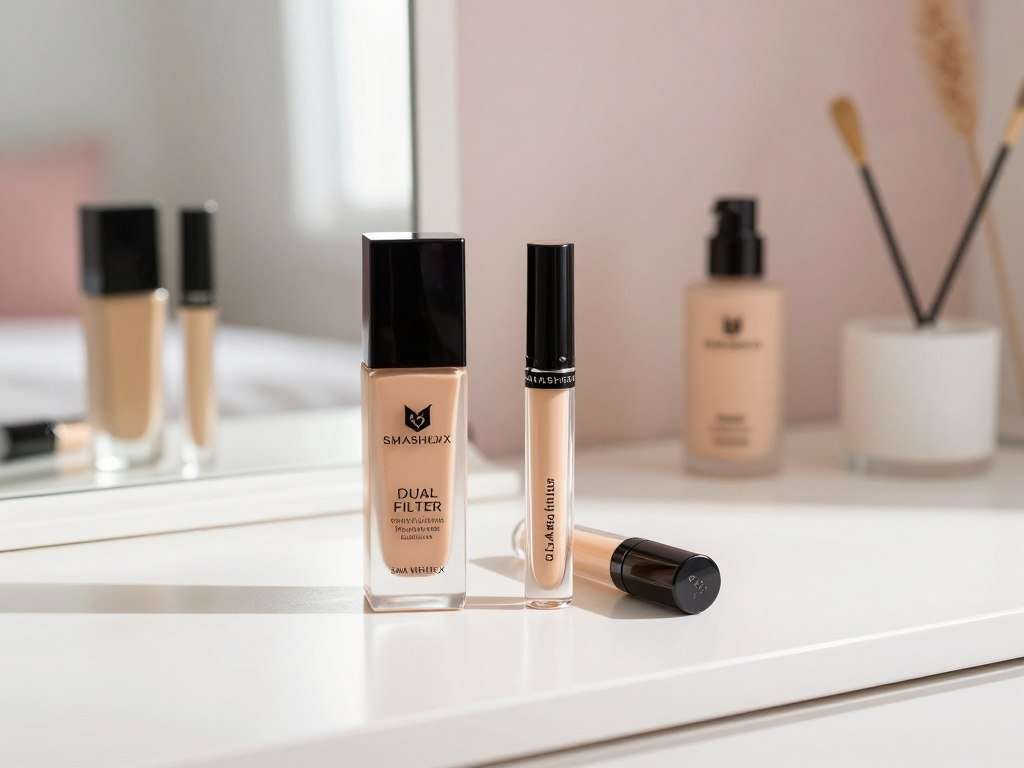
Armani Beauty Luminous Silk is the strongest all-around starting point when you want buildable coverage and a radiant finish. It offers medium-to-full coverage in 44 shades, and glycerin adds a hydrating ingredient to the formula.
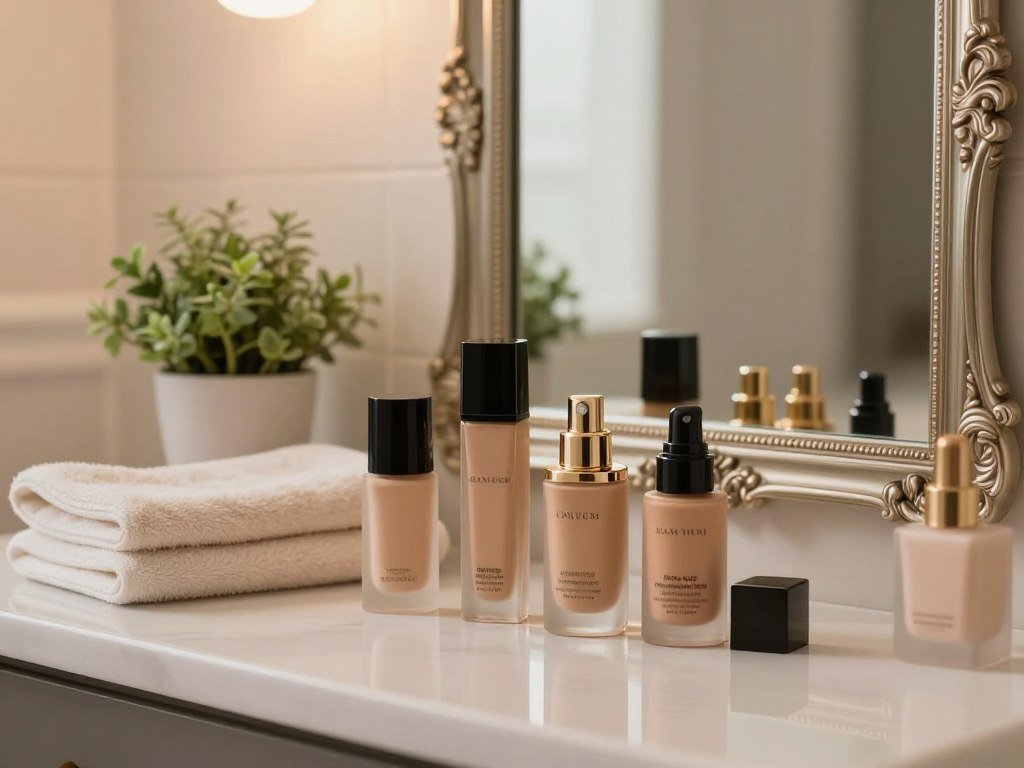
These five picks offer different coverage levels, not one formula that suits everyone. Armani Luminous Silk glides on smoothly and resists settling into creases, though no foundation can promise to erase lines. The 44-shade Luminous Silk range also gives you several options for finding a close match.
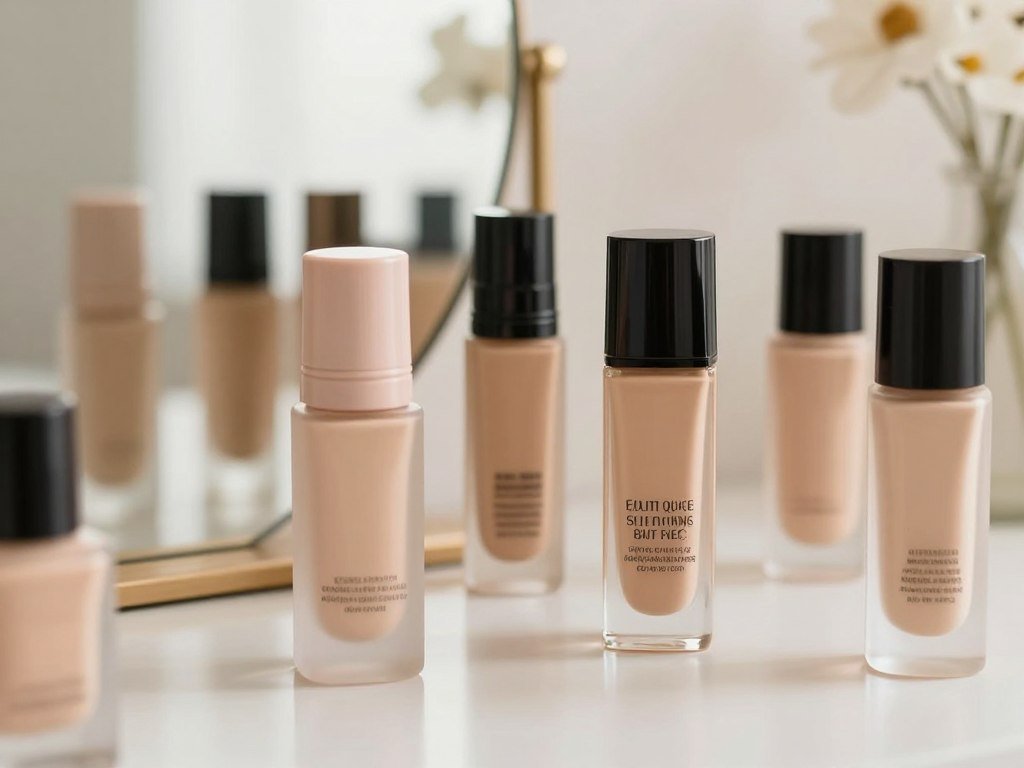
| Product | Price | Coverage and finish | Standout fit |
|---|---|---|---|
| Armani Beauty Luminous Silk | $69 | Medium-to-full, radiant | Overall pick |
| Makeup by Mario SurrealSkin | $48 | Buildable, satin | Fuller coverage |
| Jones Road What the Foundation | $46 | Light-to-medium, natural/radiant | Lightweight option |
| Chanel Les Beiges Healthy Glow | $69 | Sheer-to-medium, radiant | Dry skin |
| Lancôme Rénergie Lift SPF 27 | $63 | Medium | Medium coverage |
Makeup by Mario SurrealSkin has 39 shades and a satin finish. Its glycerin, grapeseed oil, and sunflower oil add moisture-focused ingredients. Jones Road What the Foundation has 16 shades, light-to-medium coverage, and sodium hyaluronate, jojoba oil, and olive oil.
Choose the table’s closest match to your preferred coverage, not the product with the most impressive-sounding claim.
Chanel Les Beiges gives sheer-to-medium buildable coverage in 42 shades. Lancôme Rénergie Lift offers medium coverage in 20 shades. Allure named Armani its best overall foundation, Makeup by Mario its best full-coverage pick, Jones Road its best lightweight option, Chanel its best for dry mature skin, and Lancôme its best medium-coverage choice.
If you want more product comparisons across finishes, browse these makeup picks for 2026. Choose the table’s closest match to your preferred coverage, not the product with the most impressive-sounding claim.
Which Drugstore Foundations Are Worth Trying?
For an affordable first try, L’Oréal Paris True Match Nude is the clearest pick for sheer, dewy coverage. Its tinted serum has 1% hyaluronic acid and comes in 14 shades. The light formula suits days when you want less makeup on your face.
Match the coverage to what you want to even out, since a fuller formula can feel like too much. The four options below cover sheer, light, and buildable medium-to-full needs. Each has a different finish and a distinct shade range.
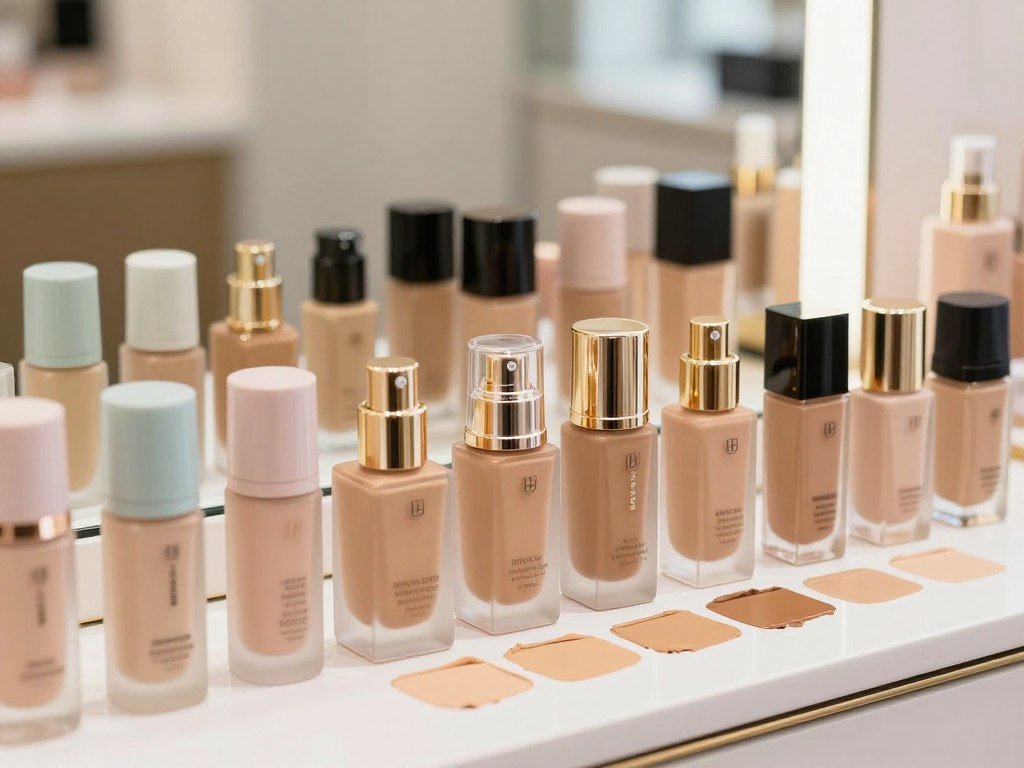
| Product | Coverage and finish | Shade count | Useful detail |
|---|---|---|---|
| L’Oréal True Match Nude | Sheer, dewy | 14 | 1% hyaluronic acid |
| e.l.f. Soft Glam | Buildable medium-to-full, satin | 36 | Glycerin |
| Maybelline Super Stay Lumi-Matte | Buildable medium-to-full | 24 | Glycerin and niacinamide |
| Neutrogena Hydro Boost | Light, natural | 10 | Hyaluronic acid and glycerin |
A mature-skin review described L’Oréal True Match as smoothing without settling into fine lines. Its dewy finish may appeal if dry skin makes some foundations feel tight. The formula provides sheer coverage, so it will not cover every spot or area of redness.
e.l.f. Soft Glam builds to medium-to-full coverage and includes glycerin. Maybelline Super Stay Lumi-Matte also builds to medium-to-full coverage, with glycerin and niacinamide. Allure named e.l.f. its best full-coverage drugstore foundation and Maybelline its best medium-coverage drugstore pick for mature skin.
For another e.l.f. choice, Flawless Finish Foundation costs $6 and comes in 40 shades. It contains glycerin and offers medium-to-full coverage as an alternative to Il Makiage. This is a separate option, not a fifth pick in the table.
Allure also named Milani Conceal + Perfect its best long-wearing drugstore foundation for mature skin. CoverGirl Outlast Extreme Wear earned its pick for waterproof wear, though waterproof makeup is not a must for daily use.
Neutrogena Hydro Boost offers light coverage and a natural finish, with hyaluronic acid and glycerin. Allure named it the best light-coverage drugstore foundation for mature skin. Pick by the coverage level you actually use, since a fuller formula is not automatically the better everyday choice.
Is Powder or Liquid Foundation Better After 50?
Liquid is often the easier starting point for dry skin, while powder can work well when you want lighter coverage and a natural finish. Your comfort and the amount of coverage you prefer matter more than the texture alone.
Laura Geller Baked Balance-n-Brighten is a powder option with a natural finish and lighter coverage than the brand’s Double Take Baked Full Coverage Matte Foundation. It costs $38 and comes in 10 shades: Porcelain, Ivory, Fair, Light, Medium, Golden Medium, Sand, Tan, Deep, and Toffee.
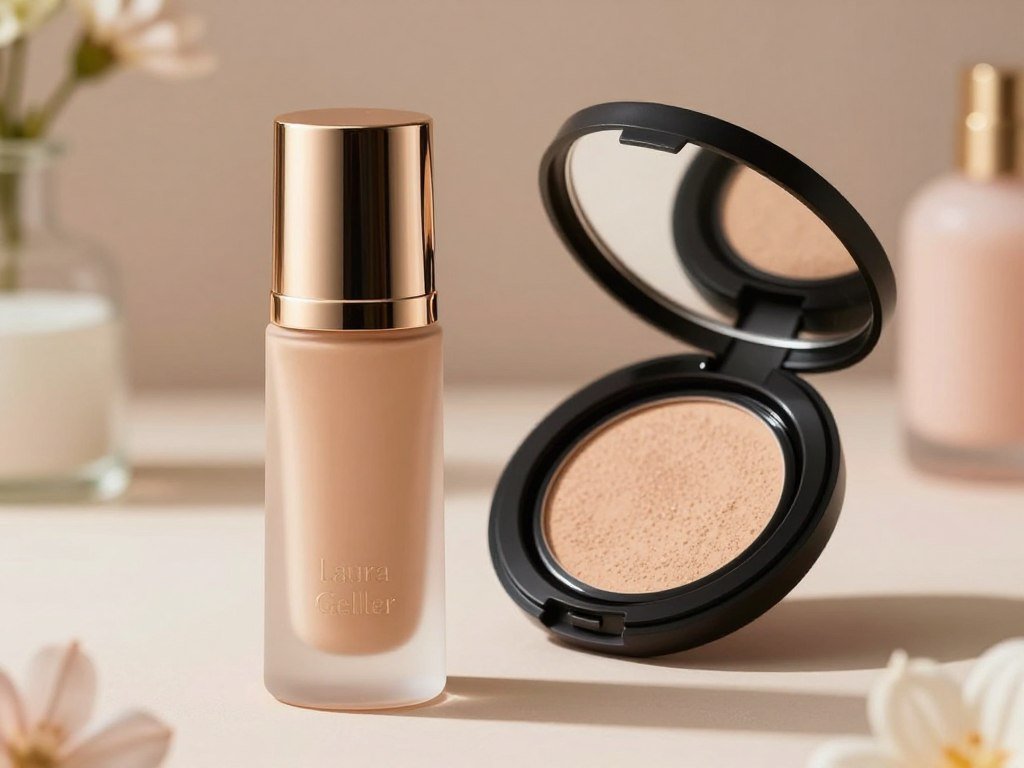
The listed ingredients include jojoba seed oil, sunflower seed oil, centella asiatica extract, green tea leaf extract, and tocopherol. Laura Geller says the product is accepted by the National Rosacea Society and recognized by the National Psoriasis Foundation.
The National Rosacea Society explains that its Seal of Acceptance includes review by three independent dermatologists and a safety-in-use test on at least 30 people with rosacea. The Seal program FAQ says the seal is not an endorsement or a promise that everyone will tolerate a product.
- Choose powder when you prefer a lighter feel.
- Use less powder on flaky areas.
- Choose liquid when you need more coverage or comfort on dry patches.
- Test the finish in daylight before committing.
Laura Geller can suit mature skin if you prefer powder, lighter coverage, and a natural finish. Its product page has a 3.9-star rating from 52,096 ratings, but ratings cannot tell you how it will feel on your skin.
If powder emphasizes dry patches, try a small amount only where you want evening rather than applying it across the whole face.
Which Foundations Give Full Coverage Without Looking Heavy?
IT Cosmetics CC+ Cream is the clearest pick here when fuller coverage and a radiant finish are the priority. It offers fuller coverage and SPF 50, while Estée Lauder Futurist Hydra Rescue provides medium-to-full coverage with a luminous finish. Radiance describes the look, not the amount of coverage.
IT Cosmetics suits someone seeking fuller coverage, while Estée Lauder suits someone who wants medium-to-full coverage. Neither choice needs to go on thickly to even the face. Start with the result you want, then keep the layer in line with that goal.
Fuller coverage with a radiant finish
IT Cosmetics CC+ Cream is a reasonable starting point for full coverage with SPF 50. Estée Lauder Futurist Hydra Rescue offers a step down in coverage, with a luminous finish and a medium-to-full range. That difference matters if you want to cover more, but still prefer a more flexible base.
A radiant finish can bring light to the face, but it does not mean a formula has sheer coverage. If a full-face application feels heavy, use coverage only where you want to reduce the look of redness or spots.
Longer wear and a more polished result
Milani Conceal + Perfect 2-in-1 Foundation + Concealer has a silicone base and glycerin. Allure named it the best long-wearing drugstore foundation for mature skin. Its wear time can help on a longer day, but that is no reason to apply a thick layer.
A common mistake is choosing maximum coverage for the entire face when targeted coverage would do. Apply enough to even the areas that need it, then leave the rest lighter. This can help the foundation look more like skin while still giving you a polished result.
Keep the result skin-like by choosing the coverage you need rather than layering a full-face coat by default.
What Works for a Lightweight, Natural Finish?
Hourglass Veil Hydrating Skin Tint is the lightest-feeling option here for an even, luminous everyday look. It sits between foundation and tinted moisturizer, and it can even out the complexion with a sheer feel.
A skin tint is a good fit when you want a light base, but it may not cover more visible redness or spots. For a little more correction, NARS Light Reflecting Foundation gives medium coverage and a natural glow. Pixi H2O Skintint offers buildable light coverage.
- Hourglass Veil gives a lightweight, luminous tint-like feel.
- NARS Light Reflecting offers medium coverage and a natural glow.
- Pixi H2O Skintint builds from light coverage and comes in 18 shades.
NARS Light Reflecting has been described as staying smooth and radiant through the day. Pixi H2O Skintint includes green tea, rose water, chamomile, and lavender. Hourglass Veil is the pick when you want your base to feel closer to a tinted moisturizer than a traditional foundation.
The natural best foundation for mature skin over 60 may be a tint or medium coverage, depending on how much evening you want. A light, natural-looking finish can also suit mature skin over 70. Age does not set a coverage limit; your preferred result does.
If a tint leaves you wanting more evening, move up to medium coverage rather than applying multiple heavy layers.
Which Finish Suits Dry, Combination, or Oily Skin?
A natural or radiant finish is a sensible starting point for dry skin, while a soft-matte option can suit someone who dislikes shine. Formula feel matters too, since a hydrating finish may feel different after it settles.
Dry skin may favor a more hydrating feel, while combination or oily skin may prefer a natural or soft-matte finish. These are starting points, not guaranteed matches for every person. The table compares coverage, finish, and details that can help you narrow the choice.
| Product | Finish | Coverage | What to consider |
|---|---|---|---|
| Lancôme Teint Idole Ultra Wear | Natural soft-matte | Buildable | For less shine |
| Patrick Ta Major Skin Hydra Luxe | Dewy | Medium | May feel slightly thick after settling |
| Westman Atelier Vital Skin Foundation Stick | Natural | Medium | 20 shades |
| Kosas Revealer Skin-Improving Foundation SPF 25 | Natural/radiant | Medium | 36 shades; skin-friendly ingredients |
Lancôme Teint Idole offers buildable coverage with a natural-looking soft-matte finish. Patrick Ta Major Skin Hydra Luxe feels hydrating and dewy, though it can feel slightly thick after settling. Consider how a formula feels after it has been on your skin for a while, not just when it first goes on.
Westman Atelier Vital Skin is a medium-coverage foundation stick in 20 shades. Kosas Revealer SPF 25 offers medium coverage in 36 shades, with niacinamide, squalane, hyaluronic acid, and peptides. If you want a deeper look at moisturizers and other skincare for dry skin, choose products that feel comfortable together.
People with sensitive skin may also need to consider how a formula feels and wears, not just its finish. Try the finish in the areas where your skin tends to feel driest or become shiny before choosing it for the whole face.
Can Foundation SPF Replace Sunscreen?
Foundation with SPF can add a layer of protection, but it should not replace a dedicated sunscreen. The American Academy of Dermatology recommends SPF 30 for daily sun protection.
Most people do not apply enough foundation to get the protection shown on its SPF label. Keep sunscreen as its own step, then treat the foundation’s SPF as an extra layer rather than your main protection.
- Use dedicated sunscreen underneath your foundation.
- Let sunscreen form its intended layer before applying makeup.
- Treat SPF in foundation as a bonus, not a replacement.
NYX Professional Makeup Buttermelt Glaze Soft Glow Skin Tint SPF 30 was named Allure’s best drugstore foundation with SPF for mature skin. Maybelline Instant Age Rewind Treatment Foundation Makeup is a stick with SPF 20, medium buildable coverage, and 16 shades.
Lancôme Rénergie Lift Makeup Foundation carries an SPF 27 label. None of these labels alone guarantees sufficient sun protection, especially when you apply only a small amount of makeup.
For more help with everyday products, see this guide to skin care products in 2026. Keep sunscreen in your routine even on days when your foundation has an SPF label.
Which Foundation Fits Your Skin in Your 40s, 50s, 60s, or 70s?
The best choice over 40 or 50 is the formula that suits your current dryness, coverage preference, and finish, not a product selected by age label alone. Current comfort is a better guide than a birthday.
Skin can become drier as collagen and natural lipids decline, but the timing and degree differ from person to person. Your foundation needs can shift over the years, or they may stay much the same.
What to prioritize over 40 and 50
The best foundation for mature skin over 40 and the best foundation for mature skin over 50 depend on how much coverage you want and what feels comfortable. There is no fixed age cutoff for changing formulas. A skin tint may work well if you want a light base, while a medium formula can even out more.
L’Oréal Age Perfect Radiant Serum Foundation is one example, with SPF 50 and 30 shades. Its age-focused name does not make it the right choice for everyone. Consider its coverage and finish alongside the way your skin feels.
What to prioritize over 60 and 70
The same needs-based approach applies to the best foundation for mature skin over 60. A sheer tint, medium coverage, or fuller coverage can each work, depending on the result you want. A person over 70 may prefer a light formula, while another may want more coverage.
Dryness can affect how makeup sits, but not everyone’s skin changes at the same age or in the same way. Choose a formula that feels good now, rather than assuming your skin needs a certain finish because of your age.
Reassess your formula when your skin’s comfort or coverage needs change, rather than waiting for a particular birthday.
How Should You Prep and Apply Foundation?
A comfortable layer of moisturizer gives foundation a better starting point than trying to cover dry patches with extra makeup. Comfortable matters here: moisturizer should soften the skin without leaving it greasy.
Apply a thin layer first, then add coverage only where you need it. Too much foundation at once can emphasize texture or settle into fine lines, even when the formula feels hydrating.
Prep for a comfortable base
A hydrating serum or moisturizer can help prepare skin for foundation. Apply moisturizer and give it time to settle before makeup. For more tips on choosing a moisturizer for dry skin, consider what leaves your skin comfortable rather than slick.
Primer is optional. Use one if you want extra wear or a blurring effect, but you do not need it for every formula. A primer that feels heavy can make the base less comfortable, so keep your layers simple.
Apply in thin, targeted layers
Start on the cheeks and forehead, where you can spread a light layer over larger areas. Makeup artist Tony Tulve recommends starting there. Sandy Linter recommends adjusting how much you use around the nose and chin.
Use less foundation around the nose and chin, then build coverage only where needed. Blend with a damp sponge or brush, using gentle strokes. A damp sponge can help blend a light layer without adding more product.
Applying too much at once can make dryness and texture more noticeable. Powdering the entire face can have the same effect, so reserve it for areas that need it. Set only the areas that crease or become shiny, using a light touch rather than powdering the whole face.
How Can You Find the Right Shade and Undertone?
Compare undertone and depth as well as lightness, since two shades at the same depth can look different on the skin. Undertone helps explain why one color can look pink, golden, or balanced beside another.
Use a shade tool, compare swatches, then test the closest option along your jawline in natural light. These steps help you narrow the range without assuming that a shade name tells you exactly how it will look.
- Check the brand’s shade tool and compare people with similar skin tones.
- Place swatches side by side on a white paper towel to compare undertone and depth.
- Test the closest option along your jawline in natural light.
A white paper towel can make the difference between swatches easier to see. It helps you compare color, but it cannot predict exactly how a formula will look or wear on your face. Skin can change the way a shade appears once you apply it.
Maybelline Fit Me Matte + Poreless Oil Free Liquid Foundation offers medium coverage in 40 shades. A wide range gives you more options, but still calls for careful matching. If you shop online, use the brand’s shade tool as a starting point, then compare similar skin depths and undertones.
Test your closest shade along the jawline in natural light, where you can compare it with both your face and neck.
If you are between two shades, test both in natural light and choose the one that blends most naturally along your jawline.
Conclusion
A comfortable formula in the coverage and finish you prefer is a better starting point than chasing a universal winner. Age alone does not determine which foundation will feel right or give you the result you want.
Start with the finish and coverage you reach for most often. Then narrow your options to two formulas that suit those needs. Compare their shades and finish in natural light, where you can see how each looks against your skin.
Test two close shade matches in natural light and keep the one that looks and feels most like your skin.
FAQ
What is the absolute best foundation for aging skin?
Is powder or liquid foundation better for mature skin over 50?
Is Laura Geller actually good for mature skin?
What is a good dupe for IL Makiage foundation?
How much foundation should I apply to keep it from settling into fine lines?