A bottle can change how a tanning session feels and how color appears, but it cannot make UV exposure safe. The best solarium tanning lotion for you depends on your experience, skin comfort, and the look you want. A sunless tanner offers color without UV exposure.
This comparison helps you weigh product claims against the formula inside the bottle. You can look for a natural-looking glow, added cosmetic color, or a UV-free option. People with dry or sensitive skin may also want to focus on comfort before color claims.
Key Takeaways
- Choose a formula based on its color effect and your comfort.
- An accelerator does not make UV tanning safer or guarantee faster color.
- Cosmetic bronzer adds color that washes off.
- A DHA bronzer develops a temporary tint over several hours.
- A sunless tanner adds color without a tanning-bed session.
- Readers should choose based on their color goal and skin comfort, not the darkest wording on a label.
What Are the Health Risks of UV Tanning?
A tan is a visible sign that the skin has responded to UV exposure, not evidence that the exposure was harmless. Skin darkening follows increased melanin production, which is part of the skin’s response to damage.
There is no such thing as a safe tan. Evidence links UVA and UVB exposure with skin cancer, and tanning devices can also cause burns, early skin aging, and eye damage.
Any UV tan reflects skin damage, even when the color looks even or feels mild.
The FDA explains these harms in its overview of UV tanning risks. The scale of the risk matters, though population figures cannot predict what will happen to one person.
Using tanning beds before age 20 can raise melanoma risk by 47%, with risk rising with each use. In the United States, about 9,500 people receive a skin cancer diagnosis, and nearly 20 Americans die from melanoma each day.
About one in five Americans is estimated to develop skin cancer during their lifetime. Those figures describe broad groups, not an individual’s personal odds.
Use extra caution in these situations:
- You are under 18.
- Your skin burns easily.
- You or a family member has had skin cancer.
- You take medication that can increase sensitivity to light.
Some medicines can change how skin reacts to UV exposure, even if you have used tanning products before. Anyone concerned about personal risk or medication-related sensitivity should ask a healthcare professional before using a tanning bed.
What Do Accelerator, Bronzer, and Tingle Formulas Do?
The clearest difference between these formulas is where the color comes from and when it appears. Color source matters because the same-looking bottle can create a tint in different ways.
An accelerator supports the skin’s natural tanning process but does not promise faster or safer results. It does not add artificial color, so any change in color comes from UV exposure.
Accelerators often include tyrosine or amino-acid complexes. These ingredients are used to support the body’s natural tanning process, not to shield the skin from UV rays.
A cosmetic bronzer adds color right away. That immediate tint is cosmetic and washes off at the next shower.
DHA bronzers work on a different timeline. DHA means dihydroxyacetone, an ingredient that reacts with outer skin cells to create a temporary tint.
| Formula | Color source | When color appears | Main distinction |
|---|---|---|---|
| Accelerator | Natural tanning process, no artificial color | During UV exposure | Supports the skin’s natural tanning process |
| Cosmetic bronzer | Added cosmetic color | Immediate | Washes off at the next shower |
| DHA bronzer | DHA reaction with outer skin cells | Develops over several hours | Creates a delayed tint |
These labels describe the formula’s color effect, not the strength of UV exposure. A bronzer can make skin look darker without changing how much UV reaches it.
Some tanning lotions also use tingle ingredients, such as niacin or benzyl nicotinate. They can create warmth or a prickling feeling, but that feeling does not show that the tan is deeper.
Tingle products are a poor fit for sensitive skin because the sensation can be uncomfortable. Check the ingredients and product directions before choosing one.
Bronzers can also transfer onto clothing or palms before washing. Their immediate color may help you see where you applied product, but it is not lasting skin color.
Read the product label for its stated formula type rather than relying on words such as “dark” or “intense.” Choose a formula for the color effect you want, not for a claim that it can override your skin’s response to UV.
Cosmetic bronzers wash off with a shower, while DHA bronzers develop later through a reaction with outer skin cells.
That timing can help you tell a temporary surface tint from a color that develops over several hours. Neither effect changes the risks of UV exposure.
Choose a formula for the color effect you want, not for a claim that it can override your skin’s response to UV.
Which Best Solarium Tanning Lotion Fits Your Goal?
For a straightforward non-bronzer accelerator, Australian Gold Rapid Tanning Intensifier Lotion is the clearest fit among these picks. Natural-looking color is its stated goal, without DHA or bronzer.
The most practical non-bronzer pick for a gradual-looking base is Australian Gold Rapid Tanning Intensifier Lotion. It lists tea tree oil, aloe vera, olive oil, and panthenol among its skin-conditioning ingredients.
For experienced tanners who already have a base tan, Millennium Tanning Solid Black 100X is the bronzer option positioned for that user. Its marketing is aimed at people seeking a darker look with added bronzer.
b.tan UV Tanning Bed Lotion suits shoppers who prefer an accelerator marketed for indoor and outdoor use. Its label promotes x4000 tan intensifiers.
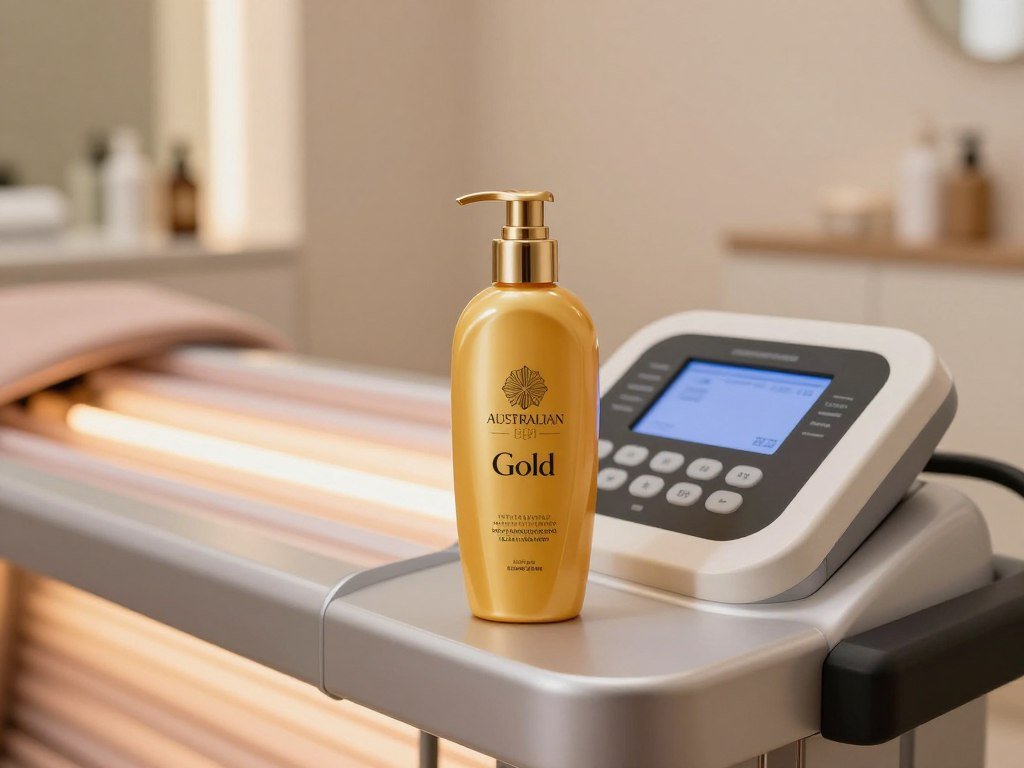
| Product | Formula positioning | Best-fit goal | Specific distinguishing detail |
|---|---|---|---|
| Australian Gold Rapid Tanning Intensifier Lotion | Accelerator without DHA or bronzer | Natural-looking base-tan goal | Tea tree oil, aloe vera, olive oil, and panthenol |
| Millennium Tanning Solid Black 100X | Bronzer lotion | Experienced tanners with an existing base tan | Marketed for experienced tanners |
| b.tan UV Tanning Bed Lotion | Indoor and outdoor accelerator | Accelerator preference | Marketed with x4000 tan intensifiers |
These are formula positions, not promises about the shade you will get. Skin response varies, and a product that looks dark on someone else may not look the same on you.
For the question of the best tanning bed lotion to get dark fast, no lotion can guarantee fast color. A cosmetic bronzer can add visible color, while an accelerator does not guarantee a faster tanning result.
The top tanning bed lotions in 2026 still need to be judged by their formula and intended user. A product name or claim about intensity cannot tell you how your skin will respond.
Compare the ingredients and color effect before adding a product to your cart. A tanning lotion cannot turn a low-SPF tan into adequate sun protection.
Tanned skin provides an SPF of about 2 to 4, below the minimum recommended SPF of 15. That small amount is not a substitute for sun protection.
Australian Gold’s listed ingredients include tea tree oil, aloe vera, olive oil, and panthenol.
The label’s ingredient list can help you spot familiar skin-conditioning ingredients. It cannot tell you that UV exposure is safe or that a particular shade is certain.
When choosing among these products, make the formula the deciding detail. Avoid treating a dark result as proof that a product has worked well for your skin.
How Should Beginners Match a Formula to Their Skin?
A first-time user is better served by a straightforward formula than by a product chosen for its most dramatic claim. Simple is easier to judge when you are still learning what feels comfortable.
Beginners generally do best with a simple accelerator or intensifier, rather than starting with a bronzer or tingle formula. A basic formula lets you focus on how your skin feels instead of managing an added tint or strong warming sensation.
Start with a simple formula if you are new to indoor tanning
An accelerator is a sensible starting category because it does not add immediate cosmetic color. That makes it easier to see how your skin responds without a bronzer tint changing the look.
Designer Skin’s Smile Your Darker is identified as an option for beginner tanners. Still, a beginner label does not mean the product will suit every person or remove UV exposure risks.
Before choosing, consider these four points:
- Your prior experience with indoor tanning products.
- Whether your skin is sensitive or reacts easily.
- Whether you have dry skin and prefer a light or rich texture.
- Whether you want natural tanning color, an added tint, or a sunless glow.
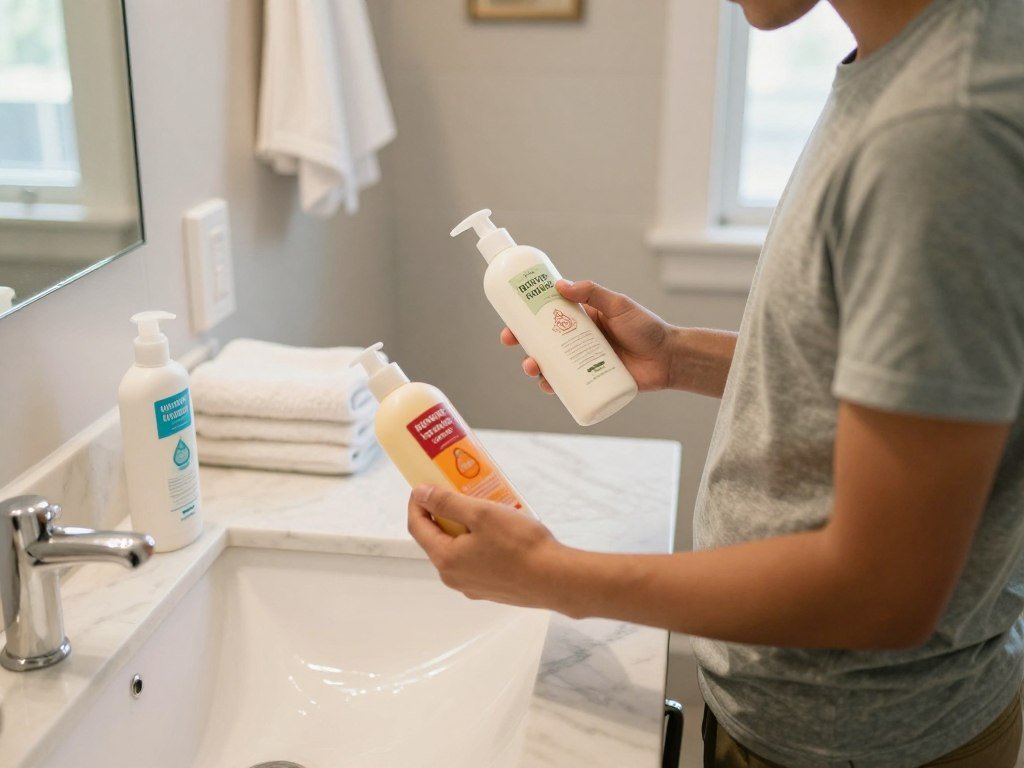
Put skin comfort ahead of a darker label
Dry skin can feel tight after applying a product, while a heavy cream may feel sticky to someone who prefers a lighter lotion. Choose a texture you can spread evenly across the skin.
Keeping skin hydrated can make dry skin feel more comfortable, but hydration does not protect against UV exposure. A product’s skin-conditioning ingredients may affect feel, not the bed’s output.
Sensitivity deserves attention before trying a tingle formula. If your skin often reacts to fragrance or active ingredients, check the label and avoid products that have caused trouble before.
A formula should feel manageable during application, not like a test of how much heat you can tolerate. A dramatic label is not a reason to ignore discomfort.
People managing acne or reactive skin may also want a gentle routine that avoids stacking irritating products. This guide to spot treatments explains how acne ingredients can affect dryness and irritation.
Choose based on your skin’s comfort and the color effect you want, rather than a promise printed on the front. If a formula causes irritation, stop using it rather than trying to push through the reaction.
How Do You Apply Indoor Tanning Lotion Evenly?
Even application starts with clean, dry skin and a small amount of product on areas that tend to look patchy. Work in sections so you can spread the lotion without rushing.
Indoor tanning lotions are not sunscreen and must not be treated as skin protection. A cream or lotion changes how the skin feels, not the UV exposure from the bed.
Use this five-step routine to keep coverage even:
- Start with clean, dry skin.
- Apply the lotion evenly in sections.
- Use less on dry joints, such as elbows and knees.
- Wash your palms after applying bronzer or tingle lotion.
- Follow the salon’s directions for when to dress or shower.
Dry joints can collect extra product and appear darker than nearby areas. A lighter touch there can help the finish look more even.
Bronzer may stain the palms if you leave residue behind. Tingle formulas can also spread to areas where warmth feels unpleasant, so careful coverage matters.
Tingle lotions may contain niacin or benzyl nicotinate, which can cause warmth or a prickling sensation. That feeling is not proof of a deeper, faster, or safer tan.
Sensitive-skin users should avoid tingle products because the sensation can be uncomfortable. Check ingredients before use, especially if you have reacted to similar products.
For outdoor exposure, a tanning lotion does not replace sunscreen. Learn how to choose sun protection for children for a separate look at sunscreen formats and use.
Follow the salon’s rules for dressing and showering, since product directions can differ. Stop using a formula if the warming turns into strong discomfort or irritation.
How Do Low- and High-Pressure Beds Differ?
Low-pressure and high-pressure beds differ mainly in the mix of ultraviolet radiation their lamps emit. The lamp mix describes the equipment, not the safety of a session.
Low-pressure beds use fluorescent lamps that emit UVA and small amounts of UVB. High-pressure beds emit mostly UVA, so the two types do not have the same radiation mix.
Low-pressure beds use fluorescent lamps
Fluorescent lamps create the UV output in low-pressure beds. They emit mostly UVA along with smaller amounts of UVB.
The mix does not tell you how your own skin will respond. A session can still expose skin and eyes to harmful UV radiation.
High-pressure beds emit mostly UVA
High-pressure beds emit mostly UVA. Calling a bed “more powerful” does not make it safer or reliably predict how much color one person will get.
Salon staff must require protective eyewear for every client. Wear it as directed, since UV exposure can harm the eyes.
A bed’s timer can limit how long the equipment runs, but a timed session is not a safety guarantee. The timer does not change the kind of radiation the lamps emit.
Different beds may feel different during a session, but warmth is not a measure of UV exposure. Do not use comfort or a lack of visible redness to judge safety.
Ask salon staff what type of bed they operate if the label is unclear. Their answer can explain the lamp type, but not predict your personal result.
Keep the equipment distinction separate from product choice. A lotion does not control the bed’s UV output.
The salon’s eyewear rule applies to each client, not only to people who notice glare. Wear the salon’s required protective eyewear every time, while recognizing that it does not eliminate UV risk.
What Do FDA Rules and Device Labels Require?
A timer’s maximum interval is not permission to stay under ultraviolet lamps for that length of time. Maximum time means the device’s timer setting, not a safe limit for your skin.
The FDA says all ultraviolet radiation is potentially hazardous, so a timer interval is not a safe exposure limit. Device labels and rules also carry age-related warnings.
| Rule or action | Date or timing | Practical meaning |
|---|---|---|
| FDA sunlamp label | 2014 | Products should not be used by anyone younger than 18 |
| FDA timer guidance | Maximum timer interval | Not a safe exposure limit |
| Proposed sunlamp rule withdrawal | March 16, 2026 | Proposed under-18 restriction and risk acknowledgement certification were withdrawn |
In 2014, the FDA required sunlamp products to carry a label stating that people younger than 18 should not use them. The label is a warning on the device, not proof that older users face no risk.
The FDA’s sunlamp product rules cover device labels and timer guidance. The maximum interval describes the timer setting, not a health-based allowance.
On March 16, 2026, the American Academy of Dermatology Association said the FDA had withdrawn its proposed sunlamp rule. That proposal would have restricted use by people under 18 and required prospective users to sign a risk acknowledgement certification.
The withdrawn proposal is not current law. Keep that status separate from the FDA’s existing label requirements.
A salon may have its own operating rules, including how it sets a session timer. Read the device label and ask the salon about its operating rules instead of treating a timer as a safety guarantee.
How Do Ratings and Bottle Size Help Compare Value?
A rating and a bottle size can help describe a product, but neither predicts the result on your skin. Each detail answers a different question: ratings show customer scores, while volume shows how much lotion is in the bottle.
Millennium Tanning Solid Black 100X has a 4.8 rating from 770 product ratings in the 2026 guide. That is a rating snapshot, not a promise of color or comfort.
The bottle holds 13.5 fluid ounces. Volume alone does not tell you value per use because the amount applied can vary.
Check these details before comparing lotions:
- The rating count, not just the score.
- The formula type, such as accelerator or bronzer.
- The bottle volume in fluid ounces.
- Whether the product matches your color goal.
For the 2026 question about the best tanning bed lotion to get dark fast, no lotion guarantees rapid color or makes UV tanning safe. A bronzer can add cosmetic color, while an accelerator cannot promise faster results.
Product prices depend on factors such as brand, bottle size, and formula. Check the current retailer listing for price and availability, since those details can change.
A large bottle may look like a better deal, but you need the product’s use amount to compare cost per application. Do not assume the largest size is the best value.
A collection of products can include different formula types and sizes, so compare like with like. Ratings can help narrow options, but they cannot show how your skin will react.
Treat a high rating as one comparison point, not a reason to ignore the formula or your own skin’s response.
Can Sunless Tanning Give Color Without UV Exposure?
A sunless tanner is the clearest choice for a bronzed look without a tanning-bed session. UV-free color can suit you when appearance matters but you want to avoid intentional UV exposure.
Sunless products add cosmetic color without a tanning-bed session, but they do not protect skin from sunlight. They include lotions, mousses, drops, and sprays.
Choose a sunless product format that fits your routine
Lotions and mousses are spread by hand, while drops can be mixed into a moisturizer. Sprays cover larger areas, though you should avoid inhaling spray product.
Pick a format you can apply with care. Results depend on the formula and how evenly you apply it.
A sunless tanner is different from a bronzer intended for an indoor UV session. A sunless product creates cosmetic color without the tanning-bed exposure.
For more body-care ideas, this guide to body care and self-tanners covers ways to build a simple routine.
Treat cosmetic color as color, not sun protection
DHA means dihydroxyacetone, an ingredient that reacts with outer skin cells to create a temporary tint. The color develops over several hours rather than appearing at once.
A DHA bronzer does not give you UV protection. A tan-looking surface does not block sunlight or replace sunscreen.
Cosmetic color changes how your skin looks, not how it responds to sunlight.
To keep skin moisturised, use a moisturizer that suits your routine, but do not mistake moisture for sun protection. The tint can fade with time and washing.
Sunless color may be a better option if you want a glow without a tanning-bed session. Use sunscreen and other sun protection outdoors even when your skin has sunless color.
Conclusion
The right choice depends on whether you want a simple accelerator, a cosmetic tint, or color without UV exposure. Australian Gold Rapid Tanning Intensifier Lotion is the straightforward non-bronzer accelerator pick, while a sunless tanner offers color without UV exposure.
Check the product label and salon rules before buying or using an indoor tanning lotion. If avoiding UV is your priority, consider a sunless option instead.
Before buying, check the formula label and decide whether a sunless tanner better fits your priority.
FAQ
What is the most powerful tanning bed?
Do intensifiers really work when tanning?
What is tanning lotion for tanning beds?
What is the best tanning lotion to use on a sunbed?
Which tanning bed lotion gets you the darkest?
What is the best tanning bed lotion to get dark fast in 2026?
How to get super dark in a tanning bed?
What is better, tan accelerator or intensifier?