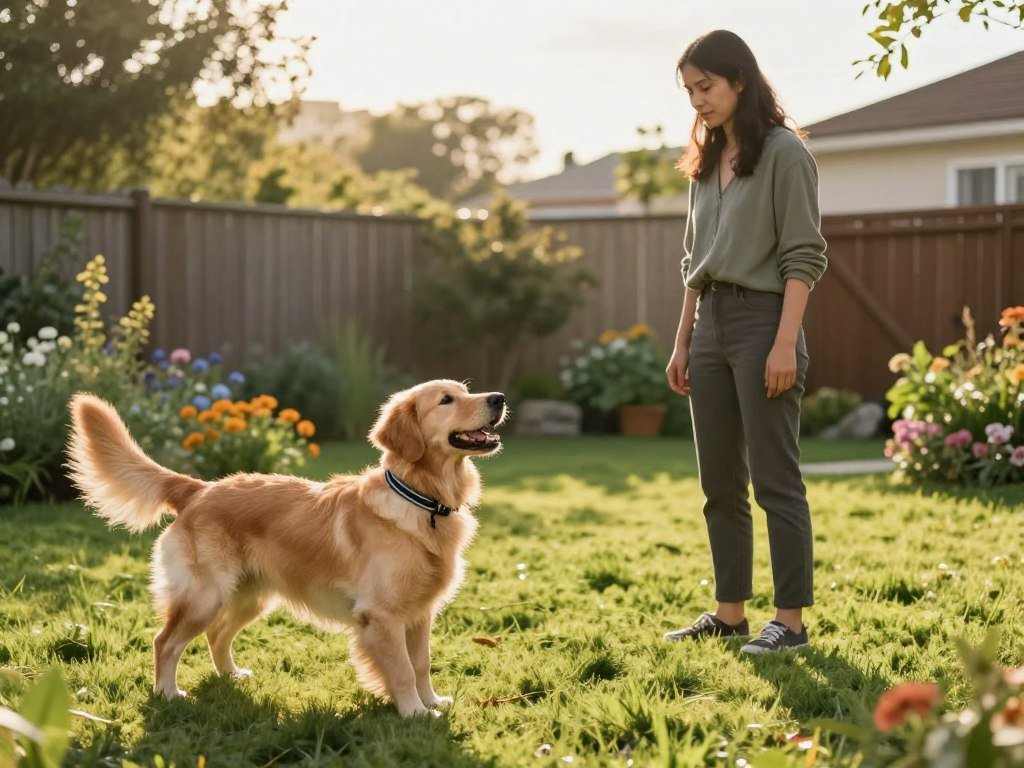
A recall lesson in a quiet yard calls for different equipment than tracking a hunting dog across open ground. The best dog training collars depend on the skill you want to teach, your dog, and where training happens. Leash collars, remote e-collars, GPS systems, and bark-control collars serve different jobs, so they are not interchangeable.
A stimulation level is the adjustable output setting used to deliver an e-collar signal; its number does not show how a particular dog experiences it. Basic cues and a comfortable fit come before relying on equipment. You will find options for different needs, not one choice that suits every dog.
Key Takeaways
- Match the collar type to the behavior or safety task.
- Check fit, weight, and comfort before comparing features.
- Remote e-collars reinforce cues the dog already understands.
- GPS tracking and GPS fences serve separate purposes.
- Identify the cause of barking before choosing a bark-control collar.
- Start by naming the behavior you want to teach, then choose equipment that fits that task and your dog.
What Types of Dog Training Collars Fit Different Jobs?
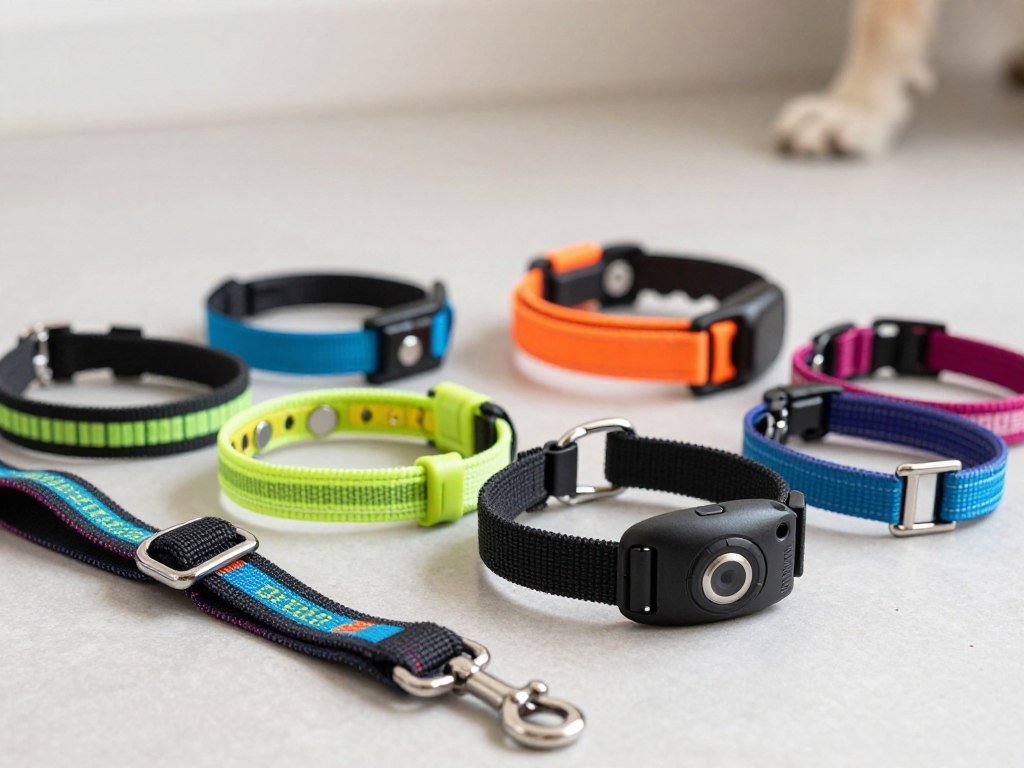
A remote e-collar, a GPS tracker, and a Martingale collar do not solve the same problem. Each type has a distinct job, and choosing by purpose helps keep features from distracting you. A dog training collar can reinforce a cue, locate a dog, mark a boundary, or support leash handling.
Choose a collar for the task it performs, not simply because it has more modes. The dog’s training stage and setting also matter. A tool that helps with distance work will not automatically help with pulling or barking.
Remote collars for cue reinforcement
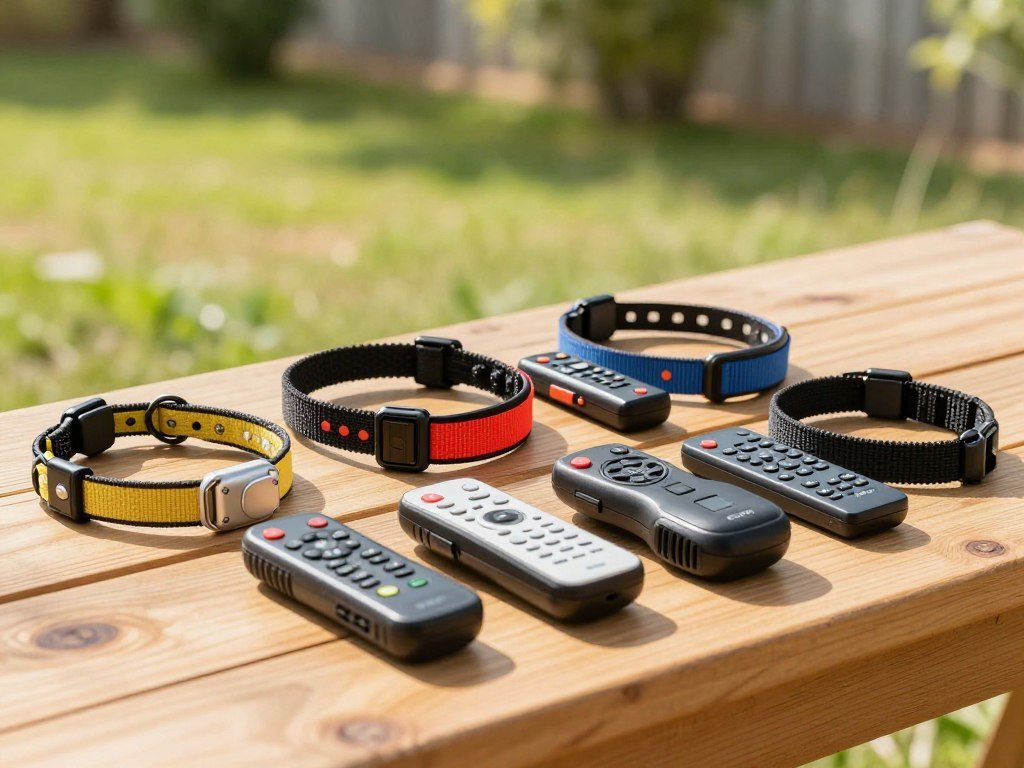
A remote e-collar lets you send a cue from a distance after your dog has learned it. Depending on the model, its transmitter can offer a tone, vibration, or static stimulation. The stimulation level is adjustable, but the number is not a direct measure of how your dog feels it.
These collars can support dog training when a dog already knows a cue and you need to reinforce it at a distance. They do not replace teaching the behavior or building a clear link between the cue and the dog’s response. Some models also let one transmitter control more than one dog.
GPS systems for tracking or boundaries
A GPS tracking collar helps you locate a roaming dog, such as a hunting dog working across open ground. A GPS fence marks a boundary and can send alerts as the dog approaches it. These are different types of GPS collars, even when both use location data.
A tracking system does not automatically work as a boundary fence. Confirm that the system is built for the job you need.
GPS range, battery life, and signal conditions affect how a system works in the field. A fence system may also need a certain amount of land to set a boundary. Compare the system’s intended function with your property and daily use.
Bark-control and leash-based options
Bark-control collars respond to vocal behavior. Some detect barking with a sensor, while other models also respond to whining or howling. Their purpose differs from remote e-collars, which let a person send a cue through a transmitter.
Leash tools include Martingale collars and slip leads. A Martingale collar has a limited-slip design that tightens under leash tension, while a slip lead combines a leash and collar. Both support leash handling, not GPS tracking or remote cue reinforcement.
Choose the tool by its job first, rather than by a feature count.
How Do You Match a Collar to Your Dog?
A collar should fit the dog’s body and training task before its maximum range becomes a selling point. Comfort and control depend on the receiver’s size, its contact fit, and your dog’s response to the tool. The best training collar for stubborn dogs still needs to fit well and suit the setting.
A remote collar’s listed range can shrink when hills, trees, or buildings block the signal. A 1-mile rating does not promise the same reach in every yard or field. Your dog’s sensitivity and drive also affect which controls make sense.
Check fit, weight, and comfort
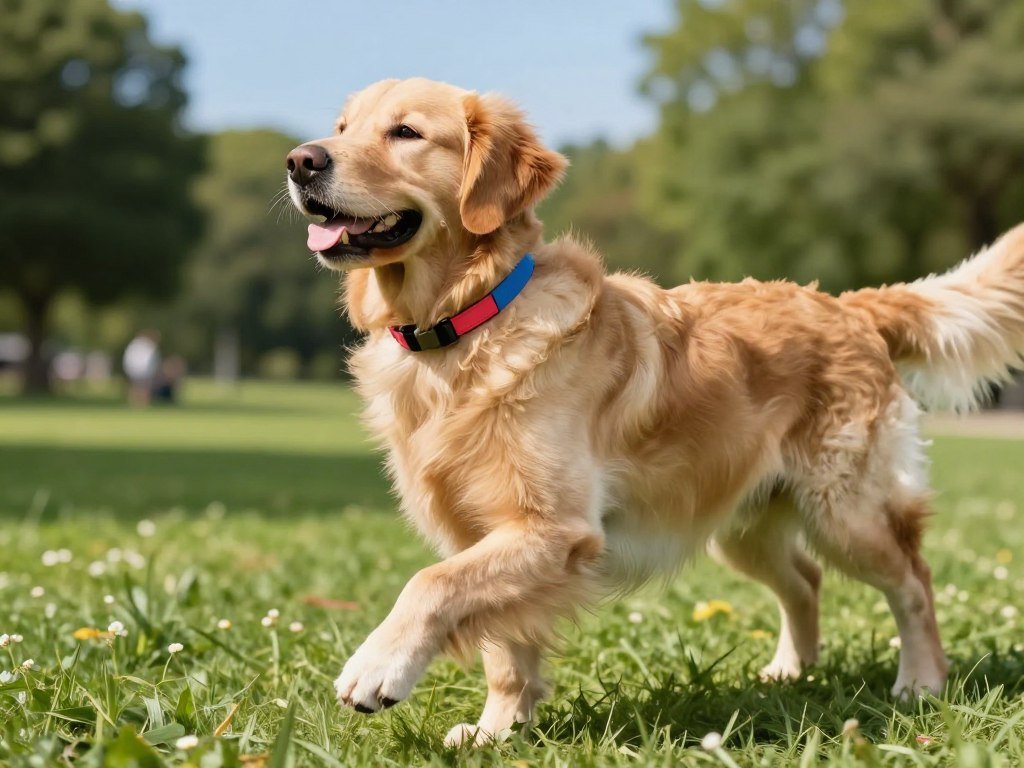
A receiver that is too large can feel awkward, while poor contact can make the fit unreliable. Check the maker’s weight guidance and how the receiver sits against your dog’s neck. A very small dog may need a smaller unit than a large, active dog.
For example, the Educator ET-800 has a 1-mile range and is designed for high-drive dogs weighing 25 pounds and up. It can expand to control two dogs. Dogtra recommends the 200iQ or 280X for mild-tempered dogs, and the 1900X line for dogs described as more stubborn.
Match the controls to temperament and activity
For a high-drive dog, the ET-800 is one model designed for that use, but its fit and controls still need to suit your dog. Parks with dog access and leash rules can also change which collar and range are useful. Check local rules before you plan off-leash practice.
Use this short checklist before you buy:
- Training goal: Name the cue or behavior you want to work on.
- Dog’s weight and fit: Check receiver size and stated weight range.
- Expected working distance: Allow for trees, hills, and buildings.
- Number of dogs: Check whether one transmitter can control them all.
Check that the receiver sits securely and comfortably before beginning any training session.
Best Dog Training Collars for Different Needs
For everyday remote training, the Educator ET-300 Mini is a strong starting point when its half-mile range suits the setting. Its 100 stimulation levels offer fine adjustment for dogs with a normal temperament. That makes it a practical general-purpose pick, not a universal winner.
Compare control modes and dog capacity as well as range and price. The models below differ in how they deliver cues and how many dogs they can support. Prices are approximate where noted.
| Model | Range | Control levels or modes | Approximate price |
|---|---|---|---|
| Garmin Sport PRO Bundle | 1 mile | 18 stimulation levels | $299 |
| Educator ET-300 Mini | 1/2 mile | 100 stimulation levels | About $225 |
| Garmin Delta XC Bundle | 1/2 mile | Tone and vibration, 18 vibration levels | About $229 |
| Dogtra iQ Plus | 400 yards | 127 stimulation levels | About $200 |
| Bousnic D-800 | 1/2 mile | 99 stimulation levels | About $60-80 |
The Garmin Sport PRO Bundle supports up to three dogs. The ET-300 Mini fits dogs weighing 5 pounds and up, and expands to two dogs. The Bousnic D-800 also supports up to two dogs.
The Garmin Delta XC’s tone-and-vibration modes make it the no-static option in this comparison. Its 18 vibration levels let you adjust that mode, while the other listed models offer stimulation levels.
The Bousnic is the budget-oriented choice, but a lower price alone does not prove a collar is a better value. Look at its fit, range, controls, and dog capacity against your needs. The Garmin Sport PRO has the longest listed range in this group, while the Dogtra iQ Plus has a shorter 400-yard range.
For routine cue work in a smaller area, the ET-300 Mini’s half-mile reach may be enough. In a wider field, the Sport PRO’s mile range may better match the distance. The right option changes with the location and the cues you plan to reinforce.
Compare the control mode and dog capacity alongside price, not price by itself.
Is Dogtra or SportDOG Better for Field Training?
Dogtra is the stronger fit when the listed range and number of stimulation levels lead the decision, while SportDOG offers higher capacity for multi-dog handling at a lower approximate price. The FieldTrainer 425X supports up to three dogs and costs about $200. Dogtra’s 1900X lists a 1-mile range and 127 levels.
The 1900X reaches farther on paper, while the SportDOG models support more dogs per transmitter. Field conditions can affect working range, so listed distance is a guide rather than a promise.
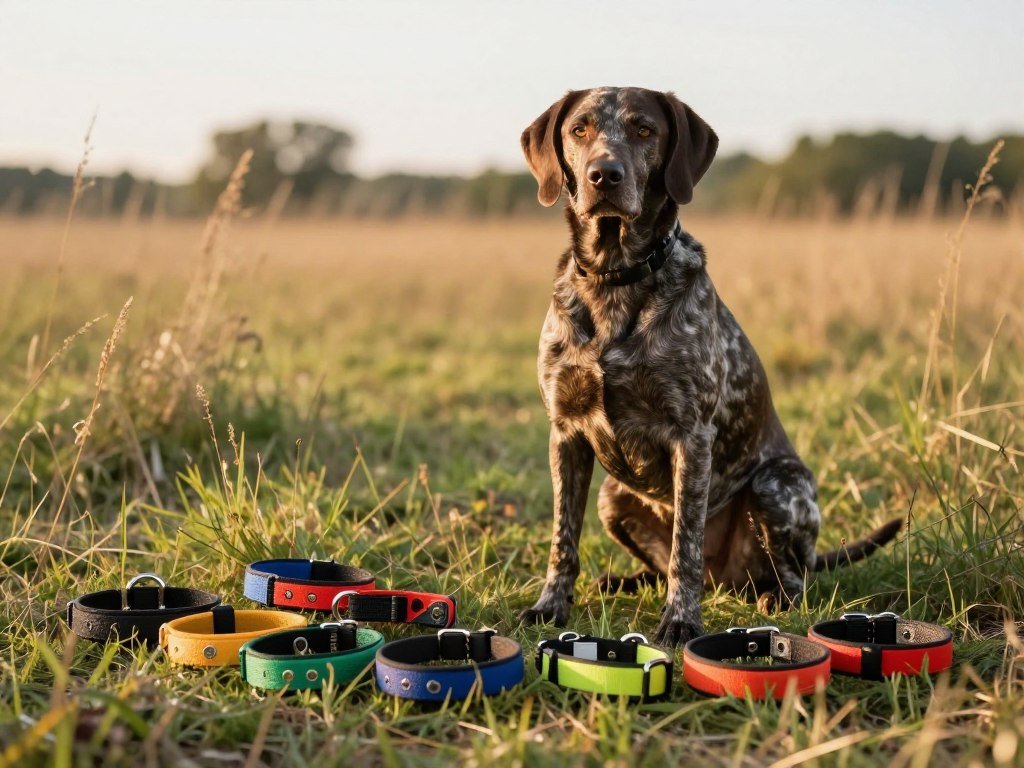
Compare range and multi-dog capacity
| Model | Range | Stimulation levels | Multi-dog capacity | Approximate price |
|---|---|---|---|---|
| SportDOG FieldTrainer 425X | 500 yards | 21 | Up to 3 dogs | About $200 |
| Dogtra 1900X | 1 mile | 127 | 1-2 dogs | About $320 |
| SportDOG SportHunter 825X | 1/2 mile | 21 | Up to 3 dogs | About $200 |
The FieldTrainer 425X offers SportDOG’s 500-yard range, while the SportHunter 825X reaches a listed half mile. Both support up to three dogs and have 21 stimulation levels. Dogtra’s 1900X lists more levels and a longer range, with capacity for one or two dogs.
Check Dogtra model fit and price
The Dogtra 1900X PRO is a different model from the 1900X. The 1900X PRO costs $234.99 and is specified for dogs weighing 35-100 pounds or more. That price does not refer to the 1900X listed in the comparison table.
The 280X PRO costs $239.99, has a 1/2-mile range, and fits dogs weighing 10-100 pounds or more. The 200iQ costs $199.99, offers the same listed range, and fits the same weight range.
The ARC-X costs $254.99, reaches 3/4 mile, and fits dogs weighing 15-100 pounds or more. These model details help narrow Dogtra choices by fit and distance. For a field dog, weight guidance matters alongside the transmitter’s reach.
Prioritize adequate field distance and the number of dogs before paying for extra levels.
Should You Choose GPS Tracking or a GPS Fence?
Pick a GPS tracking system when locating a roaming dog matters, and a GPS fence when defining a boundary is the priority. Tracking and containment are separate functions, even when a system can combine them. Dogtra PATHFINDER2 combines GPS tracking and training, with offline maps and control that do not need data.
Choose a boundary system for containment, not just because a collar uses GPS. Dogtra says PATHFINDER2 can expand to 21 dogs. Its GPS Fence and Smart Fence products mark boundaries instead.
GPS collars that combine tracking and training
| Model | Listed price | Stated range or capacity | Primary function |
|---|---|---|---|
| Dogtra PATHFINDER2 | $429.99 | Up to 21 dogs | GPS tracking and training |
| Dogtra PATHFINDER2 COMPASS | $599.99 | Up to 9 miles | GPS tracking and training |
| Dogtra PATHFINDER2 MINI COMPASS | $549.99 | Up to 4 miles | GPS tracking and training |
The Garmin Alpha 100 with TT15 is another GPS tracking-and-training example. It has up to a 9-mile range, 18 stimulation levels, and up to 40 hours of battery life. GPS accuracy can shift with signal blockage, satellite geometry, weather, and receiver design, as the GPS.gov accuracy guide explains.
GPS fences, boundary alerts, and battery trade-offs
Dogtra GPS Fence costs $199.99, has a 3/4-acre minimum, and fits dogs weighing 15-100 pounds or more. GPS Fence FIELDGUARD costs $429.99, has the same minimum acreage, and fits dogs weighing 25-100 pounds or more. Dogtra says its GPS Fence systems have no monthly fees or subscriptions.
Dogtra Smart Fence costs $279.99, has a 3/4-acre maximum, and includes a free app without a subscription. SpotOn Nova supports unlimited customizable fences without a subscription. Its core fence function works without a plan, while optional connected features, such as live tracking and escape alerts, require one.
SpotOn has a smaller saved-fence acreage threshold and supports up to 1,500 fence posts with unlimited saved fences. Halo Collar 5 saves 20 fence posts at a time. Halo’s minimum fence size is 0.2 acres, compared with SpotOn’s 0.5-acre minimum.
Halo Collar 5 lists up to 48 hours of battery life. SpotOn Nova lists 25 hours in containment mode and 18 hours in tracking mode. Halo fits necks from 8 to 30.5 inches; the reviewed SpotOn collar fits 10 to 26 inches, or up to 29 inches with an extender.
In 2025 lab testing, SpotOn Nova showed 2.3 feet of fence-line drift, while Halo’s maximum GPS drift measured 45 feet. SpotOn boundary alerts are designed to sound 10 feet and again 5 feet before the fence line. Independent lab testing recorded all three SpotOn stimuli as issued 100% of the time; these results do not guarantee real-world performance.
Match the system to your acreage and connectivity needs before comparing add-on features.
Do Bark Collars Work for Nuisance Barking?
Bark collars can interrupt some vocal behavior, but choosing a model starts with what it detects and whether it fits the dog. Detection matters: a bark sensor differs from a collar that also detects whining and howling. These tools cannot identify the reason a dog is vocal.
A bark collar is not a guaranteed fix or a substitute for finding the behavior’s trigger. Barking may reflect different needs or situations, so a plan should address the cause and teach a useful alternative response.
Match the collar’s detection method to the behavior
The Dogtra YS300 costs $84.99 and uses a bark-detection sensor. It is specified for dogs weighing 10 pounds or more. The Dogtra Smart NoBark costs $124.99 and detects barking, whining, and howling.
The Smart NoBark is specified for dogs weighing 10-100 pounds or more, and it filters ambient noise. That wider detection set may matter if your dog makes sounds beyond barking. It still cannot explain why those sounds happen.
The best automatic bark collar for large dogs depends on the model’s stated weight range and detection method. The Smart NoBark’s stated fit begins at 10 pounds and extends to 100 pounds or more. The best bark collar for small dogs in these examples is the YS300 for dogs weighing 10 pounds or more.
Choose a fit that suits the dog
A collar needs to sit correctly for its sensor to work as intended. A poor fit can make the tool uncomfortable or affect detection. Read the weight guidance and check that the receiver does not interfere with normal movement.
Barking at a visitor, reacting to noise, and calling for attention may need different responses. Teaching a quiet cue or another behavior can give the dog a clear job instead. The collar should not be the only response to repeated vocal behavior.
If barking changes suddenly or comes with signs of distress, address the underlying cause rather than relying on a collar alone.
How Should You Introduce an E-Collar Safely?
A dog should understand the cue on leash before an e-collar is used to reinforce it. Start with basic obedience, then pair the collar with a cue your dog already knows. Dogtra says most young dogs can generally start e-collar training around 6 months old, once basic obedience comes first.
An e-collar should reinforce an understood cue, not teach a command from scratch. Begin on leash, keep practice controlled, and move to off-leash work only when your dog is ready. The AVSAB recommends reward-based training and advises against aversive methods, including electronic collars, in its position statements for the public.
Teach the cue before adding the collar
Teach a basic command on leash with clear cues and rewards. Practice until your dog responds reliably in that setting. Then, if you choose to use an e-collar, pair it with the known cue while the leash remains on.
Keep the practice setting calm and familiar at first. Once the dog responds well with the leash and collar, you can build toward off-leash practice in a safe place. Add distractions and distance gradually, based on the dog’s response.
Keep sessions controlled and check fit
Stop a session and reassess if your dog shows any of these signs:
- The dog seems confused by the cue.
- The dog avoids you or moves away from the handler.
- The dog shows discomfort around the receiver.
Return to a simpler cue and check the receiver’s fit before trying again. Some, not all, Dogtra remote-training collars include a 12-second timeout. Some models also have a safety-level lock, which can help prevent an unintended setting change.
Dogtra recommends rotating its e-collar periodically to help avoid pressure sores. A receiver left in one spot for too long may cause skin problems, so check the contact area during regular use.
If the dog appears confused, stop and clarify the cue without increasing stimulation.
That pause gives you a chance to check whether the dog understands the command and whether the receiver fits comfortably. Small, clear practice steps make it easier to see what the dog has learned.
What Collar Helps a Dog That Pulls?
For a dog that pulls, start with leash handling and a well-fitted non-electronic collar rather than reaching first for remote stimulation. Leash control comes first: a Martingale collar or slip lead can help you guide the dog, while a long line supports recall practice at a distance.
These tools do not replace teaching loose-leash walking. Reward the behavior you want, and practice where your dog can focus before adding harder distractions. For field or park practice, check [a nearby park’s dog rules](https://praviceler.com/parks-near-me/) and any leash limits.
Choose a tool based on the handling task:
- Martingale collar: Helps prevent a dog from backing out of a standard collar.
- Slip lead: Combines leash and collar for simple handling.
- Center-ring safety collar: Designed to roll if caught on a branch during field work.
- Long line or check cord: Supports recall practice from a safe distance.
A Martingale has a limited-slip design, so it tightens under leash tension. Keep the fit secure and use steady leash handling rather than sharp pulls. A slip lead can be quick to put on, but it still calls for calm handling and attention to fit.
A long line gives your dog room to practice recall while you keep a connection. Use it in an open area away from traffic, and avoid wrapping it around your hand. It can help with distance work, but it does not teach the dog to return by itself.
Practice loose-leash walking in a low-distraction area before adding distance or busier surroundings.
Which Features Matter Before You Buy?
For a large dog, first verify that the bark collar is specified for the dog’s weight, then check how it detects barking. The Dogtra YS600 costs $89.99, uses a bark-detection sensor, and is specified for dogs weighing 35 pounds or more. Weight fit comes first.
Check the stated fit and operating conditions before comparing extra features. A transmitter’s listed range is line-of-sight, and hills, trees, buildings, or poor weather can cut its effective distance.
Fit bark-control collars to the dog
The YS600 gives a specific large-dog option for both common queries about the best bark collar or anti-bark collar for large dogs. Its stated weight range starts at 35 pounds. A dog below that weight would not match the stated fit.
Check how the collar detects vocal behavior as well as the dog’s weight. A bark sensor suits a different detection need from a system that also responds to whining or howling. The product’s stated features help you judge whether its mode fits the dog.
Check range, battery, and weather protection
Use this two-part buying check:
- Confirm the collar’s stated weight range and fit for your dog.
- Check transmitter range, battery charging, and weather protection for the training location.
Educator products are described with 2-hour rapid-charge batteries, waterproofing to 500 feet, and impact resistance to 5,000 Gs. Those are Educator product specifications, not a standard shared by all training collars.
Think about where the dog will wear the collar and where you will hold the transmitter. Trees and buildings may block a remote signal, while wet conditions make weather protection relevant. Battery charging time can also affect how ready the unit is for regular sessions.
Compare the stated fit and operating conditions against the places where the dog will actually wear the collar.
That check can rule out a poor match before price or extra modes influence the decision. Focus on the dog’s size and the conditions you expect during use.
Conclusion
The right collar is the one that fits your dog and supports the training goal you can clearly name. A useful choice depends on the skill, your dog’s fit and temperament, and the real training environment. Start with basic obedience and choose one tool for one clear need.
More range or extra controls cannot make up for a poor fit or an unclear cue. Your dog’s comfort and response matter as much as the product’s listed features.
Write down the behavior you want to teach, measure your dog for fit, and compare only the models suited to that task.
FAQ
What collars do dog trainers use?
Which is better, Halo or SpotOn?
Is Dogtra or SportDOG better?
Do bark collars work?
What will shut up a barking dog?
What is the 3 bark rule?
What do vets recommend to stop barking?