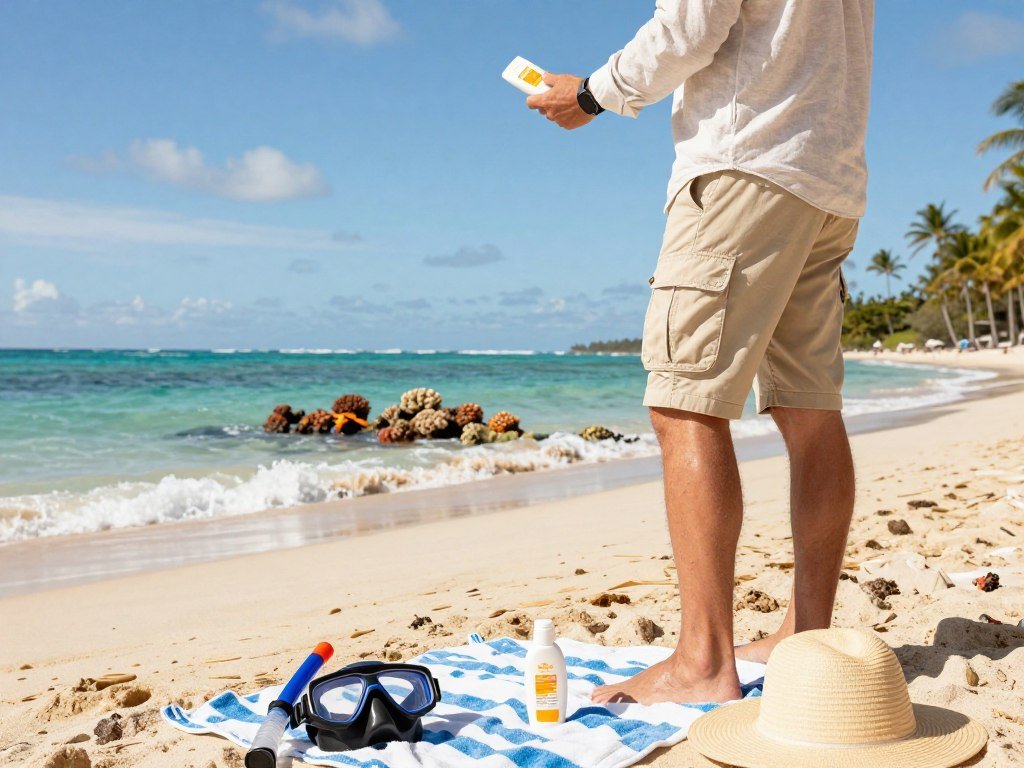
A beach day calls for protection that works for your skin and a closer look at what may wash into the water. Rising sea temperatures put added pressure on reefs, so your trip can include thoughtful sun care without losing sight of skin protection. Choosing the best reef safe sunscreen means weighing both needs, then checking the active ingredients. A front label alone cannot tell you what a formula contains. The Drug Facts panel gives you a more useful view of its UV filters. You will find practical checks, product options, application tips, and ways to cover skin without adding more sunscreen. Start with the product’s active ingredients, then consider its SPF, water-resistance time, and fit for your beach plans. The label claim can be a clue, but it cannot settle the choice on its own. Treat the ingredient panel, not the front-of-package claim, as the useful starting point.
Key Takeaways
- “Reef-safe” is not a federally defined U.S. sunscreen term.
- Check the Drug Facts panel for active ingredients and SPF.
- Mineral formulas list zinc oxide, titanium dioxide, or both.
- Follow the product’s water-resistance time and use directions.
- Sun-protective clothing and shade can cover more skin.
Is “Reef Safe” a Regulated Label?
In the United States, “reef-safe” is not a federally defined sunscreen term. The same applies to “reef-friendly,” so the phrase itself does not establish what a product contains or how it affects the environment.
These terms are marketing claims, not a federal sunscreen standard. Turn the package over and read its active ingredient panel. The Drug Facts label lists the active ingredients in U.S. sunscreens, which the FDA regulates as nonprescription drugs.
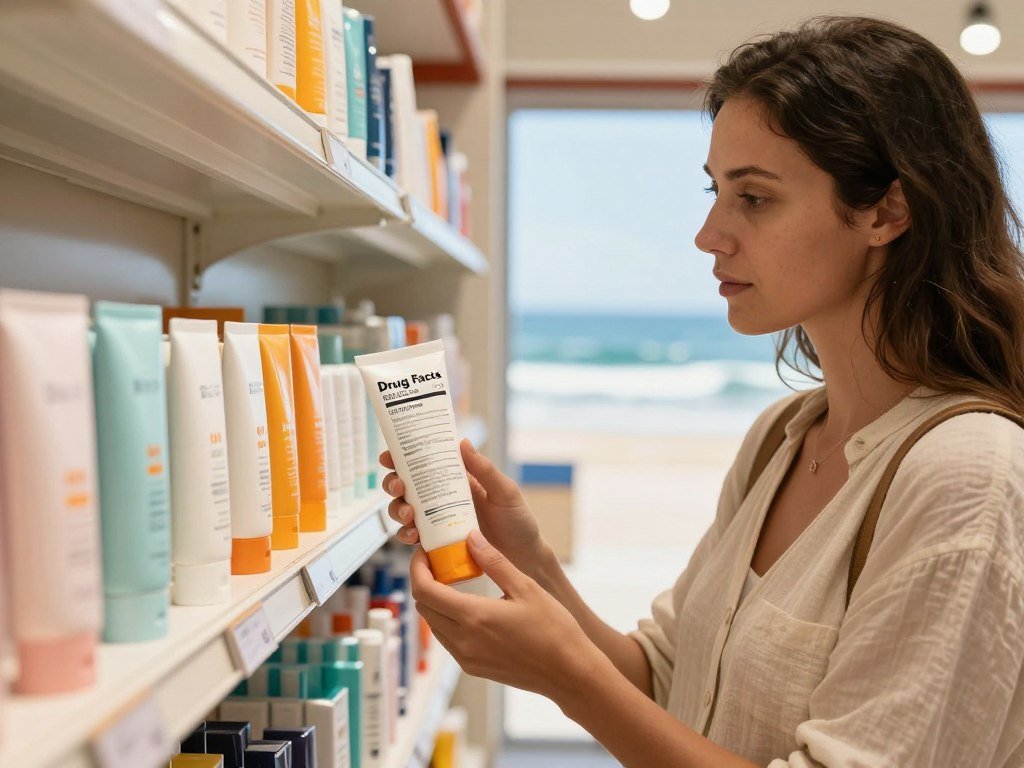
Local rules can still limit what you may buy or use. Hawaii’s statewide ban on selling or distributing sunscreens with oxybenzone or octinoxate took effect in 2021. That rule applies in Hawaii, not across the country.
California has considered limits on sunscreen marketing claims, too. Its AB 1744 proposal targeted claims such as “reef safe” on products with certain UV filters. A summary of the California proposal shows how state rules can differ.
A “reef-safe” label is not a federal guarantee of no environmental impact.
For a reef-safe sunscreen in 2026, use the claim as a prompt to check the product, not as proof. Is reef-safe sunscreen real? The phrase appears on products, but it has no single federal definition for sunscreen.
Rules can change by state, island, park, or marine reserve. Check the rules for the specific beach destination before packing a formula.
Which Ingredients Should You Look For or Avoid?
Start with the active ingredient box, where the product’s UV filters are named. For a mineral formula, look for zinc oxide or titanium dioxide on that panel.
Non-nano means mineral particles that are not in the nanoscale range, generally understood as particles smaller than 100 nanometers. If that detail matters to you, look for clear non-nano wording on the current package.
Mineral Actives to Seek
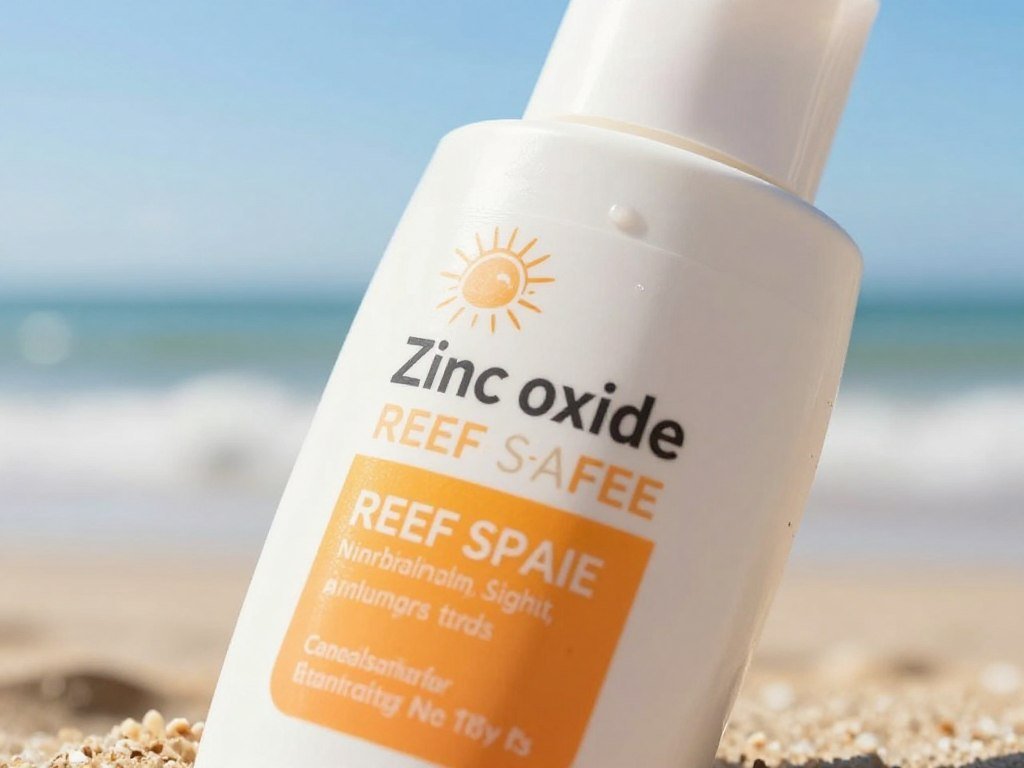
Zinc oxide and titanium dioxide are the mineral UV filters used in mineral sunscreen. The Drug Facts panel identifies them as active ingredients and usually gives their percentages.
Check the exact product, not just a brand’s general description. A brand may sell several sunscreen types, and their active ingredients can differ. The label also helps you confirm whether a face lotion or sport balm fits your plans.
UV Filters to Screen Out
If you want to avoid certain chemical UV filters, check the full active ingredient list. A useful screen can include these six ingredients:
- Oxybenzone
- Octinoxate
- Octocrylene
- Avobenzone
- Homosalate
- Octisalate
This list is a screening tool, not a complete ranking of environmental risk. Research on oxybenzone has examined several kinds of effects in coral.
A 2016 study found that oxybenzone made coral more prone to bleaching. It also found DNA damage, disrupted endocrine function, and deformities in coral larvae.
In a 2022 Stanford University study, sunlight changed oxybenzone into a modified molecule. That molecule built up in sea anemone tissue and symbiotic algae, and researchers linked the process to bleaching and death at high enough concentrations.
The findings do not make every UV filter equal, nor do they settle every question about fish or marine life. If the label does not let you verify the active filters, choose a formula with clearer ingredient information.
How Do Mineral and Chemical Sunscreens Compare?
For a lower-impact starting point, choose a mineral formula rather than assuming all UV filters behave alike. Mineral filters are zinc oxide and titanium dioxide, which provide UV protection.
Research points to fewer effects on aquatic organisms from mineral sunscreens than from chemical UV filters. That does not mean either mineral filter removes every environmental concern.
What Mineral Filters Do
Zinc oxide and titanium dioxide are the active ingredients in mineral sunscreen. The product’s label states which filter it uses and how much it contains. Many shoppers begin with these ingredients when seeking a more reef-conscious option.
If you are also choosing sunscreen for a child, a guide to sunscreen for kids can help you compare broad-spectrum and water-resistant label features.
What Research Says About Chemical UV Filters
Evidence varies by chemical, so one finding should not stand for every formula. An August 2022 National Academy of Sciences review found that specific chemical UV filters can harm aquatic life, including corals.
The review also called for broader ecological risk assessments of UV filters. NOAA describes mineral sunscreens as a better option for aquatic organisms because they have fewer effects on them than chemical UV filters.
The National Academy of Sciences review highlights why researchers assess filters individually rather than treating all chemicals as alike.
| Filter type | Examples | Aquatic evidence |
|---|---|---|
| Mineral | zinc oxide and titanium dioxide | Fewer effects on aquatic organisms |
| Chemical | oxybenzone and octocrylene | Specific filters can harm aquatic life |
| Chemical | avobenzone and homosalate | Check active panel and destination rules |
Use the filter type as a first screen, then verify the exact product label.
How Does Sunscreen Reach Water and Affect Marine Life?
Sunscreen can enter water during a swim, after a shower, or through wastewater runoff. What washes off depends partly on where you apply it and what happens afterward.
A 2026 review estimates that swimmers shed around 25% of a typical sunscreen application within the first 20 minutes of entering the ocean. That estimate applies to ocean entry, not every setting or length of time.

The same review estimates that 14,000 tons of sunscreen enter waterways around the world each year. The estimate includes swimming, shower rinsing, and wastewater runoff.
After a beach day, sunscreen can rinse from your skin and travel through drains. Wastewater can carry ingredients onward, so the path does not end at the shoreline.
Coral reefs are not the only aquatic setting to consider. A 2026 review notes that octocrylene has been detected in coral tissue, dolphins, and sea turtles.
Detection shows that a chemical reached those animals or habitats; it does not, on its own, prove harm. Still, the findings make the route from skin to water worth considering.
When snorkeling, keep your distance from coral and marine animals, and follow local conservation rules. You can find more on snorkeling sites and responsible reef visits.
Think about where the formula can go after it leaves your skin, not only where you plan to swim.
How to Choose the Best Reef Safe Sunscreen for Different Beach Days
For a mineral formula with a clearly listed active ingredient, Stream2Sea SPF 30 is the most straightforward starting pick. Its listed active ingredient is 8.8% titanium dioxide.
Choose Stream2Sea SPF 30 if you want a listed mineral active at SPF 30. Stream2Sea SPF 45 gives you a higher-SPF option, while the SPF 40 balm suits targeted application.
Stream2Sea lists four options with mineral actives and different formats. Use the table to compare their labeled SPF and active ingredient.
| Product | SPF | Listed active ingredient |
|---|---|---|
| Stream2Sea SPF 20 | 20 | 6.6% titanium dioxide |
| Stream2Sea SPF 30 | 30 | 8.8% titanium dioxide |
| Stream2Sea SPF 40 Sport Sunscreen Balm | 40 | 20% zinc oxide |
| Stream2Sea Every Day Active | 45 | 19% zinc oxide |
The balm offers a smaller, targeted-application format, while the lotions suit broader coverage. Pick a format you can use across the areas exposed during your beach day.
All Good SPF 30 Sport Mineral Sunscreen is another named option. All Good also makes mineral products, but the product name alone does not confirm its full active panel.
Babo Botanicals sells Hydrating Milk Mineral Face Sunscreen SPF 30, Super Shield Sunscreen Lotion SPF 50, and Daily Sheer Tinted Mineral Sunscreen Fluid SPF 50. Its Sheer Zinc Mineral Sunscreen SPF 30 is another candidate.
For any All Good or Babo Botanicals product, inspect the current active ingredient panel. Confirm non-nano status on that exact label if it is part of your criteria.
Some shoppers look up All Good sunscreen because they want a sport formula for beach use. Compare the specific package rather than assuming every product from one brand has the same filters.
If snorkeling, choose a product format that lets you cover your face and exposed skin evenly before entering the water. A mineral product name or brand description does not prove that its formula meets every personal standard.
Match the product format and SPF to the day, then confirm the current label before buying.
Which Formula Fits Your Skin and Budget?
A mineral sunscreen that feels comfortable enough to apply generously is more useful than one left in the bag. Texture and tint can help you narrow down formulas for your skin.
Check the label for texture, tint, and active ingredients instead of expecting every mineral formula to rub in the same way. Zinc oxide and titanium dioxide formulas can leave a white cast.
What Helps a Mineral Sunscreen Rub In
Tinted or sheer formats may look less visible on some skin, though the exact finish depends on the formula. Read the package description and, when possible, try a small amount before a long beach day.
Check whether the product is made for the face, body, or both. A lighter face fluid may feel different from a thicker sport lotion, even when both list mineral actives.
Neutrogena Ultra Sheer Dry-Touch Broad Spectrum SPF 55 lists avobenzone 3%, homosalate 10%, octisalate 5%, and octocrylene 10% as active ingredients. Neutrogena describes the formula as oxybenzone-free.
An oxybenzone-free claim does not remove the other listed active ingredients. The label still lists four chemical UV filters, so one removed ingredient does not settle the full formula question.
The brand’s SPF 55 active ingredient panel shows the listed filters and their percentages. Use that panel to assess the product, rather than relying on one front-label claim.
How to Compare Cost Per Ounce
To compare affordable reef-safe sunscreen options, divide the package price by its ounces. Then compare the result alongside SPF, product format, and how much coverage the package offers.
A low cost per ounce may not help if the texture makes you apply too little. A face fluid, balm, and family-size lotion also serve different needs, so compare like formats where possible.
Compare the cost per ounce only after confirming that the active ingredients meet your criteria.
How Should You Apply Sunscreen for a Beach Day?
Apply a generous, even layer before heading into the sun, and use the amount on the product label as your guide. Full coverage matters because missed spots leave skin unprotected.
About 1 ounce is a common full-body application amount. Spread sunscreen evenly over exposed skin, including areas that are easy to miss, such as the ears and tops of the feet.
Apply Enough for Full Coverage
Using too little can reduce the protection you get from the labeled SPF. Apply before sun exposure, and cover each exposed area rather than spreading one thin layer across your body.
Broad-spectrum sunscreen protects against UVA and UVB rays. If you are applying it to a child, a child sunscreen application guide can help you follow the same basic label habits.
Reapply by the Label and Conditions
The labeled swim or sweat duration is the water-resistance time. Follow the package directions for that time, towel drying, and ordinary wear.
Neutrogena Ultra Sheer Dry-Touch SPF 55 is labeled water resistant for 80 minutes. Its label gives these reapplication directions:
| Situation | Reapply timing | Example from the SPF 55 label |
|---|---|---|
| Swimming or sweating | After 80 minutes | Reapply after 80 minutes |
| Towel drying | Immediately | Reapply immediately |
| Ordinary wear | At least every 2 hours | Reapply at least every 2 hours |
An 80-minute water-resistance label does not cancel the other directions. That SPF 55 label also says to reapply after towel drying and at least every two hours.
Keep the package directions in reach so you can follow the right timing after swimming, sweating, or towel drying.
What Can You Use Instead of More Sunscreen?
A sun shirt and swim pants can cover more skin without adding another layer of product. Clothing stays on while you swim, unlike sunscreen that can wash off.
Covering skin can reduce how much area needs sunscreen, but exposed skin still needs protection. Follow local guidance about sun exposure, especially during long beach visits.
UV-protective clothing includes sun shirts and pants. A rash guard is made for swimming, while swim pants cover legs during time in the water.
Pack a few simple options for a day near the sea:
- A long-sleeved sun shirt or rash guard
- Swim pants
- A wide-brimmed hat
- Shade
A hat covers your face and scalp, and sunglasses protect your eyes. Shade helps during breaks, though an umbrella does not block every UV ray.
Keep clothing comfortable enough to wear in warm weather. You can also read about choosing a beach umbrella for shade, including safe setup in changing wind.
These steps help you protect skin without relying on sunscreen alone. They do not promise full protection for every exposed area or every beach condition.
Pair covered skin with shade during the brightest part of your beach outing.
Where Can You Buy Reef-Safer Sunscreen?
The same label check works whether you shop at a drugstore, a supermarket, an outdoor retailer, or online. Start with the exact package, since stock and formulas can vary by place and date.
Read the product label before you decide that a sunscreen suits your criteria. U.S. sunscreen labels show the SPF value and active ingredients.
Drugstores, supermarkets, outdoor retailers, and brand websites may carry mineral options. Selection varies by location, and no retailer can guarantee a particular product will be in stock.
Use this short checklist while shopping:
- Read the active ingredients.
- Confirm the SPF and broad-spectrum label.
- Check for non-nano wording if that matters to you.
- Read the water-resistance directions.
- Compare package size and cost per ounce.
If you are checking which sunscreens at Walmart are reef safe, assess the exact product in store or online. Use the same label checks instead of relying on a store name or product claim.
SPF 30 blocks approximately 97% of UVB rays, while SPF 50 blocks approximately 98%. The higher number alone does not replace correct application or reapplication.
For an overview of SPF, broad-spectrum labels, and sunscreen use, the FDA sunscreen guidance explains what the label means.
Do not treat a retailer, brand, or front-label claim as proof that a formula matches your needs.
Online listings may show older package details or incomplete ingredient information. Check the exact package and its current directions before adding it to your beach bag.
Conclusion
The simplest way to make a more informed beach-day choice is to check the active ingredients before relying on a label claim. “Reef-safe” is not a regulated U.S. sunscreen definition. The front of a package cannot replace its Drug Facts panel.
That quick check helps you see which UV filters the formula lists. It also gives you a better basis for comparing products for skin protection and your environmental concerns.
Take one simple step before your next trip: inspect the active ingredient panel on the sunscreen already at home or the one you are considering. Before your next trip, read the Drug Facts panel on the sunscreen you plan to pack.
FAQ
Is Neutrogena Ultra Sheer Dry Touch sunscreen reef safe?
What kind of sunblock is reef safe?
Is babo botanicals sunscreen reef safe?
Does Reef Safe sunscreen actually work?
What stores sell Reef Safe sunscreen?
Is Hawaiian Tropic actually reef-safe?
Does Target sell Reef Safe sunscreen?
Is Blue Lizard actually reef-safe?