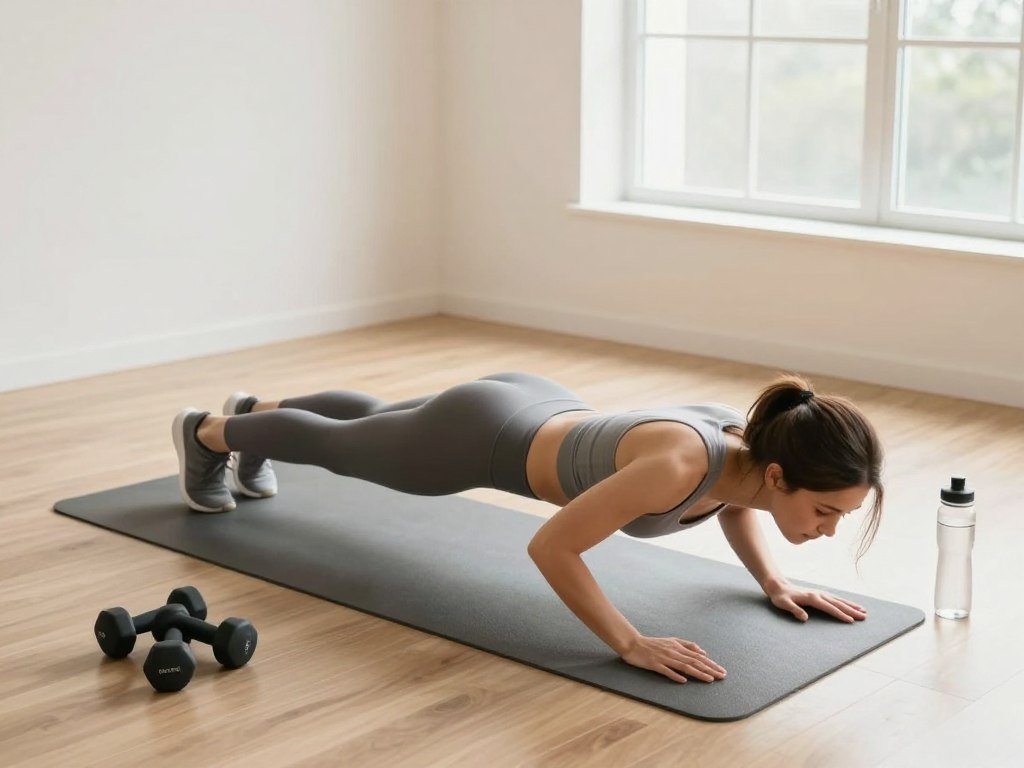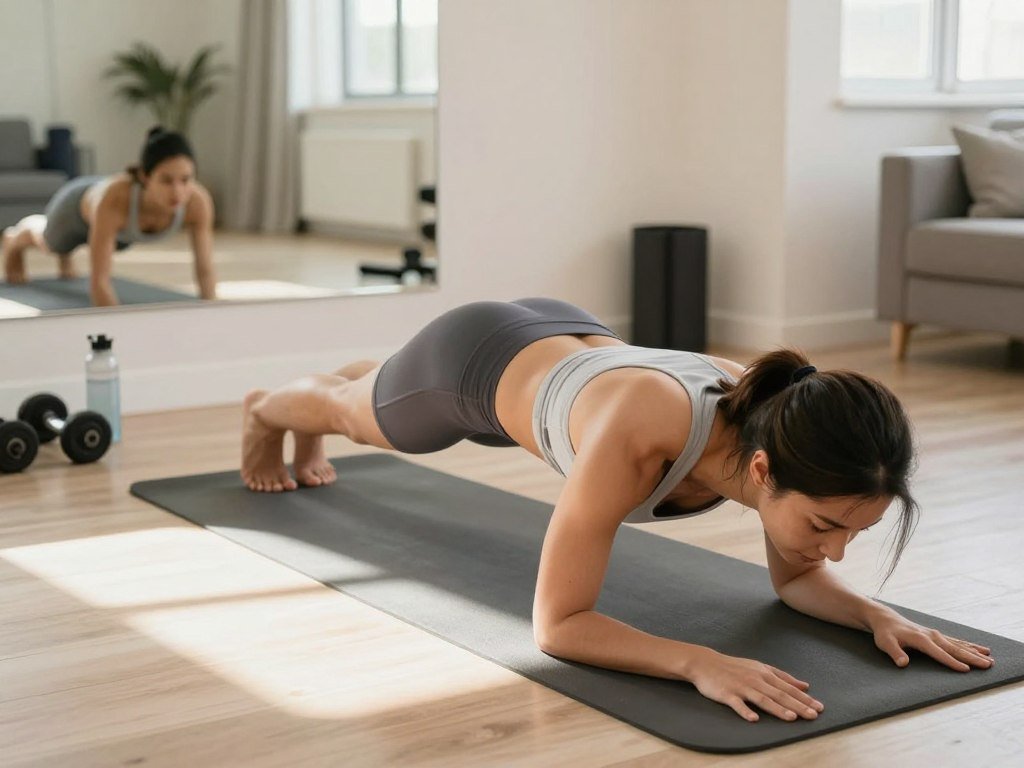
Regular exercise supports bone health by loading bones and strengthening the muscles that help you stay steady. Bone mineral density (BMD) is the amount of mineral in a measured area of bone. Adults can support bone strength, muscle function, and steadiness with regular movement. Bones respond to physical loading, while stronger muscles and better balance can help lower fall risk. A useful routine combines more than one kind of activity, rather than relying on a single exercise. Your health, ability, and fracture risk all matter when choosing a safe starting point. This guide helps you build a steady plan that fits your life and supports your goals. Choose activity you can do consistently, then tailor its intensity to your health and ability.
Key Takeaways
- Combine different kinds of activity.
- Include work that challenges your balance.
- Match impact and effort to your ability.
- Build your weekly activity at a steady pace.
- Ask a clinician about safe changes after a fracture.
Best Exercises for Bone Health
A practical bone-focused routine combines weight-bearing activity, resistance training, and balance work rather than relying on one category alone. Each type supports a different part of bone health, from bone loading to steadier movement.
Combined aerobic and resistance exercise ranked highest for BMD at the lumbar spine and femoral neck in postmenopausal women. A 2025 network meta-analysis covered 49 papers, 3,360 participants, and eight exercise interventions. A separate review of 50 randomized trials found that resistance and impact training improved strength and balance and reduced falls in people with osteoporosis or osteopenia.
Choose activities that challenge your bones, muscles, and steadiness in different ways.
Exercise can slow bone loss in adults and support muscle strength and balance. This combined exercise finding is useful, but it does not mean one routine suits every person. Your health and current ability shape how much impact or resistance is right for you.
| Exercise type | Examples | How it challenges the body | Main contribution |
|---|---|---|---|
| Weight-bearing and impact | Walking or dancing | Loads bones through the feet | Bone loading |
| Resistance training | Bands or body weight | Muscle force pulls on bone | Muscle and bone strength |
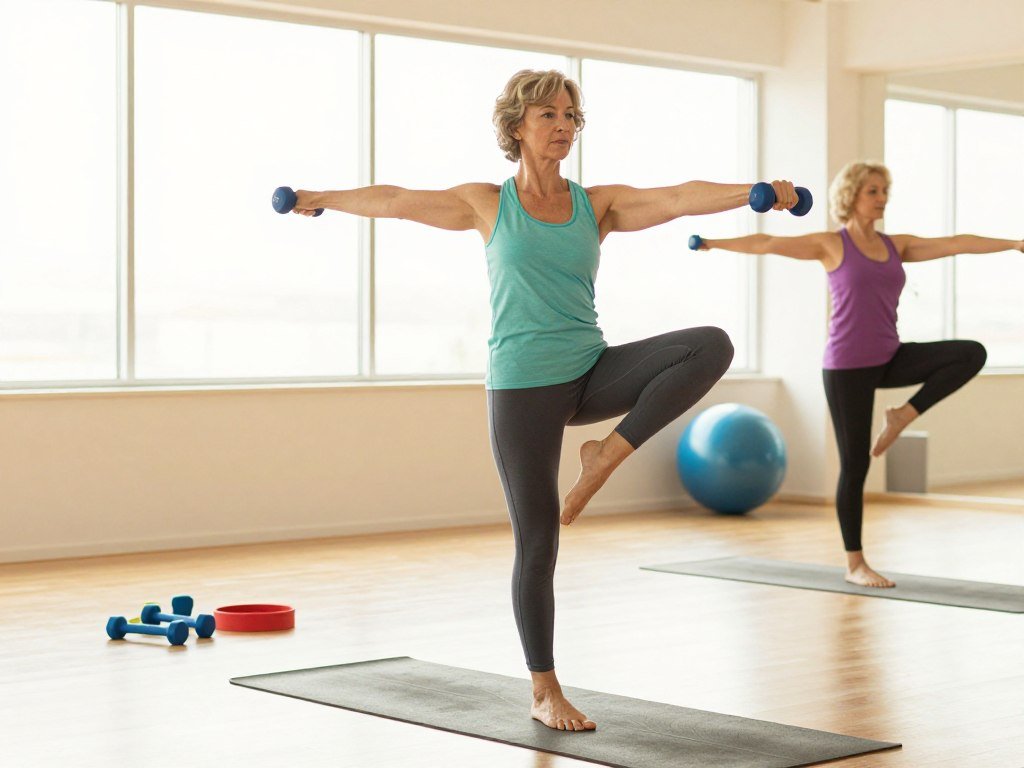
| Balance work | Tai chi or supported standing | Challenges steadiness | Fall prevention support |
A 50-trial review also found benefits from resistance and impact training for people with osteoporosis or osteopenia. You can use the workout routine ideas to shape a plan around your schedule and equipment. Treat the categories as complementary, because balance practice helps protect against falls even when it is not the main bone-loading activity.
Which Weight-Bearing Activities Load Bone?
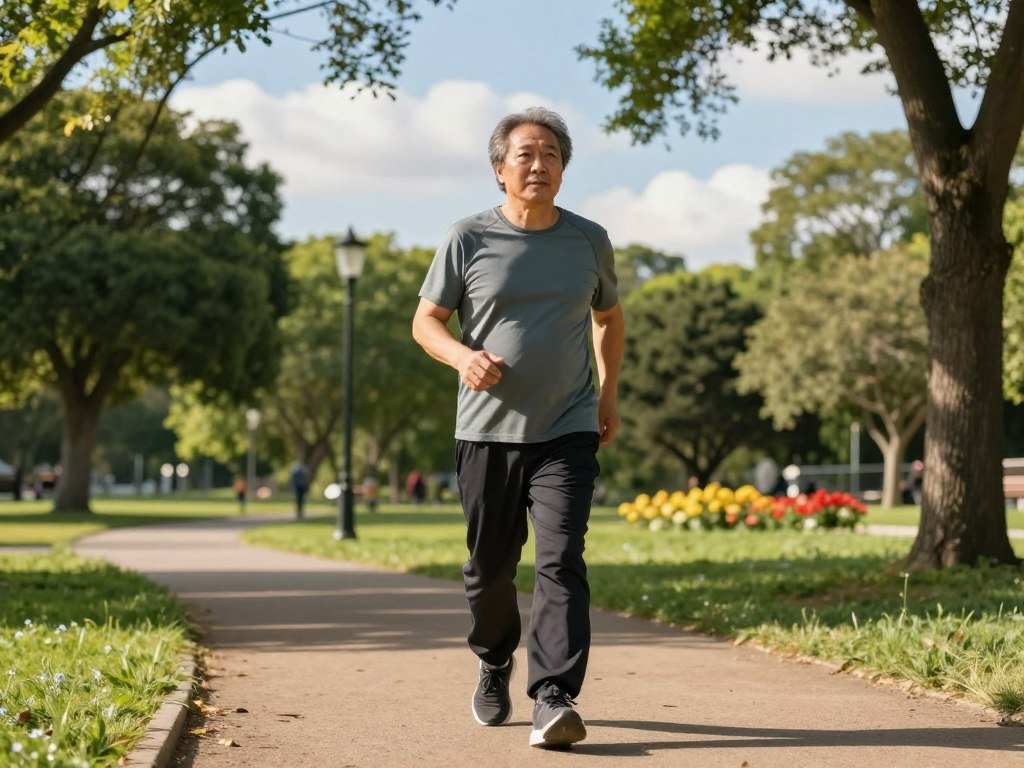
Walking is a weight-bearing exercise because your legs carry your body against gravity with each step. Weight-bearing exercise happens on your feet as you work against gravity, which places load on bones.
Choose an impact level that matches your ability and health. Higher-impact activity includes jogging, dancing, and racket sports. Lower-impact choices still keep you upright and active, but reduce the jolt through your body.
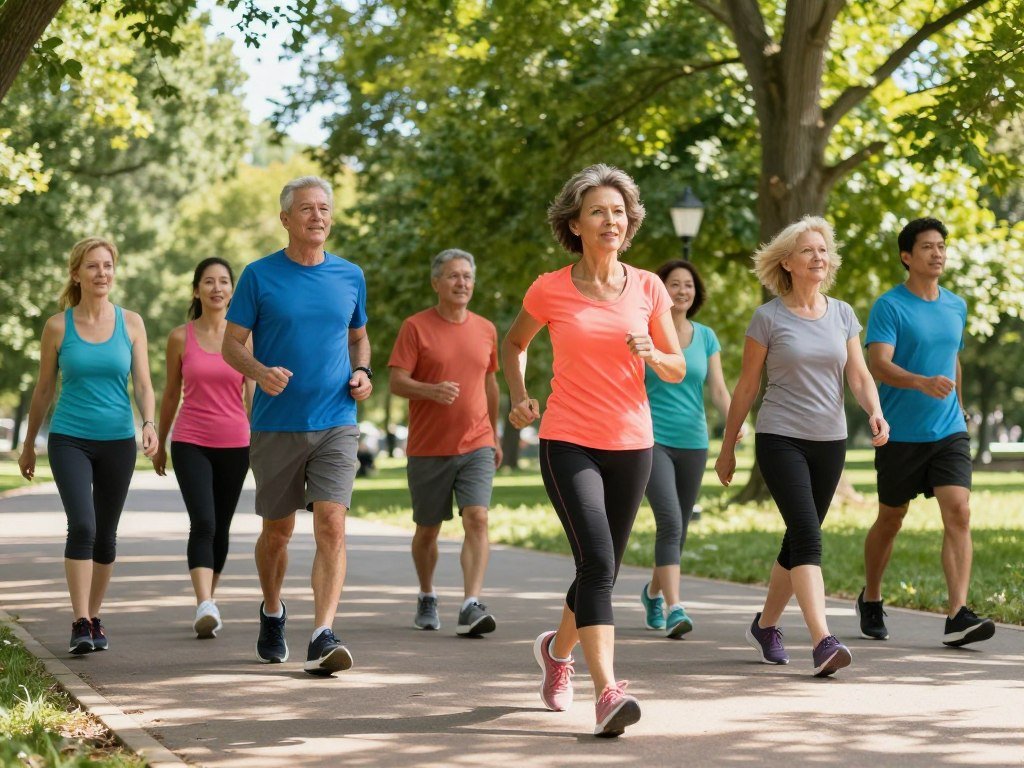
Higher-impact activities and safer alternatives
Jogging, energetic dancing, and racket sports create more impact than walking. That challenge may not suit everyone, especially when a health condition or fracture history affects safe movement. Lower-impact options include treadmill, elliptical, and step-machine exercise.
Brisk walking is commonly described as walking at 3-4 miles per hour. Walking, jogging, stair climbing, dancing, and racket sports all load the legs against gravity. Try one of these choices if it fits your ability:
- Brisk walking
- Dancing
- Stair climbing
- Jogging
- Racket sports
Bone-strengthening exercises at home
Brisk walking outdoors or indoors is an accessible way to get moving. You can climb indoor stairs or walk in place when you have little room. A treadmill, elliptical, or step machine offers a lower-impact option at home or in a gym.
For osteoporosis, weight-bearing exercises at home can include indoor walking or stepping, with the impact suited to your health. Swimming and cycling support cardiovascular fitness, but they are not weight-bearing because water or a bicycle supports your weight. A guide to exercise and osteoporosis also explains how activity choices can support bone health.
If higher impact is not comfortable or appropriate, choose a lower-impact weight-bearing activity you can repeat regularly.
How Can Strength and Balance Training Help?
Resistance training strengthens muscles that pull on bones, while balance practice helps you stay steadier during everyday movement. Both matter because stronger muscles support movement and steadiness may help lower fall risk.
Regular physical activity can reduce falls by nearly one-third in older adults at high risk of falling. Tai chi, yoga, and Pilates can help improve balance, strength, and flexibility. A one-leg standing test also offers a clue about fracture risk, but it does not prove that the exercise builds bone.
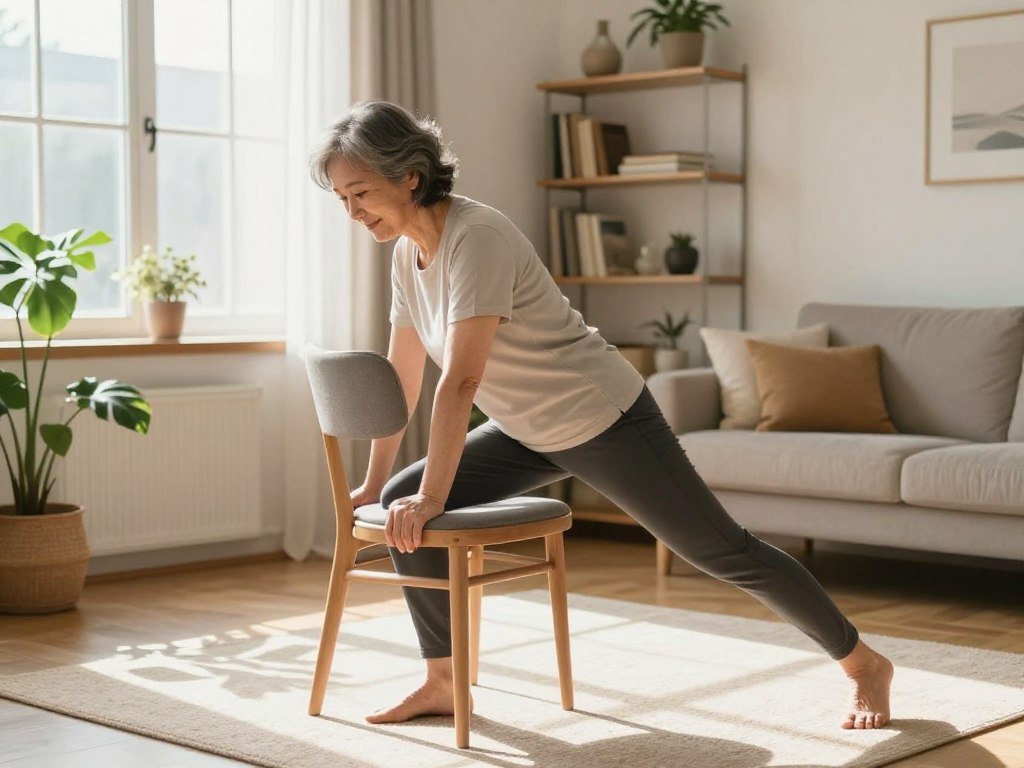
Pictures of exercises for osteoporosis
For a chair-supported heel raise, stand behind a sturdy chair and hold its back lightly. Keep your trunk upright, lift both heels, then lower them with control. Try 10 repetitions once each day.
For a standing hip abductor raise, stand beside a chair and hold it for support. Keep your trunk upright and toes facing forward, then move one leg out to the side without leaning. Do 10 repetitions per side, two or three times each week.
These clear positions can help you picture each movement without rushing through it. Use a stable chair, and keep the motion small enough to stay controlled.
Strength and balance moves you can do at home
Resistance training can use free weights, weight machines, resistance bands, or body weight. Bands let you add pull without a machine, while body weight can challenge muscles during simple standing movements. Choose a level that lets you keep good control.
In women ages 75-80, standing on one leg for less than 10 seconds was linked with higher hip-fracture risk over a median 3.6-year follow-up. The link also appeared for nonvertebral fractures. For a 75-year-old woman, low one-leg standing time was estimated to raise four-year fracture probability by a factor of 1.3-1.5, depending on BMD.
Those findings show an association with fracture risk, not proof that one-leg standing builds bone. Practice balance beside a stable chair or counter so you can steady yourself before you feel at risk of falling.
Which Moves Are Safer With Osteoporosis?
People with osteoporosis can often stay active, but spinal fractures or very low bone strength can change which movements are safe. Safer movement depends on your condition, fracture history, and ability.
People with osteoporosis, especially those with spinal fractures, may need to avoid forward bending, forceful twisting, and high-impact movement. A tailored exercise program can address posture, balance, gait, coordination, and hip and trunk stability.
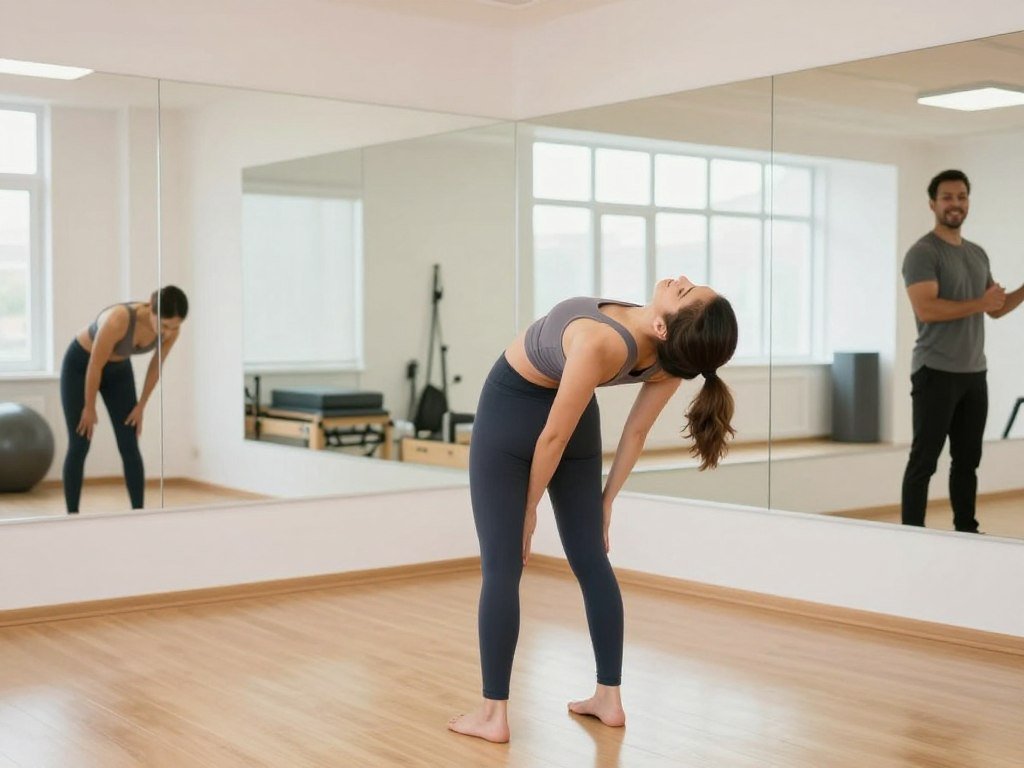
Spine-strengthening exercises for osteoporosis
Spine-focused resistance and posture work can target the back and trunk. For a standing back extension, place a ball behind your upper back and lean into it gently. Keep your spine, hips, and knees in the same position as you extend backward.
Hold the position for five seconds, then return to your starting stance. Build gradually toward 15-20 repetitions. The Bone Health and Osteoporosis Foundation guidance says backward bending or leaning back reduces stress on the front of the spine.
A prone chest raise is an advanced move, not a beginner exercise. Lie on your stomach, draw your shoulders back, and lift your head and chest while looking down. Hold for five seconds and repeat until tired.
Moves to avoid or modify
Forward spinal bending can place extra stress on the front of the spine. The Bone Health and Osteoporosis Foundation advises avoiding forward flexion during exercise and daily activities. People with osteoporosis may need to change the following movements:
- Sit-ups
- Deep or repeated waist bending
- Forceful twisting
- Abrupt or explosive movements
- Jumping or other high-impact loading
These moves matter most when low bone strength or spinal fractures make them unsafe. A physiotherapist can tailor exercise to your capabilities and help you choose suitable movement. Exercise does not replace prescribed osteoporosis medicine.
Ask a clinician or physiotherapist to review any move that causes pain or feels unsafe, especially after a fracture.
How Often Should You Exercise for Bone Health?
Most adults can use regular weekly activity as a starting target, while osteoporosis-specific resistance and impact protocols use more precise doses. Build gradually according to your fitness and strength.
U.S. adult guidance calls for at least 150 minutes of moderate activity or 75 minutes of vigorous activity each week, plus muscle-strengthening activity at least two days weekly. Older adults should include balance, aerobic, and muscle-strengthening activity each week.
The detailed osteoporosis protocols below are specific guidelines, not a starting prescription for every reader.
| Guideline or focus | Amount or intensity | Frequency | Duration or condition |
|---|---|---|---|
| General U.S. adult activity | 150 minutes moderate or 75 minutes vigorous, plus strength work | Strength work at least 2 days weekly | Each week |
| International Osteoporosis Foundation target | 30-40 minutes of exercise | 3-4 times weekly | For most adults |
| Osteoporosis or osteopenia resistance protocol | 3-10 major muscle groups; 50%-85% of one-repetition maximum; 5-12 repetitions per set | 2-3 days weekly | 3-12 months |
| Osteoporosis or osteopenia impact protocol | 50 jumps per session | At least 3 days weekly | At least 6 months |
The resistance and impact doses are specific guidelines for people with osteoporosis or osteopenia, not a default plan for everyone. A gradual increase can make regular physical activity easier to sustain. For older adults, the NHS activity guidance also includes balance and muscle-strengthening work.
You can use a workout app to track activity across the week, but a simple calendar works too. Track your activity across the week and adjust the plan with a health professional if your health or fracture risk calls for it.
Conclusion
Consistency matters more than trying to do every type of exercise at once. A varied routine can support bone strength and steadiness, while a manageable pace makes it easier to keep moving week after week.
Choose a combination that fits your health and ability. If osteoporosis or a fracture history affects your choices, ask a clinician to review your current plan before making changes.
Write down a simple schedule for your first week, keeping each activity realistic for your day. Choose two or three realistic activity days for the coming week and put them on your calendar.
FAQ
Does standing on one leg increase bone density?
What exercise should you not do if you have osteoporosis?
Does yoga improve bone density?
Is walking a weight-bearing exercise?
Can you regain bone density after 60?
What aggravates osteoporosis?