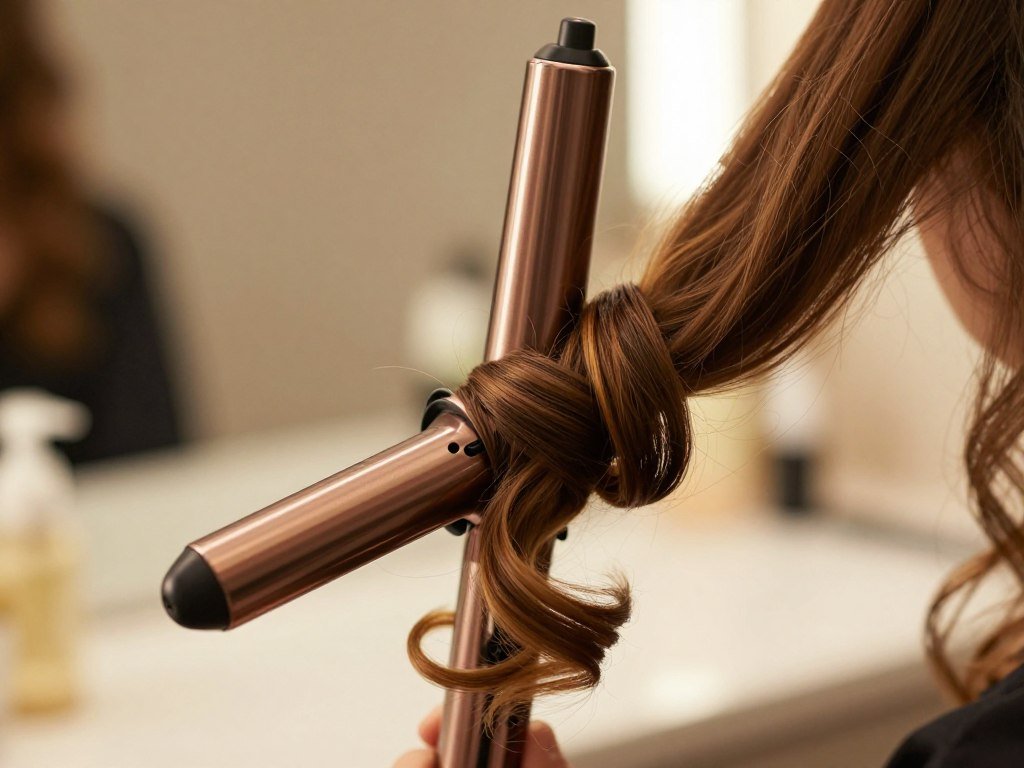
Fine hair can be difficult to curl because it needs enough warmth to shape while remaining vulnerable to excess heat. It can also lose curls quickly, making heat damage a real concern when styling. The barrel is the heated cylinder around which hair is wrapped to form a curl.
This roundup compares heat control, barrel size, tool design, and use cases for different hair lengths and curl styles. The goal is to help you find a tool that shapes delicate strands without asking them to handle more heat than needed. For more care tips, see how to choose shampoo and conditioner for your hair type.
Key Takeaways
- Choose variable heat settings so you can start low.
- Match barrel size to your curl goal and hair length.
- A clamp and a wand offer different ways to hold hair.
- Use heat protectant on fully dry hair before styling.
- Let curls cool before brushing to help them hold their shape.
How to Choose the Best Curling Iron for Fine Hair
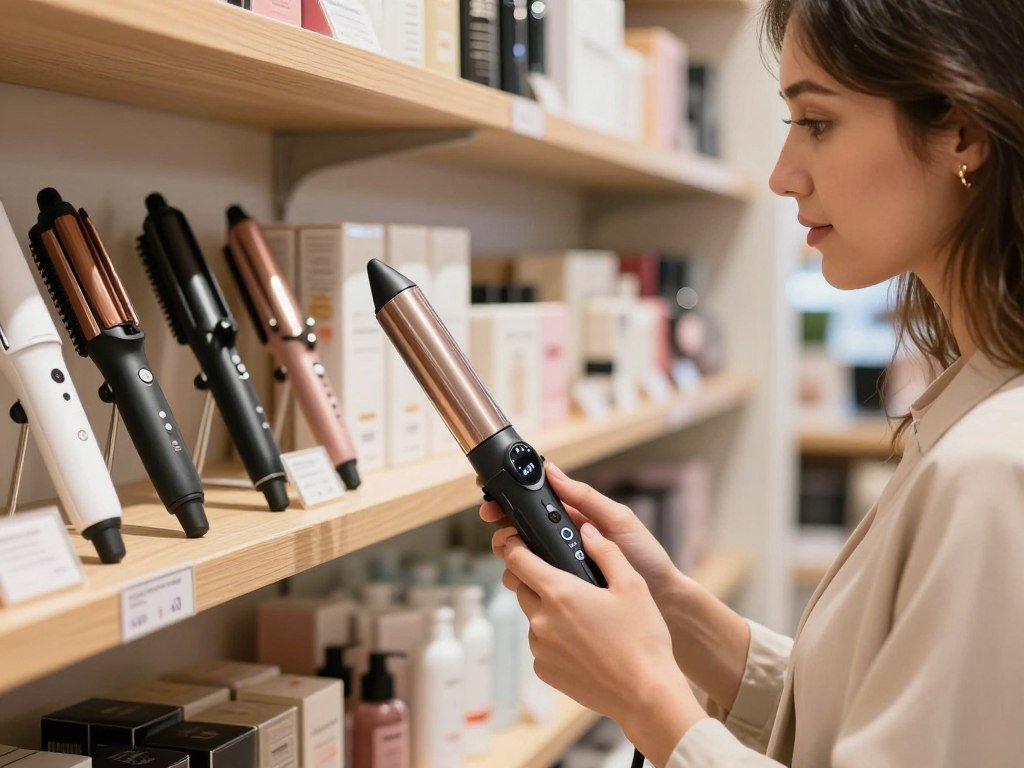
Start by checking whether the iron lets you choose a low temperature, since fine strands do not need a tool’s maximum setting. Even heat and easy control matter more than a very high top temperature. FHI Heat advises variable temperature settings and starting at the lowest level that works for your hair type.
Ulta also recommends adjustable-heat styling tools for fine or thin hair to help avoid excess damage. A smooth barrel that heats evenly can make each pass more predictable, while the right design helps you handle a section without a struggle. If you also use a straightener, review this guide to choosing a hair straightener for your hair type.
Choose an iron for the lowest useful heat setting, not its highest number. You should be able to control the heat and the section comfortably.
Use this short checklist before you buy:
- Variable heat settings that include a low option.
- A smooth barrel without rough seams or snags.
- A barrel size suited to your curl goal and hair length.
- Comfortable handling that feels steady in your hand.
Someone who wants only loose waves may prefer a larger barrel, while a smaller barrel better suits defined curls. The best curling iron for fine hair should also feel easy to hold during the time it takes to style each section. Before buying, confirm that the lowest usable setting and the barrel shape match your hair and styling goal.
What Temperature Should You Use on Fine Hair?
For fine, colored, or highlighted hair, start within 250-300°F and begin at the low end. Use the least heat that shapes a curl, since fragile hair can be more prone to heat damage. FHI Heat recommends beginning low and raising the setting gradually only if needed.
The 250-300°F range applies to fine, colored, or highlighted hair. It is not a universal setting for every texture or condition. Fine hair should not start at the iron’s maximum temperature.
| Hair condition | Temperature range | Practical use |
|---|---|---|
| Fine, colored, or highlighted hair | 250-300°F | Begin at the low end |
| Medium-to-thick hair | 300-375°F | Comparison for mixed-texture households |
| Very thick or coarse hair | 325-400°F | Comparison only, not a fine-hair setting |
The broad ranges for thicker hair provide context if more than one person shares your hot tools. They do not mean fine strands need the same level of heat. A lower temperature may take more time to shape a section, yet it can limit unnecessary exposure.
Start at the Lowest Effective Setting
Test a small section first, and check whether it forms the curl you want. If it does, keep that setting for the rest of your styling. A heat protectant can help limit damage, but it does not make high heat harmless.
Fine, Colored or Highlighted Hair
Color-treated or highlighted strands may need extra care because they can be more fragile. Keep the temperature range tied to the condition of the hair, not to the iron’s available range. Details about temperature control for hair tools can also help you compare styling choices.
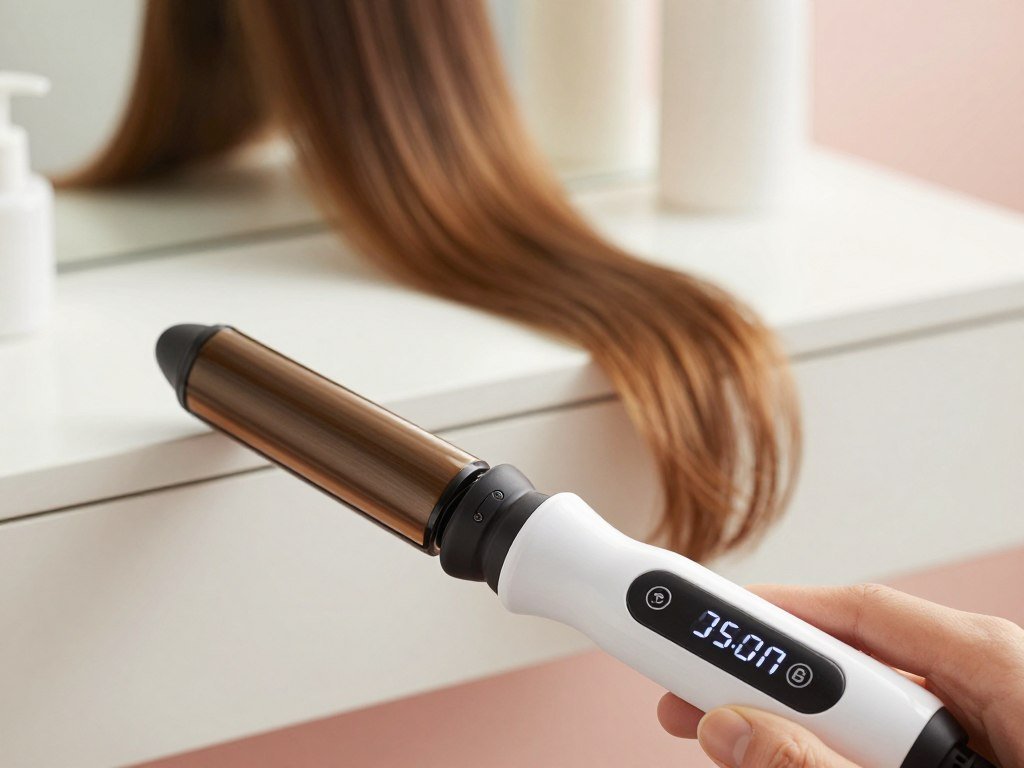
If a low setting does not shape a section, raise the temperature gradually rather than jumping to the iron’s maximum.
Is a Ceramic Curling Iron Best for Fine Hair?
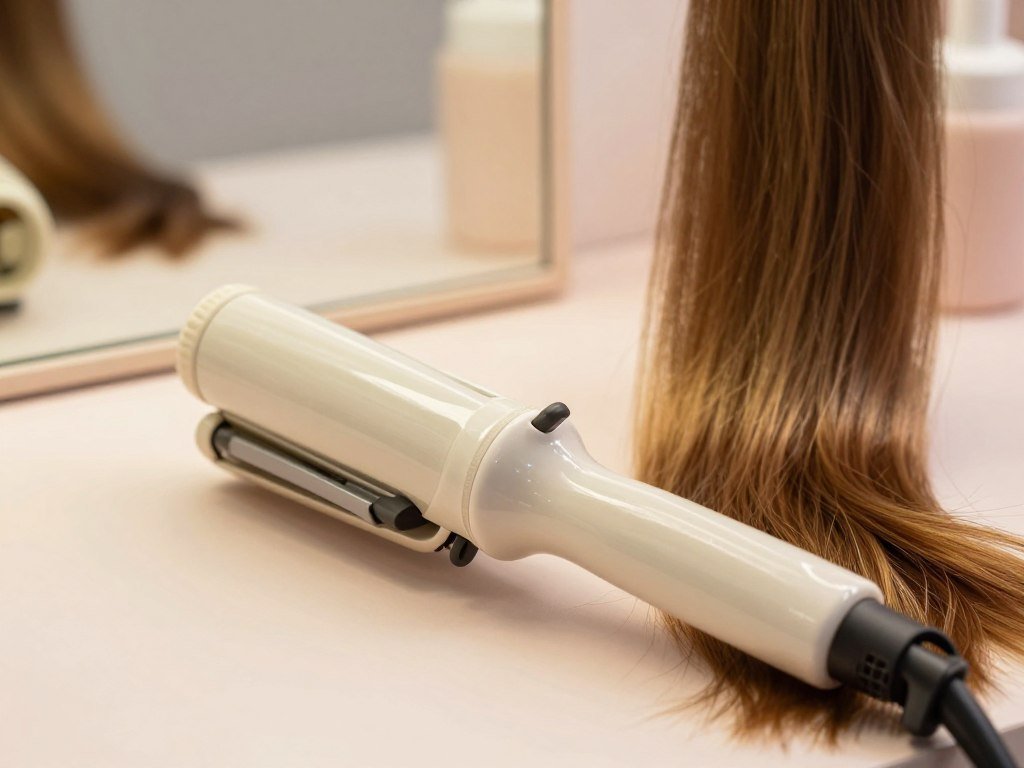
A ceramic barrel is a sensible first choice when even heat and a gentler feel matter more than fast, high heat. Even heat can make styling feel more consistent across a section. Ceramic is generally gentler for fine or fragile hair than a tool built for very high heat.
The barrel material affects how an iron heats and handles hair, but it does not replace heat control. For many fine-haired users, ceramic is a practical starting point. You still need variable heat settings to choose a temperature that works for your strands.
Why Ceramic Is a Gentle Starting Point
Ceramic distributes heat evenly across the barrel. That can help avoid hot spots that may expose one part of a section to more heat than another. A ceramic coating can also provide a smooth surface for hair to wrap around.
Look at the full design, not just a label on the box. A ceramic barrel with limited temperature control may be less useful than one that lets you choose a lower setting. The same idea applies when you compare other heated tools.
When Tourmaline or Titanium Makes Sense
Tourmaline ceramic can help reduce frizz and static by emitting negative ions. These negative ions help smooth the look of flyaways for some users, though results can vary. An ionic feature is a bonus, not a substitute for careful heat use.
Titanium heats faster and can hold higher temperatures, which may suit users who need quick styling. That speed can be less forgiving for fragile strands, so it is not the first material many fine-haired users should choose. A coating or ionic label cannot control heat on your behalf.
For fine or fragile strands, prioritize even heat and controllable settings over a material’s speed.
What Barrel Size Makes the Curls You Want?
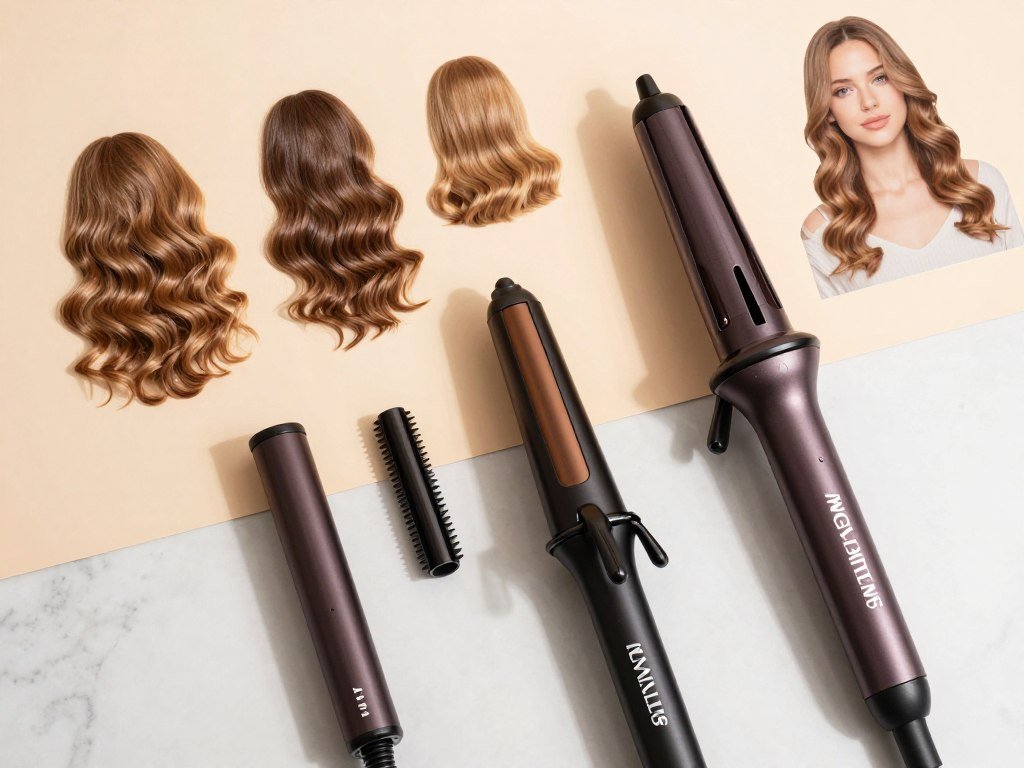
Choose barrel size by the curl you want: smaller barrels define curls, and larger barrels loosen them. The size changes the shape more than it changes how well a curl holds. Your hair length also affects how easily you can wrap a section around the barrel.
Most stylists do not use one fixed size for every client. A 1-inch barrel is a versatile general-purpose option, while your desired curl and length guide other choices. Pick a diameter for the finish you want, not because one size is called standard.
| Barrel size | Typical curl | Best fit |
|---|---|---|
| 0.5-0.75 inch | Ringlets or tight curls | Short to medium hair |
| 1 inch | Defined curls to soft waves | Versatile across lengths |
| 1.25 inches | Loose curls | Medium to long hair |
| 1.5 inches | Soft waves or volume | Longer hair |
Smaller Barrels for Defined Curls
A 0.75-inch or 1-inch barrel can create defined curls, while a 1/2- to 3/4-inch barrel can make ringlets. A smaller diameter gives hair a tighter bend around the barrel. That can suit a defined curl, but it may not give you the loose curls you want.
Shorter hair may wrap more easily around a smaller hair barrel. Longer hair can take more time to curl with a narrow tool, especially if you want a soft finish. Think about the end result before choosing a size.
Larger Barrels for Loose Waves
A 1.25-inch barrel suits loose curls on medium to long hair. A 1.5-inch barrel is better for soft waves or added volume, especially on longer hair. Larger barrels create a looser bend, so hair may look less tightly curled.
If you are deciding between 1.25 and 1.5 inches, choose 1.25 for more defined loose curls and 1.5 for softer waves or volume.
Should You Choose a Clamp or a Curling Wand?
A clamp is often easier to control when you are learning, while a wand gives you a clamp-free way to wrap hair. Your comfort matters because each design asks your hands to work differently. A traditional curling iron’s clamp holds hair around the barrel.
A curling wand has no clamp, so you wrap the hair and hold its end by hand. This design can make clamp-free wrapping simple, but the exposed end needs care. Keep your fingers away from the hot barrel and use the cool tip when the tool has one.
Check these handling details before you choose among hot tools:
- Clamp tension that holds hair without pulling it.
- A cool tip that gives your hand a safer place to rest.
- A swivel cord that helps reduce tangling as the tool moves.
- Auto shutoff that turns the tool off after 30 or 60 minutes, when offered.
A swivel cord can make it easier to turn the tool without twisting the cord around your wrist. Auto-shutoff times differ, so check the listed setting rather than assuming every model has the same feature. A clamp can be useful when you want a section held in place as you curl.
If you are new to heat styling, pick the design that lets you control the section without bringing fingers close to the hot barrel.
Which Curling Iron Works Best for Fine Hair and Professional Styling?
For most fine-haired shoppers, the T3 SinglePass Curl X is the strongest starting pick because it offers adjustable heat down to 260°F. Its nine heat levels give you room to select a lower setting than many irons offer. The T3 curling iron has a 1-inch ceramic barrel.
The T3 SinglePass Curl X suits shoppers who want low, adjustable heat. It has a 4.5446734 out of 5 rating from 582 reviews, but a rating cannot prove a fit for every hair type. A different tool may better suit a specific curl goal or handling style.
| Product | Heat control | Barrel or format | Best fit |
|---|---|---|---|
| T3 SinglePass Curl X | 9 levels, down to 260°F | 1-inch ceramic barrel | Fine hair and adjustable low heat |
| CurlQ set | 12 settings, 200-450°F | 1-inch, 1.25-inch, and 1.5-inch barrels | Several curl sizes |
| Conair Double Ceramic | 30 settings and fine or fragile setting | 1-inch barrel | Value-oriented, classic curls |
| Hot Tools Professional 24K Gold Marcel | Variable control up to 430°F | 24K gold Marcel iron | Experienced users wanting manual control |
The CurlQ set offers three barrel sizes for people who want to change curl shape. A two-month salon test with 40+ clients assessed curl longevity, heat distribution, ease of handling, durability, and value. That salon test found the CurlQ reached 350°F in 30 seconds.
The Conair Double Ceramic has a fine or fragile setting, along with 30 heat settings and a 1-inch barrel. It is a value-oriented option for classic curls. The Hot Tools Professional 24K Gold Marcel has variable temperature controls up to 430°F and a 7-year warranty.
The Marcel design gives experienced users manual control, but it may take practice to handle. The T3 offers a more direct fit if your main concern is choosing lower heat. The CurlQ salon test results give you one more way to compare speed and handling, rather than a guarantee of your results.
Match the pick to your main priority, then check that its lowest usable temperature fits your hair.
What Size Curling Iron Works for Short Fine Hair?
For short fine hair and tight curls, a 0.75-inch barrel is a practical starting size. That smaller size can make it easier to form tight curls or ringlets on short hair. A 1-inch barrel gives a looser curl and more styling flexibility.
Choose the smaller barrel for tighter curls, not simply because your hair is short. Very small barrels can create ringlets, so they are not automatically right for soft waves. Your preferred finish should guide the choice.
A 0.75-inch barrel is commonly used for tight curls and short hair. Bio Ionic’s Long Barrel Curling Iron comes in that size, which can suit someone who wants a defined curl. The small diameter can also help create visible shape when shorter strands are difficult to wrap.
For curls without a tight spiral, consider a 1-inch barrel. It can create a more relaxed result and gives you an option for more than one look. If you want soft waves, a smaller barrel may need extra care during styling so the result does not look too tightly curled.
Short hair does not always mean you need the smallest barrel available. A smaller size creates a tighter shape, while a wider barrel relaxes the bend. The tool should fit both the length you have and the finish you plan to wear.
Choose a 1-inch barrel instead if you want a more relaxed curl and an option you can use for more than one look.
Does Bio Ionic’s Long Barrel Curling Iron Suit Long Fine Hair?
For long fine hair, Bio Ionic’s Long Barrel Curling Iron is worth considering when extra reach is the main need. The longer barrel can make it easier to wrap longer sections without crowding hair near the handle. It is a useful option when a standard barrel feels short.
The barrel is 2 inches longer than average, and the iron has adjustable heat settings. It also includes automatic shutoff, universal voltage, and a 1-year limited warranty. Those features add convenience for home use and travel.
The best curling iron for long hair depends on whether you want defined curls or looser, voluminous waves. A barrel with extra reach helps with longer sections, but it does not decide the curl shape by itself. Diameter still affects how tight or loose the curl looks.
For voluminous waves, 1.5- to 1.75-inch barrels suit long hair. Smaller diameters can create more defined curls, while a larger one makes a softer bend. Fine strands may also need a gentler heat choice, even when the tool is designed for longer hair.
Consider the Bio Ionic model when long sections are hard to wrap on a standard barrel. Its extended reach addresses that handling issue, while the adjustable settings give you control over heat. The iron’s length does not mean every curl will come out loose.
Check the barrel diameter against your preferred curl, since extra length does not determine how loose the curl will be.
How Do You Get Fine Hair to Hold a Curl?
Start with completely dry hair and heat protectant, then curl one small section at a time. Small sections help you work through fine hair without leaving large amounts on the barrel. A heat protectant helps limit heat damage, but it does not prevent all damage.
Hold each section for about 8-10 seconds as a typical guide. If the hair feels too hot or uncomfortable, take it off the barrel sooner. Do not treat the time as a reason to keep heating hair that feels distressed.
Follow these steps for more long-lasting curls:
- Dry your hair fully before using the curling iron.
- Apply heat protectant across the hair you plan to style.
- Work in small sections rather than wrapping a large amount at once.
- Hold each section for about 8-10 seconds, unless it feels too hot.
- Let curls cool before brushing, then finish with hairspray.
Prep Dry Hair in Small Sections
Hair should be completely dry before curling. Damp hair can take longer to shape and may be more vulnerable during heat styling. A clarifying shampoo can remove buildup that weighs hair down and affects styling products; follow it with conditioner or a mask.
Small sections make it easier to wrap hair evenly around the barrel. They also help you avoid repeating the same pass across a larger section. Use hairspray after the curls have cooled if you want extra hold.
Let Each Curl Cool Before Brushing
Brushing a warm curl can loosen its shape before it has time to set. Give each curl a chance to cool completely, then brush gently for a softer finish. If you brush too soon, the style may fall faster.
Let each curl cool fully before brushing. That pause gives the shape time to set.
Allow each curl to cool before brushing so the shape has time to set.
How Do You Clean and Store a Curling Iron?
Unplug the curling iron and wait until it is completely cool before wiping away residue. A cool tool is safer to handle and helps protect the cloth from heat. Product buildup can collect on the barrel after repeated styling.
Never immerse an electrical styling tool in water. A soft, slightly damp cloth can remove residue without scraping the surface. Keep moisture away from the handle and electrical parts.
Use this simple cleaning and storage checklist:
- Unplug the iron from the outlet.
- Wait until the iron is fully cool.
- Wipe the barrel with a soft, slightly damp cloth.
- Store it only when dry, with the cord loosely arranged.
Do not scrape the barrel with abrasive objects, which can scratch its surface. If residue is stubborn, wipe gently again instead of pressing hard. Never clean the iron while it is plugged in or still warm.
Keep the tool in a dry place after cleaning. A loose cord arrangement avoids tightly winding it around the handle, which can strain the cord over time. Make sure no damp spots remain before putting it away.
Store the tool dry, with the cord loosely arranged rather than tightly wrapped around the handle.
Does a More Expensive Curling Iron Make a Difference?
A higher price can buy extra controls or design features, but it does not automatically make an iron safer for fine hair. Price alone does not guarantee better curls or less damage. Curling irons commonly cost $15-$200.
Basic ceramic models typically cost $15-$65, while tourmaline-coated models commonly cost $70-$200. The price can reflect material, controls, attachments, and design. Pay for a feature you expect to use, not a higher maximum temperature.
The Conair Double Ceramic is a drugstore-style choice with a 1-inch barrel and multiple heat settings. That combination can suit shoppers who want a familiar barrel size and options for changing heat. A more expensive model may offer a different design or added control, but it still needs to suit your hair.
A higher price does not promise a better curl or safer heat. Choose the controls and design features you will actually use.
Bio Ionic’s Long Barrel Curling Iron was listed at $163. That price sits within the wider range for styling tools, but the best choice still depends on which features matter to you. A lower-cost iron with useful variable heat can be a better fit than a pricier model with settings you do not need.
Pay for a feature you will use, such as adjustable heat, rather than a high maximum temperature you may never need.
Conclusion
The right pick is the one that gives you control over heat and the curl shape you actually want. Start with control, then choose a barrel that fits your hair length and the finish you prefer. Fine hair does not need the hottest tool to look styled.
A curling iron should feel manageable in your hand and offer a setting that works for your strands. Choose the tool that fits your routine, whether you want defined curls or soft waves. A lower workable setting and careful styling can help limit avoidable heat exposure.
Before styling, choose a low workable setting and apply heat protectant to fully dry hair.
FAQ
What size curling iron for short fine hair?
How to clean curling iron?
How do I get my thin fine hair to hold a curl?
Do I want a 1.25 or 1.5 curling iron?
Does a more expensive curling iron make a difference?
What is the best curling iron I can buy at a drugstore?
What is the #1 curling iron?
Which curling iron is least damaging to hair?