Two suits can look identical on the hanger and entirely different on the body. The difference is decided long before the cloth is cut by the pattern. Bespoke and made-to-measure are the two most misunderstood terms in menswear, used loosely by shops, brands and salespeople, and often as though they meant the same thing. They do not.
Both produce a suit made for one customer, not pulled from a rack, and both involve measurements, a choice of cloth and a wait. But what happens between the first meeting and the finished garment is quite different, and so is what you are paying for. This guide sets out the difference plainly the pattern, the fittings, the handwork, the cloth, the time and how to decide which of the two deserves your money.
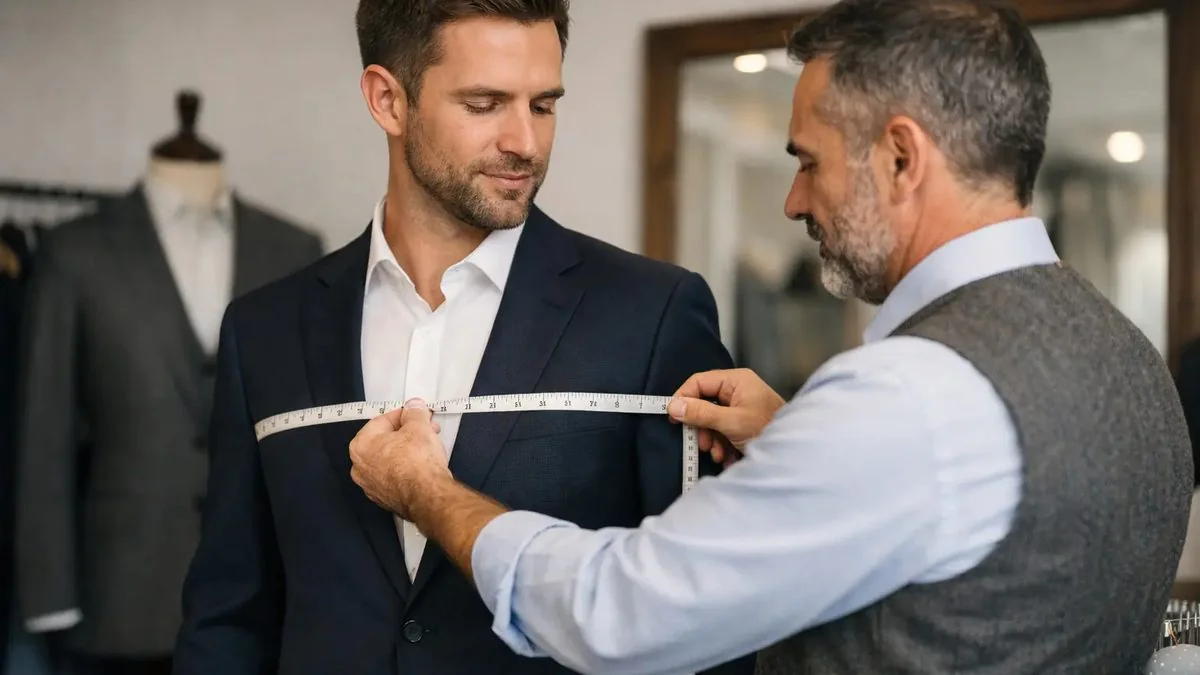
The Short Answer
Bespoke means a pattern drafted from scratch for one person, the suit built around it largely by hand over several fittings. Made-to-measure means an existing pattern a block, in the trade’s language adjusted to your measurements, the suit then made with a greater share of machine work and fewer fittings. The pattern is the dividing line; the hours, the fittings, the hand stitches, the wait and the price all follow from it.
That distinction matters because the word bespoke carries no legal protection in Britain: in 2008 the Advertising Standards Authority declined to restrict it, taking the view that most people understand it simply to mean made to order.
The tailors of Savile Row disagreed, and still do. So the word on a shop window tells you less than the process behind it ask instead whether a new pattern will be drafted for you, and how many fittings are planned.
Bespoke, Defined
Bespoke comes from bespeak, an old verb meaning to speak for something to order it. In tailoring it means a garment cut from a pattern made for one customer alone.
The cutter measures the client the Savile Row Bespoke Association’s standard speaks of around thirty measurements noting posture, the slope of a shoulder, the way one arm hangs differently. Those observations are drafted into an individual paper pattern, and the chosen cloth is cut from it.
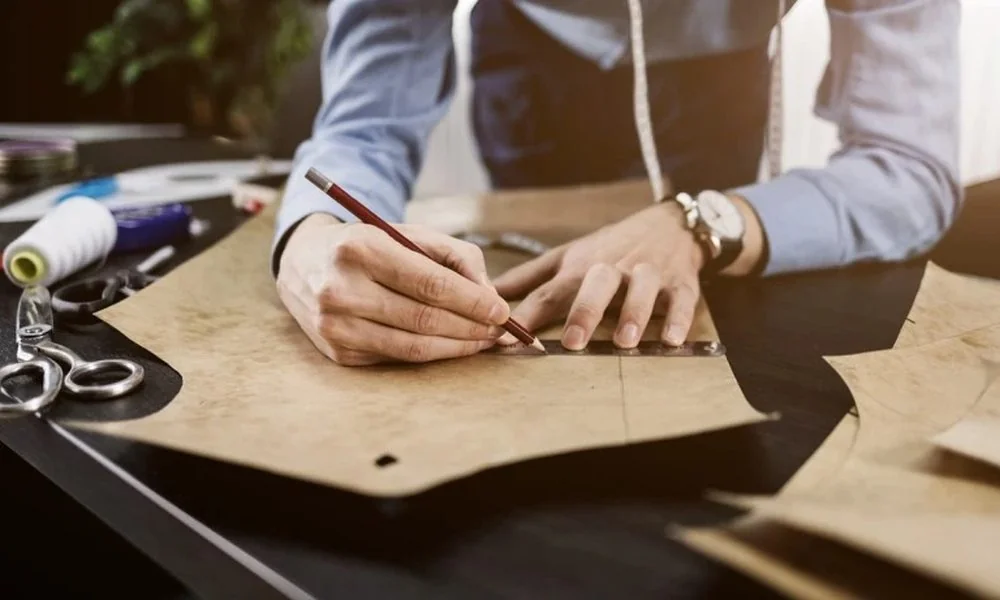
The pattern is kept, which is why a second bespoke suit is often smoother than the first: the tailor refines a shape that already belongs to you rather than starting over. It is also why bespoke can accommodate bodies that ready-to-wear and adjusted patterns struggle with a dropped shoulder, a prominent chest, a sway back. The pattern does not bend a standard shape toward you. It begins with you.
None of this is quick. The Savile Row Bespoke Association the trade body formed in 2004 by houses including Anderson & Sheppard, Dege & Skinner, Gieves & Hawkes, Huntsman and Henry Poole sets its standard at an average of around fifty hours of hand work, three intermediate fittings and about three months from commission to finished suit.
Other houses have their own traditions, but the shape of the process is the same everywhere: measure, draft, cut, fit, refine, finish.
How a Bespoke Suit Is Made
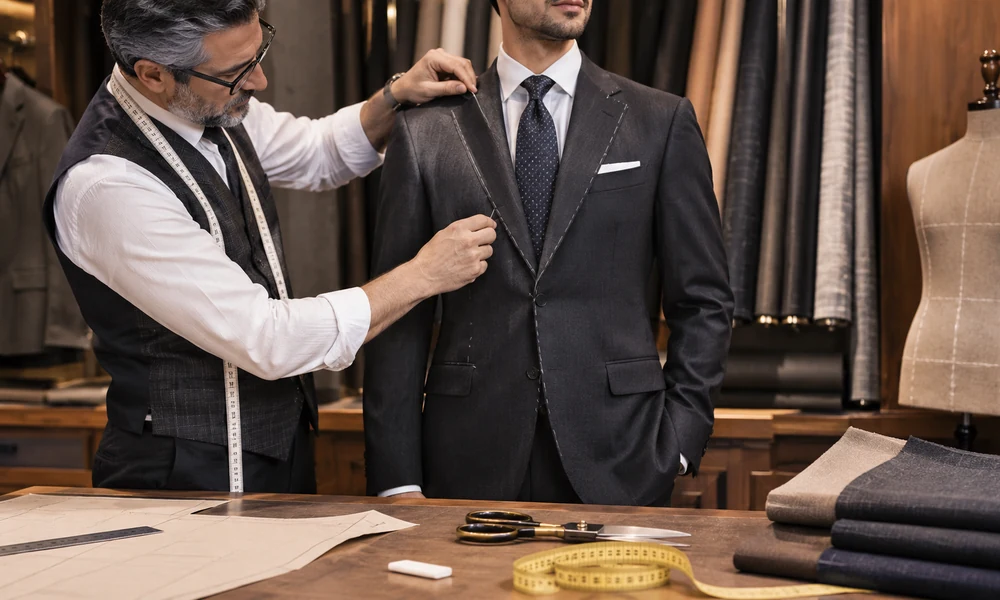
The first visit is a conversation as much as a measurement: you talk through what the suit is for, choose cloth from the books, and settle the details lapel width, button stance, pockets, lining. The cutter measures you, the pattern is drafted, and the cloth is chalked out and cut by hand with shears.
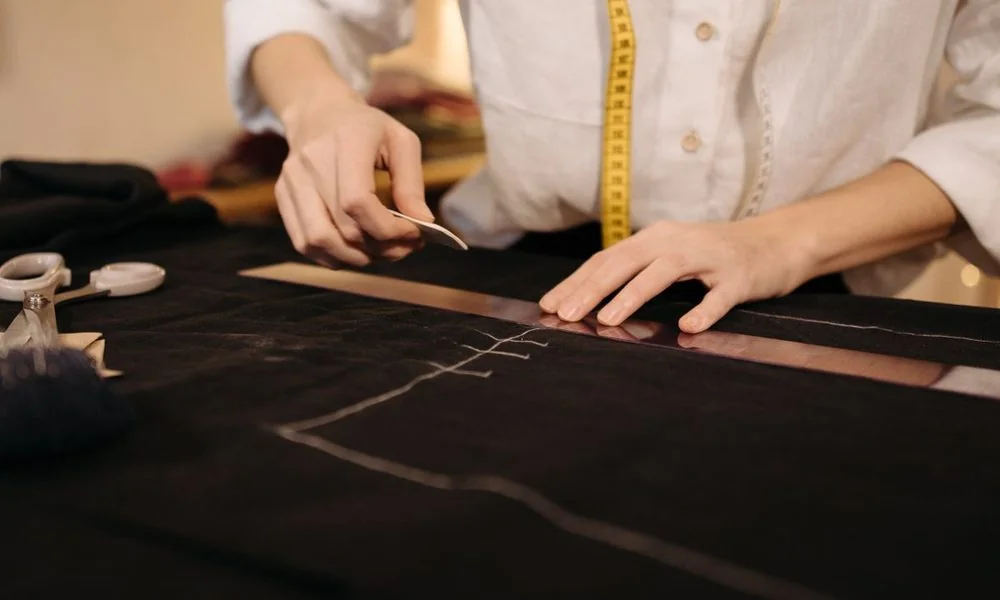
The first fitting is usually the baste: the suit loosely tacked together with white basting stitches, chalk marks often still visible, no finished edges. The cutter pins, marks and sometimes takes the garment apart to recut it. A forward fitting follows, the suit closer to finished sleeves set, pockets cut then a final fitting checks the finished garment before collection.
Between fittings the suit passes through several specialist hands cutter, coatmakers, trouser makers and finishers each building one part. Under the Savile Row standard the jacket fronts are fully hand canvassed, and buttonholes, sleeves and linings are sewn by hand.
Made-to-Measure, Defined
Made-to-measure starts somewhere else entirely: the house already has a pattern a block for each of its models, in a range of sizes. Your measurements are taken, the closest block is chosen, and it is adjusted the chest let out, the sleeve lengthened, the waist suppressed.
The garment is still cut for you, and it is not the same as altering a finished suit, which works on cloth already cut and sewn. But it begins life as a shape designed for many people, and is bent toward one.
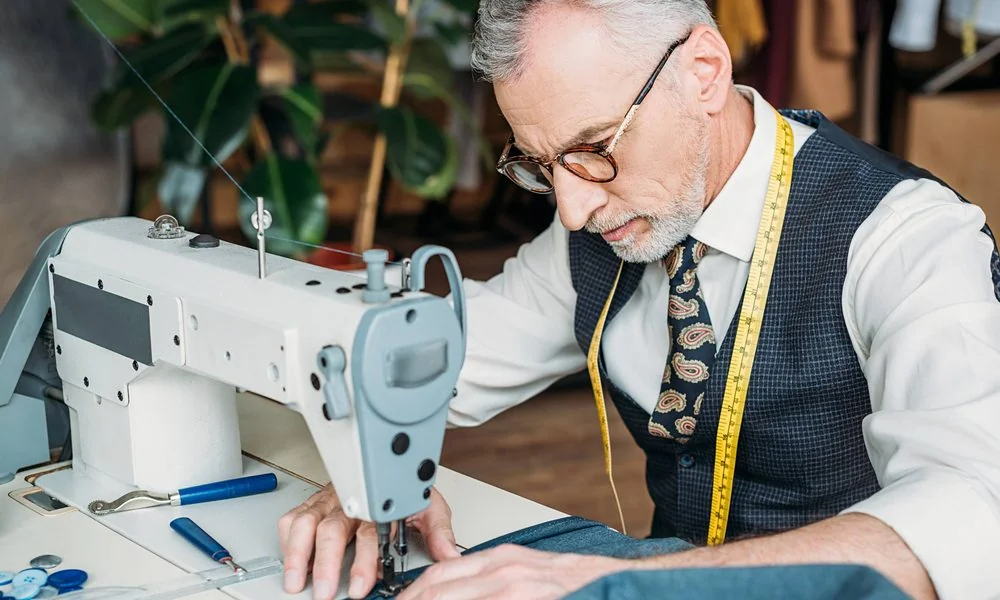
Because the pattern already exists, the process is shorter, needing fewer fittings often one or two, sometimes a single final check. Construction typically mixes machine and hand sewing, and the making is often done in a workshop or factory away from the shop where you were measured.
A good made-to-measure programme, fitted by someone who knows what they are looking at, can produce a suit that fits far better than anything off the rack. What it cannot do is fully re-shape the garment for an unusual posture or an asymmetrical frame: the block’s underlying geometry the balance of the jacket, the pitch of the sleeve, the shape of the shoulder remains the house’s, not yours. For most bodies, that is no hardship at all. For some, it is the whole question.
Choosing the Cloth
Both routes offer a choice of cloth, but the scale differs. A Savile Row house will typically offer a library of thousands the Association’s standard speaks of a choice of at least two thousand from the great English and Italian mills, in weights and weaves for every season and purpose. Made-to-measure programmes offer a smaller, curated selection, often a few hundred cloths.
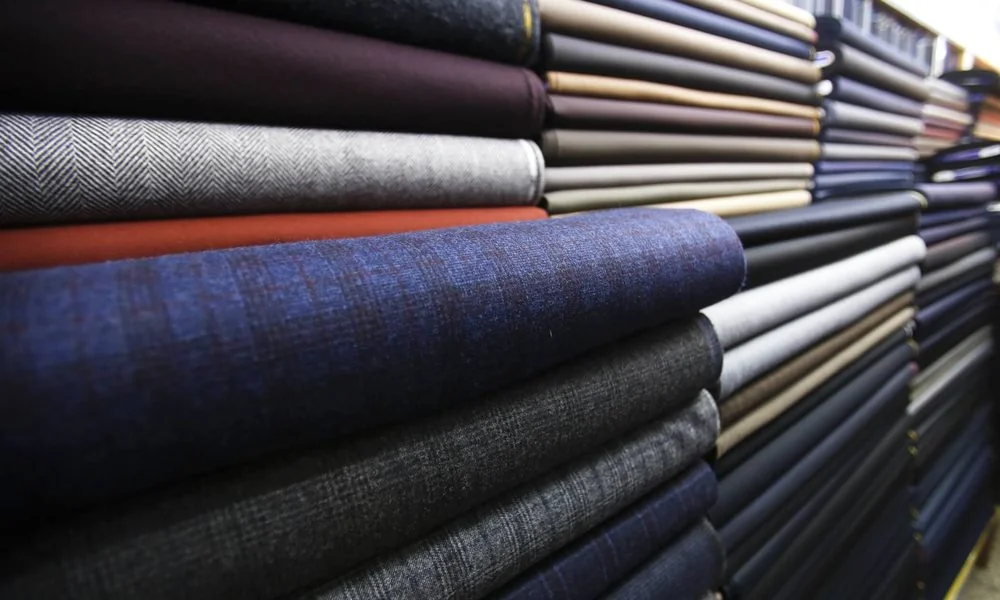
The choice matters more than it first appears: cloth determines how a suit drapes, wears, creases and lasts. A heavier cloth holds a sharper line; a lighter one breathes but wrinkles sooner. A good cutter or fitter will steer you toward what suits the garment’s purpose rather than what merely catches the eye in the book. For a first suit of either kind, a mid-weight navy or charcoal in a plain weave is the most forgiving place to start.
The Fittings
Fittings are where the two services most visibly part company. Bespoke, at its best, gives you three or more the baste, the forward fitting and the finish each a chance for the cutter to see the cloth on your body and change their mind. Made-to-measure usually gives you one or two, and the adjustments available are narrower, because the garment arrives closer to finished and there is less the fitter can unpick.
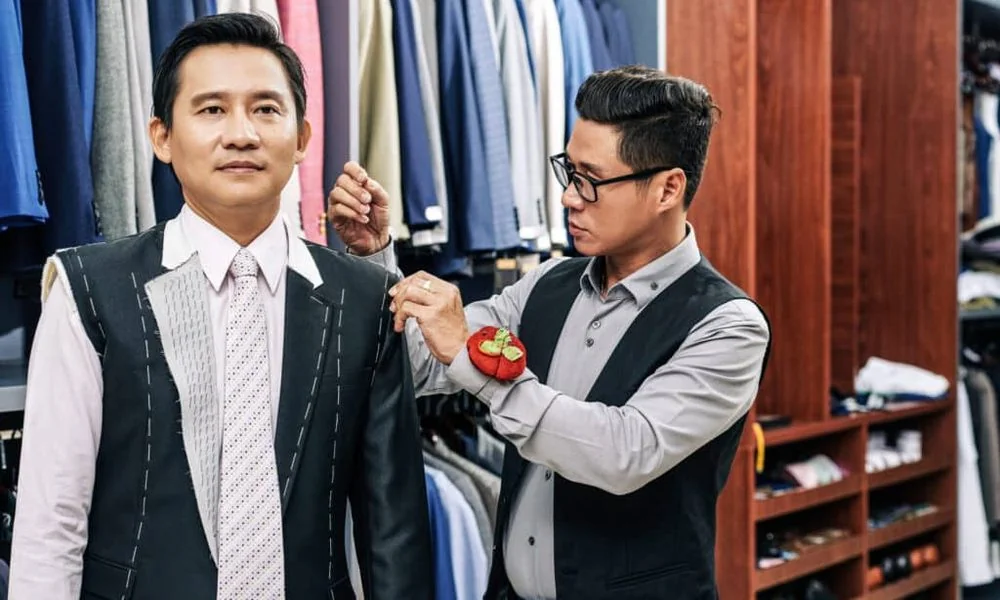
A fitting is not a formality. Wear the shoes and shirt you intend to wear with the suit, stand as you normally stand, and move sit down, raise your arms, walk across the room. A good fitter watches the back of the jacket as much as the front, and checks the collar sits cleanly against the neck.
It is also worth knowing who is fitting you: in a bespoke house it is usually the cutter who drafted your pattern, while in a made-to-measure service it may be a trained fitter or a salesperson, and the result depends a great deal on their eye.
The Handwork
Handwork is the part of the story most often romanticised, and the part that most needs plain language. In a bespoke suit, a great deal is sewn by hand: the canvas inside the jacket chest, which gives the lapel its roll and the chest its shape; the buttonholes; the sleeves; the lining.
Hand sewing is not automatically better than machine sewing a machine makes a stronger, more even seam but in certain places the hand gives the tailor control a machine cannot, such as the fullness eased into a sleeve head or the soft roll of a lapel.
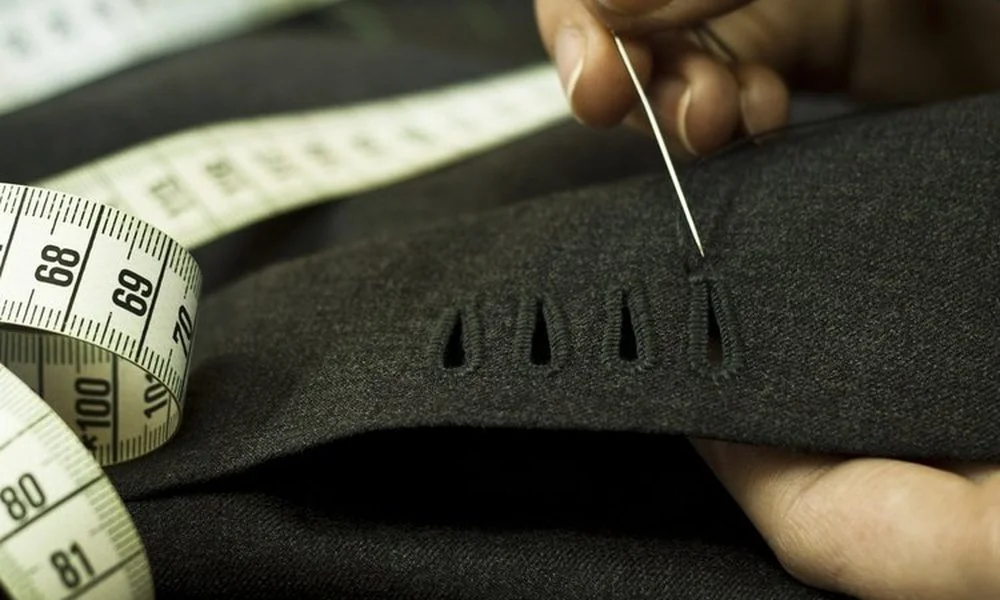
Made-to-measure suits use handwork more sparingly, typically where it shows or affects the drape the lapel, often, and sometimes the buttonholes with structural work done by machine.
The result can be a clean, well-finished garment, but it will not have the slow accumulation of handwork that makes a bespoke coat feel, over time, as though it were shaped by wear rather than simply worn. Whether that difference is worth the price is a personal judgement, not a technical one.
The Fit, and How to Judge It
On the body, the difference is usually one of degree rather than drama. A well-fitted made-to-measure suit looks excellent clean through the chest, a collar that sits, trousers that hang straight.
A bespoke suit, at its best, adds something harder to name: the jacket follows the body without pulling anywhere, the shoulder line looks like your own, and the whole thing moves as you move.
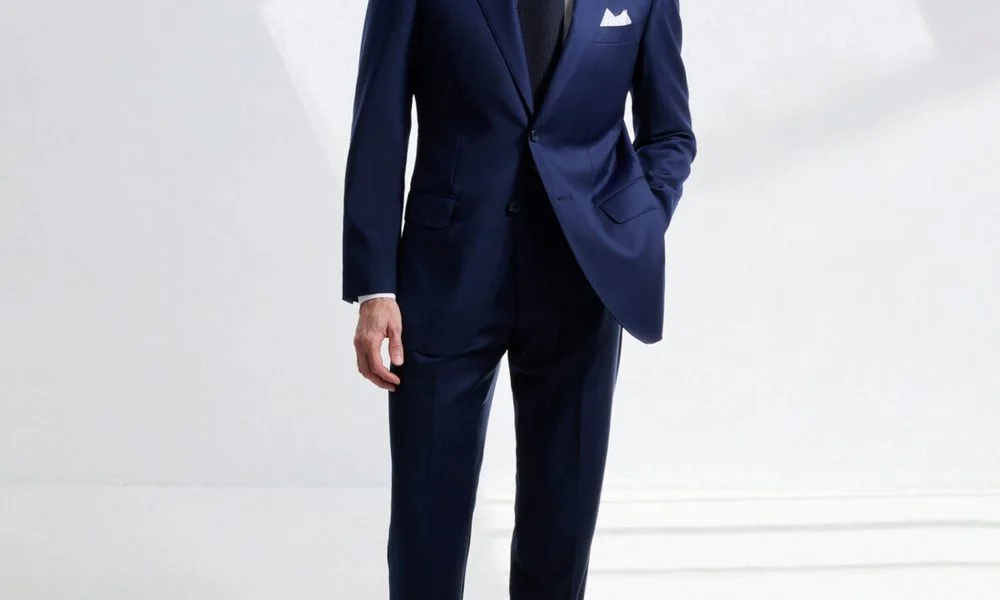
Judge either suit the same way: the collar should meet the shirt collar all the way round, with no gap at the back of the neck; the shoulder seam should end at your shoulder, not beyond it; the jacket should close without strain or billowing; the sleeve should show a small amount of shirt cuff; and the trouser should break gently over the shoe, not pool around it.
If you are unsure, ask the fitter to explain what you are seeing a good one will be glad to. Learning how to identify quality in luxury clothing before you buy will sharpen your eye for the details that separate a good suit from a merely expensive one.
Savile Row and the Word Itself
The word bespoke belongs, in the popular imagination, to one short street in Mayfair. Savile Row was laid out in the 1730s and settled by tailors from the early nineteenth century onwards.
The street’s tailors formed the Savile Row Bespoke Association in 2004 to protect how the work is done, and its standard individual pattern, fifty hours, three fittings, handwork, making close to the Row remains the strictest definition in the trade.
Elsewhere the word is used far more loosely, and not always dishonestly bespoke has come to mean, in everyday use, anything made to order, and the 2008 ruling accepted that.
The honest question is not whether a shop is entitled to the word, but whether the process matches the price. If a “bespoke” suit is measured once, made by machine in a distant factory and delivered in a fortnight with a single fitting, it may be a perfectly good suit but it is, by the Row’s definition, made-to-measure, whatever the label says.
Our guide to the bespoke tailoring houses every man should know shows what the traditional houses offer. The same looseness applies to neighbouring terms: made-to-order usually means a standard garment made up in your size and chosen cloth, without pattern adjustments at all a step below made-to-measure, not a synonym and the made-to-order luxury fashion brands worth knowing show how wide that world has become.
What You Are Actually Paying For
Put plainly, a bespoke suit costs substantially more than a made-to-measure one, often several times as much and the gap is not a markup on the same thing. You are paying for the cutter’s time in drafting a pattern that exists for you alone; for the hours of handwork; for three or more fittings with the person who cut the cloth; and for the keeping of your pattern, so the same shape can be remade years later.
Made-to-measure charges for a shorter, more industrial process: an adjusted pattern, fewer fittings, more machine work, and a garment made in a workshop rather than an atelier.
Time is part of the price, too: bespoke takes months around three, on the Savile Row standard while made-to-measure is typically ready in weeks. If you need a suit for an event next month, that alone may settle the question. Neither service is a bargain and neither is a swindle; they are different amounts of skilled labour at different prices, and the value depends on how much of that labour your body and your life actually need.
Which One Should You Choose?
Choose bespoke if your body is hard to fit, if you want a particular house’s cut and are prepared to wait for it, if you are building a wardrobe to last decades, or if the process itself — fittings, a relationship with a cutter, the slow making is part of the pleasure.
It is the right choice for a wedding suit you intend to keep, for a first suit of real consequence, or for anyone whose shoulders, posture or proportions have defeated every rack and every adjusted pattern so far.
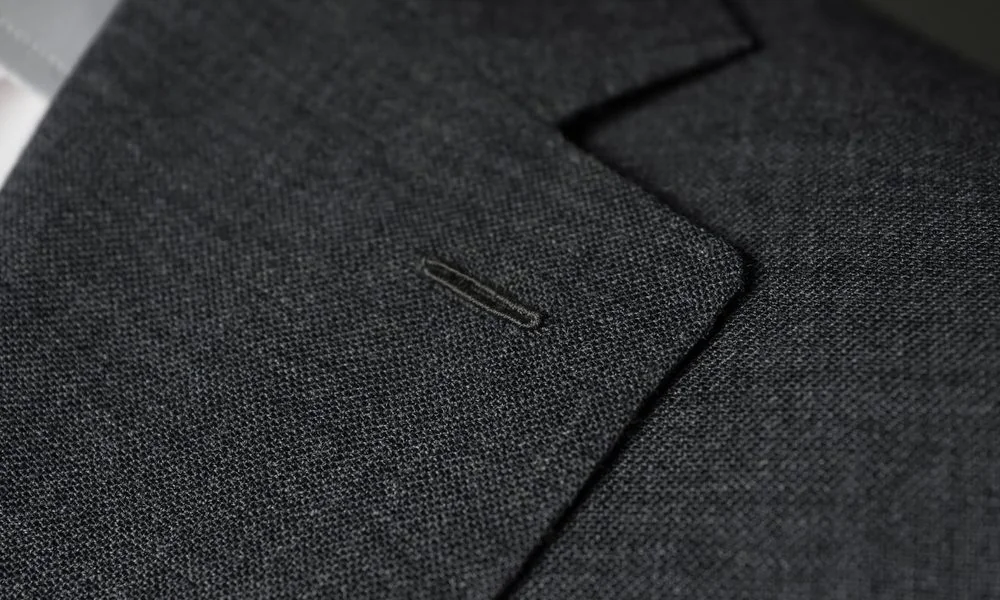
Choose made-to-measure if your frame is fairly standard, if you want a better fit than the rack offers without the bespoke wait or price, if you need several suits for work, or if you are still finding your style. It is also the sensible first step into made-for-you clothing: a good made-to-measure suit teaches you what a proper fit feels like, and what to ask for next time.
And if you are still unsure, buy the best ready-to-wear suit you can find from a house whose cut already suits you, and spend the difference on alterations by a good tailor for many men, that is the best value in tailoring.
A suit made well, by either route, has a quiet way of settling into your life it becomes the one you reach for without thinking, the one that fits the day as well as it fits you. Take your time with the choosing, enjoy the small ceremonies of cloth books and fittings, and wear whatever you commission in good health, for many years to come.