Sneakers completed the journey from the gym to the auction house in under forty years. What began as performance equipment became, through the sneaker culture of the 1980s and the resale platforms of the 2010s, a collecting category with its own grading services, its own auction records, and its own logic of scarcity that prices certain pairs above the watches on the same wrist. Here are the eight sales that defined the ceiling.
1. The Michael Jordan Finals Worn Air Jordan 13s: $2.2 Million
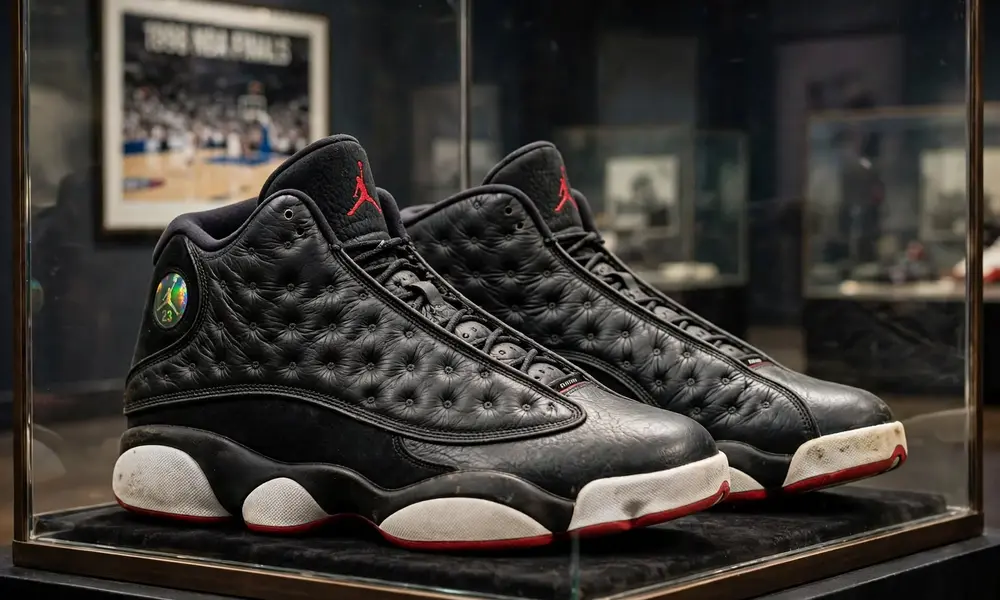
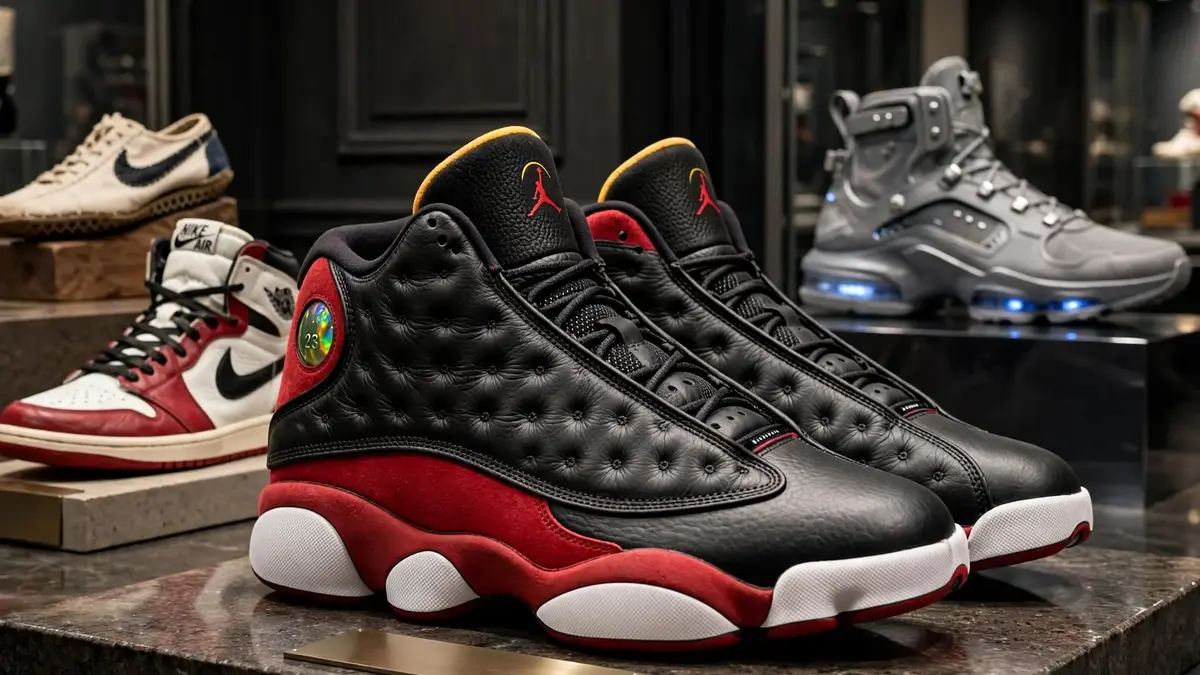
The most expensive sneakers ever sold: the pair Michael Jordan wore during the 1998 NBA Finals, the Last Dance season’s closing games, photo matched and signed, auctioned by Sotheby’s in 2023 for $2.2 million.
The price certified what the memorabilia markets had long understood, that game worn objects of the greatest careers trade on the moment’s weight, and it placed sneakers formally beside the jerseys and the cards in the collectibles hierarchy.
2. The Kanye West Grammy Worn Nike Air Yeezy 1 Prototypes: $1.8 Million
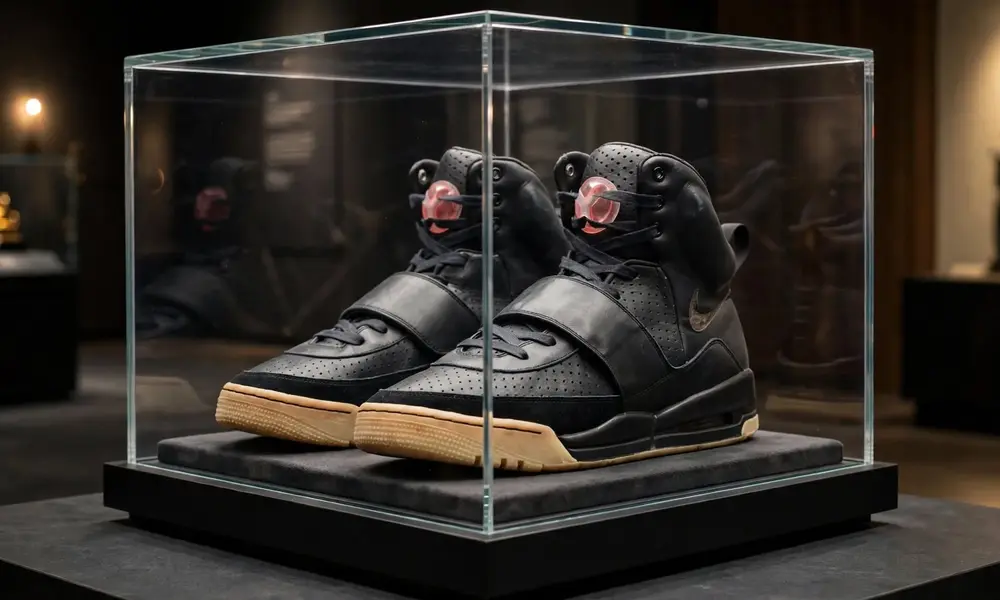
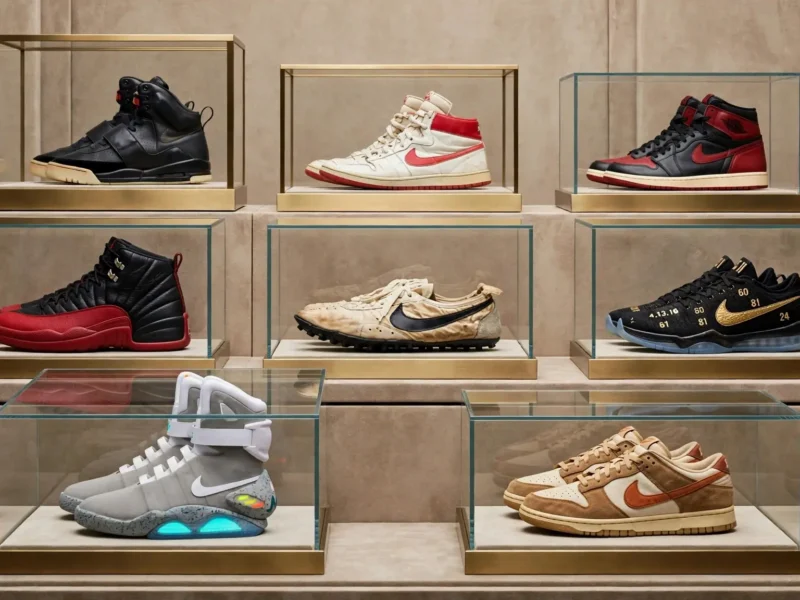
The prototypes Kanye West wore to the 2008 Grammy Awards, sold by Sotheby’s in 2021 for $1.8 million, the most ever paid for sneakers at that time and the record that announced the category’s arrival at the summit.
The price mixed the object’s scarcity, prototypes never released, with the cultural weight of the moment that launched West’s design career and, with it, the modern sneaker as fashion object.
3. The Solid Gold OVO x Air Jordans: $2 Million (Reported)
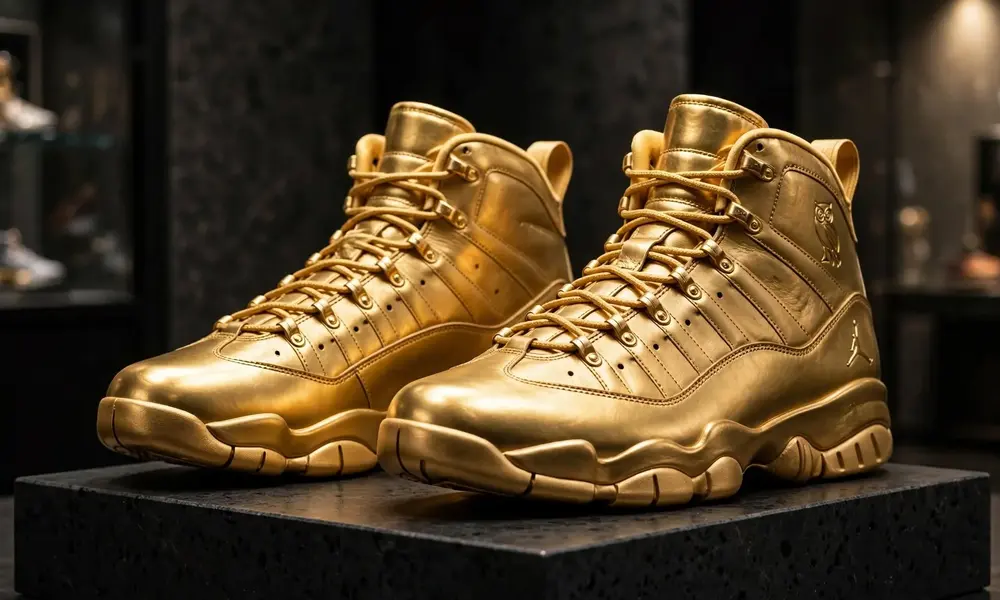
The 24 karat gold custom Air Jordan 10s commissioned by Drake’s OVO label, their reported $2 million valuation resting on their bullion content and their celebrity provenance rather than any auction.
The entry belongs to the category’s bespoke tier, objects made to be priceless rather than sold, and it demonstrates that the sneaker market’s ceiling, like the art market’s, includes commissions that exist precisely to exceed the records of things sold.
4. The 1985 Air Jordan 1 Chicago, Game Worn and Signed: $560,000

The original Air Jordan 1, the shoe that started the culture, in the Chicago colorway, game worn and signed, has traded at auction around the half million mark across several record setting sales. The 1985 Chicago is the category’s Mona Lisa: the object that converted a basketball endorsement into a design legend, and the pair against which every other sneaker’s significance is measured.
5. The Nike MAG Back to the Future (2011 and 2016): $200,000 and Above
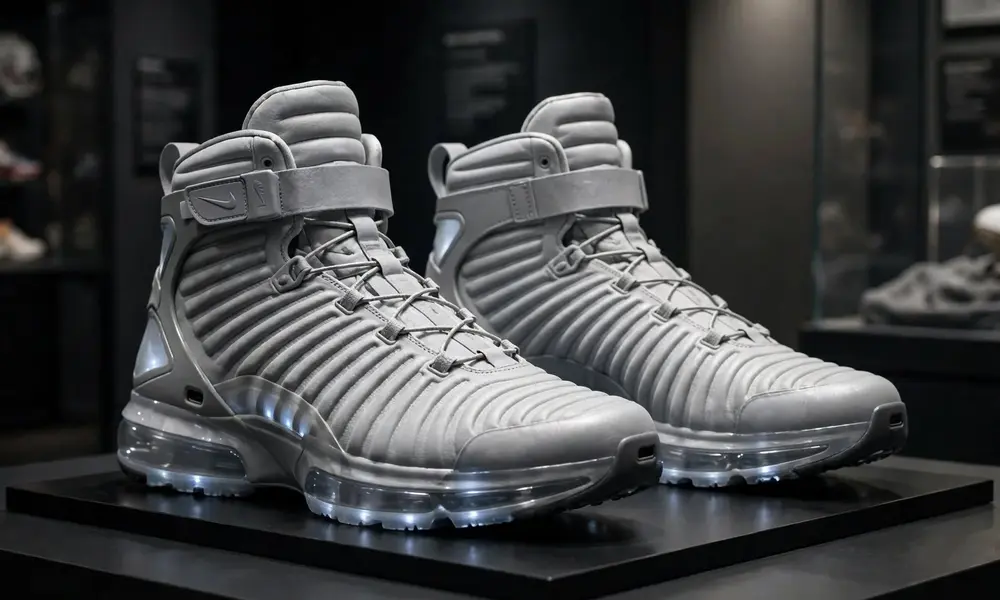
The self lacing prop come true, released in charity auction editions of 1,500 in 2011 and 89 in 2016, with individual pairs trading at $200,000 and beyond. The MAG’s prices rest on Hollywood provenance and the technology’s promise, and its charity provenance, the Michael J. Fox Foundation’s Parkinson’s research, gives the category its most philanthropic object.
6. The Nike Moon Shoe: $437,500
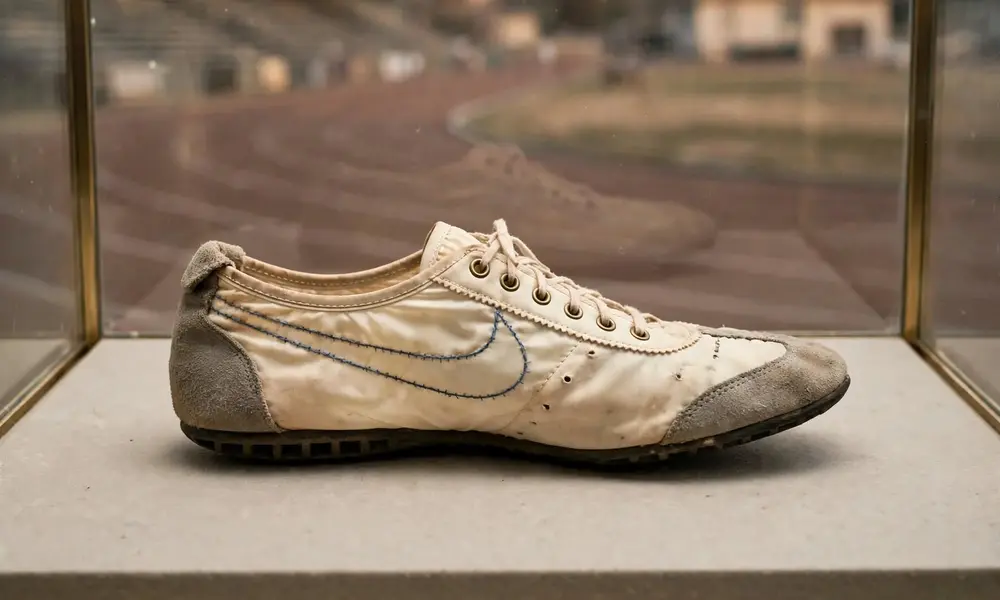
The handmade waffle sole prototype of 1972, one of perhaps a dozen made for the Olympic trials, sold by Sotheby’s in 2019 for $437,500, then a record. The Moon Shoe, named for the sole’s resemblance to the Apollo footprint, represents the sneaker’s prehistory, the moment running became an industry, and its price certified that the category’s oldest artifacts command the market’s deepest respect.
7. The Air Jordan 1s of the 1985 Banned Narrative: $615,000
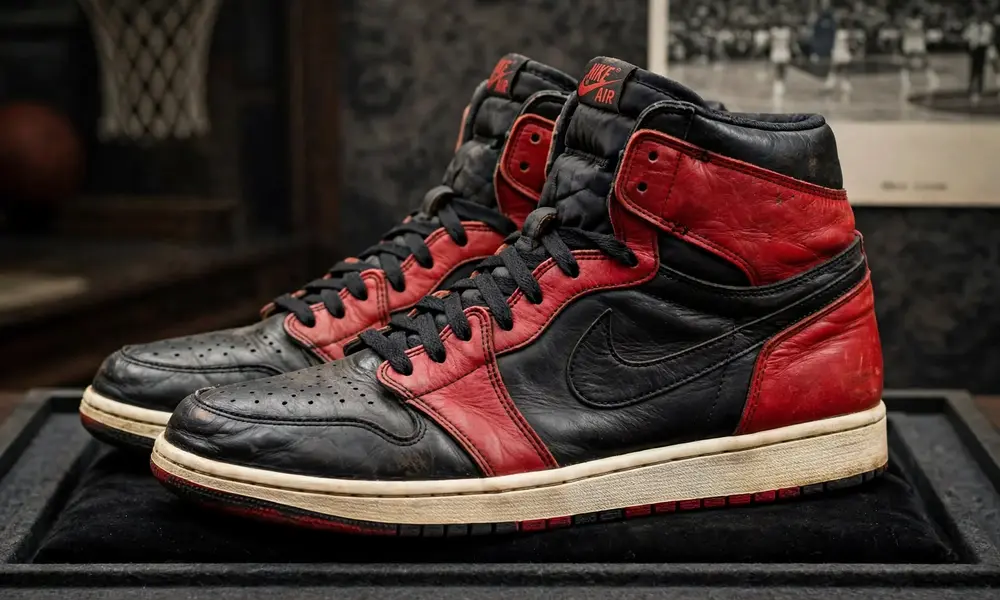
The black and red pairs associated with the NBA’s famous fine, Nike’s marketing turned the league’s objection into the culture’s founding myth, have traded in the several hundred thousand range, with the autographed and player connected examples setting the band’s upper records. The Banned narrative is the category’s most instructive lesson in provenance: the story, once attached to the object, appreciates faster than the object alone.
8. The MSCHF x Lil Nas X Satan Shoes: $101,000 (Reported)
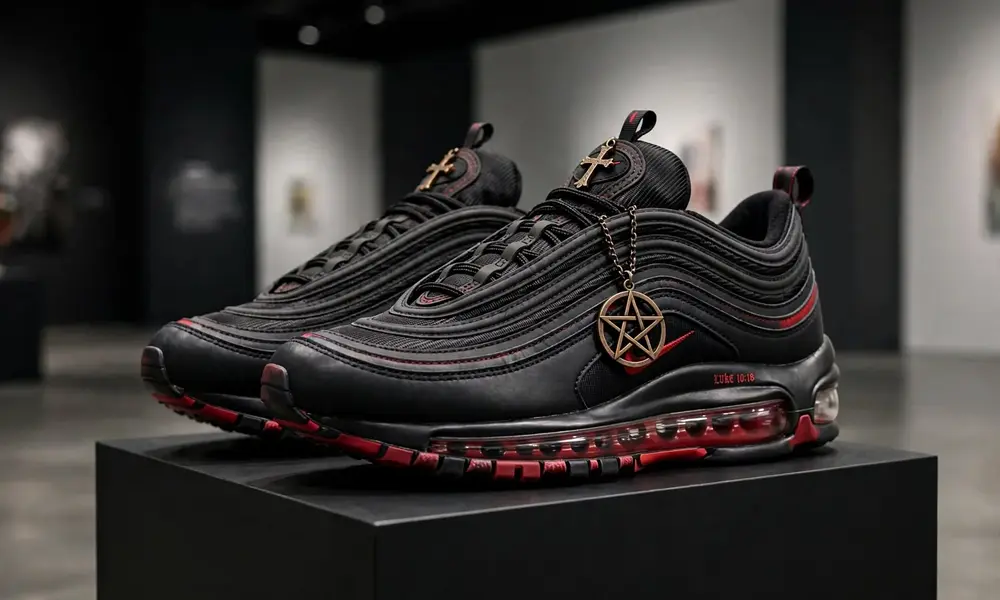
The modified Nike Air Max 97s containing a drop of human blood in the sole, released in a run of 666 in 2021, with individual pairs reported at auction around $101,000 before the Nike lawsuit intervened.
The entry belongs to the category’s conceptual wing, art object and provocation at once, and its price, set in a market moment of maximum attention, demonstrated that the sneaker ceiling responds to culture’s temperature as readily as to scarcity.
What the Market Teaches
The eight sales compress into the category’s own arithmetic. Provenance dominates: game worn, celebrity worn, and prop connected pairs set every record, as in every collecting category, though the sneaker market reached the lesson in a single generation.
Condition is graded with numismatic discipline, and the grading services’ authority now prices the market’s middle tiers. Scarcity takes unusual forms: prototypes, charity editions, and lawsuits rather than vintages.
And the culture’s velocity is the category’s risk: sneakers appreciate on attention, and attention is the most volatile asset in the collecting world, the caution every buyer of the modern records should hold beside the excitement.
FAQs
1. What is the most expensive sneaker ever sold?
The 1998 Finals worn Air Jordan 13s, photo matched and signed, sold by Sotheby’s in 2023 for $2.2 million, followed by the Kanye West Grammy worn Yeezy prototypes at $1.8 million.
2. Are sneakers a good investment?
The top tier has appreciated strongly, but the market is young and attention driven, with mid tier pairs subject to fashion’s cycles. The discipline of the established collecting categories, buy provenance and rarity, apply with sharper risk.
3. What is the Nike Moon Shoe?
The handmade 1972 waffle sole prototype, one of roughly a dozen made for the Olympic trials, sold in 2019 for $437,500, representing the sneaker industry’s prehistory and its oldest artifacts’ market respect.
4. Why are game worn sneakers so expensive?
The same provenance arithmetic as every memorabilia category: the object’s connection to the career’s defining moments, photo matched and documented, prices the moment’s weight, as our memorabilia coverage details across the collecting world.
5. What are the most valuable sneakers to collect?
The 1985 Air Jordan 1 in the Chicago and black red colorways, the early game worn and player connected pairs, and the documented prototype tiers, with condition graded and provenance papered as in any established collecting category.
6. Do sneakers lose value if worn?
In the collecting tiers, yes, materially, and the grading services’ standards apply. The culture’s distinction between deadstock collectors and wearers is the market’s founding social divide, and the prices belong to the unworn.
7. Where are expensive sneakers sold?
Sotheby’s and the specialist houses conduct the record auctions, the resale platforms trade the mid tiers, and the private placements the summit: the infrastructure of every collecting category, built in a single generation.
8. What should a first collector buy?
The object the collector loves at a price that survives fashion’s forgetfulness: in a market that runs on attention, the only holding strategy that cannot be embarrassed is affection.