Blog SummaryThe best bespoke tailors work across London, Naples, Paris, Rome, Milan, and Chicago. Each house cuts by hand, takes your exact measurements, and builds garments built to last decades. London’s Savile Row names – Henry Poole, Huntsman, and Anderson & Sheppard – define the English tradition. Italian houses Kiton, Brioni, and A. Caraceni build softer, more relaxed garments. Cifonelli in Paris blends French elegance with Roman craftsmanship. Oxxford Clothes in Chicago leads American bespoke. Prices start around $4,000 and can pass $10,000 with premium fabrics. |
Spend enough time around well-dressed men and you start to notice something. The ones who look genuinely good, not just expensive, are wearing clothes that seem to belong to them in a way you cannot quite explain. The jacket does not bunch when they move.
The collar lies flat without being tugged down. Nothing shifts. That is almost always bespoke, and the best bespoke tailors in the world have spent generations figuring out how to produce that effect.
Made-to-measure, despite what most marketing will tell you, is not the same thing. Adjusted off a stock block, fitted once, maybe twice. The result can be very good. But it is a workaround, not the real thing.
Real bespoke means your cutter draws your pattern from scratch. Nobody else’s shoulder width goes into it. You try a rough shell of the garment before anything permanent happens, you come back when corrections have been made, and you keep going until the thing fits the way it should. That process takes months. You cannot shortcut it and get the same result.
Eight houses below have spent their existence doing exactly that. A few are famous. Some are not, and those are often where the most interesting work is happening.
1. Henry Poole & Co., London (Est. 1806)
Before Savile Row was Savile Row in the way we understand it now, Henry Poole moved his business there. That was 1846. The street was respectable enough at the time, but Poole’s connections to European courts, Napoleon III was a client, Emperor Hirohito was a client, multiple British monarchs, turned it into something beyond respectable.
The firm holds more Royal Warrants than any other tailor in the world, and they have held that record for a while.
The Cut
There is nothing showy about a Poole suit. The shoulder sits naturally, not roped out or padded up. The waist has a proper shape but you are not aware of it when you are wearing the jacket. The chest is smooth. The whole thing is designed to make you look very well turned out without anyone being able to point at a specific thing that makes it so. That is harder to achieve than it sounds.
The workshop upstairs still runs on the old model. Journeyman cutters who trained there, who have spent years learning the house’s way of reading a body before they take on their own clients. That continuity is not just tradition for its own sake. It shows in how a collar lies, in how a sleeve behaves through a long day.
What to Know Before You Go
First commission means a full consultation, a measurement session, and then a baste fitting. The baste is the moment you stand in an unlined canvas shell and the cutter reads what the cloth is doing across your frame. Two more fittings follow before the finished suit is yours. Lead times are usually twelve to sixteen weeks. Starting price is around £5,500.
2. Huntsman, London (Est. 1849)
Huntsman is the one house on this list that you cannot accuse of understatement. The silhouette is strong: wide, structured shoulder, high armhole, a waist suppression that produces one of the most recognisable jacket shapes in English tailoring. You can spot a Huntsman suit from across a room, which is exactly what some clients want and exactly what others would find exhausting.
One Button, Long Roll
The house made its name in part on the single-button jacket. One button sitting low, with the lapel rolling down to it in a long, generous sweep. It gives the front of the jacket a drama that most English tailoring deliberately avoids. Rex Harrison wore it. Gregory Peck. Roger Waters. There is a particular type of person who is drawn to this house, and the cut is very good at sorting for them.
Kyle Arditti now runs the cutting room and has maintained the standard through what were sometimes turbulent years of ownership changes. The workroom sits above the fitting rooms and is visible to clients, which either feels reassuring or a bit distracting depending on your personality. Either way, the coats being built up there are the product of days of handwork on a single chest.
Timeline and Cost
Starting price around £6,500. First-time clients should plan for at least four months from first appointment to a finished suit. The house does not do rush jobs, and that is not a flex, it is just the reality of how long the process takes when it is done properly.
3. Anderson & Sheppard, London (Est. 1906)
Fred Astaire was a client. Marlene Dietrich too. Neither fact appeared in any A&S advertisement for decades. The house has never been particularly interested in that kind of publicity, which might be one reason it has lasted this long.
The cut is soft and draped in a way that reads almost Italian from a distance, though it is entirely English in its cloth and character. Minimal shoulder padding. The chest opens up with real room in it. The waist is shaped, not pinched.
Moving in one of these jackets, you feel nothing except that the suit is on you, which sounds like it should be easy and is in fact quite difficult to pull off without the jacket losing its shape entirely.
The Haberdashery on Clifford Street
A&S runs a separate retail space a short walk from the main house, stocking their own accessories and a small selection from other makers. Worth visiting even if you are nowhere near ready for a commission. The shop has a feel to it that tells you more about the aesthetic of the house than most press coverage ever has.
How to Start
Full bespoke from around £5,200. The house also runs an Anthology programme that uses the existing Savile Row block library as a starting point, at a more accessible price, which is a useful way to build a relationship with them before committing to the full bespoke process.
4. Brioni, Rome (Est. 1945)
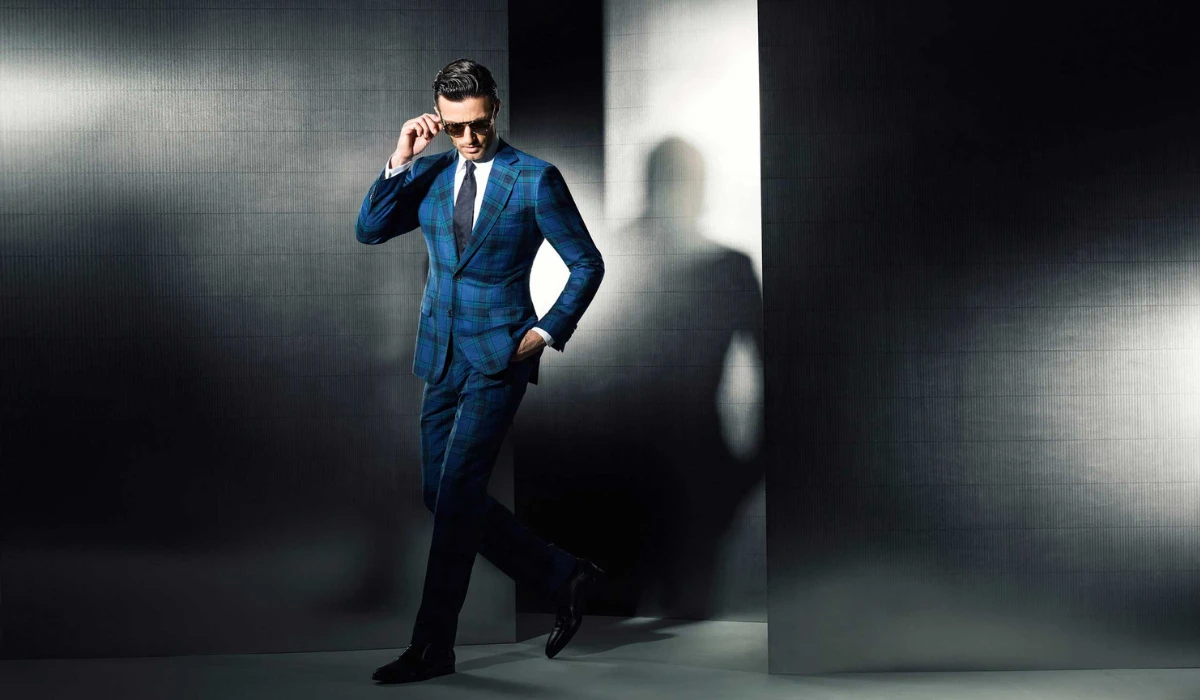
Two men founded Brioni in the Via Barberini in 1945: a tailor named Nazareno Fonticoli and a businessman named Gaetano Savini. From the first year, the goal was to challenge English tailoring at the top of the market. In 1952 they pulled off the first-ever men’s fashion show.
That kind of confidence, the willingness to say Italian tailoring is not a lesser version of something else, has been part of the brand’s character ever since.
How the Suits Are Built
Brioni’s construction is soft in a specific, intentional way. Very little internal canvas. Minimal padding. The jacket does not hold a shape on its own. What it does is drape across your body and take the shape of the person underneath it. The movement is different from anything with more structure. You do not feel the jacket working to maintain its silhouette, because it is not. Your body is doing that.
Pierce Brosnan wore Brioni for four Bond films. Which tells you something accurate about the brand. It photographs well because it sits well, and it sits well because the construction is confident enough not to need a lot of reinforcement.
Commissioning
Bespoke runs from Rome and through trunk shows in major cities internationally. Measurement session, then a toile fitting, then at least one more before you take delivery. Lead times of sixteen to twenty weeks are typical. Prices start around $7,500 and move up from there with cloth selection.
5. Cifonelli, Paris (Est. 1936)
Ask anyone who follows bespoke tailoring seriously about Cifonelli and they will mention the shoulder within about thirty seconds. They cannot help it. The house’s signature construction creates a horseshoe-shaped crest at the top of the sleeve that frames the shoulder blade in a way that looks almost architecturally considered.
Seen on the right body it is genuinely striking. There is nothing else in tailoring quite like it.
Fourth Generation
Lorenzo and Massimo Cifonelli, brothers, run the atelier now on the Rue Marbeuf. Fourth generation of the same family. The house is selective about how many clients it takes on at any one time, which is either a quality control decision or a business strategy, probably both. Trunk shows happen in New York, London, and Tokyo. But the fitting experience you want is the one in Paris.
What Cifonelli produces sits between English structure and Italian softness in a space that is distinctly French. The chest has presence. The lapel has a long, confident roll to it. Nothing feels borrowed or referential. It is its own thing, which after four generations it should be.
Practicalities
Starting from around 6,000 euros. You will probably need two visits to Paris over the course of the commission, though trunk show appointments can handle early stages. Lead times of four to six months are normal. If you manage to secure an appointment, bring your ideas but be prepared to listen.
6. Kiton, Naples (Est. 1956)
Ciro Paone founded Kiton in 1956 with a philosophy simple enough to state once and complicated enough to spend a lifetime executing: find the best fabric, hire the best people, never rush the work. The house employs around 350 artisans at a facility in Arzano, outside Naples. The garments still take the same amount of hands-on time they always have.
What the Neapolitan Tradition Actually Does
Neapolitan tailoring treats the shoulder differently from almost any other tradition. The technique is called spalla camicia, which translates roughly as shirt shoulder. The sleeve head is gathered very slightly as it is set, creating a soft roll at the top of the arm rather than a flat edge or a roped line. It is subtle to look at and immediately noticeable to wear.
The jacket settles onto your body the way a shirt does. No pulling, no tension in the shoulder when you lift your arm, no feeling that the jacket is working against your movement. Once you have worn a jacket built this way it is very hard to be satisfied with anything built the conventional English way.
Kiton’s ready-to-wear already attracts serious attention and serious prices. Their bespoke programme, the Yellow Label, takes the same construction and applies it to a garment that begins and ends with one specific person.
The Bespoke Process
You work with a master tailor throughout. Full measurement session, at least two fittings, detailed conversation about fabric weight and construction preferences. The house sources cloth from their own Ciro Paone mill, including some cashmere and fine wool blends that are not available through normal trade channels. Starting price is around $8,000.
7. Oxxford Clothes, Chicago (Est. 1916)
American bespoke does not have a home the way London and Naples do. No single address, no concentrated culture, no street that attracts cutters the way Savile Row does. What it has, since 1916, is Oxxford in Chicago. And the quality is not a conversation below the European houses.
The Labour
More than 40 hand operations go into each suit. Hand-padded lapels. Hand-set collar. Hand-felled sleeve lining. Total labour from cut cloth to finished garment: around 55 hours. That number is worth spending a moment with, because most men buying suits in this price range have never worn anything that took 55 hours to make.
US presidents have worn Oxxford. Federal judges, attorneys in cities where the suit still matters professionally, businessmen who wear them five or six days a week for years and come back because the thing held together. That is a meaningful endorsement.
Access
Oxxford works through authorised retailers rather than a single flagship, which means you can often begin a commission without travelling to Chicago. Starting price around $4,000, which makes this the most accessible house on this list. Not the cheapest, but the most accessible given the quality level. The construction does not take shortcuts to get there.
8. A. Caraceni, Milan (Est. 1913)
Augusto Caraceni opened in Rome in 1913. The family’s tradition eventually spread into several related houses. A. Caraceni in Milan is the branch that people in the industry tend to talk about with particular respect, operated quietly, no obvious signage from the street, no heavy advertising, selective with new clients. The suits coming out of that atelier are exceptional.
What Milan Does Differently
Milanese tailoring has a clarity to it that Neapolitan work does not always aim for. The collar fits tight and stays there. The lapel lies flat and has a precise shape. The chest carries structure without becoming stiff. A Caraceni suit reads as sharp without any severity to it, and getting that balance right, clean without being cold, takes real mastery of the construction.
Gianni Agnelli was a client. Worth mentioning not as a celebrity reference but because Agnelli thought carefully about how clothes fit and move on a body, more carefully than most. He was not a passive client. What he was getting from Caraceni satisfied a very high standard of scrutiny.
How to Commission
Address in central Milan, discreet, no sign at eye level. Starting from approximately 4,500 euros. At least two visits to Milan for the fitting process in most cases, though the house can work around a travel schedule if you explain your situation. Lead times of three to five months are standard.
The 8 Houses: Quick Reference
| House | City | Style | From | Lead Time |
|---|---|---|---|---|
| Henry Poole | London | Classic English | £5,500 | 12-16 wks |
| Huntsman | London | Strong / Dramatic | £6,500 | 16+ wks |
| Anderson & Sheppard | London | Draped / Soft | £5,200 | 14-16 wks |
| Brioni | Rome | Soft Roman | $7,500 | 16-20 wks |
| Cifonelli | Paris | Sculpted French-Italian | €6,000 | 18-24 wks |
| Kiton | Naples | Neapolitan Soft | $8,000 | 16-20 wks |
| Oxxford | Chicago | American Bench-made | $4,000 | 12-16 wks |
| A. Caraceni | Milan | Milanese Precise | €4,500 | 14-20 wks |
Choosing the Right House
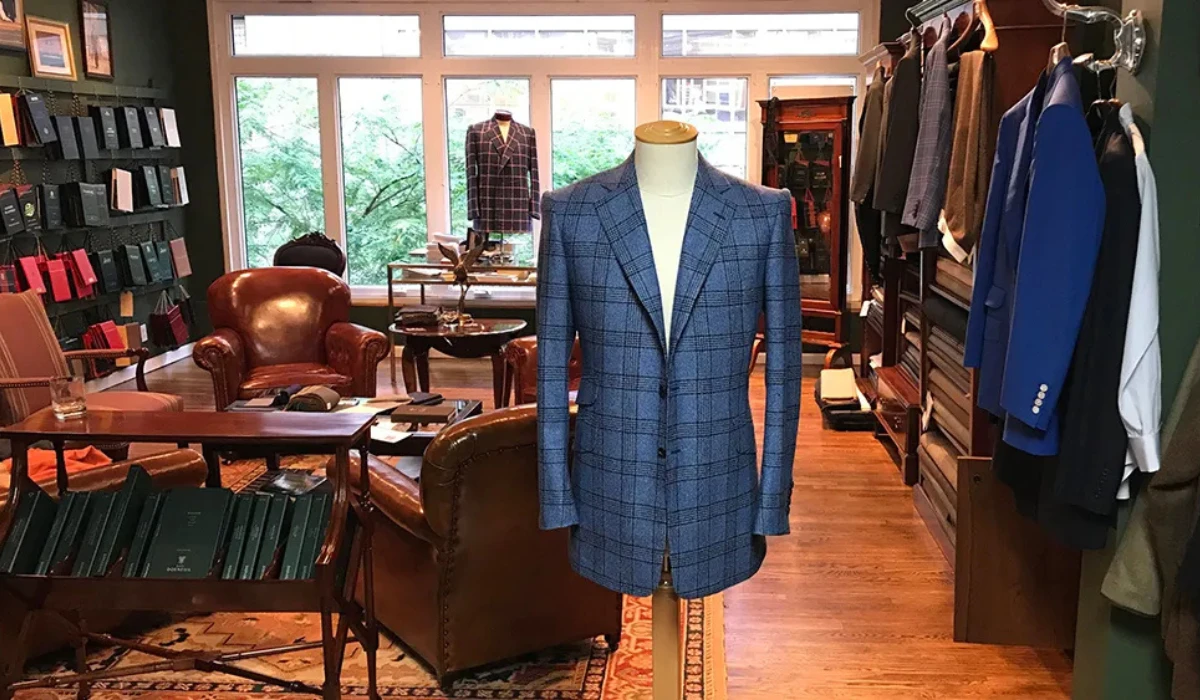
The ranking does not matter as much as the aesthetic match. All eight houses produce work that the other seven would respect. But you are not buying the house’s reputation, you are buying a specific garment made in a specific way, and those ways differ enough to matter.
Start With What the Suit Will Actually Do
If you wear suits to formal meetings and need something that reads as authoritative, the structured English houses are the practical choice. Henry Poole and Huntsman in particular. If you want something you can wear comfortably for twelve hours without feeling like you are being held in place, Italian construction, Kiton, Brioni, makes more sense.
Cifonelli is worth the trip to Paris if the silhouette speaks to you, because there is genuinely nothing like it.
Where You Live Matters
Two visits minimum to complete most bespoke commissions properly. London-based clients have three excellent options within walking distance of each other. For North American clients who rarely travel to Europe, Oxxford is the most sensible answer, and it is not a compromise.
One Commission to Start
The best bespoke tailors in the world do not require an introduction or a reference to walk through the door. Book a consultation, be honest about how you live and what you need the suit to do, and let the cutter lead. Your second commission with a house will fit better than your first because by then there is a relationship and a pattern that already knows your body. That relationship is part of the value.
What Bespoke Actually Means
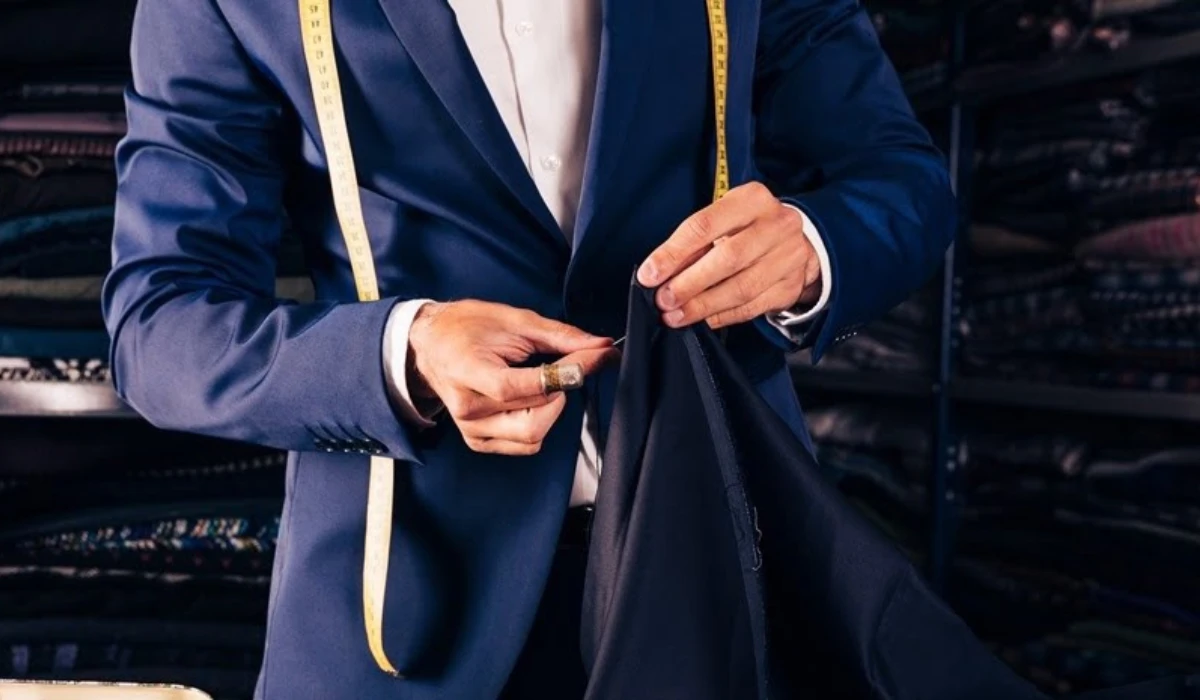
Since the word appears on everything from hotel tailors to department store websites, it is worth being specific.
- A new pattern is drawn from your measurements. No existing block, no adjustments to someone else’s template.
- The first fitting is in a baste: an unfinished shell, before any real construction happens.
- Further fittings follow as the garment is built. You do not just try the finished thing and hope for the best.
- A significant portion of the work is done by hand throughout.
- Your finished pattern stays in the house’s archive, yours alone.
Made-to-measure adjusts an existing pattern block. Good houses do it well and the results can be impressive. But there is no baste fitting, which means the cutter has no chance to read how cloth falls across your specific frame before the permanent work begins. For a body that sits close to standard sizing, this may not matter much. For most people, it does.
Frequently Asked Questions
What is the actual difference between bespoke and made-to-measure?
Made-to-measure takes a pre-existing block, a pattern made to fit an average body in a particular size range, and adjusts it to your measurements. Bespoke starts with nothing and builds your pattern from scratch. The practical difference shows up most clearly in the baste fitting, which only happens in bespoke.
How much does a bespoke suit actually cost?
Oxxford starts around $4,000, which is the most accessible entry on this list. London houses tend to begin between £5,200 and £6,500. The Italian and French houses sit between 4,500 and 8,000 euros or dollars depending on the house. These are starting prices with standard cloth.
Can I commission bespoke from abroad?
Yes. Trunk shows are the standard way this works: houses travel to major cities several times a year and handle measurement and fitting appointments on the road.
Is bespoke actually better than expensive ready-to-wear?
For the majority of men, the best bespoke tailors produce something that no amount of alteration to a stock garment can replicate, not because they are more expensive but because they are building around the specific problem of your specific body rather than solving a different problem and hoping it applies.
A Final Word
The best bespoke tailors are not interchangeable. Huntsman and Kiton are both exceptional, and a man who would look extraordinary in one would look wrong in the other. Getting the choice right matters, and it starts with being honest about your aesthetic and your life rather than buying a name.
What all eight houses on this list share is a refusal to compromise on the process. The baste fitting happens, or it is not bespoke. The pattern is yours, or it is not bespoke. The handwork takes the time it takes, or something else is happening. That consistency of process, across different traditions and different cities and very different silhouettes, is what produces results that hold up for twenty years.
Any of these houses is worth your time. One of them, probably, is worth your money.