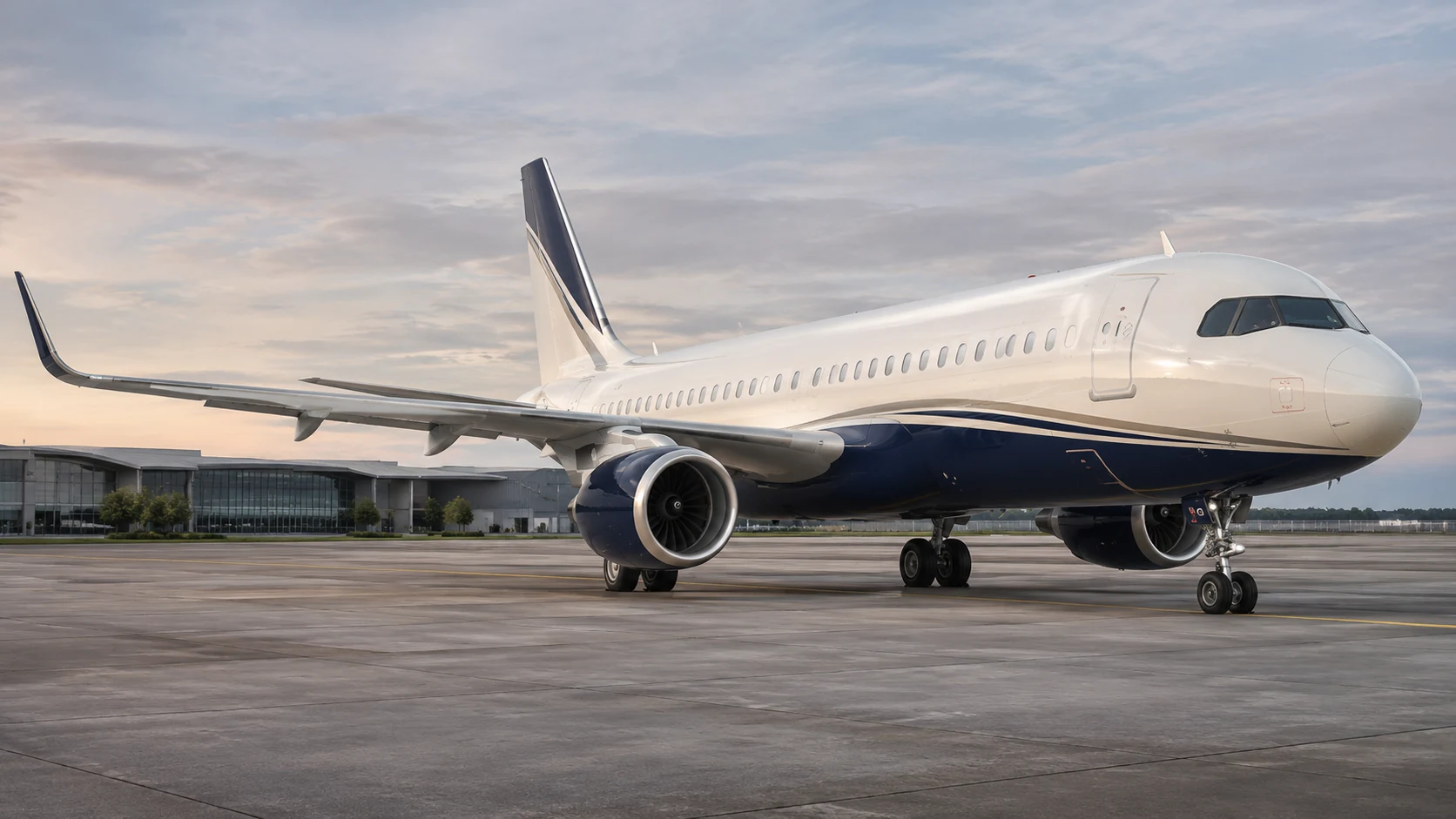
The BBJ and the ACJ are the largest private jets money can buy: Boeing Business Jets and Airbus Corporate Jets, the private variants of the 737 and A320 airliner families, converted from machines built to carry 180 passengers into flying residences for twenty. With multiple bedrooms, full showers, boardrooms, and ranges that circle half the globe, they represent the absolute ceiling of private aviation.
They also represent one of the most fascinating competitions in luxury, because the two aircraft are at once nearly identical in concept and completely different in character. Choosing between them is a decision measured in hundreds of millions of dollars, and it rewards careful understanding.
The Logic of the Converted Airliner
Why would anyone convert an airliner into a private jet? The answer begins with space. Even the largest purpose-built business jets, the Gulfstream G700 and Global 7500, offer cabins of roughly 400 to 500 square feet.
A BBJ or ACJ offers 800 to over 1,000 square feet, a genuine apartment in the sky, with headroom throughout, separate rooms with real doors, and the ability to carry an entourage, a staff, or a family across an ocean without anyone sharing a wall with a stranger.
The second answer is proven reliability. These airframes descend from the most-tested aircraft families in history, machines that fly thousands of hours a year in airline service and are engineered to standards no low-volume business jet can match. Support, parts, and qualified crews exist on every continent, and the maintenance economics, relative to size, benefit from the same scale.
The third answer is range, achieved through auxiliary fuel tanks that fill the cavernous cargo holds of an airliner flying a fraction of its design payload.
The current generation, the BBJ MAX family and the ACJneo family, flies 6,000 to 6,600 nautical miles and beyond, connecting virtually any two cities on earth with a single stop at most. Among the top luxury private jets, these machines stand in a category entirely their own.
The Boeing Case
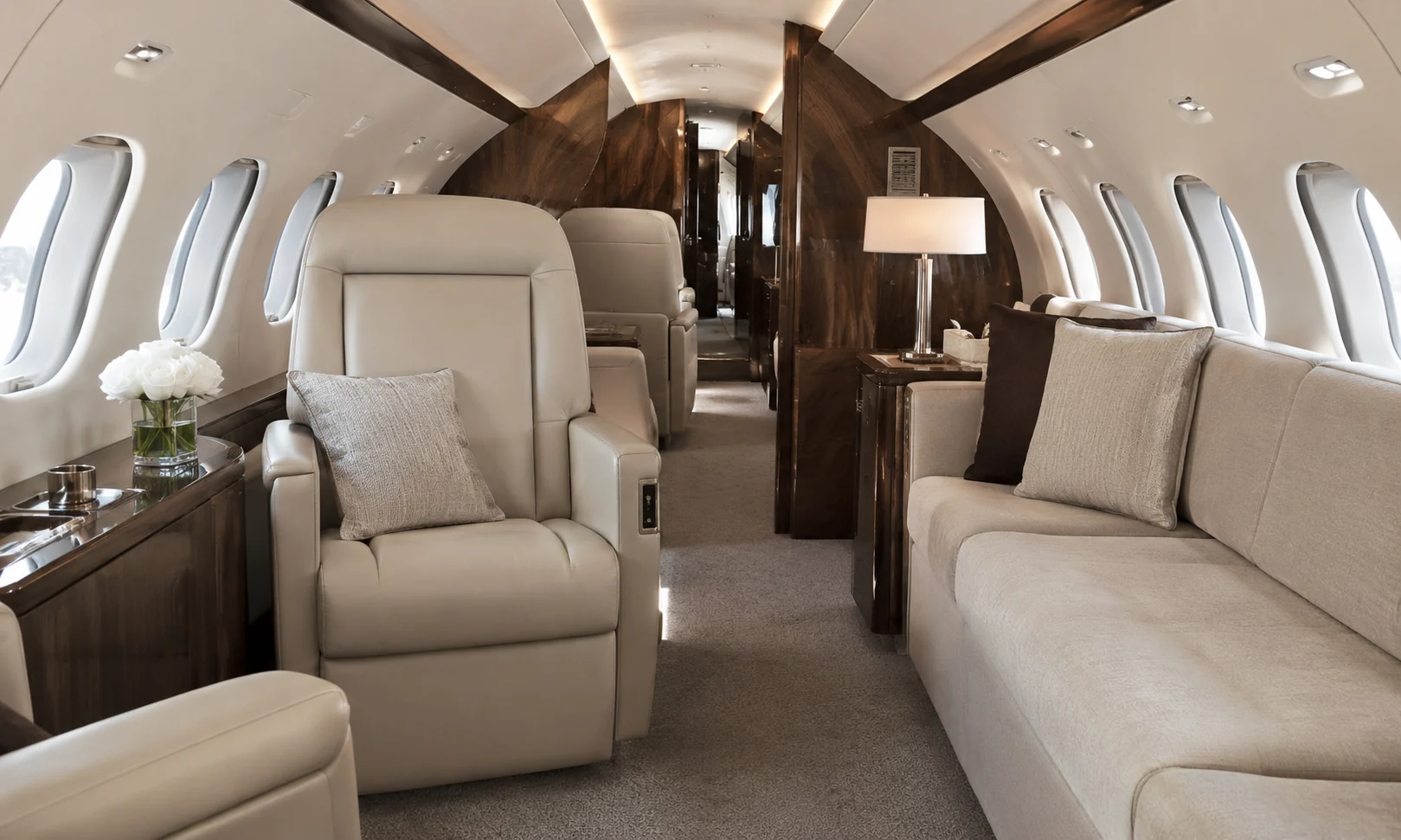
The Boeing Business Jet program began in 1996 with a simple observation: the 737’s fuselage, mated to a strengthened wing and auxiliary tanks, could create the ultimate executive transport.
The concept succeeded immediately, and the line has evolved through the generations of the 737 to today’s BBJ MAX, built on the re-engined MAX airframe with its quieter, more efficient LEAP engines.
The BBJ’s character reflects its maker: robust, proven, and slightly more spacious in certain configurations, with a cabin width that has traditionally given its interiors a subtle advantage.
Boeing’s completions have included some of the most famous private aircraft ever delivered, from heads-of-state flagships to the flying residences of the Gulf’s royal families, and the type’s service record in government fleets is unmatched.
The United States Air Force’s C-40 transports, military variants of the same family, carry the nation’s leadership daily, an endorsement written in official confidence.
The Airbus Case
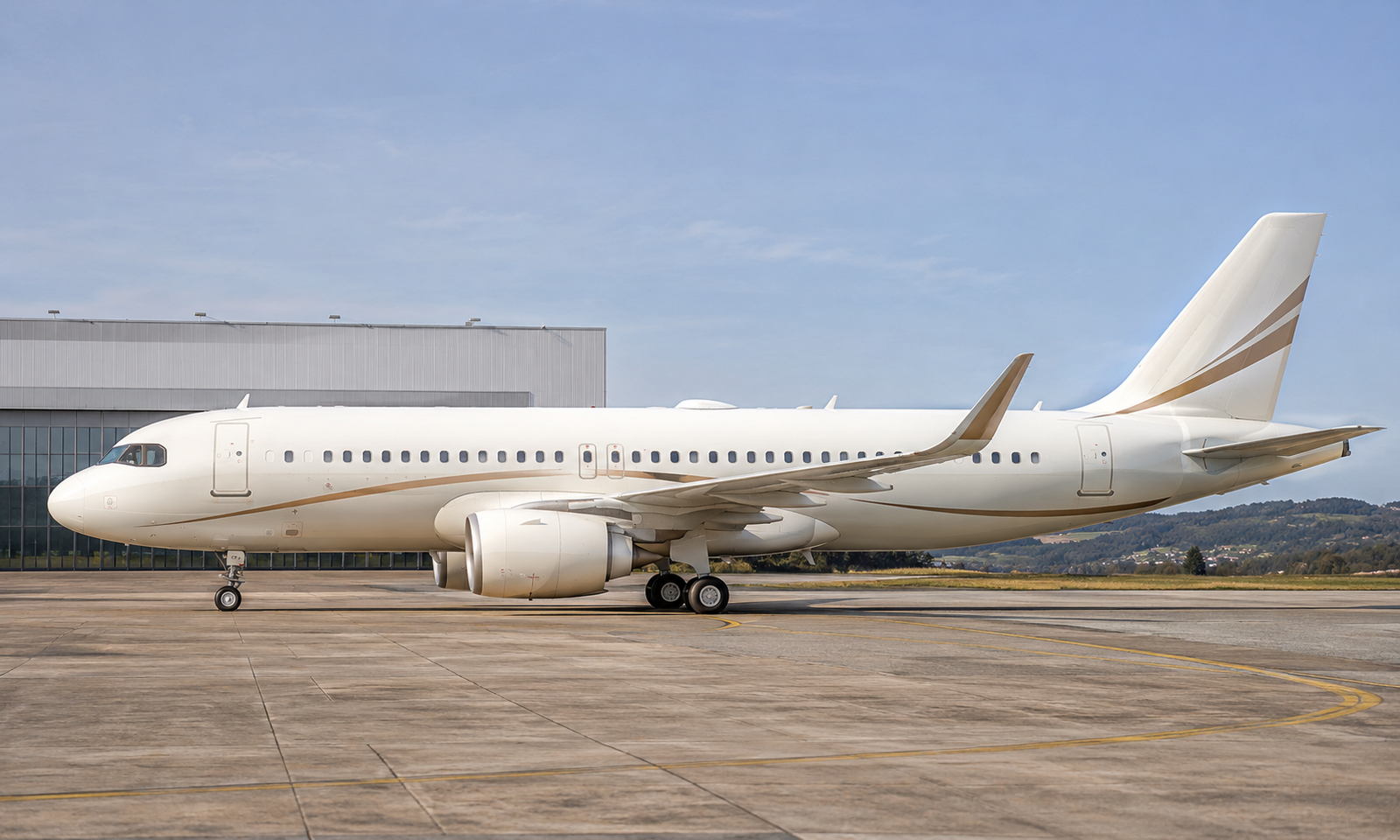
Airbus answered with the ACJ, the Airbus Corporate Jet, built on the A320 family, and brought a distinct philosophy to the contest. The ACJ’s cabin is wider at its shoulders and famously adaptable, and Airbus invested early in the completion ecosystem, cultivating relationships with the great cabin outfitters whose work transforms the empty airframe into a residence.
The current ACJneo family, built on the A320neo generation, pairs new engines with aerodynamic refinements to deliver intercontinental range with remarkable efficiency, and the smaller ACJ220 variant, based on the A220, has opened the category to buyers who want airliner space with lighter operating economics.
Airbus interiors have produced some of the most photographed cabins in private aviation, environments closer to boutique hotels than to anything with a flight number.
The Completion: Where the Palace Is Built
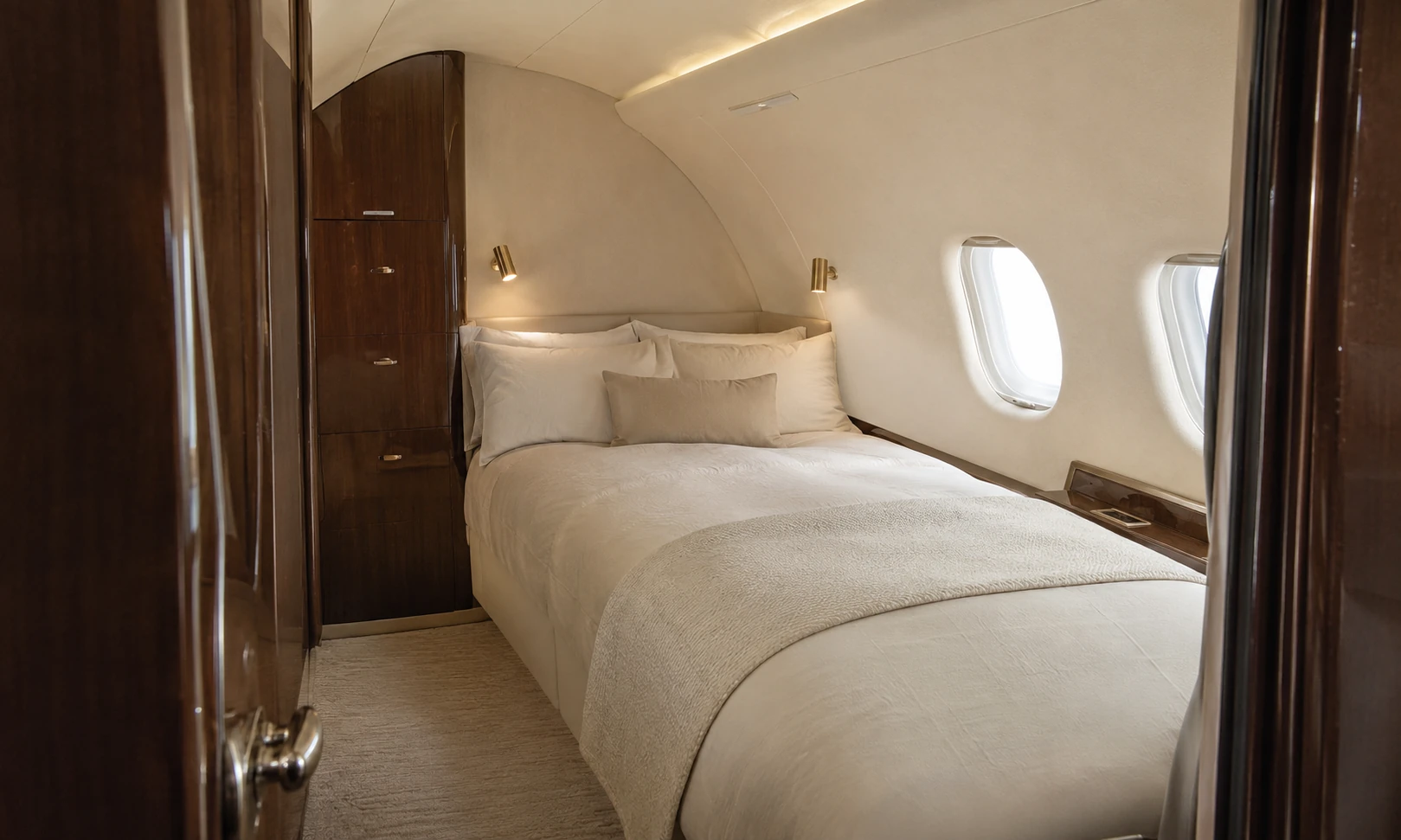
Neither aircraft leaves its factory finished. The green airframe, bare of interior, travels to a specialist completion center, the great houses of the art such as those in the United States, Switzerland, Germany, and France, where a bespoke interior is designed and installed across a process that routinely takes two years or more.
This is where budgets travel into the stratosphere. A full VVIP completion on an airliner frame can cost as much as the aircraft itself, and the results justify it: master suites with full-size beds, bathrooms with rainfall showers in stone and marble, dining rooms seating twelve, boardrooms with satellite connectivity, lounges with cinema systems, and crew quarters that allow the staff to rest on the longest sectors.
Materials are drawn from the same suppliers as the great yacht interiors, and the comparison is apt: these machines are, in every meaningful sense, superyachts that fly. Owners already fluent in that world will recognize the philosophy from our examination of superyacht engineering.
The Economics of the Ceiling
The acquisition price of a new BBJ MAX or ACJneo begins around one hundred million dollars for the green aircraft, with completed VVIP examples frequently exceeding two hundred million, and exceptional builds traveling well beyond.
Operating costs reflect the scale: flight crews of four or more, cabin attendants, maintenance programs scaled to airliner standards, and fuel burns measured in thousands of gallons per ocean crossing.
The buyers at this altitude are correspondingly rare: heads of state, royal families, the founders of technology empires, and a handful of charter operators serving the ultra-premium market.
For most private flyers, the purpose-built flagships offer the saner path, and the arithmetic across categories is laid out in our guide to the real cost of owning a private jet.
Yet for those whose needs genuinely fill these cabins, governments moving delegations, families traveling with staff, principals who must hold working meetings at altitude, the converted airliner is not extravagance but the only rational answer.
For the rest of us, the category occasionally opens its doors: a small number of BBJ and ACJ aircraft operate in charter, and an hour aboard one remains the most covetable seat in the sky, as our overview of private jet charter explains.
The Verdict
BBJ versus ACJ is, in the end, a choice between two superb answers to the same question, and the deciding factors are surprisingly human: relationships with the manufacturers, the preferences of the completion house, cabin geometry subtleties that matter to a particular family’s floor plan, and fleet commonality for operators who fly other Boeing or Airbus types.
What unites them is the concept’s audacity: taking the most reliable aircraft ever built and reimagining them as homes. The converted airliner represents the point where private aviation stops competing with first class and starts competing with real estate.
At forty thousand feet, with the bedroom made and the shower hot, the comparison no longer feels like hyperbole.
FAQs
What is a BBJ?
The Boeing Business Jet is the private variant of the Boeing 737 airliner family, converted into a VVIP aircraft with bedrooms, showers, and boardrooms. The current generation is based on the 737 MAX.
What is an ACJ?
The Airbus Corporate Jet is the private variant of the Airbus A320 family, offering a wide, adaptable cabin with intercontinental range. The current ACJneo family is based on the A320neo generation.
How much does a BBJ or ACJ cost?
A new green airframe begins around one hundred million dollars, with fully completed VVIP interiors frequently bringing the total beyond two hundred million dollars and exceptional builds exceeding that.
Which is bigger, the BBJ or the ACJ?
Both offer cabins of roughly 800 to over 1,000 square feet depending on the variant, with subtle differences in width and geometry that completion designers exploit according to each client’s floor plan.
How far can a BBJ or ACJ fly?
The current MAX and neo generations fly approximately 6,000 to 6,600 nautical miles and beyond with auxiliary fuel tanks, connecting virtually any two cities on earth with at most one stop.
Who owns BBJ and ACJ aircraft?
Heads of state, royal families, government fleets, technology founders, and a small number of ultra-premium charter operators. The United States Air Force operates military variants for government transport.
How long does it take to complete a BBJ or ACJ interior?
A full VVIP completion at a specialist outfitter typically requires around two years from delivery of the green airframe, and the interior alone can cost as much as the aircraft.
Can you charter a BBJ or ACJ?
A limited number operate in the ultra-premium charter market, making an hour aboard one of these flying palaces among the most exclusive experiences available in private aviation.