The Robinson R66 is the helicopter that democratized turbine flight. Launched in 2010 with a Rolls-Royce engine and a price roughly half that of its nearest turbine rivals, it opened a door that had been closed to most private owners: the step from piston power to the smooth, reliable world of the turbine.
It has since become one of the bestselling turbine helicopters in the world.
Its significance reaches beyond its price tag. The R66 is the culmination of one man’s fifty-year argument that a helicopter should be simple, honest, and within the reach of ordinary successful people, an argument that changed the economics of rotorcraft forever.
The Robinson Revolution
To understand the R66, begin with Frank Robinson, the company’s founder and one of aviation’s genuine originals. An engineer who had worked at Cessna and Bell, Robinson founded his company in 1973 with a conviction the industry considered naive: that a helicopter designed for simplicity rather than for military or corporate procurement could be built and sold at a fraction of prevailing prices.
The R22, certified in 1979, proved him right, becoming the world’s most popular training helicopter and the entry point for generations of pilots. The four-seat R44 followed and became the best-selling helicopter in the world, a title it has held for decades, bringing helicopter ownership to ranchers, photographers, tour operators, and enthusiasts who had never imagined it possible.
The R66, first delivered in 2010, completed the logical arc. Robinson had conquered piston flight; the turbine was the last frontier, and the company’s answer was characteristically direct: a five-seat machine built around the proven Rolls-Royce RR300, priced where competitors feared to go.
What the Turbine Buys
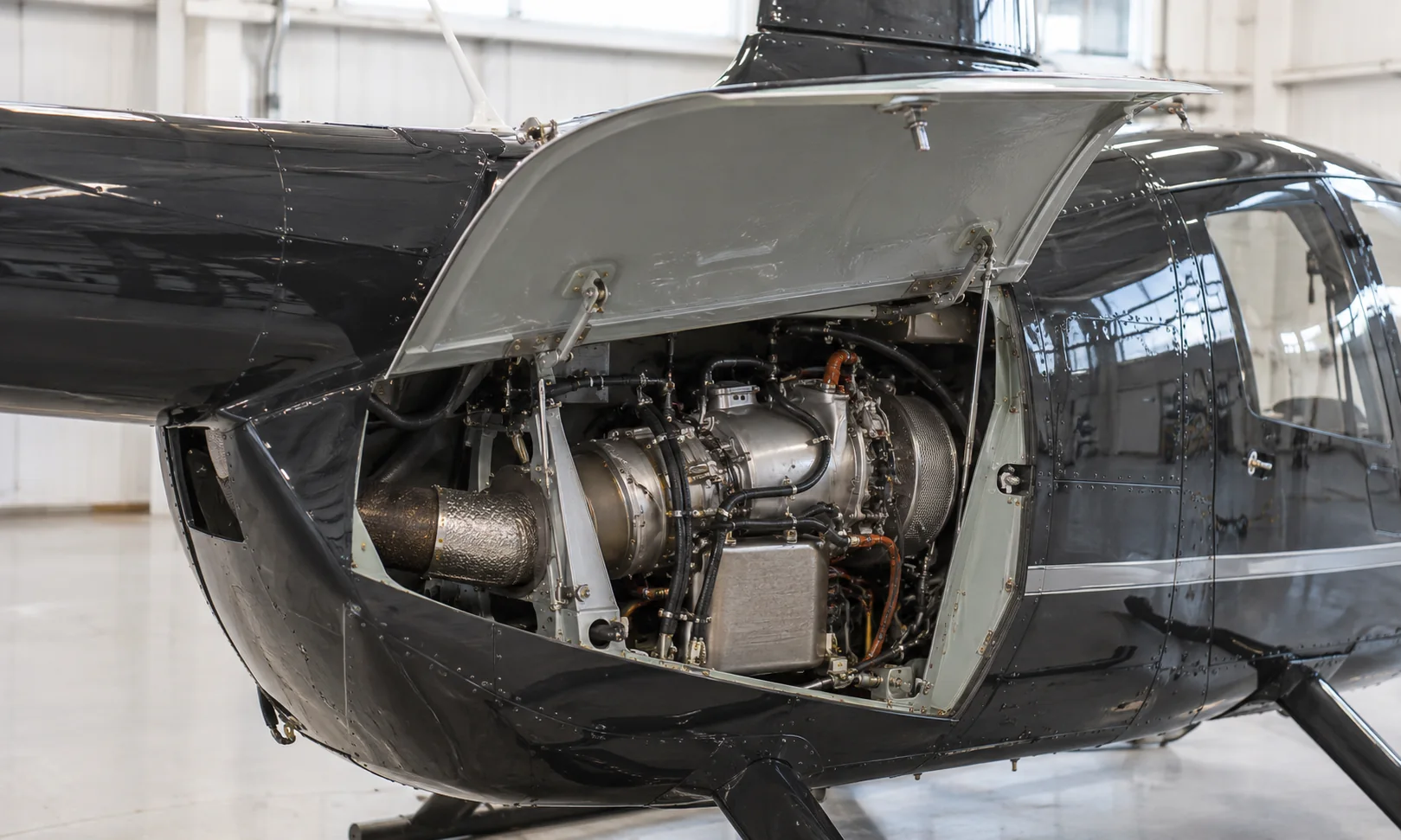
The step from piston to turbine power transforms a helicopter, and understanding why illuminates the R66’s entire appeal. Turbine engines are smoother, lighter for their power, and dramatically more reliable than piston engines, with fewer moving parts and no spark plugs, carburetors, or magnetos to fail.
They start easily in cold weather, run happily for thousands of hours between overhauls, and deliver their power with a seamlessness that passengers feel immediately.
The RR300, developed by Rolls-Royce specifically for this application and derived from the legendary Model 250 family that has powered light helicopters for half a century, gives the R66 genuine performance: a cruise speed around 110 knots, a range approaching 300 nautical miles, and a useful load that accommodates five people or a serious cargo of gear.
For the private owner, the practical consequences are profound. The R66 performs missions that strain its piston sibling: high-altitude operations, hot days with full loads, long over-water crossings where turbine reliability matters most.
It is, in the vocabulary of the industry, a real helicopter, at a price that made headlines precisely because it should not have been possible. Among the luxury helicopter models accessible to private buyers, none opens the door wider.
The Machine Itself
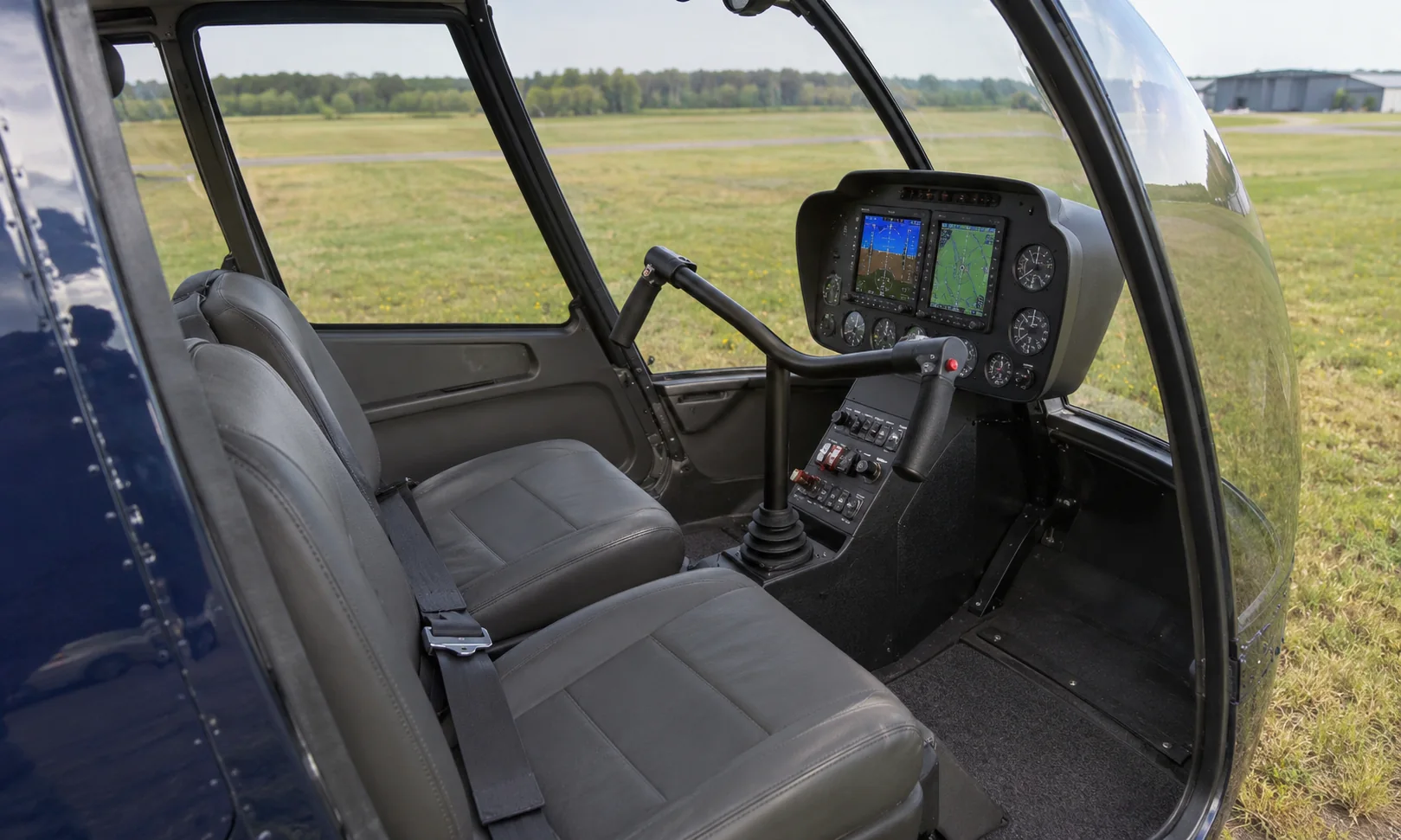
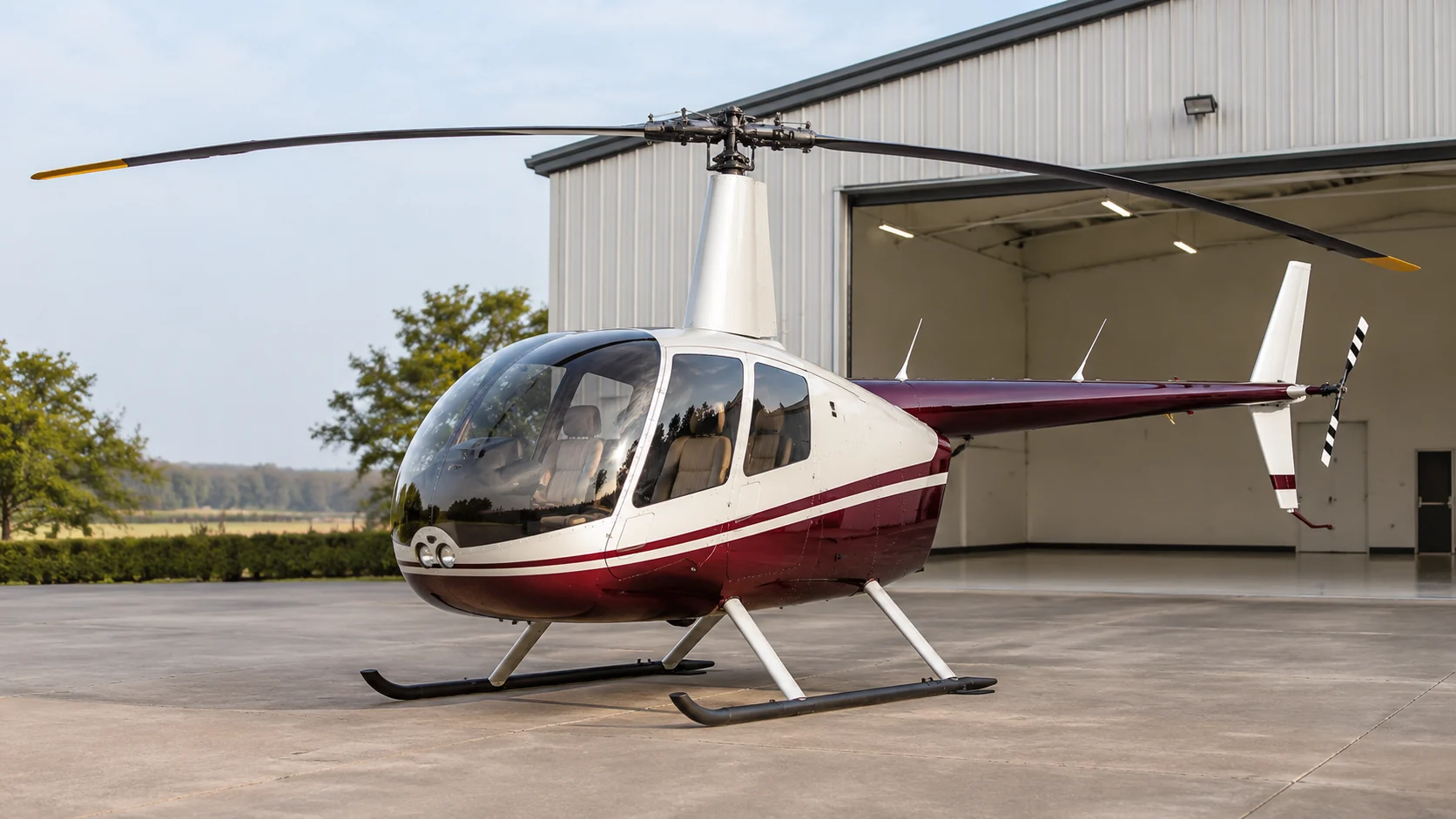
The R66’s design carries the Robinson philosophy in every line. The cabin seats five, pilot included, with a simplicity of layout that owners describe as refreshingly honest: excellent visibility, straightforward controls, and a baggage compartment large enough for genuine touring.
The instrument panel can be equipped with modern glass displays, and the helicopter’s systems are designed to be understood rather than merely operated.
The two-blade rotor system, a Robinson signature, contributes to the machine’s economy and its distinctive flight character. Pilots transitioning from other types notice the lighter control feel, and the type rewards smooth, thoughtful flying with an efficiency that heavier machines cannot match.
Operating economics complete the picture. The R66 burns fuel at rates that would embarrass most light jets, its maintenance requirements follow Robinson’s doctrine of simplicity, and the global network of Robinson service centers, grown across five decades of R22 and R44 support, keeps owners flying on every continent.
For buyers comparing rotorcraft against fixed-wing alternatives, the calculus differs fundamentally from the world of private jet aviation: the R66’s runway is a lawn, a beach, or a ranch meadow, and its purchase price sits below many luxury automobiles.
The Honest Conversation
Robinson helicopters attract strong opinions, and a publication that values its readers must present the whole picture. The company’s machines are engineered to a price, and that philosophy involves real compromises: the cabin is snug by the standards of executive twins, the two-blade rotor demands respect and proper training, and the light structure prioritizes efficiency over the crashworthiness margins of heavier designs.
The R66’s safety record, like that of the broader Robinson family, has been debated in aviation circles, and the honest reading of the data points to training and operational discipline as the decisive factors.
Robinson responded to early criticism with an intense focus on pilot education, including mandatory safety courses that have measurably improved outcomes, and the company’s instructors are regarded as among the best in the light helicopter world.
The conclusion most aviation professionals reach is balanced: the R66 is a safe and capable machine when flown within its design envelope by properly trained pilots, and its compromises are the honest price of its unprecedented accessibility.
Buyers who require twin-engine redundancy for night urban or extended overwater operations should look to the larger machines. Buyers whose missions are daylight, land-based, and practical will find the R66’s economics irresistible.
Who the R66 Serves
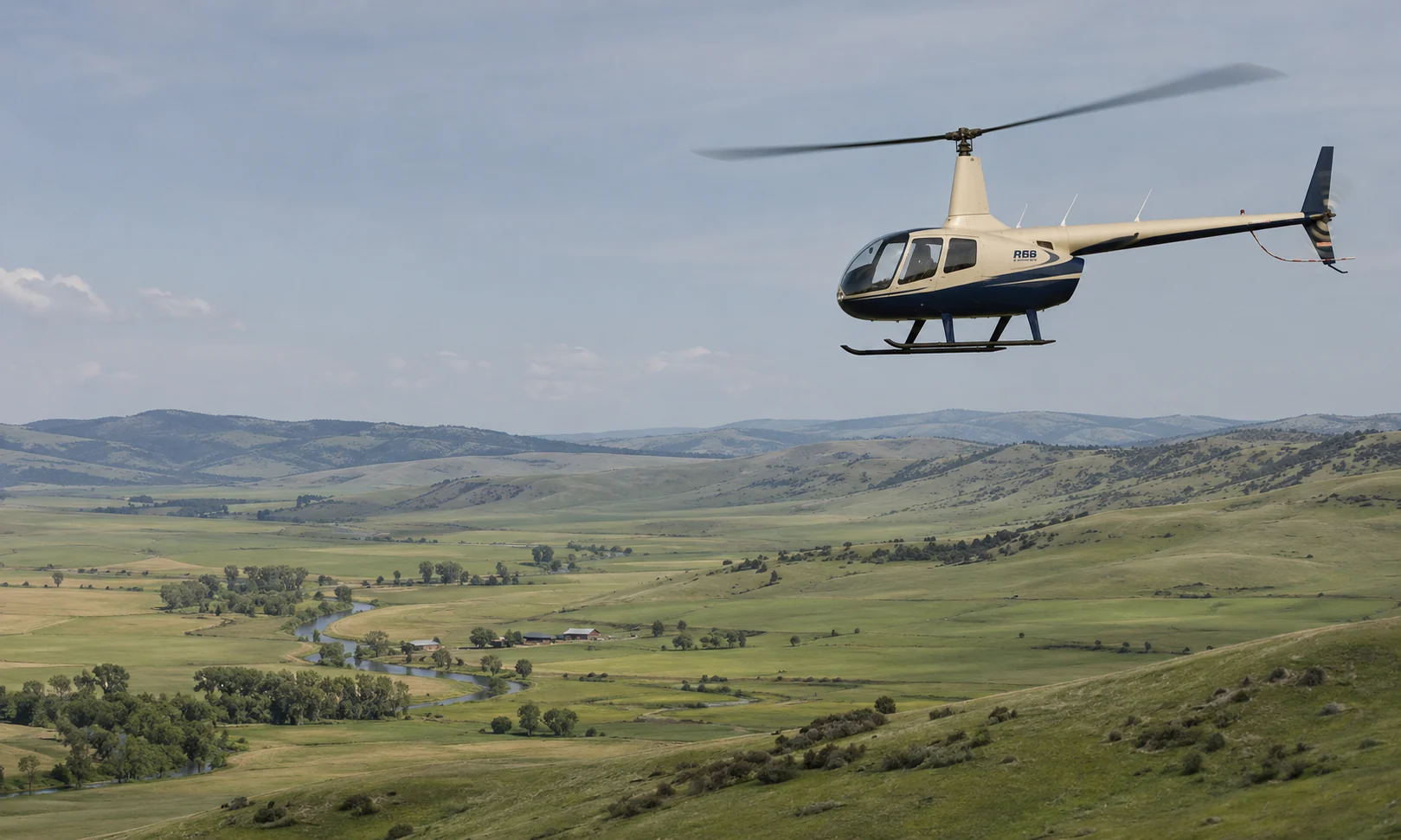
The R66’s owner base tells its own story. Ranchers use it to inspect thousands of acres in an afternoon. Tour operators in destinations from Alaska to the Pacific islands build businesses on its reliability.
Yacht owners carry it as a ship’s helicopter where a super-medium twin would be extravagant, a role that pairs naturally with the world of the luxury yacht experience. And private owners, the largest group, use it as Robinson always intended: as personal transportation that compresses geography and returns time.
For many, the R66 is also the machine that makes the dream possible at all. The pilot who trained in an R22, logged hours in an R44, and finally steps up to turbine power finds in the R66 a familiar friend rather than a foreign country, and that continuity is among the type’s quietest strengths.
The Verdict
Frank Robinson believed helicopters should be accessible beyond the wealthy and large institutions. The R66 brings that vision to life. With turbine reliability, five seats, and practical performance, it makes helicopter ownership more accessible to private buyers.
Not every luxury is about excess. Some are about access, and the R66 is among the purest examples in aviation: the machine that opened the turbine sky to everyone who could dream of owning it. That is a form of luxury the industry’s grandest machines cannot offer, and it explains why, on ramps from Montana to New Zealand, the little turbine from Torrance keeps multiplying.
FAQs
How much does a Robinson R66 cost?
A new R66 lists in the region of one million dollars depending on configuration, roughly half the price of competing turbine helicopters, with operating costs among the lowest in turbine aviation.
What engine powers the Robinson R66?
The Rolls-Royce RR300, a turbine engine developed specifically for the R66 and derived from the legendary Model 250 family that has powered light helicopters for fifty years.
How many people does the R66 carry?
Five including the pilot, with a spacious baggage compartment that supports genuine touring and utility missions.
Is the Robinson R66 safe?
The type is safe when operated within its design envelope by properly trained pilots. Robinson’s mandatory safety courses and the RR300’s turbine reliability have produced a strong record, though its light structure rewards disciplined flying.
What is the range of the Robinson R66?
Approximately 300 nautical miles, with a cruise speed around 110 knots, suited to regional transport, ranch work, touring, and yacht operations.
Who founded Robinson Helicopter Company?
Frank Robinson founded the company in 1973 in Torrance, California, pursuing his conviction that simple, affordable helicopters could open rotorcraft ownership to private individuals.
Is the R66 good for first-time helicopter owners?
Yes. It is the most common step from piston to turbine ownership, offering familiar Robinson flying qualities, turbine reliability, and the lowest operating costs in its class.
How does the R66 compare to the R44?
The R66 adds turbine power, a fifth seat, greater useful load, and better high-altitude and hot-weather performance, while retaining the R44’s simplicity and operating philosophy at roughly double the acquisition price.