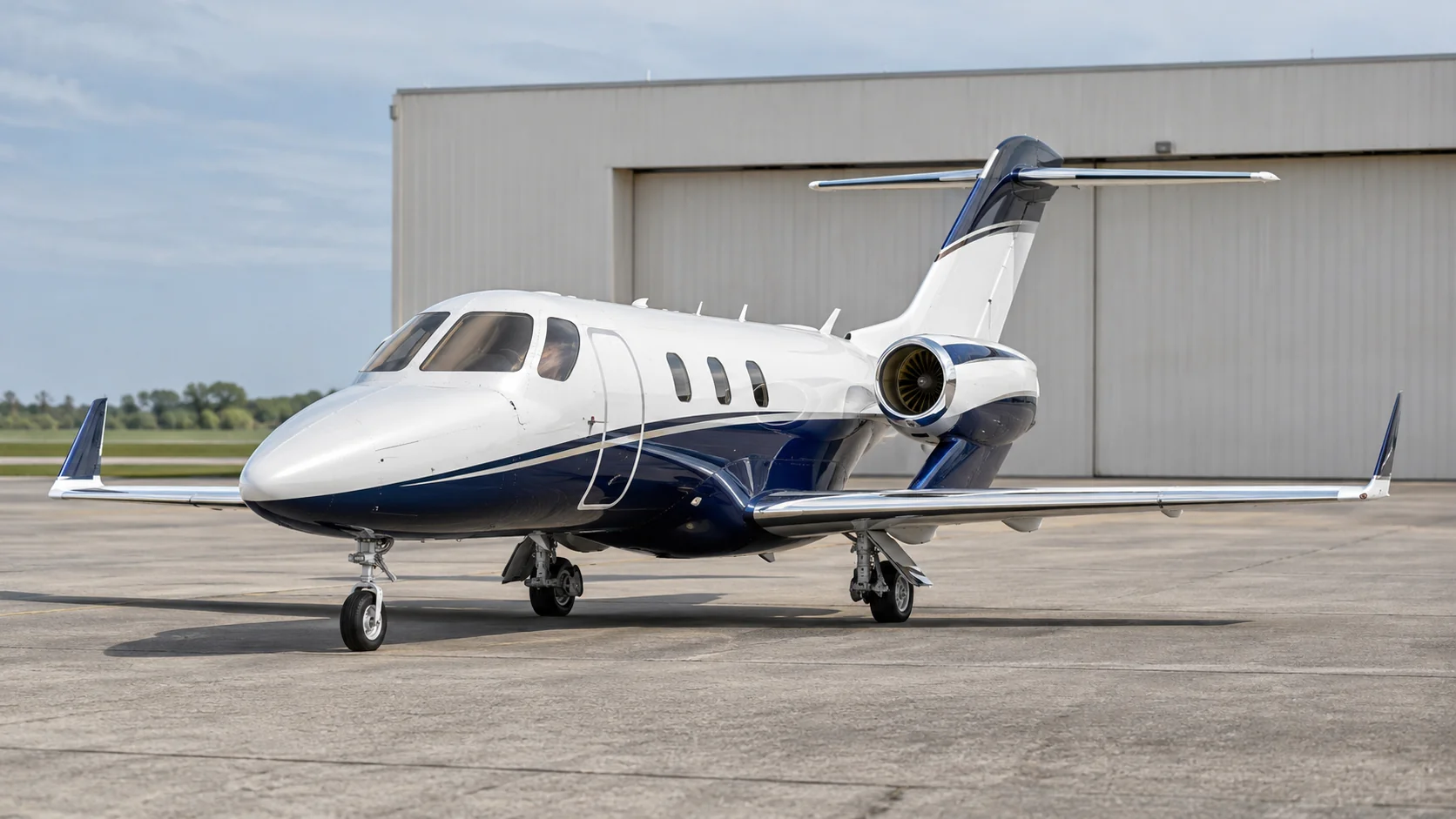
The HondaJet Elite II is the most unconventional business jet in production, a very light jet whose engines sit on pylons above the wings rather than beside the fuselage, a layout the industry doubted for decades.
The gamble paid off spectacularly: the HondaJet is the fastest, highest-flying, and most fuel-efficient aircraft in its class, with the largest cabin the segment offers.
It is also one of the great product stories of the century: a car company that spent thirty years teaching itself to build aircraft, refused every compromise, and emerged with a machine that humbles rivals from companies with seventy-year head starts.
The Thirty-Year Bet
Honda’s aviation dream predates its aircraft by a generation. Soichiro Honda, the company’s founder, spoke of building aircraft as early as the 1960s, and Honda formally began aeronautical research in 1986, assigning a young engineer named Michimasa Fujino to the problem. Fujino would spend the next three decades on a single mission: designing a light jet that was better in every measurable way than anything in its class.
The program advanced with Honda’s characteristic patience and secrecy. Wind tunnel work through the 1990s validated the radical engine placement. A proof-of-concept aircraft flew in 2003.
Certification of the production HondaJet arrived only in 2015, after a development odyssey that included designing an entirely new engine with General Electric.
The industry, which had watched the program with skepticism for years, delivered its verdict quickly: the HondaJet won virtually every award aviation offers, and Fujino received the highest honors in aeronautical engineering.
The Wing That Made It Possible
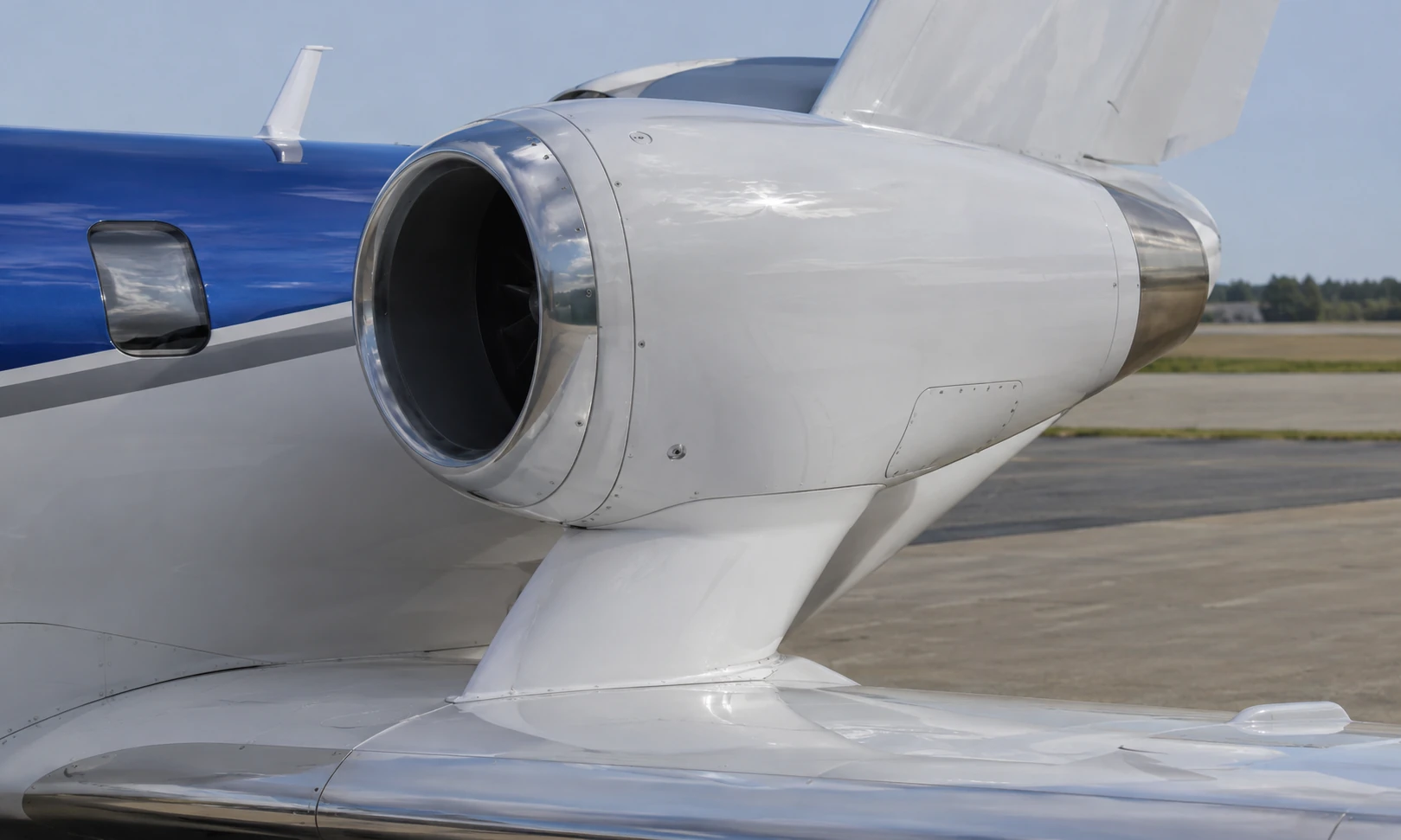
The Over-The-Wing Engine Mount, the configuration the industry abbreviates as OTWEM, is the HondaJet’s entire thesis. Convention places a light jet’s engines on the rear fuselage, a layout that imposes penalties everywhere: the engine mounts intrude into the cabin, aerodynamic interference between the nacelle and the fuselage creates drag at high speed, and the arrangement limits how clean the wing can be.
Honda’s research proved that placing the engines above the wing, at precisely calculated positions, did the opposite.
The configuration exploited a favorable aerodynamic interaction that actually reduced drag at cruise, freed the fuselage of engine structures entirely, and quieted the cabin by moving the noise source away from the passengers.
The dividends compound through the whole aircraft: more cabin volume, more baggage space, better efficiency, and a distinctive silhouette that makes the HondaJet recognizable from across any ramp.
The natural-laminar-flow wing and nose, sculpted to keep air moving smoothly over the surface, complete the aerodynamic argument. The result is an aircraft that cruises at 422 knots, climbs to 43,000 feet, and sips fuel at rates that embarrass the class, numbers that read like marketing and verify like physics.
The Cabin That Defies the Class
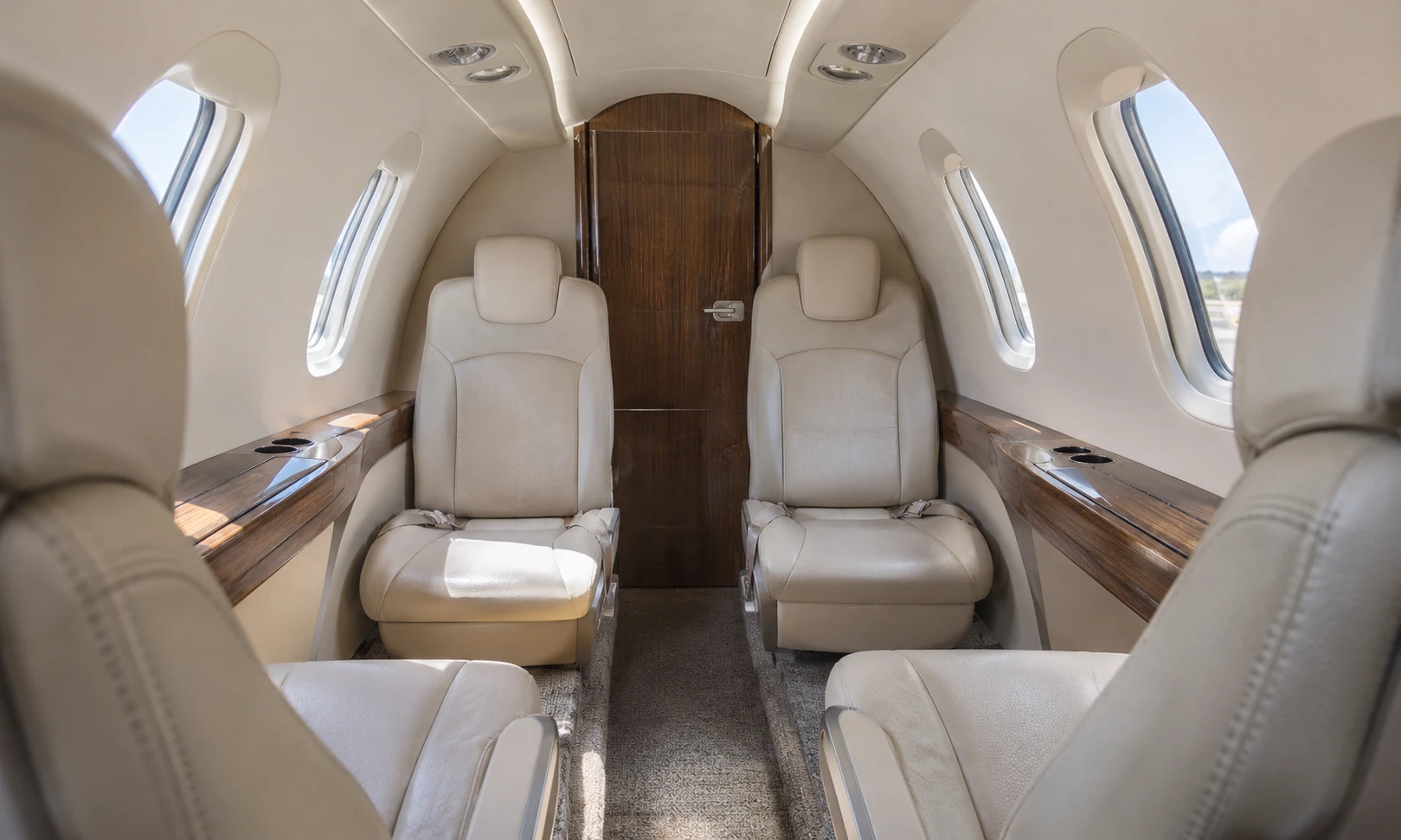
Very light jets traditionally ask their passengers to compromise: snug cabins, limited headroom, and a sense that the machine is small because the budget was. The HondaJet declines the bargain.
Freed of fuselage-mounted engines, its cabin offers the most space in the segment, seating five or six passengers in a club arrangement around an interior of genuine refinement, with a fully private aft lavatory that no direct rival matches.
The Elite and Elite II iterations have polished the proposition continuously: greater range, refined interiors, a galley improved for real catering, and the Bongiovi speakerless audio system, which turns the cabin’s sidewalls into the sound system.
The Elite II added autothrottle and emergency autoland capability, technologies descended from the most advanced cockpits in aviation, bringing single-pilot operation to a new standard of safety. For travelers exploring the broader landscape of private jet aviation, the HondaJet represents the category’s most convincing proof that small need not mean spartan.
The Economics of Efficiency
The HondaJet’s acquisition price sits in the region of seven million dollars, positioning it at the premium end of the very light segment, and its operating economics reward the premium continuously.
The aerodynamic efficiency translates directly into fuel burn well below class rivals, the Honda Aero engine support network has matured into a genuine strength, and the aircraft’s dispatch reliability has built a loyal owner base.
The type particularly suits the owner-pilot, the executive who flies themselves and considers the flying the point.
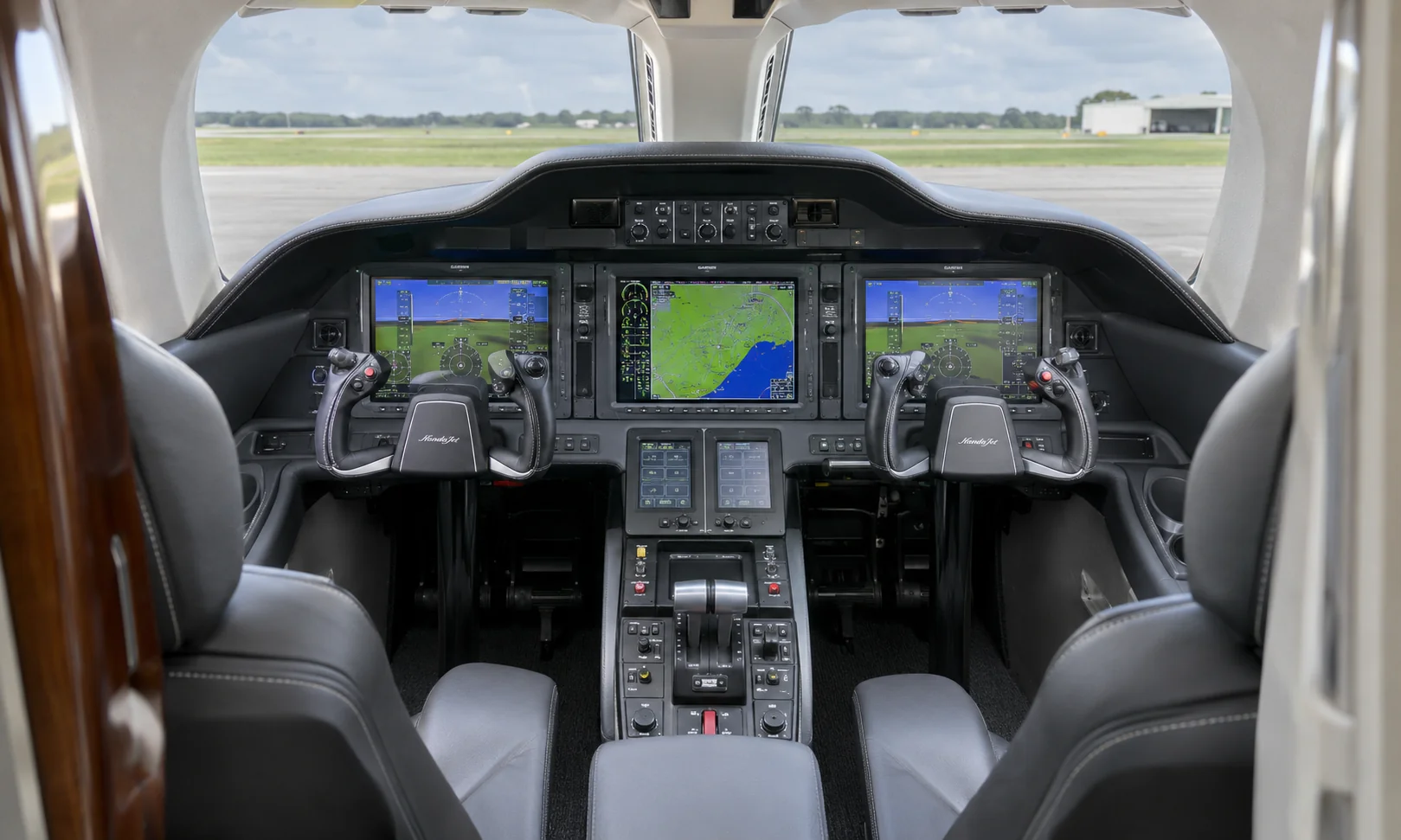
Its cockpit, built around the Garmin G3000 suite, is among the most advanced in any light jet, and the handling has won consistent praise for the precision Honda engineered into every control response.
A significant share of HondaJets are flown by their owners, a proportion that speaks to the machine’s accessibility as much as its appeal.
Owners weighing the full ownership picture against charter and fractional alternatives will find the framework in our analysis of the real cost of owning a private jet, where the very light category’s arithmetic proves especially favorable for the right mission profile.
The Honest Boundaries
The HondaJet’s excellence is specific, and honesty maps its edges. Range sits around 1,400 to 1,500 nautical miles, a two-to-three-hour machine that serves regional missions superbly and asks for a fuel stop on longer legs.
The cabin, though the best in class, remains a light jet cabin, best for parties of four or fewer on flights of a few hours. And baggage capacity, while improved by the engine layout, still requires the packing discipline that all small aircraft impose.
Buyers whose missions regularly exceed three hours, or whose parties fill six seats with luggage, belong in the super-midsize class. Buyers whose flying is regional, frequent, and self-piloted will find nothing in the sky that matches the HondaJet’s combination of speed, efficiency, and sheer engineering elegance.
The Verdict
The HondaJet Elite II is proof that the aircraft industry still rewards the stubborn. A car company identified a configuration everyone else had dismissed, spent thirty years proving it right, and produced the best very light jet ever built.
The over-wing engines that once drew skepticism now draw the eye, and the aircraft’s awards, sales, and devoted owners have settled the argument completely.
In a category defined by compromise, the HondaJet’s achievement is coherence: every radical choice serving a measurable purpose, every efficiency converted into passenger benefit. It is the smallest machine in our survey of top luxury private jets, and in engineering terms, inch for inch, it may be the cleverest.
FAQs
What is special about the HondaJet’s engine placement?
The engines mount on pylons above the wings, the Over-The-Wing Engine Mount configuration, which reduces aerodynamic drag at cruise, frees cabin space, and lowers cabin noise, a layout Honda spent decades proving against industry skepticism.
How much does a HondaJet Elite II cost?
The Elite II lists in the region of seven million dollars, at the premium end of the very light jet segment, with operating costs among the most efficient in its class.
How fast is the HondaJet?
The HondaJet cruises at 422 knots and climbs to 43,000 feet, making it the fastest and highest-flying aircraft in the very light jet category.
What is the range of the HondaJet Elite II?
Approximately 1,400 to 1,500 nautical miles depending on load, ideal for regional missions of two to three hours between city pairs.
How many passengers does the HondaJet carry?
Five or six passengers in a typical club configuration, with the largest cabin in the very light class and a fully private aft lavatory.
Can one pilot fly the HondaJet?
Yes. The HondaJet is certified for single-pilot operation, and the Elite II’s autothrottle and emergency autoland systems make it particularly suited to owner-pilots.
Who builds the HondaJet?
Honda Aircraft Company, a subsidiary of Honda, builds the aircraft in Greensboro, North Carolina, with engines developed jointly with General Electric.
How does the HondaJet compare to the Cessna Citation M2?
The HondaJet offers greater speed, altitude, cabin volume, and fuel efficiency at a higher price, while the M2 counters with lower acquisition cost and the Citation support network. The HondaJet is widely regarded as the segment’s performance leader.