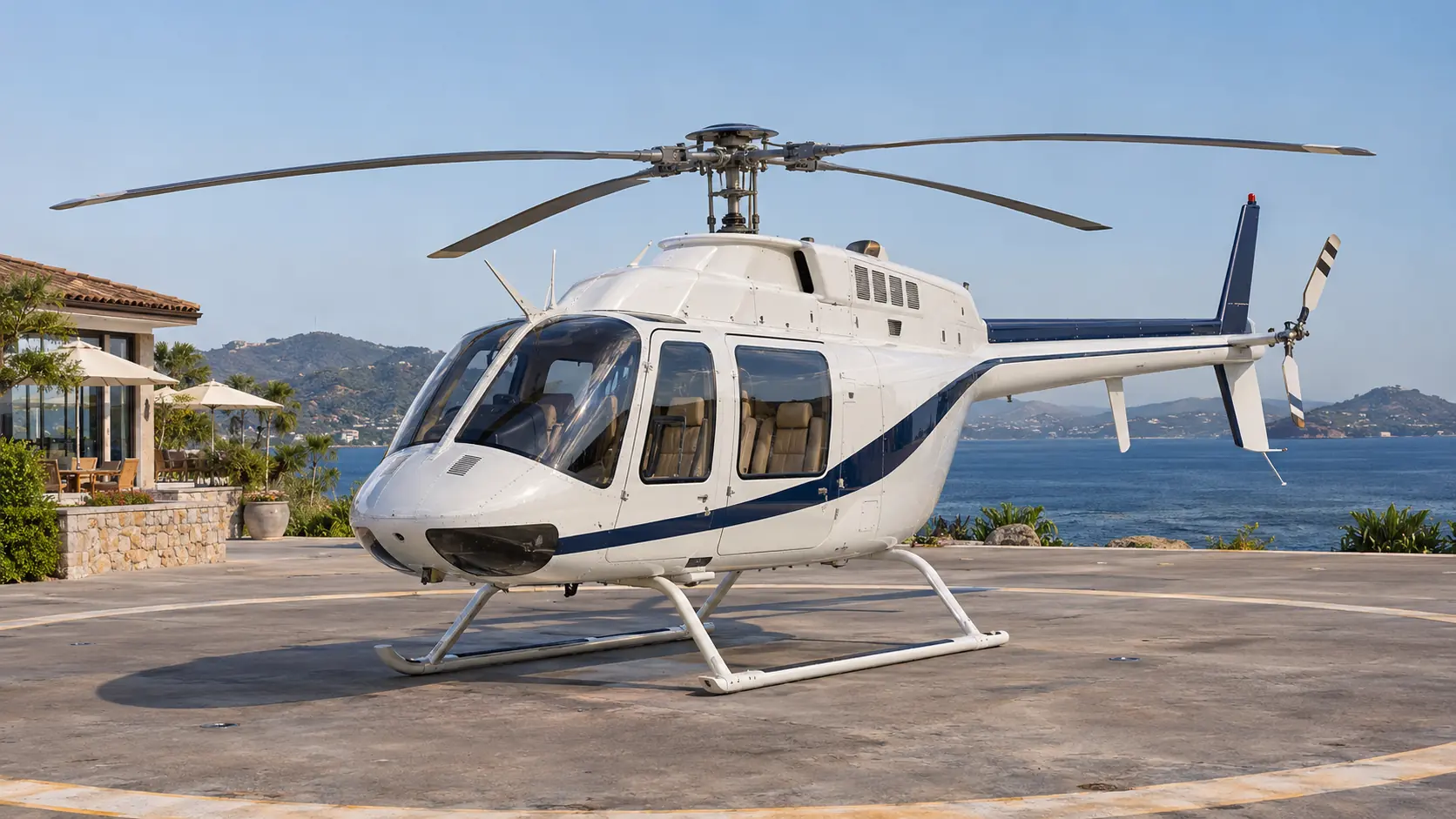
The Bell 407 is the charter industry’s favorite single-engine helicopter, a machine that has spent nearly three decades flying sightseeing tours, corporate transfers, and utility missions with a reliability that operators describe in the language of devotion. Derived from the legendary LongRanger lineage, it first flew in 1995 and has since accumulated millions of flight hours across a fleet that numbers well over a thousand aircraft.
Its persistence tells a story about what the helicopter market actually rewards. The 407 has never been the newest, the fastest, or the most glamorous machine in its class. It has simply been, year after year, the one that works, and in commercial aviation, working is the highest technology of all.
The LongRanger Inheritance
The 407 descends from a line that reaches back to the Bell 206 JetRanger of the 1960s, the most successful light helicopter family in history. The JetRanger and its stretched sibling, the LongRanger, established the template: a simple, rugged, single-engine machine that operators could fly hard, maintain easily, and afford to keep earning.
By the early 1990s, the design had started to show its limitations, especially in hot and high-altitude conditions. Bell responded with its practical approach. Instead of designing a completely new helicopter, the company used the proven LongRanger design.
It added a four-blade rotor system with composite blades and a hub developed through military programs. This upgrade made the Bell 407 smoother, quieter, and faster. It also improved its performance at high altitudes while keeping the reliable features of the original model.
First deliveries began in 1996, and the market responded immediately. Here was a machine that charter companies already understood, improved precisely where it needed improving, with no exotic systems to learn and no new risks to price.
The Operator’s Arithmetic
Charter and utility operators choose helicopters the way restaurants choose stoves: on reliability, cost per hour, and the ability to work every day without drama. The 407 wins this arithmetic on every line.
The Rolls-Royce 250 engine, in its C47 variant, is among the most proven powerplants in aviation history, a turbine with decades of service and a global support network that reaches every corner where helicopters fly. Maintenance is straightforward, parts are everywhere, and pilots qualified on the type can be found in abundance, a practical advantage that operators rank above most specifications.
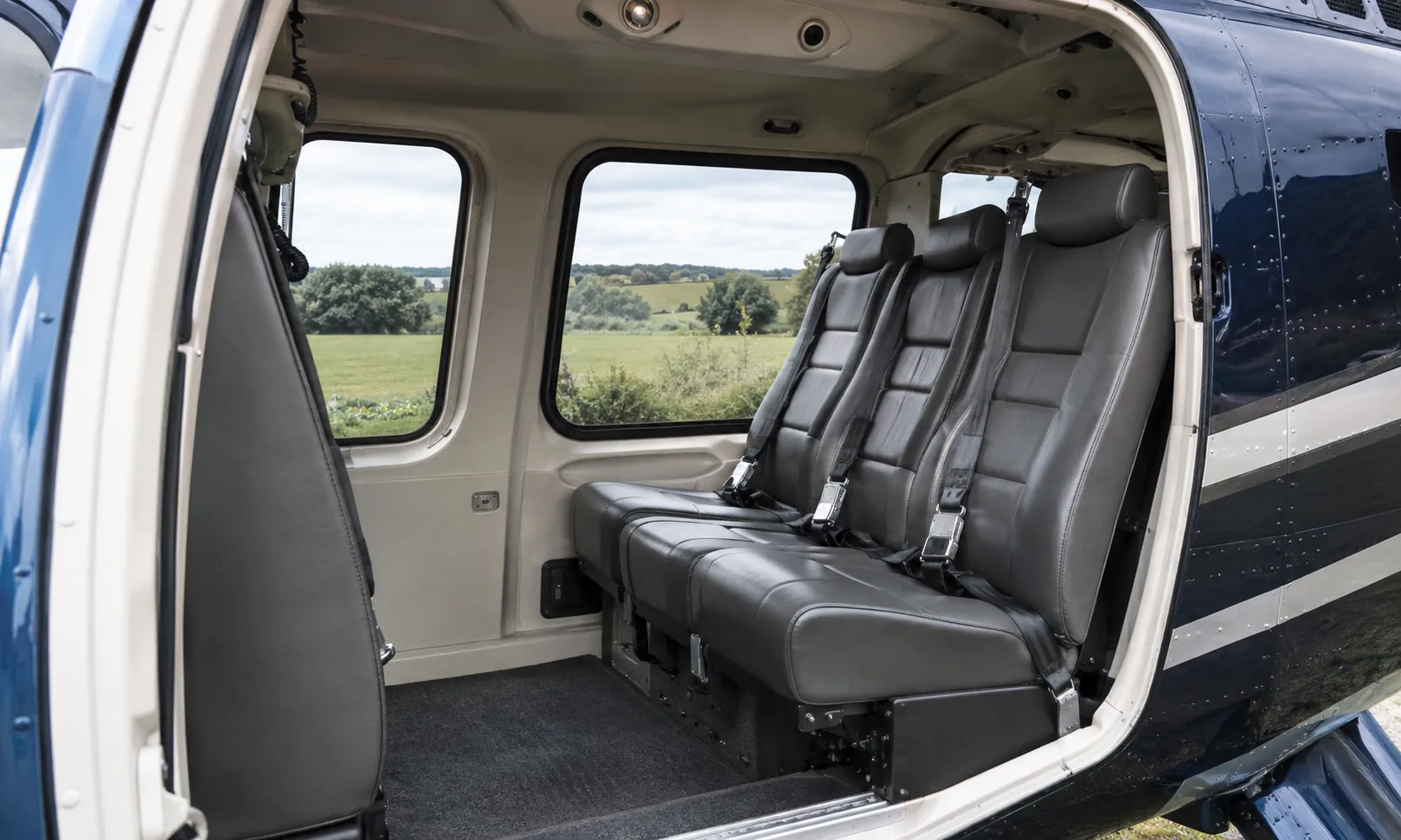
The cabin seats six passengers with the panoramic visibility that has made the type the default platform of the sightseeing industry, from the Grand Canyon to the Las Vegas Strip to the Manhattan skyline. Tourists may never learn the helicopter’s name, but the odds are strong that their most memorable aerial view arrived through a 407’s windows. For travelers weighing rotorcraft against fixed-wing options, our overview of private jet charter sets the comparison in context, but within cities and over scenery, nothing competes with the helicopter.
The Versatility Record
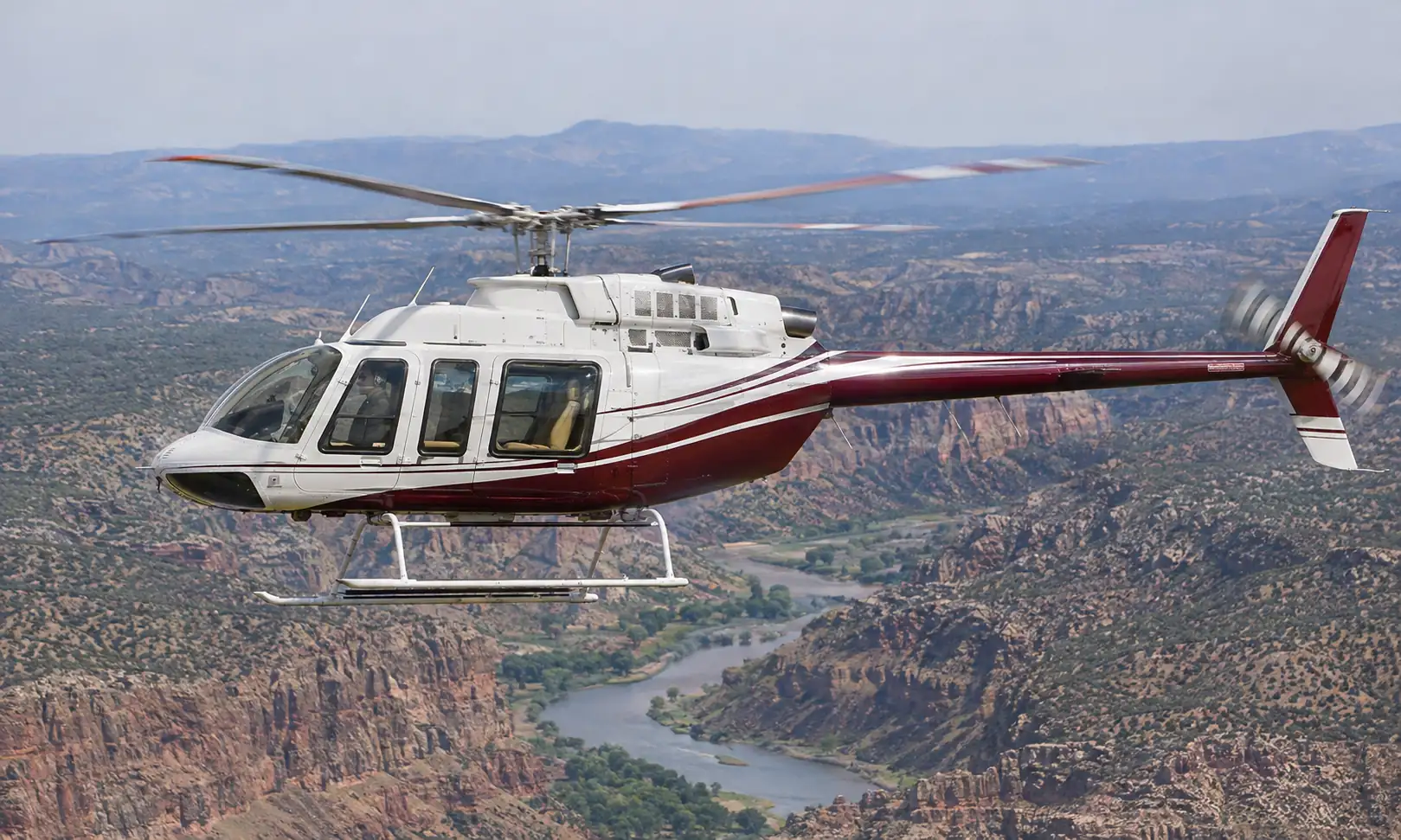
Spend time at any busy heliport, and you can see how versatile the Bell 407 is. In the morning, it may carry executives from a city helipad to a regional plant. By afternoon, it may transport a film crew or medical team. In the evening, it may take tourists over the waterfront.
The same helicopter is also used as an air ambulance in the mountains. Law enforcement teams use it for patrols. Utility crews use it to inspect power lines across entire states.
This versatility is intentional. It is part of the helicopter’s design. The flat floor, wide doors, and external load capability allow operators to prepare the helicopter for different missions. The four-blade rotor provides a smooth ride. This feature made it popular for sightseeing and is equally useful in other roles.
In emergency medical services, a smooth ride is important for patient care. The Bell 407’s gentle flight helps provide better care during medical transport.
The GXi Generation
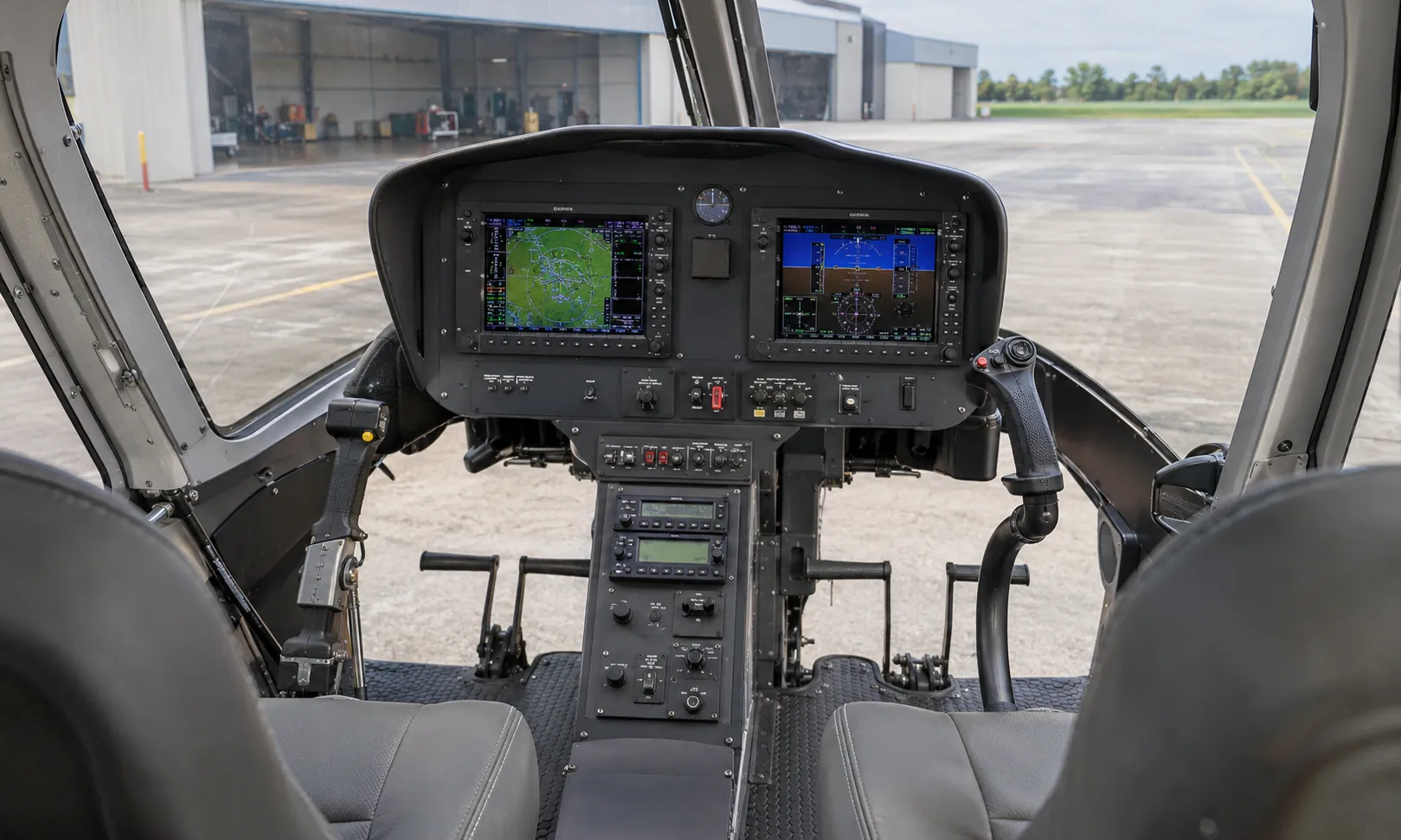
Bell has continued to improve the model over the years. The 407GXi, certified in 2018, brought modern features to the helicopter. It included a Garmin G1000H glass cockpit, an upgraded engine with full authority digital control, and better performance and maintenance features.
The update kept the original design’s strengths. Everything operators liked remained, while outdated features were replaced with newer technology.
The GXi matters because it extends the 407’s productive life deep into the coming decades, assuring buyers that the ecosystem of parts, training, and support they join today will endure. In the market for luxury helicopter models, longevity of support is among the most undervalued forms of security, and the 407 family offers it in unusual depth.
The Honest Trade-offs
Honesty is also an important part of the Bell 407’s profile. It is a single-engine helicopter. Operators flying over busy cities at night or across long stretches of water may need twin-engine helicopters because of regulatory and insurance requirements.
The cabin is comfortable and spacious. However, it does not offer as much room for club-style seating as executive twin-engine helicopters. Its simple, utility-focused design also lacks some of the luxury details found in European competitors.
For the missions it was built for, these trade-offs are mostly theoretical. Sightseeing, charter hops, corporate shuttles, and utility work are overwhelmingly daylight, land-based missions where the 407’s economics dominate, and the type’s safety record across millions of hours stands as the empirical answer to the theoretical concerns.
The Verdict
The Bell 407 remains popular because it was designed for the helicopter industry’s most important customer: the operator who needs to make money with the aircraft every day. It offers reliable engines, reasonable costs, and plenty of support. It also provides one of the smoothest rides among single-engine helicopters. Its design is easy to learn and handles the challenges of daily commercial flying.
Three decades of operators have voted with their fleets, and the verdict is inscribed on every tourist’s holiday photographs and every charter client’s on-time arrival. The classics, in helicopters as in all of luxury, are the machines that quietly outlast the arguments about them. The 407 is such a classic, and its logbook is still being written.
FAQs
What is the Bell 407 used for?
The Bell 407 serves sightseeing tours, corporate and charter transport, emergency medical services, law enforcement, and utility work, making it among the most versatile light helicopters in service.
How many passengers does the Bell 407 carry?
Six passengers in addition to the pilot, with panoramic windows that have made it the sightseeing industry’s preferred platform worldwide.
What engine powers the Bell 407?
The Rolls-Royce 250-C47, one of the most proven turbine engines in aviation history, with a global support network and decades of accumulated service.
When did the Bell 407 enter service?
The 407 first flew in 1995 and entered service in 1996, as a four-blade development of the Bell LongRanger family that descends from the 1960s JetRanger.
What is the Bell 407GXi?
The modernized version certified in 2018, featuring a Garmin G1000H glass cockpit, an upgraded engine with full digital control, and improved performance and maintainability.
How much does a Bell 407 cost?
A new 407GXi represents an investment in the mid single-digit millions of dollars, with a deep pre-owned market offering earlier examples across a wide range of prices.
Is the Bell 407 safe?
Yes. The type has accumulated millions of flight hours across three decades of commercial service, with a safety record reflecting its proven engine, simple systems, and the maturity of its design.
How does the 407 compare to the Airbus H125?
Both are leading light singles. The 407 offers a four-blade rotor’s smoothness and the Rolls-Royce engine’s ubiquity, while the H125 counters with superior high-altitude performance. The choice typically follows operator experience and mission profile.