
Key Takeaways
- 86,400 seconds in a standard calendar day
- Calculated as 24 hours × 60 minutes × 60 seconds
- Leap seconds adjust for Earth’s changing rotational speed
- Sidereal days measure star rotations at 86,164 seconds
- Understanding time math boosts daily planning and focus
AI Overview
Ever wondered how many seconds in a day? A standard solar day has exactly 86,400 seconds, calculated by multiplying 24 hours by 60 minutes and 60 seconds. However, Earth’s natural rotation isn’t perfectly uniform. Astronomers use sidereal time (86,164 seconds) and occasional leap seconds to align our digital clocks with the cosmos. Learn the exact math and time breakdown with PraviCeler.
Introduction
Have you ever paused mid-coffee and wondered, how many seconds in a day do we actually get to live, work, and dream? It feels like time flies by, but the math behind our daily clock is delightfully simple and remarkably precise.
There are exactly 86,400 seconds in a standard 24-hour day. This clean figure comes from multiplying 24 hours by 60 minutes and then multiplying that total by 60 seconds.
While 86,400 is the standard answer for our civil calendars, the physical realities of Earth’s orbit and atomic time measurement reveal fascinating variations. In this guide, we will break down the exact mathematics, explore astronomical differences like solar versus sidereal days, and look at how precise time measurement impacts our daily lives.
The Simple Math Behind Daily Seconds
Understanding time math doesn’t require an advanced degree in astrophysics or complex computer science. We break down every standard day using three fundamental units: hours, minutes, and individual seconds. Every standard calendar day follows this exact progression, forming the foundation of modern timekeeping.
Here is how the basic equation unfolds in step-by-step arithmetic:
- Hours to Minutes: 1 day contains 24 hours, and 1 hour contains 60 minutes. Multiplying $24 \times 60$ gives us 1,440 minutes in a full day.
- Minutes to Seconds: 1 minute contains 60 seconds. Multiplying $1,440 \times 60$ yields the final result: 86,400 seconds.
At PraviCeler, we love breaking down operational data into clear, actionable, and human-friendly insights for your everyday productivity. Knowing how many seconds in a day exist helps us structure schedules, build software, and appreciate every fleeting moment.
Detailed Time Conversions Breakdown
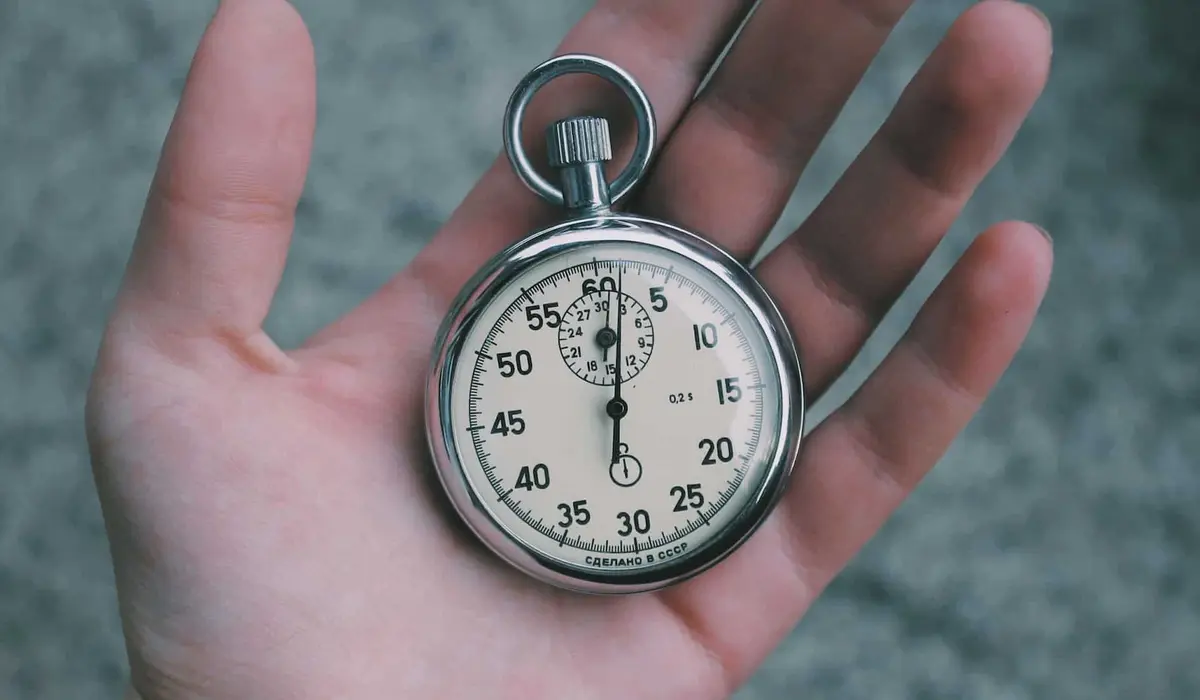
To see how seconds accumulate across different standard timeframes, look at the reference table below.
| Time Unit | Calculation Formula | Total Seconds |
| 1 Minute | 60 seconds | 60 |
| 1 Hour | 60 minutes × 60 seconds | 3,600 |
| 1 Solar Day | 24 hours × 3,600 seconds | 86,400 |
| 1 Sidereal Day | 23h 56m 4.09s | 86,164.09 |
| 1 Week | 7 days × 86,400 seconds | 604,800 |
| 1 Standard Year (365 days) | 365 days × 86,400 seconds | 31,536,000 |
| 1 Leap Year (366 days) | 366 days × 86,400 seconds | 31,622,400 |
Solar Day vs. Sidereal Day: Why Earth’s Rotation Isn’t Perfect
Did you know our standard clock isn’t the only way scientists measure a full day on Earth? What we call a day in daily life is technically known as a mean solar day. A mean solar day measures the average time it takes for the Sun to return to the exact same meridian in the sky. That full solar cycle takes roughly 86,400 seconds in most cases.
However, astronomers also measure what is known as a sidereal day. A sidereal day measures how long Earth takes to complete one full 360-degree rotation relative to fixed distant background stars. Because Earth is simultaneously orbiting the Sun while spinning on its axis, it must rotate slightly more than 360 degrees for the Sun to reach the same position overhead.
As a result, a sidereal day is slightly shorter than a solar day: exactly 23 hours, 56 minutes, and 4.09 seconds. That means a sidereal day contains roughly 86,164 seconds, about 236 seconds less than our traditional 24-hour clock day!
Why Do We Have Leap Seconds and Leap Years?

Earth is not a rigid quartz clock spinning through space in perfect isolation. Environmental factors such as tidal friction caused by the Moon’s gravity, fluid movement in Earth’s molten core, and atmospheric changes subtly alter the planet’s rotation speed over time.
Because Earth’s speed naturally fluctuates, standard Coordinated Universal Time (UTC) which is maintained by hyper-precise atomic clocks, can slowly drift away from astronomical solar time.
To keep our digital clocks aligned with Earth’s actual position, international timekeeping authorities periodically insert an extra leap second. When a leap second occurs, the final minute of the designated day has 61 seconds instead of 60, making that specific day 86,401 seconds long.
On a larger scale, leap years address a similar orbital discrepancy. Because Earth takes approximately 365.2422 days to orbit the Sun, adding an extra 24 hours (86,400 seconds) every four years prevents calendar drift across generations.
At PraviCeler, staying aligned with precise timing and synchronized workflows helps teams maintain seamless operational continuity across worldwide time zones.
How We Spend Our 86,400 Seconds Every Day
Seeing 86,400 as a raw number can feel abstract until you map it onto your real daily routine. When we break down our daily schedule into blocks of time, it becomes clear how quickly these seconds add up:
- Sleeping (7–8 hours): Uses roughly 25,200 to 28,800 seconds for crucial physical and mental recovery.
- Working & Commuting (8–9 hours): Eats up about 28,800 to 32,400 seconds in focus time, meetings, and travel.
- Meals & Personal Care (2 hours): Accounts for nearly 7,200 seconds spent eating, cooking, and refreshing.
- Leisure & Family Time (5 hours): Leaves around 18,000 seconds for hobbies, social connections, and relaxation.
Fun Facts About Seconds and Earth Tim
Time is full of fascinating quirks that show just how incredible our planetary clock really is. The way humanity measures and experiences seconds has evolved dramatically throughout scientific history:
- Atomic clocks measure time using the vibration frequency of cesium-133 atoms rather than planetary rotation.
- The international standard second was officially defined in 1967 as 9,192,631,770 periods of radiation from cesium-133.
- Earth’s rotation is gradually slowing down over millions of years, making days about 1.7 milliseconds longer per century.
- In the dinosaurs’ era 200 million years ago, a full Earth day was only about 23 hours long (approx. 82,800 seconds).
Historical Evolution of Time Division

The division of a day into 24 hours, 60 minutes, and 60 seconds date back thousands of years to ancient civilizations.
The ancient Egyptians were among the first to divide the day and night into 12-hour segments using sundials and water clocks. Later, the Babylonians who used a sexagesimal (base-60) numerical system extended this framework by dividing hours into 60 smaller units (minutes) and those units into 60 further subdivisions (seconds).
Before atomic standards were established in the mid-20th century, a second was simply defined as $1/86,400$ of a mean solar day. Modern physics has since replaced astronomical definitions with atomic frequency standards to eliminate small variations caused by planetary mechanics.
Conclusion
Now you know the complete math: every single standard calendar day grants you exactly 86,400 seconds to make an impact, build habits, and connect with loved ones. While planetary shifts and leap seconds tweak the edges, our 24-hour rhythm remains the heart of modern life. Understanding these numbers helps us appreciate the true value of every passing moment.
At PraviCeler, we encourage you to make every single second count! How will you spend your 86,400 seconds today?
Frequently Asked Questions
How many seconds are in a normal 24-hour day?
There are exactly 86,400 seconds in a standard 24-hour day. This total is calculated by multiplying 24 hours by 60 minutes and then by 60 seconds.
How many seconds are in a full year?
A standard 365-day year contains 31,536,000 seconds, while a 366-day leap year contains 31,622,400 seconds total based on standard solar time calculations.
Does every single day have exactly 86,400 seconds?
Most standard days have 86,400 seconds. However, days with official leap seconds have 86,401 seconds to keep atomic time aligned with Earth’s rotation.
What is the difference between a solar day and a sidereal day?
A solar day lasts 86,400 seconds based on the Sun’s position. A sidereal day lasts 86,164 seconds based on Earth’s rotation relative to stars.