NetJets vs. Flexjet is the comparison every serious private aviation buyer eventually makes, usually late at night after the third sales presentation and the second glossy brochure. A founder I know spent six months circling the decision before signing anything, and his summary was disarmingly simple.
Both companies will get you from Teterboro to Palm Beach in a superbly maintained jet with excellent pilots and a bottle of your preferred champagne waiting. The real differences live in the contract details, the fleet philosophy, and how each company treats you on your worst travel day, not your best one.
Fractional ownership, the model both companies perfected, lets you buy a share of a specific aircraft rather than the whole machine, granting you a guaranteed number of flight hours per year with the operator handling crews, maintenance, hangars, and insurance.
It is the middle path between chartering ad hoc and the full commitment of owning a private jet outright, and it accounts for a substantial share of all private flying in America today.
How Fractional Ownership Actually Works
The concept is elegant. You purchase a fraction of an aircraft, typically starting at one sixteenth, which entitles you to roughly 50 occupied flight hours per year. You pay three layers of cost. First comes the acquisition price for your share, which can range from several hundred thousand dollars for a small share of a light jet to several million for a large share of a long range flagship.
Second comes a monthly management fee covering your share of fixed costs like crew salaries, hangar space, and insurance. Third comes an occupied hourly rate each time you fly, covering fuel and variable expenses. At the end of your contract term, usually five years, you can renew, upgrade, or sell your share back at fair market value.
What you are really buying is guaranteed access. Contract holders receive an aircraft with as little as four to ten hours of notice depending on their share size and the program terms, with the operator absorbing the complexity of positioning, crewing, and recovery if a jet breaks down.
For anyone weighing this against charter, it is worth understanding what private jet charter costs on a per trip basis, because the break even point between chartering and fractional ownership typically arrives somewhere between 150 and 200 flight hours per year, depending on aircraft size and routes.
The Case for NetJets
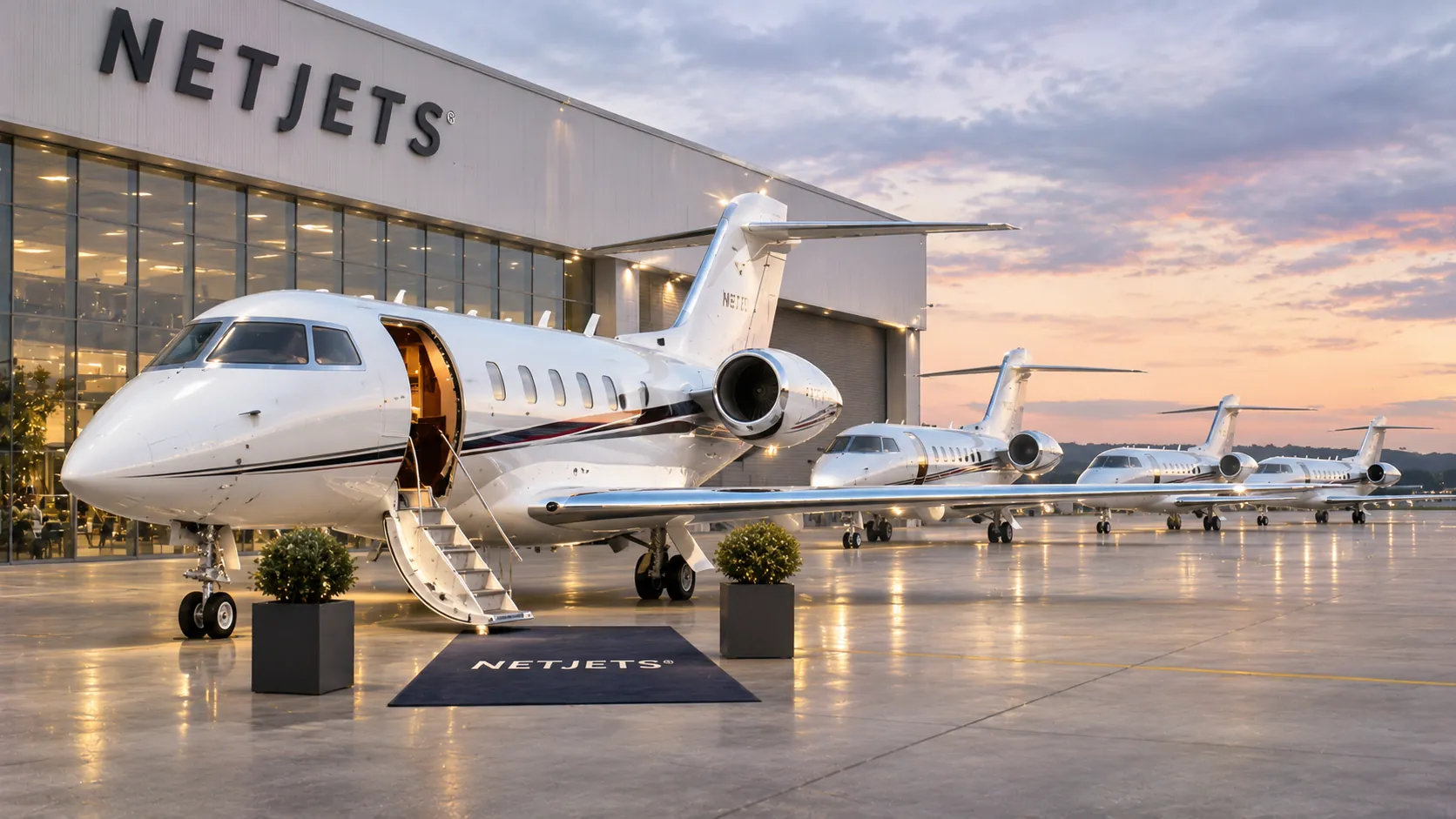
NetJets invented fractional ownership in 1986 and remains the undisputed giant of the industry, operating the largest private jet fleet in the world with well over 800 aircraft. Backed by Berkshire Hathaway, the company offers a scale no competitor can match.
That scale translates into concrete advantages. Fleet depth means recovery aircraft appear quickly when mechanical issues strike. A global footprint through NetJets Europe serves transatlantic owners smoothly. Interchange privileges let owners move between aircraft types within the fleet, flying a Phenom 300 to Nantucket in summer and a Global 6000 to Geneva in winter under the same contract.
NetJets also became the launch customer for the Bombardier Global 8000, the fastest purpose built business jet ever certified, which entered service in December 2025. For owners who want the newest metal and the longest legs, that matters.
The tradeoff is price. NetJets typically commands a premium across acquisition, monthly fees, and hourly rates, a reflection of demand that has kept its order books full for years.
You pay for the biggest brand and the deepest bench, and for many Fortune 500 flight departments and family offices, that premium is the point.
The Case for Flexjet

Flexjet, owned by Directional Aviation, has spent two decades positioning itself as the boutique alternative, and the strategy has matured into something genuinely competitive rather than merely cheaper.
Its most distinctive feature is dedicated crewing on many programs, where your flights are operated by a consistent team of pilots assigned to your aircraft rather than drawn from a pool.
For owners who fly weekly and value familiar faces in the cockpit, this is a meaningful quality of life difference that NetJets’ scale model does not replicate.
Flexjet’s fleet leans heavily toward large cabin and super midsize aircraft, including the Gulfstream G650 and G700 family, the Bombardier Global series, and the Embraer Praetor 600.
Its Red Label program adds bespoke cabin interiors with artisan materials, curated catering, and a service standard aimed squarely at owners who notice stitching.
Flexjet has also historically offered younger average fleet age and competitive pricing that can run meaningfully below NetJets for equivalent aircraft, though exact figures vary by share size and negotiation.
For travelers comparing the experience against the finest private jets flying today, Flexjet’s large cabin emphasis means more time in genuinely spacious aircraft.
The Honest Differences That Matter
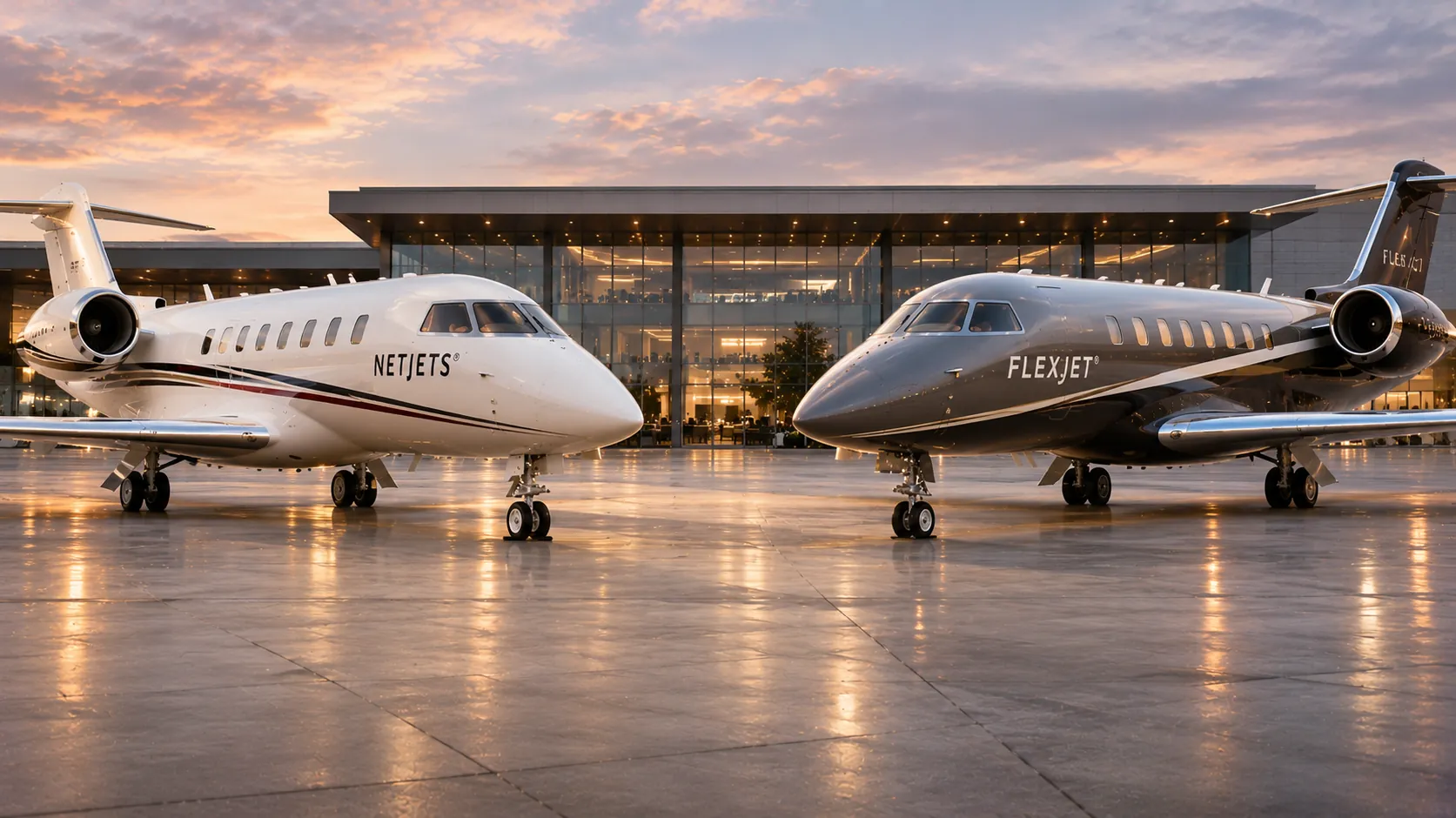
Strip away the marketing and five factors decide this choice for most buyers. Fleet access: NetJets offers broader type variety and more aircraft overall; Flexjet skews toward larger, newer cabins.
Crewing model: Flexjet’s dedicated crews suit habitual flyers; NetJets’ pooled model suits those who prioritize flexibility.
Geography: NetJets Europe gives it an edge for owners who split life between continents.
Pricing: Flexjet usually wins on headline numbers; NetJets argues its recovery performance and fleet depth justify the gap.
Contract terms: both offer share sizes from one sixteenth upward, but notice periods, peak day rules, and ferry fee policies differ enough that a lawyer should read every line.
Peak days deserve special attention. Both programs impose restrictions around holidays and major events, when demand for the best private jets in New York and every other hub spikes simultaneously.
The number of peak days your share carries, the extra notice they require, and the premium rates they command can quietly reshape the true cost of ownership. Ask for each company’s actual peak day calendar before signing.
Who Should Choose Which, and Who Should Choose Neither
NetJets fits the buyer who values certainty above all: global reach, interchange flexibility, and the comfort of the industry’s largest operator standing behind every flight. Flexjet fits the buyer who flies consistent routes, appreciates a dedicated crew and a design forward cabin, and wants large cabin comfort at a sharper price.
Neither fits the occasional flyer. If you fly under 100 hours a year, charter or a jet card will almost certainly serve you better and cheaper, with no capital locked into a depreciating asset. Fractional ownership rewards consistency, punishes spontaneity, and works best when your calendar is as predictable as your taste.
The wisest buyers we know treat the sales process like buying any other major asset. Fly both programs as a charter guest first. Talk to current owners, not just the references the sales team provides. Model your three most common routes against the full five year cost of each program. The jet itself is the easy part. The contract is where the real decision lives.
FAQs
What is fractional jet ownership?
Fractional ownership means purchasing a share of a specific private jet, typically from one sixteenth upward, which entitles you to a set number of flight hours per year. The operator manages the aircraft, crews, maintenance, and insurance while you pay acquisition, monthly management, and hourly flight costs.
How much does a NetJets share cost?
Costs vary widely by aircraft type and share size. A one sixteenth share of a light jet can start in the high hundreds of thousands of dollars, while large cabin shares run into the millions, plus monthly management fees and occupied hourly rates. Exact pricing is quoted individually and negotiated.
Is Flexjet cheaper than NetJets?
Flexjet typically offers lower pricing than NetJets for comparable aircraft and share sizes, though the gap varies by program and negotiation. NetJets counters with greater fleet scale, broader aircraft variety, and its global European operation, which it argues justifies the premium.
What is the Flexjet Red Label program?
Red Label is Flexjet’s premium tier, featuring dedicated flight crews assigned to specific aircraft, bespoke cabin interiors with artisan finishes, curated catering, and an elevated service standard. It targets owners who fly frequently and value consistency and design detail.
How many flight hours do you get with fractional ownership?
A one sixteenth share typically provides about 50 occupied flight hours per year. A one eighth share doubles that to roughly 100 hours, and so on. Hours can often be shifted between years within contract limits, and both programs sell larger shares for heavier users.
What happens at the end of a fractional contract?
At the end of the typical five year term, owners can renew the contract, trade up or down to a different aircraft type, or sell the share back at fair market value. Resale values depend on the aircraft type, market conditions, and the program’s specific terms.
Can fractional owners fly internationally?
Yes. Both NetJets and Flexjet support international flying, though ferry fees, international handling charges, and specific program rules apply. NetJets operates a dedicated European fleet, giving it an advantage for owners who regularly cross the Atlantic.
Is fractional ownership better than chartering?
It depends on annual flight hours. Below roughly 100 to 150 hours per year, chartering or a jet card is usually more economical. Above that threshold, fractional ownership’s guaranteed access, consistent service, and predictable pricing often justify the capital commitment.