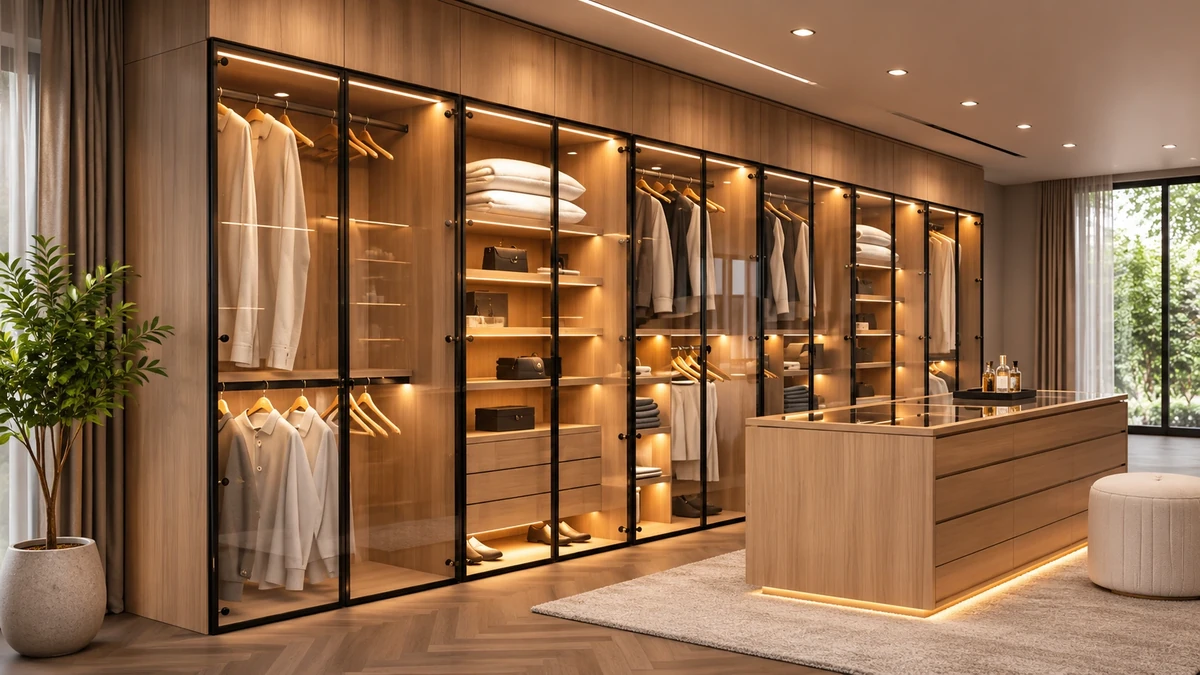
A beautifully designed wardrobe can change the way a bedroom looks, feels, and functions. A thoughtful Luxury Wardrobe Design is more than a place to hang clothes or store shoes. The right wardrobe brings order to everyday routines, creates visual harmony, and adds a sense of quiet luxury to the home.
Picture opening a wardrobe in the morning and finding everything exactly where it belongs. Shirts hang neatly, shoes have their own shelves, accessories are arranged in soft-lined drawers, and warm lighting makes even the smallest details easy to see. Nothing feels crowded or difficult to reach.
That is what thoughtful luxury wardrobe design should achieve.
Modern luxury wardrobes combine beautiful materials, elegant proportions, intelligent storage, and personalized details. From floor-to-ceiling built-in cabinets to spacious walk-in dressing rooms, there are designs for almost every bedroom size and decorating preference.
Whether you are renovating a primary bedroom, planning a new home, or simply looking for inspiration, these 25 luxury wardrobe design ideas offer a starting point for creating a space that feels sophisticated and genuinely useful.
What Is a Luxury Wardrobe Design?
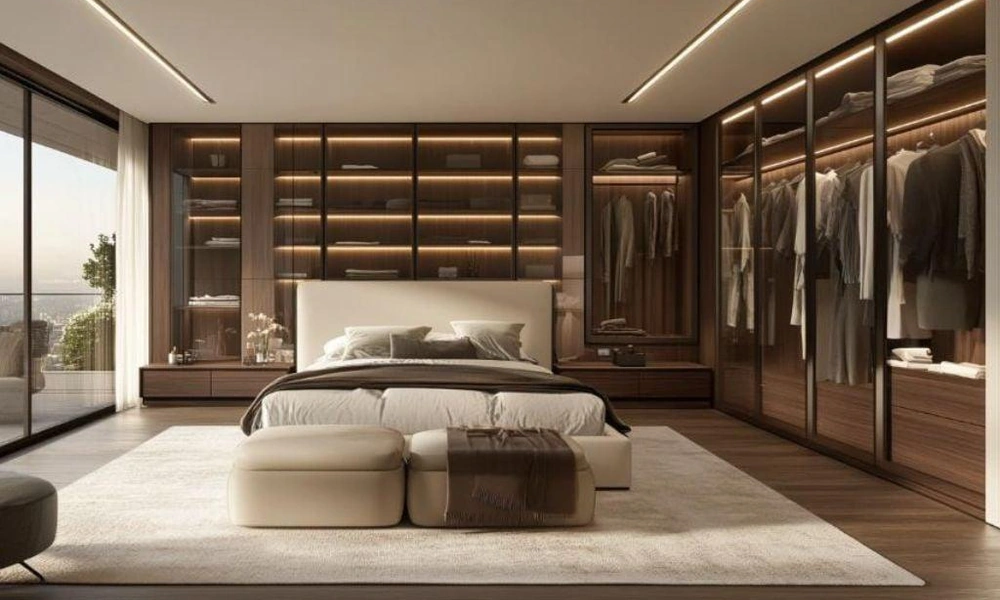
A luxury wardrobe design is a thoughtfully planned clothing storage system that combines quality materials, functional organization, refined finishes, and a design tailored to its surroundings.
Unlike basic freestanding cupboards, luxury wardrobes often incorporate custom dimensions, integrated lighting, specialized compartments, high-quality hardware, and coordinated interior finishes.
The most successful designs generally share five characteristics:
- Thoughtful storage: Dedicated spaces for hanging clothes, folded garments, shoes, and accessories.
- Beautiful materials: Wood veneers, lacquered surfaces, glass, metal accents, and carefully chosen interior finishes.
- Quality craftsmanship: Strong construction, precise joinery, smooth drawers, and reliable hinges.
- Considered lighting: Functional illumination that makes everything easier to find.
- Personalization: Storage tailored to the owner’s clothing collection, habits, and available space.
Luxury is not determined by the size of a wardrobe or how much it costs. A compact wardrobe with exceptional organization can feel more luxurious than a large dressing room with poor lighting and wasted space.
25 Luxury Wardrobe Design Ideas Worth Exploring
1. Floor-to-Ceiling Luxury Wardrobe
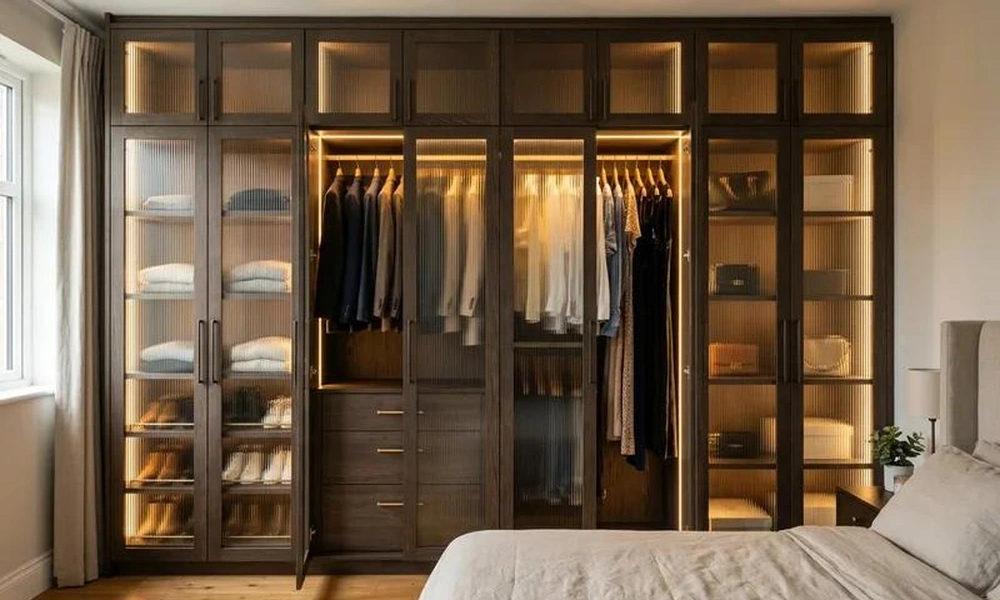
Floor-to-ceiling wardrobes create a clean architectural appearance while making use of the vertical space in a bedroom.
By extending cabinetry toward the ceiling, the design eliminates awkward gaps above standard wardrobes and creates room for seasonal clothing, spare bedding, or occasionally used accessories.
Choose smooth matte doors for a contemporary look or warm timber finishes for a softer atmosphere.
Best for: Modern bedrooms, built-in storage, and rooms with limited floor space.
2. Walk-In Luxury Wardrobe
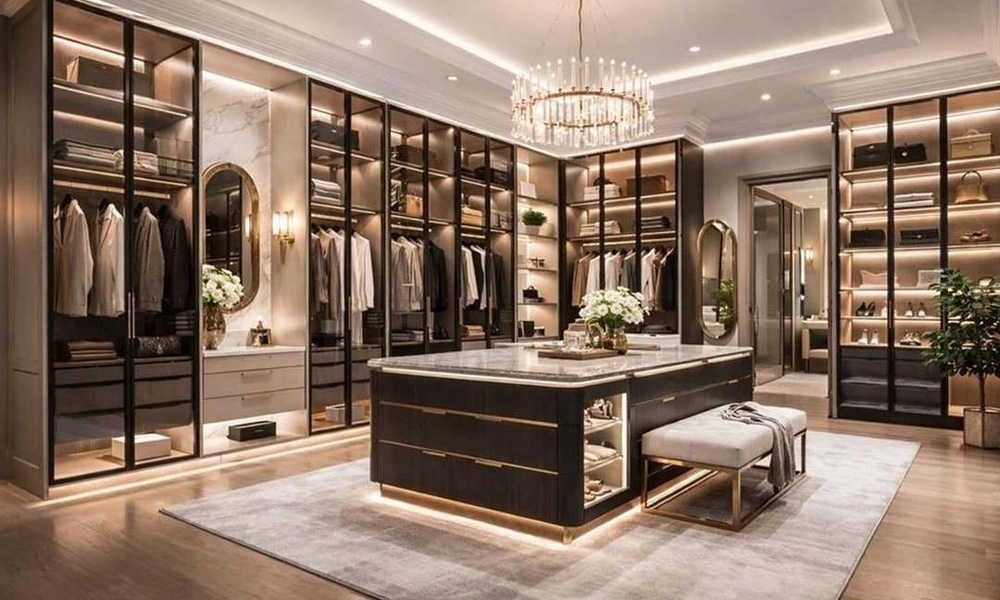
A walk-in wardrobe creates a dedicated space for getting dressed, organizing clothing, and displaying personal accessories.
It may include hanging rails along several walls, built-in drawers, shoe shelving, mirrors, and a comfortable central walkway.
Larger designs can accommodate a dressing island or seating area.
For a cohesive interior, the dressing room should complement the bedroom rather than feel like a separate furniture showroom. This is particularly important when planning a complete luxury home design where architectural details and materials connect throughout the house.
Best for: Primary bedroom suites and homes with dedicated dressing areas.
3. Glass-Door Luxury Wardrobe
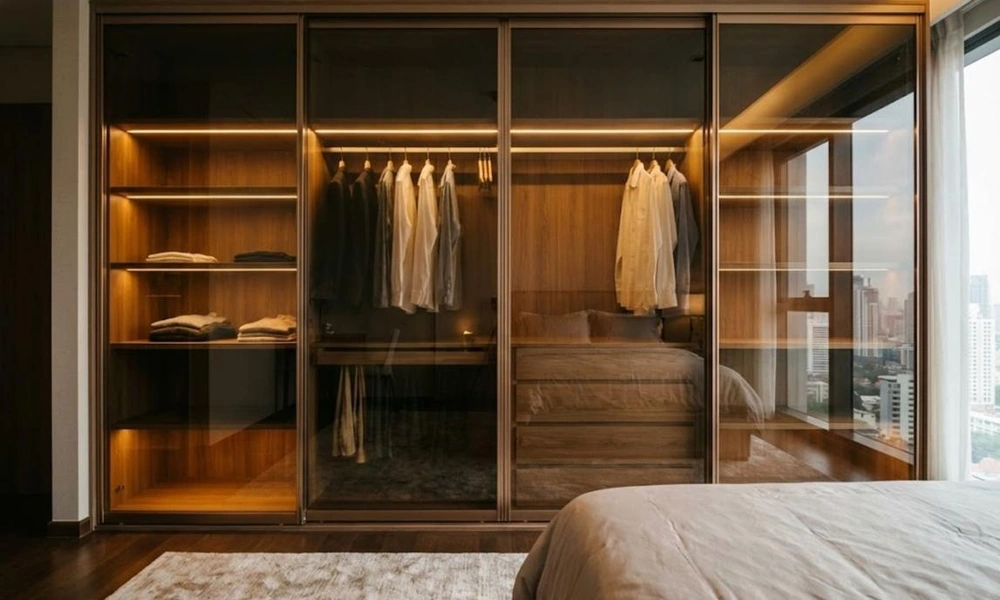
Glass wardrobe doors bring a refined, boutique-inspired appearance to the bedroom.
Clear glass allows clothing and accessories to become part of the interior design, while tinted, fluted, or frosted glass provides varying levels of privacy.
Dark bronze frames and warm interior lighting can create a sophisticated contrast.
However, glass wardrobes work best when the contents are carefully organized. Visible clutter can quickly undermine the intended elegance.
Best for: Contemporary bedrooms and curated clothing collections.
4. Sliding Door Luxury Wardrobe
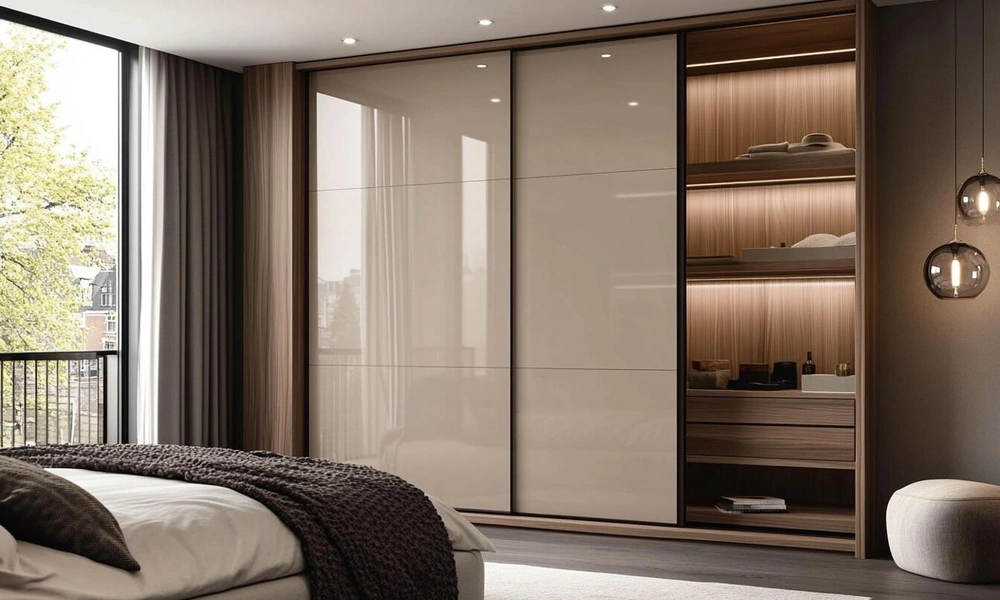
Sliding door wardrobes provide a streamlined solution for rooms where conventional hinged doors would occupy too much circulation space.
The doors move horizontally along tracks, allowing the wardrobe to sit comfortably beside beds, dressers, and other furniture.
Popular finishes include mirrored panels, lacquered surfaces, wood veneer, and glass.
Invest in quality tracks and hardware, since smooth movement is essential to both the experience and longevity of the design.
Best for: Apartments, compact bedrooms, and contemporary interiors.
5. Minimalist Handleless Wardrobe
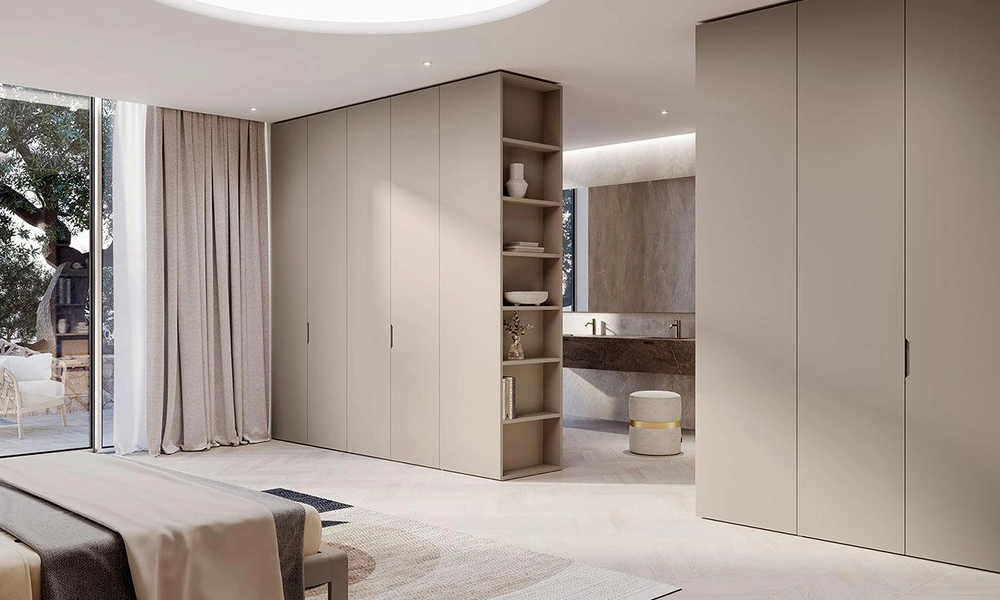
A handleless wardrobe creates an uninterrupted surface that blends naturally into the surrounding walls.
Designers achieve this appearance using recessed pulls, integrated grooves, or suitable push-to-open mechanisms.
A pale beige or warm-white finish can make the wardrobe almost disappear into the architecture, creating a calm atmosphere.
The result works especially well in bedrooms where simplicity and visual balance matter more than decorative detail.
6. Luxury Wooden Wardrobe
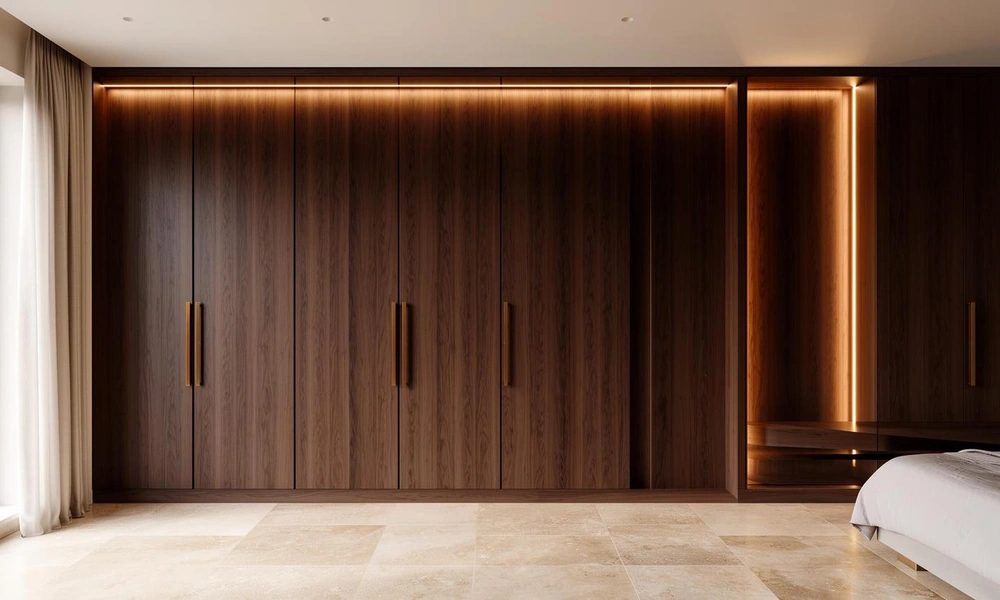
Natural wood brings warmth and timeless character to a bedroom.
Walnut, oak, ash, and other attractive timber finishes offer different colors and grain patterns. Rich walnut can create a dramatic interior, while lighter oak gives a more relaxed Scandinavian-inspired appearance.
Wood veneer over a stable engineered core can provide a consistent finish for large cabinet doors.
Pair wooden surfaces with understated handles and soft lighting for a design that feels elegant without becoming overly traditional.
7. Mirrored Luxury Wardrobe
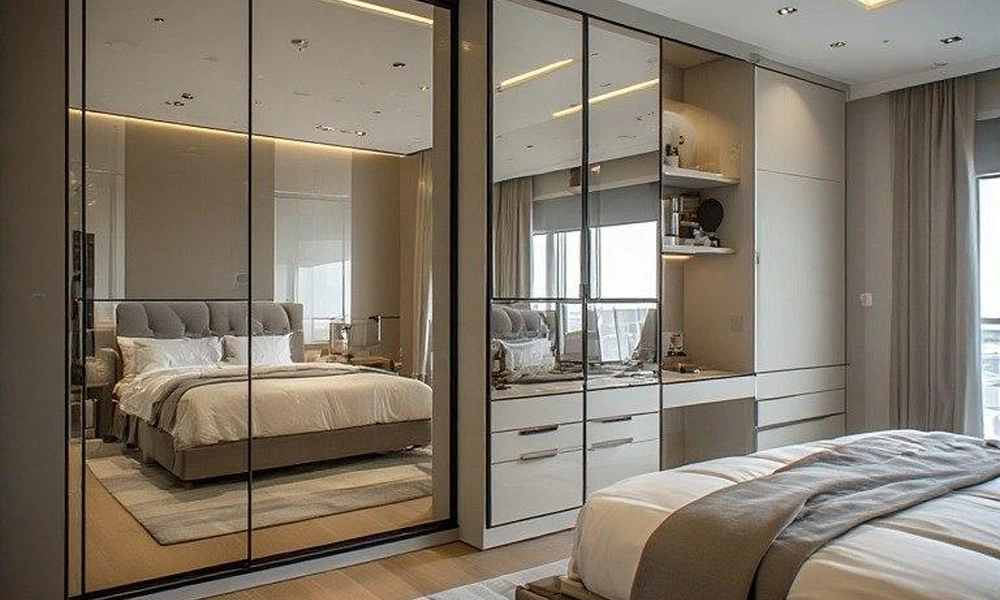
Mirrored wardrobes combine practical dressing functionality with the ability to reflect natural and artificial light.
Full-height mirrored doors are particularly useful in compact bedrooms because they can make the room appear brighter and visually more spacious.
For a softer appearance, consider bronze-tinted mirrors, subtle framing, or a combination of mirrored and solid panels.
This approach complements many luxury bedroom ideas for small rooms, where reflective surfaces and thoughtful proportions help create an open, boutique-hotel atmosphere.
8. Luxury Wardrobe With Integrated Lighting
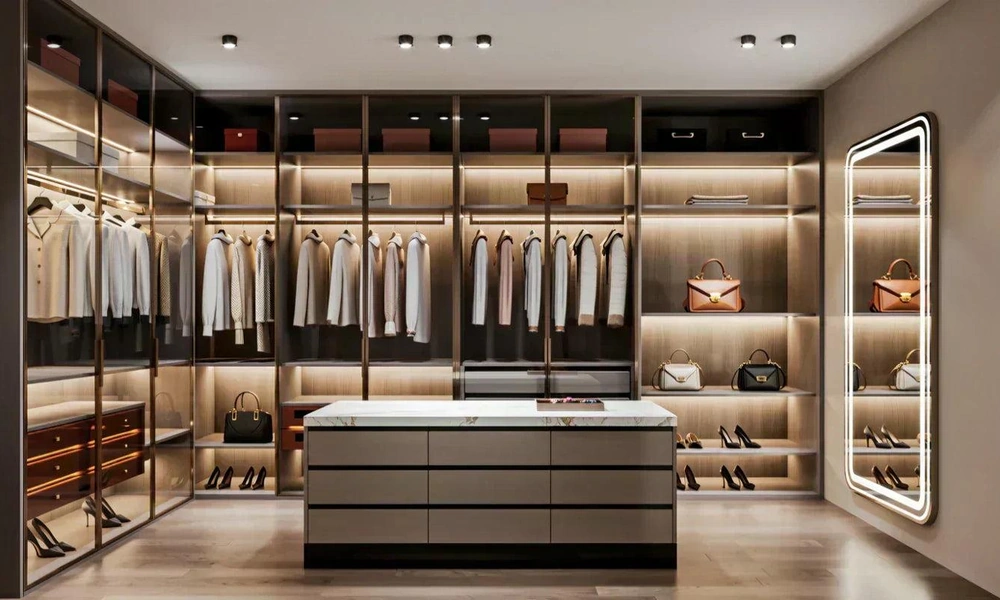
Lighting can transform an ordinary wardrobe into a beautifully organized storage system.
LED strips beneath shelves, illuminated hanging rails, and motion-activated cabinet lighting make clothing easier to see.
Warm or neutral-white lighting can create a welcoming atmosphere, although color accuracy matters when choosing outfits.
For a polished result, conceal the light sources and position them to illuminate the wardrobe contents rather than shine directly into the user’s eyes.
9. Modern Black Luxury Wardrobe
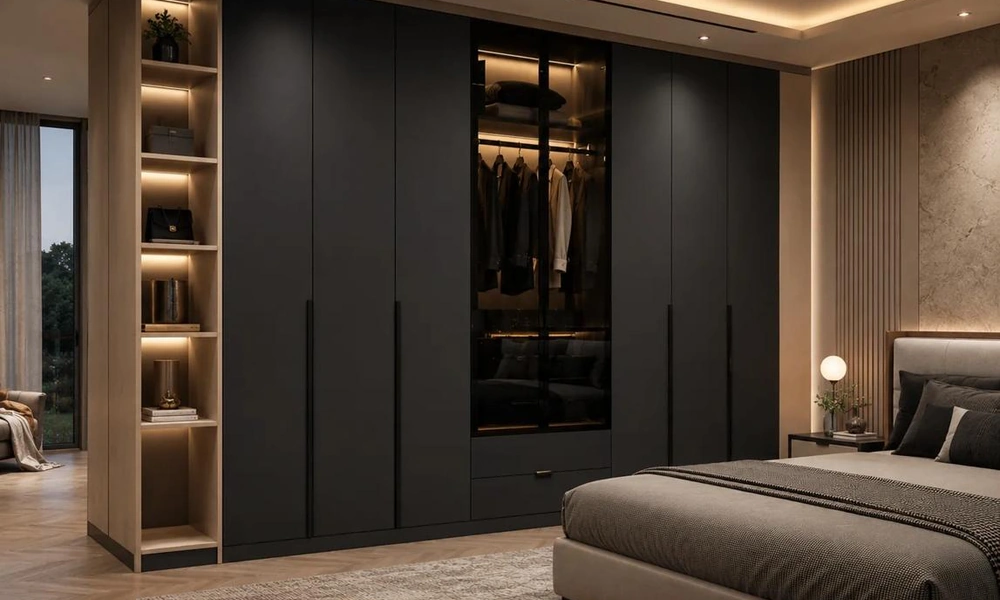
Black wardrobes can create a sophisticated, architectural statement.
Matte black cabinetry feels restrained and contemporary, while black glass panels and dark metal detailing can introduce a more dramatic effect.
Balance dark finishes with lighter walls, natural textures, and appropriate lighting so the room does not feel overly heavy.
A black wardrobe can be particularly striking when paired with warm wood flooring or soft cream upholstery.
10. Luxury White Wardrobe
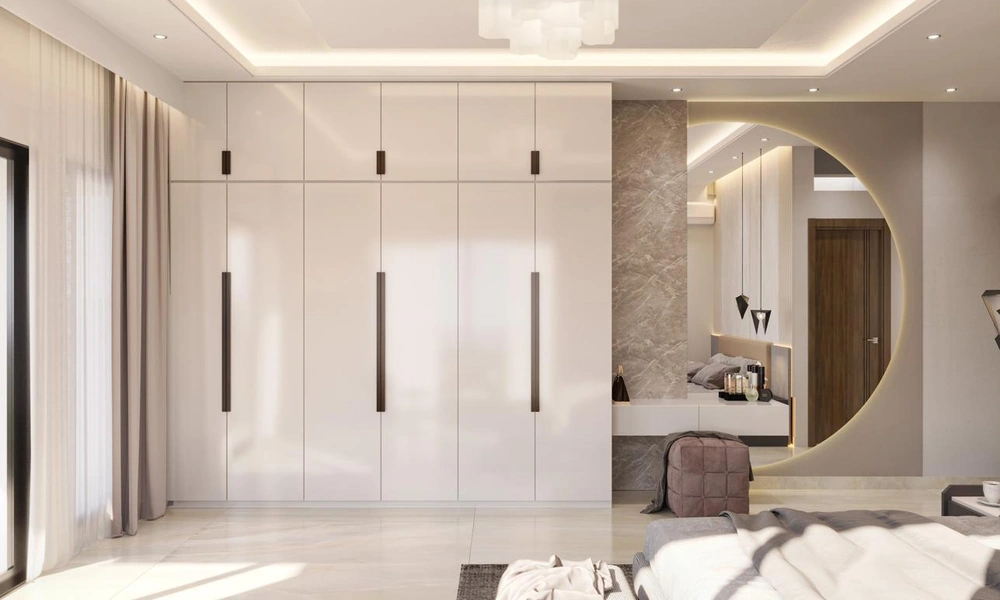
White wardrobes offer a timeless appearance that adapts easily to changing interior styles.
They work beautifully in bedrooms with pale walls, natural materials, and neutral textiles.
Rather than relying entirely on glossy surfaces, consider combining satin finishes, subtle panel detailing, and warm metallic hardware.
A carefully designed white wardrobe can feel airy, elegant, and quietly luxurious.
11. L-Shaped Luxury Wardrobe
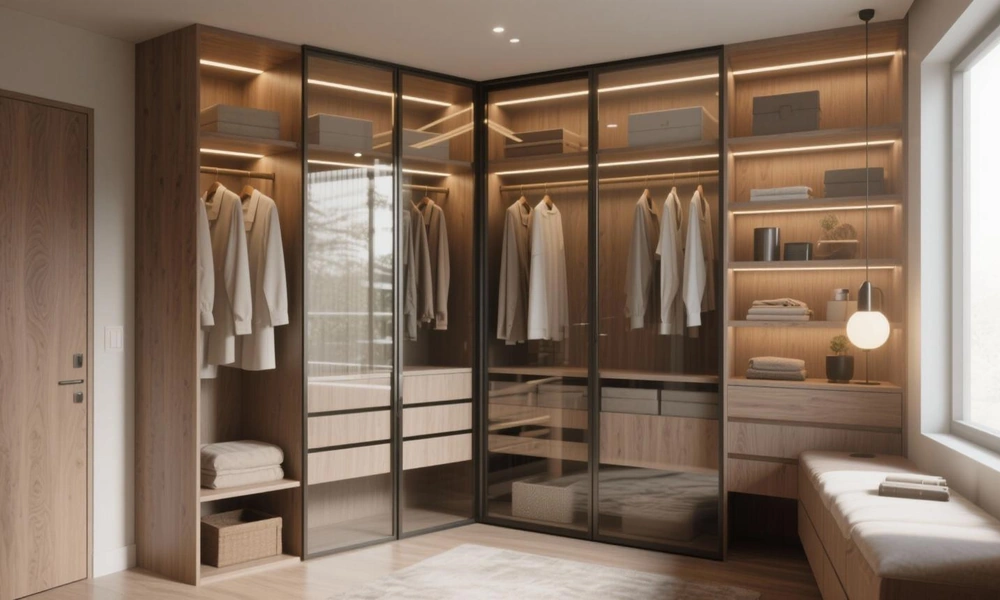
An L-shaped wardrobe uses two adjoining walls to create a generous storage arrangement.
This configuration is useful in bedrooms where a single straight wardrobe would not provide enough hanging or shelf space.
One side might contain full-length hanging sections, while the other accommodates drawers, shoes, and folded clothing.
The corner should be designed carefully to avoid inaccessible storage. Pull-out fittings or a well-planned hanging section can help make the space more practical.
12. Luxury Wardrobe With Dressing Table
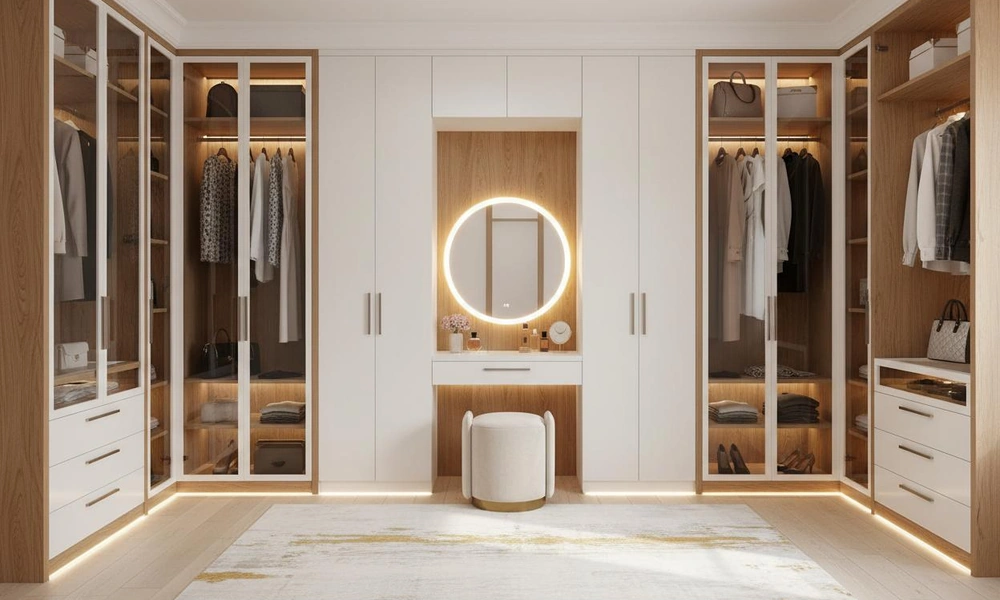
Combining a wardrobe with a dressing table creates an organized personal grooming area.
The design may feature a mirror, drawers, comfortable seating, and lighting positioned for everyday use.
A floating vanity can maintain a light appearance, while coordinated cabinetry creates visual continuity.
This approach works particularly well when a separate dressing room is not available.
13. Luxury Wardrobe With a Central Island
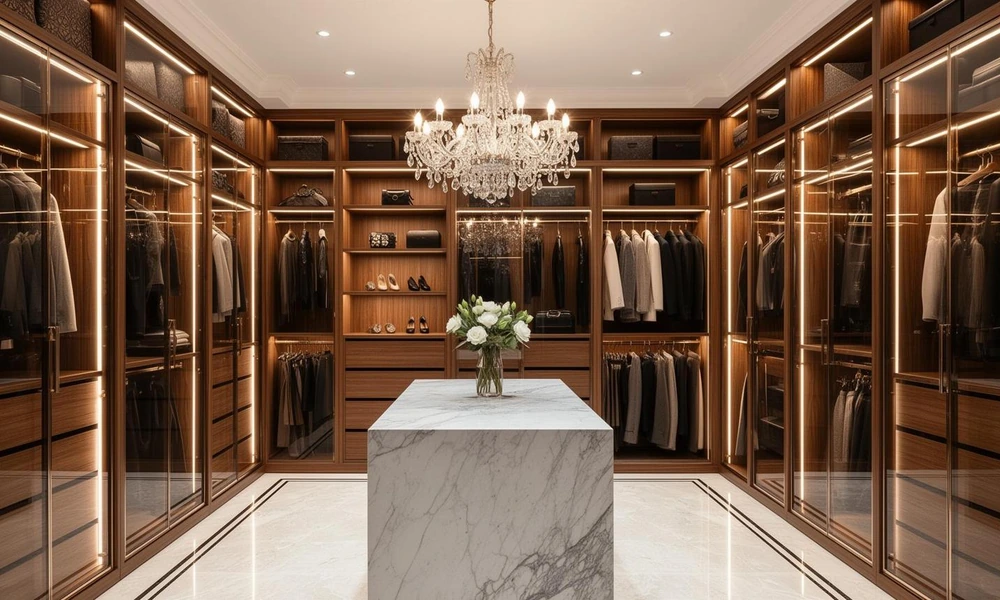
A central island can become the centerpiece of a spacious walk-in wardrobe.
It provides additional storage for watches, jewelry, sunglasses, belts, scarves, and smaller accessories.
Some designs feature glass-topped display drawers, while others use stone or wood surfaces for a more understated appearance.
The island should never obstruct circulation. Comfortable space must remain around it for opening drawers and accessing nearby cabinetry.
14. Open Luxury Wardrobe Design
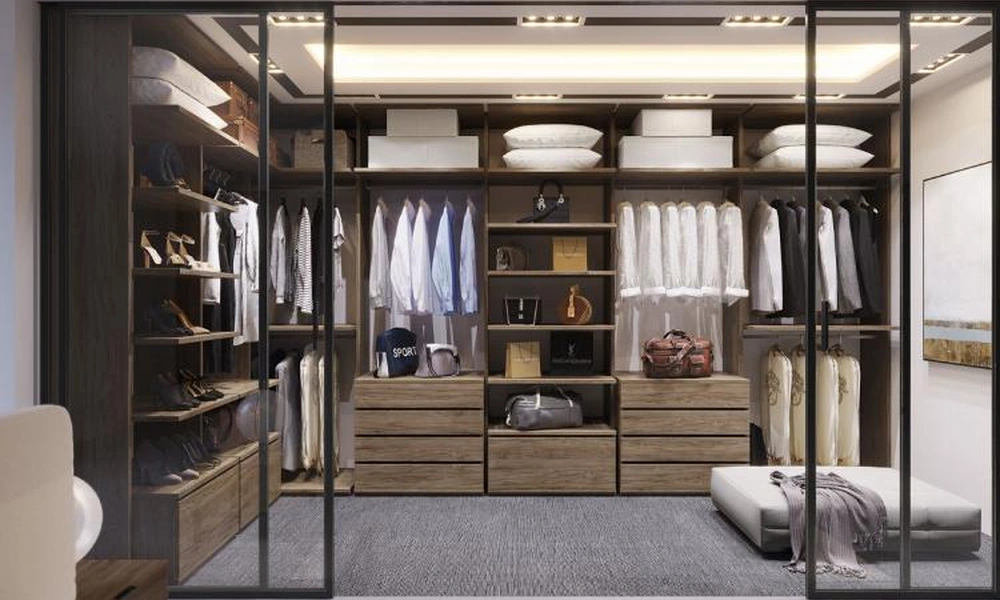
Open wardrobes eliminate conventional cabinet doors and place clothing directly on display.
They can create a relaxed, fashion-studio appearance, especially when clothing is arranged by color or garment type.
However, exposed clothes collect dust more easily, and open storage requires regular organization.
A balanced solution uses open shelves for frequently worn items and closed cabinets for less visually appealing necessities.
15. Luxury Wardrobe With Shoe Display
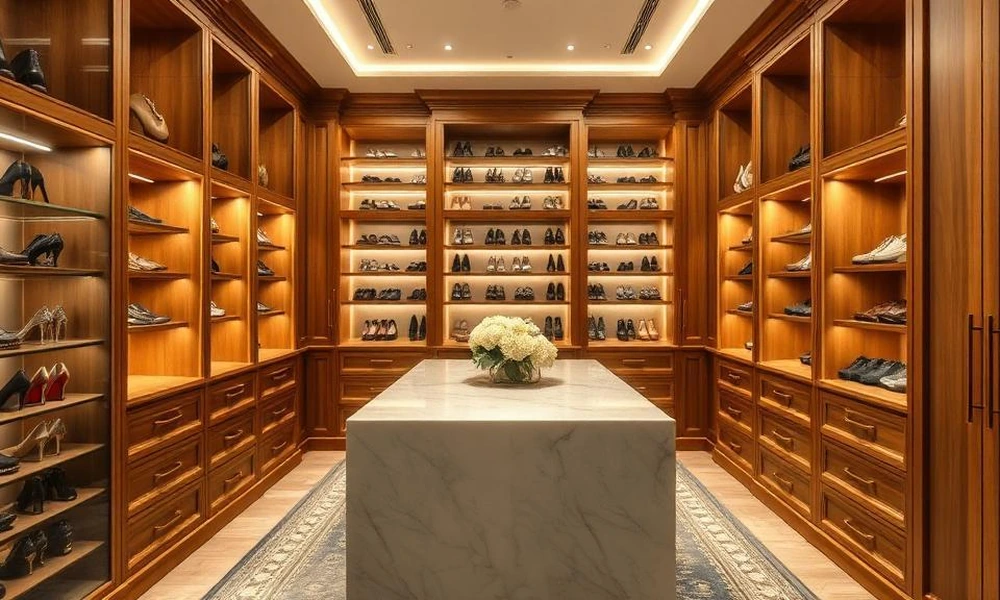
For people who enjoy collecting shoes, a dedicated display section can be both practical and visually appealing.
Adjustable shelves accommodate different styles, from flat shoes and sneakers to ankle boots and heels.
Glass-front cabinets can reduce dust exposure, while soft lighting highlights the collection.
The most useful layouts keep everyday footwear at accessible heights and place occasional shoes in less frequently used areas.
16. Luxury Wardrobe With Jewelry Drawers
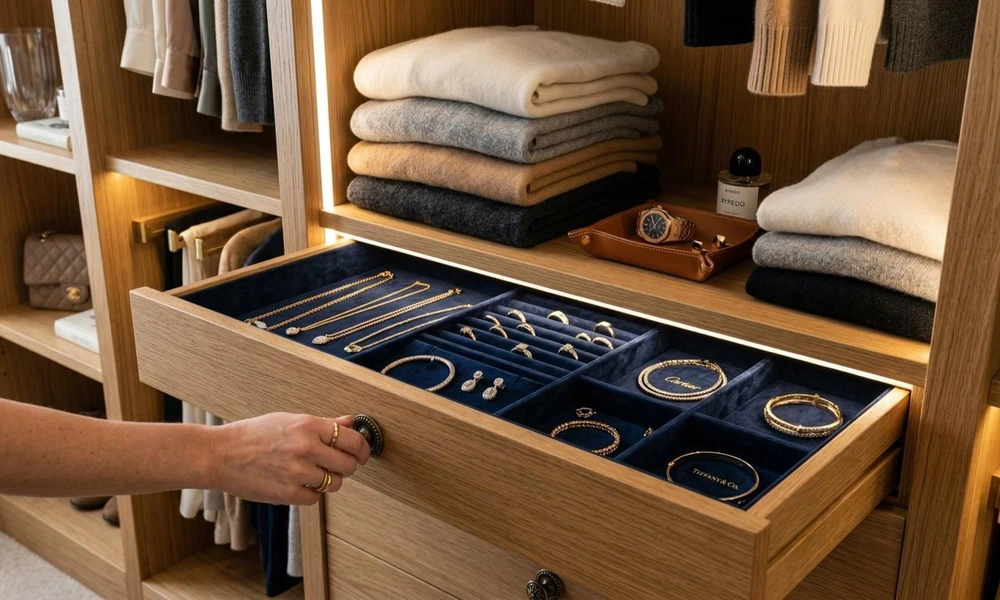
Small accessories deserve the same organizational attention as larger garments.
Velvet-lined drawers, compartment dividers, watch trays, and dedicated jewelry organizers can keep delicate items separated and protected from unnecessary friction.
For valuable collections, consider secure storage rather than relying only on decorative display drawers.
This type of detailing works especially well in a dressing room designed around a carefully curated personal collection.
17. Luxury Wardrobe With Hidden Compartments
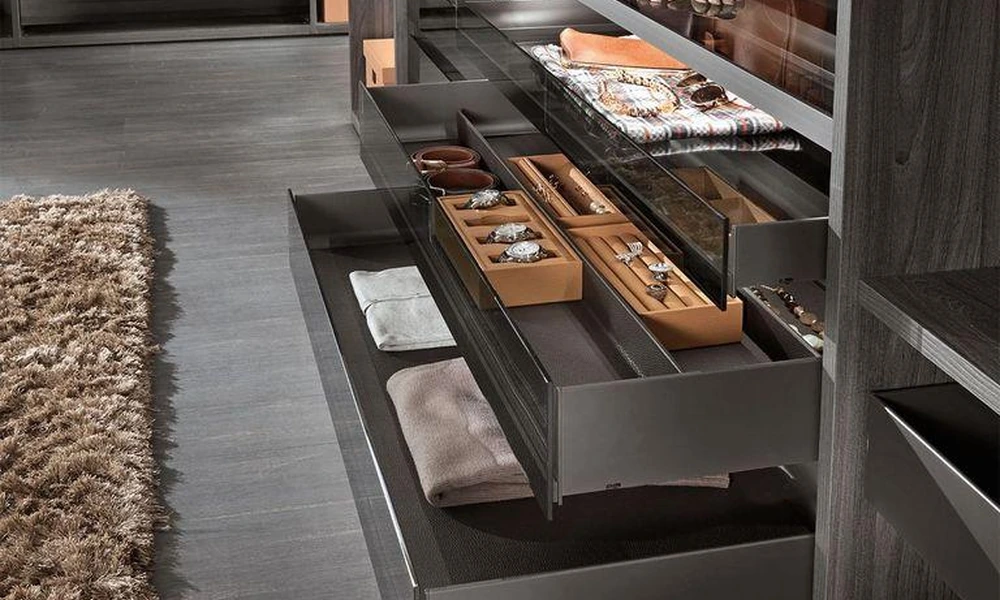
Concealed storage keeps a bedroom looking orderly while providing space for belongings that do not need to remain visible.
Examples include hidden drawers, pull-out organizers, integrated laundry compartments, and discreet storage behind full-height panels.
The goal is convenience rather than complexity.
A well-designed hidden compartment should be easy to access, durable, and appropriate for what it holds.
18. Luxury Wardrobe With Fluted Glass
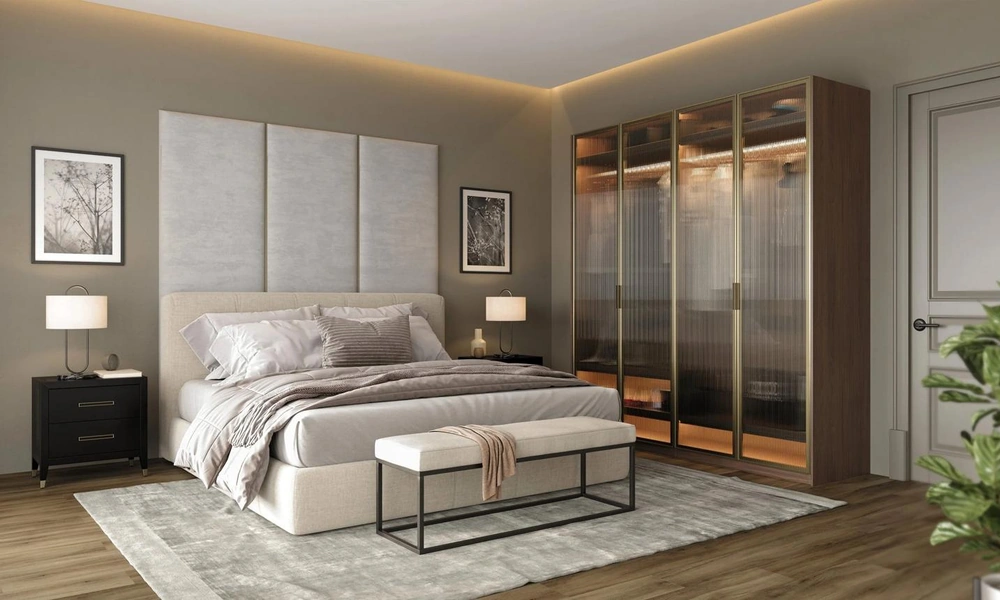
Fluted glass features vertical texture that softly obscures the contents behind it.
It introduces an elegant architectural detail while providing more privacy than completely transparent glass.
Bronze, gray, or clear fluted panels can be paired with slim metal frames and warm timber interiors.
This design suits homeowners who appreciate glass wardrobes but prefer a less exposed appearance.
19. Luxury Wardrobe With Leather Details
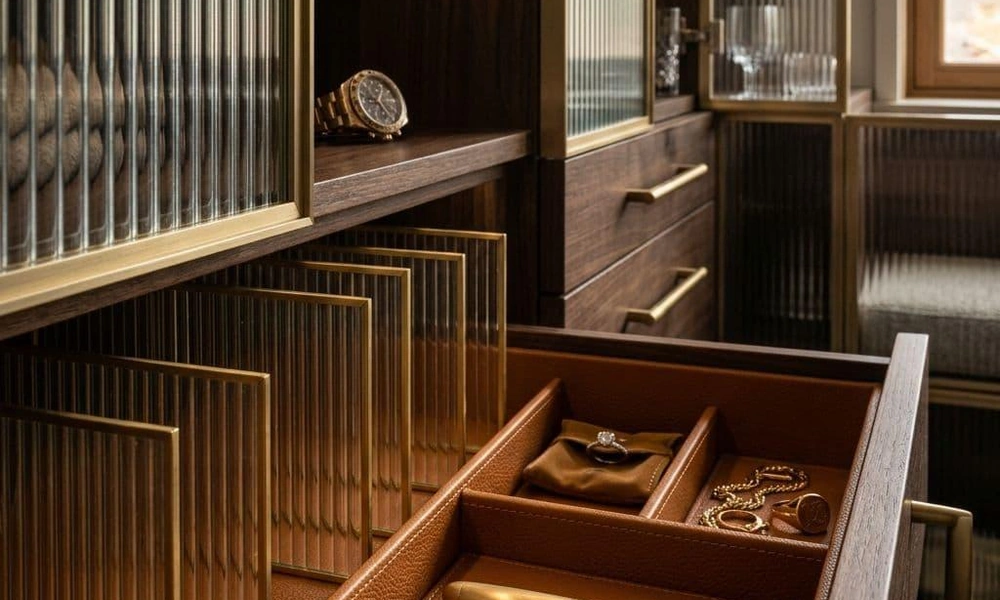
Leather or leather-look accents can introduce softness and texture to cabinetry.
They may appear on drawer fronts, handles, interior trays, or upholstered panels.
Because wardrobe surfaces experience daily use, durability and cleaning requirements should be considered before selecting materials.
Used selectively, these details can make a dressing area feel personal and refined.
20. Two-Tone Luxury Wardrobe
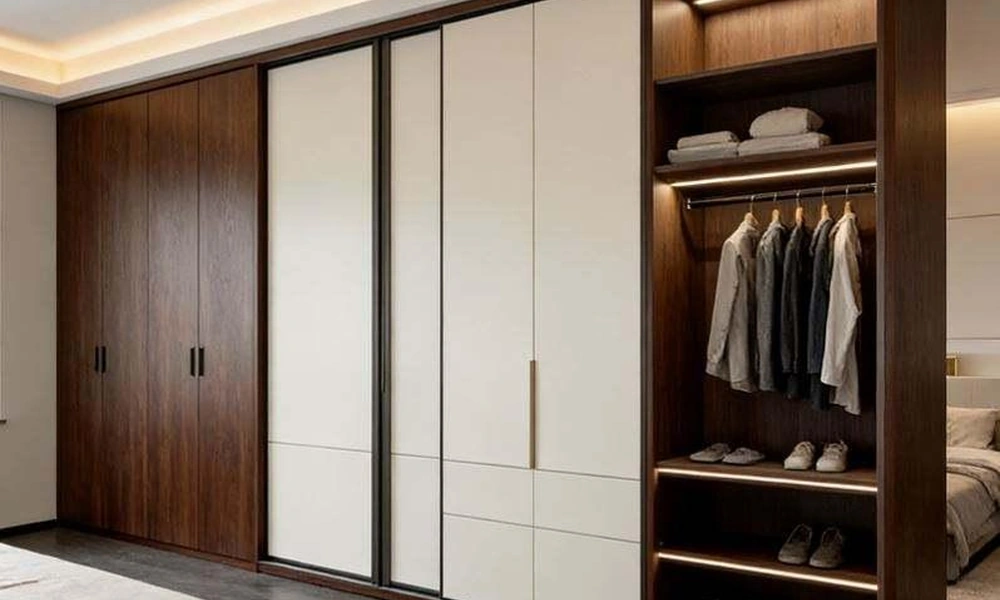
A two-tone wardrobe uses contrasting materials or colors to create visual interest.
Consider combinations such as:
- Walnut and warm white
- Charcoal and natural oak
- Cream and bronze
- Matte black and smoked glass
- Taupe and brushed metal
Choose one dominant finish and use the second as an accent. Too many contrasting materials can make the wardrobe feel visually busy.
21. Luxury Wardrobe With Sliding Mirror Panels
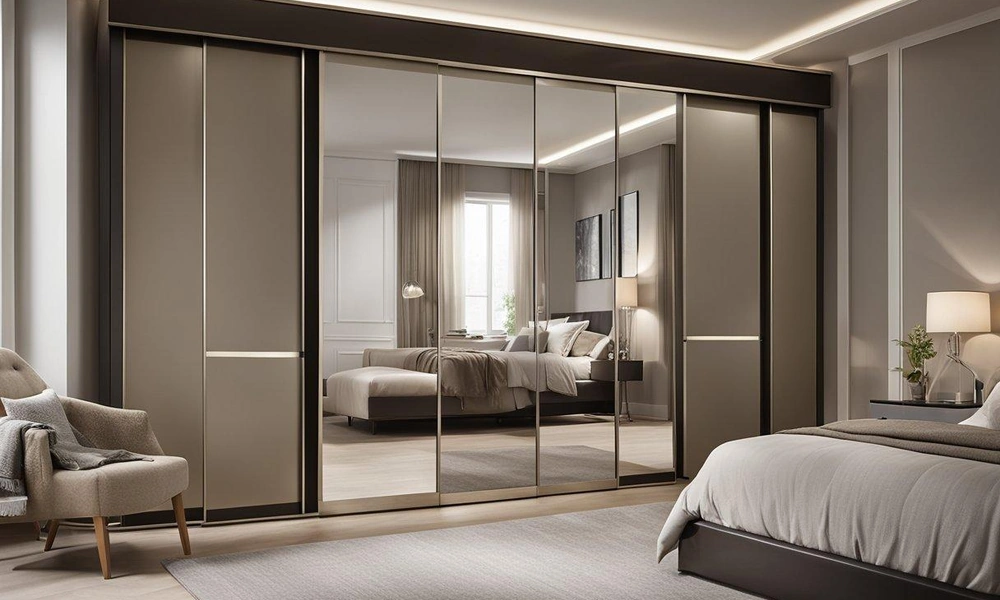
This design combines the space-saving convenience of sliding doors with a large reflective surface.
Mirror panels can be framed in dark metal, finished with subtle borders, or incorporated into a larger combination of wood and glass.
It is particularly useful in bedrooms where a separate full-length mirror would occupy valuable wall space.
22. Contemporary Floating Wardrobe
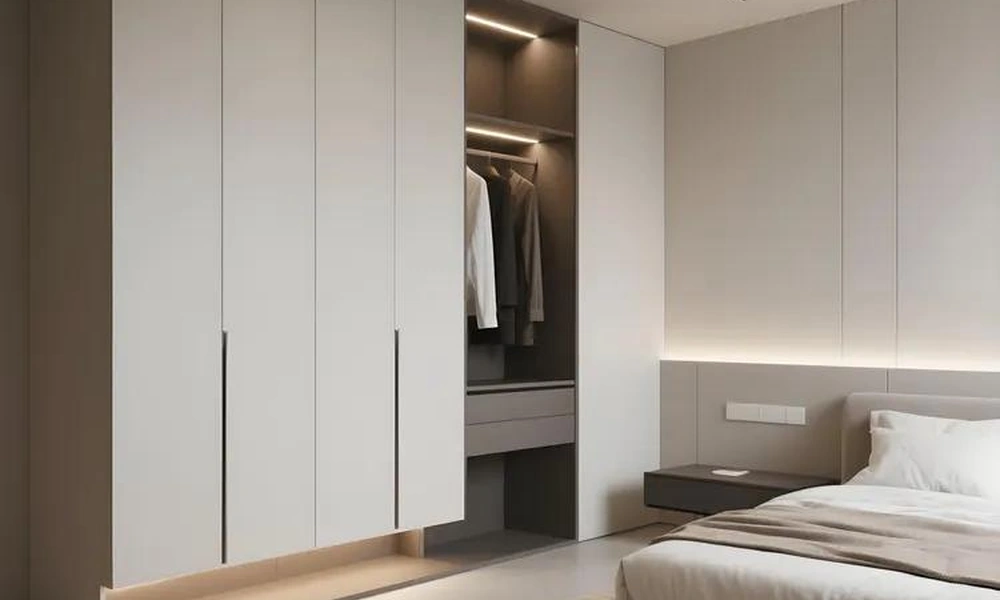
A floating wardrobe creates the impression that cabinetry is suspended above the floor.
This can be achieved through concealed structural supports or recessed bases that create a shadow line.
The effect is architectural and contemporary, particularly when combined with integrated lighting.
Because wardrobes can carry considerable weight, the installation must be properly engineered and securely supported.
23. Luxury Wardrobe With a Built-In Bench
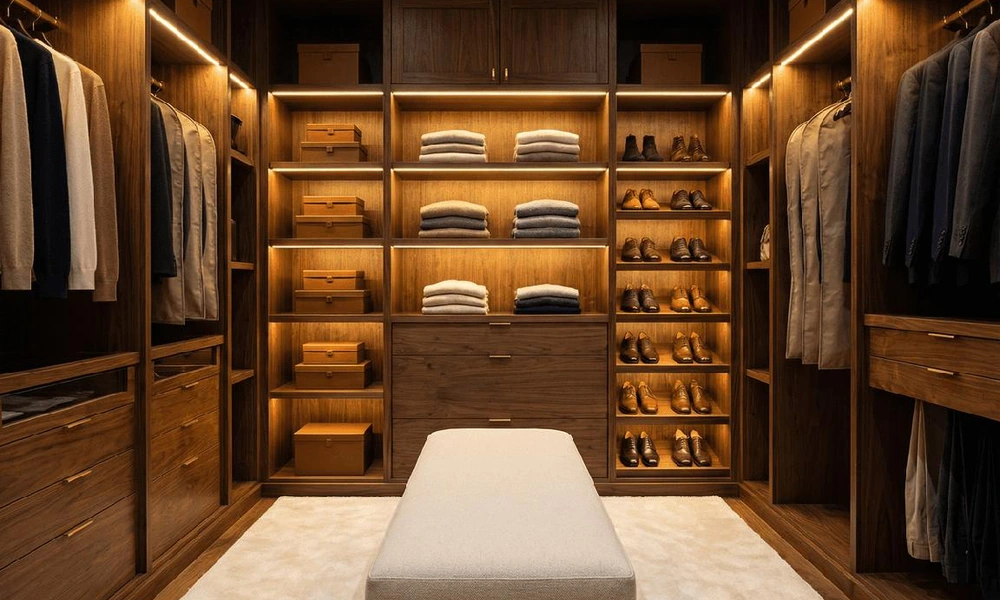
A bench adds comfort to a dressing area, particularly when putting on shoes or choosing accessories.
Upholstered seating can introduce warmth and softness to cabinetry dominated by wood, glass, or metal.
In a smaller space, a bench with integrated storage may offer additional functionality.
Choose durable upholstery that complements the overall bedroom palette.
24. Luxury Wardrobe With Smart Features
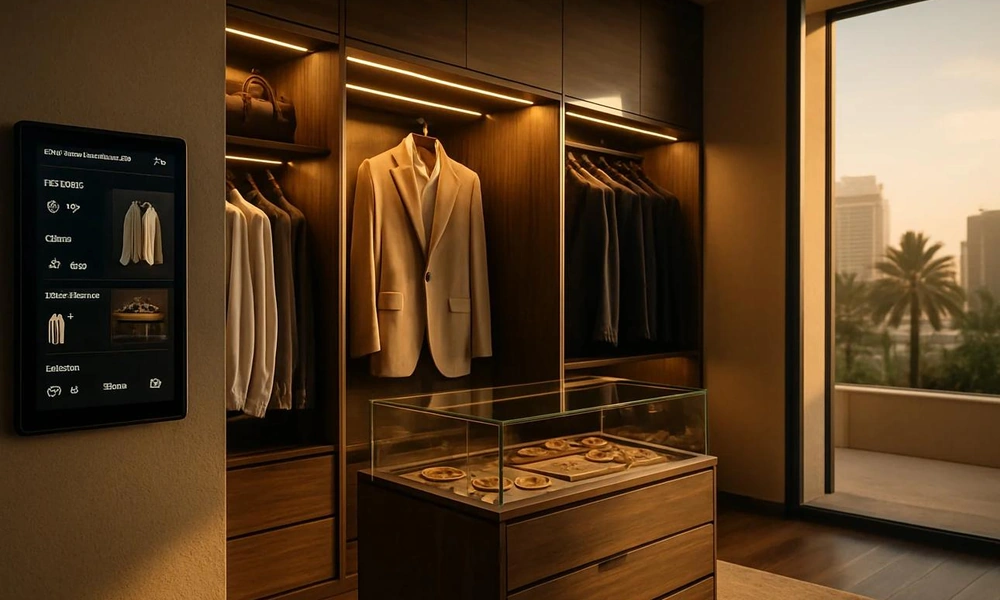
Technology can make luxury wardrobes more convenient without becoming visually distracting.
Useful features may include motion-sensitive lighting, adjustable illumination, electronic locks for selected compartments, and automated storage components.
However, technology should solve a genuine problem.
A simple, reliable lighting system may provide more everyday value than an expensive automated feature that requires frequent maintenance.
25. Bespoke Luxury Wardrobe Design
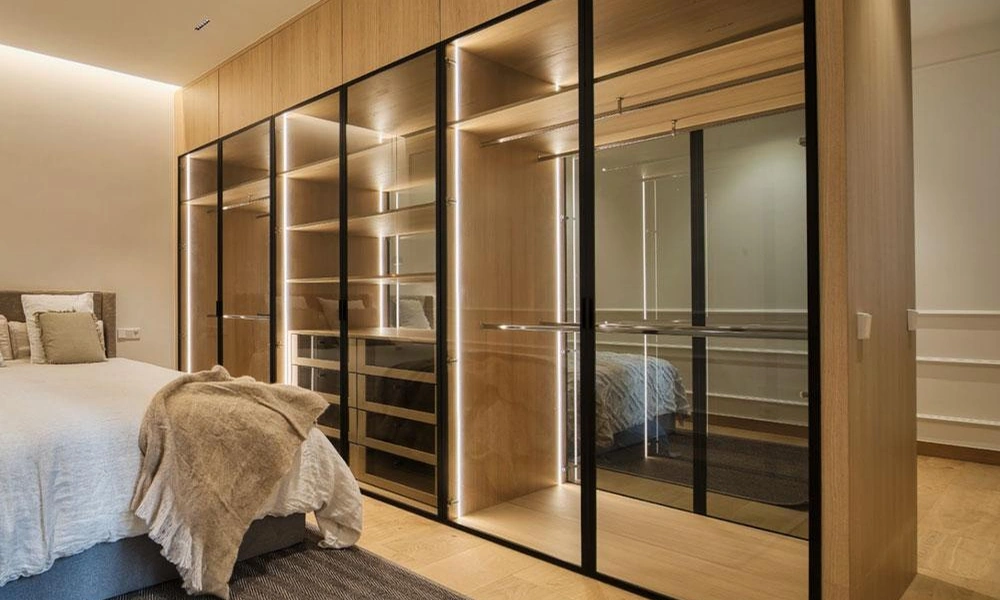
A bespoke wardrobe is designed specifically for the room and the person using it.
Every dimension, compartment, finish, and accessory can be adapted to suit individual requirements.
This might include extra hanging space for long garments, shallow drawers for accessories, dedicated luggage storage, or precisely fitted cabinetry around unusual architectural features.
The advantage is not simply exclusivity. It is the ability to use the available space intelligently while creating a design that feels naturally integrated with the home.
Which Luxury Wardrobe Design Is Best for Your Bedroom?
The right design depends on room size, available floor space, clothing storage requirements, and personal preferences.
| Wardrobe type | Best suited for | Main advantage |
| Sliding door wardrobe | Compact bedrooms | Saves door-opening space |
| Walk-in wardrobe | Large primary suites | Dedicated dressing area |
| Glass-door wardrobe | Modern bedrooms | Elegant clothing display |
| Mirrored wardrobe | Small bedrooms | Reflects light and adds functionality |
| Floor-to-ceiling wardrobe | Most room sizes | Maximizes vertical storage |
| L-shaped wardrobe | Corner layouts | Makes use of adjoining walls |
| Wooden wardrobe | Warm, timeless interiors | Natural texture and character |
| Bespoke wardrobe | Unusual rooms or specific needs | Highly personalized storage |
Rather than selecting a design solely because it looks impressive, consider how it will function during an ordinary morning.
The most beautiful wardrobe is one that makes everyday living easier.
How to Design a Luxury Wardrobe Interior
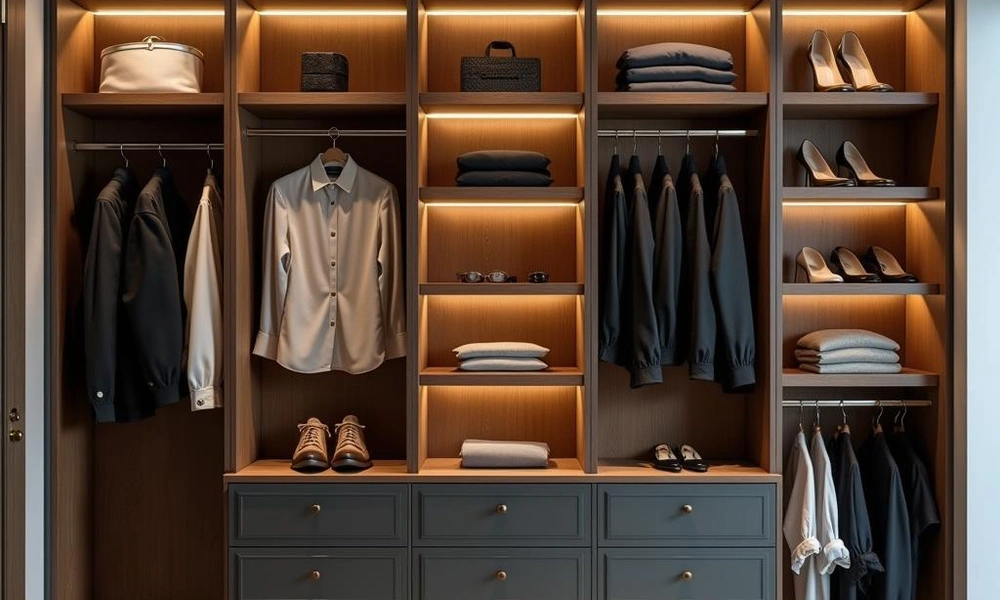
A beautiful exterior creates the first impression, but the interior determines how well the wardrobe works.
Plan Hanging Space Around Your Clothes
Not every garment needs the same amount of vertical space.
Long coats, dresses, and certain formal garments require full-height hanging sections. Shirts, jackets, and trousers may fit comfortably in shorter hanging areas.
As a practical starting point, allow approximately 100–110 cm of vertical hanging clearance for many shirts and jackets, with longer sections planned around the actual garments.
Measure your clothing before finalizing the cabinet design.
Use Drawers for Small Items
Drawers help keep socks, undergarments, accessories, and folded garments organized.
Shallow drawers work well for jewelry and accessories, while deeper drawers can accommodate bulkier clothing.
Quality runners and soft-closing mechanisms improve everyday usability.
Design Shelves That Can Change
Adjustable shelves make it easier to adapt the wardrobe as storage needs evolve.
This is particularly useful for handbags, folded knitwear, shoes, and seasonal accessories.
Add Specialized Storage Carefully
Pull-out trouser racks, belt organizers, tie holders, and accessory trays can make a wardrobe more practical.
But not every feature is necessary.
Select fittings based on what you actually own rather than filling the wardrobe with elaborate accessories you may rarely use.
Plan Ventilation and Maintenance
Closed cabinetry needs appropriate ventilation and a dry environment to protect clothing from moisture and unwanted odors.
Avoid placing vulnerable materials against damp walls, and consider local humidity conditions when planning the installation.
Best Materials for Luxury Wardrobes
Material selection affects appearance, durability, maintenance, and cost.
Natural Wood and Wood Veneer
Wood provides warmth and visual depth. High-quality veneer can deliver an elegant natural finish across large surfaces when applied to a suitable substrate.
Plywood and Engineered Boards
Quality plywood and engineered cabinetry boards can provide stable structural components when selected and manufactured appropriately.
Moisture resistance, edge sealing, and installation quality are particularly important.
Lacquered Finishes
Lacquer can create smooth matte, satin, or glossy surfaces. It is popular in contemporary wardrobe design because of its flexibility in color and appearance.
Glass and Mirrors
Glass brings transparency or texture, while mirrors add light and functionality.
Use suitable safety glass, appropriate fittings, and professional installation for large door panels.
Metal Accents
Brushed brass, stainless steel, bronze-tone finishes, and black metal details can provide subtle contrast.
Use them consistently so the wardrobe feels connected to the rest of the bedroom.
Luxury Wardrobe Design for Small Bedrooms
A small bedroom can still accommodate an elegant wardrobe.
The key is to focus on proportion, storage efficiency, and a visually calm finish.
Start with full-height cabinetry to use vertical space. Sliding doors can be helpful where clearance is limited, while mirrored panels may make the room appear brighter.
Choose a simple color palette, avoid unnecessary ornamentation, and keep frequently used items at comfortable heights.
Integrated drawers can also reduce the need for a separate dresser.
When refreshing a compact bedroom, storage improvements often have a greater visual impact than adding decorative furniture. This same approach applies to luxury home remodeling, where thoughtful built-in storage can improve both appearance and functionality.
Luxury Wardrobe Color Combinations
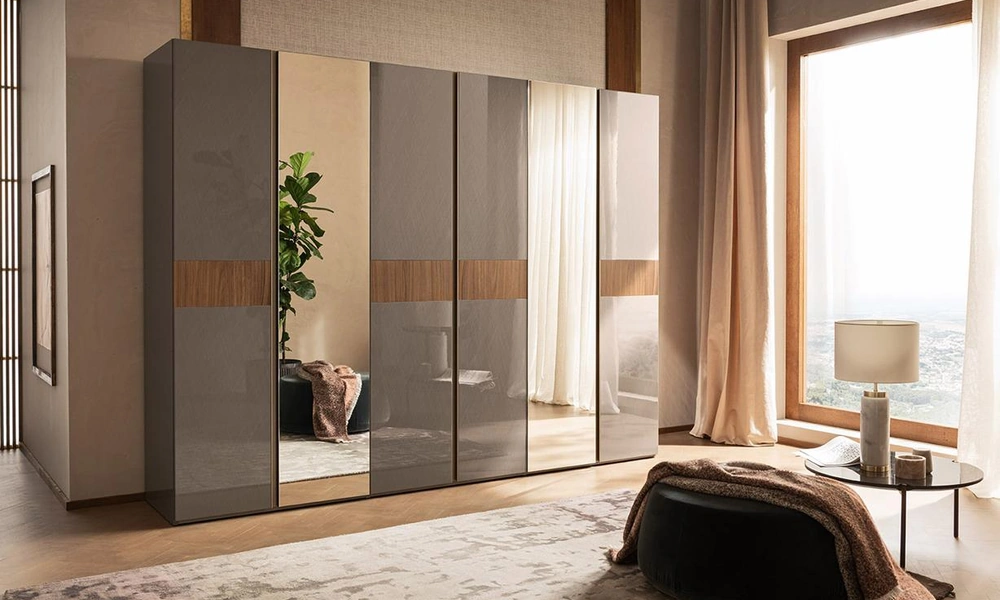
Color influences whether a wardrobe feels light, dramatic, warm, or understated.
Warm white and oak: Creates a soft, natural bedroom atmosphere.
Charcoal and walnut: Offers a rich contrast with a contemporary character.
Cream and champagne bronze: Feels elegant and warm without appearing excessive.
Matte black and smoked glass: Produces a dramatic, boutique-inspired aesthetic.
Taupe and brushed brass: Works beautifully in relaxed modern luxury interiors.
Sage green and natural wood: Introduces a gentle connection to nature.
For a cohesive result, repeat at least one wardrobe material or color elsewhere in the bedroom through the furniture, lighting, or decorative details.
How Much Does a Luxury Wardrobe Cost?
The cost of a luxury wardrobe depends on its dimensions, materials, hardware, interior accessories, customization, and installation requirements.
A well-designed modular wardrobe may be more economical than a fully bespoke installation, while extensive glasswork, premium veneers, custom lighting, and complex internal fittings can increase the price.
Instead of concentrating only on the total cost, evaluate where the money makes the most difference.
Prioritize structural quality, reliable hardware, suitable materials, and practical storage. Decorative upgrades can be added selectively.
It is also worth requesting an itemized quotation that separates cabinetry, doors, hardware, lighting, accessories, delivery, and installation.
That makes it easier to compare designs on a like-for-like basis.
Common Luxury Wardrobe Design Mistakes
Even expensive wardrobes can disappoint when the planning overlooks everyday needs.
Choosing Appearance Over Function
A beautiful glass wardrobe may look impressive, but it might not suit someone who prefers concealed storage.
Consider how the design will be used before selecting its exterior.
Ignoring Door Clearance
Hinged wardrobe doors require room to open. Drawers and pull-out accessories also need sufficient clearance.
Measure the bedroom layout carefully before approving a design.
Installing Poor Lighting
An elegant wardrobe can feel inconvenient when its interior is poorly illuminated.
Plan lighting before cabinetry is manufactured so wiring and fixtures can be integrated properly.
Overcomplicating the Interior
Too many specialized compartments can reduce flexibility.
A balance of hanging space, adjustable shelves, and drawers usually provides a more adaptable storage system.
Forgetting Future Needs
Clothing collections and household routines change.
Where possible, incorporate adjustable components that can be reorganized over time.
How to Make a Wardrobe Look More Luxurious
You do not necessarily need to replace an entire wardrobe to improve its appearance.
Small, thoughtful changes can create a more refined result.
Start by removing unnecessary clutter and organizing clothes consistently. Replace damaged or mismatched handles with coordinated hardware. Consider appropriate interior lighting and use uniform hangers for a calmer visual appearance.
If the surrounding bedroom feels disconnected from the wardrobe, repeat its finishes through furniture, textiles, or lighting.
For example, warm oak cabinetry can be complemented by natural linen bedding and soft metallic lighting. A dark glass wardrobe may look more balanced beside pale walls and a beautifully layered bed.
Even a carefully chosen luxury bedroom comforter can help bring softness and visual harmony to a bedroom dominated by fitted cabinetry.
Luxury often comes from the relationship between different elements rather than any individual piece.
Frequently Asked Questions About Luxury Wardrobe Design
What is the most luxurious type of wardrobe?
A bespoke walk-in wardrobe with high-quality cabinetry, integrated lighting, dedicated accessory storage, and carefully selected materials is often considered a luxurious option. However, a smaller custom wardrobe can feel equally refined when it is thoughtfully designed.
Which wardrobe design is best for a small bedroom?
Floor-to-ceiling wardrobes with sliding or mirrored doors are practical options for compact bedrooms. They make use of available height while reducing visual clutter and, in the case of sliding doors, eliminating door-swing clearance.
Are glass wardrobes practical?
Glass wardrobes can be practical when paired with suitable safety glass, durable fittings, and well-organized storage. They may require more frequent cleaning and are best suited to homeowners comfortable with displaying their clothing.
What color wardrobe looks luxurious?
Warm white, taupe, walnut, charcoal, matte black, and muted natural shades can all create a luxurious appearance. Material quality, lighting, and coordination with the bedroom are usually more important than the color alone.
Is a walk-in wardrobe better than a built-in wardrobe?
A walk-in wardrobe provides a dedicated dressing area and can offer generous storage, but it requires sufficient space. Built-in wardrobes often make more efficient use of smaller bedrooms. The better choice depends on the layout and storage requirements.
What is the difference between a modular and bespoke wardrobe?
A modular wardrobe uses standardized components that can be arranged to suit a space. A bespoke wardrobe is designed and manufactured around specific dimensions and individual requirements, offering greater customization.
How deep should a luxury wardrobe be?
Many hanging wardrobes are designed around 55–65 cm deep, depending on the door system, hanging orientation, and type of clothing. Drawers, shelves, and specialized compartments may require different dimensions. Final measurements should be based on the intended contents and hardware.
Can a luxury wardrobe increase home value?
Well-designed built-in storage can improve a home’s functionality and appeal to prospective buyers. However, any effect on resale value depends on the property, local market, installation quality, and buyer preferences. An expensive wardrobe does not automatically produce an equivalent increase in property value.
Final Thoughts
Luxury wardrobe design is about creating a beautiful balance between personal style and everyday comfort.
A wardrobe should feel natural within the bedroom, provide a place for everything you own, and make daily routines more enjoyable. Whether that means a spacious walk-in closet with a central island or a simple floor-to-ceiling wardrobe finished in warm oak, the principles remain the same.
Choose quality materials, plan storage around your needs, pay attention to lighting, and keep the overall design cohesive.
The most elegant wardrobes do not need to compete for attention. They quietly make a room feel more considered, organized, and complete.