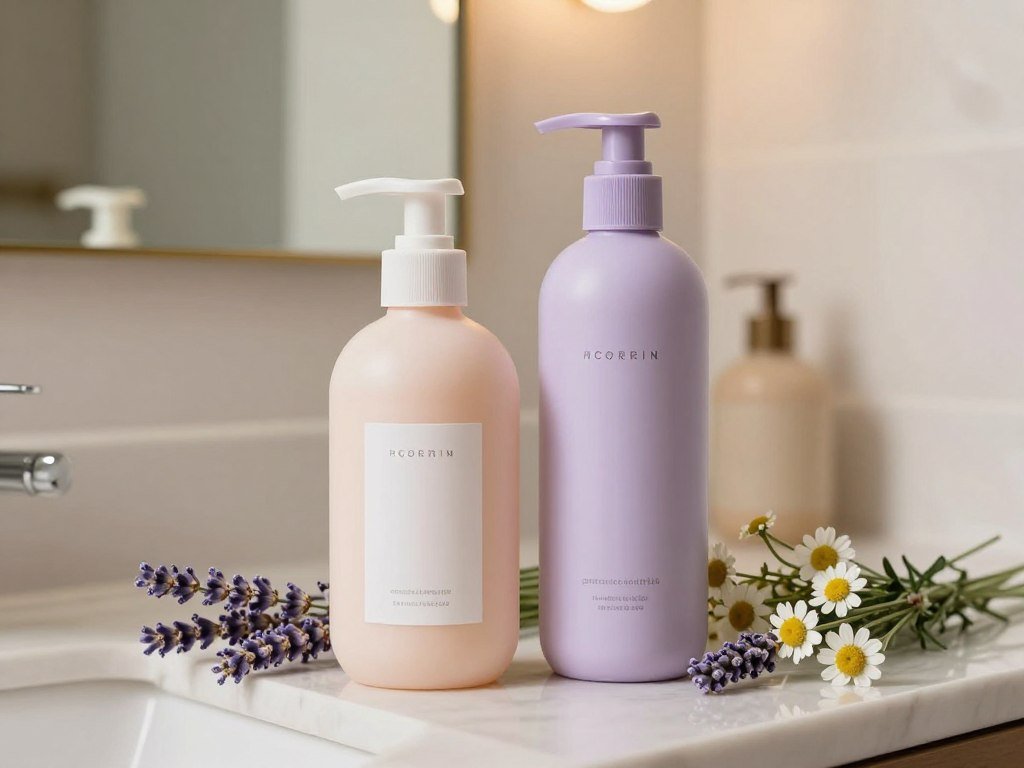
A good shampoo-and-conditioner pair can leave thinning hair cleaner, softer and easier to style, but it cannot promise to reverse hair loss. Androgenetic alopecia is gradual pattern hair loss linked to inherited sensitivity of hair follicles. People can also notice changes during periods of stress, hormone shifts, diet changes or a new routine. Gentle cleansing and conditioning can support scalp comfort and help reduce breakage. Styling products may make strands look fuller, but they do not treat the cause of loss. The right wash-day products can still make a practical difference in how your hair feels and behaves. Choose based on your scalp and hair needs, not a promise on the bottle. If thinning is new, persistent or worrying, look for its cause rather than relying on a cosmetic product alone.
Key Takeaways
- Shampoo and conditioner support cleansing, comfort and easier styling.
- Volumizing products can create a fuller look without causing regrowth.
- Choose formulas that suit your scalp, hair texture and styling habits.
- Medicated shampoo treats scalp conditions, not every cause of hair loss.
- Ongoing or sudden thinning deserves a cause-based assessment.
What Can Shampoo and Conditioner Actually Do?
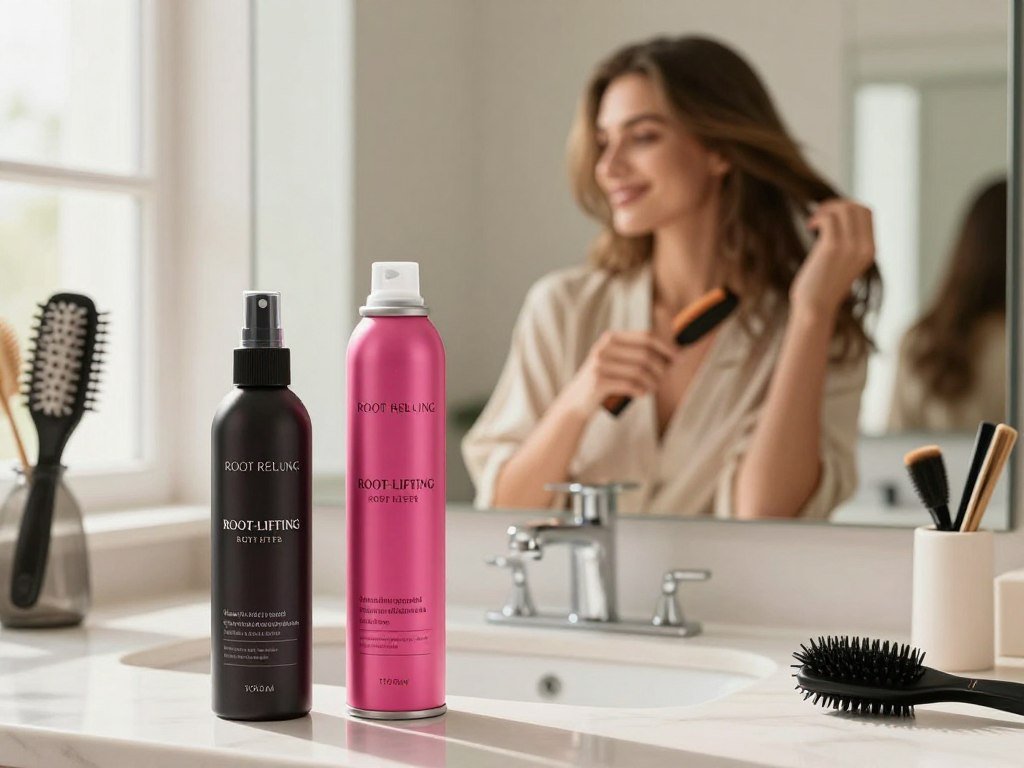
A root-lifting spray or styling foam can make fine strands look fuller the same day, but that effect is cosmetic. Shampoo cleans the scalp, while conditioner softens hair and reduces friction during combing. Neither product pair can promise permanent regrowth.
Volumizing powders may use silica or fibers to make strands appear thicker. Foams and mousses often use fixatives such as PVP, acrylates copolymer or VP/VA copolymer to help hold hair in place. Those fixatives coat and shape hair; they work differently from powder fibers that cling to strands.
A styling aid can change your hair’s shape for a day, but it cannot change follicle activity.
For a lifted root, Living Proof Full Volume & Root-Lifting Spray costs $34. Bumble & Bumble Thickening High Drama Styling Foam costs $35. Madison Reed The Great Cover Up Root Touch Up + Brow Filler costs $36 and hides visible roots.
A haircut can help, too. Removing 1 inch may make the ends look thicker, while taking off 2 inches or more creates a more noticeable change. A shampoo-and-conditioner choice guide can help you match wash-day care to your scalp and hair. If the priority is a visible change for an event, choose a styling aid or root concealer rather than expecting a shampoo to thicken hair overnight.
Best Shampoo and Conditioner for Thinning Hair by Need
Harklinikken Fortifying Shampoo and Daily Conditioner are the strongest all-around pair here for shoppers who want a gentle cleanse and a light finish. Different needs call for different formulas, and these picks do not prove that any pair regrows hair.
The best shampoo and conditioner for thinning hair for women can be the same as the best choice for men: one that feels good on the scalp and suits the hair’s texture. Harklinikken’s shampoo includes aloe, niacinamide, glycerin, betaine and panthenol. Its conditioner includes glycerin, aloe and avocado oil.
| Pair or system | Best fit | Concrete formula detail | Listed price |
|---|---|---|---|
| Harklinikken Fortifying Shampoo and Daily Conditioner | Gentle cleansing and a light finish | Shampoo has aloe, niacinamide and glycerin; conditioner has avocado oil | $46 shampoo; $56 conditioner |
| Vegamour GRO Revitalizing Shampoo and Conditioner Kit | Subscription kit | Shampoo and conditioner sold together | $76 per month |
| Living Proof Full Shampoo and Conditioner | Lightweight conditioning | Full Shampoo comes as a set of two | $68 for two shampoos; $34 conditioner |
| Aveda Invati Advanced Three-Step Kit | Multi-step routine | Three-step system with Thickening Conditioner | $135 kit; $35.25 conditioner |
Vegamour GRO Revitalizing Shampoo and Conditioner Kit suits shoppers who prefer a monthly subscription. Living Proof Full Shampoo is sold as two bottles, while its conditioner is a separate purchase. Aveda’s Three-Step Kit is the broader system, and its Thickening Conditioner can also be bought alone.
The best drugstore shampoo and conditioner for thinning hair should focus on gentle cleansing and manageable conditioning, not an unsupported growth promise. Drugstore formulas vary, so check whether the shampoo leaves your scalp comfortable and the conditioner leaves your lengths easy to comb. Choose the pair that suits your hair and wash-day preferences, not the one with the most dramatic growth language.
Which Ingredients Support Scalp Health?
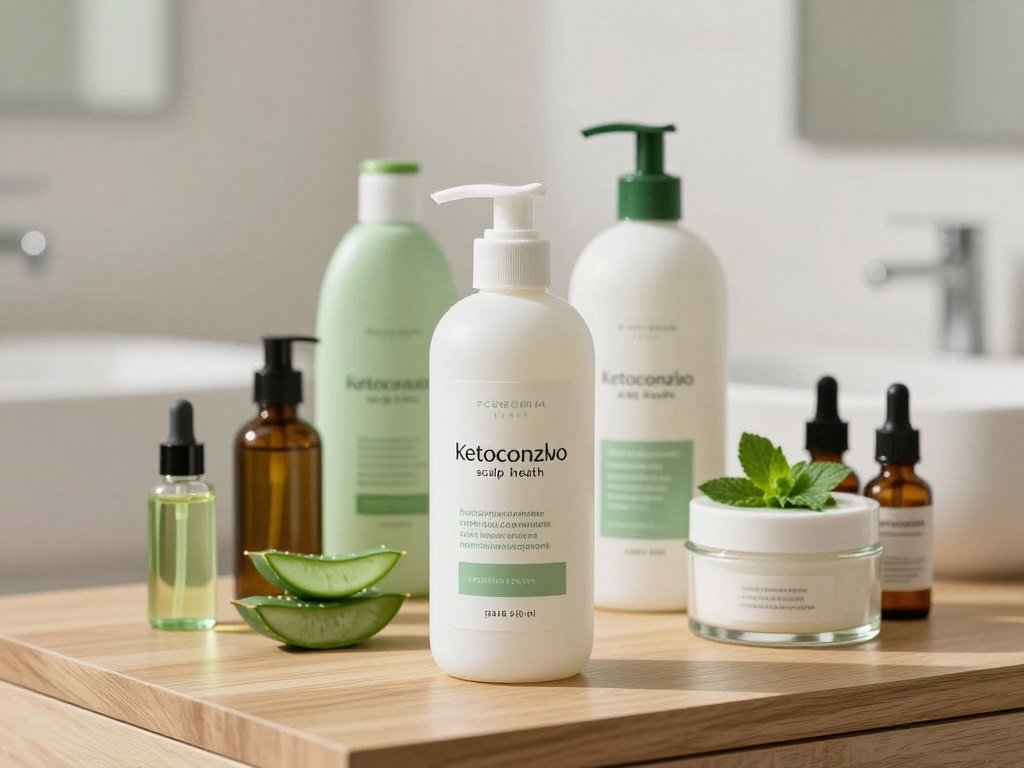
Ketoconazole has the most directly relevant trial evidence among these shampoo ingredients, but it is not an approved hair-loss treatment. It is an antifungal shampoo used for dandruff and related scalp concerns. No shampoo is an established hair-growth treatment.
In a 1998 trial, men with androgenetic alopecia used 2% ketoconazole shampoo, 2% minoxidil solution or non-medicated shampoo for six months. Both active treatments increased hair density and shaft diameter compared with non-medicated shampoo, with no significant difference between them. Ketoconazole’s use for hair loss remains off-label.
| Ingredient | Common scalp use | U.S. strength or status | Hair-loss evidence or limit |
|---|---|---|---|
| Ketoconazole | Antifungal dandruff care | 1% over the counter; 2% by prescription | Limited trial evidence; hair-loss use is off-label |
| Zinc pyrithione | Dandruff care | Over-the-counter at 1% to 2% | A 2003 study found less shedding with daily 1% use for 26 weeks |
| Selenium sulfide | Dandruff care | 1% over the counter; 2.5% by prescription | Not established as a hair-growth treatment |
| Salicylic acid | Removing scalp scale | 2% to 3% can loosen scale | Targets scale, not hair growth |
| Caffeine | Scalp-care formulas | 0.2% is an over-the-counter strength | Evidence for hair loss is weak and early |
A trial of 2% ketoconazole shampoo offers a reason for further study, not proof that shoppers can treat hair loss with shampoo. Zinc pyrithione also has a shedding study, while caffeine evidence remains early. Salicylic acid can remove scale but does not promote growth.
Medicated shampoo means shampoo used to treat a scalp condition. Treat itch, dandruff or scale as scalp-care concerns, and do not mistake a calmer scalp for proven regrowth.
How Should You Choose a Formula for Your Hair Type?
A formula that feels comfortable on your scalp and does not leave your lengths limp is a better fit than one chosen for a growth claim alone. Match cleansing strength and conditioner weight to your texture. Scalp comfort and strand feel are separate needs.
Shampoo mainly serves the scalp, while conditioner mainly serves the hair lengths. Oils, amino acids and other conditioning ingredients can improve how a strand feels, but they do not prove new growth. Choose the formula for its care benefits, not the impression that a long ingredient list treats hair follicles.
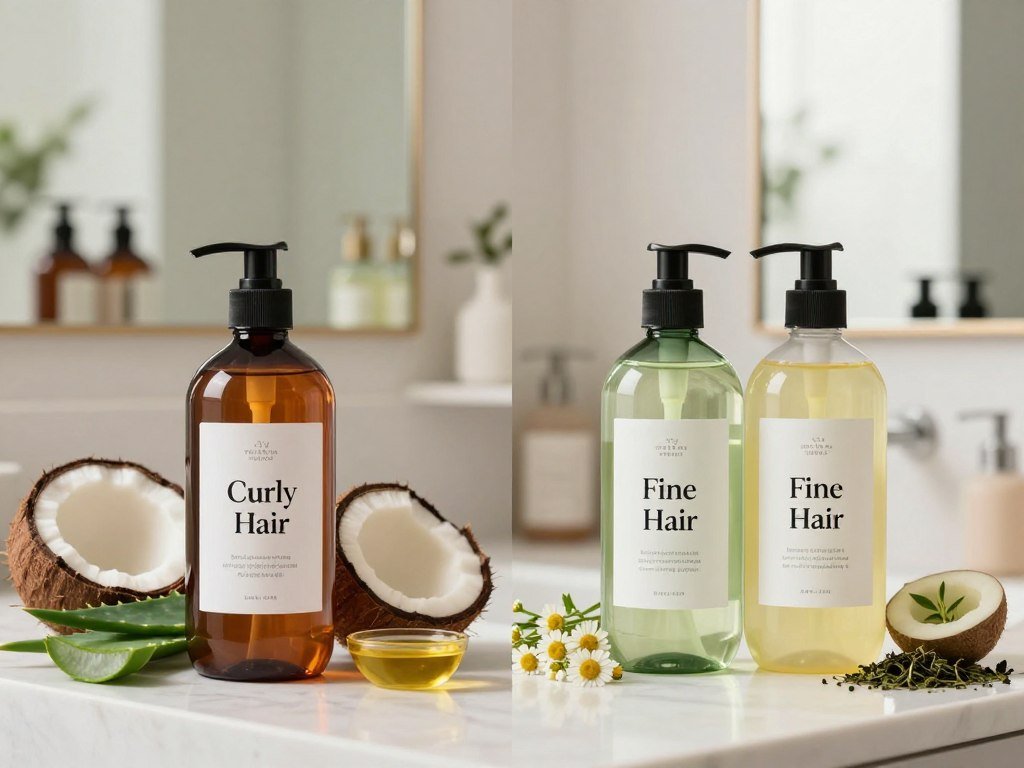
If your hair is color-treated, curly or textured
Ketoconazole shampoo can dry color-treated, curly or textured hair. Apply it to the scalp rather than spreading it through the lengths, then lift the hair while rinsing to limit contact. Curly and coily hair is more prone to dryness and breakage, so the American Academy of Dermatology’s curly-hair tips stress moisture and gentle care.
A moisturizing conditioner can help keep textured hair easier to detangle. If you use a medicated shampoo, follow its directions and keep the lather focused near the scalp. This approach can reduce needless dryness along the hair shaft.
If your hair is fine, oily or easily weighed down
Fine or oily hair may feel flat when conditioner coats the roots. Use a lightweight conditioner on the lengths and choose a non-heavy styling product when you want lift. Living Proof Full Conditioner is one example of a product sold for this type of routine.
For more guidance on matching wash products to hair texture, see how to choose shampoo and conditioner by hair type. A formula should leave your scalp clean without making the ends rough. If a medicated shampoo leaves your lengths dry, ask a clinician or pharmacist about a gentler way to manage the scalp condition.
Are Shampoo and Conditioner for Men and Women Different?
Most people do not need a shampoo labeled for their sex; they need a formula that suits their scalp and hair. Hair care needs matter more than gendered labels. Men and women can both develop androgenetic alopecia.
Female-pattern hair thinning is estimated to affect 40% of women by age 50. Treatment choices can differ by diagnosis and sex, even when the shampoo choice does not. Topical minoxidil solution and foam are FDA-approved for androgenetic alopecia in men and women.
Oral finasteride 1 mg is FDA-approved for male androgenetic alopecia. It is not FDA-approved for women of childbearing age because of the risk of birth defects. A treatment approval guide can help clarify which options have an FDA-approved use, but a clinician should match care to your health and diagnosis.
Men’s and women’s hair products may differ in scent, branding or texture, but those labels do not establish a hair-growth benefit. Ask a dermatologist about treatment options if the thinning follows a widening part, a receding hairline or a persistent change in density.
How Should You Wash and Condition Thinning Hair?
Conditioner is not the enemy of fine hair; it can help prevent wet strands from snapping during detangling. Lubricated strands are easier to comb. Combing wet hair without conditioner can stress fragile hair enough to cause breakage.
Keep the shampoo on the scalp and the conditioner on the lengths. This can clean the skin without rough handling of already fragile strands. Use these four steps as a starting routine:
- Detangle gently before washing, using your fingers or a wide-tooth comb.
- Apply shampoo to the scalp and massage without rough scrubbing.
- Use conditioner on the lengths, then detangle only when the hair feels lubricated.
- Rinse thoroughly and add a light styling product if you want more lift.
Conditioner matters after medicated shampoo because some formulas can leave hair dry and harder to comb. Living Proof Full Conditioner costs $34, and Aveda Invati Advanced Thickening Conditioner costs $35.25. They are examples, not required purchases.
A wash-day guide for shampoo and conditioner covers placement and gentle detangling. If product residue leaves hair heavy, a clarifying wash may help; use it based on your hair type and styling habits. Use the routine that leaves the scalp clean and the lengths easy to comb, then adjust if irritation or residue develops.
What Do Dermatologists Recommend for Hair Loss?
Dermatologists recommend finding the cause of hair loss before choosing a treatment, because no single option works for everyone. Scalp care can help when a scalp condition is present. No dermatologist-recommended shampoo works as a universal regrowth treatment.
There is no single dermatologist-recommended shampoo for hair loss, including for women. Medicated shampoos treat scalp conditions and may help calm scalp inflammation, but they are supportive care rather than primary hair-loss treatment. Topical minoxidil solution and foam are the only FDA-approved over-the-counter drugs for androgenetic alopecia.
A dermatologist can assess the cause and select care that fits your situation. Book an evaluation if you notice any of these changes:
- Persistent thinning that does not settle.
- Sudden or patchy hair loss.
- Scalp symptoms such as ongoing itching, pain or scaling.
A shampoo may ease a scalp concern while a separate issue continues to affect hair density. The Harvard Health overview of female pattern hair loss describes evaluation and treatment choices for women. A shampoo can support scalp care, but persistent shedding deserves a diagnosis rather than another unproven growth claim.
Which Treatments Can Address Pattern Hair Loss?
For pattern hair loss, topical minoxidil has a clearer established role than shampoo, while other options need clinician guidance or remain investigational. Results take time, and treatment depends on the diagnosis. Topical minoxidil usually needs daily use for 6 to 12 months before results appear.
Topical minoxidil can stimulate growth and help prevent further loss, but it cannot regrow an entire head of hair. Apply it to the scalp once or twice daily, as directed. Continued daily use is needed to maintain its benefits.
Topical and oral minoxidil
A 2024 trial compared 5 mg oral minoxidil once daily with 5% topical minoxidil twice daily in men. After 24 weeks, overall hair-density gains did not differ significantly. Side effects did: unwanted body hair occurred in 49% of men taking oral minoxidil and 24% using topical minoxidil.
Headaches occurred in 14% of oral users and 2% of topical users. Scalp eczema occurred in 16% of topical users and 2% of oral users. Oral minoxidil should not be started without a prescriber’s guidance.
Prescription and device-based options
Low-level laser therapy may suit early-to-moderate androgenetic alopecia. Common protocols call for three sessions each week, with results often visible after four to six months. A clinician can help decide whether a device approach fits your diagnosis.
VDPHL01 is an investigational extended-release form of minoxidil, not a treatment you can buy or receive by prescription as of October 2026. In an October 19, 2026 study, men taking it twice daily gained an average of 36.4 thick hairs per square centimeter in six months, compared with 6.6 on placebo. The 536 men had mild-to-moderate pattern hair loss and received 8.5 mg once daily, 8.5 mg twice daily or placebo.
| Option | Typical schedule or study regimen | Reported time or outcome | Key limitation |
|---|---|---|---|
| Topical minoxidil | Once or twice daily, as directed | Results usually take 6 to 12 months | Daily use must continue to maintain benefits |
| Oral minoxidil | 5 mg once daily in a 2024 trial | No significant density difference from topical after 24 weeks | Needs a prescriber; side effects differ |
| Low-level laser therapy | Commonly three sessions per week | Results often show at four to six months | Best suited to early-to-moderate pattern loss |
| VDPHL01 | 8.5 mg once or twice daily in a six-month study | Twice-daily group gained 36.4 thick hairs per square centimeter | Investigational; unavailable to buy or prescribe as of October 2026 |
The VDPHL01 study results do not make the drug available for treatment. Do not start oral medication or rely on a device protocol without discussing your diagnosis, medical history and side-effect risks with a clinician.
What Can Cause Thinning, and When Should You See a Dermatologist?
Thinning can reflect more than one cause, including hormone changes, nutritional problems, stress or damage from styling. Several factors may overlap. A dermatologist can check for health issues as well as hair-care stressors.
Common contributors to thinning
Health-related contributors can include iron or copper deficiency, hormone imbalance and autoimmune disease. Stress and diet changes can also affect hair. A single cause may not explain every case, especially when several changes happen close together.
Hair-care and lifestyle stressors include chemical treatments, excess heat and contact dermatitis. Repeated heat styling can leave hair dry or brittle and contribute to breakage. Using the lowest effective heat and taking breaks from frequent styling can help limit that damage.
How a dermatologist checks for a cause
A dermatologist may examine your scalp and perform a hair-pull test. Blood tests or a scalp biopsy may be recommended when a clinician suspects disease, vitamin deficiency, hormone imbalance or infection.
There is no single vitamin deficiency that explains everyone’s shedding. Iron deficiency and other nutrition concerns may be part of an evaluation, but testing helps show whether they apply to you. A clinician can also consider how long thinning has lasted and where it appears.
Book a dermatology appointment for persistent, sudden, patchy or unexplained loss instead of self-treating a suspected deficiency.
Do Supplements Help Hair Growth?
Pumpkin-seed oil has a small-study signal for hair count, but that finding is not a promise of regrowth for every person. In one study, people taking 400 mg daily for 24 weeks had a 40% increase in hair count, compared with 10% for placebo. One study cannot show what result you will get.
A 2023 review in JAMA Dermatology identified potential hair-loss benefits for Lambdapil, Nourkrin, Nutrafol, Pantogar and Viviscal. The products are not interchangeable, and a finding for one supplement does not prove that another will help. Your diet, health and current medicines all matter.
Before starting a supplement, take these steps:
- Discuss your medications and health conditions with a clinician.
- Avoid stacking products with overlapping ingredients.
- Seek assessment before treating a suspected deficiency.
More supplements do not mean more hair growth, and combining products can raise safety concerns.
A clinician can help check whether a deficiency is present and whether a product is safe for you. That review matters if you take medication or have a health condition. Check with a clinician before adding a supplement, especially if you take medication or suspect a deficiency.
Conclusion
The best wash-day choice is the one that cleans comfortably and leaves your hair manageable, not one that promises a cure. A gentle shampoo-and-conditioner pair can support comfortable cleansing and leave strands softer and easier to style.
If thinning continues, a diagnosis-led plan matters more than changing bottles again. Choose a formula for scalp comfort, and book a dermatologist visit if thinning persists. Choose a pair that fits your scalp and hair, and get persistent thinning assessed by a dermatologist.
FAQ
What shampoo is best for hair loss and thin hair?
Which brand of shampoo is best for thinning hair?
What shampoo do doctors recommend for thinning hair?
What are the big 3 for thinning hair?
Can hair grow back after thinning?
What vitamin is lacking if your hair is falling out?
What is best for female hair thinning?