A comfortable pair for easy pavement miles may not be the right choice for speedwork or a rocky trail. Your comfort, fit, running experience, and feet all shape what works best, so no single model suits every woman.
The right shoe depends on where you run, how much cushioning you like, and the pace you plan to keep. A model that feels smooth on a daily run may feel heavy during fast intervals. A shoe that grips dirt well may feel stiff on pavement.
This guide helps you match a shoe to your usual runs, foot shape, and budget. It covers choices for new runners, daily miles, long runs, speedwork, stability, wide feet, roads, and trails. You can use those needs to narrow the field before trying shoes on.
Begin with the kind of run you do most often, then use fit and comfort to narrow the field.
Key Takeaways
- Choose a shoe for your most common type of run.
- Fit and comfort matter more than a shoe’s label.
- Daily trainers suit many ordinary road runs.
- Specialist shoes help when pace or terrain calls for them.
- Check the shoe’s width, heel hold, and toe room.
- Compare measurements, but judge the ride on your own feet.
Running Shoes Best Womens: Which Picks Suit Different Runners?
A short shortlist works best when each pick has a clear job rather than being treated as a universal winner. The best running shoes for women in 2026 depend on each runner’s priority, from comfort to speed. Among the models covered, ASICS, Brooks, New Balance, adidas, and Nike offer choices for different needs.
Start with the run you do most, then compare the shoe’s fit and ride. This quick table highlights a useful feature and a fact that sets each pick apart.
| Running need | Model | Concrete feature | Distinguishing fact |
|---|---|---|---|
| Everyday cushioning | Brooks Glycerin 23 | DNA Tuned cushioning | 8 mm drop |
| Budget | Nike Winflo 12 | Stable ride | 8.4 stability score |
| Beginner-friendly daily use | New Balance Ellipse | Fresh Foam X, multiple widths | 7.7 oz |
| Speedwork | adidas Adizero Evo SL | Lightstrike Pro foam | 6.6 oz |
| Everyday miles | ASICS Novablast 6 | Substantial cushioning | 247.7 g (8.74 oz) |
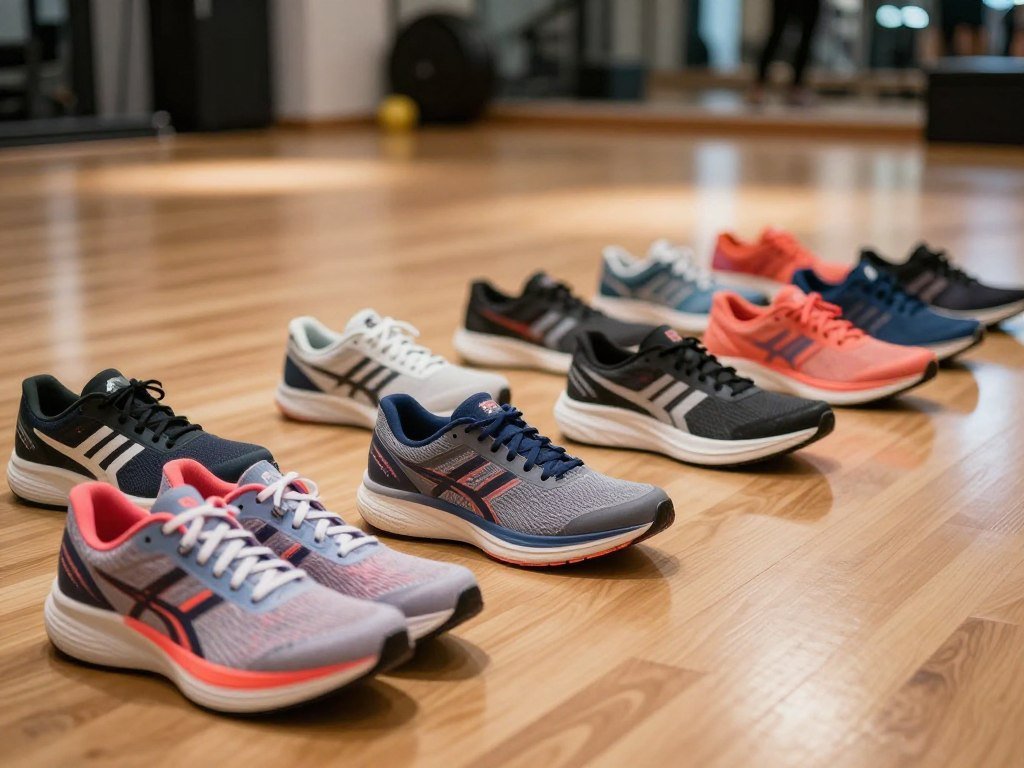
These women running shoes cover everyday training, faster sessions, and lower-cost choices. The best running shoes by brand still need to suit your foot shape and preferred ride. A shoe’s listed weight or foam type can help narrow options, but it cannot tell you whether the heel will slip.
Use the table to identify a promising category, not to skip checking the shoe’s fit on your own feet.
One model may serve several purposes, yet its feel can change with pace and distance. The adidas Adizero Evo SL works for speedwork, while its light build can suit other runs. Treat the shortlist as a starting point for your own try-on.
How Should You Check Fit and Women’s Sizing?
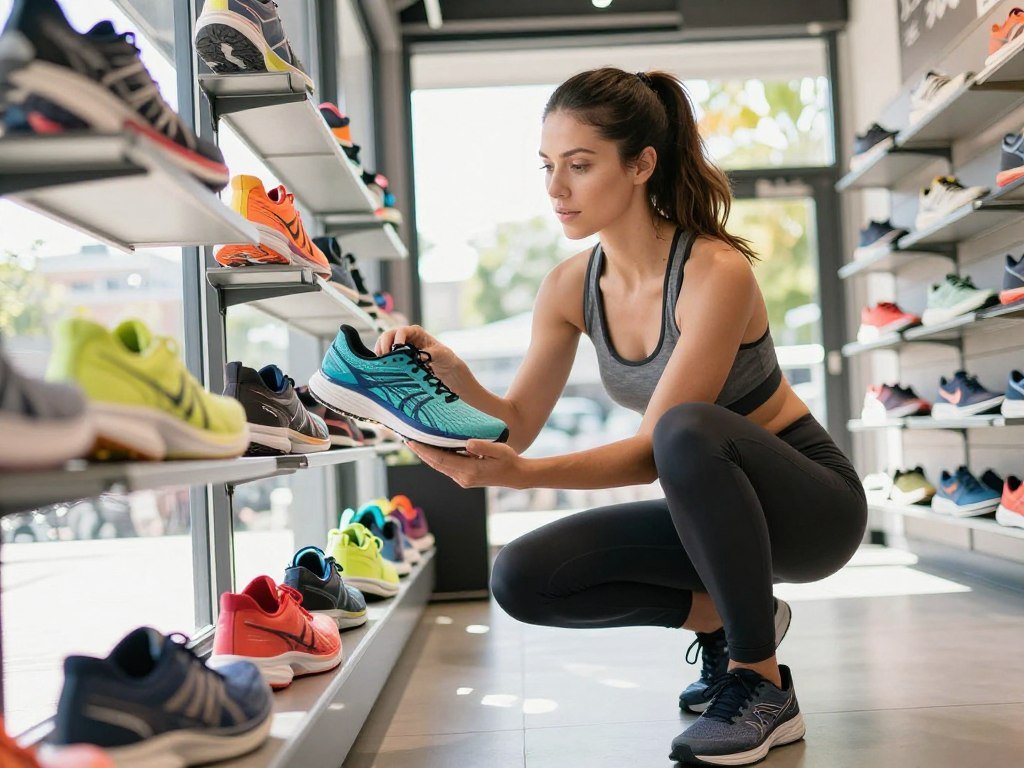
A shoe is too small if your toes feel cramped or touch the front during a comfortable standing fit. Check fit by walking in the shoes and noticing pressure across the midfoot, heel movement, and toe space. A secure fit should not pinch or force your foot to grip.
A women’s label does not guarantee a women-specific shape. Women’s feet tend to be wider in the forefoot relative to the heel, but brands vary in their shoe shapes. Standardized testing in one size can compare models, yet it cannot prove that a shoe fits every woman well.
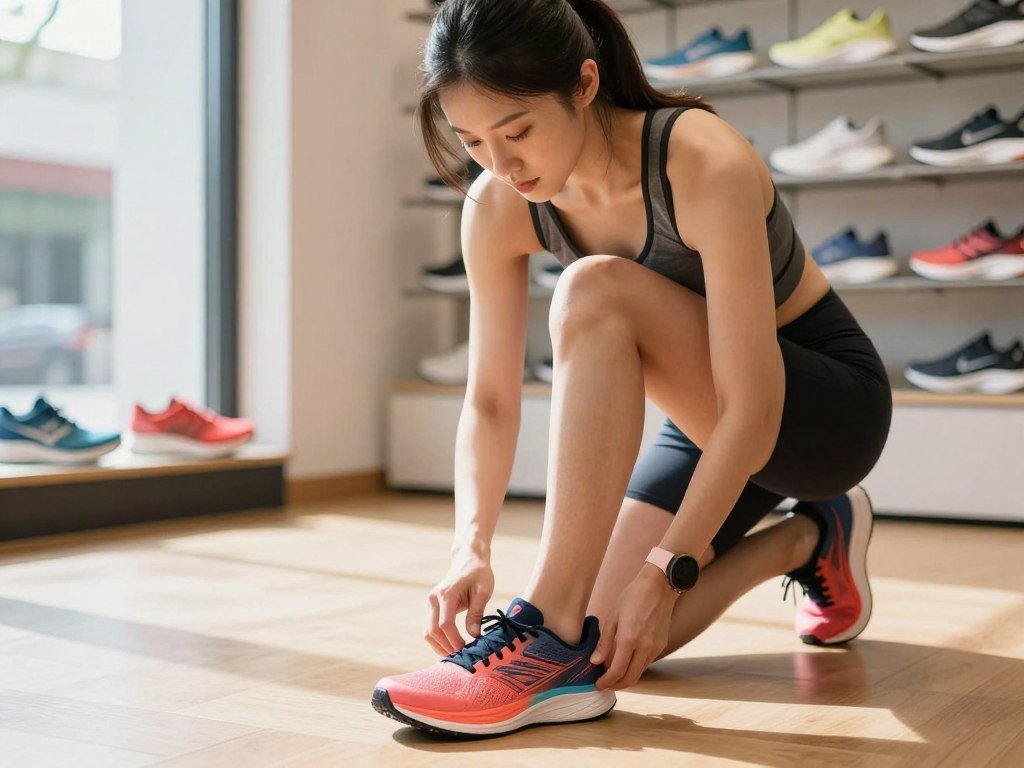
Start with toe room and heel hold
Stand in the shoe with your usual running socks. Your toes should have room to rest without pressing the front, and your heel should stay in place as you walk. A tight midfoot can make a shoe feel uncomfortable even when the toe box seems roomy.
Try both shoes, since feet may differ slightly in length or width. Walk and jog briefly if the store allows it. Look for rubbing, pressure, or a heel that lifts with each step.
Check the brand’s size conversion
Unisex shoe sizing often uses a 1.5-size difference between men’s and women’s sizes. Adidas uses a 1-size difference, so the same conversion does not work across every brand.
| Sizing convention | Typical men’s-to-women’s difference | What to check |
|---|---|---|
| Most unisex brands | 1.5 sizes | Brand chart |
| adidas | 1 size | Brand chart |
| Any brand | Not a conversion rule | Toe room and heel hold |
Some 2026 recommendations used tests of more than 300 running-shoe models in US men’s size 9. Reviewers had not yet tested women-specific shoes in those tests, so the results help compare models but do not establish a perfect women’s fit. Confirm the size on the specific brand’s chart before ordering, since the conversion is not identical across brands.
Which Running Shoes Work Well for Beginners?
New runners can start with a comfortable neutral daily trainer instead of a specialized race shoe. For beginners, easy miles matter more than a sharp, fast ride. The shoe should feel natural at an easy pace, without asking your feet to adapt to an aggressive shape.
Choose comfort and a steady feel before chasing speed or extra features. The New Balance Ellipse is a gentle choice for easy miles. Its women’s version weighs 218 g and has an 8 mm drop.
Choose comfort for the first regular runs
The ASICS Dynablast 6 offers cushioning and a rocker that helps guide the foot toward toe-off. It weighs 269.9 g (9.52 oz), with 2026 cushioning and stability scores of 7.2 and 8.2. Its cushioning held up in a simulated long-run test.
The Brooks Ghost 17 is another straightforward daily trainer, with DNA Loft v3 cushioning and a 10 mm drop. The Kiprun Kipride Max is a cushioned alternative that costs $160 in the United States. It weighs 300 g (10.6 oz) in UK size 9.5.
The ASICS Dynablast 6 can feel helpful when you want a guided roll toward toe-off, but a rocker does not suit everyone. A research review found no shared definition or measurable threshold for classifying rocker geometry. The review of rocker geometry also found that studies did not report future injury outcomes.
Build distance before choosing a specialist shoe
Before looking for a race shoe or a model built for one workout, decide what your first regular runs will involve. A simple shoe can cover easy outings while your pace and distance take shape.
- A comfortable step-in fit without pinching or rubbing.
- A stable-feeling ride at an easy pace.
- A use case that matches the runs you plan to do.
These first-pair priorities leave room to learn what you like. Keep the first regular-run shoe choice simple until the distance and pace goals become clearer.
Which Daily Trainers Can Handle Most Road Runs?
A daily trainer earns its place by being comfortable for the runs that make up most of a training week. It should handle the usual pace and distances you actually run, rather than one special workout.
Look for a ride that feels good across your regular training, not just on a store test. The models below range from medium cushioning to a more protective feel, with different weights and widths.
| Model | Daily-run character | Weight or drop | Fit or foam detail |
|---|---|---|---|
| Brooks Glycerin 23 | Cushioned everyday use | 8.7 oz, 8 mm | DNA Tuned |
| Saucony Ride 18 | Neutral daily use | 8 mm drop | Medium cushioning, wide option |
| New Balance Ellipse | Relaxed daily use | 7.7 oz | Multiple widths, Fresh Foam X |
| ASICS Novablast 6 | Everyday mileage | 247.7 g, 8.8 mm | Cushioning score 8.5 |
| Puma Velocity Nitro 4 | Daily training | 247 g (8.7 oz), 10 mm | Nitrogen-infused aliphatic TPU midsole |
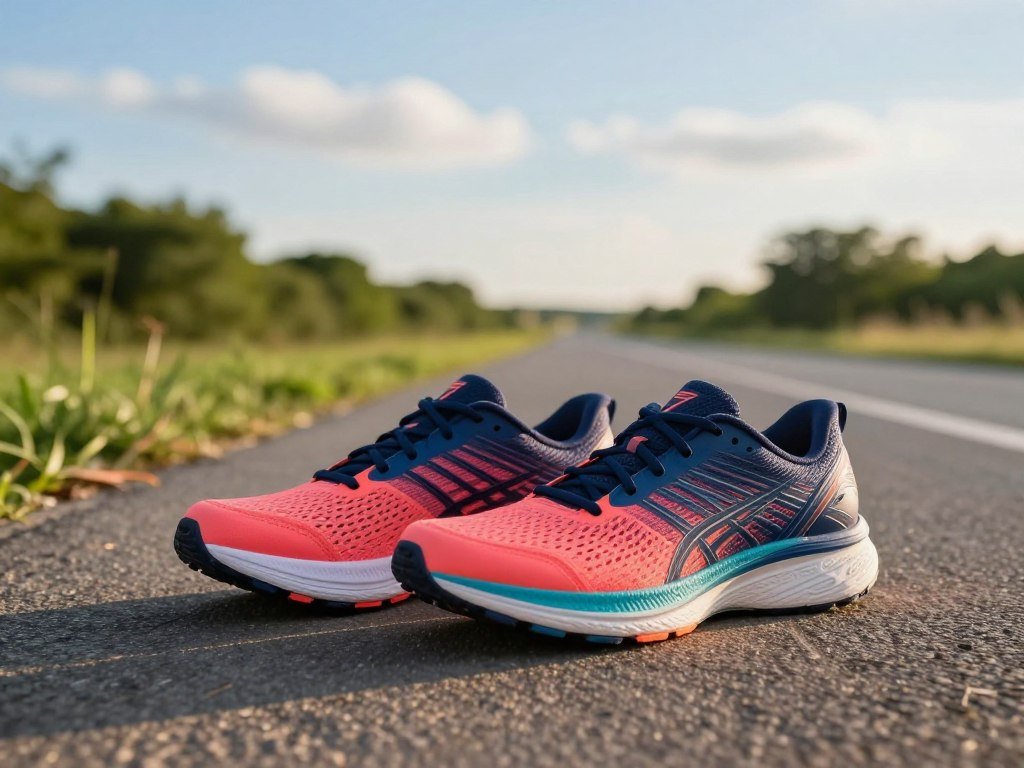
The Brooks Glycerin 23 pairs DNA Tuned cushioning with an 8 mm drop. The Saucony Ride 18 offers medium cushioning and a wide option. These details can help you compare how each shoe is set up, but personal comfort still comes first.
The New Balance Ellipse uses Fresh Foam X and comes in multiple widths. The ASICS Novablast 6 weighs 247.7 g (8.74 oz), has an 8.8 mm drop, and costs $155 in the United States. Its cushioning score is 8.5.
Puma’s Velocity Nitro 4 uses a nitrogen-infused aliphatic TPU midsole. Its 247 g (8.7 oz) weight and 10 mm drop give another set of measurements to compare. A daily trainer should feel comfortable at the paces and distances that make up your own routine.
Fresh Foam and other foam designs can feel different in firmness and rebound. Try to judge the complete ride rather than assuming that similar cushioning terms feel alike. Prioritize the model that feels natural at your usual pace, not the one with the most dramatic feature list.
Which Cushioned Shoes Suit Long Runs and Recovery Miles?
A long-run shoe should protect the legs over distance without making the stride feel cumbersome. A soft landing can ease the feel of each step, while a lively ride returns a springier sensation as you move.
More foam does not always feel better; some runners find a thick shoe bulky. The New Balance 1080 v15 weighs 9.0 oz (255 g) and has a 37.0/30.6 mm stack. Its measured foam height gives you a point of comparison, not a promise about comfort.
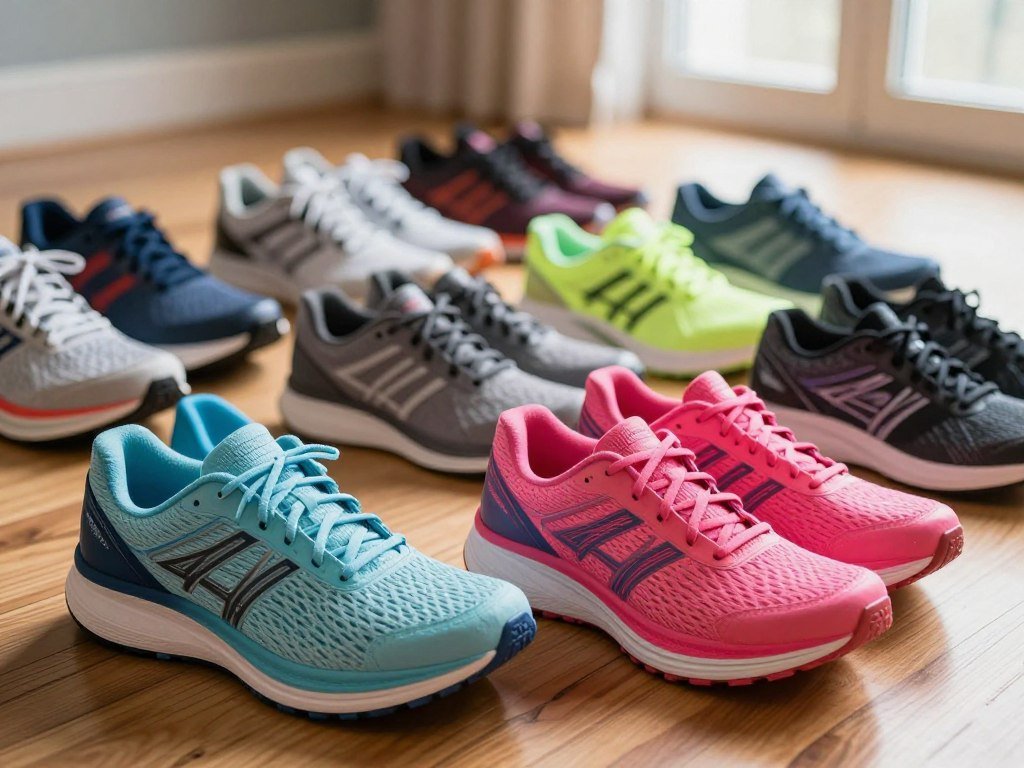
For steady long runs
The Nike Vomero 18 has 46 mm of foam, a 10 mm drop, and weighs 9.3 oz in women’s size 8. The New Balance 1080 v15 offers a lower measured stack, which may appeal if you want cushioning without the same tall profile.
The Nike Vomero Plus costs $180 in the United States and uses ZoomX foam. It weighs 300 g (10.6 oz) in UK size 9. Its foam and weight make it a high-cushion option, but the ride should feel manageable at your steady pace.
For maximum-impact protection
The ASICS Gel Nimbus 28 weighs 242 g and has an 8 mm drop. The New Balance Fresh Foam X More v5 uses Fresh Foam X cushioning and has a 4 mm drop. Both add choices for runners who prefer a protective feel on recovery days.
Softness and responsiveness are not the same thing. A very soft shoe can absorb impact yet feel slow to push off, while a livelier foam may feel springy. Some runners enjoy that extra movement; others prefer a quieter ride.
Check how the shoe feels after several minutes of easy running, not just while standing in it. If a plush shoe feels laborious at your regular pace, try a less bulky daily trainer instead.
Which Lightweight Shoes Fit Speedwork and Race Day?
Lightweight shoes can make faster sessions feel less encumbered, but racing shoes are not automatically the best daily choice. The adidas Adizero Evo SL is a light, versatile pick for daily running and speedwork. Plated models suit runners who specifically want that race-day design.
Choose by workout role and plate type, not weight alone. The Evo SL weighs 220.0 g (7.76 oz) in 2026 tests, with a 36.9 mm heel stack and 6.7 mm drop.
For unplated workouts and tempo runs
The HOKA Mach 7 costs $145 and weighs 7.2 oz per women’s shoe. It has a 5 mm drop and needs no break-in time. The Saucony Endorphin Azura weighs 212 g and has an 8 mm drop.
The New Balance SuperComp Rebel v1 weighs 174 g and has a 4 mm drop. These shoes offer lighter options for faster training without needing the same plated setup as a dedicated racer.
For plated racing efforts
The Saucony Endorphin Speed 5 uses a nylon plate and weighs 9.0 oz (255 g). The Nike Vaporfly 4 is a carbon-plated race shoe, with a weight of 5.6 oz (166 g) and a 34.7 mm ZoomX midsole.
Research on track spikes reviews foam, stiff plates, and shoe shape, but it does not prove the same performance benefit for every road runner. The review of research on super spikes says that results may vary by event and athlete.
- Choose an unplated shoe for versatile workouts.
- Choose a nylon plate for a training-focused plated feel.
- Choose a carbon plate for a dedicated race shoe.
The lightest option is not automatically the best choice for every runner. Use a race-focused design only if its ride feels stable and comfortable at your target pace.
Which Shoes Offer a More Stable Ride?
A stable ride can come from a broad, reassuring platform or from a shoe built with guidance features. The right level of support depends on how the shoe feels to you, not just what its label says.
A stability score or name cannot establish personal fit. The Nike Winflo 12 is a budget daily trainer with a stable ride and a 2026 stability score of 8.4. The ASICS Dynablast 6 also scored well for stability, at 8.2.
Stability features for guidance
The Brooks Adrenaline GTS 25 uses GuideRails to offer guidance features. The Saucony Guide 19 is another stability-focused design. It weighs 252 g, has a 6 mm drop, and a 39.5/31.5 mm stack.
These models take a different approach from neutral shoes that feel steady through their platform alone. Guidance can feel useful to one runner and intrusive to another, so a label does not settle the question.
Stable-feeling neutral options
The Brooks Ghost 18 is a neutral choice available in multiple widths. It weighs 9.2 oz in women’s size 8 and has a 10 mm drop. The ASICS Dynablast 6 offers another stable-feeling option for a new runner.
The Nike Winflo 12 has a cushioning score of 7.3 and an energy-return score of 6.8, alongside its stability score. Scores describe tested properties; they do not say how a shoe will feel under every foot.
Support preferences vary, and comfort can change with pace or fatigue. Choose the level of guidance that feels comfortable during a short test run, not from a label alone.
Which Running Shoes for Women Are Best on a Budget?
A lower price can still buy a useful training shoe when the model matches the runner’s needs. In its 2026 guide, RunRepeat defines cheap running shoes as those costing less than $110. Price matters, but a shoe should still suit your planned runs.
The Nike Winflo 12 costs $110, so it is a boundary-price choice, not an under-$110 shoe. The table separates it from models below that cutoff and lists options for different uses.
| Model | 2026 price | Weight or measurement | Best-fit use |
|---|---|---|---|
| New Balance Fresh Foam X Evoz v4 | $100 | 31.4/25.9 mm stack | Breathable, stable daily training |
| adidas Duramo Speed 2 | $90 | 9.1 oz (258 g) | Daily and tempo runs |
| adidas Galaxy 7 | $60 | 99.1 mm interior width | Budget option for wide feet |
| Nike Winflo 12 | $110 | 296.7 g, 8.4 stability score | Stable budget daily trainer |
| Nike Run Defy | No price figure | 258.9 g (9.13 oz) | Short runs and run-walk sessions |
The New Balance Fresh Foam X Evoz v4 combines a 31.4/25.9 mm stack with a $100 price. The adidas Duramo Speed 2 costs $90 and weighs 9.1 oz (258 g), making it an option for daily and tempo runs.
The adidas Galaxy 7 costs $60 and has a measured interior width of 99.1 mm. The Nike Winflo 12 has cushioning, stability, and energy-return scores of 7.3, 8.4, and 6.8. Those scores add detail to its stable daily-trainer profile.
The ASICS Dynablast 6 is the 2026 budget beginner pick. The Nike Run Defy weighs 258.9 g (9.13 oz) and suits occasional short runs or run-walk sessions. Its price is not listed here, so compare its cost at the time you shop.
Paying less does not help if the shoe causes pressure or does not match your route. Compare the full fit and intended-use details before paying more for features you will not use.
Which Running Shoes Work for Wide Feet?
A wide forefoot does not always mean the whole foot needs a looser shoe. Start with width options that match your forefoot, then check whether the midfoot and heel still feel secure.
Room at the toes matters, but a loose heel can make the shoe hard to control. The New Balance Fresh Foam 520v9 comes in standard, wide, and extra-wide widths for women and men.
Look for width options and a roomy forefoot
The Saucony Ride 18 and HOKA Mach 7 have women’s wide options. A shoe offered in a wider width can provide more room through the shoe without requiring a larger length.
The adidas Galaxy 7 has a measured interior width of 99.1 mm. That figure can help with comparison, but it does not show how the shoe will fit every foot. Width and shape both affect comfort.
Match the heel and midfoot as well as the toe box
The Altra Torin 9 has a roomy toe box, weighs 8.1 oz, and has a zero drop. That shape differs from many other running shoes, so treat it as a distinct option rather than a shortcut to fit.
A wide toe area cannot make up for a midfoot that presses or a heel that lifts. Check these three points when trying shoes:
- Choose a width option that matches your foot.
- Check toe room while standing.
- Walk to see whether the heel stays secure.
The right width should let the forefoot rest without forcing the rest of the foot to slide around. Keep the heel secure while allowing the forefoot enough space to spread naturally.
What Should You Look for in Shoes for Concrete?
For concrete, a comfortable road-running shoe with cushioning that feels good underfoot is a sensible starting point. The best starting point is a secure fit and a road outsole made for firm surfaces.
Choose by comfort on hard ground, not by stack height alone. The HOKA Clifton 10 is listed at $155, weighs 7.9 oz per women’s shoe, and is described for daily training and active recovery.
The Clifton 10 has a 5 mm drop in one listing and an 8 mm drop in a separate Fleet Feet listing. Those are listing-specific figures, not one combined measurement. Check which product version and listing match the shoe you plan to try.
The Nike Pegasus 42 costs $145 in the United States and weighs 305 g (10.8 oz) in UK size 9. It is a road-oriented option for regular pavement miles. The fit should feel secure without squeezing your toes or midfoot.
The Reebok Floatzig Tread weighs 227 g and has an 8 mm drop. It offers another road-oriented example to compare with the Clifton 10 and Pegasus 42. A shoe’s weight can affect how it feels, but it cannot predict comfort by itself.
Concrete is firm, so many runners prefer cushioning that softens the landing without making the shoe feel unstable. The best amount is personal; a thick midsole may feel protective to one runner and clumsy to another.
Try the shoe on the kind of firm surface you use most, since a comfortable fit matters more than a stack number alone.
Which Shoes Work for Running and Walking?
A shoe used for both running and walking should feel comfortable at a relaxed pace as well as during short jogging intervals. The HOKA Clifton 11 is a useful run-walk option because its cushioning and rocker support smooth transitions.
For mixed use, choose a ride that stays comfortable when your pace changes. The Clifton 11 weighs 8.3 oz, has an 8 mm drop, and uses Meta-Rocker geometry.
For run-walk sessions
A rocker shape can help the shoe roll through each step, though the feel depends on its design and your stride. The Clifton 11 combines that shape with cushioning for runners who alternate between jogging and walking.
A review of rocker geometry found no consistent definition or measurable threshold for the term. The rocker geometry review also found that studies did not report future injury outcomes. A rocker label alone does not predict comfort.
For recovery days and easy walking
The HOKA Bondi 9 weighs 9.3 oz and has a 5 mm drop. The On Cloudsurfer 2 costs $160, weighs 7.9 oz per women’s shoe, and has a 9 mm drop. Both offer cushioned options with different weights and shapes.
The Saucony Paramount Max weighs 250 g and has a 6 mm drop. Its stable, shock-absorbing ride gives a different feel from the plush Bondi 9 and Cloudsurfer 2.
These options can suit several relaxed activities:
- Run-walk intervals with short jogging breaks.
- Easy recovery jogs at a relaxed pace.
- Walking before or after a run.
If you use the same pair for daily walking, its comfort after the jog matters too. For more ideas on all-day fit, see these comfortable walking shoes for women. If most of the day is walking, favor the model that stays comfortable after the run ends.
Which Shoes Can Handle Trails and Mixed Terrain?
A route that shifts between pavement and dirt calls for a different outsole than a route dominated by mud or rocky ground. A road-to-trail shoe can balance both surfaces, while a trail shoe needs grip suited to rougher ground.
Shallow lugs suit mixed routes better than a road outsole on loose or muddy ground. More aggressive traction can feel less natural when you return to pavement.
For road-to-trail routes
The lululemon Wildfeel is a road-to-trail option. It weighs 10 oz in women’s size 8 and has a 6 mm drop. This type of shoe can suit routes where dirt sections are firm and the pavement still makes up part of the run.
The Salomon Aero Glide 4 costs $160, weighs 256 g (9 oz) in UK size 9, and has an 8 mm drop. It is another option to compare for mixed routes, with its weight and drop offering useful points of reference.
For dedicated trail running
The Altra Experience Wild 3 weighs 9.1 oz, has a 4 mm drop, and uses 3.5 mm lugs. That outsole detail can help on dirt and uneven paths without the deeper grip of some trail shoes.
The Altra Lone Peak 9 has a zero drop and a MaxTrac outsole. The HOKA Speedgoat 7 weighs 275 g, has a 6 mm drop, and uses 5 mm lugs for more demanding off-road runs.
Loose ground and mud can make a road shoe feel slippery, while deep lugs may feel awkward on smooth pavement. Consider the hardest section of your route when choosing outsole grip. Match lug depth and grip to the roughest surface on the route, not just the trailhead.
What Do Stack Height, Drop, and Energy Return Tell You?
A larger stack or a higher return score can describe a shoe, but neither guarantees that it will feel best to a particular runner. Measurements are clues, not a verdict on comfort or fit.
Stack height is the cushioning thickness, and heel-to-toe drop is the height difference between heel and forefoot. Drop is measured in millimeters. Energy return describes how much energy a foam gives back in a test, rather than how springy it must feel to you.
| Model | Heel stack | Drop | Relevant score or return figure |
|---|---|---|---|
| ASICS MEGABLAST | 44.6 mm | 8.7 mm | Cushioning 9.3, energy return 8.3 |
| adidas Adizero Evo SL | 36.9 mm | 6.7 mm | 74.3% heel, 70.3% forefoot return |
| Nike Winflo 12 | 44.3 mm | 12.5 mm | Stability 8.4 |
| ASICS Novablast 6 | 41.9 mm | 8.8 mm | Cushioning 8.5, stability 7.1 |
| Nike Vaporfly 4 | 34.7 mm ZoomX midsole | Not stated | 5.6 oz |
The adidas Adizero Evo SL returned 74.3% of energy in the heel and 70.3% in the forefoot in 2026 lab tests. The ASICS MEGABLAST has a cushioning score of 9.3 and an energy-return score of 8.3 in those tests.
The ASICS MEGABLAST weighs 229.9 g (8.11 oz), while the Evo SL weighs 220.0 g (7.76 oz). The Nike Winflo 12’s higher drop and the Novablast 6’s stack give you other ways to compare shoe geometry.
Scores and lab percentages describe measured properties, not a guaranteed personal sensation. Use measurements to compare similar shoes, then let fit and comfort make the final call.
Do You Need More Than One Pair for Training?
Most runners can start with one well-fitting daily trainer and add another pair only when their runs call for a different ride. One pair is enough for a simple routine that uses the same surfaces and paces.
A second shoe makes sense when it adds a clear role, such as faster workouts or trails. Buying another pair just because it has a new feature may not make training more comfortable.
When one daily trainer is enough
A comfortable daily trainer can cover ordinary road runs without making you manage different shoes for each outing. The Nike Pegasus 42 is a road-oriented option that costs $145 in the United States, weighs 305 g (10.8 oz) in UK size 9, and uses a full-length Air Zoom unit.
If your runs stay easy and use similar routes, one well-fitting pair may meet your needs. Consider how often you run and what feels comfortable before adding a second shoe.
When a second shoe adds a useful difference
The adidas Adizero Evo SL is a lightweight neutral shoe for daily running and speedwork. The Saucony Endorphin Speed 5 uses a nylon plate and weighs 9.0 oz (255 g), making it a plated workout choice.
A second pair can also help when your routes shift from pavement to rough trails. Rotation choices can stay simple:
- One daily pair for a straightforward routine.
- A daily pair plus a speed shoe for faster workouts.
- A road pair plus a trail shoe for mixed terrain needs.
Choose a second pair only if the new shoe changes how a specific run feels or handles. Add a second pair only when it solves a real difference in terrain, pace, or comfort.
How Can You Judge Running Shoe Test Results?
A useful shoe test explains who tested the model, how long they ran in it, and what surfaces they covered. Relevant testing gives you a better basis for judging whether a shoe suits your own runs.
Look for test length, tester count, surfaces, and the range of runner needs. A score by itself cannot show whether the shoe feels right at your pace or on your usual route.
Look for a clear test method
Runner’s World tested each recommended shoe for at least 100 miles with a 300-runner wear-test team. Testing covered trails, tracks, roads, and treadmills. That method can show how a shoe feels across repeated use and different surfaces.
Wear testing and lab work answer different questions. A 100-mile test can reveal comfort changes over time, while standardized measurements can compare weight, foam, or stability under set conditions.
Check whether the testing matches your use
Standardized 2026 testing covered more than 300 models in US men’s size 9. Those tests help compare shoes in a consistent size, though a lab result does not tell you how every foot will fit.
For your own choice, check whether testers ran on the same kind of ground and at a similar pace. A trail test may matter little if you only run on roads, while road comfort may not predict grip on loose dirt.
Give more weight to results that reflect your own terrain and typical pace than to a score alone.
Test results matter most when the test conditions match the runs you plan to do.
Conclusion
The best pair is the one that fits comfortably and suits the runs you actually do. A daily trainer can cover many ordinary miles, while specialist features help only when they solve a real need.
Think about your usual route, pace, and budget before you try shoes. Then compare how each pair feels rather than choosing by a score or feature name alone.
Try on two or three models from the right category and choose the pair that feels secure and natural at an easy pace.
FAQ
How much room should running shoes have in the toe box?
Should women’s running shoes be different from men’s?
How often should I replace running shoes?
Are high-stack running shoes harder to run in?
Can I use road running shoes on trails?
Do beginners need a carbon-plated shoe?