Couture is one of the most borrowed words in fashion. It appears on high-street labels, in influencer captions and on the packaging of perfumes that have nothing to do with dressmaking. Used this loosely, it comes to mean little more than expensive, or elegant, or vaguely French. That is a pity, because the real thing is precise, rare and worth understanding on its own terms.
True couture haute couture, or high sewing is not a style and not a price bracket. It is a legally protected category of dressmaking, governed by rules, practised by a small number of Paris houses, and made one garment at a time for one client at a time.
What the Word Actually Means
Couture is the French word for sewing or dressmaking, and haute couture means, plainly, high sewing. The phrase describes garments that are designed and made to order for a private client, cut and finished by hand in a workshop an atelier rather than produced in sizes for the general market. Every couture garment begins with a person, not a size chart.
That distinction is the whole of the definition. A ready-to-wear dress, however fine, is made in standard sizes and sold to whoever buys it. A couture dress is made for one body, fitted on that body, and adjusted until it fits that body alone. It is never repeated exactly, because the next client has a different figure, different wishes and different occasions in mind.
The word also carries legal weight. In France, haute couture is a protected designation: only houses that meet a published set of criteria, and are approved each year, may legally describe their work as haute couture. The term is not a marketing flourish. It is a standard, and it is enforced.
It helps to keep three related terms apart. Haute couture is the protected, made-to-order category. Ready-to-wear, or prêt-à-porter, is the designer’s collection produced in sizes and sold in shops.
Demi-couture sits between the two: garments made to measure or in very small numbers, often with hand finishing, but without the legal status of haute couture. Demi-couture can be beautiful and costly. It is simply not couture in the protected sense, and an honest house will not claim otherwise.
A Short History: From Worth to the New Look
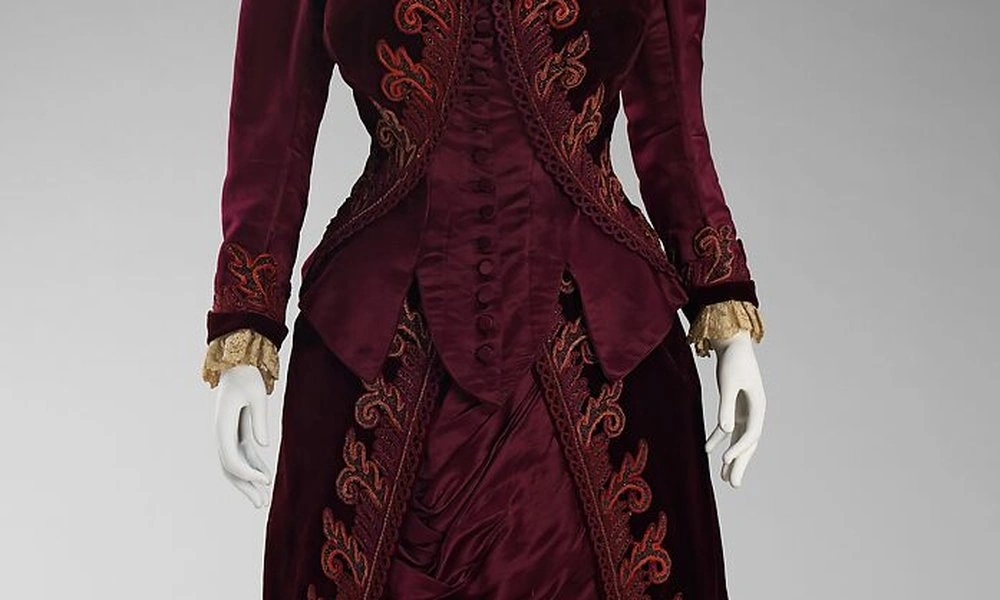
Couture as we know it began in Paris in the middle of the nineteenth century, with an Englishman. Charles Frederick Worth arrived in Paris in 1846 and, in 1858, opened his own house Worth and Bobergh at 7 rue de la Paix, with the Swedish businessman Otto Bobergh.
Worth did something no dressmaker before him had done: he designed collections in advance, showed them on live models, signed his work with a sewn-in label, and told his clients what they should wear, rather than simply executing their instructions.
The approach worked. His most important client was Empress Eugénie, wife of Napoleon III, and where the empress led, the courts of Europe followed. Worth is now widely regarded as the father of haute couture, and the practices he introduced the seasonal collection, the live showing, the designer’s name as a mark of authorship became the structure of the modern fashion industry.
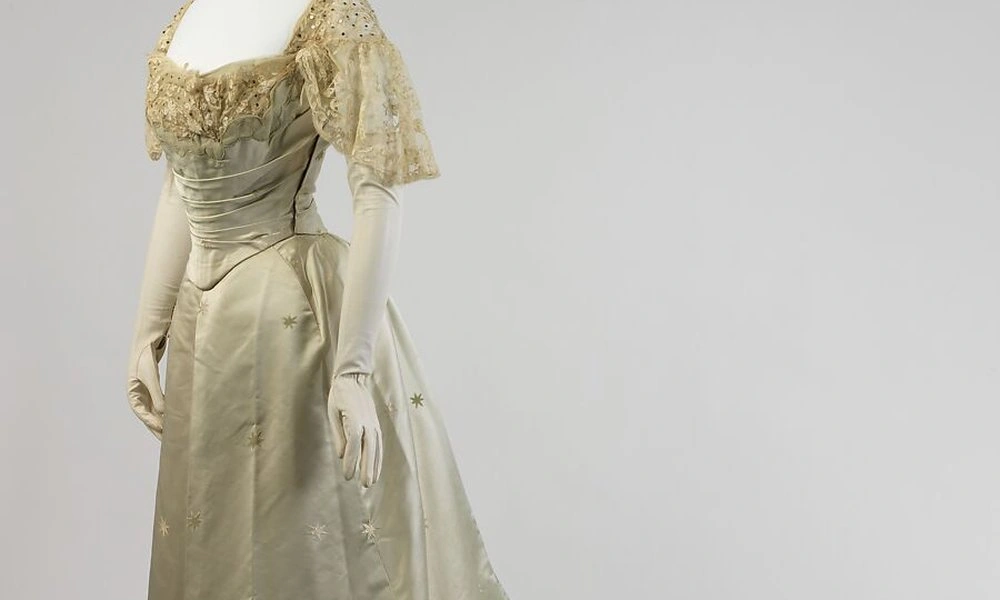
In 1868, the dressmakers of Paris organised themselves into the Chambre Syndicale de la Couture Parisienne, a body that would regulate the profession its collections, its calendar, its standards for the next century and a half. The decades that followed were couture’s golden age. Houses such as Worth, Doucet, Paquin and Callot Soeurs dressed the wealthy of Europe and America, and Paris became, unchallenged, the capital of fashion.
The twentieth century tested that position. Two world wars, the rise of ready-to-wear and the changing lives of women all pressed against a trade built on handwork and private clients. Couture adapted by becoming, in part, a showcase: the collections advertised the house, while the money increasingly came from perfume, accessories and ready-to-wear.
The turning point of the post-war era came in 1947, when Christian Dior presented his first collection the one the press called the New Look, with its soft shoulders, narrow waist and full skirt. It restored Paris fashion to the centre of world attention and set the silhouette of the decade. The story of that collection is told in full in our account of Dior’s New Look.
Since then, the houses have changed hands, merged into luxury groups and passed through the hands of a long line of celebrated designers. What has not changed is the shape of the system Worth invented: a Paris atelier, a seasonal collection, a private client, and a garment made by hand for one person.
The Rules: What a House Must Do to Call Itself Haute Couture
The legal protection of the term dates to the aftermath of the Second World War. By a decision of 23 January 1945, confirmed by a ministerial order that April, haute couture became a designation of origin in France, granted by the minister responsible for industry on the advice of a classification commission. The intention was to protect Paris fashion at a moment when its standing had been badly shaken, and to stop the word being used by anyone who wished to borrow its prestige.
The body that administers the system today is the Fédération de la Haute Couture et de la Mode, which took its current name in 2017 and brings together the couture, ready-to-wear and menswear federations of Paris. Its haute couture committee selects the guest houses invited to show; a classification commission reviews the member houses each year, and the label is granted one year at a time.
The published criteria a house must meet are demanding. It must design made-to-order garments for private clients, with at least one fitting. It must maintain an atelier in Paris employing at least fifteen full-time staff, with at least twenty full-time technical workers in at least one workshop. And it must present a collection of original day and evening designs to the press in Paris twice a year, in January and July, during Haute Couture Week. The collection minimum was long described as fifty original looks; in recent years it has commonly been described as twenty-five, and the federation has applied the rules with more flexibility.
As of late 2026, thirteen houses held the appellation: Adeline André, Alexis Mabille, Chanel, Christian Dior, Franck Sorbier, Giambattista Valli, Givenchy, Jean Paul Gaultier, Julien Fournié, Maison Margiela, Maison Rabih Kayrouz, Schiaparelli and Stéphane Rolland.
Around them sits a second circle of corresponding members foreign houses such as Giorgio Armani Privé and Valentino and guest houses invited to show each season. Neither group holds the appellation itself, though their shows are part of the same week and often draw as much attention as the members’.
Inside the Atelier: How a Couture Garment Is Made
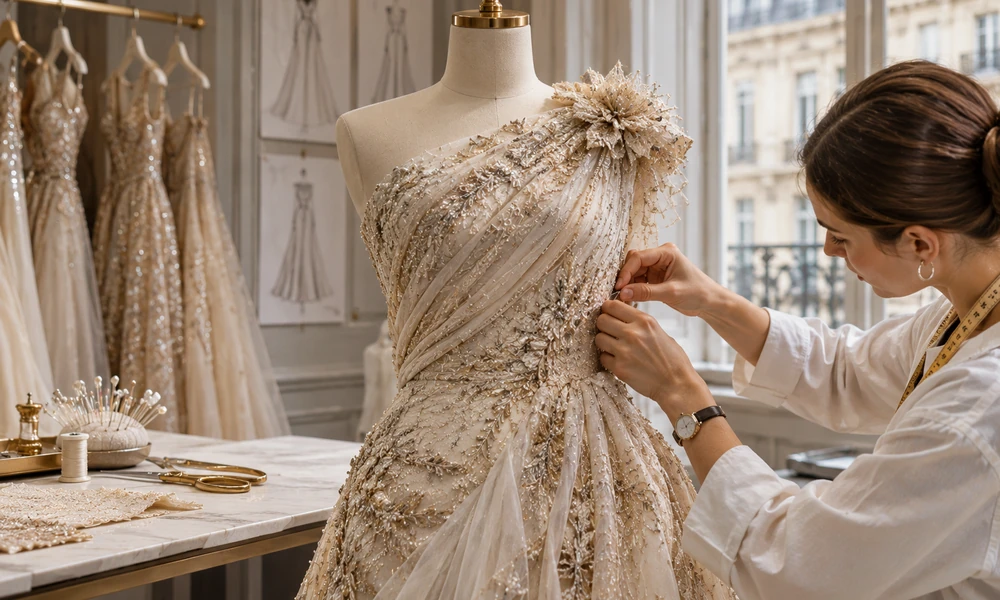
A couture commission begins with a conversation. The client meets the designer or the head of the atelier, discusses the occasion, and chooses a design from the collection or commissions something new. Fabric is selected silk, wool, organza, tulle, lace often from specialist mills, and the work begins not on the final cloth but on a toile, a mock-up in plain cotton muslin, cut and basted to the client’s measurements.
The toile is fitted on the client, marked, taken apart and remade until the shape is right. Only then is the real fabric cut.
The garment is built up by hand: seams are sewn by hand or finished by hand, linings are fitted, boning is placed, and the structure of the dress is settled before any decoration is applied. Embroidery, beading and appliqué are done by specialist hands, often in separate workshops devoted entirely to that work, and a single gown can absorb hundreds of hours of handwork before it is finished.
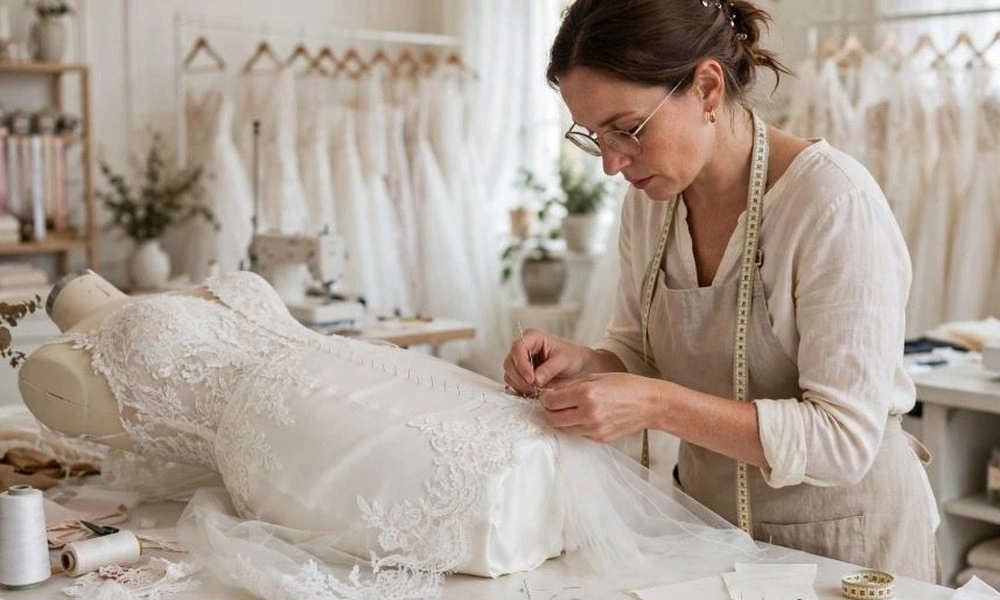
The client returns for further fittings traditionally three as the garment takes shape. Each fitting is a chance to correct the line, adjust the length, settle the shoulder, and check how the fabric moves on the body. Nothing is standardised: the dress exists for one person, and the fitting is where that fact is made real.
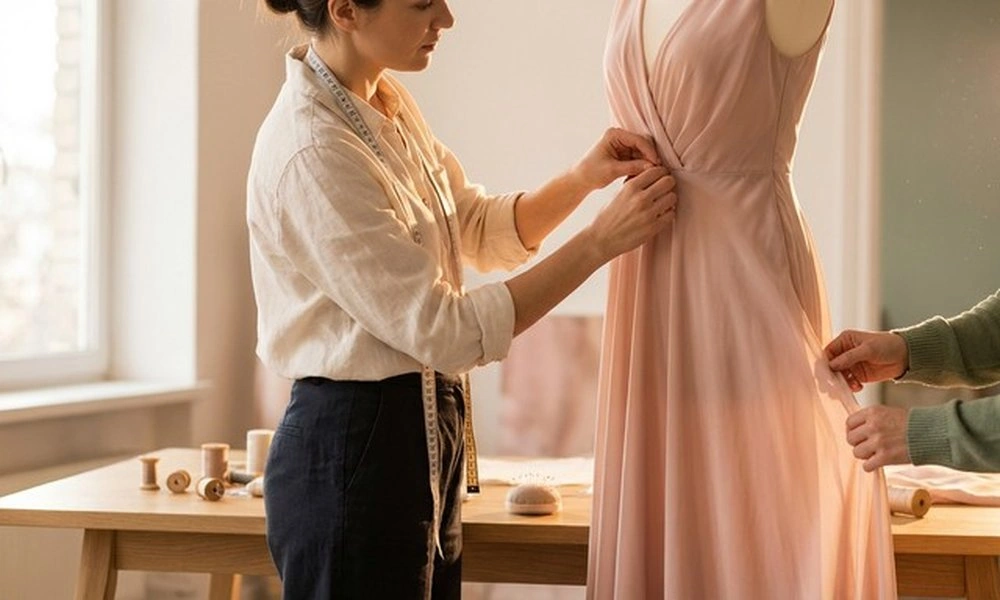
The people who do this work are known in the trade as the petites mains, the little hands the seamstresses, embroiderers, fitters and finishers whose skill is the real substance of a couture house. A celebrated designer may draw the silhouette, but the garment is made by dozens of hands, each trained over years. When a house speaks of its savoir-faire, it is speaking of them.
Finally, the garment is pressed, checked, and delivered, often with a final fitting in the salon. Prices are rarely published and are agreed privately with each client; what is certain is that the price reflects hours of skilled labour rather than a label alone.
Couture, Ready-to-Wear and Demi-Couture
The three categories are best understood as three different relationships between a garment and its wearer. Couture is made for one person. Ready-to-wear is made in sizes for many people. Demi-couture is made to measure, or in very small numbers, with hand finishing closer to couture in method, but without its legal standing.
Ready-to-wear is where most of the fashion industry lives, including the couture houses’ own ready-to-wear collections: designed by the house, shown on a runway, produced in sizes and sold in shops. The quality can be very high, and the design may come from the same creative director as the couture. What it cannot offer is a garment cut for one body and fitted on that body.
Demi-couture is the honest middle ground. Many fine dressmakers work this way: the client chooses a design, the garment is made to her measurements with several fittings, and handwork features throughout. For a wedding dress or an evening gown, demi-couture is often the sensible choice, and it is where much of the best dressmaking in the world now happens.
The confusion arises only when the word couture is used to describe it. A good test is the simplest one: if the garment was not made to order in a Paris atelier of an approved house, it is not haute couture, whatever the label says.
The distinction matters beyond terminology. The fashion houses behind the collections are creative businesses as much as workshops, and their couture ateliers are often small departments inside much larger companies. The atelier’s job is not to make money directly few couture departments are profitable on their own but to hold the standard that gives everything else the house sells its authority.
Who Still Wears It?
The first answer is: very few people. The private clientele of haute couture is usually described as numbering only a few thousand people worldwide a small, largely private circle of women who commission pieces season after season. They are, for the most part, not public figures. They are women of substantial means who value discretion, fit and the knowledge that no one else will wear what they are wearing.
The second answer is the one the public sees: royalty, film stars and musicians, who wear couture on red carpets and at state occasions. A gown worn by an actress at a festival is often a couture loan made for her, fitted on her and it is this borrowed visibility that keeps couture in the public eye.
Brides form a third, quieter group. A couture wedding dress is one of the most common commissions, because a wedding is one of the few occasions on which a client is willing to pay for a garment worn once and kept for life. Several houses maintain bridal ateliers of their own, and many private dressmakers work to couture standards for brides without ever claiming the protected term.
The Shows: What You Are Actually Watching
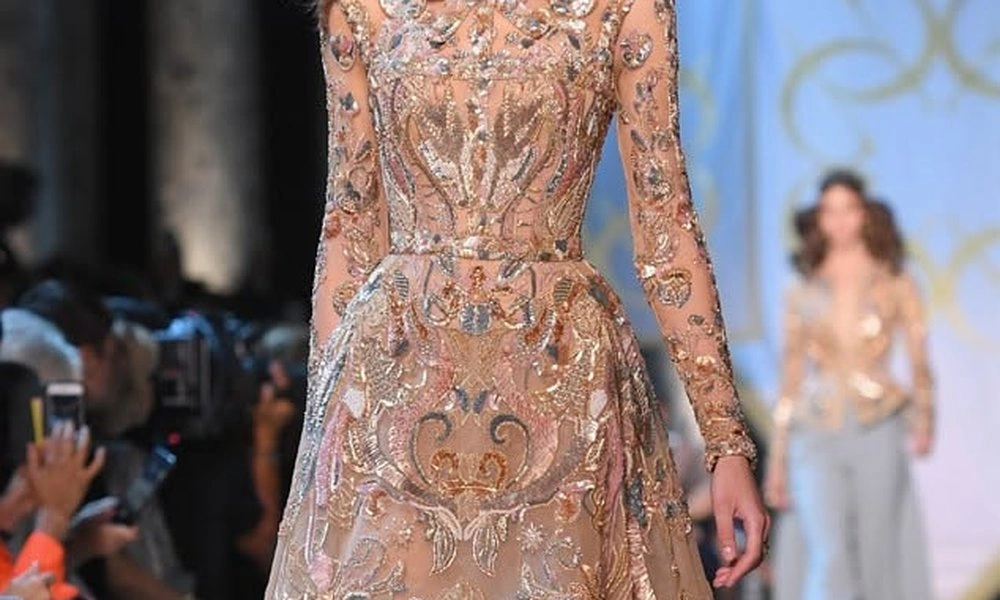
Twice a year, in January and July, Paris hosts Haute Couture Week. The shows are the most visible part of the system and the most misunderstood. They are not sales events in the ordinary sense. The audience is made up of clients, press, buyers and guests, and the clothes on the runway are samples some of them extreme, unwearable in daily life, designed to show what the atelier can do rather than what a client will order.
What follows the show is quieter and more important. Clients visit the salon, look at the garments at close range, and place orders often for simplified versions of what they saw, in different colours, for real occasions. The spectacle is the advertisement; the appointment afterwards is the business. A house that shows brilliantly and sells nothing has failed, however beautiful the photographs.
The shows also serve the houses beyond selling dresses: the images travel the world within hours and carry the house’s name into places its shops will never reach, selling the perfume, handbags and ready-to-wear on which the modern luxury business actually runs.
Does Couture Still Matter?
It is a fair question, and it has been asked for as long as couture has existed. The trade has been declared dying many times by war, by ready-to-wear, by changing fashions, by economics. Each time, it has survived by becoming smaller and more exact about what it is.
The strongest case for couture is the simplest: it preserves skills that would otherwise disappear. Hand embroidery, feather work, flower making, the cutting of a bodice that fits without strain these are crafts that take years to learn and cannot be replaced by machines. The Paris ateliers, and the specialist workshops that supply them, keep those skills alive by employing them. Lose the ateliers, and the knowledge goes with them.
The second case is influence: ideas that begin in couture a silhouette, a treatment of fabric, a colour travel downwards through ready-to-wear and into the clothes ordinary people wear.
There are honest criticisms, too. Couture is exclusive by design, and its exclusivity sits uneasily with a world that asks fashion to be more open. Its environmental record is mixed: a garment made to last and worn for decades is, in itself, a sustainable object, but the shows, the travel and the spectacle around them are not. And the economics remain fragile most houses would not keep an atelier open on dressmaking alone. Couture survives because the houses that own it consider it worth the cost, and because their clients, few as they are, keep coming back.
How to Recognise Real Couture
The rules are also a practical checklist. A garment described as haute couture should come from a house on the federation’s list, be made to order for a named client, involve fittings, and be made by hand in a Paris atelier. If any of those is missing, the word is being used loosely.
Look, too, at the work itself. Couture finishing is visible to the trained eye: seams that are finished by hand, linings that fit as carefully as the outside, embroidery that is stitched rather than glued, and a fit that looks effortless because the garment was built around the wearer.
Much of what marks quality in any fine garment applies here, and our guide to how to identify quality in luxury clothing sets out the signs to look for, from the stitching to the cloth.
Finally, be wary of the word itself. Couture is used freely on labels, websites and social media, and most of those uses are not the protected term. That does not make the garments bad many are very good but it does make the word unreliable. The reliable test remains the one the French system has used since 1945: the house, the atelier, the fitting, and the client. Everything else is a description, not a designation.
Couture, in the end, is a simple promise kept at extraordinary length: a garment made for one person, by people who know their trade, with nothing rushed and nothing faked.
Whether you ever commission a piece or only admire one in a photograph, that promise is worth carrying with you it is a reminder of what clothing can be when time and skill are allowed to matter. We hope this guide has given you a clearer view of that world, and we would be glad of your company the next time we look closely at something made beautifully.