On the morning of February 12, 1947, in a salon at 30 Avenue Montaigne in Paris, a little-known designer named Christian Dior presented ninety outfits to a room of editors, buyers, and socialites, introducing what would become known as Dior’s New Look.
By the time the last model walked, the audience understood that fashion had changed permanently. Carmel Snow, the legendary editor of Harper’s Bazaar, famously declared that the clothes were a new look, and the phrase named not just a silhouette but an era.
The New Look remains the most consequential debut in fashion history, and its significance reaches far beyond hemlines. It restored Paris to the center of the style world, proved that luxury could lead a shattered continent back to prosperity, and established the model on which the entire modern fashion industry still runs.
The Man Behind the Curtain
Christian Dior was an unlikely revolutionary. Born in Granville, Normandy, in 1905, he had spent his youth in artistic circles, run a gallery that sold works by Picasso and Dalí, and drifted into fashion illustration only after his family’s fortune collapsed in the Depression.
By 1947 he was forty-two years old, shy, superstitious, and softly round, a man so far from the dandy archetype that journalists struggled to reconcile him with the glamour he was about to unleash.
He had learned his craft properly, sketching for the couturier Robert Piguet and then working alongside Pierre Balmain at the house of Lucien Lelong during the Occupation years.
When the textile magnate Marcel Boussac offered to back him, Dior initially hesitated, accepting only after consulting his fortune teller, a detail he never hid and that humanizes everything that followed. The house of Dior was founded on a superstition, a fortune, and a decade of quiet apprenticeship.
Paris Before the New Look
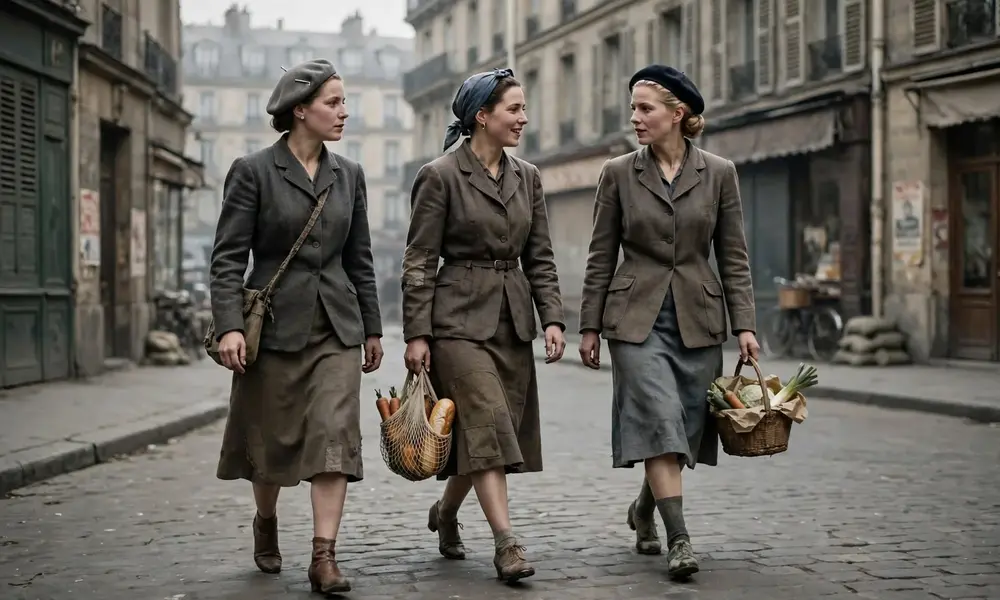
To grasp what happened in that salon, you must picture what fashion had become. Six years of war and occupation had reduced French couture to a shadow: fabric was rationed, silhouettes were boxy and short, and the great houses survived on a diet of restrictions.
Worse, the industry’s center of gravity seemed to be drifting across the Atlantic, where American sportswear and Hollywood costume were defining a new, practical femininity.
Paris in early 1947 was cold, grey, and rationed. The idea that a designer would propose clothes requiring twenty meters of fabric for a single skirt bordered on provocation, and some quarters of the press said exactly that. Dior’s gamble was that the world was not tired of luxury. It was starving for it.
The Ninety Outfits
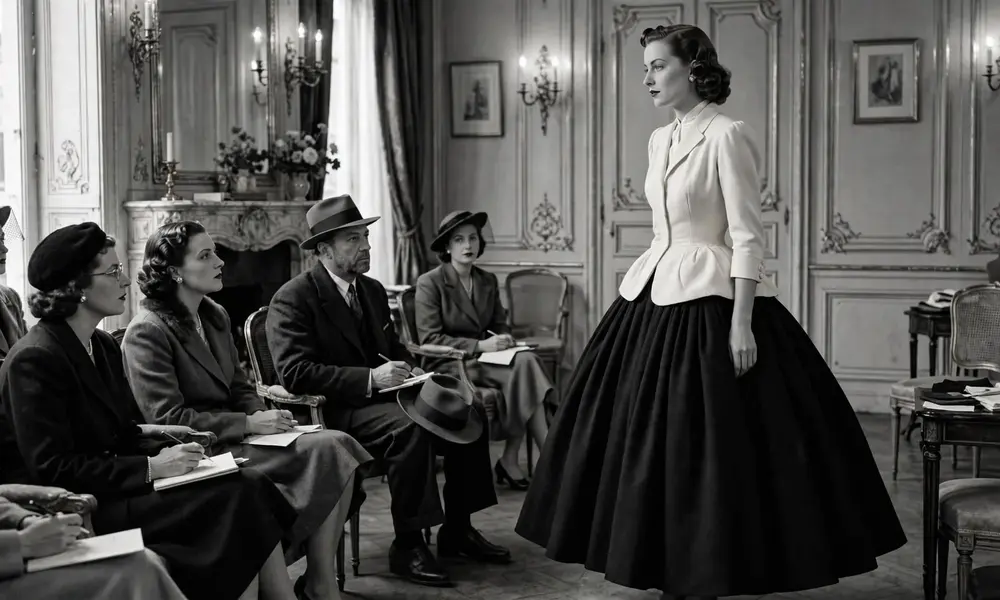
The collection, presented in two lines named Corolle and En Huit, after the corolla of a flower and the figure eight, proposed a silhouette that inverted everything the war years had imposed. Shoulders were soft and rounded rather than padded.
The bust was shaped, the waist cinched to the smallest possible circumference, and the skirts bloomed outward in enormous pleated or padded constructions that used fabric with deliberate, almost defiant abundance.
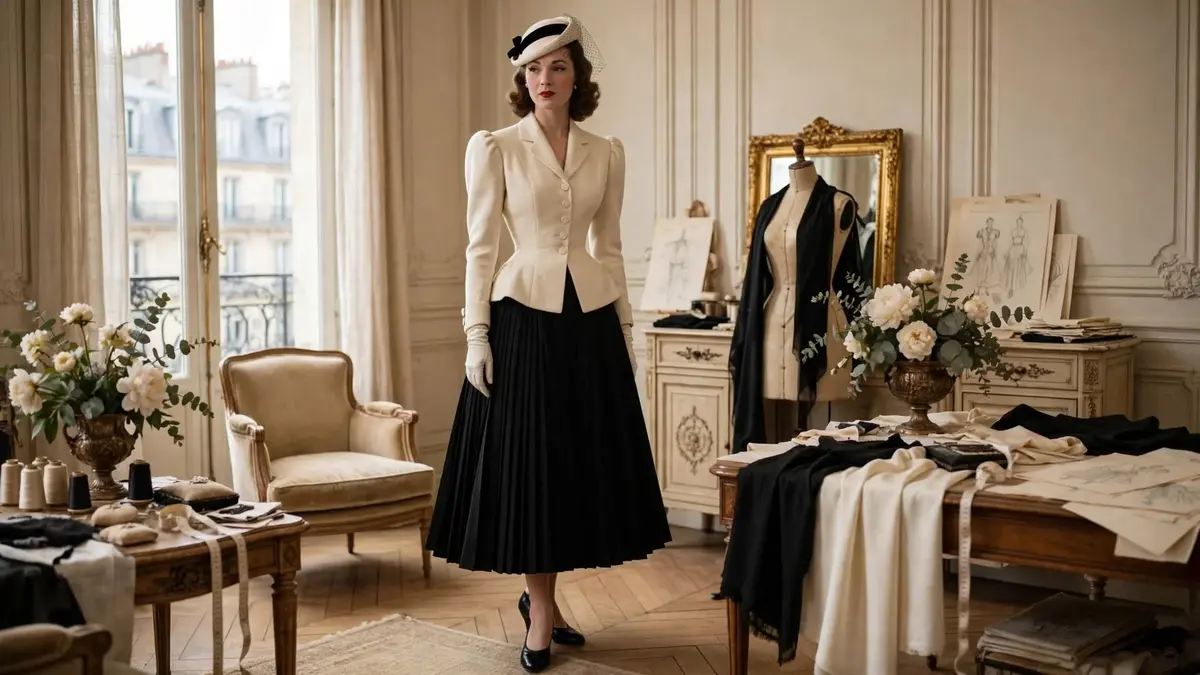
The Bar suit distilled the idea into a single outfit: a cream silk shantung jacket molded to the torso, a vast black pleated wool skirt, and a hat tilted with absolute confidence. It remains the most famous outfit in fashion history, endlessly reproduced, referenced, and reinterpreted by every designer who has since led the house.
The reaction was immediate and total. Orders flooded the house. The American press, whose buyers had crossed an ocean uncertain whether Paris still mattered, went home converted.
Within months, the New Look was being copied on every continent, and Dior licenses began generating the revenue that would make the house the financial engine of postwar French fashion.
The Controversy and the Answer
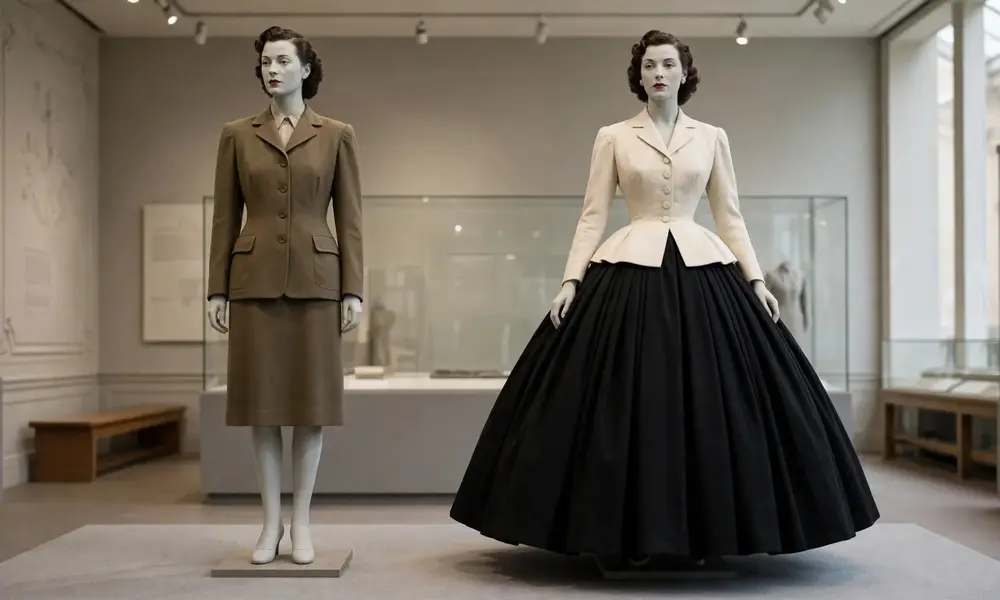
Honesty requires noting that the New Look was not universally adored. Critics called it regressive, a return to constriction after women had tasted the practical freedom of wartime clothing.
Protesters in some cities demonstrated against skirts they considered wasteful, and Coco Chanel herself, whose entire philosophy had been built on liberating women from such structures, regarded the new silhouette with undisguised contempt.
The rivalry between their two visions of women, freedom through simplicity against splendor through structure, still organizes fashion debate today, as our comparison of Dior versus Chanel explores in depth.
History sided with Dior, at least for the decade that mattered. Women voted with their wardrobes, embracing a silhouette that restored ceremony to getting dressed, and by the early 1950s the house was generating a remarkable share of French couture exports.
Dior himself managed the expansion with unexpected commercial genius, establishing the licensing system that put his name on stockings, perfumes, and accessories worldwide, inventing in the process the business architecture of the modern luxury brand.
Ten Years That Built an Empire
Dior’s career lasted only ten years. He died suddenly in October 1957, at fifty-two, while taking a cure in Italy, leaving behind a house that had grown in a single decade from a debut collection into the largest couture operation in the world. His death could have ended everything. Instead, it revealed the strength of what he had built.
A twenty-one-year-old assistant named Yves Saint Laurent took over the atelier, beginning a succession of creative directors that reads as a history of fashion itself: Marc Bohan’s elegant longevity, Gianfranco Ferré’s architectural drama, John Galliano’s theatrical genius, Raf Simons’s modernist clarity, and Maria Grazia Chiuri’s feminist reimagining.
Each era reinterpreted the founder’s codes, the cinched waist, the full skirt, the cannage pattern, the grey he called the most elegant of colors, without ever abandoning them.
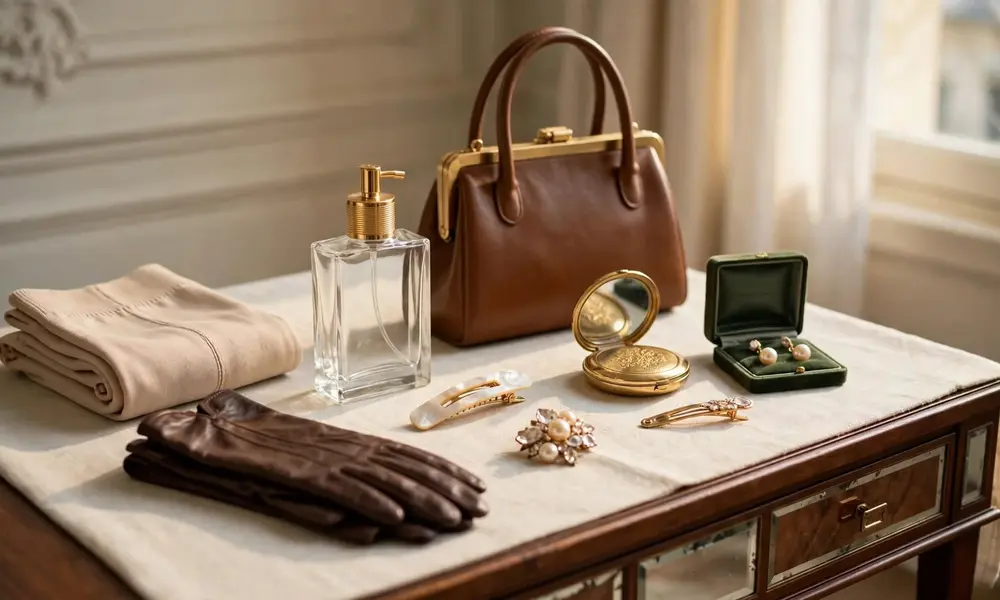
The house’s expansion into the complete luxury universe, from the Lady Dior bag, explored in our Dior bag guide, to J’adore and the entire fragrance empire, fulfilled the licensing architecture Dior himself had sketched in his first years.
Today the house anchors LVMH alongside Louis Vuitton, and the salon at 30 Avenue Montaigne, recently restored to its founding splendor, remains the spiritual address of French fashion.
Why 1947 Still Matters

The New Look’s deepest lesson is about timing and nerve. Dior did not follow the mood of 1947. He judged that the mood was exhausted and offered its opposite, betting a fortune that people who had been deprived of beauty would choose abundance over restraint the moment they were allowed. He was right, and every successful luxury revival since has repeated his calculation.
The debut also established the debut itself as fashion’s highest drama. Every hyped first collection, every creative director’s opening show, every moment when an industry holds its breath at a runway’s first exit descends from that February morning on the Avenue Montaigne.
Christian Dior did not merely design a silhouette. He designed the way fashion renews itself: with audacity, ceremony, and the nerve to call it new.
FAQs
What was Dior’s New Look?
The New Look was the silhouette introduced in Christian Dior’s first collection on February 12, 1947: soft rounded shoulders, a cinched waist, and enormously full skirts using abundant fabric, a deliberate reversal of wartime austerity.
Who coined the term New Look?
Carmel Snow, the editor-in-chief of Harper’s Bazaar, declared the collection a new look at the debut show, and the phrase became the collection’s permanent name.
What is the Dior Bar suit?
The Bar suit is the most famous outfit of the 1947 collection, a cream silk shantung jacket molded to the torso worn with a vast black pleated skirt, and it remains the defining image of the New Look.
Why was the New Look controversial?
Critics called its extravagant use of fabric wasteful in a rationed economy and its cinched silhouette regressive after years of practical women’s clothing. Some protests occurred, and Coco Chanel openly disapproved.
When did Christian Dior die?
Christian Dior died suddenly in October 1957 in Italy, aged fifty-two, just ten years after founding his house. Yves Saint Laurent, then twenty-one, succeeded him.
Where was the first Dior show held?
At the house’s original salon, 30 Avenue Montaigne in Paris, which remains the spiritual home of Dior and was recently restored as the house’s flagship and gallery.
What is Dior’s connection to Marcel Boussac?
Boussac, France’s textile king, financed the founding of the house in 1946, providing the capital that made the 1947 debut possible.
How did the New Look change the fashion industry?
It restored Paris as the capital of world fashion, pioneered the global licensing model that built the modern luxury business, and established the designer debut as the industry’s defining drama.