Enzo Ferrari founded the most famous car company in the world, and he did it reluctantly. The road cars that made his name immortal were, to him, a necessary irritation, a way to fund the only thing he ever truly cared about: racing. He sold beautiful machines to the public so that he could build faster ones for the track, and the tension between those two purposes created the Ferrari mystique.
Almost everyone who knew Enzo Ferrari described him as a difficult man. He could show great loyalty but also be very cold.
He was also a genius in his own way. His genius was not in engineering, as he left that work to others. It was in his strong will and determination.
To understand Enzo Ferrari, we must understand how his obsession, repeated tragedies, and stubborn nature helped create a brand recognized around the world.
The Racing Driver Who Became an Impresario
Enzo Ferrari was born in Modena in 1898. He claimed that he decided his future at the age of ten after watching a race in Bologna.
In the 1920s, he worked as a professional racing driver for Alfa Romeo and achieved respectable results. However, his real talent appeared when he stopped driving.
In 1929, he founded Scuderia Ferrari, which means “Ferrari Stable.” It was a racing team that managed Alfa Romeo’s racing program throughout the 1930s. It became the most successful team in pre-war Grand Prix racing.
The Scuderia years taught Ferrari the skills that shaped his career.
He developed the ability to hire and manage skilled but challenging individuals. He also knew how to secure financial support from sponsors and industrialists. For him, racing was more than a sport.
The arrangement ended because of the war and a disagreement with Alfa Romeo. Ferrari was left with an empty workshop, a famous name, and a non-compete clause.
He waited until the restriction ended. In 1947, the first car carrying his own name, the 125 S, came out of his new factory in Maranello.
Racing First, Always
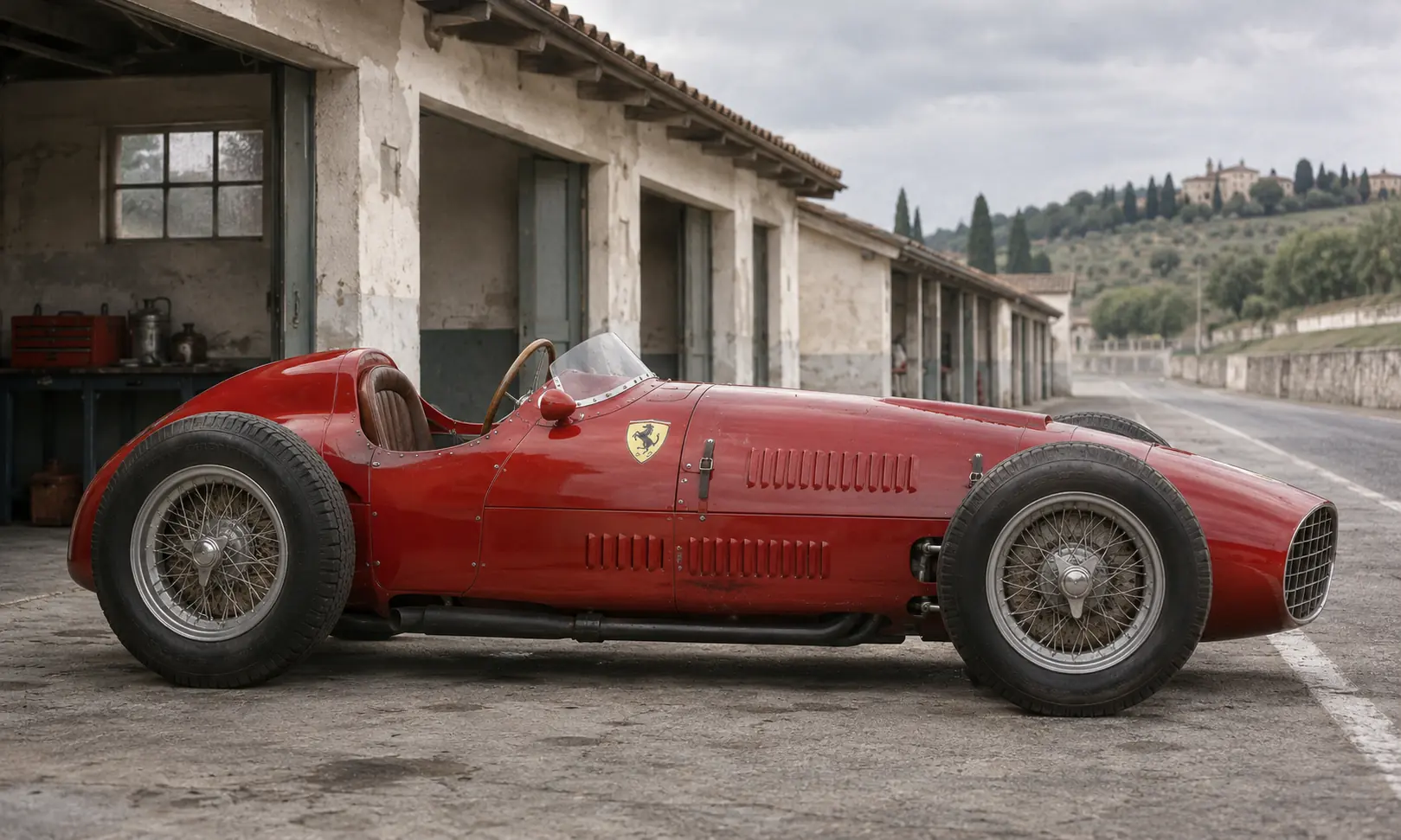
The founding principle of Ferrari the company was that racing paid for nothing and road cars paid for racing. Enzo sold his road cars, exquisite machines bodied by the great coachbuilders, to fund his competition program, and he never pretended otherwise.
Customers were means to an end, and he treated them with a hauteur that became part of the brand’s strange allure: Ferrari did not court buyers; buyers petitioned Ferrari.
On the track, the formula produced the most successful racing organization in history. Ferrari won its first Grand Prix in 1951, dominated the sports car championships of the 1950s, and went on to accumulate more Formula One victories, more constructors’ titles, and more Le Mans wins than any marque in the sport’s history.
The cavallino rampante, the prancing horse badge drawn from the emblem of a First World War fighter ace, became the most recognized symbol in motoring.
The Tragedies That Shaped Him
No honest account of Enzo Ferrari can omit the grief that ran through his life like a dark river. The most dangerous era of motorsport unfolded under his leadership, and the drivers he recruited and drove to their limits died with terrible regularity through the 1950s and 1960s: Ascari, Castellotti, Musso, Collins, von Trips, and others, each death a wound he carried visibly.
The deepest wound was personal. His son Alfredo, called Dino, his heir and his joy, died in 1956 at twenty-four of muscular dystrophy. Enzo never recovered.
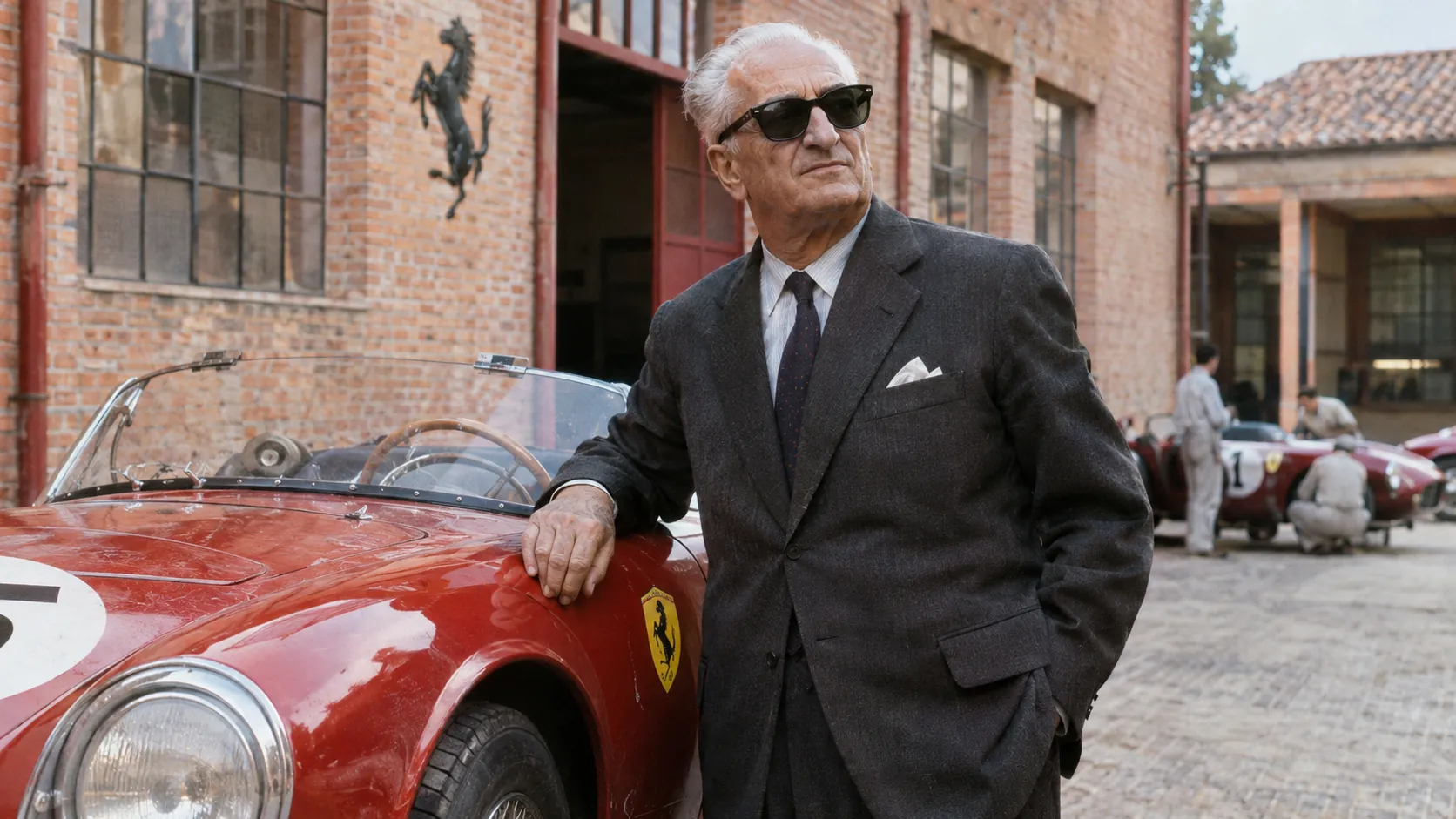
He withdrew from public life almost completely, refused to attend races for years, conducted business from his factory office in dark glasses, and poured his grief into the V6 engine project Dino had championed, which became a car line bearing his son’s name.
The prancing horse’s legend is written in speed, but its undertone is mourning, and the old man’s black glasses became the visible symbol of both.
The Ford Humiliation and the Fiat Marriage

The most famous episode of Enzo’s later life combined his cunning and his pride in equal measure. In 1963, Ford Motor Company negotiated to buy Ferrari, and Enzo encouraged the talks, let Ford’s executives audit his books and tour his factory, and then, at the final hour, refused to sign, reportedly enraged by clauses that would have subordinated his racing program to Detroit’s control.
Henry Ford II’s response was the most famous grudge in automotive history: a no-expense-spared racing program aimed at beating Ferrari at Le Mans, which the GT40 accomplished four consecutive times from 1966.
The story, immortalized in film, obscures the coda that mattered more to Enzo: in 1969 he sold half his company to Fiat, securing Ferrari’s financial future on terms that preserved his absolute authority over racing until his death. He had used Ford’s offer as leverage all along, or so the paddock always suspected.
The Final Decade
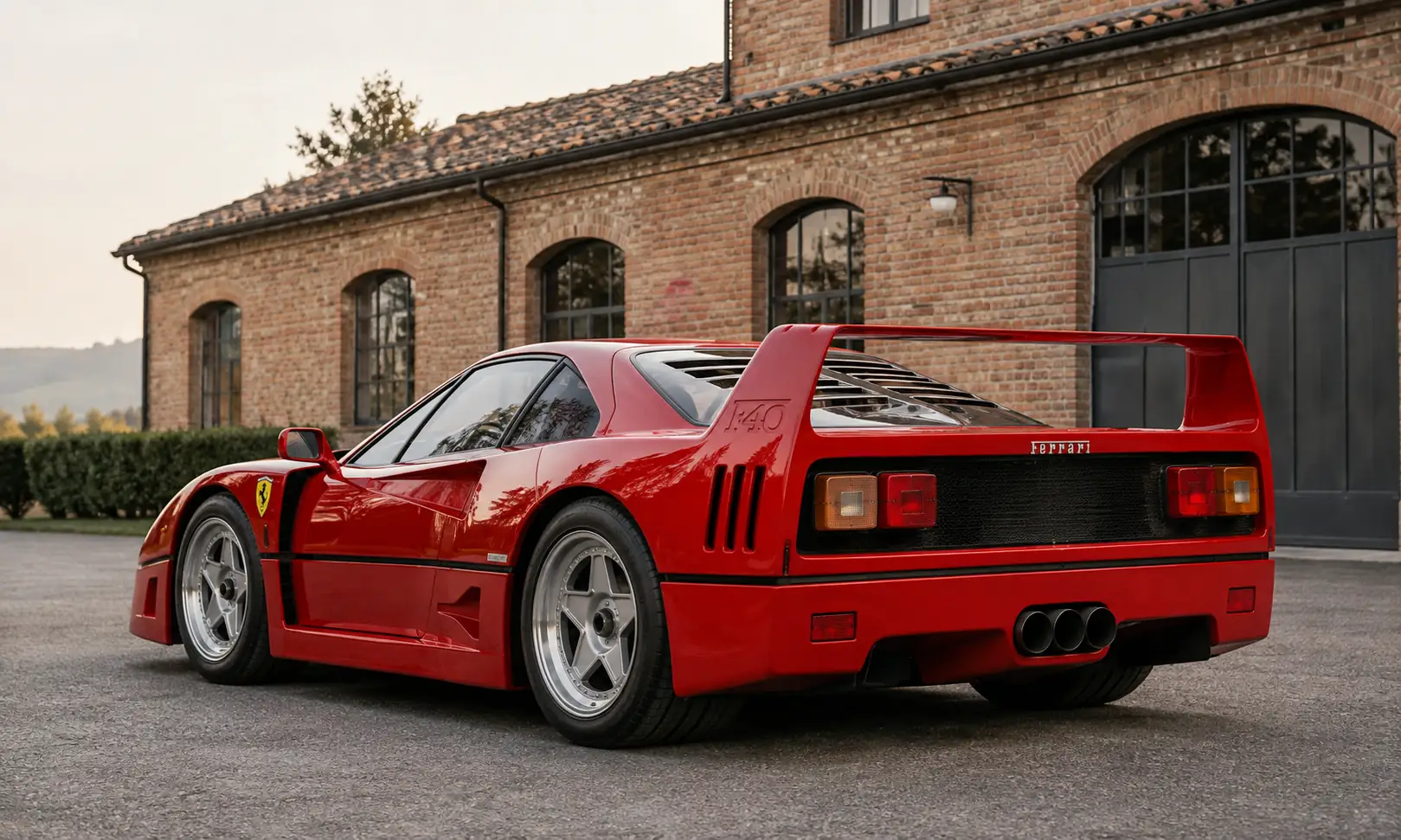
Enzo Ferrari ruled Maranello until the end of his life, a presence employees called the Pope of the North, governing through instinct, memory, and a telephone. His last great gestures carried the old fire: the 288 GTO and then, for the company’s fortieth anniversary, the F40, the raw twin-turbo supercar he approved personally as his farewell statement, the last machine to carry his direct blessing.
He died in August 1988, aged ninety, and his death was kept secret for two days at his own instruction, one final act of control. The company he left behind, now a publicly traded luxury giant whose cars, chronicled in our review of the fastest supercars, command prices and waiting lists undreamed of in his lifetime, would have astonished him in everything except its devotion to racing, which he would have considered simply correct.
The Paradox That Built the Brand
Enzo Ferrari’s genius was a paradox he never resolved and never needed to: he despised the commercial side of his company, and that very disdain became its greatest commercial asset. The reluctance read as purity. The hauteur read as exclusivity.
The road cars, built to fund a private obsession, absorbed the obsession’s glow, and buyers then and now feel they are purchasing proximity to the racing program rather than mere transportation.
Every Ferrari sold today, from the entry models to the hypercars that headline auctions, trades on the formula Enzo invented: racing first, always, with the road cars as a privileged bystander’s ticket. He never wanted customers. He wanted believers, and believers, unlike customers, never leave.
FAQs
Who was Enzo Ferrari?
Enzo Ferrari, born in Modena in 1898, was a racing driver turned team manager who founded Scuderia Ferrari in 1929 and the Ferrari car company in 1947, creating the most successful racing organization and the most famous car brand in history.
Why did Enzo Ferrari sell road cars?
Reluctantly, and only to fund his racing program. He regarded road-car customers as a means to finance competition, an attitude that paradoxically strengthened the brand’s exclusivity.
What was Scuderia Ferrari?
The racing team Enzo founded in 1929, which ran Alfa Romeo’s competition program through the 1930s and remains the name of Ferrari’s Formula One team today.
What happened with Ford’s attempt to buy Ferrari?
In 1963, Enzo Ferrari encouraged Ford’s takeover negotiations and then refused to sign at the final moment. Henry Ford II responded by building the GT40 program that beat Ferrari at Le Mans four consecutive times from 1966.
Who was Dino Ferrari?
Alfredo Dino Ferrari, Enzo’s beloved son and heir, who died of muscular dystrophy in 1956 at twenty-four. Enzo honored him with the Dino marque and its V6 engine, and never fully recovered from the loss.
What was the last car Enzo Ferrari approved?
The F40, the twin-turbo supercar built for the company’s fortieth anniversary in 1987, the final machine to carry his personal blessing before his death in August 1988.
Who owns Ferrari today?
Ferrari is an independent publicly traded company, separated from Fiat in 2016, with the Agnelli family’s Exor holding company as its largest shareholder and Piero Ferrari, Enzo’s surviving son, as vice chairman.
Why is the Ferrari badge a prancing horse?
The cavallino rampante was the personal emblem of Francesco Baracca, a First World War fighter ace, whose mother suggested Enzo adopt it for luck. He placed it on a yellow shield, the color of Modena.