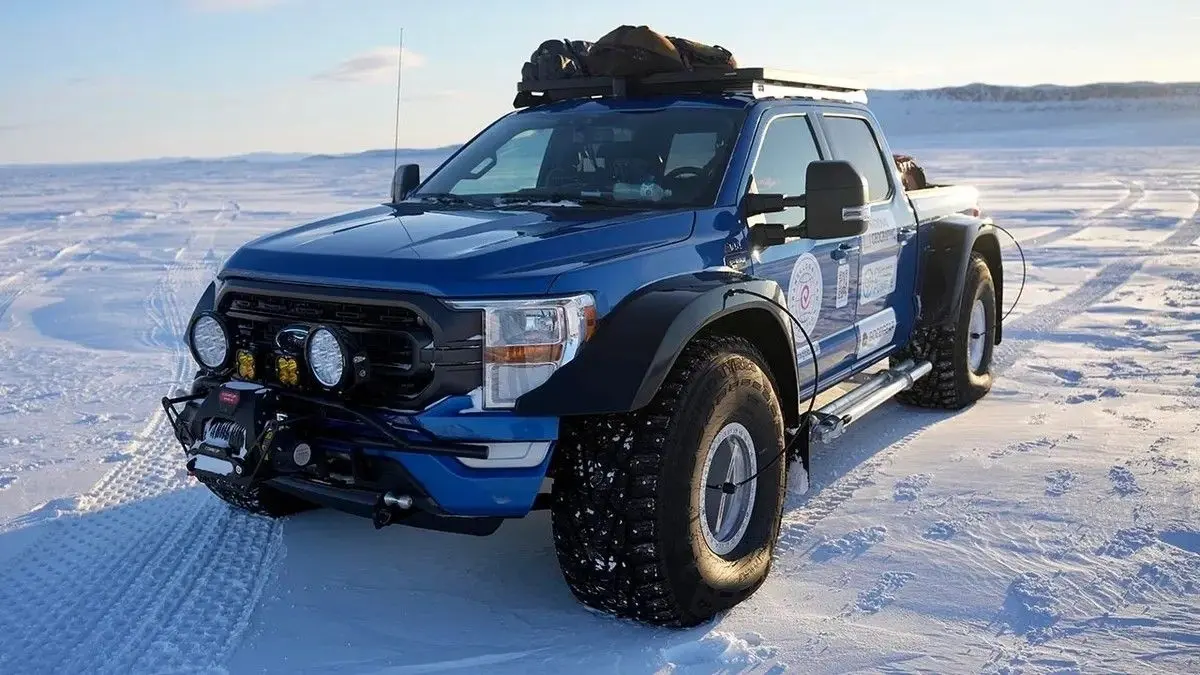
The first heavy snowfall has a way of changing how you think about your truck. A road that felt perfectly ordinary yesterday becomes slippery, visibility drops, and a familiar journey suddenly demands more attention. You begin to notice things you might overlook in warmer weather: how confidently the tires grip the road, how predictable the steering feels, and whether your truck can handle an unplowed driveway without getting stuck.
That is why choosing a truck for winter driving involves more than looking for a powerful engine or an aggressive four-wheel-drive badge.
The right pickup should suit the conditions you actually encounter, whether that means icy highways, steep mountain roads, rural routes covered in fresh snow, or everyday commuting through a long winter. Ground clearance, drivetrain, tires, weight, and stability systems all influence how the truck behaves when the weather turns.
Several pickups deserve consideration, including the Ford F-150, Toyota Tacoma, Jeep Gladiator, Chevrolet Silverado 1500, and Ram 1500. But before choosing a particular model, it helps to understand what makes a truck genuinely capable in winter pand which features are worth prioritizing.
What Makes a Truck Good for Snow and Winter Driving?
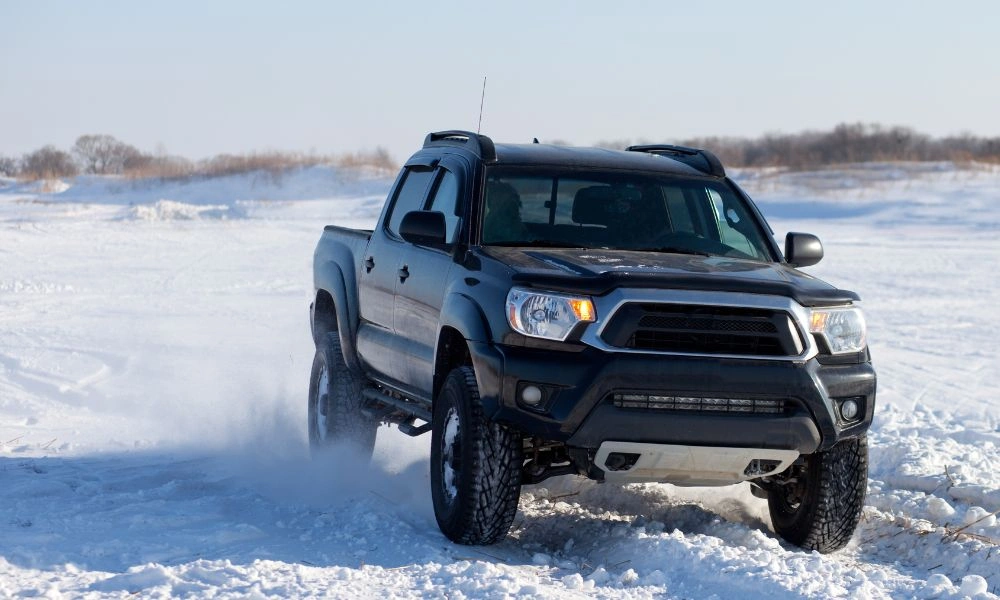
A truck can look unstoppable and still struggle on an icy road. Large wheels, powerful engines, and rugged styling do not automatically translate into better winter control.
The most important qualities are traction, predictable handling, sufficient ground clearance, effective braking, and tires suited to the conditions.
Four-wheel drive can help a pickup move away from a slippery stop or travel through deeper snow. Ground clearance helps prevent the underside from contacting packed snow. Electronic stability control can help manage a developing skid, while appropriate tires provide the grip needed for accelerating, turning, and stopping.
These features work together. A truck with excellent ground clearance but unsuitable tires may struggle on ice, while a lower truck with good winter tires may perform confidently on cleared roads.
Start by thinking about the winter you actually drive through. Regular snow-covered highways call for a somewhat different setup from remote roads where snow accumulates faster than it can be cleared.
Four-Wheel Drive or All-Wheel Drive: Which Do You Need?
This is one of the first decisions worth making when shopping for a winter truck.
Four-wheel drive, commonly advertised as 4WD or 4×4, is available on many traditional pickups. Depending on the system, the driver can select a mode for slippery surfaces or use a low-range setting for demanding terrain.
All-wheel drive, or AWD, generally manages power distribution automatically. Some smaller pickups use AWD systems that are well suited to everyday roads and changing weather.
Neither system is universally superior in every winter situation.
For deep snow, rural tracks, and uneven terrain, a pickup with a capable 4WD system and suitable ground clearance can be a strong choice. For commuters who mainly travel on plowed roads and encounter changing traction throughout the day, an AWD pickup may provide the convenience they want.
One distinction matters more than the terminology: four-wheel drive helps you get moving, but it does not guarantee that you can stop or turn safely on ice. Tires and driving technique remain essential.
Why Winter Tires Matter More Than You Might Expect
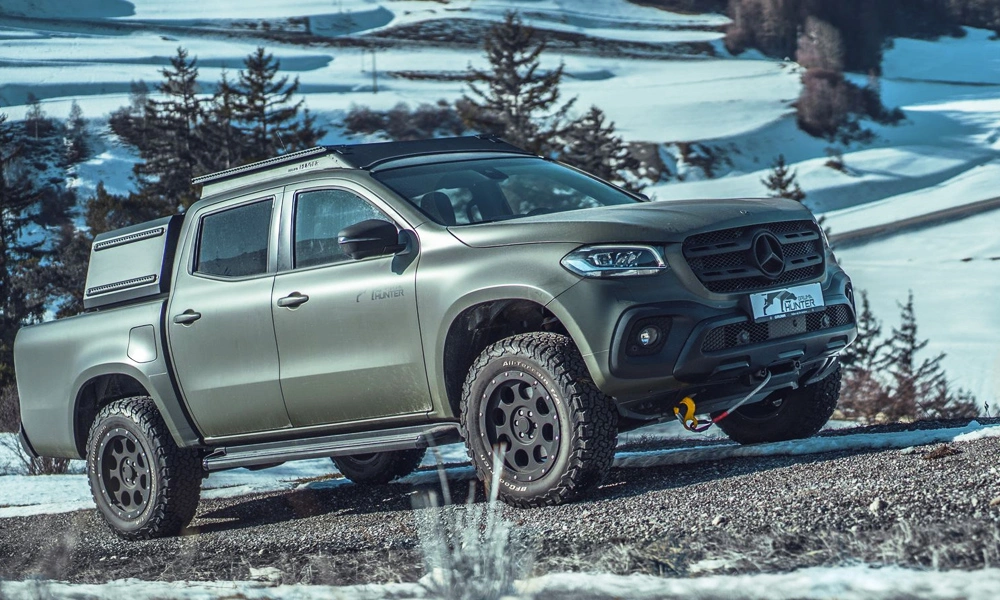
Imagine two similar pickups approaching a snow-covered bend. One has four-wheel drive and ordinary tires. The other has appropriate winter tires and a drivetrain suited to the road. The second truck may have a significant advantage in maintaining grip, depending on the conditions.
Winter tires use rubber compounds and tread designs intended to perform in cold weather. They can improve traction and braking on cold, snowy, and icy surfaces compared with many conventional all-season tires.
Three-season all-terrain tires may look suitable for winter because of their deep tread, but appearance alone is not enough. If you want one set of tires for year-round use, check the tire’s winter certification and performance characteristics rather than assuming every all-terrain tire is equally capable.
For severe winter conditions, dedicated winter tires are often worth considering. Make sure their load ratings and dimensions are appropriate for your truck.
A capable drivetrain paired with unsuitable tires is an incomplete winter setup.
Ground Clearance: How Much Is Enough?
Ground clearance becomes particularly important when snow accumulates on roads that haven’t been cleared. A truck that can travel over deeper snow without its underside dragging has a practical advantage.
However, maximum clearance should not be your only buying criterion. Most winter commuting happens on roads where traction, braking, and stability matter more than extreme off-road dimensions.
For reference, the 2026 iSeeCars snow rankings list the Ford F-150 with up to 11.9 inches of ground clearance and the Jeep Gladiator with 11.6 inches. These figures depend on configuration and should be verified against the exact trim you’re considering.
If you regularly drive through deep snow, look at the specific vehicle’s clearance, approach angle, tires, and underbody layout. If you mainly drive through town, a sensible road-focused configuration with good winter tires may be more useful than a heavily lifted truck.
Which Trucks Deserve a Place on Your Winter Shortlist?
Once you’ve identified your needs, comparing a few pickups becomes much easier. The following models offer different combinations of size, capability, and everyday usability.
Ford F-150: A Versatile Full-Size Choice
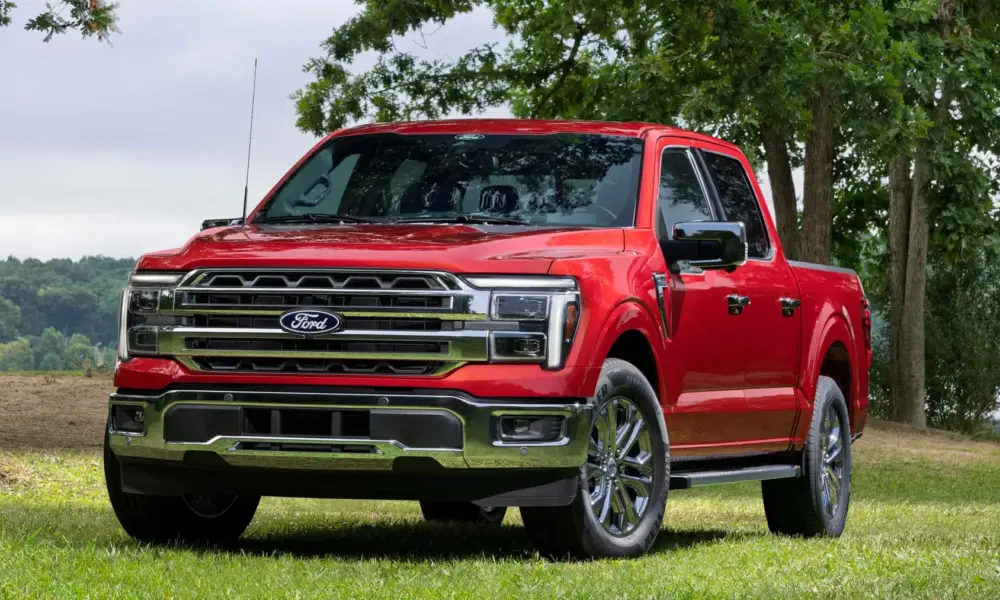
The Ford F-150 is worth considering if you want a full-size pickup that can handle winter commuting, family use, hauling, and occasional trips through deeper snow.
Its available four-wheel-drive configurations and range of trims allow buyers to choose between road-focused comfort and more specialized off-road equipment. Some configurations also provide substantial ground clearance.
The important thing is to compare the exact version rather than treating every F-150 as identical. Tire choice, drivetrain, suspension, and equipment can change how a truck performs.
For someone who needs one pickup for work and everyday winter travel, the F-150 is a sensible starting point.
Toyota Tacoma: A Practical Midsize Option
Not everyone wants a full-size truck. The Toyota Tacoma is worth considering if you prefer a midsize pickup for daily use, outdoor trips, and snow-covered roads.
Its available four-wheel-drive configurations and off-road-oriented trims can make it suitable for winter travel beyond regularly cleared streets. Its smaller overall footprint may also feel more manageable than a full-size pickup in some parking situations.
However, off-road equipment isn’t automatically the best choice for every winter commuter. Consider ride comfort, tire selection, fuel consumption, and the type of roads you use most often.
If you want a truck that balances everyday practicality with occasional winter adventures, the Tacoma deserves a close look.
Jeep Gladiator: For Snowy Roads Beyond the City
The Jeep Gladiator has an off-road-focused design that can be appealing if winter driving includes remote routes, uneven terrain, and deeper snow.
Its available four-wheel-drive systems and off-road equipment are useful considerations for buyers who travel beyond maintained roads. The Gladiator also appeared at the top of iSeeCars’ 2026 midsize-truck snow rankings, which emphasize ground clearance and qualifying winter-related features.
Its open-air design and rugged character are distinctive, but buyers should also consider highway comfort, wind noise, and everyday practicality.
If your winter weekends involve outdoor trails, snow-covered roads, or a mountain getaway, the Gladiator may be worth exploring. Planning the destination too? Browse our picks for the best luxury ski resorts.
Chevrolet Silverado 1500: A Full-Size Workhorse
The Chevrolet Silverado 1500 is another strong candidate for buyers who need a pickup for winter travel and practical work.
Available four-wheel-drive configurations, multiple cab and bed options, and a broad range of equipment make it adaptable to different needs. Buyers who tow or carry heavy loads should pay particular attention to the truck’s configuration and how its weight affects handling.
For winter commuting, prioritize the right tires, stability features, and a setup that remains comfortable on ordinary roads. You may not need the most aggressive off-road trim to travel confidently through a typical snowy winter.
The Silverado makes sense for drivers who want a full-size pickup that can serve several purposes throughout the year.
Ram 1500: For Everyday Comfort in Winter
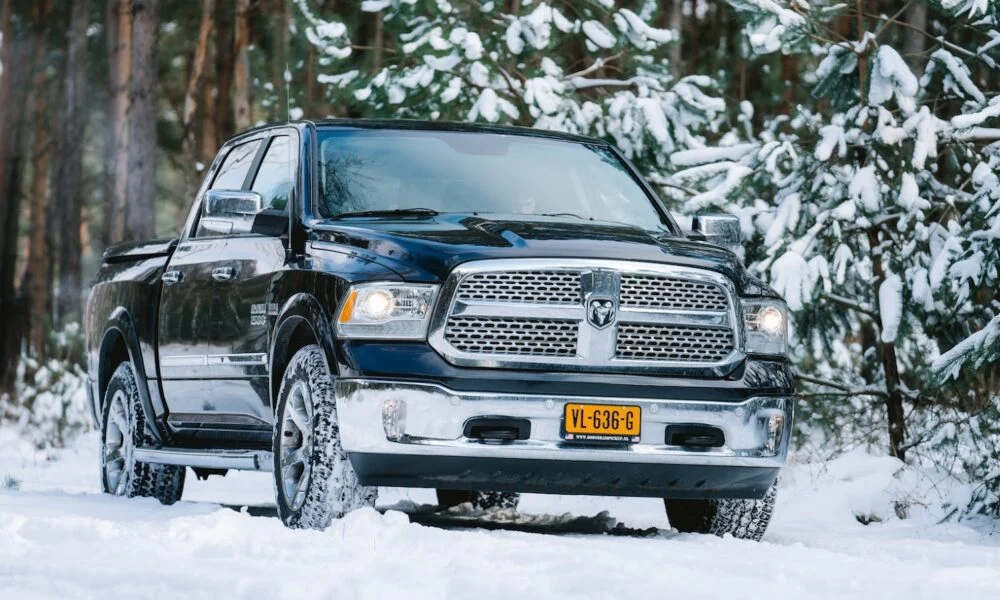
If much of your winter driving happens on highways, suburban streets, and cleared roads, the Ram 1500 deserves consideration for its comfort-focused configurations.
Available four-wheel-drive versions can help in slippery conditions, while the range of trims gives buyers choices that suit different priorities. A road-focused setup may be more pleasant for long commutes than a heavily modified off-road truck.
Before buying, compare the specific drivetrain, tire package, safety features, and ground clearance. The Ram’s suitability for winter depends on the configuration just as much as the name on the tailgate.
Which Truck Is Right for Your Winter Conditions?
Rather than searching for one universal winner, match the truck to the roads you drive and the work you need it to do.
| Your main winter need | Models worth considering |
| Full-size everyday pickup | Ford F-150, Chevrolet Silverado 1500 |
| Midsize pickup for mixed use | Toyota Tacoma |
| Off-road routes and deeper snow | Jeep Gladiator, suitably equipped Tacoma |
| Highway commuting and everyday comfort | Ram 1500, Ford F-150 |
| Work, hauling, and winter travel | Ford F-150, Chevrolet Silverado 1500 |
These are starting points, not guarantees of performance. A particular trim with appropriate winter tires may be a better choice than another version of the same truck with unsuitable tires or equipment.
Features Worth Checking Before You Buy
When comparing two similar pickups, small details can matter more than a long list of marketing claims.
Selectable 4WD or suitable AWD: Check how the system operates and which modes are intended for slippery surfaces. Some part-time 4WD systems should not be used in certain high-traction conditions, so follow the owner’s manual.
Electronic stability control: This system can help manage a loss of directional control. It does not eliminate the risk of skidding, but it is an important safety feature.
Ground clearance: Consider the depth of snow you normally encounter rather than choosing the highest number available.
Heated mirrors and seats: These features won’t improve tire grip, but they can make cold-weather driving more comfortable and help with visibility.
Remote start and effective climate control: Useful conveniences for cold mornings, provided they are used according to the manufacturer’s safety guidance. If you’re curious how cabin heating and cooling draw power, see how a car’s air conditioning uses gas or electricity.
Driver-assistance technology: Features such as automatic emergency braking and blind-spot monitoring can be helpful, but their performance may be affected by snow or ice covering sensors. Never rely on them as a substitute for attentive driving.
Also check the truck’s condition if you’re buying used. Worn tires, damaged suspension components, neglected brakes, or a poorly maintained 4WD system can undermine its winter capability.
How to Drive a Truck Safely in Snow and Ice
Even the right truck requires a different approach when the road becomes slippery.
Accelerate gently, leave more distance between vehicles, and slow down before corners rather than braking sharply while turning. Sudden steering inputs, hard acceleration, and abrupt braking can all reduce control.
Remember that four-wheel drive can make acceleration feel reassuring even when the road offers very little grip. It does not shorten braking distances on ice in the same way that suitable tires can improve traction.
Before a winter trip, clear snow and ice from the windows, mirrors, lights, roof, and cameras. Keep an emergency kit in the truck with warm clothing, a flashlight, a first-aid kit, and other supplies appropriate for your route.
If conditions become severe, delaying the journey may be the safest decision. No pickup can make every winter road safe.
Is a Heavy-Duty Truck Better for Winter Driving?
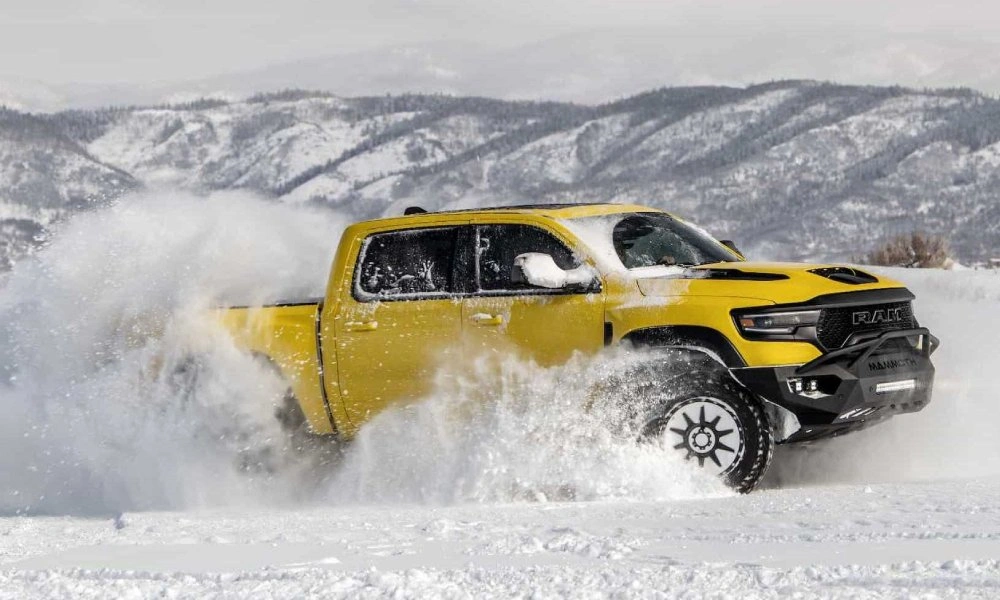
Not necessarily.
A heavy-duty pickup may be the right choice if you need to tow substantial loads, carry heavy equipment, or perform demanding work. But for ordinary winter commuting, a larger and heavier truck can bring additional costs and may be more difficult to manoeuvre in certain conditions.
For many drivers, a properly equipped half-ton pickup is a practical balance of capability, comfort, and everyday usability.
Choose a heavy-duty model because your workload requires it, not simply because you assume more size and weight automatically mean better performance in snow.
Frequently Asked Questions
What type of truck is best for driving in snow?
A truck with suitable four-wheel drive or all-wheel drive, good winter tires, effective stability control, and adequate ground clearance is a strong starting point. The ideal model depends on whether you drive mainly on cleared roads or through deeper snow.
Is 4WD better than AWD in winter?
Four-wheel drive can be especially useful in deeper snow and off-road conditions, while AWD can be convenient for everyday roads with changing traction. Both depend on appropriate tires and careful driving.
Is the Ford F-150 good in snow?
An appropriately equipped F-150 can be a capable winter truck, particularly with four-wheel drive and suitable tires. Performance depends on the trim, tires, road conditions, and driver technique.
Are all-terrain tires good enough for winter?
Some all-terrain tires perform well in snow, but not all are designed for severe winter conditions. Check the tire’s winter certification and independent performance information. Dedicated winter tires may provide better cold-weather traction.
Does a heavier truck handle snow better?
Not automatically. Weight, tire grip, drivetrain, suspension, and vehicle balance all influence performance. A heavier truck still needs appropriate tires to accelerate, turn, and stop safely.
Should I buy an off-road truck for winter driving?
Only if its capabilities match your needs. Off-road equipment can be useful for remote roads and deep snow, but it may add cost or compromise everyday comfort. A road-focused 4WD pickup with winter tires can be sufficient for many drivers.
The Right Winter Truck Is About More Than Power
When winter arrives, the most useful truck isn’t necessarily the biggest, most powerful, or most aggressively styled. It’s the one that gives you the right combination of traction, control, clearance, comfort, and practical capability for the roads ahead.
Start with your winter driving conditions, compare the actual configurations available, and budget for suitable tires rather than spending everything on the vehicle itself.
A well-chosen pickup can make winter travel more manageable, but good equipment and careful driving remain essential. The aim isn’t to make snow and ice disappear. It’s to be prepared when the weather changes.
Thanks for reading, and drive safely wherever winter takes you.
Disclaimer: This article is intended for informational purposes only.