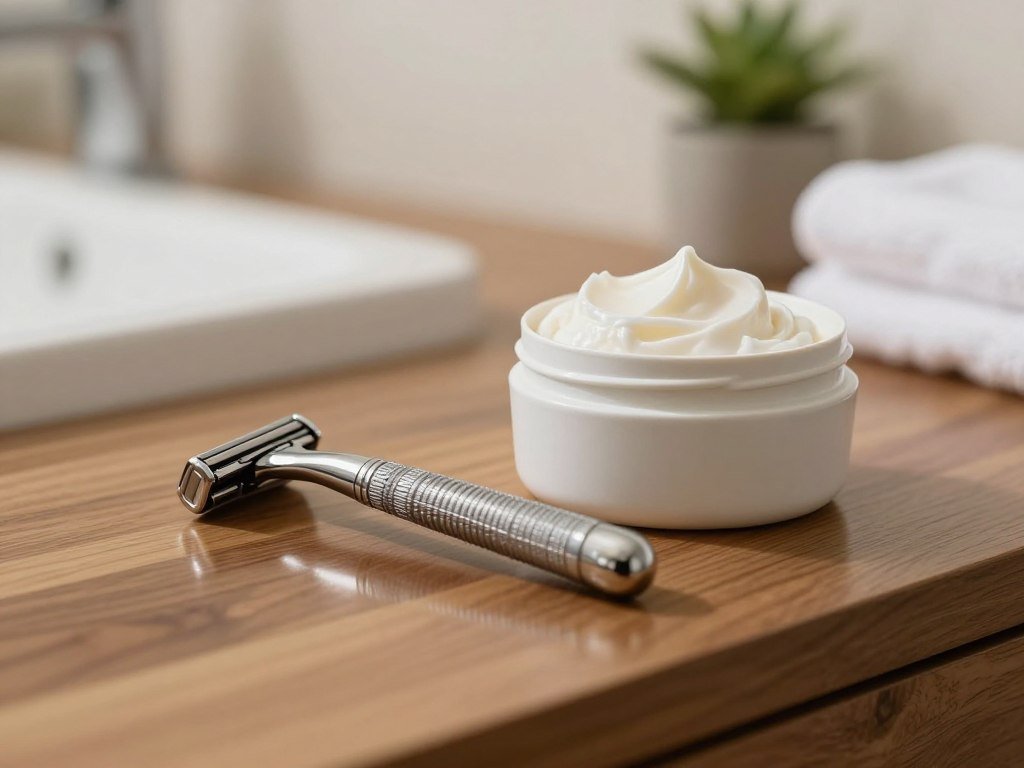
The best choice is the one that matches your skin, beard, and comfort with a single blade, not simply the razor with the most features. Your ideal tool depends on how close a shave you want and how much control feels right in your hand.
Blade exposure means how much of the blade edge extends beyond the guard and can contact skin. That detail can affect comfort, especially if you have sensitive skin or are new to shaving with one blade.
This roundup helps men and women choose a reusable razor for everyday shaving. It covers all-around, sensitive-skin, beginner, budget, and specialty options, so you can focus on the fit that matters to you.
Key Takeaways
- Match the razor to your beard, skin, and grip.
- A mild design can be a comfortable place to start.
- Blade exposure affects how directly the blade meets skin.
- Handle shape and head size change how a razor moves.
- Technique matters as much as the razor itself.
Start with the mildest option that can handle your beard, then build technique before seeking a more aggressive shave.
Best Safety Razor for Most Shavers: Merkur 34C
The Merkur 34C is the strongest all-around starting point for a shaver who wants balanced comfort and efficiency. Its closed-comb head and compact handle offer a controlled feel without adding adjustment settings.
For 2026, it is a sensible everyday candidate if you are comfortable with its short handle. Its balanced shave can suit daily use, though a longer handle may feel easier to reach with for some people.
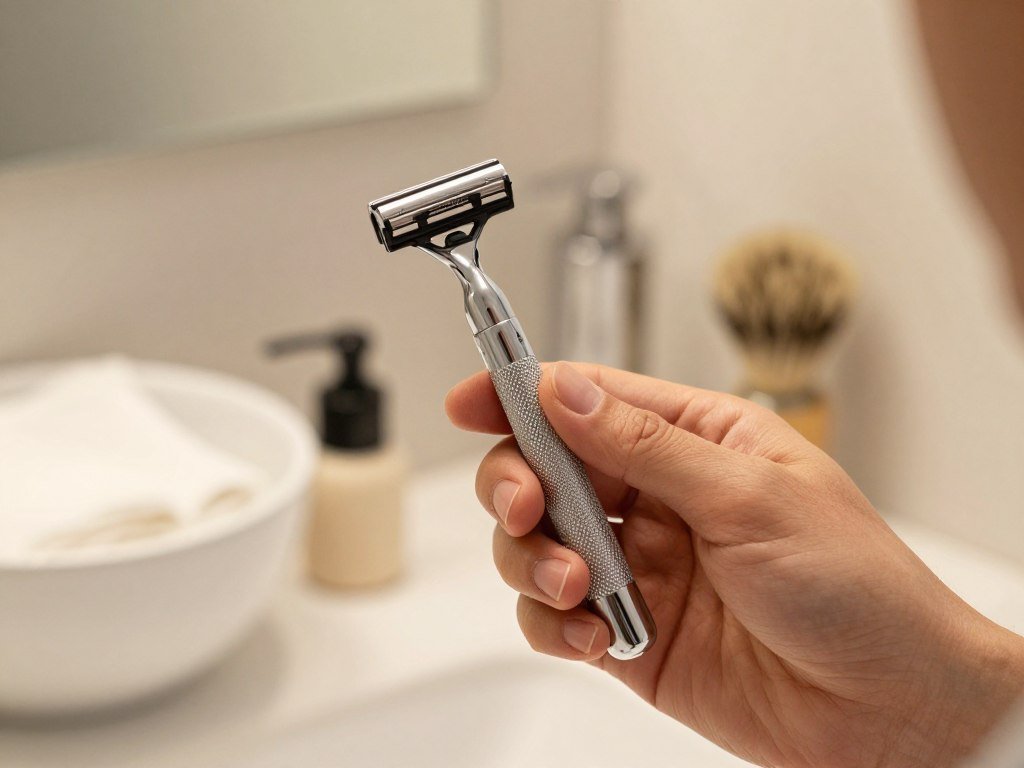
Why the Merkur 34C works as an all-around pick
The closed comb places a guard over the blade, which helps keep the shave measured. The razor has a 3-inch handle and a screw-off blade mechanism that many DE shavers find familiar.
It comes with 10 blades and accepts double-edge blades from different brands. That gives you room to try blades with different sharpness levels while keeping the razor itself the same.
For the best safety razor for daily use, this model makes sense when its short handle feels natural in your grip. It is also a strong general-purpose choice for men, though beard thickness and skin sensitivity may point you elsewhere.
What its closed-comb, screw-off design means in practice
The handle is short, so it can feel nimble around the face. A shaver who prefers a longer reach may find it less comfortable, especially when working around harder-to-reach areas.
Try one compatible blade at a time so a change in sharpness does not get confused with a change in technique.
Each compatible blade can change the feel of the shave, even when the razor stays constant. Keep your grip and stroke style steady while you test a new blade.
Which safety razor suits sensitive skin, beginners, or coarse beards?
For sensitive skin, start with the Rockwell 6S or a mild, low-exposure model; for a first razor, consider the Weishi Nostalgic or Supply SE. These are distinct starting points, not interchangeable choices for every face.
The Rockwell 6S is the leading sensitive-skin pick, while the Henson AL13 and Feather AS-D2 are mild options with low blade exposure. A mild design may feel comfortable, but it cannot prevent irritation for every user.
| Need | Model | Razor type or feature | Why it fits |
|---|---|---|---|
| Sensitive skin | Rockwell 6S, Henson AL13, Feather AS-D2 | Mild options; low exposure on Henson and Feather | Designed for a gentler feel |
| Beginner | Weishi Nostalgic, Supply SE | DE and injector formats | Named beginner choices |
| Budget | Baili BD179 | Safety razor | Budget pick |
| Adjustment or easy blade changes | Rockwell T2 | Adjustable butterfly | Easy blade changes |
| Specialized shaving | Parker 26C; RazoRock Lupo Open Comb 95; RazoRock SuperSlant; Parker Adjustable Injector | Open comb; coarse beard; slant; compact injector head | Open comb for its format; Lupo for coarse beards; slant head; compact head for tight areas |
For the best safety razor for beginners, the Weishi Nostalgic and Supply SE are the listed choices. The Supply is an injector razor, giving you a clear alternative to a DE razor.
The Rockwell T2 combines adjustment with butterfly blade access. The Parker Adjustable Injector has a compact head for precise work in tight areas, while the RazoRock SuperSlant uses an angled head.
Choose the specialized open-comb, slant, or compact injector designs only when their particular advantage matches your shaving routine.
How do combs and loading systems affect a shave?
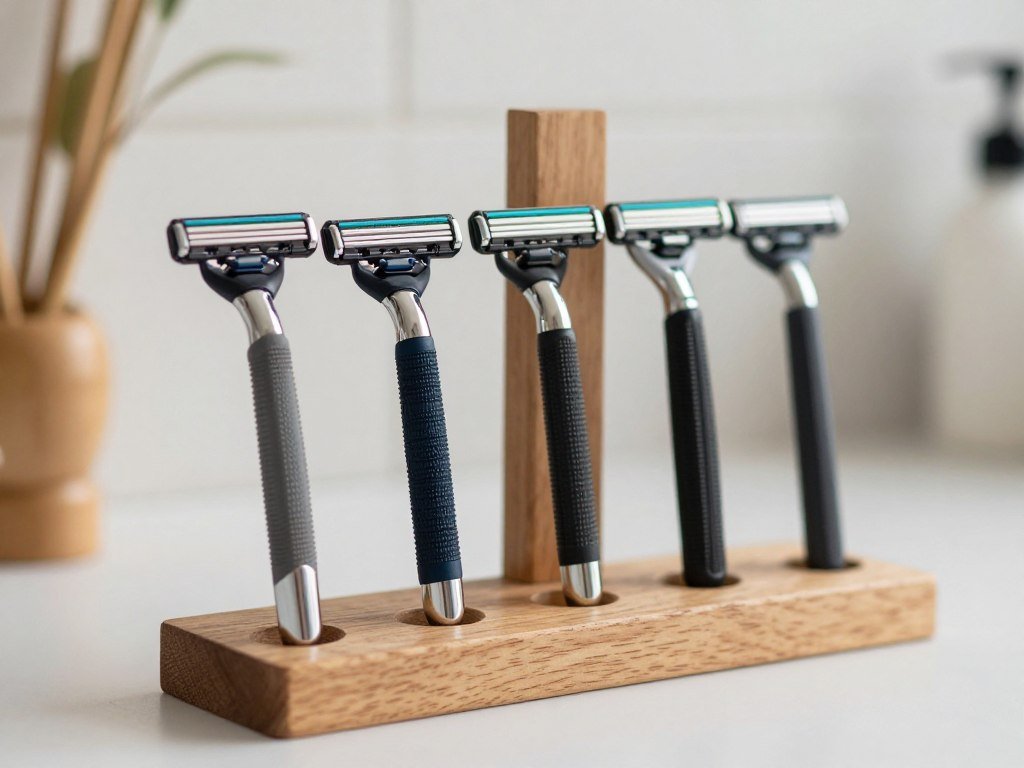
Closed-comb designs are the more forgiving starting point, while open combs leave more room for lather and cut hair to pass through. The comb shape changes contact and hair flow, while the loading system mainly changes how you reach the blade.
An open comb can raise nick risk for someone who has not learned the technique. Blade gap is one part of the feel, alongside blade angle and blade exposure.
| Design | What it changes | Useful for | Trade-off |
|---|---|---|---|
| Closed comb | Guard covers blade; milder feel | Beginners | Less direct blade contact |
| Open comb | More open path for lather and hair | Experienced technique or heavier growth | Greater nick risk for learners |
| Adjustable | Blade exposure or shave setting | Those changing aggressiveness | Adjustment adds a choice |
| Butterfly | Twist opens blade doors | Easier loading | Convenience does not teach technique |
| Screw-off top | Head unscrews to load blade | Familiar DE format | Handle the head during a change |
Comb shape changes blade exposure and hair passage
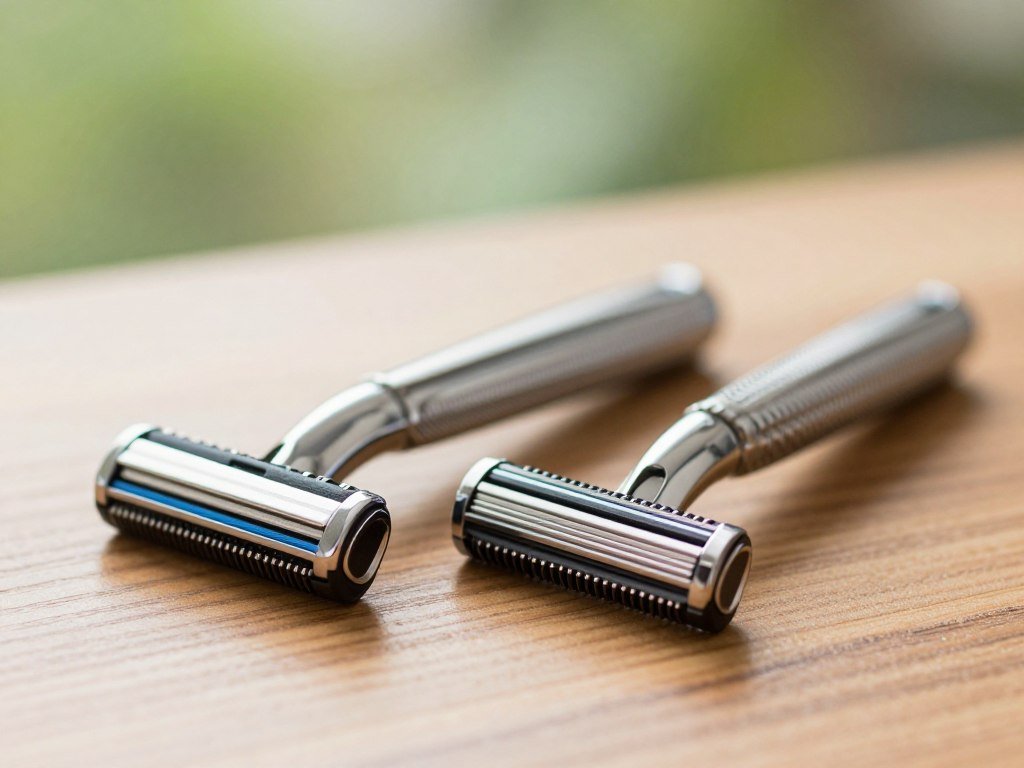
A closed comb puts a guard over the blade. An open comb gives hair and lather a more open route through the razor head, which can help with heavier growth.
Handle length also affects reach. The average safety-razor handle is 3 inches, while a longer handle is typically 3.7-4 inches.
Loading design affects blade changes, not shaving skill
The Edwin Jagger Double Edge Safety Razor, Short Handle is a 3-inch closed-comb model with screw-off loading; blades are sold separately. The Rockwell 6C has a 3.3-inch handle, a closed comb, screw-off loading, and five blades included.
Standard DE razors generally accept blades from different brands. Replace a blade when it begins tugging, since hair thickness can change how long it feels comfortable.
If a blade starts tugging, replace it rather than compensating with extra pressure.
Which details matter when choosing a razor?
Compare how a razor behaves in your hand and on your beard, not just its material, finish, or advertised aggressiveness. How the head moves can matter more than a polished look.
A close shave is not automatically the best shave if it takes pressure or repeated passes. Use these five checks to compare the qualities that affect your own routine.
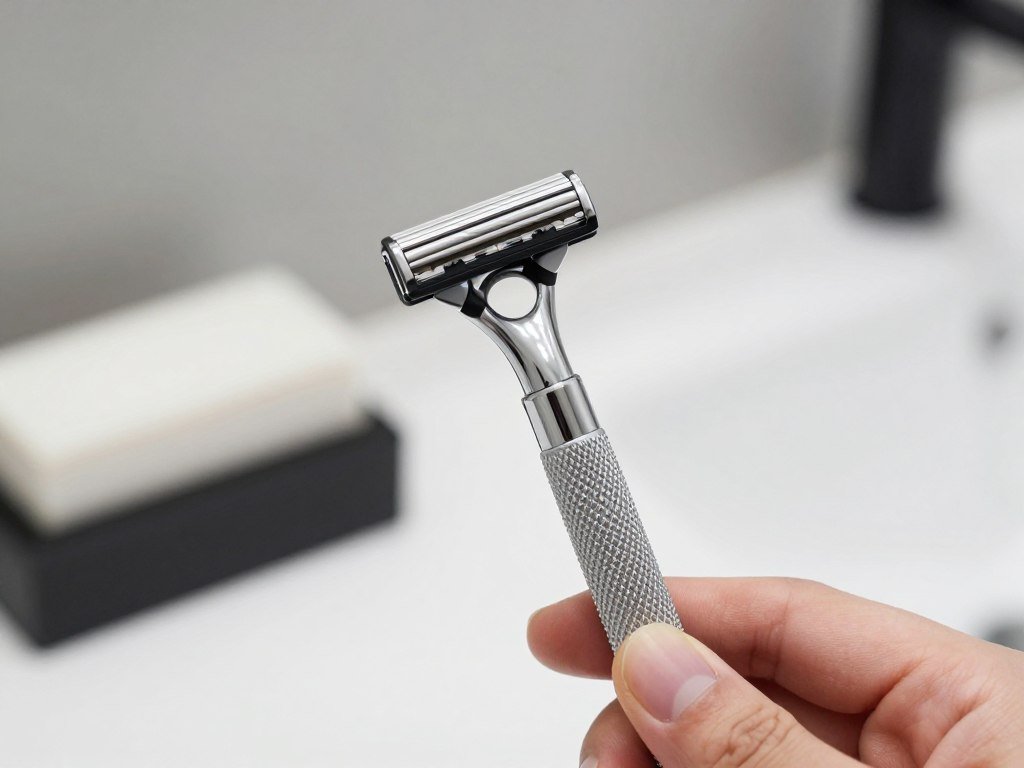
- Efficiency and blade feel: Notice how well the blade cuts and how direct it feels.
- Forgiveness: Consider how much the razor allows for small errors in technique or skin sensitivity.
- Head geometry and maneuverability: Check how the head reaches tight areas.
- Weight and balance: Hold the razor with wet hands and see how it rests in your grip.
- Beard performance and value: Judge its results on your beard against its cost and build.
These are the 2026 evaluation criteria: efficiency and blade feel, forgiveness, head geometry and maneuverability, weight and balance, beard performance, and value relative to performance.
A common mistake is choosing by material or finish alone, without checking how the head moves around your face. A stainless steel handle may look appealing, but it does not tell you whether the head reaches the spots you shave.
Give the most weight to the feature that has caused trouble in your own shaves, such as irritation, poor reach, or tugging.
How do you use a safety razor on your face or legs?
A light touch and short, controlled strokes matter more than trying to finish a large area in one pass. Let the blade do the work, especially on sensitive skin.
A comfortable starting angle is about 30-45 degrees. For the best safety razor for women, choose by grip, skin comfort, and body area, not by assuming a separate razor category exists.
A DE razor can work for facial or body shaving when paired with shaving soap or cream. Move slowly, and use short strokes and no pressure for the best safety razor for legs.
- Prepare skin and hair with warm water and slick lather.
- Find a comfortable angle near 30-45 degrees.
- Shave with the grain using short strokes and no pressure.
- Rinse as needed, and stop if the blade tugs or skin becomes irritated.
Take extra care around curves and sensitive areas, where a broad stroke can lose control. The women’s shaving guidance suggests changing the blade after about 10 shaves, though hair and use affect how long it feels comfortable.
Let skin comfort, not the urge for a closer first pass, decide whether to shave an area again.
What do blades cost, and when should you replace them?
DE blades usually keep ongoing costs low, while an injector razor has its own blade format and replacement schedule. Check compatibility first, since injector blades and DE blades are not the same format.
A Supply Single Edge SE injector blade costs about $1 and provides 8-10 shaves. The fixed-head design takes most users five to ten shaves to learn.
In 2026, the Supply Single Edge SE costs $59 and has a zinc-alloy handle and head. Its product terms include a lifetime razor warranty and a 30-day money-back guarantee.
Supply says its standard injector blades last 8 to 10 shaves and advises replacing the Single Edge SE blade after that range. A Merkur blade pack costs $10, and each blade averages at least five shaves.
- Blade format compatibility: Match the blade to the razor.
- Pack price and blade count: Compare the full pack, not price alone.
- Expected shaves per blade: Use the estimate for your specific system.
- Warranty and return terms: Include them when comparing the initial cost.
The Supply terms belong to that named product, not to all safety razors. Hair type and shaving habits can affect how long a blade stays comfortable.
Compare the cost of the blade system you will actually use, not just the razor’s purchase price.
How should you compare test scores and trade-offs?
A high overall score is useful only when the model’s strengths match the way you shave. Separate scores by trait to see whether a razor’s comfort, build, and handling suit your needs.
The Vikings Blade The Godfather scored 86 overall in TechGearLab’s 2026 test of 17 razors. Its ratings were 9.0 for shave quality, 8.0 for glide and comfort, 9.0 for handle ergonomics, 10.0 for build quality and durability, and 5.0 for cleaning and blade replacement.
The Godfather is a single-blade DE razor with a hefty, balanced, textured metal handle. Its build and grip scores sit beside real trade-offs: a slower shave, a more aggressive feel that can irritate, difficult rinsing, and a need to practice technique.
Comfort and blade feel are personal fit checks, not details an overall score can settle.
The Gillette SkinGuard scored 79 overall, with 8.5 for shave quality and 9.0 for glide and comfort. It uses two blades, lubrication strips, and guards around the blades.
Those comfort scores may make it a fit for sensitive skin, though it may not suit heavy beards. The Godfather’s higher total does not make its more aggressive feel right for every face.
Scores measure separate traits, so read them beside your skin sensitivity, beard type, and technique. A top rating for build quality says little about how the head feels on your face.
Conclusion
A well-matched razor and a light touch are a better starting point than chasing the closest shave at any cost. The Merkur 34C is the all-around pick for balanced comfort and efficiency.
If you have a specific need, choose a model whose mildness, loading system, or head design addresses it. That fit can matter more than extra features or a premium finish.
Start with the mildest suitable option and choose a blade that fits its format. Choose the model that fits your skin and beard, then give yourself several careful shaves to judge it fairly.
FAQ
Does a heavier razor automatically give a closer shave?
Can a mild razor handle coarse beard hair?
Should I use the same blade brand in every razor?
Can a safety razor be used for head shaving?
How should I dispose of used safety-razor blades?
Can shaving cream work as well as shaving soap?