A wider part or extra strands in the brush can make a routine feel suddenly urgent, but the best first step is to match the product to the reason your hair looks thinner. The best hair products for thinning hair can help strands look fuller, support scalp care, or treat some forms of hair loss. Those goals are different, so a beauty product that adds volume is not the same as a treatment for regrowth.
Styling can help right away, but its volume is temporary. Treatment takes patience, and results depend on the cause. Stress, illness, hormones, or hereditary patterns may call for different next steps. Even in New York, a busy salon or a popular product cannot tell you why your hair changed. A dermatologist can help investigate new or persistent changes before you spend on a regimen.
Key Takeaways
- Styling products create temporary volume or coverage.
- Shampoo mainly cleans the scalp and supports existing strands.
- Topical minoxidil may help some types of early hair loss.
- Persistent or sudden changes deserve a medical assessment.
- Choose a product for its role, not just its label.
What Causes Thinning Hair?
The cause may be inherited, temporary, medical, hormonal, or related to how the hair and scalp are treated. The pattern matters: hereditary hair loss often changes density gradually, while telogen effluvium is temporary, diffuse shedding that often starts a few months after a physical or emotional stressor.
Hair loss has many possible causes, and one person may have more than one. Age and family history can shape hereditary hair thinning. Hormone changes, medication, illness, and some scalp conditions can change growth or increase shedding.
A sudden or patchy change should not be assumed to be ordinary hereditary thinning.
Hereditary hair loss often looks different in women and men. Women may first notice overall thinning or a widening part. Men may see a receding hairline or a bald spot at the crown. Hormonal imbalance can also affect hair, so the pattern alone cannot confirm the cause.
Hereditary and age-related patterns
Inherited changes can become more visible with age. In women, the part may widen while the front hairline stays in place. In men, thinning may begin near the temples or crown. A Harvard guide to female pattern hair loss explains how age, family history, hormones, health, and stress can shape thinning.
Temporary shedding and other causes
Childbirth, major stress, illness, cancer treatment, weight loss, and iron deficiency can contribute to temporary hair loss. A poor diet or low iron or copper may affect hair health. Scalp infection, psoriasis, and contact dermatitis can also change the scalp and strands.
Some medicines affect hair growth, while repeated chemical treatments and excessive heat can damage strands. The causes vary, so avoid treating every case as a product problem. A sudden or patchy change should not be assumed to be ordinary hereditary thinning.
How Can You Tell Hair Is Thinning?
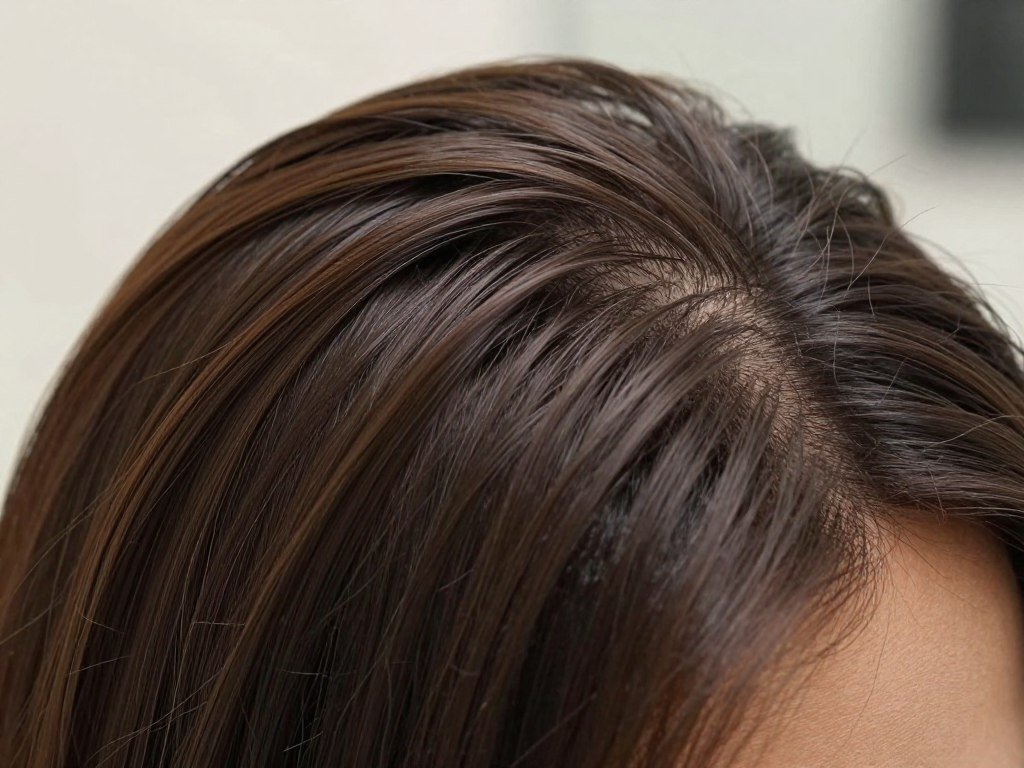
Losing about 50-100 hairs a day is normal, but a clear change in density, part width, or hairline deserves attention. Look for a pattern over time rather than counting every hair in the brush. Photos taken in similar light can help you compare changes.
A widening part or a smaller-feeling ponytail can signal a visible change, especially when the difference continues. You may also notice more scalp through the hair, a receding hairline, or less coverage at the crown. These signs do not reveal the cause on their own.
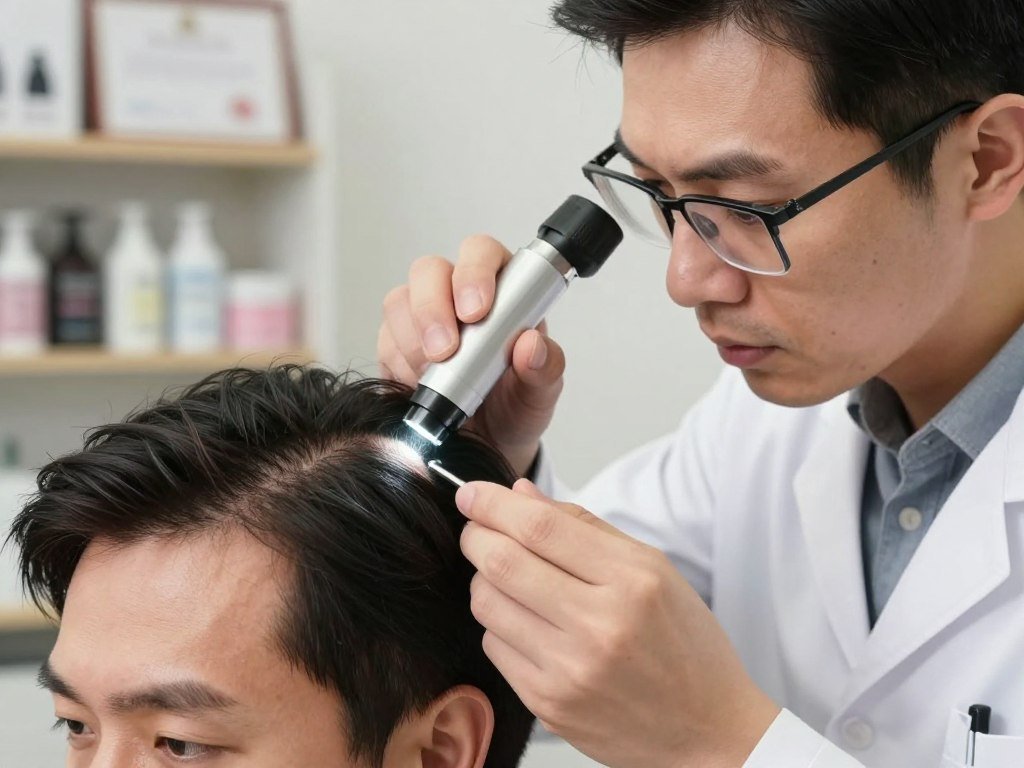
Changes you can notice at home
Check your part, hairline, and ponytail size every few weeks. Take pictures from the same angle, with dry hair and similar lighting. A single day of extra shedding can follow washing or brushing, so compare the broader trend instead.
Write down when the change began and whether it seems spread across the scalp or focused in one area. Keep track of new medicines, illness, and other symptoms. That timeline can give a dermatologist useful context.
What a dermatologist may check
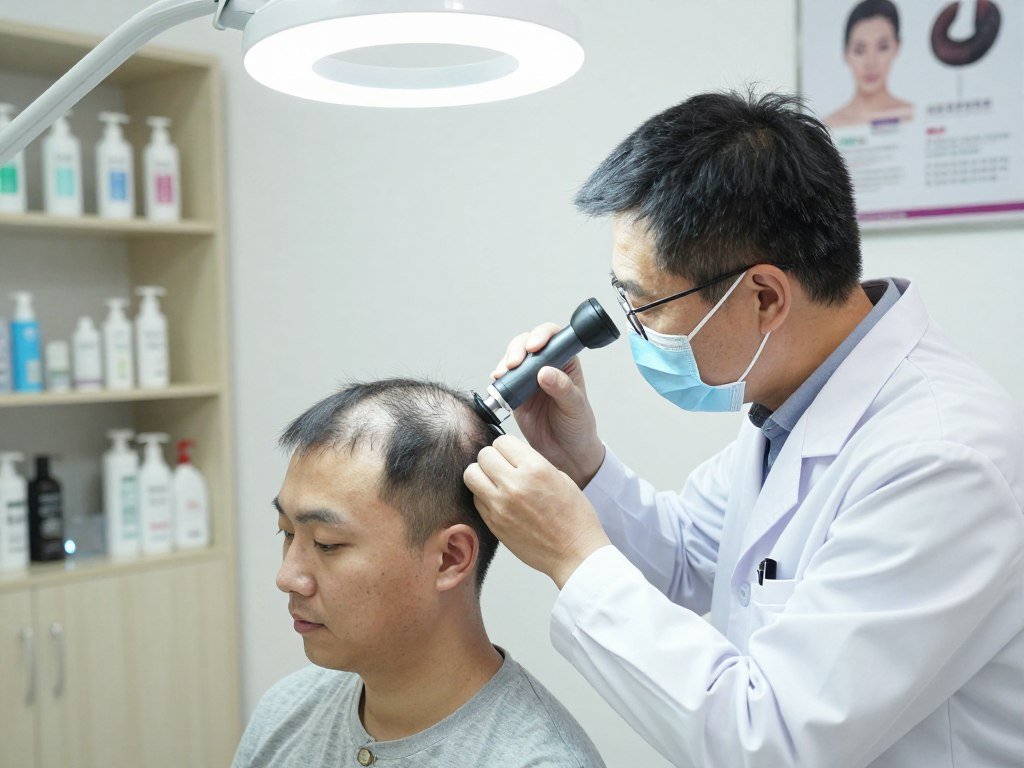
A dermatologist may examine your scalp and hair, perform a hair-pull test, or order blood tests. A scalp biopsy may help when the suspected cause remains unclear. Each step depends on the pattern and the questions raised by the exam.
Seek prompt medical care for sudden, patchy, or painful hair loss, scalp changes, or new symptoms. A clinician can assess these changes before you choose a treatment. Bring a short timeline of the change and any new medicines, illness, or symptoms to the appointment.
Can Hair Grow Back After Thinning?
Yes, some thinning can improve as the trigger passes, although the cause determines whether regrowth is likely. Temporary shedding can recover after childbirth, a major illness or surgery, cancer treatment, significant weight loss, mild alopecia areata, or cleared scalp psoriasis.
Hair may regain normal fullness within 6-9 months after a stressor ends, though shedding can begin a few months after the event. This delay can make the change seem unrelated to the original trigger. Persistent hereditary thinning may need ongoing treatment instead.
The American Academy of Dermatology’s regrowth guidance lists several temporary situations in which hair can grow back without treatment. That does not mean every case will follow the same course. Your health, the trigger, and the hair-loss pattern all matter.
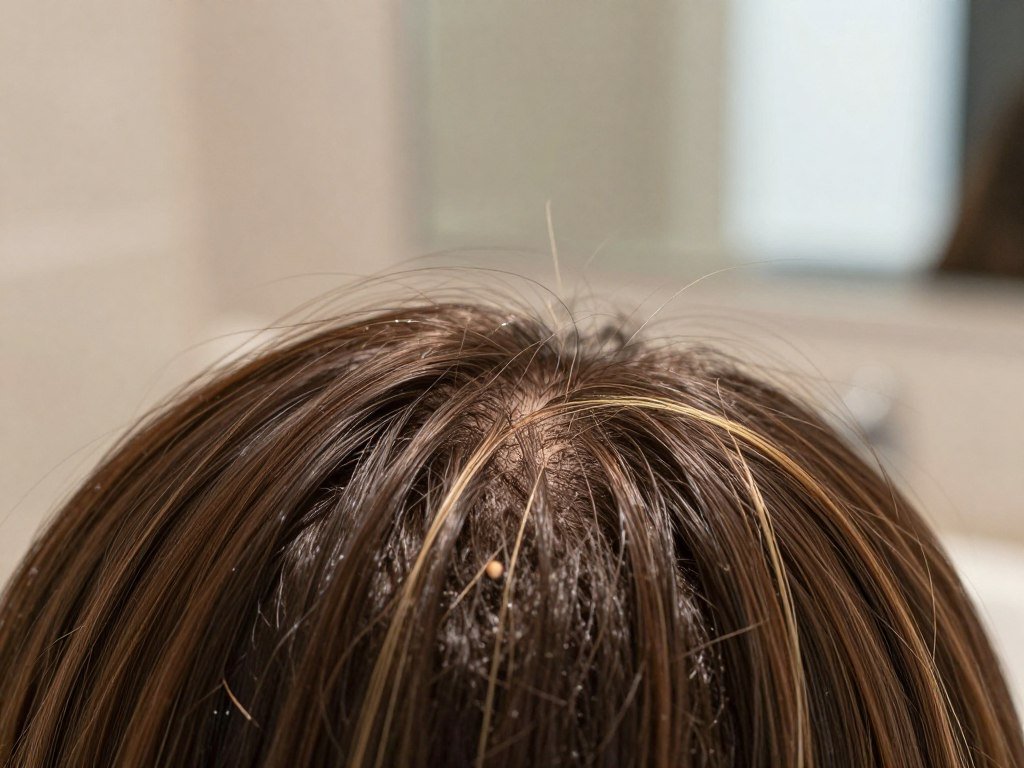
After childbirth, illness, surgery, or emotional stress, the shedding phase often appears after a delay. Hair growth then takes time to become visible, so a few weeks may not show the full change. Your usual hair care can continue while the trigger resolves, unless a clinician advises otherwise.
- Childbirth or another major life event
- Major illness or surgery
- Cancer treatment
- Significant weight loss
- Mild alopecia areata or cleared scalp psoriasis
Not every cause improves on its own, and regrowth does not always restore the same density. If fullness has not begun to return after the stressor has ended, ask a clinician whether another cause needs attention.
Which Proven Treatments Can Slow Hair Loss?
For early hair loss, topical minoxidil is a proven option, but it requires consistent use and patience. It can help some people, but it cannot regrow an entire head of hair. Results also depend on the cause and how early treatment begins.
Topical minoxidil may take about 6-12 months to show results, and daily use is needed to maintain its benefits. Rogaine is a brand of topical minoxidil. Rogaine 5% foam directions call for half a capful on the affected area daily.
Minoxidil does not work for everyone. If you stop using it, its benefits wear off, shedding can gradually increase, and some hairs may look and feel thinner. The change may take time rather than appearing overnight.
Minoxidil’s daily-use guidance reflects an important trade-off: you need ongoing use to keep its effect. Follow the product directions and ask a clinician whether it fits your situation, especially if you have scalp irritation or other health concerns.
Do not assume more product will work faster. Use the amount on the label or given by your clinician. Keep treatment away from your eyes and wash your hands after applying it.
Some people use topical minoxidil as part of a longer plan, while others need a different approach. A dermatologist can help weigh the likely benefit against irritation, cost, and the effort of daily use. Keep minoxidil away from cats and dogs because even trace amounts can be highly toxic to pets.
What Can a Dermatologist Prescribe or Perform?
A dermatologist may use injections when the pattern and diagnosis make an office-based treatment appropriate. The diagnosis comes first, since these procedures do not suit every type of hair loss.
Corticosteroid injections are a common treatment for patchy alopecia areata. A dermatologist usually gives them every 4-8 weeks as needed. In one study of 127 people with patchy alopecia areata, more than 80% regrew at least half their hair within 12 weeks.
Injections for patchy alopecia areata
A clinician injects corticosteroid medicine into affected areas to treat the immune-driven patches. The number and timing of injections depend on the response and the area involved. The study result is encouraging, but it does not promise the same outcome for each person.
These injections are given in a medical office, not as a home treatment. Your dermatologist can explain possible side effects and how often the scalp needs review. Ask how the clinician will measure new growth.
Platelet-rich plasma treatment
Platelet-rich plasma, or PRP, uses components from your own blood. A clinician prepares the blood and injects the platelet-rich portion into the scalp. It is a repeated procedure, not a one-time injection.
PRP typically starts with injections once a month for 3 months, followed by maintenance sessions every 3-6 months. The schedule can vary with the clinician’s plan. It should not replace a diagnosis or a treatment with a better fit.
The American Academy of Dermatology’s treatment details describe professional options such as injections and PRP. These are office procedures, not at-home substitutes. Ask the clinician which diagnosis the procedure is intended to treat and how progress will be assessed.
Are Laser Devices and Microneedling Worth Trying?
At-home laser devices have some encouraging findings, but the evidence is limited and results are not assured. Early studies are promising, yet some users do not regrow hair, and long-term effects need more research.
Laser combs and caps need repeated use over months, while microneedling can worsen some scalp conditions. Ask a dermatologist whether a device fits your hair-loss pattern before starting, especially if you plan to needle the scalp.
| Option | Study or device details | Schedule | Evidence caveat |
|---|---|---|---|
| Laser comb study | More than 200 men and women with hereditary hair loss | Three times weekly for 26 weeks | Some users had thicker, fuller hair than sham-device users |
| Microneedling study | Men ages 20-35 with mild or moderate hereditary hair loss | Weekly, with minoxidil, for 12 weeks | More growth than minoxidil alone in that study |
| HigherDOSE Red Light Hat | 120 red LEDs at 650 nm | 10 minutes daily for 16 weeks, then three or four times weekly | Device directions do not prove regrowth for every user |
In the laser-comb study, some participants who used the device three times weekly for 26 weeks had thicker, fuller hair than people using a sham device. That result does not confirm that every laser cap or comb will work. Devices and study designs can differ.
One study found that men with mild or moderate hereditary hair loss had more growth after 12 weeks of minoxidil plus weekly microneedling than with minoxidil alone. A dermatologist can help you check the device and risks. Confirm the device and schedule with a dermatologist before adding scalp needling to a routine.
What Can Shampoo Do for Thinning Hair?
A shampoo can help hair look fuller or keep the scalp clean, but it is not a stand-alone regrowth treatment. Its main job is washing: a dermatologist-recommended shampoo for hair loss can remove dirt, excess oil, product buildup, or dandruff.
Rinse-off shampoo has limited power to stimulate new growth, since it leaves the scalp quickly. It may support scalp comfort or add temporary volume, but it cannot act like a leave-in treatment. No one shampoo is best for every hair type or cause.
Cleansing the scalp
Keeping the scalp clean can help reduce buildup that may clog follicles and contribute to hair loss. Choose a formula based on oiliness, flakes, sensitivity, and hair texture. Washing too harshly can leave the scalp or lengths dry.
Wash when your scalp feels oily or has buildup, and adjust for your texture and activity. A guide to choosing shampoo and conditioner can help you match shampoo to the scalp and conditioner to the lengths.
Cosmetic fullness versus new growth
Shampoos for thinning hair may strengthen existing strands or make them appear fuller. That cosmetic effect can help hair look thicker for a day, but it does not mean new follicles have grown. Look for the product’s role rather than a broad growth promise.
- Choose for scalp oil, flakes, or sensitivity.
- Use a formula that suits your texture and color treatment.
- Expect cleansing or temporary fullness, not guaranteed regrowth.
- Use a separate treatment if regrowth is your goal.
Shampoo mainly helps growth indirectly by keeping the scalp clean, not by working like a leave-in medicine. Choose a shampoo for your scalp and hair type, then use a separate evidence-based treatment if regrowth is the goal.
Best Hair Products for Thinning Hair by Need
Match a product to its role first: shampoo for cleansing, a supplement for nutritional support, and a prescription topical for clinician-guided treatment. One label does not fit every goal, and a cosmetic formula is not a medication.
The best drugstore hair products for thinning hair may improve cleansing or appearance, but they are not interchangeable with prescription care. Compare the format and active ingredients before buying. A product named for hair growth does not prove it can treat the cause.
| Need | Named option | Format | Distinguishing ingredients or active ingredients |
|---|---|---|---|
| Shampoo | Happy Head Hair Thickening Shampoo | Rinse-off cleanser | Argan oil, biotin, collagen, keratin, saw palmetto |
| Shampoo | Hers Triple Threat Shampoo | Rinse-off cleanser | Biotin, saw palmetto, pumpkin seed oil |
| Nutritional support | Nutrafol Hair Growth Nutraceutical | Daily supplement | Ashwagandha, saw palmetto, vitamin E, marine collagen peptides, curcumin |
| Clinician-guided treatment | Ro Hair Solution Rx | Prescription topical serum | Minoxidil 5%, tretinoin 0.025%, melatonin 0.1% |
A 2026 women’s hair-loss roundup named Hers as its overall pick, Happy Head as its shampoo pick, Nutrafol as its supplement pick, and Ro as its topical-treatment pick. Those labels describe product categories, not a guarantee that each option suits you.
Ro Hair Solution Rx is a prescription topical treatment with directions to apply twice daily. Because it contains prescription ingredients, a clinician should guide its use. The shampoo options are rinse-off products, while Nutrafol is taken by mouth.
Check whether an option is a cosmetic product, supplement, or prescription treatment before comparing its claims. The format and ingredients help you understand what a product is meant to do.
Which Shampoos Suit Different Hair Types?
The right shampoo depends more on whether hair is fine, curly, dry, or color-treated than on a promise of new growth. Match the formula to your strands, then consider how your scalp feels after washing.
A shampoo without chemicals is not a meaningful category, since every formula contains chemicals. Compare named ingredients and avoid personal irritants instead. Sulfate-free does not automatically mean better for every scalp or hair type.
| Hair need | Product | Named ingredients or formula feature | Product’s stated use |
|---|---|---|---|
| Color-treated, brittle hair | Olaplex No. 4 Bond Maintenance Shampoo | Color-safe, sulfate-free; glycerin, rosemary leaf extract, coconut-oil-derived surfactants | Helps strengthen brittle hair, not new growth by itself |
| Dry, frizzy hair | SheaMoisture Intensive Hydration Shampoo | Manuka honey, mafura oil, fig extract, shea butter, aloe leaf juice | Hydration for dry, frizzy hair |
| Curly hair | Not Your Mother’s Curl Talk Curl Care Shampoo | Rice, keratin amino acids, enzymes | For curly hair care |
| Fine, dry, color-treated hair | Pureology Hydrate Sheer Shampoo | Jojoba oil, green tea, sage | Hydration for fine, dry, color-treated hair |
Pantene Abundant & Strong Shampoo is a drugstore example with panthenol, niacinamide, and piroctone olamine. Vegamour GRO+ Advanced Balancing Shampoo and Conditioner use turmeric and mung bean extracts; the shampoo directions say to leave it on for at least one minute before rinsing.
Kevin Murphy Plumping Wash and Plumping Conditioner feature ginger root and nettle extract. These formulas offer different ingredients and uses, but none should be treated as a proven regrowth product just because it targets volume or strength.
For more shampoo choices by texture and color treatment, see how clarifying shampoo handles buildup. Patch-test a new formula if your scalp is sensitive, and stop using it if irritation develops.
Do Hair-Growth Supplements Help?
A supplement is most useful when it addresses a real nutritional need, not as a substitute for diagnosing unexplained shedding. More ingredients do not mean more growth, and a supplement is not a guaranteed primary treatment.
Supplements may support hair health when a deficiency or nutritional need is present. Nutrafol Hair Growth Nutraceutical is a once-daily example with ashwagandha, saw palmetto, vitamin E, marine collagen peptides, curcumin, and other ingredients.
That ingredient list describes the product, but it does not prove that the formula will fix hair loss. Hair changes can have causes that supplements do not address. Taking a high-dose vitamin without a clear need can also create risks.
Talk with a health care professional before adding a supplement, especially if you take medicines or are considering a high-dose formula. Some ingredients can interact with medicines or affect health conditions. Bring the full product label to the visit.
Ask a clinician whether testing for a deficiency is appropriate before starting a supplement. A test can help show whether a nutrient gap is part of the picture, rather than leaving you to guess from a label.
Which Styling Products Make Hair Look Fuller?
A root-lifting spray, matte texture product, or scalp-concealing powder can make fine or sparse hair look fuller right away. The effect is temporary, but choosing a light formula can add lift without weighing down the roots.
Hair fibers cover sparse areas without moving the hairline. Powders may use silica or fibers, while foams and mousses may rely on fixative polymers such as PVP, acrylates copolymer, or VP/VA copolymer.
| Styling goal | Product | Format | Use or feature |
|---|---|---|---|
| Root lift | Living Proof Full Volume & Root-Lifting Spray | Root-lifting spray | Adds lift at the roots |
| Body and texture | Bumble & Bumble Thickening High Drama Styling Foam | Styling foam | Creates a fuller-looking style |
| Sparse-area coverage | Madison Reed The Great Cover Up Root Touch Up + Brow Filler | Root touch-up product | Temporarily covers visible areas |
| Volume | Oribe Maximista Thickening Spray | Thickening spray | Supports fuller-looking hair |
| Body and hold | R+Co Rodeo Star Thickening Style Foam | Styling foam | Adds body and styling hold |
Root lift and texture
Apply lift products near the roots or through damp lengths as the label directs. K18 AstroLift Reparative Volume Spray is used on damp, freshly washed hair. It contains pea peptides, rice protein, seaweed-derived extract, and panthenol.
T3 Volumizing Hot Rollers use one-inch hair sections and stay in for 10-20 minutes. Oribe Maximista and Living Proof sprays offer another way to add volume without heat. Hair type and styling skill can affect the finish.
Temporary coverage for sparse areas
Powder products can soften the contrast between hair and visible scalp. Hair fibers cling to existing strands for temporary coverage, so they do not shift the hairline or create new growth. Use them only where you want extra coverage.
A haircut can also change how density looks. A low burst fade may keep the top from looking as sparse by contrast, while a higher fade can make that effect stronger. Start with a small amount of styling product because added weight can make fine hair lie flatter.
How Can a Routine Support Scalp and Strands?
A useful routine can be simple: clean the scalp, choose one targeted leave-in if it suits you, and avoid piling on products. One new product at a time makes it easier to spot irritation or buildup.
Use scalp products as options, not as a promise of regrowth. The Ordinary Multi-Peptide Serum for Hair Density contains caffeine, biotinoyl tripeptide-1, acetyl tetrapeptide-3, red clover extract, and procapil.
- Cleanse based on scalp oil, buildup, and comfort.
- Choose one leave-in serum if you want one.
- Use a pre-wash oil only if your scalp suits it.
- Exfoliate only when buildup or itch makes it useful.
Cécred Restoring Hair & Edge Drops contain bioactive keratin ferment, biopeptide-5, biotin, fermented rice powder, ginger extract, and rose extract. Nécessaire The Scalp Serum contains capixyl, hyaluronic acid, biotin, and niacinamide.
Briogeo Scalp Revival Rosemary Pre-Wash Oil combines rosemary oil, biotin, and castor oil. Briogeo Scalp Revival Charcoal + Coconut Oil Micro-Exfoliating Shampoo may suit buildup-prone or itchy scalps when used twice monthly.
Arey Good Night, Grey Overnight Serum is another named scalp serum. A list of ingredients does not show that a cosmetic product can regrow hair, so use it for the purpose stated on its label.
Stop any new scalp product that causes persistent redness, burning, or itching. A simpler routine can help you identify which product caused the reaction.
What Habits Can Make Thinning Worse?
A hairstyle that repeatedly pulls on the same area can damage follicles, not just snap the hair shaft. Repeated tension matters: tight ponytails, braids, extensions, and similar styles can cause traction alopecia, which may lead to permanent loss.
Follicle damage can be lasting, while shaft breakage affects the visible strand. Coloring, perming, or relaxing can damage hair and contribute to loss. A damaged follicle may not grow hair again.
Repeated tension and tight hairstyles
Changing the style does not help if each version pulls on the same spot. Rotate styles and avoid extensions or braids that feel heavy. If your scalp feels sore, the tension is already too much.
Chemical processing and rough handling
Frequent chemical processing and high heat can weaken strands. Rough brushing or detangling can snap fragile hair, especially when it is wet. Mixed-bristle brushes combine nylon and boar bristles, while flexible-bristle Ergo brushes are designed for gentler styling.
Use the lowest heat that works, avoid repeated passes, and give heat styling a break when you can. For straighteners, use dry hair and heat protectant according to the product directions; the straightener guide for your hair type covers these choices.
- Loosen ponytails, braids, and extensions.
- Reduce coloring, perming, and relaxing.
- Lower heat and limit repeated passes.
- Detangle gently with a brush that suits your hair.
- Pause a style if it causes scalp pain.
Pain or tenderness from a style is a sign to loosen it rather than wait for visible thinning.
How Do Hair-Loss Products Differ for Men and Women?
Men’s and women’s product labels do not determine whether a formula suits you; diagnosis and treatment safety matter more. The pattern and cause guide care, while styling products mainly change appearance.
Topical minoxidil is used for male and female pattern hair loss. The NHS lists minoxidil and finasteride as main treatments for male pattern baldness, while women should not use finasteride.
Products marketed to men or women may differ in scent, texture, or packaging. Those details do not show whether a treatment is right for your hair loss. Hair can thin in ways that do not match a typical gendered pattern.
Men looking for the best hair products for thinning hair for men can separate styling products from treatments aimed at hair loss. The same is true for women comparing the best hair products for thinning hair for women. A serum or shampoo is not automatically a treatment because its label says “growth.”
Medication safety can also depend on the person and the product. Do not assume a treatment intended for one group is suitable for everyone. Ask a clinician before using a medication intended for a different pattern or population.
How Should You Choose a Hair-Loss Product?
Start by deciding whether you want immediate cosmetic fullness, reduced breakage, or treatment aimed at regrowth. Be clear about the goal, so you can compare products that serve the same purpose.
Earlier treatment works better for hereditary hair loss, which can affect both men and women. No hair-loss treatment is 100% effective, so avoid promises of guaranteed results.
Choose a product for the job you want it to do, not the result its name suggests.
- Choose a goal: fullness, less breakage, or regrowth.
- Check active ingredients, directions, and how the product works.
- Consider the likely cause of the hair change.
- Look for ingredients that may irritate your scalp.
- Confirm medication or supplement choices with a clinician.
Check the product label and directions, especially for an active treatment. If you have a sensitive scalp, consider how the formula may feel with your usual shampoo and styling products.
Hereditary hair loss may respond better when care starts early, but timing does not guarantee results. Some products help appearance, while others aim to slow loss or support regrowth. Those outcomes are not the same.
Choose one change at a time and keep a dated record of shedding and visible density to judge whether it is helping. Regular notes can help you compare the change with your baseline.
Conclusion
The most useful product is the one that fits the cause of the change and the result you want. Shampoo and styling products mainly support cleansing or fuller-looking strands, while treatments may address some forms of hair loss.
Start with a simple choice: appearance, scalp care, or clinician-guided treatment. If thinning is new, sudden, patchy, or continuing, schedule a dermatologist visit before building a treatment routine.
FAQ
What vitamin is lacking if your hair is thinning?
What does NHS recommend for hair loss?
What causes thinning hair?
Will thinning hair grow back?
How often should I wash thinning hair?
What not to do if hair is thinning?
What do the Japanese do for hair loss?
Can thin hair turn thick again?