A handwoven cushion arrives home from a craft market. You love its colors and the texture of the stitching. But against your streamlined sofa and glass coffee table, it suddenly feels difficult to place.
The answer may be as simple as repeating one of its colors elsewhere or removing a competing accessory beside it.
To mix handmade and modern home decor, connect pieces through color, material, shape, or scale. Let a few distinctive handmade objects stand out against simpler furnishings, keep everyday surfaces useful, and choose items whose care suits your home.
You can begin with the furniture you already own and one handmade piece you genuinely enjoy.
Handmade and Modern Can Overlap
Handmade describes how something is produced. Modern may describe its design, its period, or simply its place in a contemporary room.
A hand-thrown vase can have a clean geometric shape. A handwoven textile can feature a bold contemporary pattern. A piece of handmade furniture can be highly precise.
You are working with individual objects rather than two fixed styles.
The most useful question is: what connects this piece to the room, and what makes it interesting within it?
1. Start With One Piece You Want to Keep
Choose something you already love: a ceramic bowl, woven rug, carved stool, quilt, or artwork.
Identify what draws you to it.
| What you enjoy | How it can guide the room |
| Its color | Repeat a shade in another textile or artwork |
| Its texture | Place it near a smoother surface |
| Its shape | Echo a curve or angle elsewhere |
| Its material | Connect it with an existing timber or metal finish |
| Its story | Give it a visible, useful place |
For example, a blue ceramic vase might connect with a small blue detail in a print. That may be enough to make it feel at home.
Avoid buying several supporting objects immediately. Try a different position first.
2. Use Color as the Easiest Connection
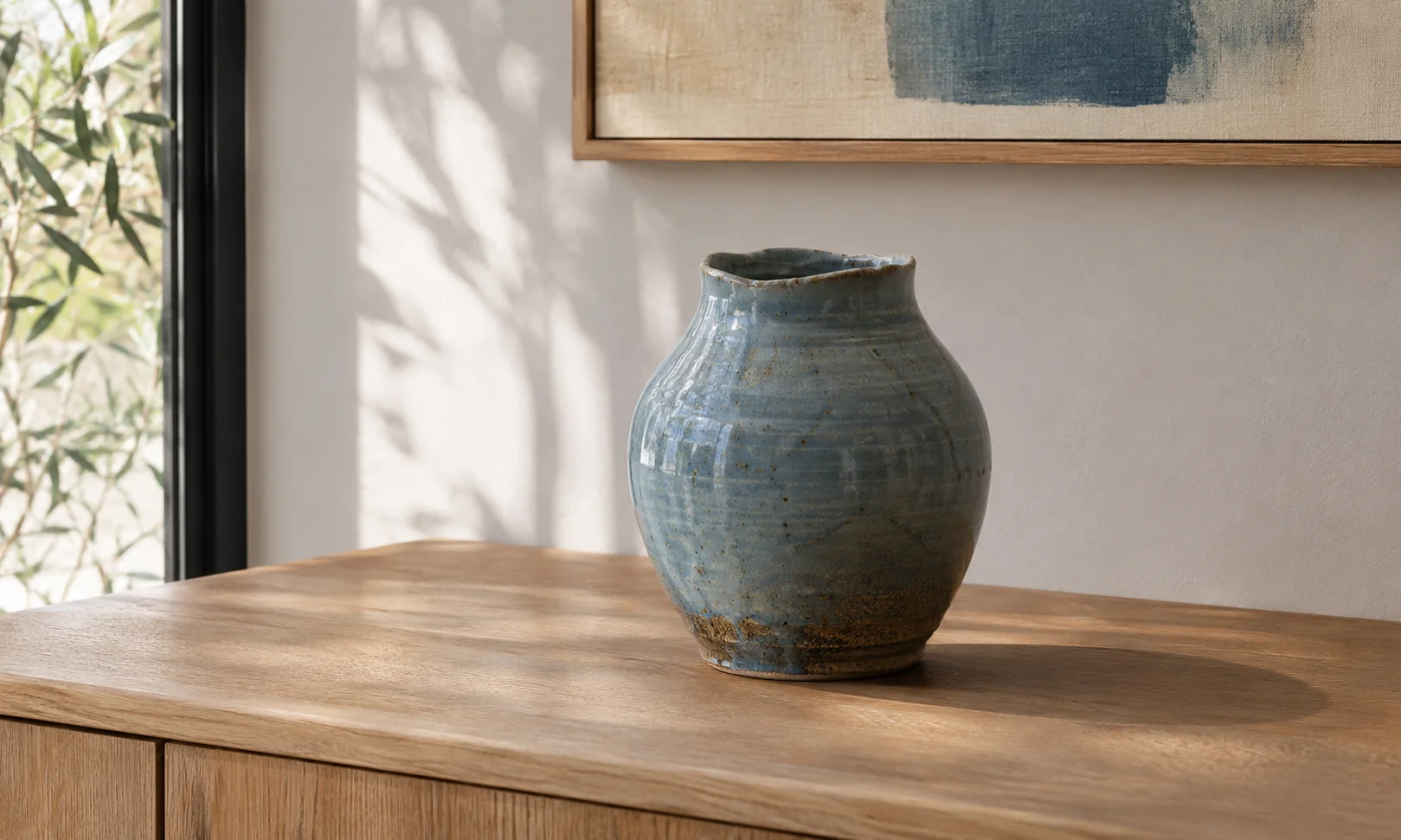
Look at the handmade piece and choose one color already present in the room.
A patterned cushion may contain the same warm brown as your flooring. A woven basket may relate to a timber chair. A bright vessel might pick up a small accent in a painting.
The colors do not need to match exactly. Try them together in the room’s actual light.
Example Combinations
| Existing room | Handmade addition | Possible connection |
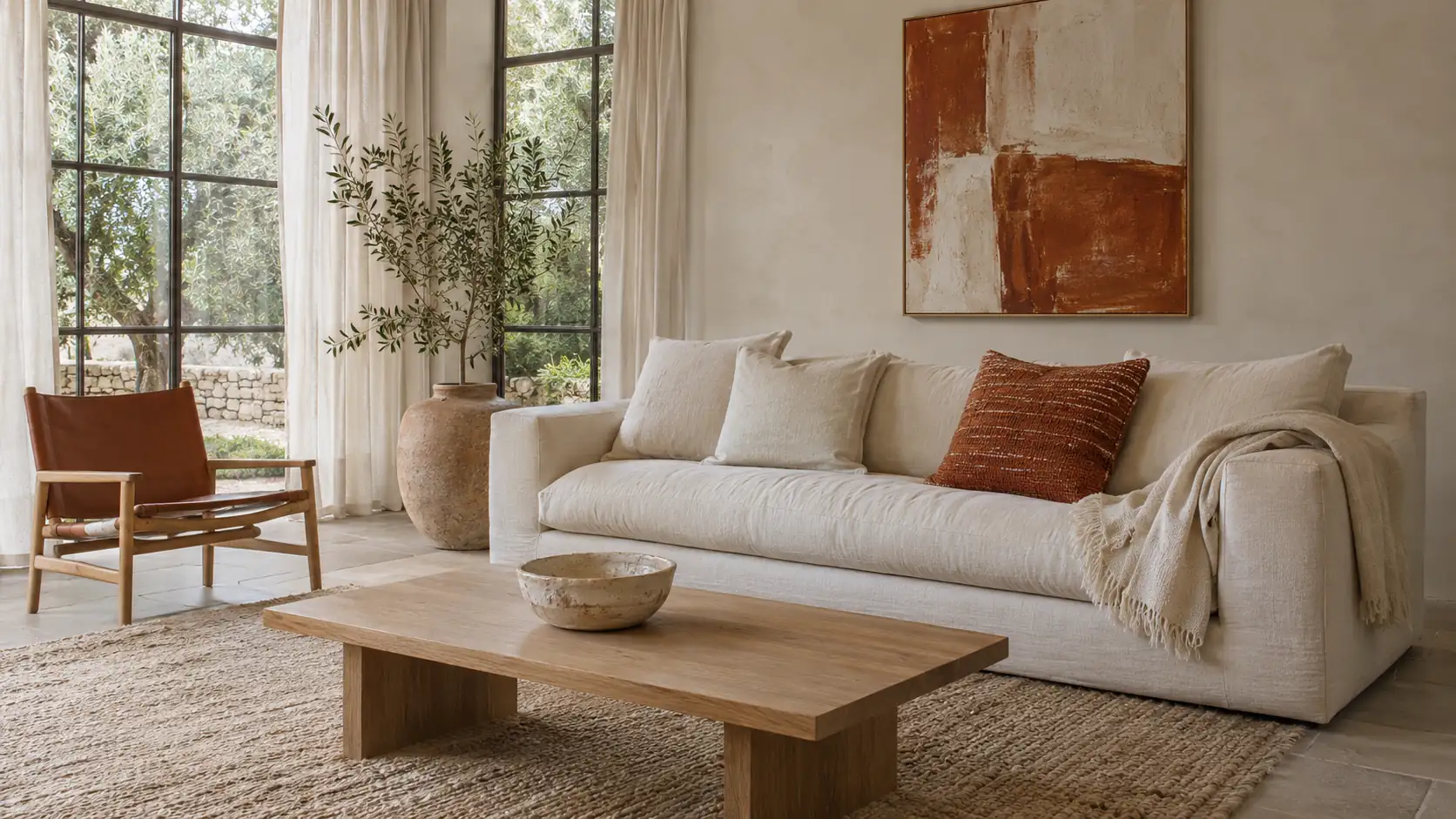
| Gray sofa and pale walls | Rust-colored woven cushion | Repeat rust in a small artwork |
| Black dining chairs | Dark ceramic bowl | Shared color, different surface |
| Oak desk | Handmade paper shade | Warm tones and gentle texture |
| Blue bedroom textiles | Patterned quilt | One repeated shade of blue |
Pravi Celer’s guide to warm minimalism interior design offers more ideas for combining simple surroundings with texture and personal details.
3. Let Texture Create Contrast
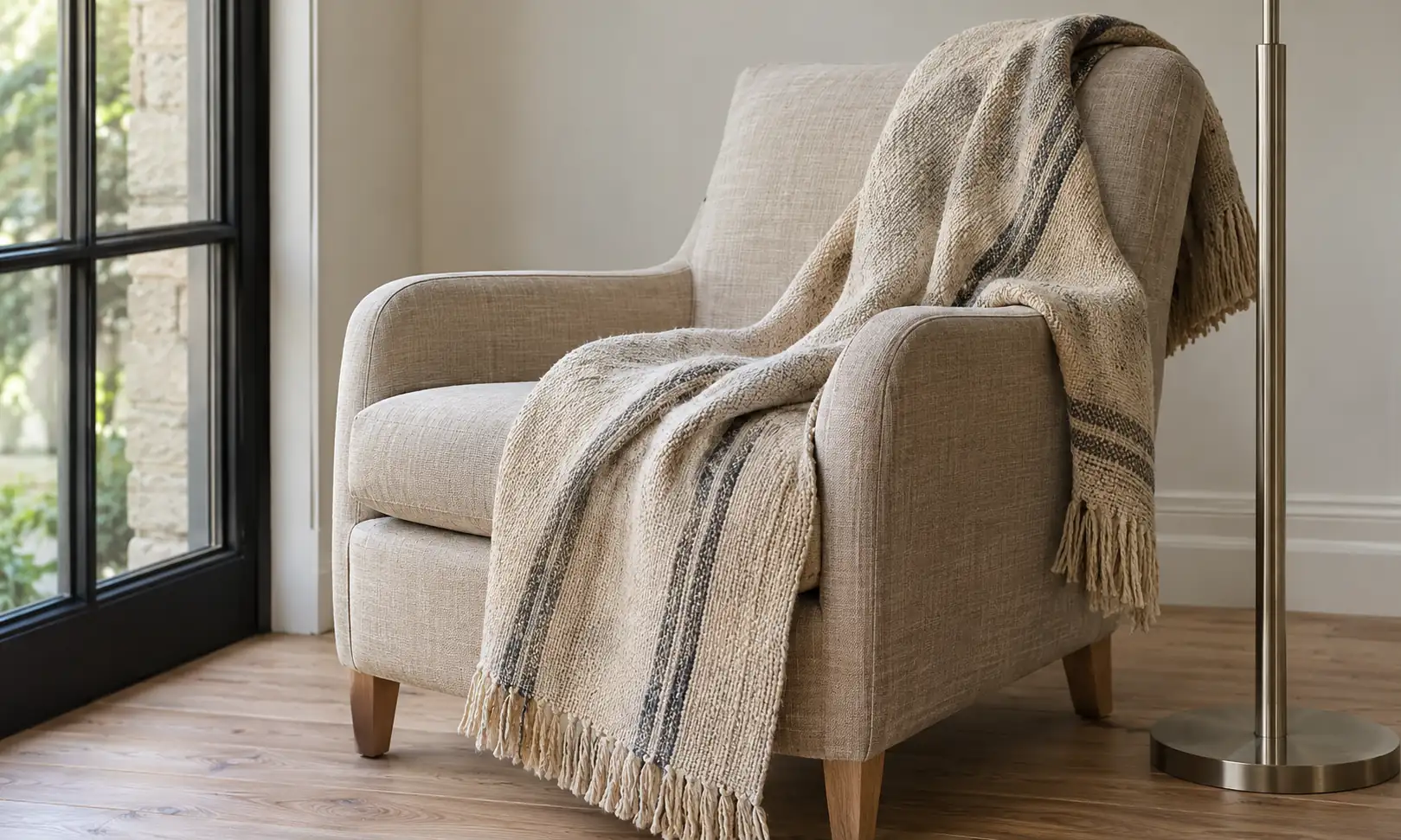
A smooth surface can make the texture of a handmade object easier to notice.
Try:
- A woven textile over a plain upholstered chair.
- A textured ceramic vessel on a smooth sideboard.
- A carved wooden object beside a simple metal lamp.
- A handmade quilt against straightforward bedding.
These are styling suggestions, not rules. Look at the whole arrangement and decide whether the contrast feels comfortable.
If several heavily textured items compete in one corner, move one elsewhere before adding anything new.
4. Check Scale Before Choosing More Accessories
A piece can feel misplaced because of its size rather than its style.
A tiny bowl may disappear on a large dining table. A substantial sculptural vessel may overwhelm a narrow shelf.
Place the object where you can appreciate its outline and details.
Try the View From Different Positions
Look from the doorway, then from the seat you use most often.
Ask:
- Can I see the object clearly?
- Does it block something useful?
- Is the supporting surface large enough?
- Does the arrangement leave comfortable space around it?
A smaller surface may suit a small object better. A larger piece may work alone.
5. Give Distinctive Pieces Some Space
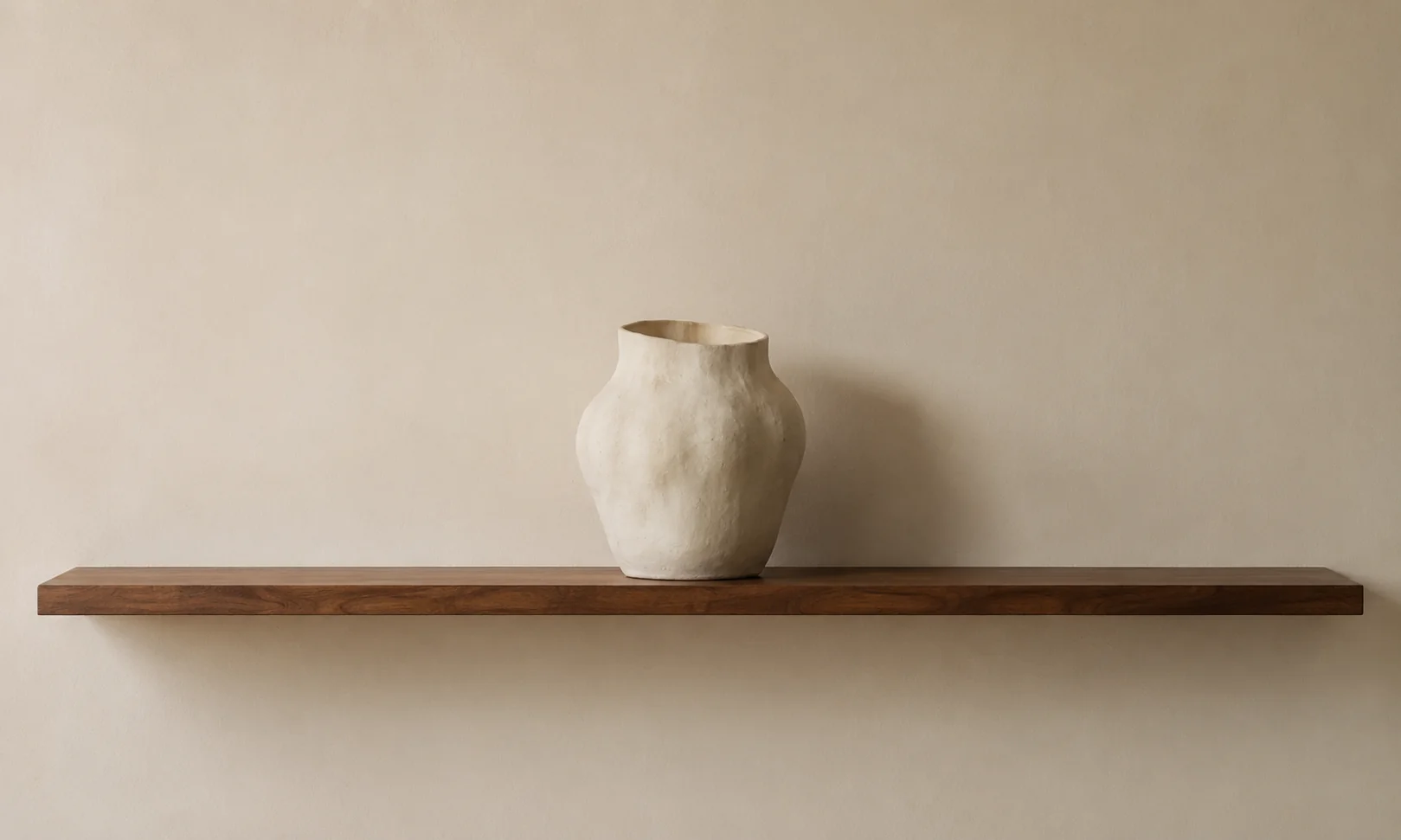
A handmade object does not need several companions to justify its place.
Start with a clear surface and add the piece you want to highlight. Then introduce another item only if it improves the arrangement.
You might combine a vessel with a framed photograph, or a woven basket with a reading chair. Leave room for everyday use.
There is no required ratio of handmade to modern decor. A room can feel balanced with one handmade focal point or a much larger collection.
6. Repeat a Shape Without Buying a Matching Set
Look for a visual relationship between objects made in different ways.
A rounded ceramic bowl could sit comfortably near a curved lamp. A striped textile might relate to the lines of a modern cabinet. A rectangular weaving could echo a window or doorway.
Choose a connection you can actually see.
You can also use contrasting shapes deliberately: a rounded handmade vessel can soften the appearance of a very angular arrangement.
7. Bring Handmade Pieces Into Everyday Tasks
An object can feel more naturally integrated when it has a useful role.
Consider:
| Handmade piece | Possible everyday role | Check before use |
| Basket | Lightweight storage | Weave, handles, and intended load |
| Tray | Organizing a surface | Stability and finish |
| Bowl | Holding suitable personal items | Surface sensitivity |
| Textile | Cushion, throw, or table covering | Care instructions and condition |
| Stool | Seating or occasional surface | Construction and stated purpose |
Use the maker’s guidance. A decorative stool may not be designed for sitting, and a vessel’s appearance does not establish whether it is suitable for water or food.
Room-by-Room Ideas
Living Room: Build Around the Sofa
Keep your existing sofa and try one handmade textile or a larger piece of art.
If the cushion has a strong pattern, let nearby fabrics remain simpler while you assess the result. Add a basket only if it solves a storage need.
A handmade object on the coffee table should still leave space for the activities that happen there.
Dining Room: Choose a Useful Centerpiece
A ceramic bowl or sculptural object can give a simple dining table character.
Make sure it is easy to move before meals and does not obstruct conversation. If you want to use it for serving, confirm that it is intended for food contact.
You can introduce pattern through table linens instead, especially where storage for a large centerpiece is limited.
Bedroom: Let One Textile Lead
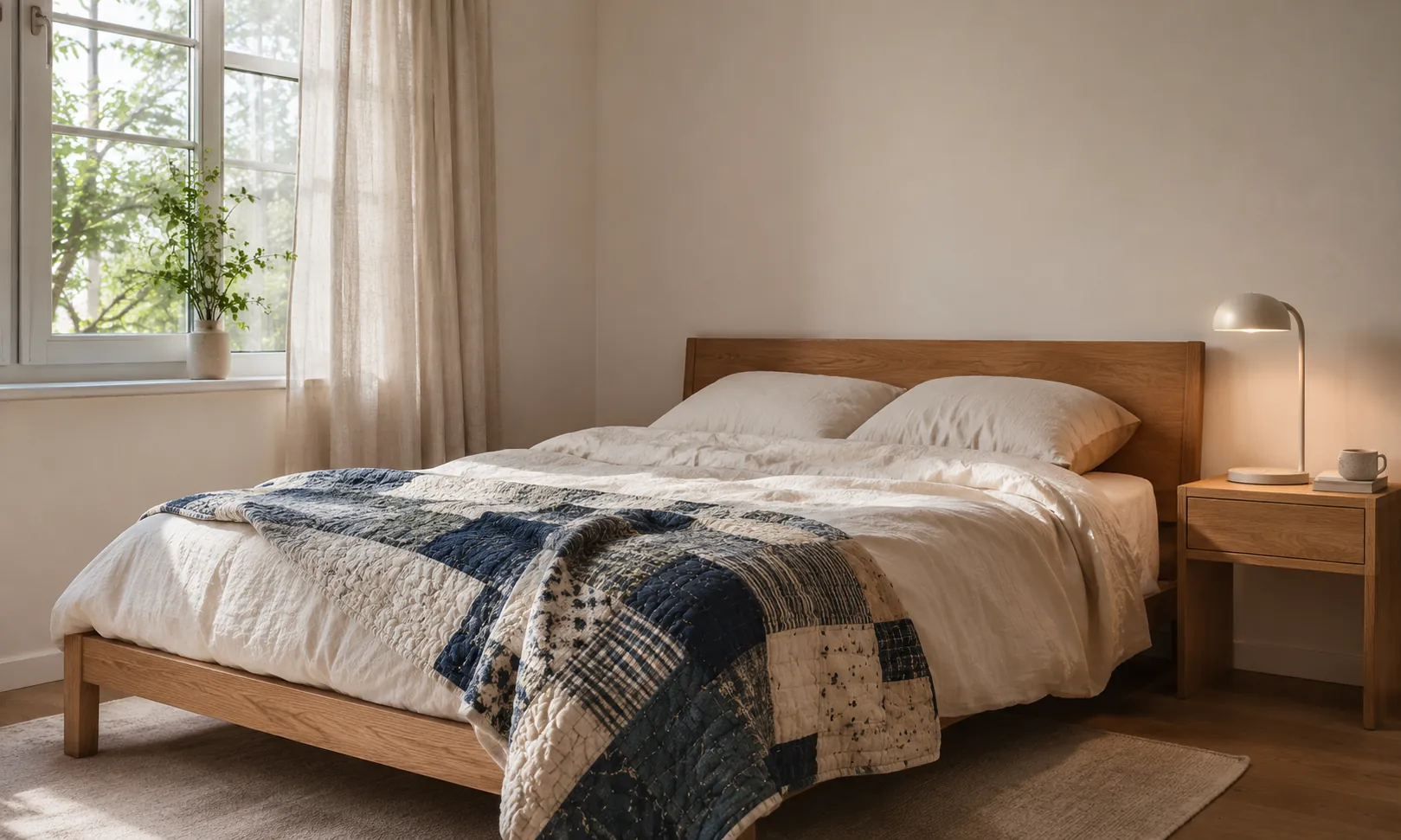
A quilt, woven cushion, or handmade throw can supply much of the room’s color.
Choose bedding that relates to one shade in the piece. Keep the arrangement manageable when it is time to sleep.
If the textile is fragile or important to preserve, consider a suitable display rather than routine handling.
Workspace: Keep the Surface Functional
A handmade pen holder, tray, or small artwork can personalize a modern desk.
Place it where it supports your work instead of reducing the space you need. One useful object may be enough.
Entryway: Make the First Piece Practical
A sound tray or basket can hold appropriate daily essentials. Keep delicate pieces away from bags, coats, and busy movement.
If you are planning broader changes, Pravi Celer’s guide to how to design luxury homes explores how layout, lighting, materials, and function work together.
How to Buy Handmade Decor Thoughtfully
Ask specific questions about the object:
- Who made it?
- Which processes were carried out by hand?
- What materials and finishes were used?
- Is it functional or decorative?
- What care does it need?
- Can it be repaired?
- Are photographs showing the exact piece or a representative example?
Handmade production can involve tools, machinery, molds, and collaborative work. A clear explanation is more informative than a vague label.
Organizations such as the Crafts Council provide maker directories covering disciplines including ceramics, glass, textiles, and wood. These can be a starting point for researching makers and their practices.
Inspect the Actual Construction
Handmade does not automatically establish durability, sustainability, or suitability for your intended use.
Assess joints, seams, stability, finish, and function. Ask about anything described as a natural variation so you understand what to expect.
Care and Display Matter Too
Choose placement according to the material and condition.
For ceramics and glass, the Canadian Conservation Institute advises avoiding extreme or rapid temperature and humidity changes. It also recommends arranging storage and display to minimize unnecessary handling and breakage.
Keep fragile objects on stable surfaces, away from edges and crowded routes. Follow the maker’s instructions for cleaning textiles, timber, metal, and mixed-material pieces.
If you are unsure about an older or valuable object, seek advice before cleaning or altering it.
Common Mixing Mistakes
| Mistake | A better approach |
| Buying many pieces before trying one | Introduce a single object and assess it |
| Assuming handmade always means rustic | Look at the actual design |
| Adding texture to every surface | Leave quieter areas between details |
| Choosing only by appearance | Check function, dimensions, and care |
| Overcrowding shelves | Give important pieces room to be seen |
| Replacing furniture to suit one accessory | Try color and placement changes first |
FAQs
Can handmade decor work in a minimalist home?
Yes. Choose pieces you enjoy, give them suitable space, and preserve the room’s practical surfaces.
Do handmade objects need to match?
No. Connect them through color, shape, material, purpose, or a shared story. Some contrast can make each piece easier to appreciate.
Can I mix handmade items from different makers?
Yes. Consider how the individual pieces work together and retain information about their makers and origins.
Is handmade decor always more expensive?
Prices vary with materials, time, skill, process, and other factors. Set a budget and assess the particular object rather than assuming a fixed price difference.
How can I start on a small budget?
Rearrange what you own first. One useful object, bought with care, can be enough for a meaningful change.
Is handmade decor automatically sustainable?
No. Ask about materials, sourcing, production, transport, durability, and repair. The label alone does not establish environmental performance.
Begin With One Thoughtful Pairing
Place a handmade piece beside something simple you already own.
Look for one connection a color, curve, material tone, or useful purpose and give the arrangement room to work.
Live with it before adding more. Over time, your home can reflect both the clarity of contemporary design and the particular makers, objects, and stories you value.