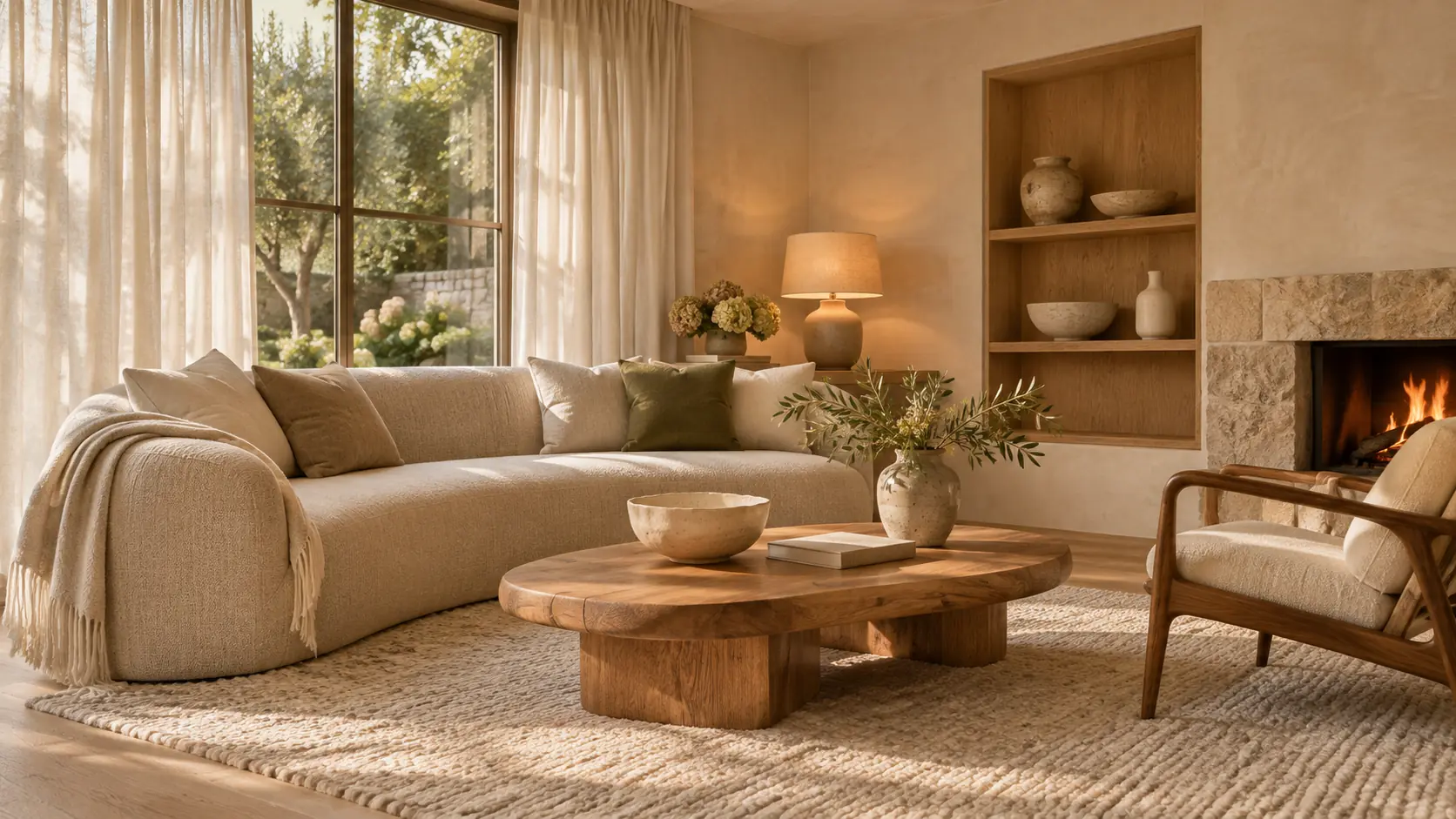
There’s a funny thing about a perfectly decorated room. Sometimes it looks absolutely beautiful and nobody wants to sit in it. The cushions are arranged with mathematical precision. The coffee table holds one expensive book. Every wall is white, every surface is spotless, and the sofa looks as though sitting on it might ruin the entire design. This is where warm minimalism interior design makes a difference, bringing together simplicity, natural textures, and inviting comfort to create spaces that feel as good as they look.
It’s impressive. But is it somewhere you’d want to spend a rainy Sunday afternoon? That’s where warm minimalism interior design comes in.
It takes everything we love about minimalist spaces—the beautiful simplicity, uncluttered surfaces, and thoughtful furniture—and adds the little things that make a house feel like somewhere people actually live.
Soft linen curtains. A beautifully worn wooden table. Warm evening light. A comfortable sofa with a blanket casually resting over one arm. Nothing excessive. Nothing unnecessarily complicated. Just a home that makes you feel wonderful the moment you walk through the door.
Warm minimalism is an interior design style that combines clean lines and carefully chosen furniture with natural materials, earthy colors, layered textures, soft lighting, and meaningful personal details.
Unlike stark minimalism, which can sometimes feel cold or impersonal, warm minimalism aims to make simplicity comfortable.
And the lovely part? You don’t need a sprawling architect-designed home or an enormous renovation budget to achieve it. Sometimes the difference begins with changing a light bulb, moving your furniture, or choosing one beautifully textured piece. Let’s discover how.
Key Takeaways
- Warm minimalism combines uncluttered spaces with earthy colors, natural materials, layered fabrics, and soft lighting.
- The most useful colors include warm white, oatmeal, mushroom, taupe, chocolate brown, muted olive, and terracotta.
- Natural wood, linen, wool, stone, and handmade ceramics introduce character without requiring excessive decoration.
- Layered lighting often makes a bigger difference than purchasing more furniture.
- You don’t need to replace your existing sofa, floors, or cabinets to create a warmer home.
- A practical warm minimalist space should be comfortable, functional, and personal—not simply beautiful in photographs.
- The best results usually come from improving one room at a time.
What Is Warm Minimalism in Interior Design?
Imagine two living rooms.
The first has pure white walls, a cool gray sofa, a glass coffee table, and almost no decorative objects.
Everything looks exceptionally clean.
The second has similarly simple furniture, but the walls are a softer cream. A walnut table introduces warmth. A textured rug softens the floor, while a ceramic lamp creates a welcoming glow.
Both rooms are minimalist. But they create very different feelings. That’s the essential difference. Warm minimalism keeps the visual calm of traditional minimalism while adding material richness, comfortable seating, and a more personal atmosphere.
It doesn’t mean filling every corner with cushions or covering every wall with artwork. It means choosing fewer things with greater intention. An old wooden cabinet can look beautiful beside a modern linen sofa. A handmade ceramic vase can bring interest to a plain table.
A favorite photograph can make an otherwise restrained bedroom feel personal. The aim isn’t perfection. It’s balance.
Why Is Warm Minimalism So Popular in 2026?
Interior design is moving away from the idea that a beautiful home must look completely untouched. Houzz’s September 2026 design trends report identifies warmth, layered textures, natural materials, and personal storytelling as increasingly important priorities.
There’s also an interesting shift toward richer colors. In the 2026 1stDibs Designer Trends Survey, which gathered responses from 468 design professionals, 33% selected chocolate brown as the leading trending color.
That doesn’t mean every home should suddenly become dark brown. It simply reflects growing interest in depth and warmth beyond the familiar cool white-and-gray interior. The broader change is about creating homes that feel collected over time rather than purchased from one showroom in a single afternoon.
And that’s a wonderful direction for anyone who loves beautiful interiors. Because a home should be more than an impressive backdrop. It should make ordinary life more enjoyable.
12 Warm Minimalism Interior Design Ideas Worth Trying
1. Start With Warm White Instead of Brilliant White
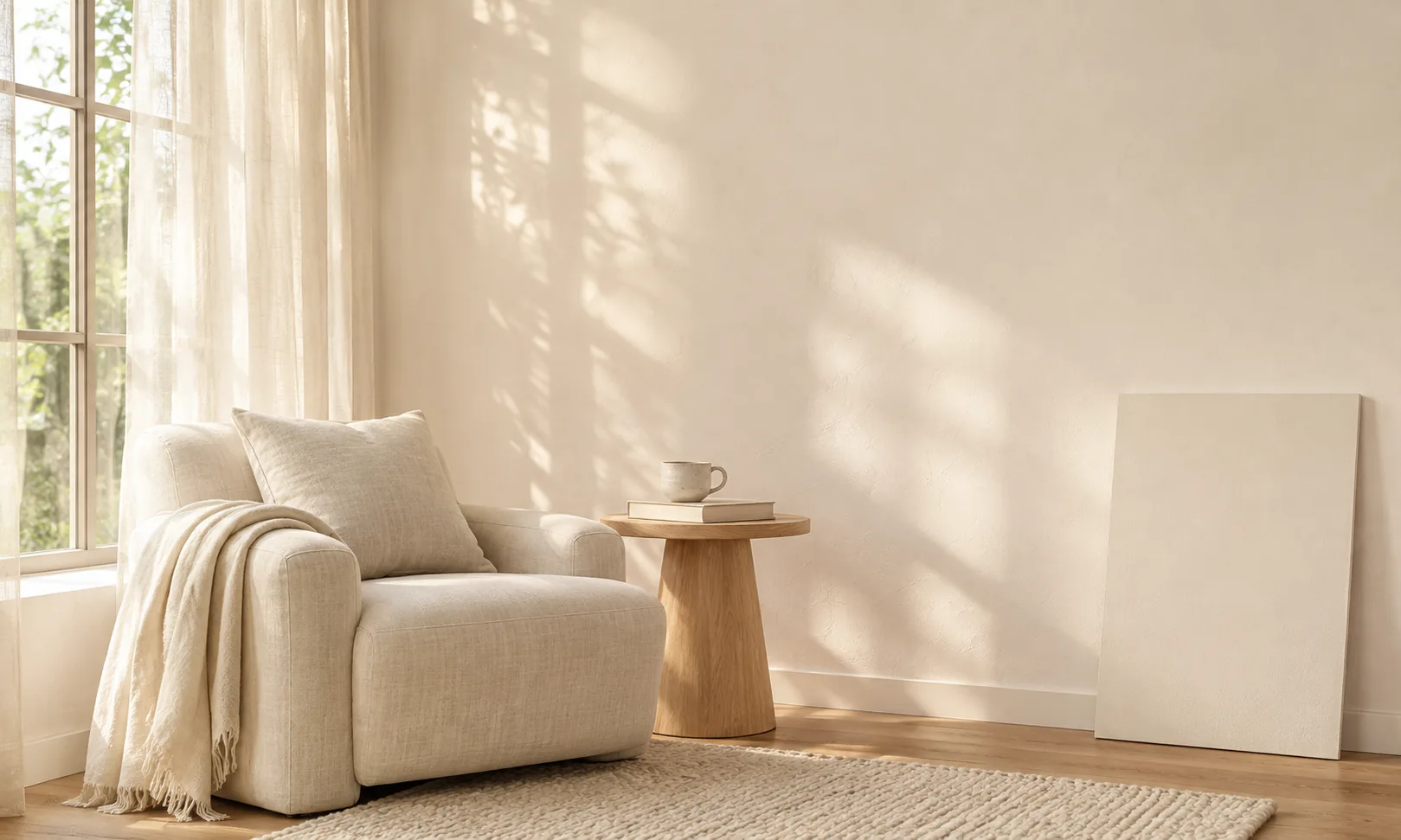
White walls aren’t the enemy of a cozy home. The problem is choosing a white that feels too cold for your lighting, furniture, and flooring.
Warm whites often contain subtle cream, beige, or yellow undertones. They can create a softer backdrop for wood, stone, and natural fabrics. Think ivory, chalk, oatmeal, and warm off-white.
Before painting an entire room, test large samples on different walls. Observe them in daylight, late afternoon, and artificial light. A color that looks creamy in the shop might appear yellow or gray in your home.
The luxury detail: A thoughtfully selected wall color can make existing furniture look more cohesive without replacing a single piece.
2. Bring Natural Wood Into the Room
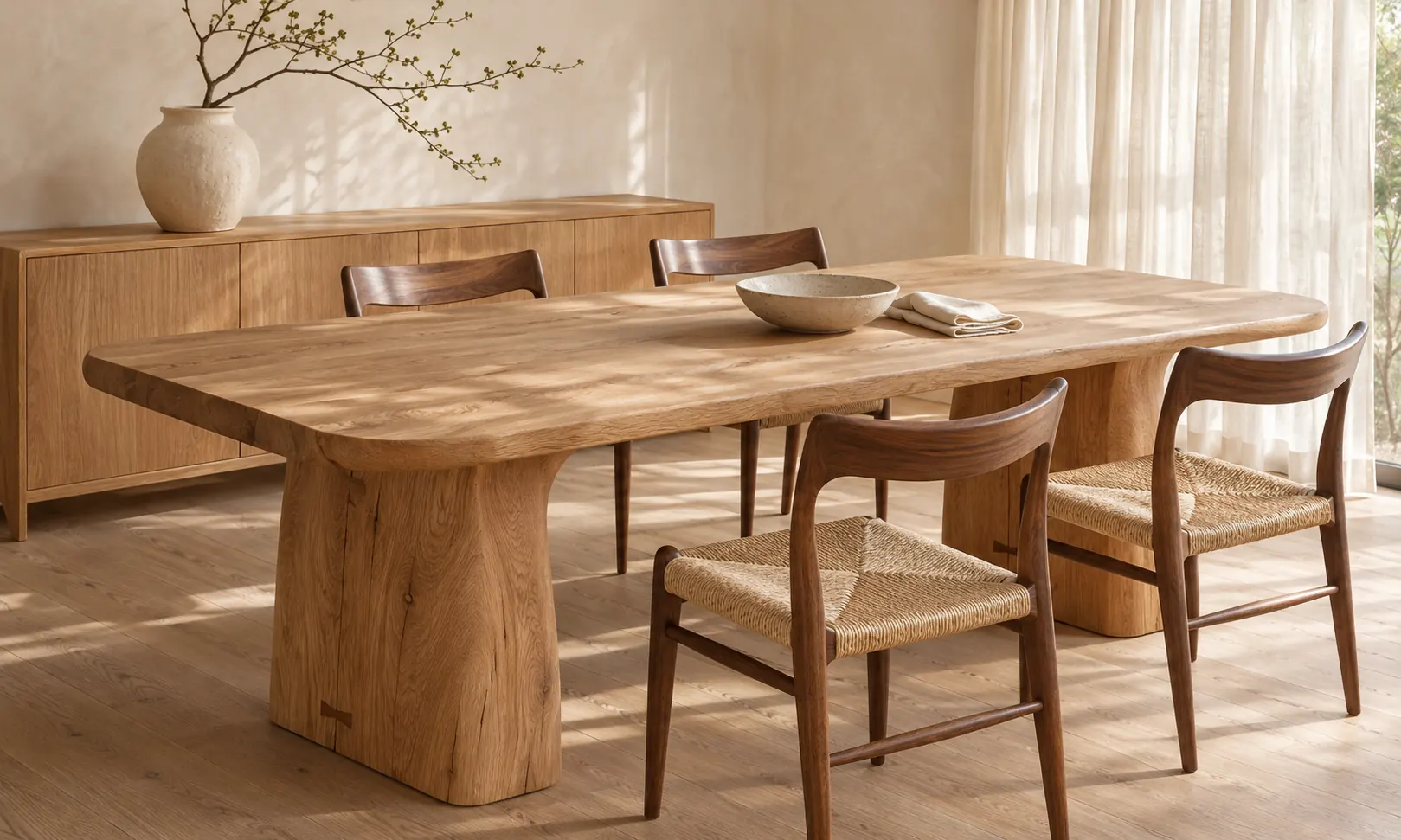
There’s something wonderfully inviting about a wooden table. Especially one with visible grain, a beautiful finish, or a little character. Oak, walnut, ash, and other wood species can create warmth through their natural patterns and tones.
You don’t have to cover every surface with timber. One beautifully chosen piece may be enough. Consider a walnut coffee table, an oak sideboard, or a wooden picture frame.
Even an existing furniture piece might be refinished rather than replaced, provided its construction and surface make refinishing appropriate. The secret is consistency without excessive matching. Different wood tones can work together when their colors and overall proportions feel balanced.
3. Layer Linen, Wool, and Cotton for Comfortable Texture
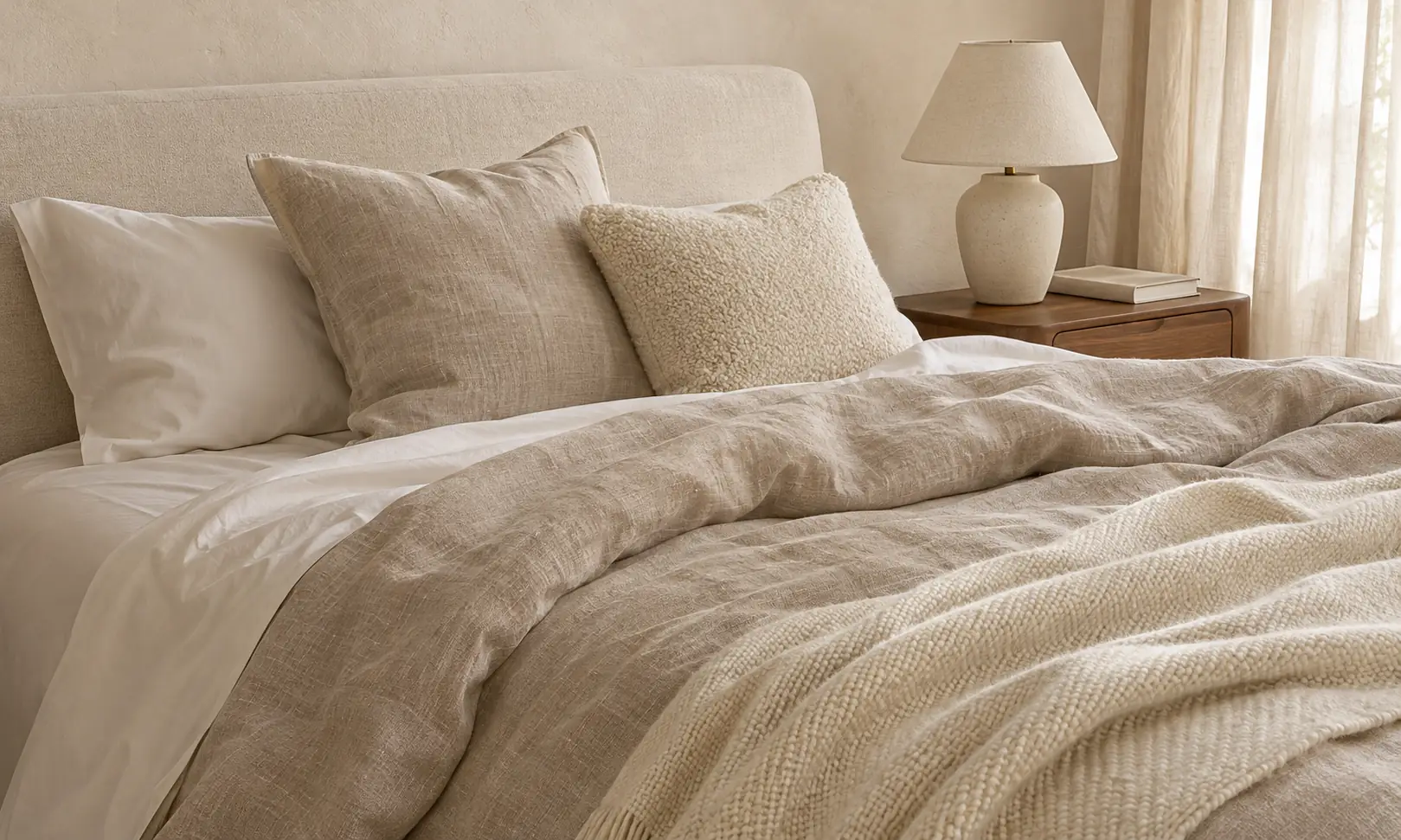
A room decorated entirely with smooth, hard materials can feel visually flat. Now imagine adding linen curtains, a wool rug, and a soft cotton throw. Suddenly, the atmosphere changes.
Texture introduces variety without requiring bold patterns or bright colors. Linen brings relaxed folds. Wool can contribute warmth and a satisfying tactile quality.
Cotton offers versatility, while woven upholstery can create visual interest. You don’t need expensive cashmere cushions to achieve a beautiful result.
The fabric should suit your climate, cleaning preferences, and daily life. A washable cotton cover may be more luxurious in practice than a delicate material you’re constantly worried about damaging.
4. Replace Harsh Lighting With a Softer Evening Glow
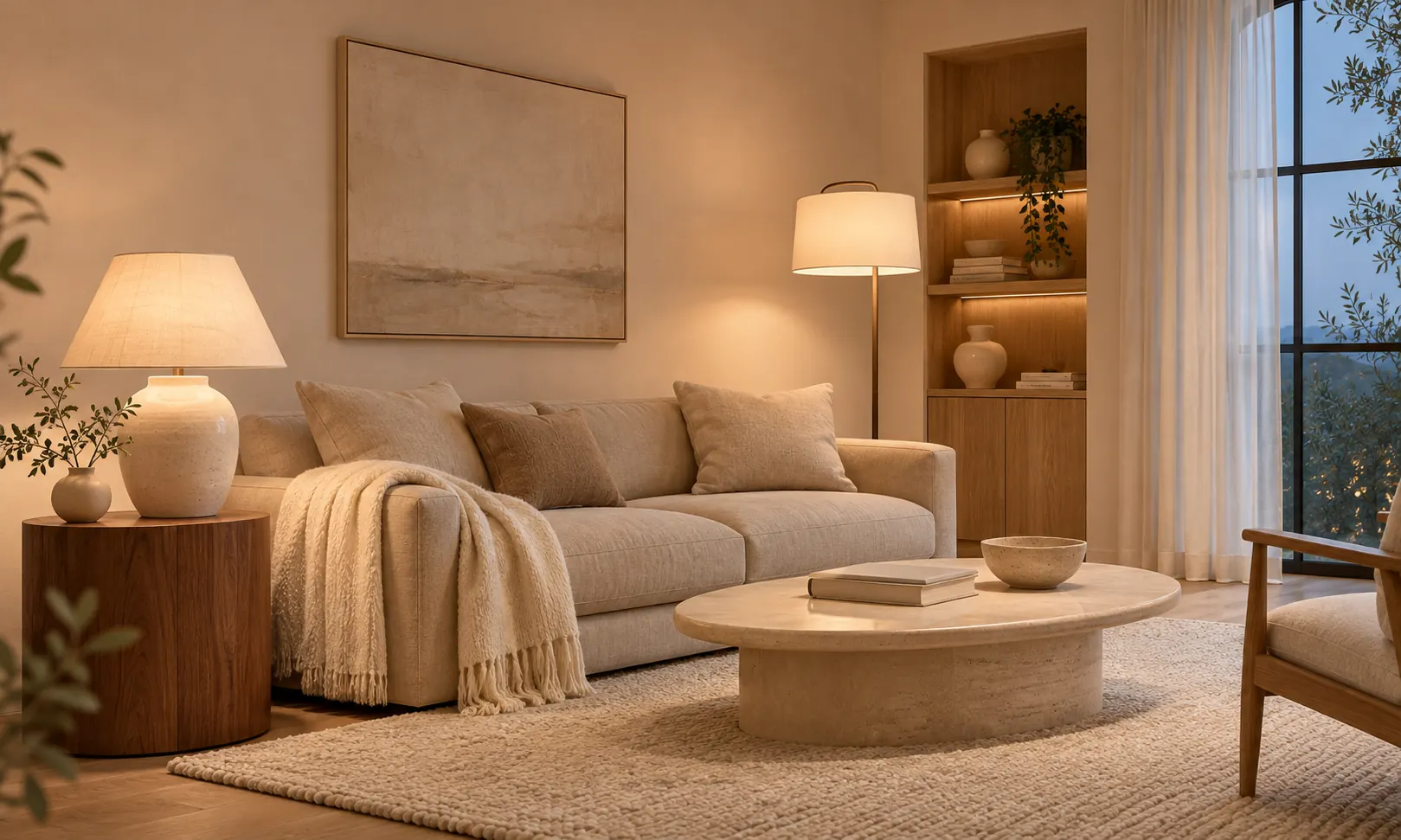
Here’s one of my favorite interior design lessons. A room can look beautiful at midday and completely different after sunset.
And often, the furniture isn’t the problem. It’s the lighting. For relaxed residential settings, warm-white light around 2700K–3000K is a useful starting point.
The Kelvin number describes the appearance of the light. Lower values generally look warmer, while higher values appear cooler. But don’t rely on one ceiling fixture to illuminate everything.
Try combining a ceiling light with a floor lamp and a smaller table lamp.
This creates different levels of illumination. A reading corner receives focused light, while other parts of the room remain softer.
The luxury detail: Lighting should support what you’re doing. A beautiful room also needs enough light to read, cook, work, and move safely.
5. Choose One Beautiful Statement Piece
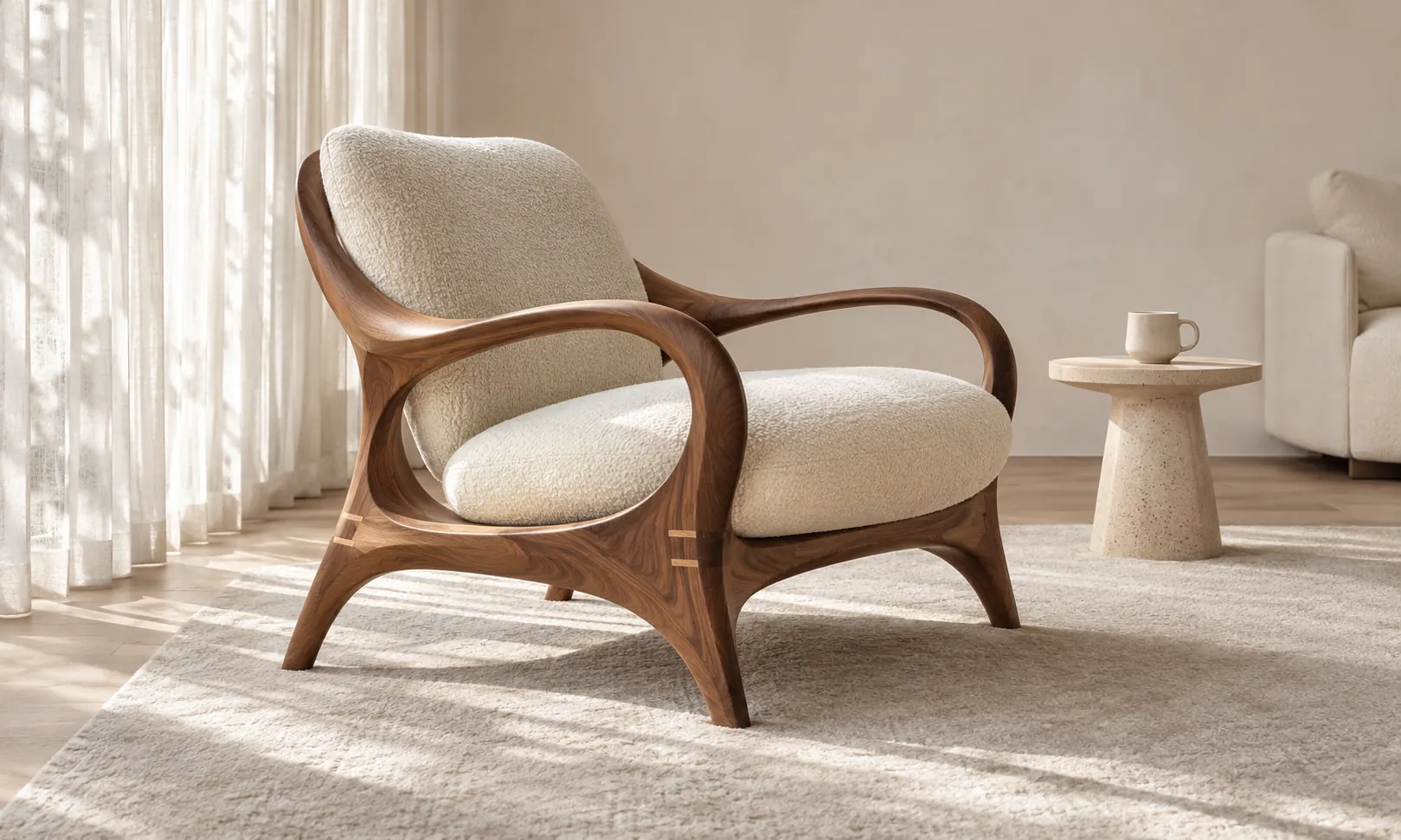
Minimalist design can become cluttered when every item tries to be special. A sculptural chair. An enormous chandelier. A dramatic coffee table. A brightly patterned rug. All competing for attention.
Instead, choose one element to provide the room’s strongest visual identity. It could be a beautifully proportioned sofa, an original artwork, a handcrafted table, or a distinctive light fixture.
Then let the surrounding pieces support it. For inspiration on furniture construction and design, explore PraviCeler’s guide to 15 luxury sofa brands for a beautiful living room.
Remember that the statement piece doesn’t need to be the most expensive item. It simply needs to be something you genuinely love.
6. Introduce Curves Without Losing Clean Lines

Not everything in a minimalist room needs a sharp edge. A rounded side table can soften a rectangular sofa. An arched mirror can provide contrast against straight walls.
A curved chair can add movement without introducing visual clutter. The key is restraint. You don’t need a curved sofa, circular rug, arched doorway, and rounded coffee table all in the same room.
One or two thoughtfully placed shapes can create enough contrast. This is especially useful when existing furniture feels rigid. Sometimes a round wooden side table is all it takes to make an arrangement feel more welcoming.
7. Make Your Bedroom Feel Like a Private Retreat
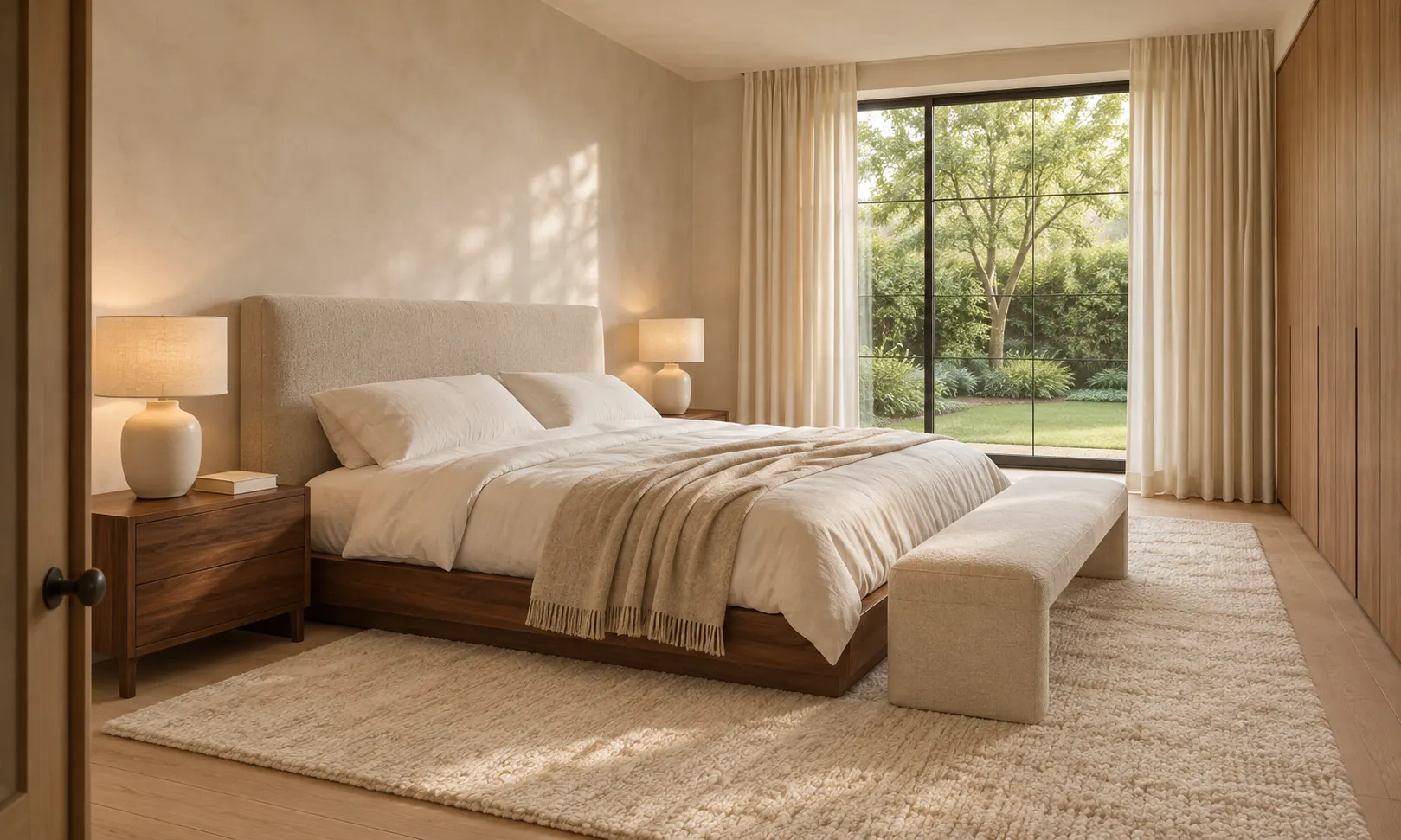
The bedroom might be the most natural place to embrace warm minimalism. After all, its primary purpose is comfort. Start with beautiful, practical bedding.
Choose colors that work together, perhaps cream, sand, chocolate, and muted olive. Add softly textured curtains, a bedside lamp, and a rug if it suits the layout. Keep surfaces organized without removing every personal belonging.
A favorite book, framed photograph, or small ceramic piece can feel completely appropriate. For bedding inspiration, explore our guide to luxury bedroom comforters, including material choices, construction, and comfort considerations.
A bedroom shouldn’t feel like a showroom suite where you’re afraid to disturb the pillows. It should feel like somewhere you’re genuinely happy to rest.
8. Use Stone and Ceramics for Quiet Character
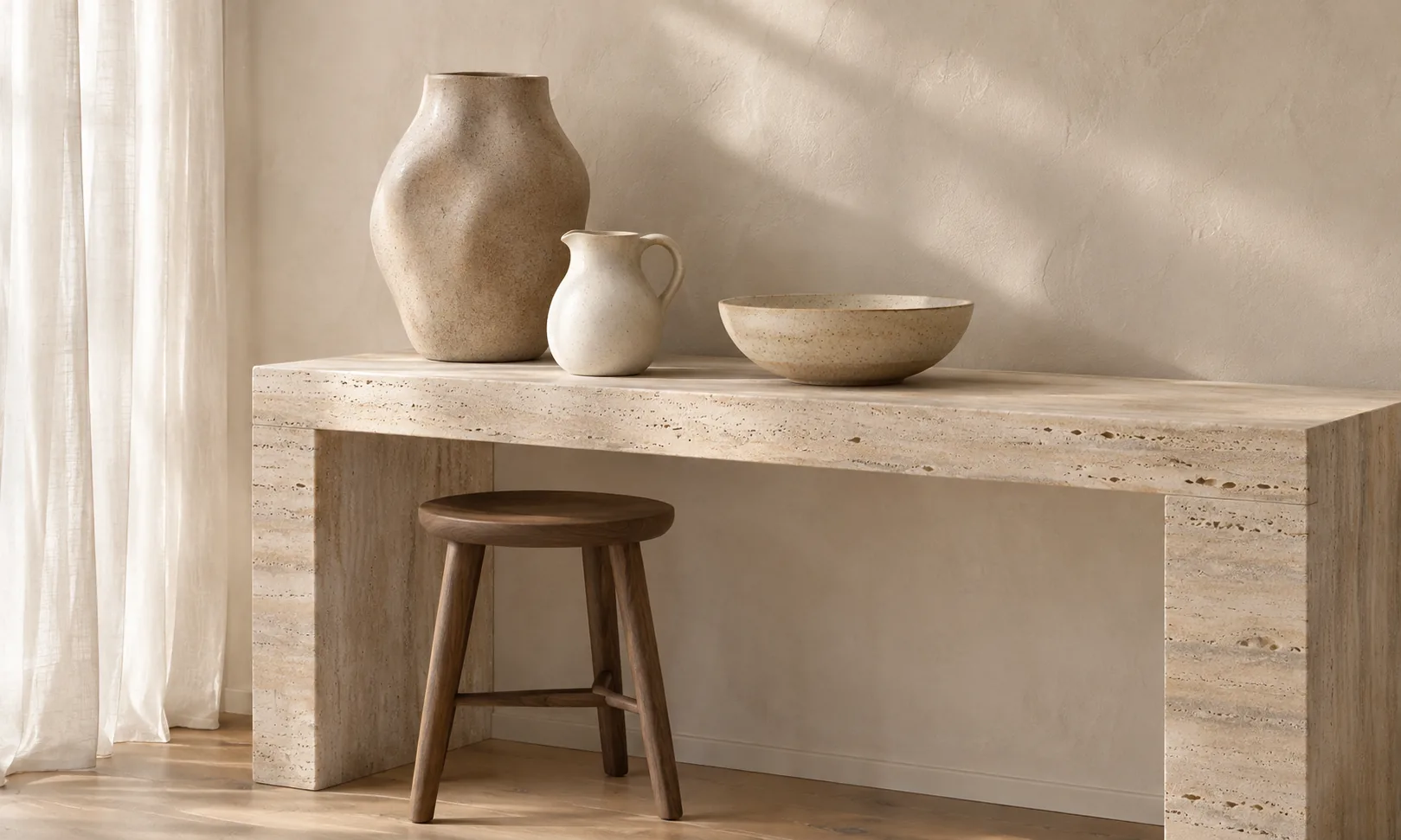
Natural stone can introduce beautiful variation to minimalist interiors.
Travertine, marble, limestone, and other stones bring distinctive patterns and textures. But here’s the good news.
You don’t need to install a new stone kitchen or bathroom.
A ceramic bowl, stone tray, or small side table can introduce the same general material contrast on a much smaller scale. Choose finishes carefully.
Some natural stones are porous and require appropriate sealing and maintenance.
A delicate marble surface may not be ideal for a household that frequently deals with spills. Beauty and practicality should work together.
A luxurious home isn’t one where everyone is nervous about touching the furniture.
9. Add One Vintage Piece With a Story
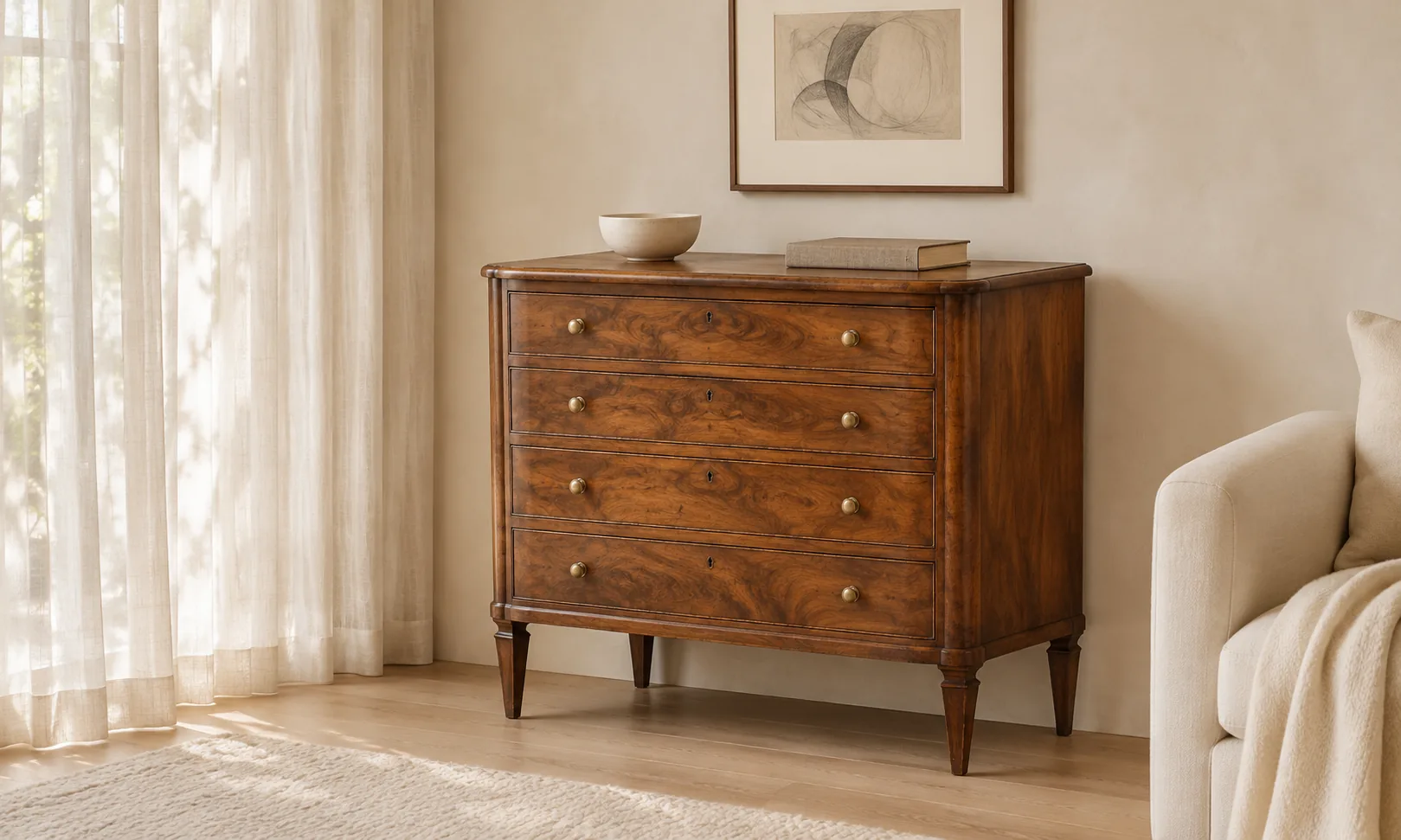
A beautifully designed room doesn’t need everything to be new. In fact, a vintage item can bring character that perfectly matching furniture sometimes lacks.
Think of a small antique wooden cabinet, an old framed illustration, or a distinctive ceramic vessel.
The contrast between older pieces and contemporary furniture can make a space feel more personal. And the item doesn’t need a spectacular history.
Perhaps it came from a family member. Maybe you discovered it at a neighborhood market. Or perhaps you simply love its proportions.
Warm minimalism welcomes these details because they create a sense of connection. The aim is a room that looks thoughtfully collected rather than mechanically coordinated.
10. Bring Greenery Into the Space
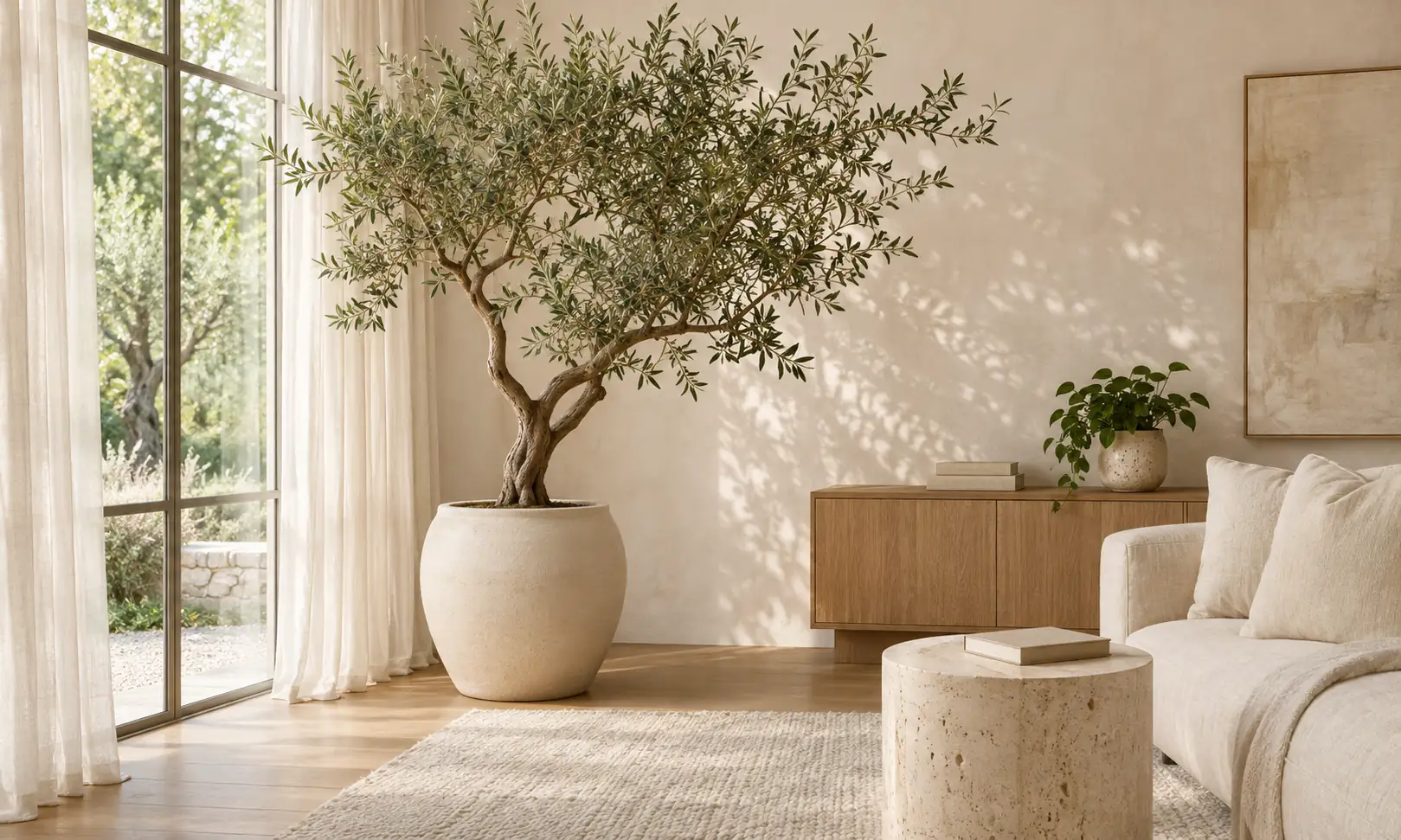
Plants are a lovely way to introduce natural shapes and color. A single large plant can soften an empty corner. A smaller plant can add life to a bookshelf or side table. But avoid buying greenery purely for decoration without considering its needs.
Light, watering requirements, climate, pets, and available space all matter. A healthy, well-positioned plant looks far more beautiful than several struggling ones.
Our guide to indoor plants and care tips offers useful ideas for choosing greenery suited to different spaces.
And remember that houseplants aren’t a substitute for ventilation or proper air filtration. Their value here is primarily decorative and experiential.
11. Create Storage That Makes Daily Life Easier
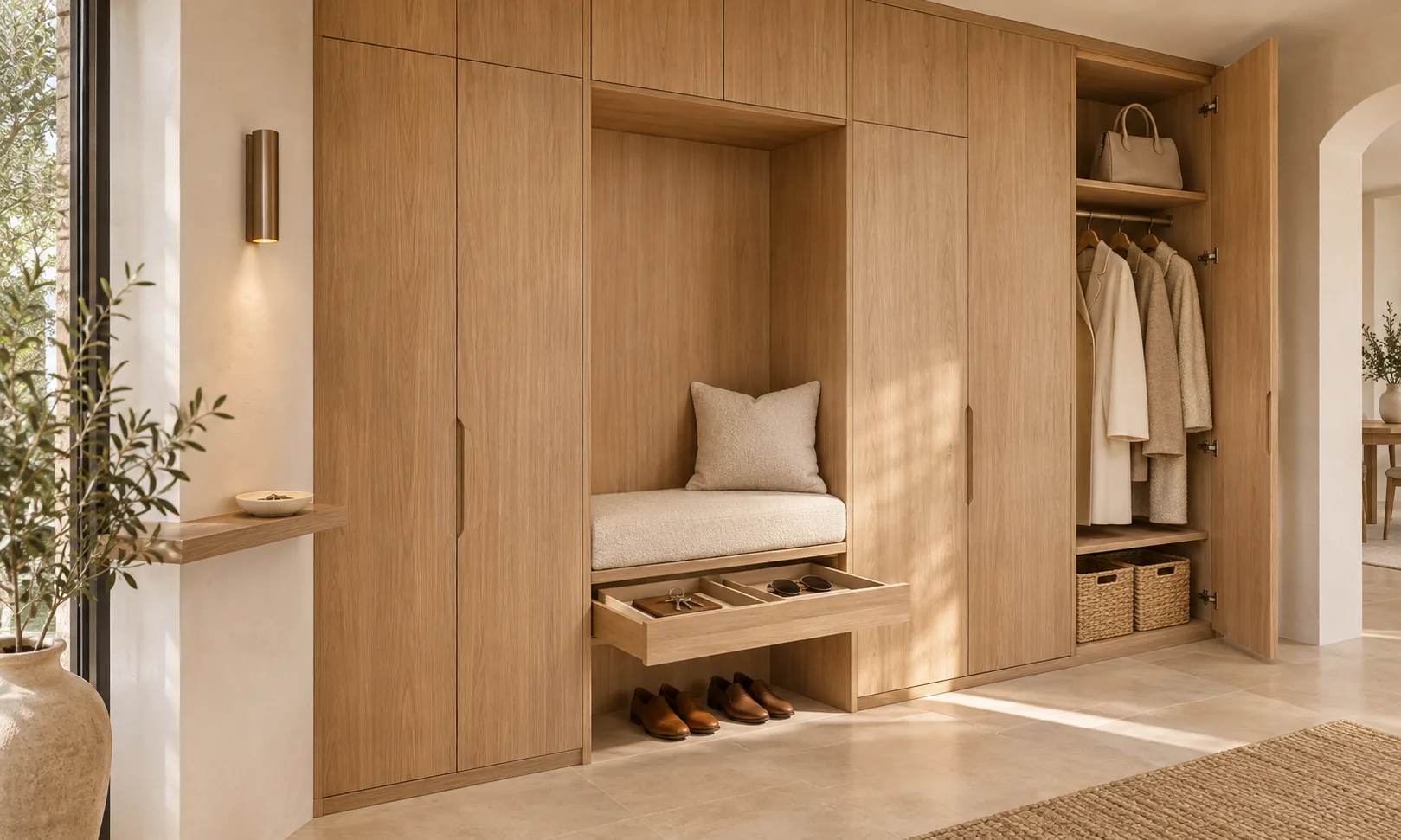
Nothing disrupts the calm of a minimalist room quite like constantly having to move everyday belongings out of sight. Storage needs to work for the people who live there. A beautiful cabinet can hide electronics and accessories.
A bedside drawer can keep small essentials organized. A well-planned wardrobe can reduce clutter without requiring you to own fewer clothes than you actually need.
But don’t confuse minimalism with the idea that everything must disappear. Books are meant to be read. Shoes need somewhere practical to live. A home office needs equipment.
The goal is to give belongings sensible places. If you’re improving a bedroom, our guide to luxury wardrobe design ideas explores practical storage layouts and elegant material options.
12. Leave Space for Life to Happen
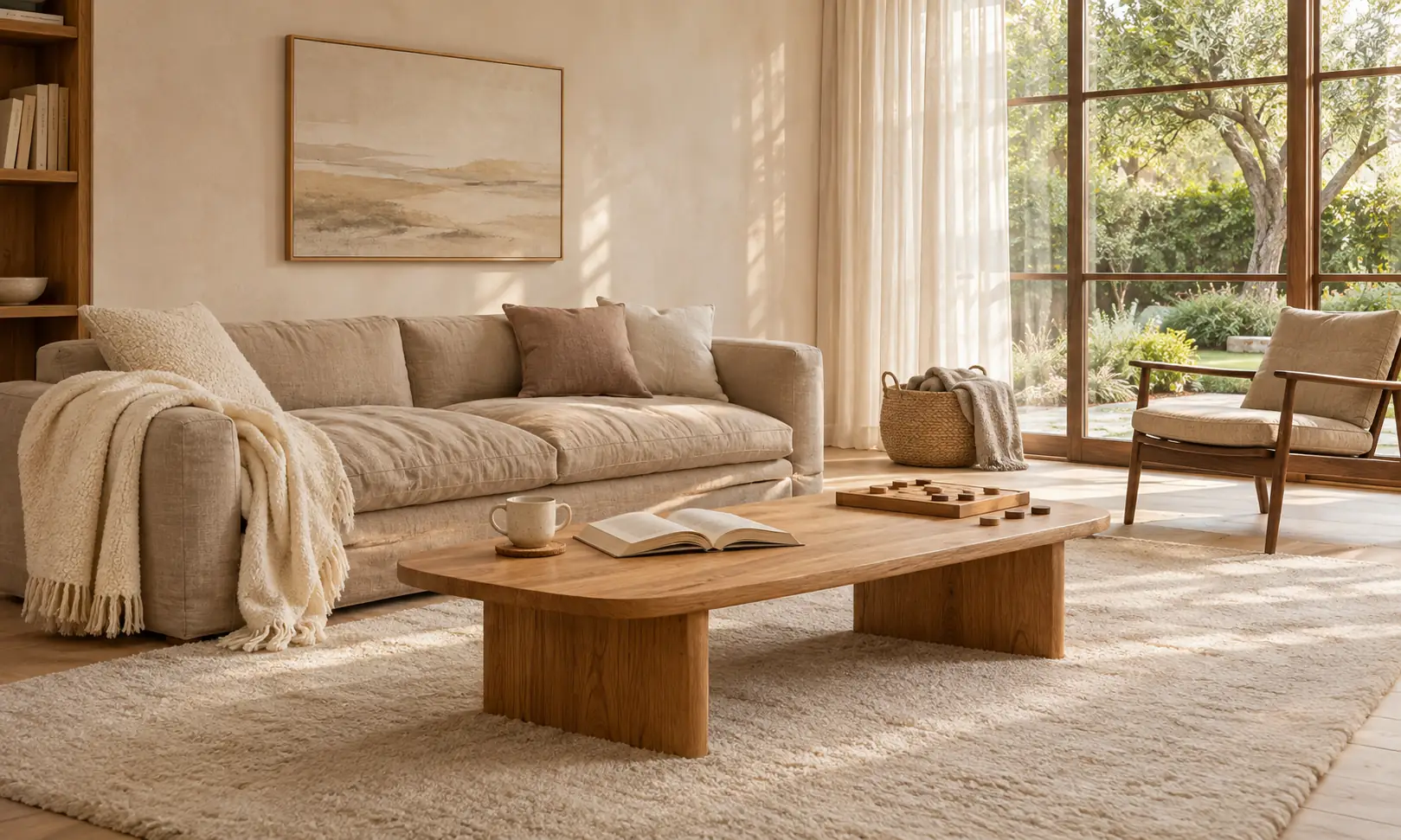
This may be the most important idea in the entire guide. A home isn’t finished when every surface looks perfect. It’s successful when you can enjoy living there.
A sofa should invite you to sit down. A dining table should have room for a meal. A coffee table should accommodate an actual coffee.
And your home should have space for the things and people you love. You don’t need to remove every object with sentimental value just because it doesn’t match a particular color palette.
A photograph from a wonderful holiday can belong in a beautifully minimal room. So can children’s drawings, a favorite collection, or a much-loved book. The finest interiors don’t erase personality. They give it room to breathe.
Warm Minimalism vs. Traditional Minimalism: What’s the Difference?
| Design element | Traditional stark minimalism | Warm minimalism |
| Color palette | Cool whites, grays, monochrome | Cream, taupe, earth tones |
| Materials | Glass, metal, polished surfaces | Wood, linen, wool, stone |
| Furniture | Sharp lines and geometric forms | Clean lines with softened shapes |
| Lighting | Often uniform and bright | Layered and atmospheric |
| Decoration | Very limited accessories | Selected personal objects |
| Overall atmosphere | Restrained and highly ordered | Calm, comfortable, lived-in |
Neither approach is automatically better. Some people genuinely love crisp, cool minimalism.
Others prefer richer materials and softer surroundings. Your home should reflect your taste rather than satisfy somebody else’s design rules.
The PraviCeler Five-Sense Warmth Audit: An Original Way to Improve Any Room
Here’s a question that rarely receives enough attention in interior design.
Does your room feel as lovely to use as it looks in a photograph?
That’s worth exploring before purchasing more furniture.
For PraviCeler, I’ve created a simple editorial framework called the Five-Sense Warmth Audit.
It evaluates five practical dimensions of a room.
1. Visual Comfort
Do the colors feel balanced?
Can your eyes rest without being pulled toward too many competing objects?
2. Touch
Are the materials comfortable to sit on, walk over, and use?
Do the fabrics and furniture suit everyday life?
3. Lighting
Does the room work beautifully in both daylight and the evening?
Can you control brightness for different activities?
4. Sound and Atmosphere
Does the room feel uncomfortably echoing or noisy?
Would rugs, curtains, and soft furnishings help make the space more pleasant?
5. Personal Connection
Is there at least one object, artwork, photograph, or piece of furniture that feels meaningful to you?
Give each dimension a score of zero, one, or two.
A total of ten points represents a room that performs strongly against your personal preferences.
This is an original editorial checklist, not a scientifically validated interior design assessment.
It encourages you to identify what’s actually missing.
A room scoring well on color and furniture but poorly on lighting probably doesn’t need a new sofa.
It needs better lighting.
And that can be a much more affordable improvement.
How Much Does It Cost to Create a Warm Minimalist Living Room?
Let’s imagine you already have a comfortable sofa, a functional coffee table, and walls you don’t want to repaint.
You’d like to make the room warmer without renovating.
Here’s a hypothetical $240 refresh plan.
| Upgrade | Example budget |
| Warm LED light bulbs | $24 |
| Floor lamp | $85 |
| Textured cotton throw | $45 |
| Two cushion covers | $36 |
| Vintage-style ceramic vase | $25 |
| Small lampshade or decorative light accessory | $25 |
| Total | $240 |
These are illustrative budget allocations, not verified retailer quotations. Actual prices depend on your market, materials, and purchasing choices.
The important point is where the money goes.
Instead of replacing furniture you already enjoy, the budget targets lighting, texture, and a small amount of personality.
You might spend even less by moving existing lamps, rearranging furniture, or reusing accessories from another room.
The real luxury isn’t buying everything new. It’s making the things you already own work beautifully together.
How to Choose a Warm Minimalist Color Palette
You don’t need a complicated interior design mood board to start.
Choose one light foundation, one deeper supporting color, and one accent.
Here are three combinations worth considering.
Soft and airy: Warm white, oatmeal, natural oak, and muted sage.
Rich and sophisticated: Cream, chocolate brown, walnut, and brushed brass.
Earthy and romantic: Ivory, mushroom, terracotta, and olive green.
You can also introduce charcoal, burgundy, muted blue, or black where it suits the design.
Warm minimalism doesn’t forbid contrast.
It simply asks that the room feels coherent.
Before committing, compare material and color samples under the actual lighting conditions in your home.
The undertones of your flooring, furniture, and walls can change how a shade appears.
Warm Minimalism Decorating Checklist
- Choose a warm, coordinated base color.
- Keep existing furniture that is comfortable and functional.
- Introduce at least two contrasting textures.
- Add lighting at more than one height.
- Include natural wood, stone, or ceramic details.
- Arrange furniture to support comfortable movement.
- Create sensible storage for everyday belongings.
- Add one meaningful personal object.
- Check how the room feels in the evening.
- Avoid buying decorative items merely to fill empty spaces.
You don’t need to complete everything at once.
A beautiful home is allowed to evolve.
Frequently Asked Questions About Warm Minimalism Interior Design
What is warm minimalism interior design?
Warm minimalism combines simple furniture, uncluttered layouts, and restrained decoration with natural materials, soft textures, earthy colors, and comfortable lighting.
What colors are best for warm minimalism?
Warm white, cream, oatmeal, taupe, mushroom, chocolate brown, muted olive, and terracotta are popular choices. The best combination depends on natural light, flooring, and personal taste.
Is warm minimalism still popular in 2026?
Yes. Current interior design reporting highlights continued interest in warmer colors, natural materials, layered textures, and more personal spaces instead of stark, impersonal rooms.
How can I make a minimalist living room feel cozy?
Start with warm lighting, a comfortable rug, textured cushions or a throw, natural wood, and one or two personal decorative objects. Avoid adding unnecessary furniture.
Can warm minimalism work in a small apartment?
Absolutely. Small apartments can benefit from coordinated colors, multifunctional furniture, practical storage, and carefully selected textures. The goal is comfort without overcrowding.
Is Japandi the same as warm minimalism?
Not exactly. Japandi combines influences from Japanese and Scandinavian design, while warm minimalism is a broader approach to creating comfortable, restrained interiors. The styles can overlap through natural materials and simple forms.
Does warm minimalism require expensive furniture?
No. Lighting, furniture arrangement, color choices, and textiles can make a substantial difference without replacing major pieces.
What is the biggest mistake in warm minimalist design?
Focusing only on appearance while overlooking comfort and function. A room can have perfect neutral colors and still feel unpleasant if the seating, lighting, storage, or layout doesn’t support everyday living.
Final Thoughts: The Most Beautiful Home Is One That Welcomes You Back
There’s something lovely about coming home after a long day. You put down your keys, take off your shoes, and settle into your favorite corner. Perhaps there’s a book waiting beside the sofa. The evening light is warm. The room feels peaceful.
And nothing about the experience requires an extraordinary house or expensive collection of designer furniture. That’s what makes warm minimalism such an appealing way to think about interior design.
It reminds us that a home doesn’t need to be filled with beautiful objects to feel beautiful. Sometimes it simply needs a little softness. A little character. And enough room for life to happen. So keep the wooden table you love. Choose the comfortable sofa.
Hang the photograph that makes you smile, even if it doesn’t match the color palette perfectly. Let your home grow with you rather than trying to finish it in one shopping trip.
Because the greatest compliment a home can receive isn’t that it looks expensive. It’s that people walk inside, feel immediately comfortable, and wish they could stay a little longer.