Somewhere in Geneva, a company sells more than a million watches a year, takes in over eleven billion francs, and answers to no one. No shareholders. No quarterly calls. No family waiting to inherit. Just a crown, and a dead man’s instructions.
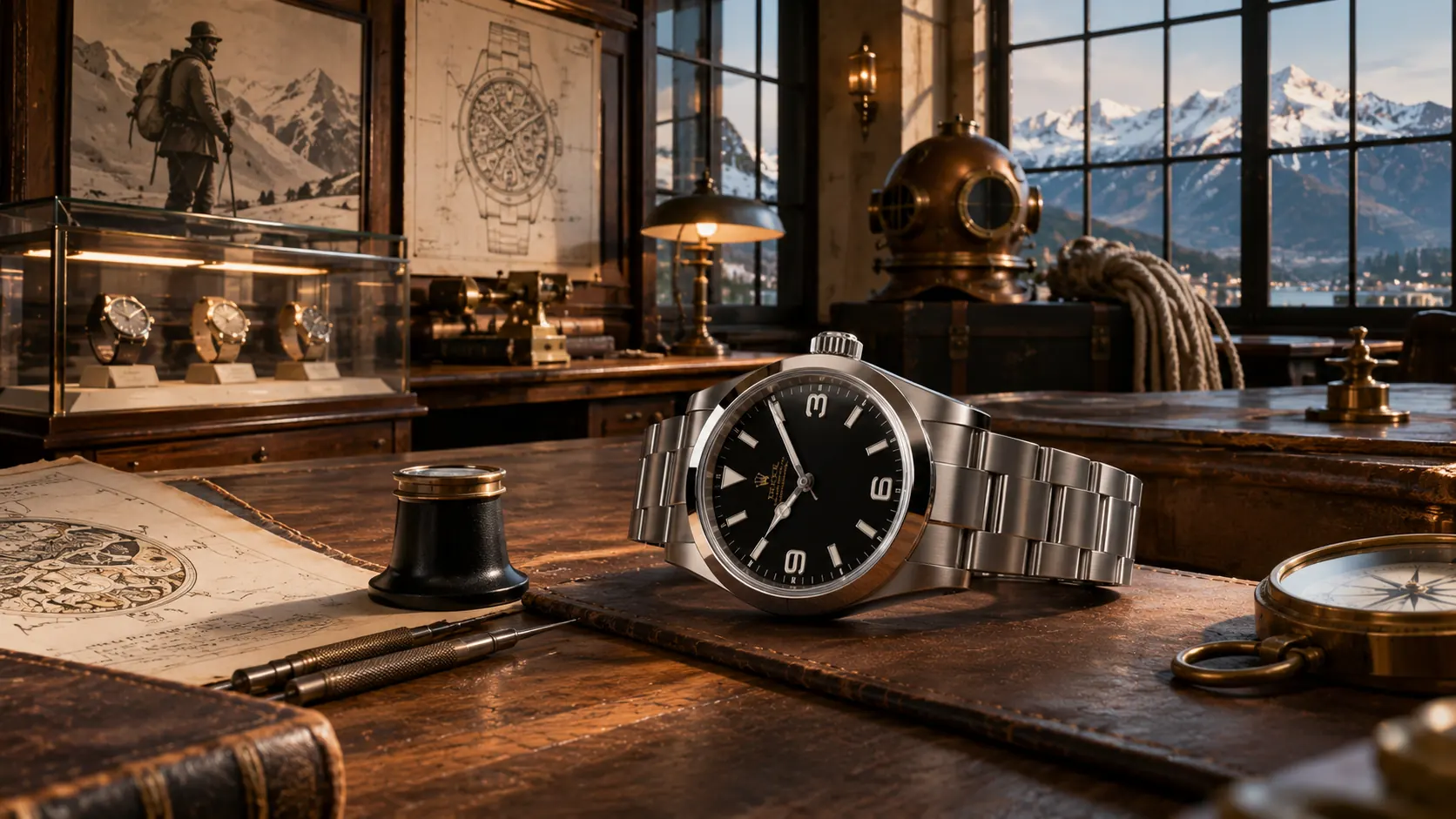
Rolex began in 1905 when a 24 year old orphan named Hans Wilsdorf bet that people would wear watches on their wrists. It became the most recognized luxury object on earth through waterproofing, self winding and marketing genius, and it is still owned today by a charitable foundation, which is why it can afford to think in decades.
This is how a five letter word whispered on a London bus became the last word in watches.
The Orphan Who Bet on the Wrist
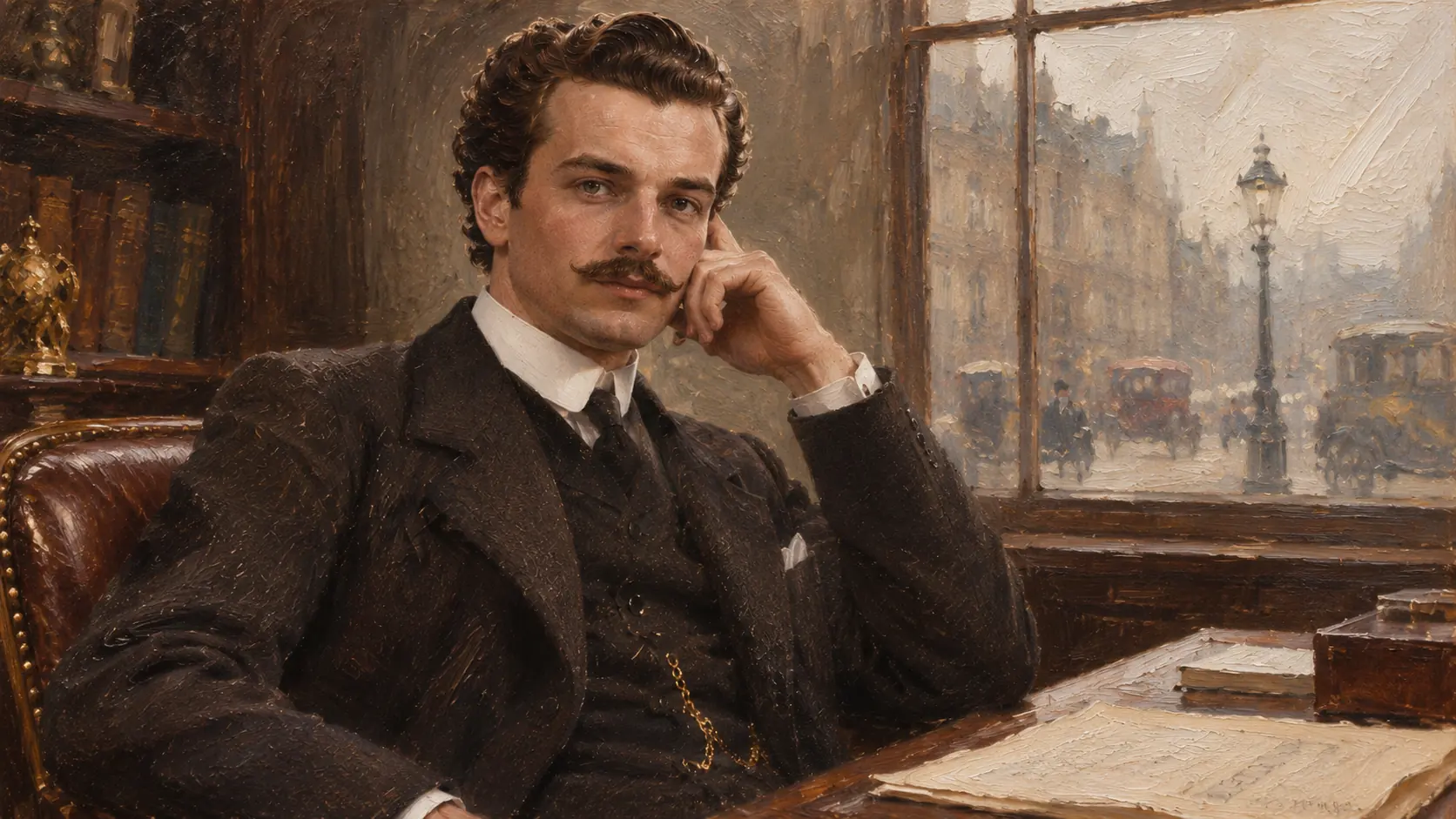
Hans Wilsdorf was born in Bavaria in 1881 and orphaned at twelve. Boarding school made him self reliant; a Geneva watch export firm taught him the trade; and in 1903 he moved to London, where two years later, at twenty four, he founded a company with his brother in law Alfred Davis to distribute timepieces.
Then he made the bet that defined everything. In 1905, serious men kept their watches in their pockets, and wristwatches were dismissed as fragile jewelry for ladies. Wilsdorf believed the pocket was finished. He ordered small, precise movements from a specialist maker in Bienne, Switzerland, and put them into wristwatch cases with total conviction, years before the First World War would turn the wristwatch from a curiosity into a necessity, as soldiers discovered that fumbling in a pocket during a bombardment was not an option.
He was not a watchmaker. He was something rarer: a man who understood what people would want before they did.
Five Letters Whispered on an Omnibus
The company needed a name, and Wilsdorf gave the quest the obsession of a man naming an empire. His own account is famous: he tried combining letters in every possible way, produced a hundred candidates, and hated them all. Then, one morning, riding the upper deck of a horse drawn omnibus along Cheapside, a genie, he said, whispered “Rolex” in his ear.
Five letters. Easy in every language. Short enough to sit on a dial. Meaningless in all of them, so it could mean anything. In 1908 he registered it.
Then he set out to make the word stand for precision. In 1910 a Rolex became the first wristwatch ever to receive the Swiss Certificate of Chronometric Precision. In 1914 the Kew Observatory in London awarded a Rolex wristwatch a class A certificate, an honor previously reserved for marine chronometers. The wristwatch was no longer a toy. Wilsdorf had the paperwork to prove it, and he made sure everyone saw it.
The Oyster and the Girl in the Channel
In 1926 Wilsdorf unveiled his masterstroke: the Oyster, the first genuinely waterproof and dustproof wristwatch case, its bezel, case back and winding crown screwed down tight against the elements. He named it after an oyster because, as he put it, it could remain underwater indefinitely without harm to its parts.
A product this good needed proof, and proof arrived in a swimsuit. In October 1927, a young London secretary named Mercedes Gleitze swam the English Channel wearing a Rolex Oyster around her neck. Ten hours in freezing water. The watch emerged ticking. Wilsdorf bought the front page of the Daily Mail to announce it, and with that single stroke he invented something bigger than an advertisement: the testimonial. Every Rolex ambassador since, from explorers to tennis champions, descends from that cold morning in the Channel.
It remains one of the great marketing plays in luxury history, a full century before influencer culture, the subject of so many of the modern comparisons in our guide to luxury watch brands.
The Crown Learns to Wind Itself
One problem remained: owners had to unscrew that sealed crown daily to wind their watches, wearing the seal away. In 1931 Rolex answered with the Perpetual rotor, a self winding mechanism powered by the motion of the wrist. Waterproof, self sufficient, precise: the template of the modern watch was complete, and Rolex has spent ninety years refining it rather than replacing it.
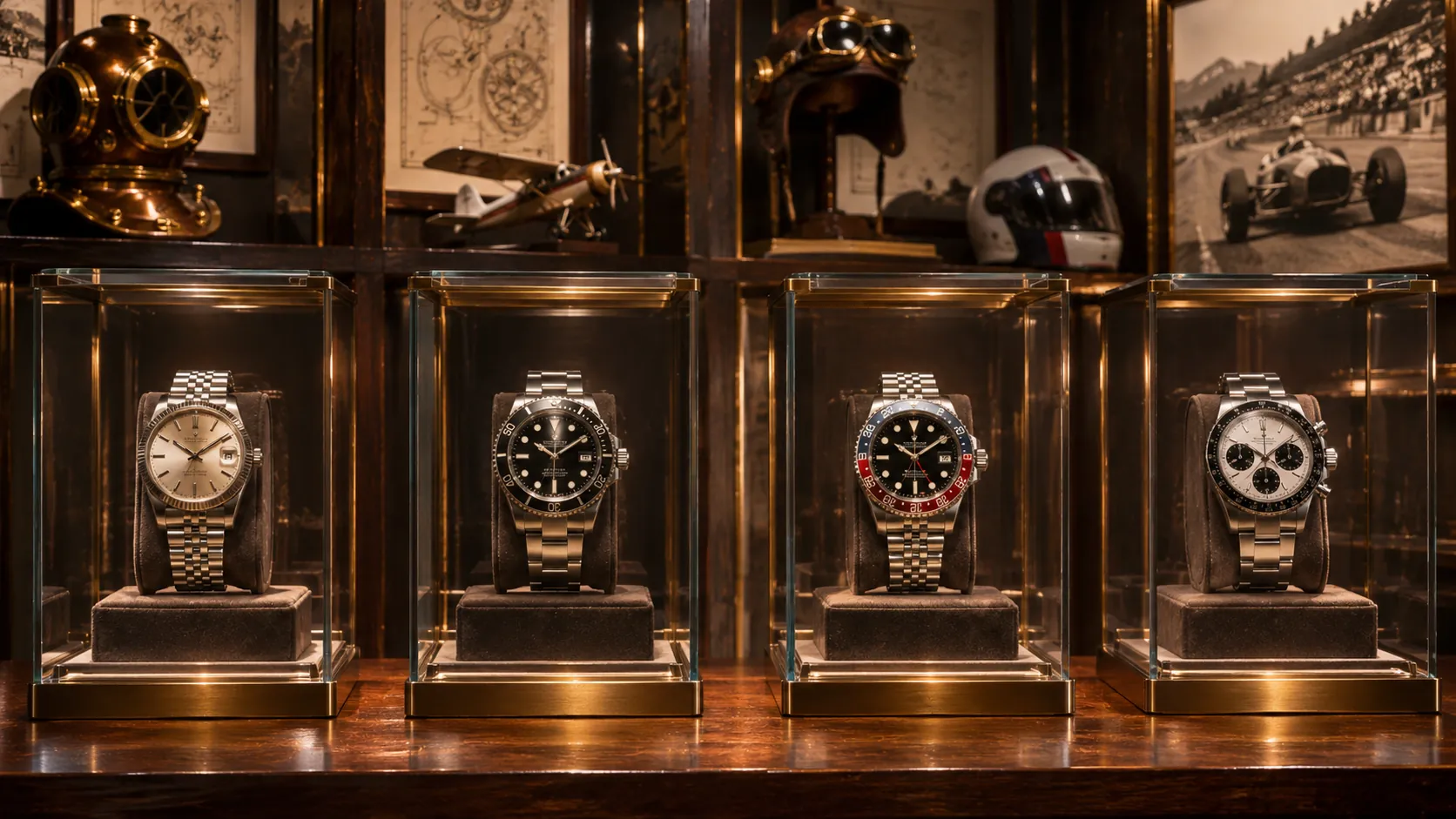
Then came the icons, one per decade, each solving a real problem:
| Year | Watch | The Problem It Solved |
|---|---|---|
| 1945 | Datejust | The date, changing itself at midnight, the first ever |
| 1953 | Submariner | Diving, waterproof to 100 meters |
| 1955 | GMT-Master | Two time zones, built for Pan Am pilots |
| 1956 | Day-Date | The day spelled in full, soon nicknamed the President |
| 1963 | Cosmograph Daytona | Timing motor races, lap by lap |
| 1967 | Sea-Dweller | Saturation diving, with its helium escape valve |
Look at that table again. Not one of these watches was designed to be pretty. Each was built to do a job, and the beauty followed the function. That is the entire Rolex aesthetic in one sentence, and it is why a 1953 Submariner still looks correct today. Our own dive into the Rolex Submariner vs Omega Seamaster question shows the argument is still raging seventy years later.
Everest and the Bottom of the Sea
Wilsdorf understood that a watch proven at the extremes was proven everywhere.
In 1953, Rolex watches rode to the top of the world on the Hillary and Norgay Everest expedition, the lineage that became the Explorer. In 1960, the bathyscaphe Trieste descended 10,916 meters into the Mariana Trench, the deepest point on earth, with an experimental Rolex Deep Sea Special strapped to its outside hull. It surfaced working. Rolex celebrated with a telegram: happy to announce your watch as precise at 11,000 meters down as on surface.
No human would ever dive that deep with a watch on their wrist. That was never the point. The point was margin, the promise that your watch’s abilities so far exceed your life that you never have to think about it again. Excess capability as peace of mind: it is the same philosophy that puts a GMT on a traveler’s wrist, the philosophy behind cult favorites like the Rolex Batman.
The Company Nobody Owns
Here is the strangest and most important chapter of the Rolex story, and the one most people never hear.
Hans Wilsdorf had no children. His wife died in 1944, and the following year he created a foundation. When he died in 1960, he left the entire company to it. Today the Hans Wilsdorf Foundation, a charitable trust under Swiss law, owns Rolex completely. There are no shareholders to satisfy, no heirs to divide the spoils, no boardroom pressure to chase a trend or sell to a conglomerate. Profits are reinvested, and large sums flow quietly to charity in Geneva.
Think about what that structure buys. When the market zigs, Rolex does not have to zag. It can hold production while rivals discount. It can spend a decade developing an escapement. It can wait. In an industry of quarterly nerves, the patient player wins, and Rolex is patience made corporate. It is a structure few houses share, as readers of the Hermès story will recognize, where family ownership plays the same long game.
Surviving the Quartz Storm
Every watch story has a winter, and Rolex’s came on batteries.
In the 1970s, cheap quartz movements from Japan collapsed the Swiss industry. Half of it vanished: brands died, towns emptied, a craft four centuries old seemed finished. Rolex dipped a toe into quartz itself, then made the decision that secured its future. It doubled down on the mechanical watch, not as a timekeeping device, which quartz had already won, but as an object of permanence, craft and meaning.
The logic was icy. If a $50 quartz watch tells better time, then a mechanical watch must be about something else entirely. So Rolex made the something else: heritage, durability, the crown on the dial. When the world swung back to mechanical luxury in the 1990s, Rolex was standing exactly where it had always stood, and everyone else had to climb back. For a sense of what separated the survivors from the casualties, our explainer on automatic vs quartz watch differences covers the ground, and the cautionary tale of whether fashion watches hold value shows what the quartz era really cost.
The Modern Crown
The 21st century Rolex is a study in controlled aggression.
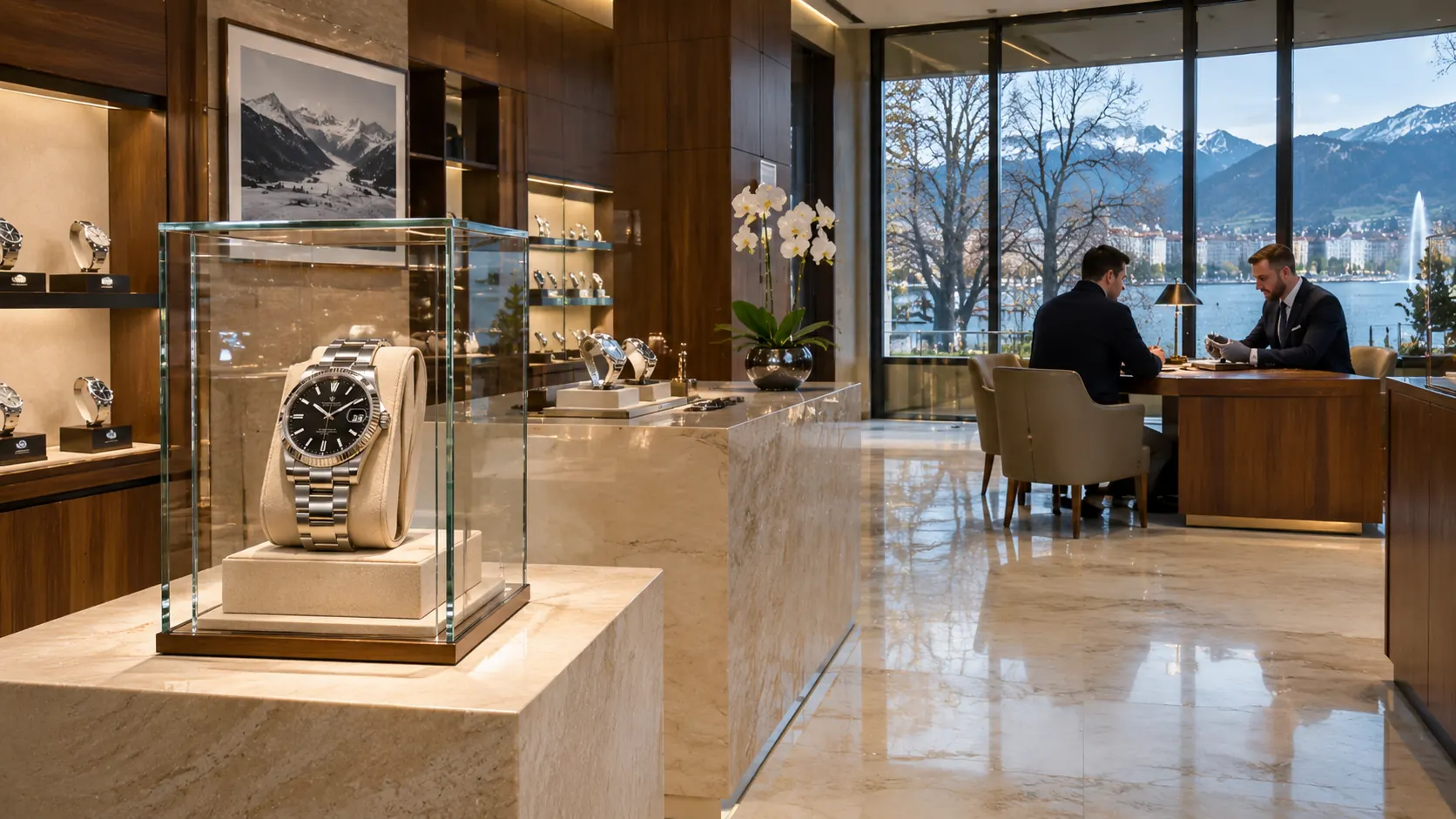
Under chief executive Jean-Frédéric Dufour, who arrived in 2015, the brand has tightened every screw: production now hovers around 1.15 million watches a year, deliberately below demand. In 2022 it launched a certified pre owned program, blessing the secondhand market it once ignored. In 2023 it acquired Bucherer, the vast European retailer, after its owner died without heirs, quietly taking control of its own shop windows. The same year it introduced the elegant 1908 line, and in April 2025 came the Land-Dweller, the first entirely new model family in more than a decade, built around an all new escapement architecture.
The results read like fantasy. Morgan Stanley estimates Rolex sales topped CHF 11 billion for the first time in 2025, an implied retail value of about CHF 16 billion, roughly a third of the entire Swiss watch industry from a single brand. Its estimated retail value now rivals the Apple Watch, a product that sells tens of millions of units a year. Rolex does it with about 1,360 points of sale and waiting lists that function as the most elegant marketing ever devised: the thing you cannot simply buy.
Rolex ranks first in our 25 luxury watch brands ranked and anchors our best luxury watches for men guide for the same reason it has since 1927: proof over promise.
Rolex by the Numbers
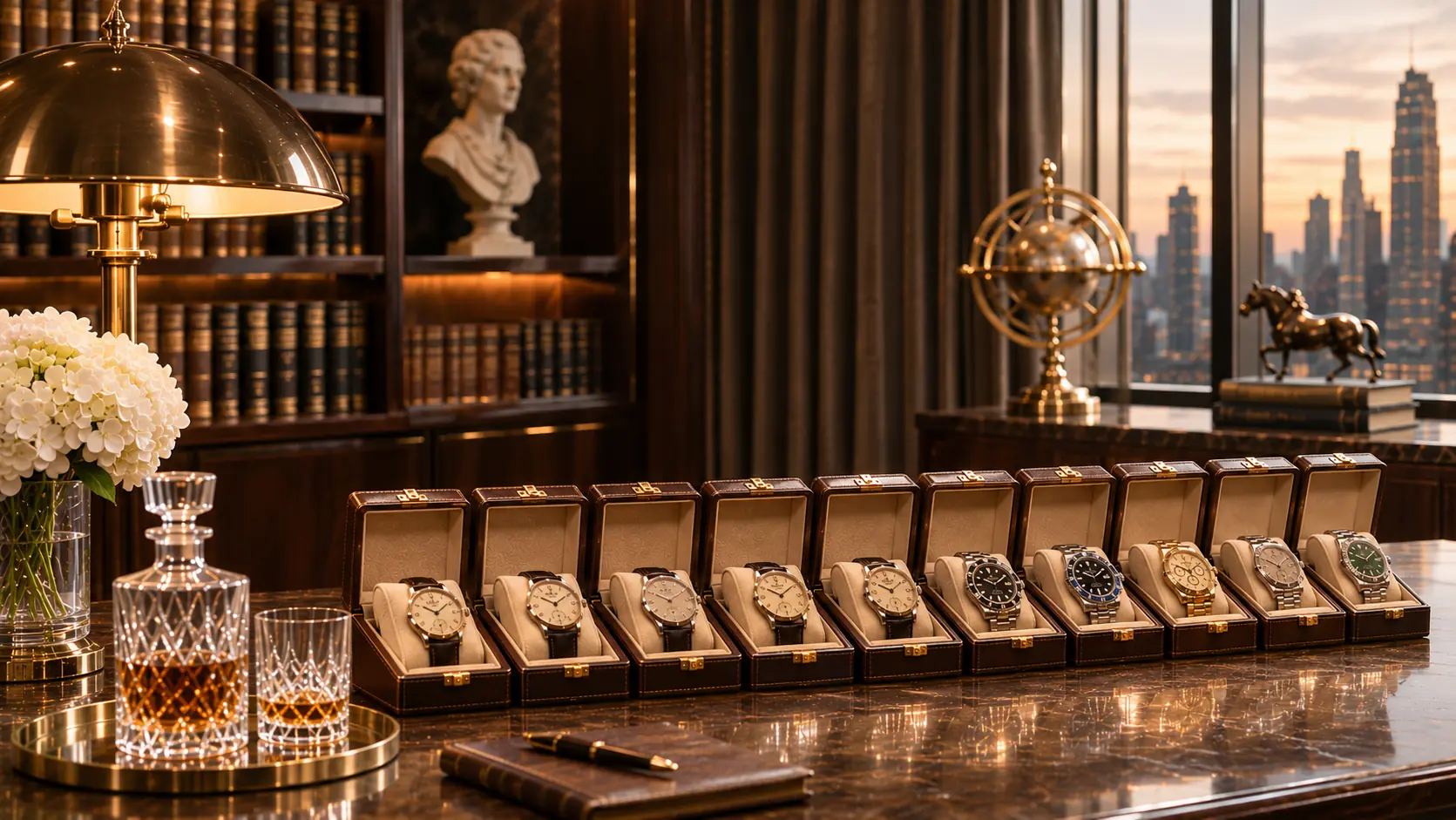
1905: The year Hans Wilsdorf, 24 and orphaned at 12, founded the company in London.
1908: The name, whispered, he claimed, by a genie on a Cheapside omnibus.
1926: The Oyster, the first waterproof wristwatch case.
10 hours: Mercedes Gleitze’s Channel swim in 1927, watch ticking at the end.
10,916 meters: The depth the Deep Sea Special survived in 1960.
1.15 million: Estimated watches produced in 2025.
CHF 11 billion: Estimated 2025 sales, a first in company history.
33 percent: Rolex’s estimated share of the entire Swiss watch market.
0: The number of shareholders the company answers to.
Frequently Asked Questions
Who founded Rolex and when?
Hans Wilsdorf founded Rolex’s parent company in London in 1905, at age 24, with his brother in law Alfred Davis. Orphaned at twelve, Wilsdorf bet his career on the wristwatch when the world still carried pocket watches, and registered the Rolex name in 1908.
Why is it called Rolex?
Wilsdorf wanted a short name that was easy to pronounce in any language and elegant on a watch dial. After a hundred failed combinations, he claimed the word Rolex came to him one morning in 1908 while riding a horse drawn omnibus through Cheapside, London.
Who owns Rolex today?
Rolex is wholly owned by the Hans Wilsdorf Foundation, a private charitable trust under Swiss law, created by the founder in 1945 and heir to the company since his death in 1960. It has no shareholders and no family owners, and donates substantial sums to charity.
What was the first waterproof watch?
The Rolex Oyster of 1926 is recognized as the first genuinely waterproof and dustproof wristwatch. Rolex proved it in 1927 when swimmer Mercedes Gleitze wore one during her ten hour English Channel crossing, then announced the result with a famous front page newspaper advertisement.
How many watches does Rolex make a year?
Rolex is estimated to produce around 1.15 million watches annually, based on 2025 Morgan Stanley and LuxeConsult estimates. The company famously keeps supply below demand, which is why authorized dealers maintain waiting lists for popular models like the Submariner, Daytona and GMT-Master.
Is Rolex a good investment?
Rolex watches hold value better than almost any luxury good, and sought after steel models have historically traded above retail on the secondary market, though prices correct like any market. Buy a Rolex first to wear and enjoy for decades; treat any appreciation as a bonus, not a plan.
The Bottom Line
Rolex won by refusing to play everyone else’s game.
While rivals chased fashion, it perfected one formula: a waterproof, self winding, precise watch, proven at the extremes, sold with genius, and improved by millimeters for a century. While rivals answered to shareholders, a foundation let it think in generations. While rivals flooded the market, it built waiting lists and called them patience.
An orphan with a five letter word built the one object that means the same thing in Tokyo, Lagos, São Paulo and Geneva: made it. A hundred and twenty years later, the crown still does not follow the market. The market follows the crown.