Every luxury house sells a dream. The Prada Story begins with a question: What is beautiful? What is taste? Why should a backpack made of industrial nylon cost more than a suitcase made of leather?
Prada began in 1913 as a leather goods shop in Milan’s Galleria Vittorio Emanuele II and became the most intellectual house in fashion, built by a communist feminist with a PhD who never wanted the job, and by the industrialist husband who turned her ideas into a €5.7 billion empire that now owns Versace.
This is the story of how a family shop became the house that taught luxury to think.
The Shop in the Glass Arcade
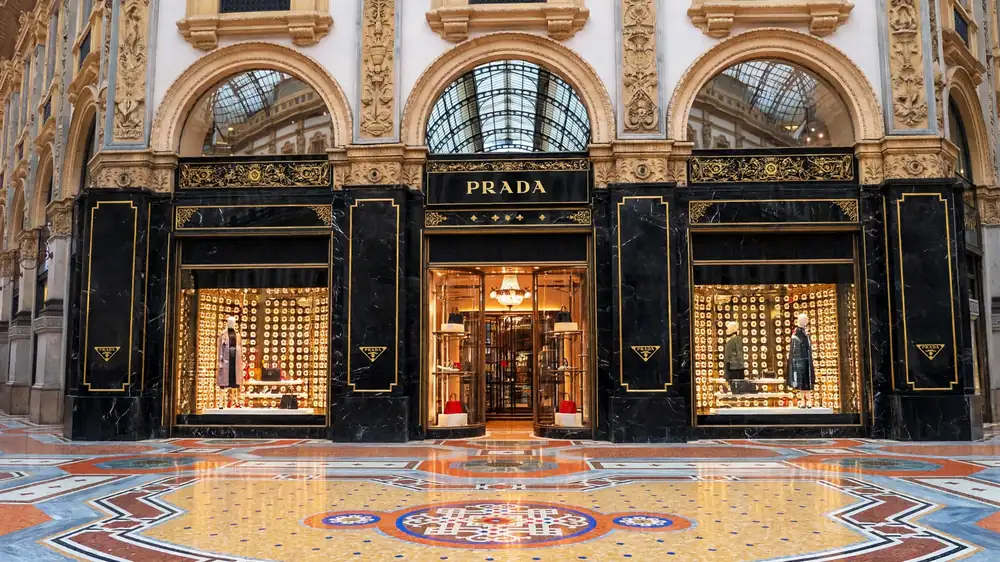
In 1913, two brothers, Mario and Martino Prada, opened Fratelli Prada inside the Galleria Vittorio Emanuele II, the glass roofed arcade at the heart of Milan that was already the city’s most elegant address. They sold trunks, handbags and travel accessories, many imported from England, to clients who traveled first class or not at all.
Business was good enough that in 1919 the house was appointed official supplier to the Italian royal family. That warrant gave Prada the right to use the House of Savoy’s coat of arms and knotted rope in its logo, and if you look at the triangle plaque on a Prada bag today, that royal knot is still hiding inside it.
Mario believed the business was no place for women, and in the oldest family joke in fashion, his son wanted nothing to do with it. So the shop passed to his daughter Luisa, who ran it quietly for decades, and then to Luisa’s daughter, a young woman named Miuccia. The man who banned women from the business had built one that would be defined by two of them.
The Granddaughter Who Did Not Want the Job
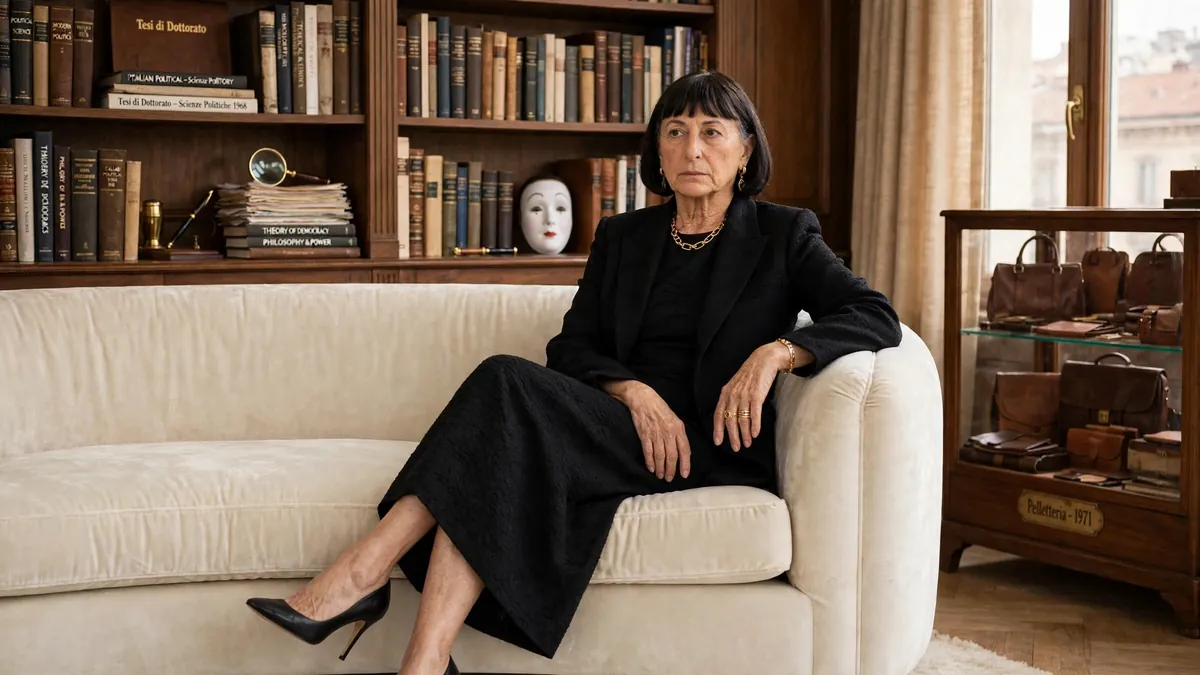
Miuccia Prada was the least likely fashion designer in Milan.
She earned a doctorate in political science, trained for five years as a mime at the Piccolo Teatro, marched with the communist party and wore Yves Saint Laurent to the protests. She has said she felt guilty for years about entering fashion at all, because she considered it a silly profession for a serious person.
In 1970 she drifted into the family shop anyway, and by 1978 the shop was hers. What she brought was not sketching skill. It was a mind trained to argue, to question and to notice what everyone else had stopped seeing. Prada’s entire future would grow from that mind.
The Argument at the Trade Fair
In 1977, at a leather goods fair, Miuccia met a Tuscan manufacturer named Patrizio Bertelli. The meeting was not romantic. His factories made bags; her shop was selling copies of them. He confronted her about it, and instead of a lawsuit, they started a conversation that has now lasted nearly fifty years.
They became partners in business and then in life, and the partnership is the real engine of the Prada story. She supplied the ideas, often strange, often years ahead of the market. He built the factories, the stores and the discipline to give those ideas time to find their audience. Asked why it worked, Bertelli once said they never worked to become rich or famous, only for the pleasure of doing something interesting and constructive.
Every great house has this pairing somewhere in its foundation, as we saw in the Hermès story, where craft met commerce across generations. At Prada the pairing is a marriage, and the debate never stops. Lorenzo Bertelli, their son, says the family method is simply discussion, on the belief that different opinions produce better results.
The Backpack That Broke the Rules
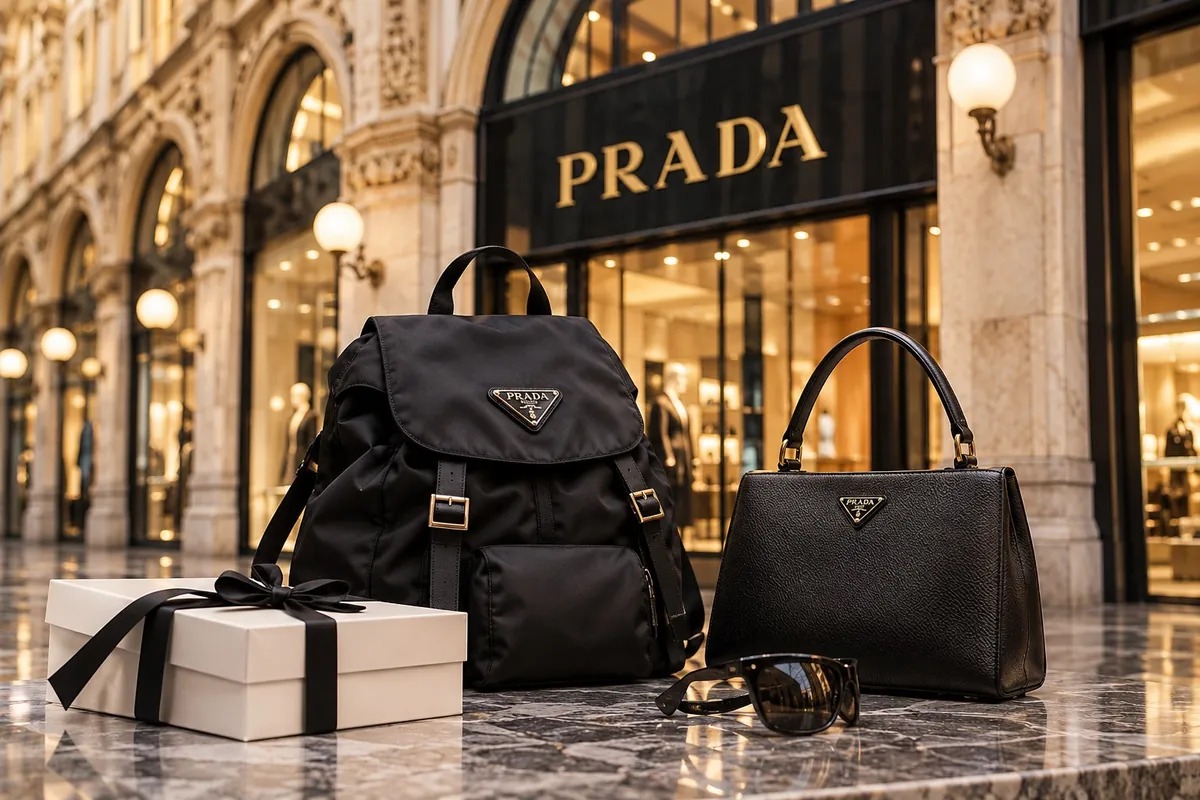
In 1984 Miuccia Prada did something the luxury industry considered insane. She took Pocono, a black industrial nylon used for military tents and parachutes, and made it into a backpack. No leather, no logo plate worth stealing, no heritage. Just a plain black triangle and perfect utility.
The fashion world shrugged. The Vela backpack was not an instant hit. But editors and students and cool girls found it, and slowly it became the anti status status symbol: a bag that said you were too clever to need a bag that said anything. It made Prada famous, and it announced the house’s lifelong thesis, that luxury is not a material but an idea.
The idea aged so well that in 2019 Prada relaunched the fabric as Re-Nylon, made entirely from recycled ocean plastic and fishing nets. The rule breaking fabric had become heritage, so Prada broke the rule again.
Ugly Chic: The Runway Years
In 1988 Prada showed its first women’s ready to wear collection in Milan, and the reviews invented a phrase the house has worn with pride ever since: ugly chic.
While the late eighties worshipped shoulder pads and gold, Miuccia sent out drab colors, odd proportions and fabrics no luxury house would touch. She called her approach a fascination with bad taste treated seriously. Critics did not know whether to laugh. By the mid nineties they were copying her, and Prada minimalism, all clean lines and strange beauty, had become the defining look of the decade.
This is what people mean when they call Prada intellectual fashion. The clothes are arguments. A collection might ask why ugly cannot be beautiful, or why a librarian’s cardigan cannot be the sexiest thing in the room. You do not just wear Prada. You take a position.
Miu Miu: The Rebellious Little Sister
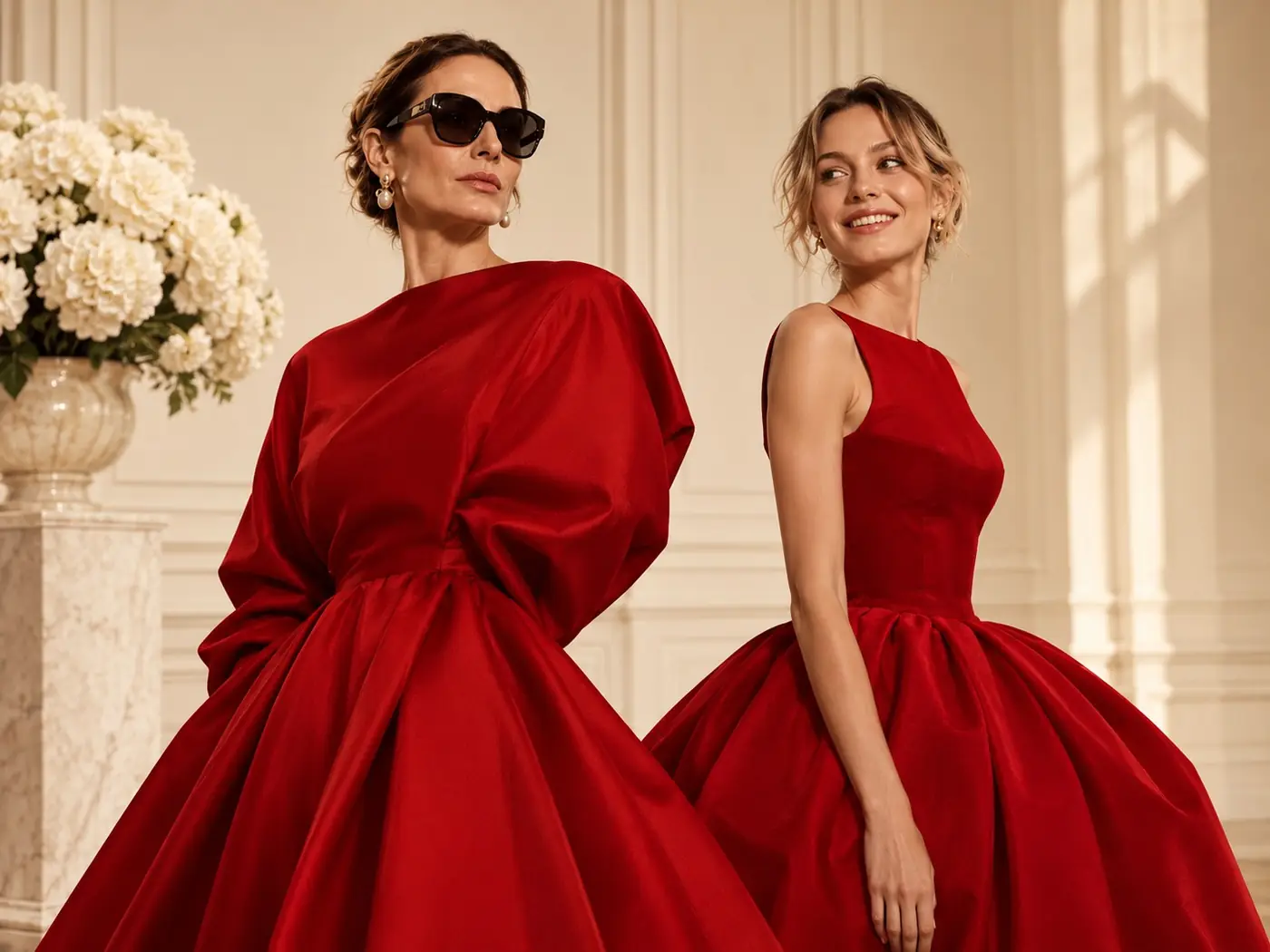
In 1993, the same year she launched menswear and her art foundation, Miuccia created a second brand and named it after her own childhood nickname: Miu Miu.
If Prada is the serious older sibling, Miu Miu is the one who stays out too late and says the thing everyone was thinking. Shown in Paris since 2006, it grew for years in Prada’s shadow, and then, in the 2020s, it exploded. The micro miniskirt of 2022 broke the internet. Retail sales jumped 93 percent in 2024 and another 35 percent in 2025, making Miu Miu the fastest growing major name in luxury while much of the industry shrank.
Today Miu Miu brings in roughly a quarter of the group’s sales and sits at the top of every fashion heat index. The little sister grew up, and she is paying the family bills. Prada now ranks alongside the giants in any honest list of the biggest luxury fashion houses, and Miu Miu is the reason the ranking keeps climbing.
The Empire That Almost Ate Itself
The Prada story has a dark middle chapter, and the family tells it honestly.
In 1999, drunk on success, the group went shopping: Church’s shoes, Jil Sander, Helmut Lang, and a stake in Fendi bought alongside LVMH. The dream was an Italian luxury group to rival the French. The reality was debt, culture clashes and two brilliant brands, Jil Sander and Helmut Lang, that suffocated under new ownership and were sold off by 2006. Miuccia’s own verdict: the purchases came too early, before anyone had learned how such partnerships work.
Then came the slump. In the mid 2010s the group overexpanded in China, raised prices too fast and missed the sneaker wave. Sales and profit fell for years. The turnaround began in 2017, led by the family itself: products renewed, wholesale cut, digital rebuilt, seasonal markdowns ended in 2019. A rally driver turned philosophy graduate named Lorenzo Bertelli, the couple’s elder son, joined that year to fix the company’s weakest point, digital communication, and his father later called him a key element of the recovery.
Culture Is the Marketing
Other houses buy advertising. Prada builds cathedrals of curiosity.
The Fondazione Prada, created in 1993, runs serious contemporary art exhibitions in a gold leafed Milan complex designed by Rem Koolhaas. The Epicenter stores in New York, Tokyo and Los Angeles turned shopping into architecture. The Luna Rossa sailing team, founded in 1997 from Bertelli’s personal obsession, has chased the America’s Cup for a quarter century. The group owns a Milanese pastry institution, Marchesi, and in 2024 it helped design NASA’s lunar spacesuit for the Artemis III mission. Yes, the spacesuit.
And then there is the film. The Devil Wears Prada, the 2006 movie that borrowed the name, carried the brand into places no campaign could buy, and its 2026 sequel did it all over again. Asked about the sequel, Miuccia said she had not seen it. Honestly, that might be the most Prada answer ever given.
The Handover
The hardest chapter of any family story is the one about letting go, and Prada is writing it in public, carefully and early.
In 2020 Raf Simons, one of the most respected designers alive, joined Miuccia as co creative director of the Prada brand, an unprecedented arrangement between two giants. Their working rule, in her words: if somebody hates it, we do not do it. In 2023 Andrea Guerra became the first chief executive from outside the family, a deliberate bridge between generations. In 2024 Miuccia transferred ownership of almost all her shares to her two sons while keeping the voting rights, separating the inheritance from the control.
Lorenzo Bertelli, now the group’s chief marketing officer, head of sustainability and the named future leader, will take the top job when the time is right. No drama, no guessing games. Among the great Italian luxury fashion houses, this is what a planned succession looks like.
Buying Versace: The Biggest Gamble Yet
In April 2025 Prada agreed to buy Versace from Capri Holdings for about $1.4 billion, completing the deal on December 2, 2025. It is the largest acquisition in the group’s history, and it answers the ghost of 1999.
This time the conditions are different. The group is rich and growing, with twenty consecutive quarters of growth behind it. Versace no longer depends on its founding designer, so creative leadership was the buyer’s to choose. Prada picked Pieter Mulier, the former Alaïa creative director and a longtime Raf Simons collaborator, who took over on July 1, 2026, with Lorenzo Bertelli installed as Versace’s executive chairman. The son gets a famous, wounded business of his own to repair, in public, exactly as he once repaired Miu Miu.
The cost is visible already. First half 2026 revenue rose 16 percent, yet net income fell 15 percent as the group digests loss making Versace and pulls it out of discount channels. The family says it is neither in a hurry nor anxious. Italy never produced a luxury group on the French scale. Prada plus Versace is the closest it has ever come, and the rivalry at the top, the subject of our Gucci vs Prada vs Louis Vuitton comparison, just got a lot more interesting.
Prada by the Numbers
1913: The year Mario and Martino Prada opened their shop in the Galleria.
1919: The royal warrant that put the Savoy knot in the logo.
1984: The nylon backpack that turned an idea into an empire.
€5.7 billion: The group’s total revenue in 2025.
93 percent: Miu Miu’s retail growth in 2024, followed by 35 percent in 2025.
20: Consecutive quarters of group growth through the end of 2025.
25: Industrial facilities owned by the group, 23 of them in Italy.
17,901: Employees worldwide.
$1.4 billion: The price of bringing Versace home to Italian ownership.
80 percent: The family’s approximate stake in the company they refuse to sell.
Frequently Asked Questions
When was Prada founded and by whom?
Prada was founded in 1913 in Milan by brothers Mario and Martino Prada as Fratelli Prada, a luxury leather goods shop in the Galleria Vittorio Emanuele II. In 1919 it became an official supplier to the Italian royal family, whose coat of arms still appears inside the brand’s triangle logo.
Why is Prada famous for nylon?
In 1984 Miuccia Prada turned black industrial nylon, a military fabric, into the Vela backpack, breaking every rule about luxury materials. It became an icon of understated intelligence. In 2019 the house reinvented it as Re-Nylon, made entirely from recycled ocean plastic and discarded fishing nets.
Who designs Prada now?
Prada is designed jointly by Miuccia Prada and Raf Simons, who became co creative directors in 2020 with equal responsibility for the collections. Miuccia also designs Miu Miu alone. Their working rule, in her words, is that if either of them hates something, it does not get made.
What is the difference between Prada and Miu Miu?
Both were created by Miuccia Prada, but Prada is the intellectual main line shown in Milan, while Miu Miu, named after her childhood nickname and shown in Paris, is younger, bolder and more impulsive. Miu Miu grew 93 percent in 2024 and now generates about a quarter of group sales.
Did Prada buy Versace?
Yes. Prada Group agreed in April 2025 to buy Versace from Capri Holdings for about $1.4 billion and completed the purchase on December 2, 2025. Pieter Mulier became creative director in July 2026, with Lorenzo Bertelli as executive chairman leading the turnaround of the brand.
Is Prada still family owned?
Yes. The Prada and Bertelli family controls roughly 80 percent of the company through Prada Holding, with the rest listed in Hong Kong since 2011. Miuccia Prada transferred most of her shares to her sons in 2024 while keeping voting rights, and Lorenzo Bertelli is the named future leader.
The Bottom Line
Prada is proof that the strangest ideas, held long enough, become the strongest brands.
A shop that banned women was saved by two of them. A communist who felt guilty about fashion became its greatest thinker. A tent fabric became an icon, a little sister became a growth engine, and the family that once nearly bankrupted itself buying brands just spent $1.4 billion on the boldest bet in Italian fashion.
The triangle on the bag still carries a royal knot from 1919. But the real emblem of Prada is that question it never stops asking: what is luxury, really? For the full map of where the house stands today, explore our guides to luxury designer brands, Italian luxury fashion brands and the handbag brands worth the investment. One hundred and thirteen years in, Prada is still arguing. That is exactly why it still matters.