There’s a particular kind of magic that makes the World’s Most Beautiful Cafés stand apart, a magic only a grand café can perform. You walk in off an ordinary street, order something that costs a little more than it should, and for an hour you get to sit inside three hundred years of history while a waiter in a waistcoat treats your coffee like a state occasion. Nobody is rushing you. That’s the entire point, and in a world of paper cups and laptop tables, it has become one of the last true luxuries.
The grand café was invented for exactly this purpose: to give ordinary days a marble stage. Some of the rooms on this list have been pouring coffee since before Mozart was born. Others are barely a century old. All of them are worth planning a trip around, or at least a very long detour.
Here are the fifteen most beautiful cafés in the world, in the order we’d visit them, with what to order when you get there.
1. Caffè Florian, Venice (1720)
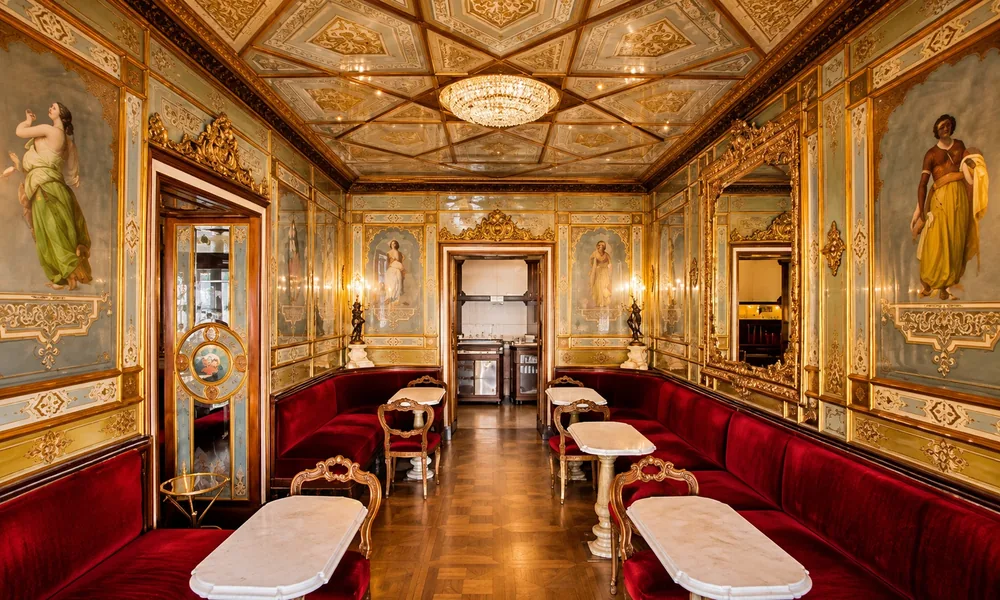
The oldest café in Italy and, by most reckonings, the oldest in the world still serving. Florian opened on St Mark’s Square in 1720, and its series of small, jewel box rooms, all mirrors, frescoes and red velvet, have hosted everyone from Casanova to Byron to Proust. Coffee arrives on a silver tray, and when the orchestra plays on the terrace, the whole square becomes your drawing room.
Order: A caffè Florian (espresso with a whisper of cream) and the tiramisù. Sit outside once, at least, whatever the table surcharge. It’s the price of the piazza, and the piazza is worth it.
2. New York Café, Budapest (1894)
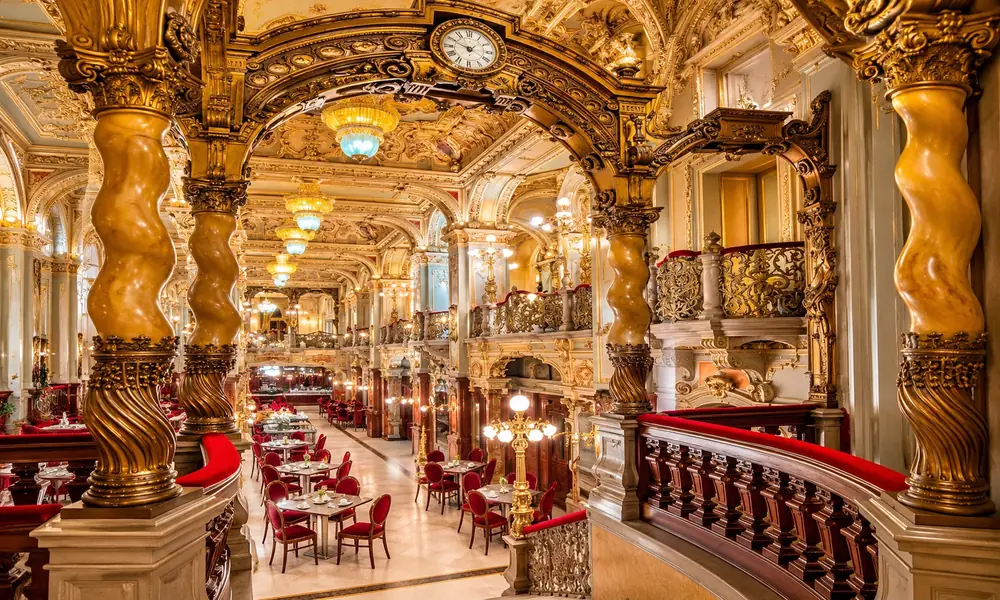
If Florian is the oldest, the New York Café is the most extravagant. Golden stucco, Murano chandeliers, marble columns and frescoed ceilings stacked across several galleries, it looks less like a café than a small opera house that happens to serve breakfast. In its early decades it was the headquarters of Hungarian literature; the editors of the great literary journals held court at its tables.
Order: The classic New York chocolate cake and a coffee with whipped cream. Go at opening time (8 am) to see the gilding in morning light without the queues. If Budapest is on your list, our things to do in Budapest guide maps the rest of the city around it.
3. Café Central, Vienna (1876)
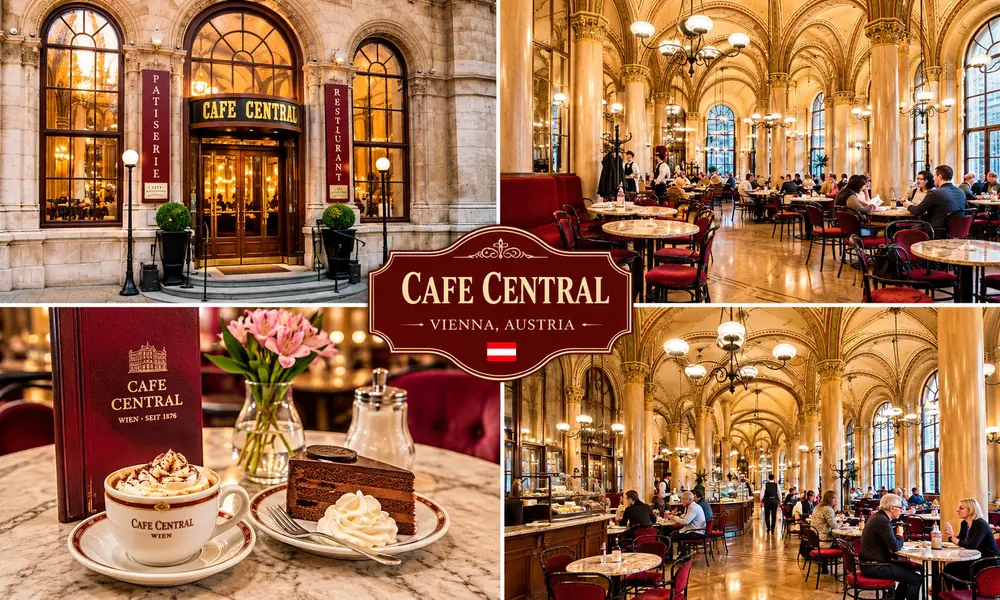
Vienna invented café culture as a philosophy, and Café Central is its cathedral. Under the vaulted ceilings of the Palais Ferstel, Trotsky, Freud, Lenin and Stefan Zweig all held regular tables, which may be the most intimidating seating chart in history. The piano plays in the afternoon, the cakes gleam behind glass, and time behaves differently here.
Order: Einspänner (black coffee with whipped cream, served in a glass) and a slice of Altenberg torte. Then do what the Viennese do: stay for two hours and one coffee. Nobody will say a word.
4. Café de Flore, Paris (1887)
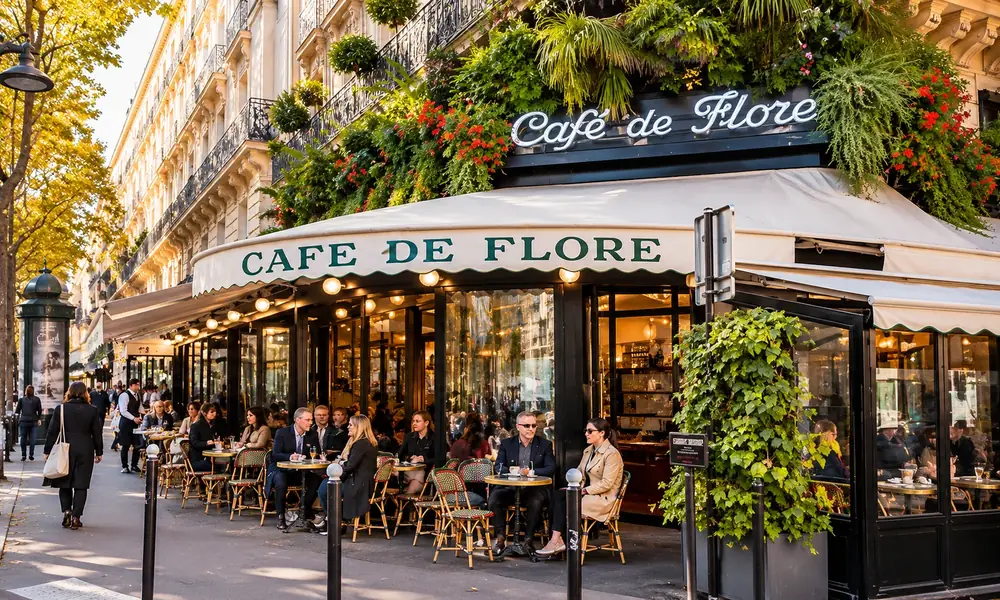
The Flore is less a café than an idea with a terrace. Sartre and de Beauvoir wrote here through the winters (the upstairs was warm), Picasso and Giacometti argued here, and the Saint-Germain publishing world still treats it as an unofficial office. The Art Deco interior is lovely, but the real show is the terrace facing the boulevard, the best people watching seat in Paris.
Order: Hot chocolate and a croque monsieur, at the terrace, mid morning. Our Paris in spring guide shows you the neighbourhood at its best.
5. Café Imperial, Prague (1914)
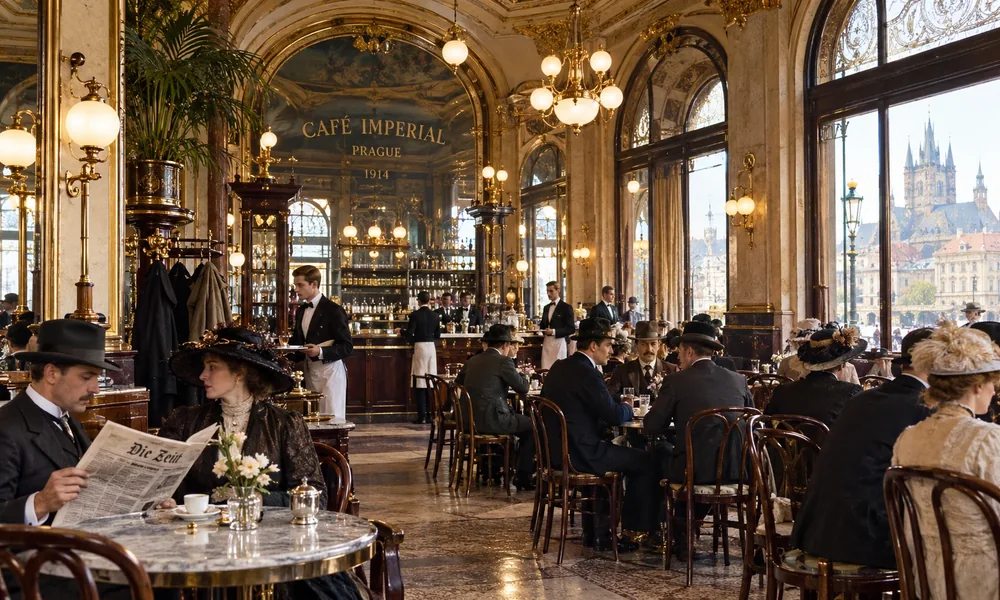
A million ceramic tiles. That’s not a figure of speech: the walls, columns and vaulted ceiling of Café Imperial are covered in Art Nouveau majolica, mosaics of peacocks, florals and geometric patterns in jade, gold and cream, restored to glory in 2007 after decades of communist era neglect. It’s the most unexpectedly stunning room on this list, and the prices remain stubbornly Czech, which is to say, gentle.
Order: The traditional Czech breakfast or the Imperial cake. If you’re building a Prague itinerary, our things to do in Prague guide pairs well.
6. Café Tortoni, Buenos Aires (1858)
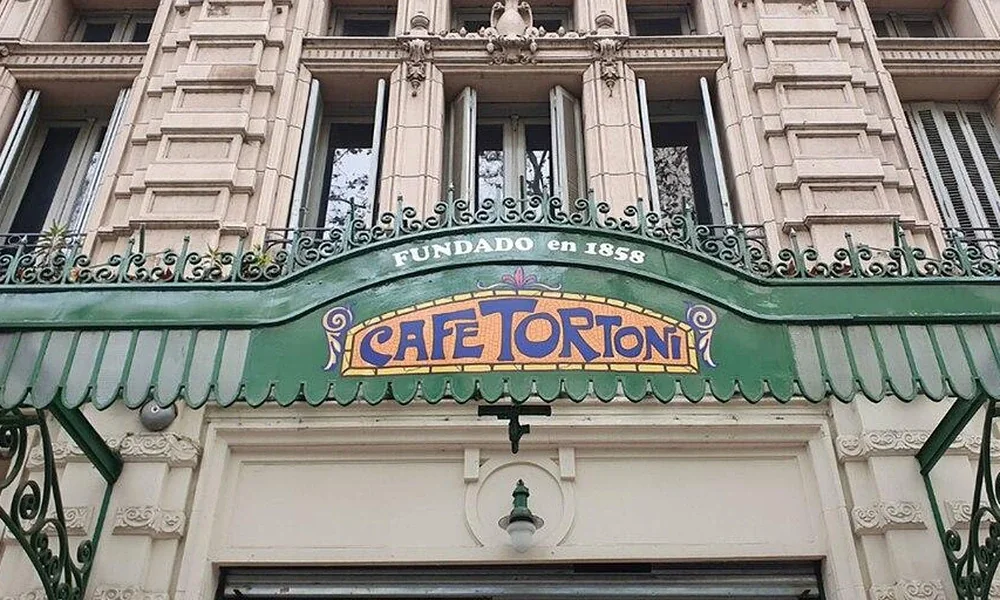
The oldest café in Argentina and the soul of Buenos Aires: stained glass, oak panelling, marble tables, and photographs of every tango legend who ever mattered. Borges wrote here. Gardel sang here. In the basement, a tiny theatre still stages tango shows most nights, which makes Tortoni the rare café where the culture isn’t just on the walls.
Order: Café con leche with medialunas (Argentine croissants), then book the evening tango in the basement.
7. Les Deux Magots, Paris (1885)
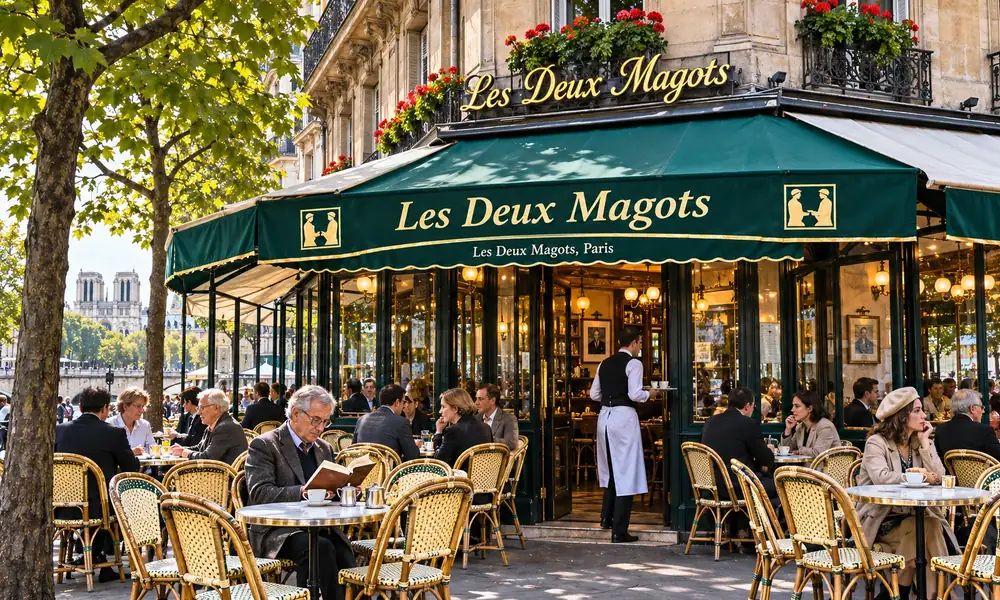
The Flore’s next door neighbour and eternal rival, named for the two Chinese figurines on its central pillar. Hemingway wrote parts of The Sun Also Rises here, and the annual Deux Magots literary prize has run since 1933. The eternal Parisian question, Flore or Deux Magots, has no correct answer, which is precisely why you should do both on the same morning.
Order: The old fashioned hot chocolate, thick enough to stand a spoon in, with a tartine.
8. Café Majestic, Porto (1921)
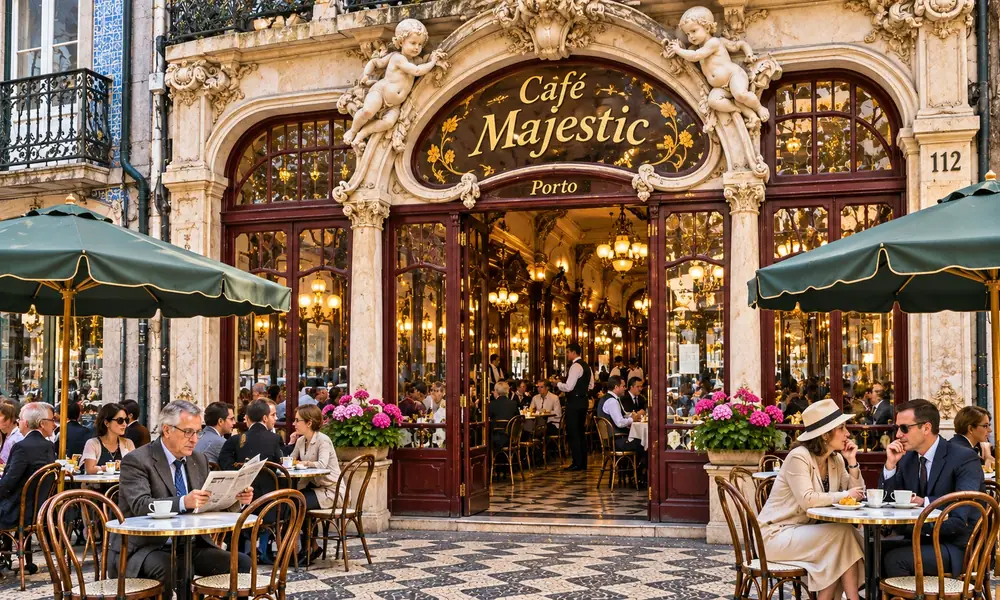
Porto’s Belle Époque masterpiece: curved mirrors, marble, leather banquettes and sculpted plasterwork that made it the salon of the city’s writers and politicians. J.K. Rowling, who lived in Porto in the early 1990s, drafted parts of Harry Potter at its tables, a fact the café has never been shy about mentioning. Fully restored in 1994 after years of decline, it now looks exactly as it did in its opening decade.
Order: A bica (Portuguese espresso) and a pastel de nata, taken slowly.
9. Caffè Greco, Rome (1760)
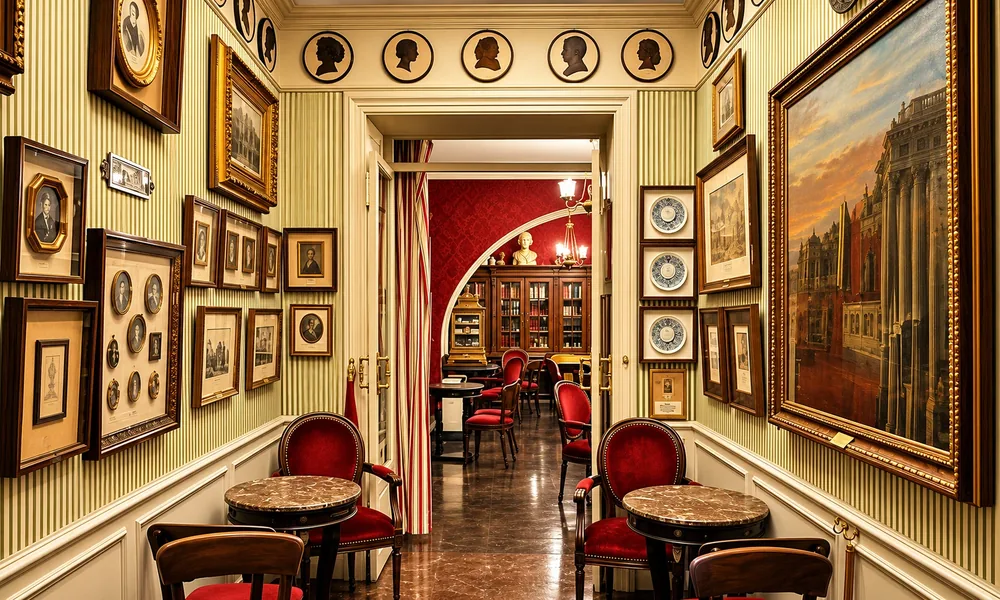
Rome’s oldest café hides on Via dei Condotti, the luxury shopping street at the foot of the Spanish Steps. Inside, it’s a long, intimate corridor of red and gold hung floor to ceiling with paintings, many by the artists who drank here: Goethe, Byron, Shelley, Wagner, Liszt. Hans Christian Andersen lived upstairs. It’s the most literary room in Italy.
Order: An espresso at the marble bar like a Roman (cheaper, faster), then ask to see the back rooms before you leave.
10. Demel, Vienna (1786)
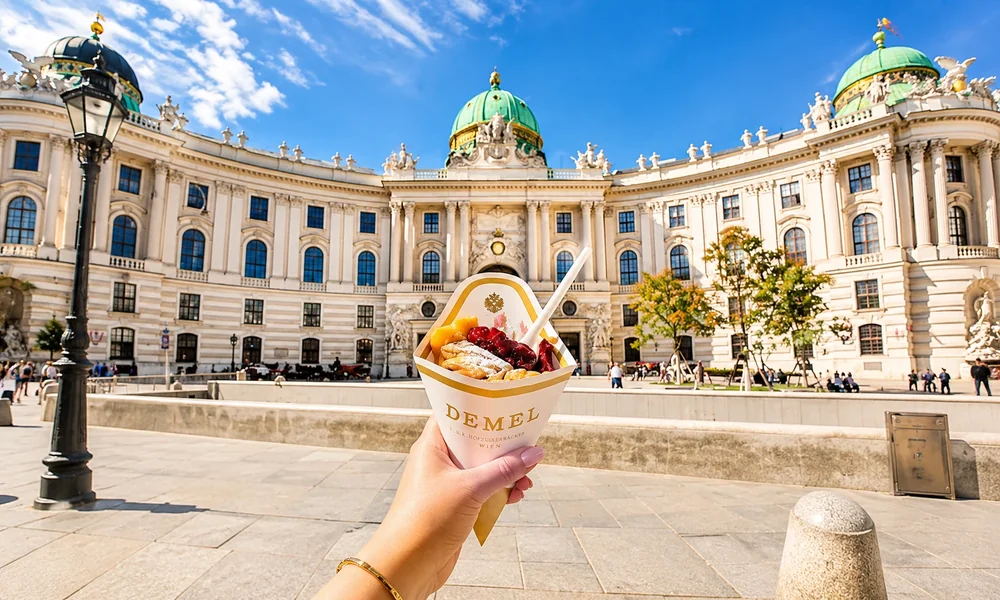
The confectioner to the Habsburg court, and the loser of the most famous cake lawsuit in history: Demel fought Hotel Sacher for decades over who could call their chocolate torte the “original” Sachertorte. Demel lost the name but arguably kept the better argument, and its salons, all white, gold and crystal, remain the most elegant cake shop on earth. Watch the pastry chefs at work behind the glass.
Order: The Demel Sachertorte, obviously, with an Anna Demel Kaffee (orange liqueur, whipped cream). Rivalry demands a comparison visit to Café Sacher across town. Take sides.
11. Café Gerbeaud, Budapest (1858)
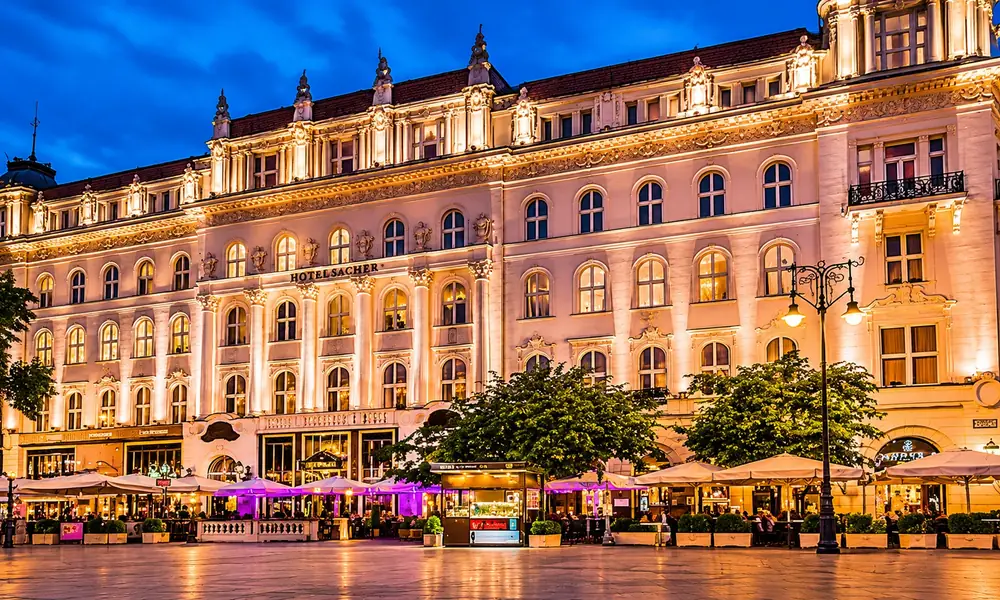
Budapest’s second grand café and its sweetest: Gerbeaud has been the city’s pastry temple since 1858, all marble, cherry wood and chandeliers on Vörösmarty Square. The zserbó, a layered apricot and walnut cake created here, is practically a national monument. In summer the terrace is the finest outdoor seat in the city.
Order: Zserbó and the Gerbeaud coffee, which arrives with a small symphony of accompaniments.
12. Angelina, Paris (1903)
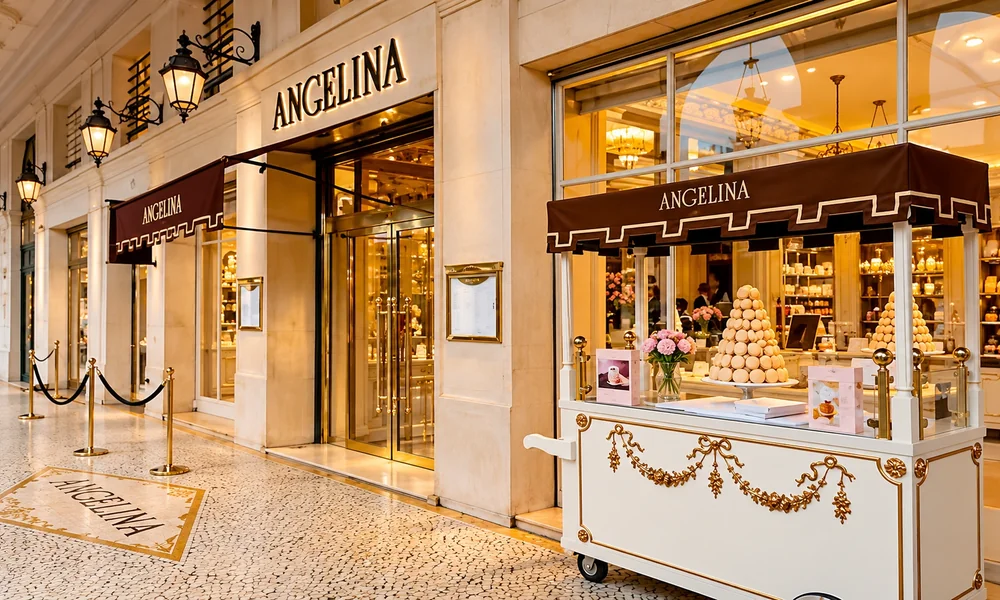
Riva Leman and her son opened this tea room near the Tuileries in 1903, and its two signatures have been untouchable ever since: the chocolat l’Africain, hot chocolate of near pudding density, and the Mont Blanc, a mound of chestnut cream and meringue that has launched a thousand diet postponements. The Belle Époque salon, all gilt and mirrors, stays busy from breakfast to close. Reservations help.
Order: L’Africain and a Mont Blanc. Share nothing. Order your own.
13. Café de la Paix, Paris (1862)
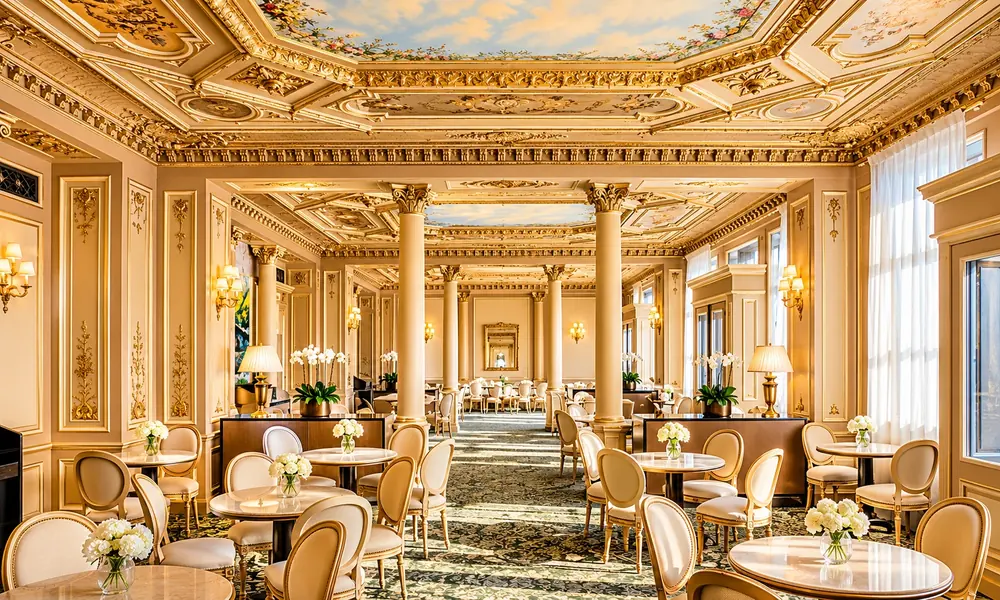
Charles Garnier designed the Opéra Garnier and then, directly across the square, this café, and it shows: the same opulent Napoleon III exuberance, gilded ceilings, frescoes, marble, in a room that has hosted everyone from Oscar Wilde to Marlene Dietrich. It sits inside the InterContinental, but locals claim it too, especially at breakfast before the opera district wakes up.
Order: Breakfast at the marble bar or an evening kir royale when the Opéra is lit up across the square.
14. Café Iruña, Pamplona (1888)
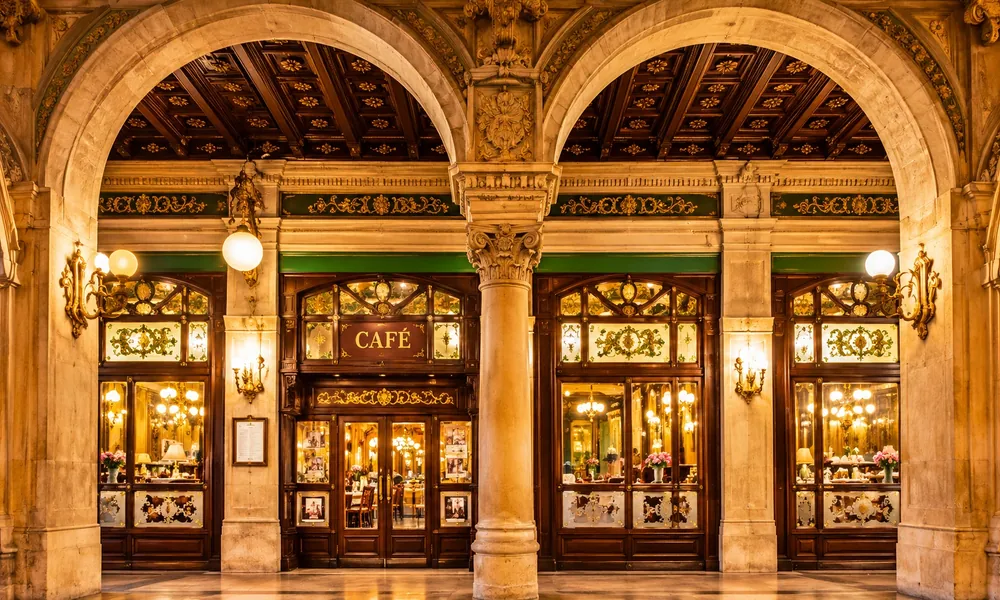
Hemingway’s café. He came to Pamplona for the San Fermín festival in 1923, fell for the city, and wrote much of The Sun Also Rises at the Iruña’s marble tables. The café has kept the Belle Époque room largely untouched, and in the corner you’ll find a life size statue of Ernest himself, perpetually leaning on the bar, one elbow down, watching the room he made famous.
Order: A café con leche in the morning, a glass of Navarra wine in the evening, and a toast to the man at the bar.
15. The Wolseley, London (2003)
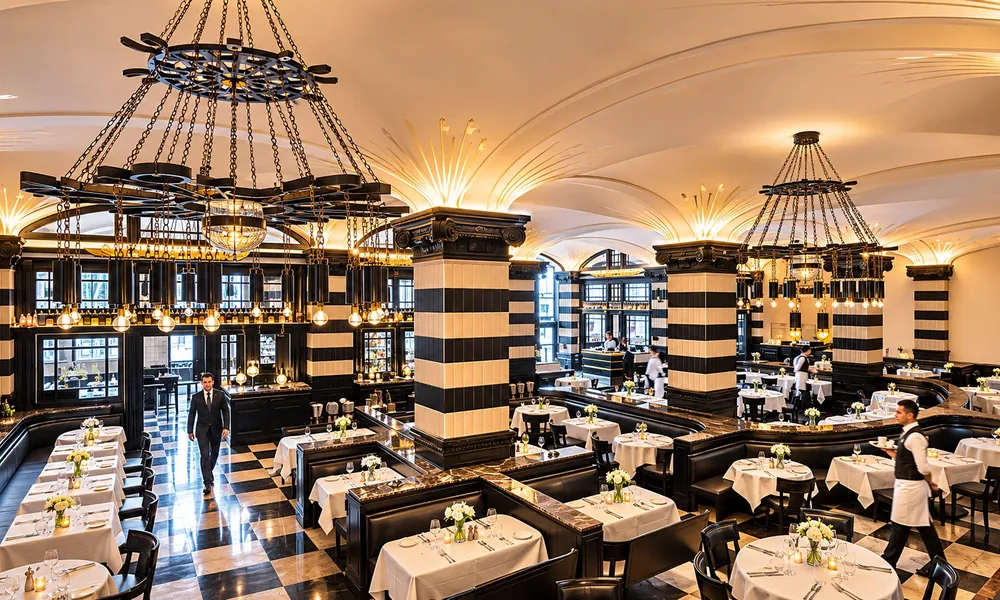
The youngest room on this list by a century, included because it proves the grand café isn’t dead. The Wolseley occupies a spectacular 1921 showroom built for Wolseley Motors, all black and gold lacquer, marble pillars and soaring arches, restored by David Collins Studio into what is simply London’s most beautiful breakfast room. Reservations are essential and worth the planning.
Order: The full breakfast or the Wiener schnitzel at lunch, and look up often. If you’re planning the stay around it, our best places to stay in London has you covered.
How to Do a Grand Café Properly
A few rules from years of practice.
Go at opening. These rooms belong to the first hour of the day: empty tables, morning light on the marble, waiters who still have time to talk.
Sit where the locals sit. Standing at the bar in Italy costs a third of the table price and teaches you more. In Vienna and Paris, the table is the whole experience, so take it and stay.
One order, two hours. The grand café is the last place on earth where lingering is the point. Bring a notebook. Some very good books have been started in these rooms.
Never rush the bill. Ask for it when you’re ready, not before. That’s not service failing; that’s service working.
And if this is your kind of travel, our fine dining trends coverage and guide to luxury travel in Europe are the natural next reads.
Frequently Asked Questions
What is the most beautiful café in the world?
Caffè Florian in Venice (1720) and the New York Café in Budapest (1894) compete for the title. Florian offers unmatched history and St Mark’s Square; the New York Café offers the most opulent interior ever built for coffee. Most travellers who see both give the visual crown to Budapest and the atmosphere crown to Venice.
What is the oldest café in the world?
Caffè Florian in Venice, opened in 1720 on St Mark’s Square, is the oldest café in continuous operation. Paris claims Le Procope (1686), but it now operates as a restaurant rather than a café, so the working café title belongs to Florian.
How much does coffee cost at the famous grand cafés?
Expect €8 to €15 for coffee at the famous rooms, and €15 to €25 with cake, more on Florian’s terrace when the orchestra plays. Standing at the bar in Italian cafés costs roughly a third of table service. You’re paying for the room, and the rooms are worth it.
Do you need reservations at grand cafés?
For most, no: walk ins work at Florian, Café Central, the Flore and Deux Magots, though expect queues at peak hours. Angelina Paris benefits from booking, and The Wolseley London effectively requires it. Early morning remains the reliable shortcut everywhere.
Which city has the best café culture?
Vienna, whose coffee house culture is listed by UNESCO as intangible cultural heritage, where lingering over one coffee for hours is a protected way of life. Paris runs a close second for terrace culture, and Budapest for sheer architectural splendour per cup.
The Bottom Line
A grand café is the most democratic luxury in the world. For the price of a coffee and a slice of cake, you get to borrow a palace for an hour, in the company of three centuries of writers, artists and lovers who did exactly the same.
Fifteen rooms, nine cities, one rule: never order it to go.