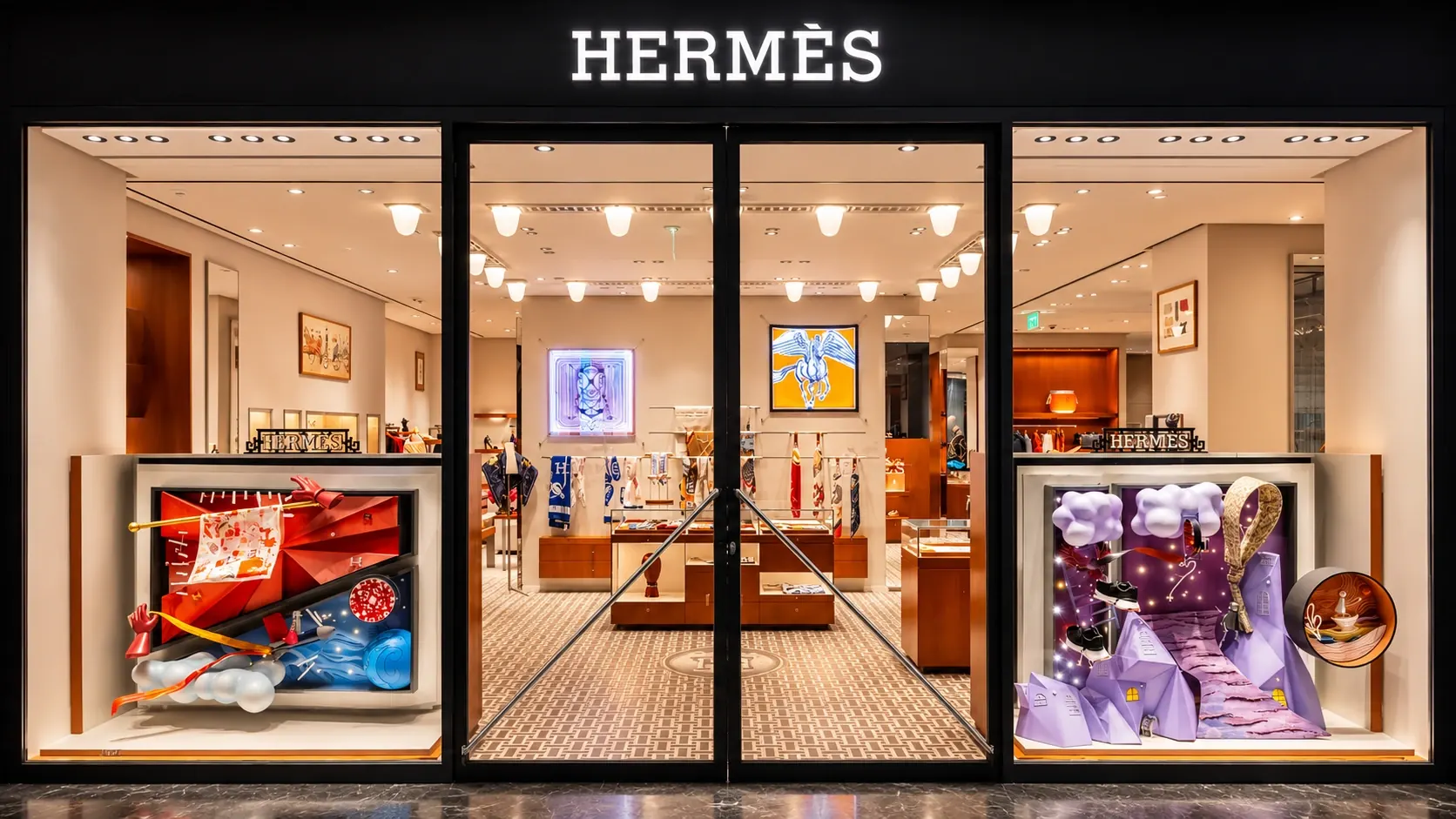
On April 15, 2025, something happened in Paris that the luxury industry had never seen. Hermès, the quietest, oldest, most stubbornly old-fashioned house in the business, overtook LVMH to become the world’s most valuable luxury company: €248.6 billion against €244.4 billion. No logo monogram plastered across every product. No aggressive expansion into hotels or yachts or cognac. Just leather, silk, and 188 years of refusing to hurry. The Hermès story is a remarkable example of how heritage, craftsmanship, and patience can build one of the world’s most valuable luxury brands.
The obvious question is the interesting one. How does a workshop that started out stitching bridles for carriage horses end up bigger than the greatest luxury conglomerate ever assembled?
The answer takes four generations, two world wars, one princess, one actress, one pop star, a zip fastener, and a siege. This is the Hermès story.
1837: The Harness Maker
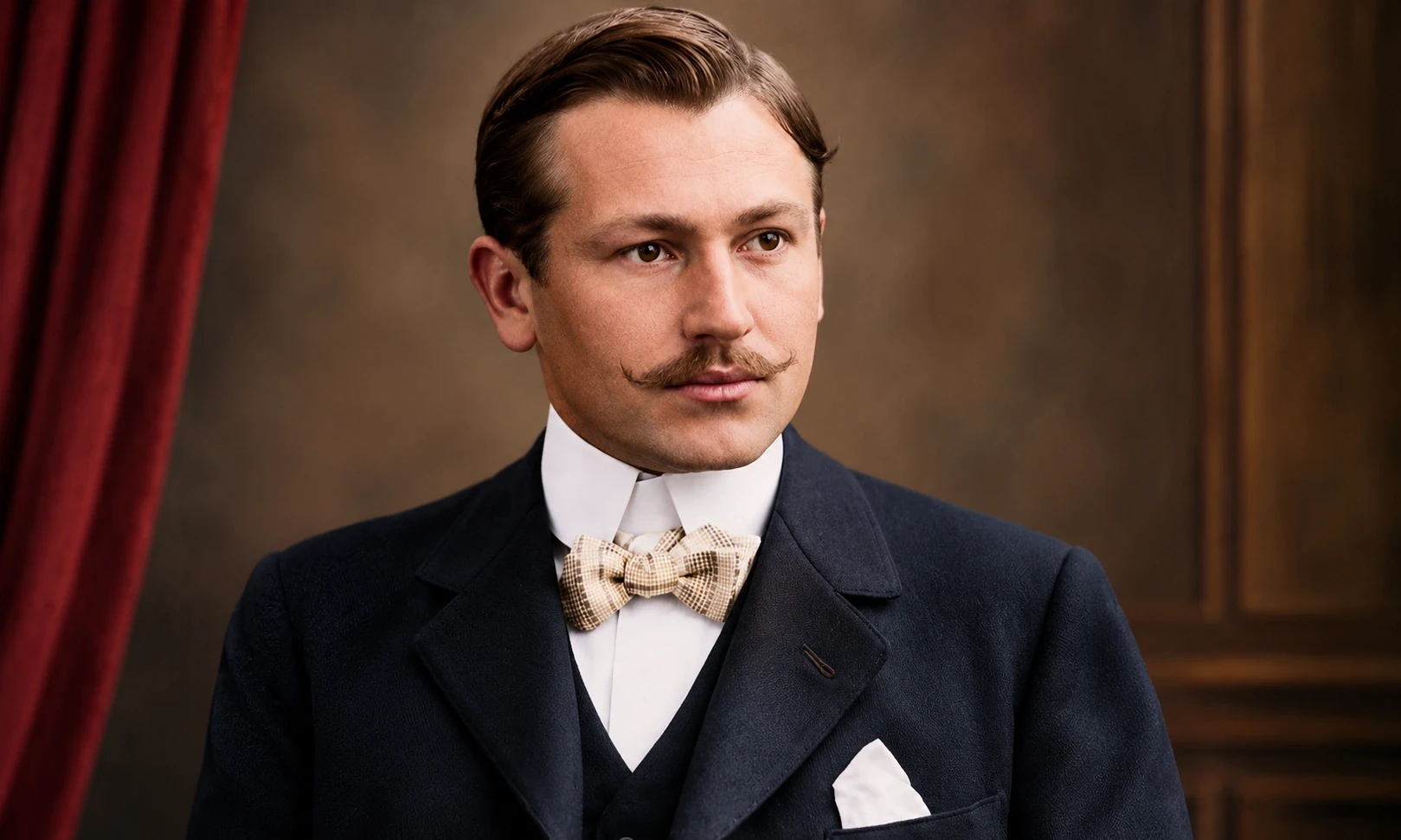
Thierry Hermès was born in Krefeld, Germany, in 1801, and arrived in Paris as a craftsman with one exceptional skill: he could make a horse harness better than almost anyone alive. In 1837 he opened a workshop on rue Basse-du-Rempart, and his timing was perfect. Paris ran on horses. The boulevards were rivers of carriage traffic, and the nobility who owned the finest horses wanted harnesses that were safe, beautiful and worthy of their stables.
Thierry’s workshop earned a reputation for leatherwork of absolute precision. When his son Charles-Émile took over, he moved the business in 1880 to 24 rue du Faubourg Saint-Honoré, a smart street near the Élysée Palace, and added saddlery. That address is still the Hermès flagship today, one hundred and forty five years later. Clients soon included Napoleon III and the Tsar of Russia. The Hermès name became shorthand for the finest equestrian equipment in Europe.
Which created a problem nobody saw coming. The horse was about to disappear.
The Automobile Problem
In the early 1900s, the automobile began replacing the carriage, and every harness maker in Europe faced extinction. Most of them did exactly that. Hermès survived because the third generation, Émile-Maurice Hermès, understood something essential: the craft wasn’t the horse. The craft was the leather.
On a trip to North America, Émile-Maurice encountered a new invention called the zipper and secured exclusive French rights to it. In 1918, Hermès produced a zippered leather golf jacket for the Prince of Wales, the first garment in France to use the fastener. Handbags followed in 1922, reportedly after Émile-Maurice’s wife complained she couldn’t find one she liked. By 1925 the house had launched its first clothing line.
Read that sequence again, because it’s the whole company in miniature. A crisis that should have killed the business became the reason to build a bigger one. Hermès would repeat this move for the next century.
The Accidental Icons
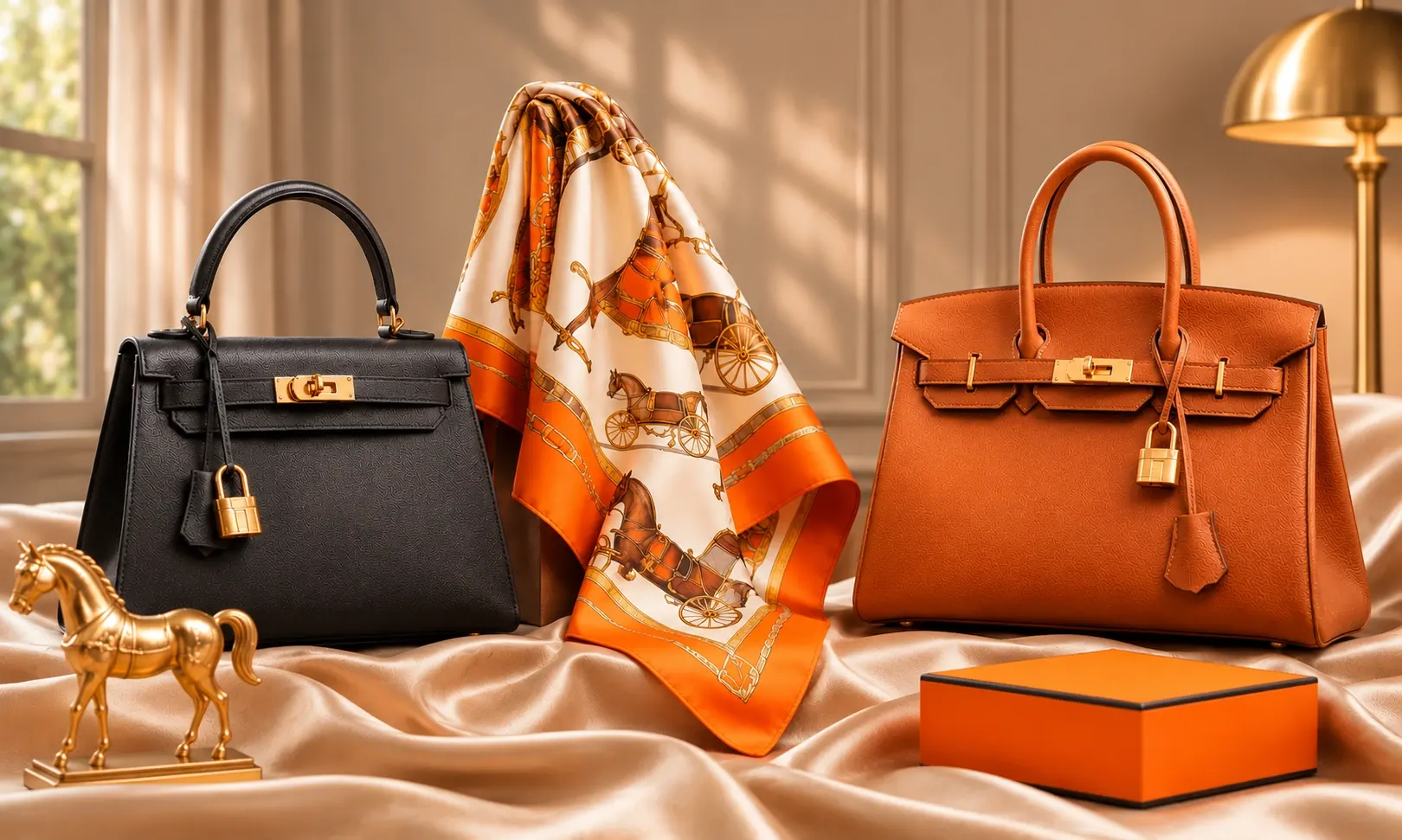
Here’s what nobody tells you about the three most famous luxury objects in the world: none of them was designed to be famous. All three were solutions to practical problems, and fame arrived later, by accident.
The Kelly. In 1935, Robert Dumas (an Hermès by marriage) designed a structured trapezoid bag called the Sac à Dépêches. It sold respectably for two decades. Then, in 1956, a photographer caught Grace Kelly, the new Princess of Monaco, holding the bag in front of her to discreetly shield her pregnancy from the cameras. The image ran everywhere. Women began asking for “the Kelly bag”, and Hermès, with typical restraint, simply made the name official.
The Carré. The first Hermès silk scarf appeared in 1937, printed on silk twill imported from China that was twice as strong as anything available in France. Ninety centimetres square, hand rolled edges, designs commissioned like artworks. It became the one luxury object that grandmothers and twenty year olds could wear with equal credibility, and roughly one is sold somewhere in the world every twenty seconds.
The Birkin. In 1984, on a flight from Paris to London, the actress and singer Jane Birkin found herself seated next to Jean-Louis Dumas, then chairman of Hermès. Her straw bag spilled its contents into the aisle, and she complained that no house made a bag that was both elegant and big enough for a young mother’s life. Dumas pulled out an airsickness bag and sketched one. The Birkin would become the most coveted, most counterfeited and most investment worthy handbag ever made, and it began life as a doodle on sick bag paper at 30,000 feet.
The Dumas Doctrine
When Jean-Louis Dumas took the helm in 1978, Hermès was honestly close to irrelevance. Sales were flat, the customer base was aging, and consultants whispered that the house had become a museum. His response became the operating manual the company still runs on.
He refused to modernize the wrong things. The saddle stitch, two needles, one thread, done entirely by hand, stayed. Each bag would still be made start to finish by a single artisan, fifteen to twenty hours of work, the maker’s stamp inside. What he modernized was everything else: new colours, new leathers, playful scarf designs, the first annual creative theme in 1987, stores that felt like jewel boxes.
Most radically, Dumas decided that Hermès would never chase demand. Production would grow at the speed artisans could be trained, roughly six percent a year, and if that meant clients waited, they waited. The waiting list stopped being a logistics failure and became the most powerful marketing asset in luxury. When the company listed on the Paris Bourse in 1993, the family kept firm control, floating only enough shares to fund the ateliers.
The Siege
On October 23, 2010, Bernard Arnault’s LVMH revealed it had quietly accumulated 14.2 percent of Hermès through equity swaps, soon rising past 22 percent. The luxury world understood instantly what was happening: the great consolidator had come for the last great independent house, using financial instruments designed to stay invisible until it was too late.
The Hermès family’s response is now taught in business schools. Within weeks, more than fifty descendants across three family branches created a holding company called H51, locking up 50.2 percent of the shares for twenty years. The message to Arnault was simple: this house is not for sale, not this decade, not next decade, not ever. After years of legal and regulatory combat, LVMH capitulated in 2014 and distributed its Hermès shares to its own shareholders.
Hermès had done what no other house managed. It stayed itself.
The Numbers Behind the Myth
The vindication, if any were needed, arrived in the figures. In 2025 Hermès posted revenue of €16 billion, up 9 percent at constant exchange rates, with an operating margin of 41 percent, the highest in the entire luxury industry by a distance. Leather goods alone generated €7.1 billion. The group employs 26,494 people, more than 16,000 of them in France, and still makes 74 percent of everything it sells on French soil, much of it in its own workshops.
And then, in April 2025, came the moment that opened this story: Hermès passed LVMH in market value. The house that makes fewer bags than the market wants, in a world engineered for more, became the most valuable company in luxury.
It also holds a curious record among the most expensive luxury brands: the Birkin has outperformed both gold and the S&P 500 over long stretches of the past four decades on the resale market, something our vintage shopping guide readers already know well.
Why Hermès Won
Every luxury house studies Hermès. Few manage to copy it, because the advantages are structural, and structure takes a century to build.
Craft over speed. Competitors can copy a design in six weeks. They cannot copy six thousand artisans trained over generations, or the twelve Hermès savoir-faire schools now teaching the trade across France.
Scarcity over scale. Every other luxury brand answers demand. Hermès manages it. The discipline to leave sales on the table, year after year, is what keeps the Birkin mythical while rival it bags deflate within seasons.
Family over conglomerate. Fifty cousins agreeing to lock their shares away for twenty years is an act of collective patience no CEO on a three year contract can match. It is the single most important strategic decision in modern luxury.
Icons over trends. Hermès does not do seasonal reinvention. The Kelly is ninety years old, the carré eighty eight, the Birkin forty one, and each sells better today than the year it launched. While fashion chased logos and then chased quiet luxury, Hermès simply waited for the world to come around to what it had always done.
The Bottom Line
Look at the Hermès logo and you’ll find the whole story hiding in it: a horse drawn carriage with no driver. The image comes from an Alfred de Dreux painting, adopted as the house emblem in 1945. The horse is there because the company began with horses. The empty driver’s seat, family members like to say, is left for the client.
A harness maker outlasted the automobile. A family outlasted the world’s most acquisitive billionaire. A bag sketched on an airsickness wrapper outlasted gold as an investment. The Hermès story isn’t really about luxury at all. It’s about what happens when an institution decides, calmly and for 188 consecutive years, that how something is made matters more than how fast it can be sold.
The world finally agreed. It just took a while to catch up.