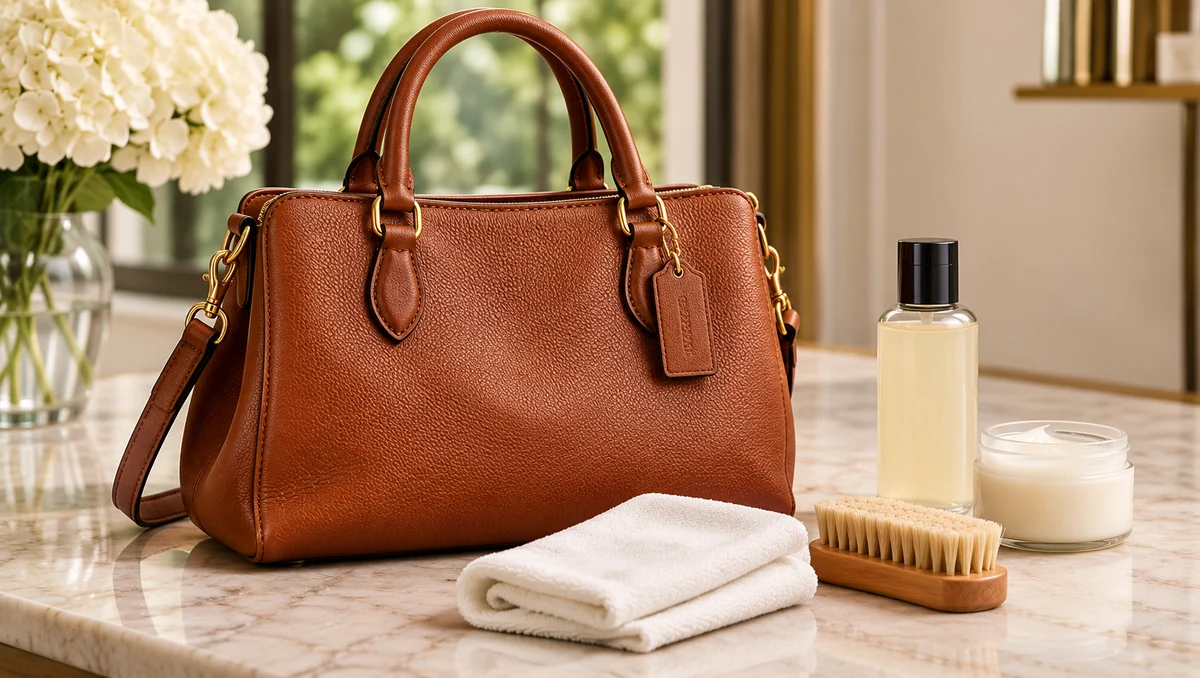
It always happens the same way. A coffee splash on the morning commute. A pen that exploded at the bottom of the bag. That slow, mysterious darkening on the handles that you notice one day and can’t unsee. You paid good money for your Coach bag, and now you’re standing in your kitchen googling how to clean it, terrified of making it worse.
Take a breath. Coach leather is famously tough (it’s one of the reasons the brand has lasted since 1941), and most cleaning jobs are genuinely simple if you do them in the right order with the right products. Here’s the exact method, the stain-by-stain fixes, and the well-meaning mistakes that actually destroy these bags.
The short version: empty the bag, dust it off, clean gently with a barely damp cloth and mild soap or proper leather cleaner, let it dry naturally, then condition. No baby wipes, no alcohol, no soaking, no hair dryer. The details below are what keep a $400 bag looking good for twenty years.
First: Know Which Leather You’re Holding

Coach uses several different materials, and they don’t all want the same treatment. Spend thirty seconds figuring out which one you have before you touch anything.
Glovetanned leather is Coach’s signature: smooth, soft, develops a gorgeous patina. It’s also the most delicate. It shows water spots and scratches easily, but it responds beautifully to proper conditioning. Most vintage Coach bags and the higher end current styles use it.
Pebbled and crossgrain leather are the workhorses: textured surfaces that hide scratches and shrug off light rain. These are the most forgiving to clean, and most everyday Coach bags (the Rowan, the Tabby line’s pebbled versions) use them.
Refined calf and smooth leathers sit between the two: dressier, smoother, moderately careful.
Coated canvas (the Signature C print) isn’t leather at all. It’s canvas with a protective coating, and it’s the easiest of all to clean, just wipe it.
Suede and nubuck need completely different treatment: no water, ever, at home. Skip to the suede section if that’s you.
The Safe Cleaning Method (Works for 90% of Bags)
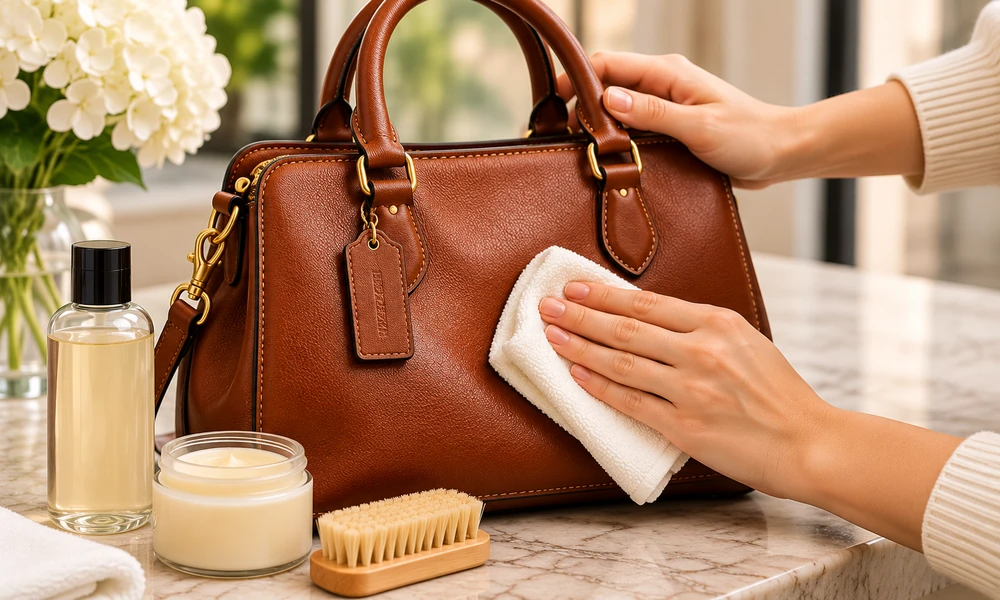
This is Coach’s own recommended approach, refined by a lot of collective experience. Total time: about fifteen minutes.
Step 1: Empty everything out. Every pocket. Turn it upside down and shake gently. Use a lint roller or the soft brush attachment of a vacuum on the interior lining. Old crumbs and grit cause more interior damage than any spill.
Step 2: Dry dust the exterior. Wipe the whole bag with a dry, soft, white cloth (white only, so no dye transfers). This removes surface dirt that would otherwise get rubbed into the leather during wet cleaning.
Step 3: Spot test, always. Dampen a corner of your cloth with your cleaning solution and touch a hidden spot, the bottom or inside a flap. Wait ten minutes. If the colour stays put and the finish looks normal, proceed. This thirty second step is what separates a cleaned bag from a ruined one.
Step 4: Clean with a barely damp cloth. Mix a few drops of mild dish soap into a bowl of lukewarm water, or use a proper leather cleaner (Coach sells its own Coach Leather Cleaner, and it genuinely works well). Dampen the cloth, wring it until it’s barely moist, and wipe in gentle circles, working in small sections. The leather should never look wet.
Step 5: Wipe off any residue with a second clean, barely damp cloth, then immediately pat dry with a dry towel.
Step 6: Air dry naturally. Room temperature, away from radiators, windows and sunlight. Stuff the bag loosely with plain white tissue so it keeps its shape. Give it a few hours.
Step 7: Condition. Once fully dry, work a small amount of leather conditioner (Coach Moisturizer, or any quality cream conditioner) in with a soft cloth. This is the step everyone skips and the one that keeps glovetanned leather from drying and cracking. Two to four times a year is plenty.
That’s it. That’s the whole ritual. The repair and care movement in fashion exists precisely because simple habits like this beat replacement every time.
The Stain ER: Fix by Fix
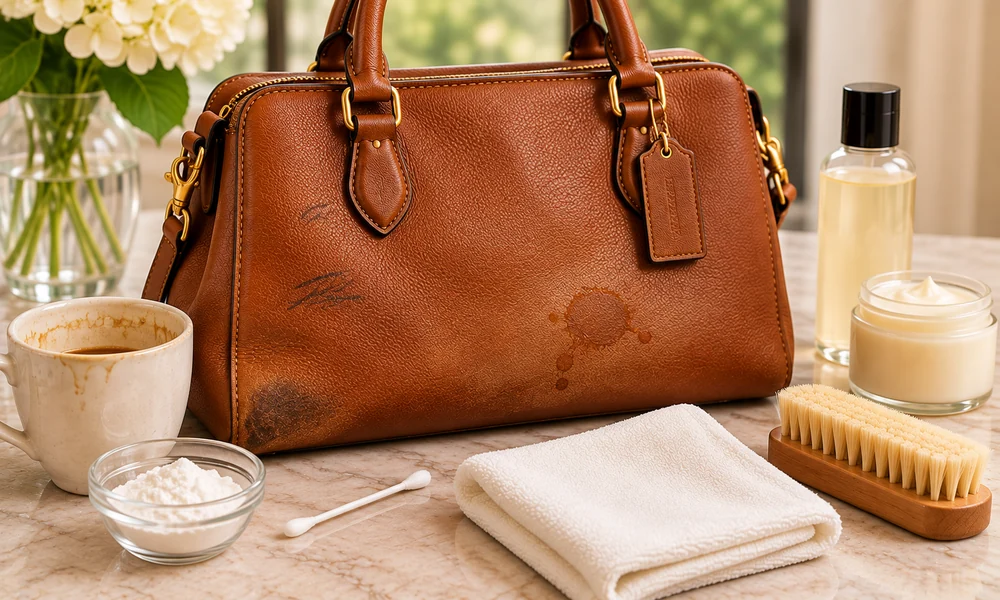
| Stain | The Fix | The Warning |
| Water spots | Dampen the whole panel evenly, dry naturally, condition | Never spot dry one patch; it makes rings |
| Ink | Dab with a cotton swab barely touched to rubbing alcohol | Test first; ink spreads fast, so dab don’t rub |
| Oil or grease | Blot, cover with cornstarch overnight, brush off | Don’t add water to fresh oil; it sets the stain |
| Denim transfer | Leather cleaner on a cloth, gentle circles | Catch it early; old transfer needs a pro |
| Handles (darkened) | The full method above, plus conditioner | Handle darkening is body oil; clean monthly |
| Food or coffee | Blot immediately, then mild soap solution | Blotting beats rubbing every single time |
| Scuffs on corners | Cream conditioner, buffed in circles | Deep scuffs need professional edge paint repair |
A note on denim transfer, since it’s the stain Coach owners ask about most: dark jeans deposit dye on light leather with friction, and it’s far easier to prevent than remove. If you wear raw denim, carry your light coloured bag on the other side, or in your hand. Our upcoming guide on preventing colour transfer goes deep on this.
Suede Coach Bags: The House Rules
Suede plays by different rules, and breaking them is permanent.
- Never use water or soap. Water stains suede and crushes the nap.
- Use a suede brush for dry dirt, brushing in one direction to lift the pile.
- Use a suede eraser (or a clean white pencil eraser in a pinch) for scuffs and shiny spots.
- Blot fresh spills immediately with a dry cloth, then let the suede dry before brushing.
- Protect it with a suede protector spray before first use, and reapply every few months.
If suede gets genuinely soaked or badly stained, stop experimenting and take it to a professional leather cleaner. Home heroics on wet suede is how bags die.
The Mistakes That Actually Ruin Coach Bags
I’ve seen each of these kill a bag that would otherwise have lasted decades.
- Baby wipes. They contain alcohol and fragrance that strip the leather’s finish. The single most common mistake.
- Rubbing alcohol on the whole bag. Fine as a targeted ink dab after testing; devastating as a general cleaner.
- The washing machine. It happens more than you’d think. Never.
- Hair dryers and radiators. Heat dries leather unevenly and cracks it. Natural air only.
- Soaking. Leather should never look wet. Barely damp is the whole game.
- Skipping conditioner. Cleaned but unconditioned leather dries out and cracks within a year or two.
- Coloured cloths. Dye transfer from a red cleaning cloth onto cream leather is a heartbreak you can’t undo.
When to Stop and Call a Professional
Some jobs are beyond the kitchen sink: ink that’s spread, oil that’s set, colour loss, cracked edge paint, broken hardware, torn lining. Coach itself offers repair services through its stores and its (Re)Loved program, which restores and resells preloved bags, and independent leather specialists can handle the rest.
Our upcoming guide to designer handbag repair costs will show you what’s worth paying for, but the rule of thumb is simple: on a bag you love, professional repair almost always beats replacement. That philosophy is exactly why we keep recommending the mindset in our vintage shopping guide: buy well, maintain, keep forever.
And once your bag is clean, store it right: stuffed, in its dust bag, away from sunlight. A clean bag stored badly is a problem you’re just postponing. Our seasonal closet rotation guide covers the storage side.
Frequently Asked Questions
Can I use baby wipes on my Coach leather bag?
No. Baby wipes contain alcohol, fragrance and moisturisers that strip leather’s protective finish and cause drying and discolouration over time. Use a barely damp white cloth with mild soap solution or a proper leather cleaner instead.
What does Coach recommend for cleaning its leather bags?
Coach recommends its own Coach Leather Cleaner followed by Coach Moisturizer conditioner, applied with soft cloths. The official method is gentle circular wiping, natural air drying, and conditioning afterward. For fabric and Signature canvas, Coach offers a separate fabric cleaner.
How do you clean the inside of a Coach bag?
Empty all pockets, shake out debris, then vacuum the lining with a soft brush attachment or use a lint roller. For lining stains, dab with a cloth barely dampened in mild soap solution, blot dry, and air dry fully with the bag open before restocking it.
Can I wash my Coach bag in the washing machine?
Never. Machine washing destroys leather: it strips oils, cracks the finish, warps the shape and can delaminate coated canvas. Even fabric Coach bags should be hand cleaned only, using the damp cloth method described above.
How often should you clean and condition a Coach bag?
Wipe down monthly if carried daily, do the full clean every two to three months, and condition two to four times per year. Handles need the most frequent attention because they absorb body oils constantly. Suede needs brushing after every few wears and protector spray every few months.
The Bottom Line
Here’s the truth about that coffee splash: your Coach bag can take it. These bags were built by a company that started out making leather goods inspired by baseball gloves, and the DNA shows. Fifteen minutes, a damp cloth, a little conditioner, and most disasters become stories instead of losses.
Clean it gently. Condition it sometimes. Store it properly. That bag will outlast the car you drove to buy it in, and it’ll look better every year you own it.